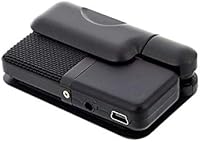
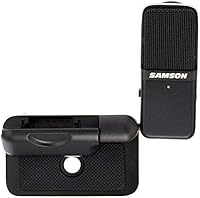
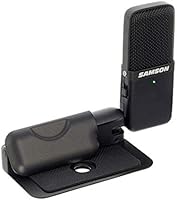

Overview

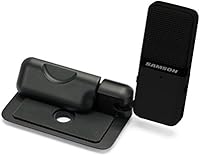
The Samson Go Mic USB Condenser Microphone has been quietly holding its ground since 2014, and for good reason — it occupies a practical sweet spot for casual creators and remote workers who want a real step up from laptop audio without diving into complex audio setups. Plug it in, and it just works, on both Mac and PC, with no drivers required. It clips directly onto your laptop lid or stands on a desk, giving you two usable configurations in one small package. This is not a studio mic — manage expectations accordingly — but it punches reasonably well for what it is.

Features & Benefits

The unidirectional polar pattern is probably the Go Mic's most practical asset — it focuses on what's in front of it and rejects a fair amount of side noise, which matters when you're recording in an untreated room. Power comes entirely through USB, so there's no need for a separate audio interface or phantom power supply. The titanium housing feels solid for its size, and at under 9 ounces it's genuinely portable. Audio clarity reaches up to 18 kHz with a 58 dB signal-to-noise ratio — respectable for speech and light recording, though not exceptional for music production. It handles one channel, which is all most solo users need.

Best For

This clip-on condenser makes most sense for people upgrading from built-in laptop microphones — students jumping on video calls, remote workers who spend hours on Zoom, or beginner podcasters recording in reasonably quiet spaces. If you use voice recognition software like Dragon, cleaner input can noticeably improve accuracy, and this mic delivers that without fuss. Travelers appreciate that it clips right onto the laptop and takes up almost no bag space. Just be realistic: if you're recording in a noisy apartment or a reverberant room, room treatment matters as much as the mic itself.

User Feedback

Across 318 ratings, the Go Mic holds a 4.4-star average, which reflects genuine satisfaction rather than inflated hype. Buyers consistently praise how effortless the setup is and how much clearer their voice sounds compared to built-in audio. That said, critical reviews are worth reading too. Some users notice an audible noise floor in very quiet recording environments, and the low-frequency response is thin — bass-heavy voices or music recording will feel flat. A few longer-term owners have flagged the clip mechanism as a durability weak point. The pattern is clear: buyers who matched this mic to the right use case were happy; those who expected studio results were not.

Pros

  • Plug-and-play USB connection works instantly on Mac and PC — no drivers, no setup headaches.
  • The clip-on design attaches directly to a laptop lid, making it one of the most packable mics available.
  • Unidirectional pickup does a reasonable job of rejecting side noise in moderately quiet rooms.
  • Voice clarity is a genuine step up from built-in laptop audio, which most users notice immediately.
  • No external power supply or audio interface required — the USB port handles everything.
  • At under 9 ounces, this portable USB mic is light enough to forget it is in your bag.
  • The titanium housing feels sturdy and well-built for a mic at this size and price point.
  • Works well for voice recognition software, improving dictation accuracy without any configuration.
  • A 4.4-star average across hundreds of real-world buyers signals consistently solid satisfaction for the intended use case.

Cons

  • Low-frequency response is noticeably thin, making bass-heavy voices or music recordings sound flat.
  • An audible noise floor becomes apparent in very quiet recording environments with sensitive monitoring.
  • The clip mechanism has been flagged repeatedly by long-term users as a durability weak point.
  • Single-channel mono output limits use cases — not suitable for interviews or multi-source recording.
  • Performance drops significantly in untreated or noisy rooms, which the mic cannot compensate for on its own.
  • Buyers comparing it against slightly pricier desktop condensers often find the audio quality underwhelming at similar price ranges.
  • No gain control or mute button on the unit itself — monitoring and levels must be managed entirely through software.
  • The Go Mic can feel limiting relatively quickly for creators whose recording needs grow beyond basic voice capture.

Ratings

Our AI rating system analyzed verified buyer reviews for the Samson Go Mic USB Condenser Microphone from multiple global markets, actively filtering out incentivized, bot-generated, and low-quality submissions to surface what real users genuinely experienced. The scores below reflect both the strengths that earned this portable USB mic its loyal following and the pain points that caused frustration for buyers who pushed it beyond its intended use. Nothing has been softened or inflated — what you see is a balanced picture built from honest, real-world feedback.

Ease of Setup
96%
Buyers across all experience levels consistently praised how fast this clip-on condenser gets up and running — plug it into a USB port and it works, no driver hunting, no software installs, no restarts required. Remote workers and students in particular loved being able to set it up mid-workday without any disruption.
A small number of users on older Windows machines reported that the device was occasionally not recognized immediately and required switching USB ports. This was rare, but worth knowing if your machine is running aging hardware.
Voice Clarity
78%
22%
For spoken-word content — Zoom calls, solo podcast episodes, voice dictation — the Go Mic delivers noticeably cleaner audio than any built-in laptop microphone. Voices come through with reasonable intelligibility and presence, which is exactly what most buyers in this category are looking for.
The limited low-frequency response means voices that naturally carry warmth and depth can sound thin or slightly hollow in recordings. Users who listened back critically on good headphones noticed this ceiling fairly quickly, especially in comparison to slightly larger desktop condensers.
Portability
93%
At under 9 ounces and with a clip that attaches directly to a laptop lid, this portable USB mic is genuinely easy to carry anywhere. Frequent travelers and commuters repeatedly called it out as one of the most convenient audio upgrades they had ever packed into a bag.
The clip design, while clever, is size-dependent — it works well on standard laptop displays but can feel loose or awkward on thinner ultrabook lids or unusually thick screen bezels. A few users wished a small carry pouch were included given the travel-focused positioning.
Noise Rejection
67%
33%
The unidirectional polar pattern does a reasonable job of focusing on the speaker directly in front of the mic and pushing back against noise coming from the sides and rear. In a home office with moderate ambient sound, most users found it performed adequately for calls and recordings.
In genuinely noisy environments — apartments near traffic, rooms with loud HVAC systems, or open-plan offices — the noise rejection falls short of what buyers expected. Several reviewers noted that room acoustics matter enormously with this mic, and an untreated space will expose its limitations quickly.
Build Quality
71%
29%
The titanium housing gives the Go Mic a solid feel that is reassuring for a mic this small. Most users who handled it daily for light use reported no structural issues with the main body, and the overall fit and finish came across as above average for the category.
The clip mechanism is the recurring weak point — long-term owners who attached and detached it daily reported it loosening over time, with some experiencing play or wobble after several months of regular use. This is the most consistent durability complaint across the review pool.
Background Noise Floor
58%
42%
In typical home or office environments where the primary concern is voice intelligibility on calls or podcasts, the noise floor is low enough that most listeners will not notice it. For casual use, it stays acceptably quiet.
In near-silent recording environments — late-night sessions, padded rooms, or when monitored through studio headphones — a faint hiss becomes audible. Users recording content where silence between sentences matters, such as audiobooks or meditative content, found this a genuine problem.
Value for Money
81%
19%
For buyers who matched this clip-on condenser to the right use case — remote work, beginner podcasting, voice recognition — the value proposition is strong. The plug-and-play convenience and real audio improvement over built-in laptop mics justify the spend for this audience.
Buyers who compared it against competing desktop condensers in a similar price bracket sometimes felt the Go Mic came up short in raw audio quality. If portability is not a priority for you, there are options at a similar price point that offer better sonic performance in a fixed desk setup.
Compatibility
89%
Mac and PC compatibility is rock solid, with the vast majority of users reporting zero issues across a wide range of operating system versions. It also works acceptably on Chromebooks, which is a bonus for students and education users who did not expect it.
iPad and tablet compatibility is inconsistent and depends heavily on adapter availability and OS version, which frustrated a subset of mobile-first users. The product is officially rated for Mac and PC only, so any other platform is effectively unsupported territory.
Frequency Response
62%
38%
The frequency response reaches up to 18 kHz, which covers the full range of human speech comfortably and handles high-frequency consonants cleanly. For voice-focused applications, this is sufficient and produces intelligible, articulate recordings.
The low end drops off noticeably, leaving recordings that involve deeper voices, acoustic instruments, or music production sounding thin and lacking body. Anyone expecting full-spectrum audio capture will find this mic hits a wall that no amount of post-processing fully corrects.
Mounting Versatility
74%
26%
Having two usable configurations — clipped to a laptop or sitting freestanding on a desk — adds genuine flexibility for users who switch between environments. Most buyers appreciated not needing a separate stand for desk use, even if the freestanding base is basic.
Neither mounting solution is particularly robust. The freestanding base can wobble on uneven surfaces, and the laptop clip does not fit all screen thicknesses evenly. Users who wanted a more stable desktop setup often ended up improvising or purchasing a third-party stand.
Software Compatibility
88%
The Go Mic worked without issues in every major audio and communication app buyers tested it with — Zoom, Teams, OBS, Audacity, GarageBand, and Dragon among others. No special configuration was needed in most cases, which kept the barrier to use extremely low.
A small number of users encountered recognition delays in certain DAW environments on Windows, requiring manual selection of the device as the input source. This is a minor inconvenience rather than a fundamental flaw, but it occasionally caught first-time users off guard.
Long-Term Reliability
63%
37%
The main capsule and USB connection held up well for users who kept the mic in a fixed location and handled it gently. Several long-term owners reported using it consistently for over a year without any functional decline in audio performance.
The clip mechanism and connector point are the two areas where wear shows up over time with frequent use. Users who traveled with it regularly or used it in a clip-on configuration daily were more likely to report physical degradation within six to twelve months.
Signal-to-Noise Ratio
61%
39%
A 58 dB signal-to-noise ratio is workable for its intended applications, keeping voice recordings clean enough for casual listening on calls, podcasts, and basic dictation tasks where the listener is not scrutinizing audio quality closely.
Compared to premium USB microphones that push beyond 70 dB, the noise floor is meaningfully higher and becomes a real issue for anyone recording content where pristine silence matters. Professional content creators will find this rating limiting as their production standards rise.
Aesthetic Design
77%
23%
The Titanium Black finish and compact proportions give this portable USB mic a low-profile, professional look that does not look out of place in video calls or on a desk. Several users mentioned that it looked more polished than they expected for the size.
It is a utilitarian design rather than a statement piece, and there are no color variants or customization options. Users who wanted something more visually distinctive for streaming setups or on-camera use found it a bit plain compared to some competing mics with RGB lighting or bolder styling.

Suitable for:

The Samson Go Mic USB Condenser Microphone is a strong match for anyone who wants a meaningful audio upgrade without the learning curve of a full recording setup. Remote workers and students who spend their days on Zoom, Google Meet, or similar platforms will notice an immediate difference compared to a built-in laptop mic — voices come through cleaner and more intelligible. Beginner podcasters recording solo episodes in a home office or quiet bedroom will find the unidirectional pickup pattern helpful for keeping background noise at bay. Travelers and commuters benefit from the clip-on design, which attaches directly to a laptop lid and takes up almost no space in a bag. Voice recognition users — people relying on tools like Dragon for dictation — will also appreciate how much cleaner the input signal is compared to typical onboard audio.

Not suitable for:

The Samson Go Mic USB Condenser Microphone is not the right call for anyone expecting studio-quality results or recording in acoustically challenging spaces. The signal-to-noise ratio of 58 dB and the limited low-frequency response mean that bass-heavy voices, musical instruments, or any content where warmth and depth matter will sound noticeably flat or thin. If you record in a noisy apartment, near an HVAC system, or in a room with hard reflective surfaces, the unidirectional pattern alone will not save you — room acoustics matter as much as the mic itself. Content creators who are even one step beyond beginner level, or who are comparing this against slightly pricier desktop condensers, may find the Go Mic underwhelming and will likely outgrow it quickly. Anyone prioritizing long-term durability should also be aware that the clip mechanism has drawn repeated criticism from owners who use it daily over extended periods.

Specifications

  • Brand: Manufactured by Samson Technologies, a brand with a long history in professional and consumer audio equipment.
  • Model: The model designation is Go Mic, sold under the part number SAGOMICTB, representing the Titanium Black variant.
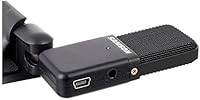
  • Connectivity: Connects via a standard USB cable, drawing power directly from the host device with no external power supply needed.
  • Polar Pattern: Features a unidirectional (cardioid) polar pattern that captures audio primarily from the front and reduces pickup from the sides and rear.
  • Frequency Response: Covers a frequency range up to 18 kHz, which is adequate for voice recording and basic acoustic content but not full-spectrum music production.
  • Signal-to-Noise Ratio: Rated at 58 dB, which delivers acceptable clarity for speech-focused applications while showing some noise floor in very quiet environments.
  • Audio Sensitivity: Sensitivity is rated at 10 dB, reflecting the microphone's ability to capture sound at moderate input levels suitable for close-range voice recording.
  • Channels: Records in mono with a single channel, which is standard for solo voice capture, podcasting, and VoIP applications.
  • Form Factor: Designed as a clip-on condenser that attaches to a laptop display or can be positioned freestanding on a flat desk surface.
  • Dimensions: Measures 6 × 2 × 5.75 inches, making it one of the more compact USB condenser microphones available for portable use.
  • Weight: Weighs 8.8 ounces, light enough to carry in a laptop bag or backpack without adding noticeable bulk.
  • Material: The housing is constructed from titanium, lending the unit a degree of durability and resistance to everyday handling wear.
  • Color: Available in Titanium Black, giving it a low-profile, professional appearance suitable for office and on-camera use.
  • Power Source: Powered entirely through the USB connection (bus power), requiring no batteries, phantom power, or separate power adapter.
  • Platform Support: Compatible with both Mac and PC operating systems without requiring any driver installation or additional software.
  • Included Components: The package includes the microphone unit itself; no additional accessories such as a dedicated stand or USB extension cable are included.
  • Microphone Type: Classified as a USB condenser microphone, using condenser capsule technology to capture audio with greater sensitivity than dynamic microphones.
  • Manufacturer: Produced by Samson Technologies, headquartered in the United States, with the product first listed for sale in November 2014.

Related Reviews
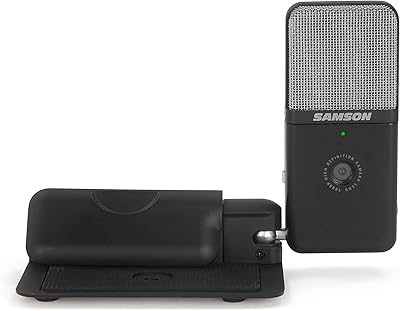
Samson Go Mic Video
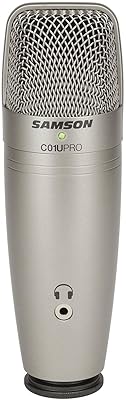
Samson Go Mic Video
77%
78%
Audio Clarity
74%
Video Quality
93%
Ease of Setup
88%
Portability & Form Factor
62%
Mounting & Clip Mechanism
More
Samson C01U Pro
Samson C01U Pro
83%
93%
Build Durability
88%
Vocal Clarity
82%
Background Noise Rejection
91%
Latency Performance
96%
Ease of Setup
More
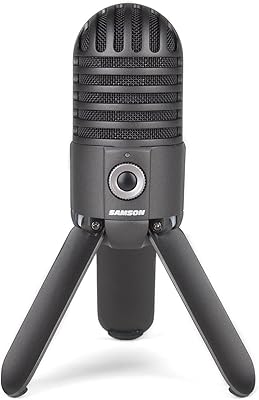
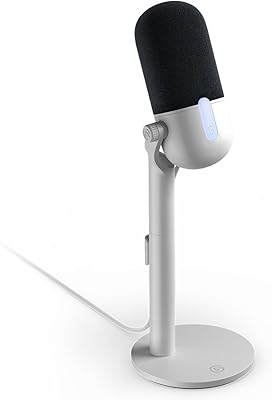
Neat Microphones Skyline USB Desktop Condenser Microphone
89%
94%
Audio Quality
91%
Ease of Use
89%
Build Quality
90%
Mute Button Functionality
92%
Value for Money
More
Samson Meteor USB Microphone
86%
89%
Audio Quality
95%
Ease of Use
83%
Build Quality
91%
Portability
94%
Setup Process
More
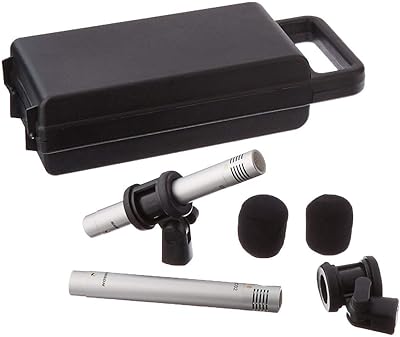
Samson C02 Pencil Condenser Microphones (Stereo Pair)
86%
88%
Acoustic Instrument Clarity
91%
Stereo Imaging Accuracy
93%
High SPL Handling
87%
Build Quality & Durability
96%
Value for Money
More
HyperX SoloCast
HyperX SoloCast
84%
89%
Audio Clarity
97%
Ease of Setup
93%
Mute Functionality
42%
Vibration Isolation
86%
Build Quality
More
AMOOX BM-800
AMOOX BM-800
74%
88%
Value for Money
71%
Audio Quality
93%
Ease of Setup
74%
Build Quality
66%
Noise Isolation
More
Samson G-Track Pro
Samson G-Track Pro
83%
96%
Build Durability
92%
Vocal Clarity
88%
Instrument Integration
94%
Ease of Setup
85%
Polar Pattern Versatility
More
KingSom Mic-1
KingSom Mic-1
76%
91%
Value for Money
74%
Audio Clarity
94%
Ease of Setup
58%
Build Quality
66%
Boom Arm Usability
More
HyperX QuadCast S
HyperX QuadCast S
87%
88%
Vocal Clarity
96%
Mute Functionality
91%
Build Quality
84%
Shock Absorption
89%
Gain Control Ease
More

FAQ

No, you do not. The Go Mic is fully plug-and-play on both Mac and PC — just plug it into a USB port and your operating system will recognize it automatically. You can start recording or taking calls within seconds of plugging it in.

It works both ways. The clip is designed to attach to a laptop lid, but the mic also has a stable base that lets it sit upright on a desk surface. It is not the most elegant desktop stand in the world, but it is functional for a quick setup.

For most Zoom or video call use, it sounds noticeably better than a built-in laptop microphone. Voices come through clearer and with less of that hollow, distant quality you get from integrated audio. It is not going to impress professional ears, but it is a real, practical improvement for daily calls.

The unidirectional polar pattern does help reject noise from the sides and behind the mic, but it is not magic. If your room is loud — fans, street noise, HVAC — you will still hear it in your recordings. This mic performs best in reasonably quiet spaces.

For beginner podcasters recording solo episodes in a quiet room, yes, it holds up well. The audio quality is clear enough for spoken-word content distributed on standard podcast platforms. If you are interviewing guests or want a richer, more produced sound, you may eventually want to upgrade.

Yes, and it works well for this use case. The cleaner input signal compared to built-in laptop audio tends to improve recognition accuracy noticeably. If you use dictation tools regularly, this clip-on condenser is a practical, low-hassle upgrade.

The clip feels solid initially, but a recurring theme among long-term owners is that it can loosen or wear down with repeated daily use. If you plan to clip and unclip it multiple times a day over months, it is worth handling it with some care to extend its lifespan.

You can, but you should set realistic expectations. The frequency response has limited low-end depth, so bass instruments and full-voiced singers will not sound particularly warm or rich. It is better suited to voice recording than musical performance capture.

Chromebook compatibility is generally good since Chrome OS supports standard USB audio devices. iPad use depends on whether you have the right USB adapter for your specific iPad model, and results can vary. The mic is officially rated for Mac and PC, so those are your safest bets.

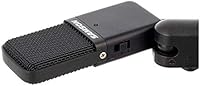
There are no physical controls on the unit — no mute button, no gain dial, nothing. All volume and monitoring adjustments need to be handled through your operating system settings or whichever software you are recording with. For most casual users this is fine, but it is worth knowing upfront.

Where to Buy