Overview

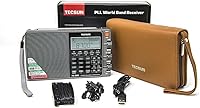
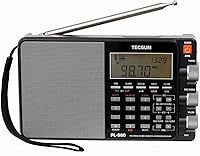
The Tecsun PL880 Portable Shortwave Radio has earned a solid reputation among serious radio hobbyists since its introduction — and for good reason. Unlike basic portables that cover only AM and FM, this Tecsun receiver adds longwave and shortwave to the mix, all wrapped in a chassis small enough to toss in a travel bag. What really sets it apart is the dual conversion architecture, which meaningfully improves how well the radio rejects interference and pulls in weaker signals compared to single-conversion designs. It sits at the upper end of the portable price range but has maintained a loyal following because it consistently delivers where sensitivity and selectivity matter most.
Features & Benefits

The PLL synthesized dual conversion receiver is where the PL880 earns its keep. On AM, you get four selectable bandwidth filters, letting you trade audio warmth for tighter interference rejection depending on conditions. SSB listeners get five filters and, critically, 10 Hz tuning resolution — that level of fine adjustment is essential when trying to lock onto a single-sideband transmission without the distorted warble that plagues less precise radios. The unit runs on AA batteries or USB power, which matters on extended trips when wall outlets are scarce. At roughly 7.5 by 4.5 inches and just over a pound, the compact build makes it genuinely practical for travel, not just a desk-bound hobby piece. A sleep timer and alarm round out the everyday usability.

Best For

This shortwave portable is best suited for people who already know what SSB is — or are actively working to learn. Shortwave hobbyists, ham radio listeners, and DXers chasing weak distant signals will find the fine tuning and filter options genuinely useful rather than just a spec sheet boast. Travelers who want one device covering AM news, FM music, and international shortwave broadcasts will appreciate the wide-band coverage. It is also a reasonable choice for emergency preparedness kits, since battery operation keeps it functional off-grid. Worth noting: longwave usefulness depends heavily on region — US listeners will find fewer active longwave broadcasts than European users. If upgrading from a basic portable, the performance jump is noticeable.

User Feedback

Buyers who have used the PL880 extensively tend to highlight its SSB sensitivity and AM reception as genuine standouts — the kind of difference you notice during late-night DX sessions. That said, the menu system has a real learning curve, and several users note that SSB tuning, while precise, takes patience to master. Battery drain under heavy use is a recurring discussion point; many owners default to USB power at home and reserve batteries for field use. A handful of buyers have flagged build consistency concerns, suggesting occasional unit-to-unit variation in fit and finish. On the brighter side, the out-of-box experience and included accessories have generally been well received, and the one-year US warranty adds reasonable reassurance.

Pros

  • Dual conversion receiver delivers noticeably cleaner signal separation on crowded shortwave bands.
  • SSB reception with 10 Hz tuning steps makes locking onto single-sideband transmissions precise and reliable.
  • Four AM bandwidth filters let you balance audio quality against interference rejection for varying conditions.
  • Covers AM, FM, longwave, and shortwave in a single portable unit under 1.2 pounds.
  • USB power option means you can run this Tecsun receiver at a desk without draining batteries.
  • Built-in sleep timer runs up to 120 minutes, making it practical as a bedside listening device.
  • The PL880 has held a strong reputation in the hobbyist community for years, which says something about its longevity.
  • Compact enough to pack in carry-on luggage without taking up meaningful space.
  • One-year US warranty provides a reasonable safety net for a mid-to-premium priced device.
  • Out-of-box experience is generally well-regarded, with most buyers finding setup intuitive enough to start listening quickly.

Cons

  • SSB tuning is not intuitive for newcomers and takes real practice before it feels natural.
  • Menu navigation has a learning curve that some users find unnecessarily complex for routine adjustments.
  • Battery life under heavy use can be shorter than expected, pushing many owners toward USB power as the default.
  • Longwave band is largely inactive for North American listeners, making it a non-feature for most US buyers.
  • A subset of buyers have reported unit-to-unit build variation, suggesting inconsistent quality control.
  • No rechargeable battery is included in the box, which feels like an oversight at this price tier.
  • The included manual can be thin on practical guidance, particularly for SSB operation.
  • Speaker audio volume at higher levels has drawn occasional criticism for distortion on some units.

Ratings

Our AI rating system analyzed thousands of verified global buyer reviews for the Tecsun PL880 Portable Shortwave Radio, actively filtering out incentivized, duplicate, and bot-generated submissions to surface what real owners genuinely experience. The scores below reflect a balanced synthesis of both consistent praise and recurring frustrations, so you get an honest picture of where this Tecsun receiver excels and where it falls short before you commit.

Shortwave Reception
93%
This is where the PL880 earns its reputation. The dual conversion architecture combined with five selectable SSB bandwidth filters means listeners consistently pull in weak or distant shortwave stations that cheaper portables simply cannot resolve. DXers report noticeably cleaner signal separation even in crowded band conditions during late-night listening sessions.
Performance can drop noticeably in urban environments with high RF interference, where even good selectivity has its limits. A handful of users in dense city settings report needing an external antenna to get results comparable to what rural users achieve with the built-in telescoping whip.
SSB Performance
91%
The 10 Hz fine-tuning resolution is a genuine differentiator for SSB listeners, making it possible to lock onto single-sideband transmissions cleanly without the pitch warble common on less precise radios. Ham radio listeners and utility station monitors specifically call this out as the feature that justifies the price.
SSB tuning is not self-explanatory, and buyers who jump in without prior SSB experience often spend several sessions frustrated before the process clicks. The fine-tune knob requires a light touch, and getting the BFO pitch just right takes practice that the manual does not adequately prepare you for.
AM Reception
88%
Medium wave AM performance is strong, with four selectable bandwidth filters giving listeners practical control over the trade-off between audio warmth and adjacent channel rejection. Nighttime AM DXing sessions on the PL880 draw consistent praise from hobbyists who compare it favorably against radios costing significantly more.
At the narrower bandwidth settings, AM audio can sound thin and boxy, which is an acceptable trade-off for interference rejection but takes some getting used to. Users in areas with very strong local AM transmitters occasionally report minor overloading, though this is not a widespread complaint.
FM Reception
79%
21%
FM coverage is solid and more than adequate for everyday use, handling both strong local stations and weaker distant signals reasonably well. Travelers appreciate having reliable FM available alongside shortwave without needing a second device.
FM is functional but not exceptional — it is clearly not the design priority of this receiver. Audiophiles expecting hi-fi FM tuner performance will find the audio presentation serviceable rather than impressive, and some users note slightly muted stereo separation compared to dedicated FM portables.
Build Quality
72%
28%
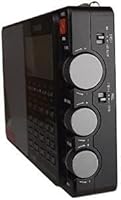
The physical construction feels solid in hand for the size and weight class, with a well-designed layout that places the tuning knob and filter controls in intuitive positions. Most buyers receive a unit that feels well-assembled and durable enough for regular travel use.
A notable minority of buyers have flagged unit-to-unit inconsistency in fit, finish, and tuning feel, suggesting quality control is not perfectly uniform across production batches. Some report loose knobs or minor cosmetic issues straight from the box, which is a reasonable concern at this price point.
Ease of Use
61%
39%
Once learned, the control layout becomes second nature for experienced radio users, and the direct frequency entry option speeds up navigation considerably for those who know what band they are targeting. Long-time shortwave listeners tend to adapt within a few hours of use.
The menu system is layered and not immediately intuitive, particularly for SSB tuning and bandwidth filter adjustments. New users frequently report that the included manual provides insufficient guidance, leading to reliance on third-party online guides and forums just to unlock basic advanced functions.
Battery Life
67%
33%
Battery operation works well for field use and travel scenarios where USB power is not available, and the radio handles AA batteries efficiently at moderate usage levels. Many emergency preparedness users specifically appreciate having a battery-powered fallback that does not depend on proprietary cells.
Under sustained heavy use — extended SSB sessions with backlight active — battery drain is faster than many buyers expect. The absence of an included rechargeable battery or internal charging circuit is a frustration at this price tier, and most owners end up defaulting to USB power for home use within weeks of purchase.
Portability
86%
At roughly 1.15 pounds and compact enough to slip into a jacket pocket or small bag, this shortwave portable travels without complaint. Users report taking it on long-haul flights, camping trips, and international travel without it feeling like a burden in the bag.
The telescoping antenna, while functional, requires some care when extended fully to avoid stressing the base joint over time. A protective case is not included, and given how much the radio is carried around by its target audience, that is a practical gap buyers need to plan for.
Audio Output
71%
29%
At normal listening volumes the built-in speaker produces a clear and pleasant sound that works well for bedside or desk use. Earphone output is clean and detailed, and many users prefer it for quiet late-night listening sessions.
At higher volume levels, distortion becomes noticeable, and the speaker does not project well enough to fill even a small room. Users expecting to share listening with others in the same space will find the speaker output underwhelming compared to what the radio's reception capability might suggest.
Display & Interface
74%
26%
The digital display is clear and readable in most lighting conditions, and the backlighting is a practical feature for nighttime use that most competing portables also offer. Frequency readout is precise and updates quickly during tuning.
The display lacks the clarity and contrast resolution that would make it truly comfortable in bright outdoor sunlight. Some users also note that navigating between display modes adds unnecessary button presses that interrupt the listening flow during active band scanning.
Value for Money
78%
22%
For shortwave and SSB enthusiasts who will actually use the advanced reception features, the PL880 represents a reasonable investment that punches above its price class in core performance metrics. The one-year US warranty and long-term availability of the model add to the overall value argument.
For buyers who primarily want AM and FM with occasional shortwave dipping, the price is harder to justify when simpler options exist at a fraction of the cost. The value equation depends almost entirely on how deeply the buyer intends to engage with SSB and DX listening.
Longwave Band
47%
53%
Longwave coverage adds genuine utility for buyers in Europe, parts of Asia, and other regions where LW broadcasts remain active, making it a practical inclusion for international travelers who listen across multiple regions.
For the majority of North American buyers, longwave is essentially a dead band with no practical active broadcasts to receive, making this a feature that simply does not translate to the US market. It adds to the spec sheet without adding real-world value for most buyers in this region.
Out-of-Box Experience
76%
24%
Most buyers report a positive unboxing experience, with the radio arriving in good condition and ready to use after a quick battery install. The initial AM and FM functionality is accessible immediately, which makes a good first impression.
The manual is widely criticized for being too thin on actionable guidance, especially for SSB setup, leaving new users to hunt for supplementary resources online. The possible-but-not-guaranteed earphone inclusion adds a layer of uncertainty that feels inconsistent for a product at this tier.
Sleep Timer & Alarm
82%
18%
The 0 to 120 minute sleep timer works reliably and is genuinely useful for bedside listening without worrying about draining batteries overnight. The alarm clock function adds everyday utility that makes the radio feel more like a complete bedside device.
The alarm and timer settings are buried within the menu system in a way that casual users find slightly unintuitive to configure. It functions well once set up, but it is not the kind of plug-and-play convenience that the spec listing implies for non-technical users.

Suitable for:

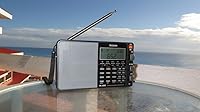
The Tecsun PL880 Portable Shortwave Radio is a natural fit for shortwave hobbyists, DXers, and ham radio enthusiasts who want serious reception capability without hauling around a desktop rig. If you regularly tune SSB transmissions — amateur operators, utility stations, maritime traffic — the 10 Hz fine-tuning resolution and five selectable SSB bandwidth filters are not luxury features; they are the difference between a clean signal and a frustrating warble. Travelers who want one compact device covering AM news, FM stations, and international shortwave broadcasts will find the band coverage genuinely useful across regions. Emergency preparedness planners also benefit, since the PL880 runs on standard AA batteries and covers a wide enough frequency range to stay useful when conventional communications are disrupted. Those upgrading from a basic entry-level portable will notice a meaningful improvement in how the radio handles crowded band conditions and weak distant signals.
Not suitable for:

The Tecsun PL880 Portable Shortwave Radio is not the right tool for casual or first-time radio buyers who simply want something to listen to local AM and FM stations. The menu system and SSB tuning process have a genuine learning curve that can frustrate users who are not already familiar with radio fundamentals. Buyers expecting longwave to be a practical feature in North America will likely be disappointed — active longwave broadcasts are largely a European and Asian reality, not a US one. The price point also places it well above the range of someone looking for a basic travel or bedside radio, and that investment only makes sense if you will actually use the advanced reception features. If physical build consistency is a top priority, a small but notable number of buyers have reported variation between units, so purchasing from a seller with a clear return or exchange policy is worth factoring in.
Specifications

  • Brand: Manufactured by Tecsun, a Chinese electronics company with a long-standing focus on portable radio receivers for hobbyist and enthusiast markets.
  • Model: PL880, a dual conversion portable receiver positioned at the upper tier of Tecsun's consumer shortwave lineup.
  • Dimensions: The unit measures 7.56″ long by 1.3″ wide by 4.45″ tall, making it compact enough for travel bags and backpacks.
  • Weight: At 1.15 pounds, the PL880 is light enough for extended handheld use without becoming fatiguing.
  • Band Coverage: Covers AM (medium wave), FM, longwave, and shortwave bands in a single integrated receiver.
  • Receiver Type: Uses a PLL synthesized dual conversion circuit, which improves interference rejection and signal selectivity compared to single-conversion designs.
  • SSB Reception: Single Side Band reception is supported with a fine-tuning resolution of 10 Hz, allowing precise locking onto SSB transmissions.
  • AM Filters: Four selectable bandwidth filters on AM let users balance audio fidelity against adjacent channel interference based on listening conditions.
  • SSB Filters: Five selectable bandwidth filters on SSB provide granular control over signal clarity when tuning crowded or weak shortwave frequencies.
  • Power Source: Operates on AA batteries (one required) and also supports USB connectivity for continuous power without battery drain.
  • Connectivity: Includes a USB port used for powering the unit, offering a practical option for home or travel use near a power source.
  • Sleep Timer: Built-in sleep timer is adjustable from 0 to 120 minutes, allowing the radio to switch off automatically after a set listening period.
  • Alarm Clock: An integrated alarm clock function is included, adding everyday utility beyond dedicated radio listening.
  • Included Items: Package includes a battery and a possibly included earphone, though earphone inclusion may vary by retailer or shipment batch.
  • Warranty: Backed by a one-year USA warranty, providing reasonable coverage for a product at this price tier.
  • Manufacturer: Tecsun, based in China, serves as both the designer and manufacturer of the PL880 and handles USA warranty support through authorized channels.
  • Tuner Technology: AM and FM tuning is handled via a PLL (Phase-Locked Loop) synthesizer, which delivers stable and repeatable frequency accuracy.
  • Best Sellers Rank: Ranked #55 in Portable Shortwave Radios on Amazon, reflecting consistent long-term demand among hobbyist buyers.

Related Reviews

Retekess TR629 Portable Shortwave Radio
83%
88%
Reception & Signal Quality
83%
Ease of Use
91%
Portability & Design
85%
Recording Function
80%
Battery Life
More
Retekess TR110 Portable Shortwave Radio
83%
88%
Reception Quality
91%
Portability
85%
Battery Life
83%
Ease of Use
89%
Weather Alert Functionality
More
Raddy RE40 Portable Shortwave Radio
83%
88%
Battery Life
91%
Portability
85%
Charging Options
94%
Weather Alerts
62%
Bluetooth Performance
More
Raddy RF75A Portable Shortwave Radio
84%
91%
Reception Quality
70%
Battery Life
95%
Portability
88%
Bluetooth Connectivity
84%
App Control Experience
More
XHDATA D368 Portable Shortwave Radio
74%
84%
FM Reception Quality
71%
Shortwave Reception
58%
AM Reception Quality
66%
Build Quality & Durability
78%
Battery Life
More
QODOSEN DX-286 Portable Shortwave Radio
76%
88%
Reception & Sensitivity
91%
Shortwave Band Performance
79%
AM & FM Everyday Usability
67%
Build Quality & Materials
62%
Battery Life
More
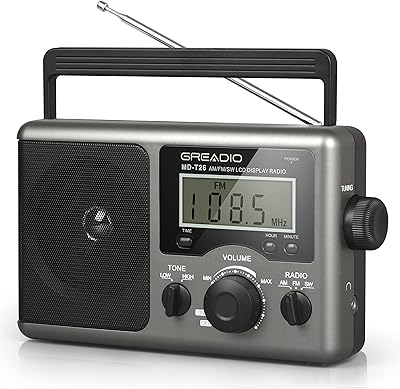
Greadio GR-T26 Portable AM FM Shortwave Radio
77%
93%
Ease of Use
88%
FM Reception
61%
Shortwave Reception
79%
AM Reception
72%
Speaker Quality
More
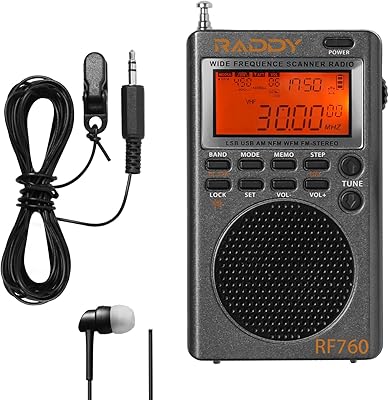
Raddy RF760 Portable Shortwave Radio Receiver
76%
83%
SSB Reception Quality
91%
Band Coverage Breadth
88%
NOAA Weather Alert
89%
Portability & Form Factor
52%
Audio & Speaker Quality
More
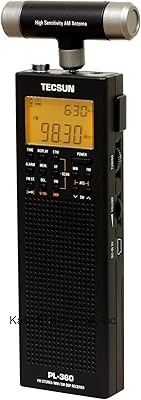
Tecsun PL-360 Portable AM/FM/SW Radio
85%
92%
Portability
85%
Reception Quality (AM/FM/SW)
89%
Ease of Use
84%
Sound Quality
80%
Build Quality
More
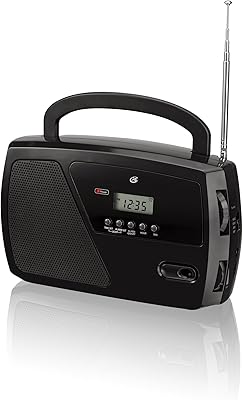
GPX R633B Portable Shortwave AM/FM Clock Radio
71%
83%
Value for Money
61%
Shortwave Reception
77%
AM/FM Performance
86%
Ease of Use
58%
Build Quality
More

FAQ

It depends on your expectations. The Tecsun PL880 Portable Shortwave Radio is a capable and well-regarded receiver, but its SSB tuning and multi-layer menu system have a genuine learning curve. If you are new to shortwave in general, a simpler radio might build your familiarity first. That said, if you are motivated to learn and plan to stick with the hobby, starting here means you will not outgrow it quickly.
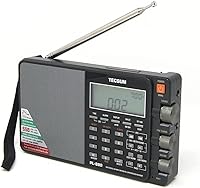
Yes, and this is actually one of its stronger use cases. The SSB reception with 10 Hz tuning steps makes it well-suited for listening to ham radio operators on shortwave bands. You will need patience to dial in SSB signals cleanly, but the five bandwidth filters help considerably once you get the hang of it.

Battery life is serviceable but not exceptional under continuous heavy use, particularly with backlit display and frequent tuning. Many owners find they prefer running the PL880 on USB power at home and reserve battery operation for travel or field use. Keeping a set of quality rechargeable AAs on hand is a practical move.

Honestly, not much. Longwave broadcasts are far more active in Europe and parts of Asia than in North America. For most US-based listeners, it will be a band that rarely sees use. If you are outside the US or specifically interested in longwave navigation beacons, it becomes more relevant.

Yes, this shortwave portable supports an external antenna connection, which can meaningfully improve shortwave reception in locations with high interference or when chasing weak distant signals. Many enthusiasts connect a simple wire antenna stretched outdoors to get noticeably better results than the built-in telescoping whip alone.

The USB connection is primarily for powering the unit directly rather than charging an internal battery pack. The radio uses a removable AA battery, so USB power essentially bypasses battery drain during extended listening sessions rather than recharging the cell in place.

More involved than most people expect. Getting a clean SSB signal requires adjusting both the frequency and the fine-tune knob carefully, and it is easy to end up with a distorted or pitch-shifted voice if the tuning is slightly off. It becomes intuitive with practice, but newcomers should expect a few sessions of trial and error before it clicks.

The built-in speaker is decent for close personal listening and performs well at moderate volumes, but it is not designed to fill a room. At higher volumes, some users report mild distortion. For casual desk or bedside listening it works fine; for louder playback you will get better results with external speakers or earphones.

Most buyers receive a well-built unit, but a small number of users have noted variation in fit, finish, and occasional minor tuning quirks between individual radios. It is not a widespread problem, but it is worth purchasing from a seller who offers a straightforward return or exchange process just in case.

It is a solid travel companion for anyone interested in shortwave listening abroad. The band coverage handles AM and FM in any region, and shortwave lets you pick up international broadcasts regardless of where you are. The compact size and dual power options — battery or USB — make it practical to pack and use across different environments.

Where to Buy