





Overview

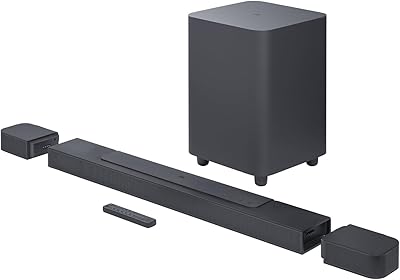
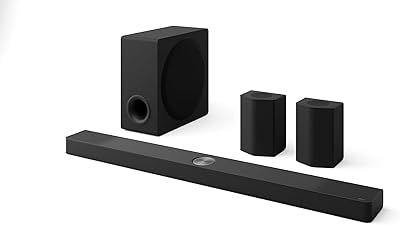
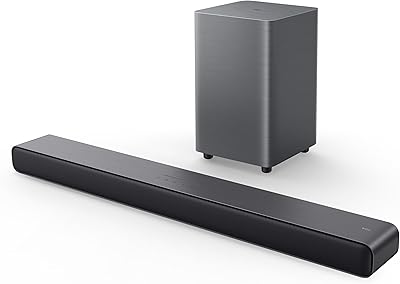
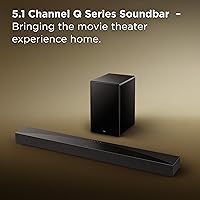
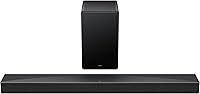
The TCL Q65H 5.1 Channel Soundbar is TCL's attempt to bring real, discrete surround sound to living rooms without the wiring headaches of a traditional home theater setup. Unlike most soundbars that simulate surround through psychoacoustic tricks, this one ships with a wireless subwoofer and two wireless rear speakers in the box — which is genuinely uncommon at this price tier. A single HDMI cable handles both audio and control, so the setup rarely takes more than fifteen minutes. TCL built its reputation on televisions, and that context matters: the audio tuning here leans toward dialogue clarity and cinematic punch rather than audiophile precision. Expectations should be set accordingly — this outperforms any basic soundbar, but it won't challenge dedicated hi-fi systems.

Features & Benefits

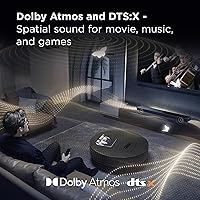
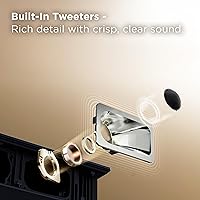
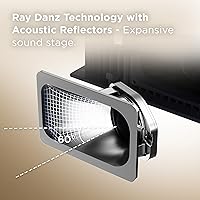
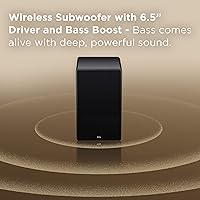
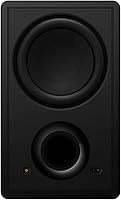
The Q65H setup supports both Dolby Atmos and DTS:X, which in practice means soundtracks mixed with height and spatial information actually expand beyond the front wall rather than just blasting from one direction. TCL's proprietary Ray Danz technology uses angled acoustic reflectors to bounce sound outward, widening the perceived stage — it works noticeably in wider rooms, though results depend heavily on room shape and furniture placement, so don't expect miracles in a small square space. The wireless subwoofer carries real weight in action sequences, and its 6.6-inch driver handles low end without becoming muddy. Having genuine discrete rear speakers — not virtual ones — means dialogue stays anchored to the screen while ambient and effects audio fill the space behind you. Bluetooth and AirPlay round things out for music streaming beyond the TV.

Best For

This 5.1 surround package is a strong fit for anyone tired of straining to hear TV dialogue or feeling like explosions and action scenes fall flat. It's particularly well-suited to apartment dwellers or medium-sized living rooms where running speaker wire isn't practical — the wireless rear units solve that problem without compromise. If you already own a TCL television, the pairing over HDMI ARC is especially clean, with volume and input control passing through one remote. Gamers benefit too, since spatial audio adds directional awareness that matters in competitive or narrative-driven titles. It also doubles as a capable Bluetooth speaker for music, making it more versatile than a TV-only audio upgrade.

User Feedback

With around 147 ratings averaging 4.3 out of 5, early buyer sentiment leans positive, though the pool is still small enough that the overall picture could shift over time. The most consistent praise centers on how quickly and cleanly the system comes together — buyers frequently mention being up and running within minutes. The subwoofer output gets particular attention; many note it hits harder than expected for the package size. On the critical side, some users report that rear speaker volume doesn't always balance cleanly with the main bar, and a handful mention that dialogue can get buried during loud scenes. A few HDMI ARC compatibility hiccups appear in reviews as well. Buyers comparing it to similarly priced single-unit bars generally call the full surround experience worth the tradeoff.

Pros

  • Comes with everything needed for true 5.1 surround right out of the box — soundbar, wireless subwoofer, and two rear speakers.
  • Single HDMI cable setup means most buyers are watching with full surround audio in under twenty minutes.
  • The wireless subwoofer hits harder than its size suggests, adding real weight to action sequences and bass-heavy content.
  • Dolby Atmos and DTS:X decoding brings genuine spatial depth to streamed movies and modern game soundtracks.
  • No speaker wire needed anywhere — the wireless rear units position cleanly behind seating without running cable along baseboards.
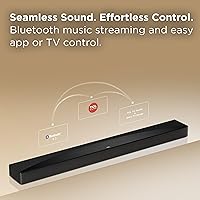
  • Bluetooth and AirPlay support make the Q65H setup genuinely useful as a daily music system, not just a TV accessory.
  • Multiple input options — HDMI ARC, optical, aux, and USB — cover virtually every TV and source device connection scenario.
  • Early buyers consistently highlight setup ease and out-of-box sound quality as the two standout strengths.

Cons

  • Dialogue clarity can suffer during loud action scenes, which frustrates viewers who rely on clear speech reproduction.
  • Balancing rear speaker volume against the main bar takes trial and error — some users report never quite nailing the mix.
  • HDMI ARC pairing can be inconsistent with non-TCL televisions, occasionally requiring reboots or manual troubleshooting to restore sync.
  • Ray Danz soundstage widening is notably room-dependent and less convincing in small or heavily furnished spaces.
  • Wireless rear speakers can occasionally introduce sync delays, most noticeable during fast-cut dialogue or effects-heavy sequences.
  • There is no dedicated companion app, leaving EQ and sound mode adjustments entirely to a basic included remote.
  • Audio tuning leans toward boosted bass and cinematic drama — listeners who prefer a flat, neutral profile may find it overdone.
  • The review base is still relatively modest, so long-term reliability data remains limited compared to more established competing models.

Ratings

These scores for the TCL Q65H 5.1 Channel Soundbar were generated by AI after analyzing verified buyer reviews from global markets, with spam, bot activity, and incentivized submissions actively filtered out. The ratings reflect both the genuine strengths that make this 5.1 surround package stand out at its price point and the real-world limitations that consistently surface in owner feedback. Expect a transparent picture — high-performing categories and persistent pain points are represented equally.

Sound Quality
78%
22%
For casual TV watching and movie nights, the overall audio presentation is a clear step above built-in TV speakers and most entry-level bars. The system handles a wide dynamic range reasonably well, managing quiet dialogue and loud action sequences without feeling overwhelmed. Buyers stepping up from basic setups consistently describe it as a substantial improvement.
The audio tuning skews toward boosted bass and cinematic drama, which means listeners who prefer a neutral or flat sound profile may find the overall mix somewhat colored. At its price tier, it cannot match the resolution and precision of premium soundbars, and audiophile-level stereo music listening will reveal its limitations clearly.
Bass Performance
84%
The wireless subwoofer is consistently one of the most praised aspects of this package, with buyers describing its output as surprisingly punchy for the system's size and price. Action films, thriller soundtracks, and bass-heavy electronic music all benefit noticeably, and the wireless connection means you can position it wherever it sounds best in the room.
Apartment dwellers and those in noise-sensitive buildings may find the subwoofer's output hard to tame at higher volumes, with bass transmitting through floors and shared walls. A portion of users also note that the subwoofer can feel slightly boomy or overemphasized relative to the rest of the mix when running at default settings.
Setup & Installation
88%
Buyers consistently highlight setup as one of the strongest points of this system — most report being fully operational with surround sound active within fifteen to twenty minutes. The single HDMI cable approach eliminates the usual tangle of connections, and the wireless rear speakers and subwoofer pair to the soundbar with minimal fuss in the majority of cases.
A segment of users — particularly those with non-TCL televisions — has encountered HDMI ARC compatibility issues that required reboots or manual troubleshooting before the system would function correctly. Occasionally, the wireless speaker pairing does not complete automatically, which can be confusing for first-time soundbar buyers expecting a fully plug-and-play experience.
Value for Money
86%
Getting a true wireless 5.1 system — soundbar, subwoofer, and rear speakers — at this price point is genuinely uncommon. Buyers comparing it to alternatives frequently note that the Q65H setup delivers more hardware and real-world capability per dollar than most competing packages. For first-time surround buyers, the all-in value is compelling.
Users who prioritize long-term reliability may want to note that the review pool is still relatively modest, so the durability track record is not yet fully established. Buyers who later want to expand or upgrade individual components will find that the system is not part of a modular ecosystem with clear standalone upgrade paths.
Dialogue Clarity
63%
37%
Under normal TV watching conditions at moderate volumes, dialogue is generally audible and reasonably well separated from background music and effects. The system's tuning favors cinematic audio, which means speech in drama series and news content tends to come through clearly enough for comfortable everyday viewing.
During loud action sequences, explosions, and effects-heavy soundtracks, dialogue can get buried — a recurring complaint among buyers who watch action films or game with the system at higher volumes. Older users and those sensitive to speech clarity have flagged this as a consistent frustration, particularly when the subwoofer and rear channels run at default output levels.
Surround Sound Immersion
81%
19%
Having physically separate rear speakers rather than digitally simulated surround makes a genuine, audible difference during movie watching and gaming — effects that pass behind the listener actually feel like they originate from behind the viewer. Buyers previously familiar with wired surround systems report that the immersion holds up favorably at this price tier.
Balancing the rear speaker volume against the main soundbar takes some experimentation, and a portion of users report that the default mix leaves the rears either too prominent or too quiet relative to the front channels. The lack of a companion app means these adjustments can only be made via the included remote, which limits fine-tuning precision.
Build Quality
72%
28%
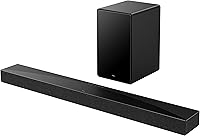
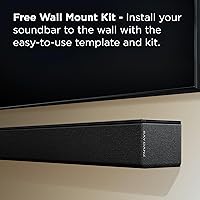
The soundbar has a clean, black rectangular profile that integrates unobtrusively with most TV setups, and the physical construction feels solid enough for standard shelf or wall placement. The included wall mount kit is a welcome addition that spares buyers the extra cost of sourcing a third-party bracket.
At this price tier, the materials are functional rather than premium — the enclosure is predominantly plastic rather than fabric-wrapped or metal-trimmed as found on higher-end bars. The remote also feels utilitarian rather than refined, and there are no dedicated tactile shortcuts for commonly adjusted settings like dialogue enhancement or bass level.
Connectivity
83%
The combination of HDMI ARC, optical, auxiliary, USB, Bluetooth, and AirPlay covers virtually every connection scenario a typical home setup might require. Whether routing audio from a streaming stick, a games console, or a laptop, there is almost certainly an input that works without adapters or additional hardware.
The HDMI port is standard ARC rather than eARC, which limits the ability to pass lossless audio formats from Blu-ray players and certain high-end streaming devices. Users who rely on Bluetooth exclusively should also know that Bluetooth audio is limited to compressed formats, so lossless streaming from a phone is not possible over that connection.
Remote & Controls
61%
39%
The remote is straightforward to learn and covers the basic functions buyers use most — volume, input switching, sound modes, and power — without requiring a complicated menu structure. For TCL TV owners, HDMI ARC passthrough means the TV remote can also control soundbar volume, reducing the number of remotes in rotation.
There is no companion app for sound customization, meaning EQ adjustments, bass level tweaks, and rear speaker balance changes all go through a basic infrared remote with limited visual feedback. Users accustomed to app-based sound systems will find this noticeably restrictive, and the absence of on-device display indicators makes it harder to confirm which mode is currently active.
Wireless Reliability
74%
26%
The majority of buyers report stable wireless connections between the soundbar, subwoofer, and rear speakers under typical home conditions, with no dropped audio or noticeable interference during regular TV watching sessions. In open-plan living rooms with clean wireless environments, the connection tends to be dependable across extended use.
A portion of users have reported occasional wireless sync hiccups — brief dropouts or latency moments — particularly in homes with dense wireless environments and multiple competing devices. For users sensitive to any latency in fast-cut scenes or precision gaming, the wireless rear channel connection introduces a variable that a wired system would not.
Music Streaming
77%
23%
Bluetooth and AirPlay support make this 5.1 surround package a capable everyday music speaker without needing the TV on at all. AirPlay in particular adds meaningful convenience for Apple device households, enabling higher-quality wireless playback from iPhones and Macs without the compression associated with standard Bluetooth connections.
The audio tuning, optimized for cinematic TV content, translates less naturally to stereo music — the bass-forward character can feel heavy-handed with acoustic, jazz, or vocal-led recordings. There is also no multi-room audio support or integration with streaming service apps running natively through the soundbar itself.
Gaming Performance
79%
21%
For console and PC gamers, discrete 5.1 surround from physical rear speakers adds genuine positional audio benefit — hearing footsteps or vehicles approaching from behind is noticeably more convincing than a simulated surround bar can deliver. Dolby Atmos-enabled game titles also benefit meaningfully from the system's spatial audio decoding.
The wireless rear speaker connection introduces a small latency risk that can be noticeable in rhythm or music-based game genres where audio sync precision is critical. Competitive gamers who rely on fine-grained directional audio cues at the highest level may still prefer a dedicated gaming headset for those specific sessions.
Soundstage Width
76%
24%
Ray Danz acoustic reflectors produce a wider, more open front soundstage than a conventional forward-firing soundbar, making cinematic scores and TV audio feel less confined to the area directly in front of the screen. In a well-proportioned living room, the lateral spread is genuinely noticeable from the primary seating position.
The effect is heavily dependent on room acoustics — in smaller spaces, heavily furnished rooms, or non-symmetrical wall layouts, reflected sound loses much of its benefit. Ray Danz is also a proprietary technology with limited independent verification, so real-world results will vary more than the specification description implies.
TV Compatibility
71%
29%
The range of supported connection types — HDMI ARC, optical, and auxiliary — means this TCL soundbar system will work with the vast majority of televisions in current use, regardless of brand or age. Optical as a fallback is particularly useful for older TV models that lack HDMI ARC support entirely.
A meaningful subset of users with non-TCL televisions has reported HDMI ARC handshake issues — most resolve with a reboot or by adjusting ARC settings in the TV menu, but it adds friction to what should be a straightforward connection. Full remote passthrough and auto-power behaviors are also more reliable when the soundbar is paired with a TCL television.

Suitable for:

The TCL Q65H 5.1 Channel Soundbar is built for the kind of buyer who wants a noticeable audio upgrade without tearing up walls or deciphering a receiver manual. It's a natural choice for renters and apartment dwellers in particular, since the wireless subwoofer and included rear surround speakers mean you get genuine 5.1 placement with zero cable runs across the floor. If you already own a TCL television, the HDMI ARC integration makes this an especially frictionless pairing — one cable, one remote, done. Casual movie viewers, binge-watchers, and gamers who want spatial audio without a specialist setup will find this system hits a practical sweet spot. It also works well for households that frequently stream music via Bluetooth or AirPlay, since it functions as a capable whole-room audio solution well beyond TV duty.

Not suitable for:

The TCL Q65H 5.1 Channel Soundbar will leave dedicated audiophiles wanting more — the audio tuning is optimized for cinematic impact rather than the tonal neutrality and precision that serious listeners expect. If your priority is high-resolution audio fidelity, accurate stereo imaging, or the low-distortion output that premium separates deliver, this system won't satisfy those demands. Buyers with large or acoustically complex rooms should also temper expectations, as the Ray Danz reflector technology performs best in open mid-sized spaces and its effectiveness varies considerably with room layout and furnishings. Anyone pairing this with a non-TCL television should verify HDMI ARC compatibility first, since a portion of users have flagged intermittent handshake issues. If wireless audio latency is a firm dealbreaker — for musicians or rhythm-game enthusiasts, for instance — the wireless rear speaker connection warrants scrutiny before purchase.

Specifications

  • Channel Config: The system delivers true 5.1 surround sound using a dedicated soundbar, a wireless subwoofer, and two wireless rear surround speakers operating as discrete channels.
  • Total Power: Combined system output across all channels reaches 181 watts.
  • Soundbar Size: The main soundbar measures 41.5″ wide, 4.86″ tall, and 2.68″ deep.
  • Item Weight: The soundbar unit weighs 9.3 pounds, making it practical for both shelf placement and wall mounting.
  • Subwoofer Driver: The wireless subwoofer uses a 6.6-inch dynamic driver to reproduce low-frequency bass content.
  • Audio Formats: The system decodes both Dolby Atmos and DTS:X for spatial and object-based audio playback from compatible sources.
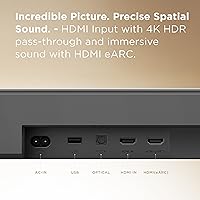
  • Wired Inputs: Wired connectivity includes HDMI ARC, optical, auxiliary (3.5mm), and USB inputs to accommodate a range of source devices.
  • Wireless: Both Bluetooth and AirPlay are supported for wireless audio streaming from compatible phones, tablets, and computers.
  • Subwoofer Link: The subwoofer connects to the soundbar wirelessly, eliminating any interconnect cable between the two units.
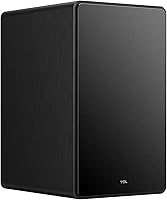
  • Rear Speakers: Two wireless surround speakers are included in the box and designed for placement behind the primary listening position to create genuine rear channels.
  • Proprietary Tech: Ray Danz technology uses integrated acoustic reflectors to disperse sound laterally, widening the perceived soundstage beyond the physical width of the soundbar.
  • Control: The system is operated via the included infrared remote, which requires two AAA batteries (provided in the box).
  • In-Box Contents: The package includes the soundbar, wireless subwoofer, two wireless rear speakers, one HDMI cable, one power cord, a remote with batteries, and a wall installation kit.
  • Mounting: The soundbar supports both floor-standing and wall-mounted installation, with the required wall mount hardware included.
  • Power Source: The system runs on 120-volt AC power via a corded electric connection.
  • Color: The soundbar, subwoofer, and both rear speakers are finished in black.
  • Warranty: TCL covers this product under a limited warranty; buyers should verify the current terms and duration directly with TCL at the time of purchase.

Related Reviews
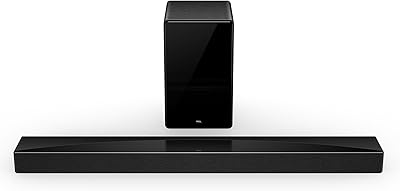
TCL Q75H 5.1.2 Channel Soundbar
76%
78%
Sound Quality
67%
Atmos Performance
82%
Subwoofer Integration
86%
Dialogue Clarity
93%
Setup Experience
More
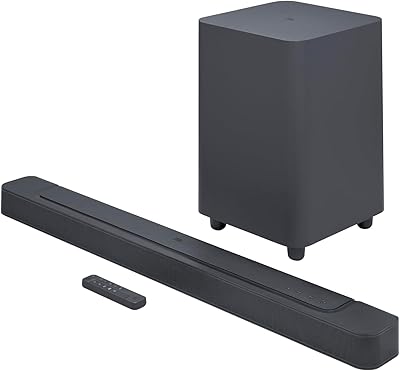
JBL Bar 500
JBL Bar 500
81%
88%
Sound Quality
91%
Bass Performance
86%
Dialogue Clarity
93%
Streaming & Connectivity
89%
Setup & Installation
More
JBL Bar 700 5.1-Channel Soundbar
80%
91%
Surround Sound Immersion
88%
Bass Performance
93%
Detachable Speaker Design
67%
App & Setup Experience
82%
Dolby Atmos Performance
More
LG S95TR Soundbar
LG S95TR Soundbar
81%
93%
Surround Sound Immersion
89%
Dialogue Clarity
88%
Wireless Setup & Cable Management
91%
LG Ecosystem Integration
76%
Subwoofer Performance
More
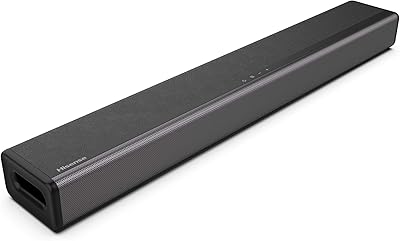
LG S70TY 3.1.1-Channel Soundbar
80%
91%
Dialogue Clarity
83%
Dolby Atmos Performance
67%
Bass & Subwoofer Output
93%
LG Ecosystem Integration
89%
Ease of Setup
More
Hisense HS214 2.1ch Soundbar
72%
74%
Sound Quality
58%
Bass Performance
81%
Dialogue Clarity
88%
Setup & Connectivity
79%
Value for Money
More
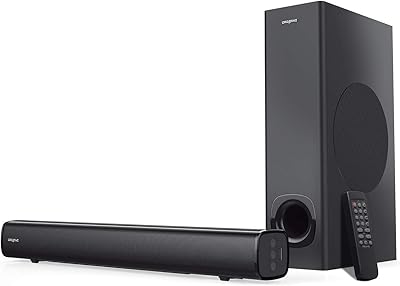
Creative Stage 2.1 Soundbar
78%
84%
Bass & Low-End Performance
73%
Audio Clarity & Midrange
91%
Connectivity & Input Range
86%
TV ARC Reliability
67%
Bluetooth Performance
More
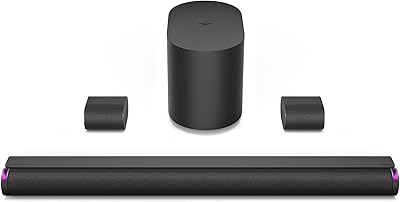
TCL S55H 2.1 Channel Soundbar
80%
88%
Bass Performance
91%
Value for Money
67%
Dialogue Clarity
72%
Spatial Audio (Atmos & DTS)
94%
Setup & Installation
More
VIZIO Elevate SE SL512X 5.1.2 Soundbar
75%
86%
Dolby Atmos Performance
83%
Surround Sound Immersion
71%
Subwoofer Bass Quality
88%
Build Quality & Design
81%
Setup & Installation
More
Pyle PSBV28HB 2.1 Channel Soundbar with Subwoofer
67%
74%
Value for Money
78%
Bass Performance
83%
Setup & Installation
71%
Connectivity Range
63%
Audio Clarity
More

FAQ

It works with any TV that has an HDMI ARC port, an optical output, or a 3.5mm auxiliary jack, so compatibility is broad. That said, pairing it with a TCL television tends to be the smoothest experience, since TCL optimizes HDMI ARC handshaking and remote passthrough for its own products. A portion of users have reported occasional sync hiccups with televisions from other brands, so confirming your TV model supports standard ARC before buying is a sensible precaution.

No — this is a genuinely all-in-one package. The box includes the soundbar, wireless subwoofer, two wireless rear speakers, an HDMI cable, and a wall mount kit, so you should be up and running without any additional purchases.

In most cases, the rear speakers pair to the soundbar automatically on first power-on without any manual configuration. Placement is flexible since there are no cables to route — a shelf, speaker stand, or side table behind your seating position all work well. Some users have noted needing to manually trigger pairing if auto-connection does not register on the first attempt, but this appears to be the exception rather than the rule based on available reports.

This is a legitimate concern. The subwoofer delivers noticeably more low-end output than entry-level bars, and at higher volume levels some bass will transmit through floors and shared walls. Running it at moderate levels is generally manageable in apartments, but positioning the subwoofer away from shared walls and keeping the bass level dialed back during late hours will help minimize any impact on neighbors.

Yes — Bluetooth and AirPlay both operate independently of any TV connection, so you can stream directly from a phone, tablet, or laptop without involving the TV at all. This makes the Q65H setup a reasonable option as a primary room speaker for everyday music listening, not just TV audio.

Based on the product specifications, the soundbar uses standard HDMI ARC rather than eARC. This means it handles the compressed Dolby Atmos streams you get from most streaming services without issue, but passing lossless Atmos from a 4K Blu-ray player over HDMI would require eARC, which this system does not support. For Blu-ray users in that situation, the optical input can serve as a practical fallback for standard surround formats.

Not in the traditional sense. Atmos on this system is delivered through Ray Danz beam-shaping and the soundbar's spatial processing rather than through physical upward-firing drivers, so there are no true height channels. What you do get is a noticeably wider, more enveloping presentation compared to a standard soundbar — Atmos-mixed content sounds more spacious and dimensional. Just keep in mind that the ceiling-bounce overhead effect you would get from a dedicated Atmos tower or upward-firing bar is not replicated here.

Ray Danz uses angled reflectors inside the soundbar to scatter sound toward the sides of the room rather than projecting it solely forward, which widens the perceived front soundstage. It works most noticeably in open, medium-sized rooms where the reflected sound has room to spread. In smaller spaces or rooms with a lot of soft furnishings, the effect is more subtle. It is a genuine improvement over conventional soundbar dispersion, but the honest framing is that it widens the front stage — it is not a substitute for physically placed side or height speakers.

As of the current product specifications, there is no dedicated companion app — all adjustments go through the included remote. This is one of the more common observations from buyers who want finer control over sound modes or EQ curves. If granular audio customization is a priority for you, that limitation is worth factoring into your decision before purchasing.

The core argument for this 5.1 surround package over a single-unit bar at the same price is that you get physically separated rear channels rather than digitally simulated surround — and that difference is real and audible. Most soundbar-only options at this tier use processing tricks to create the impression of rear sound, which rarely convinces the ear the way an actual speaker behind you does. The tradeoff is that managing three wireless components adds a bit more setup complexity, and wireless audio introduces a small potential for sync inconsistency that a simpler single-unit bar avoids entirely.

Where to Buy