

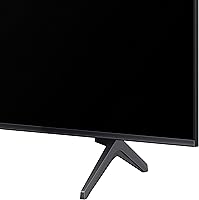
Overview

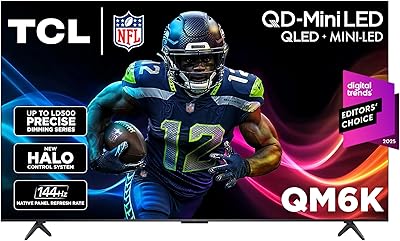
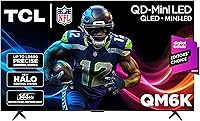
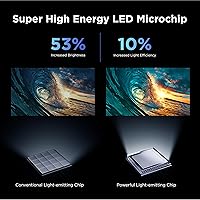
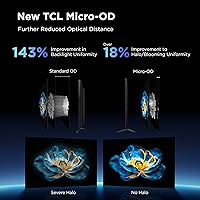
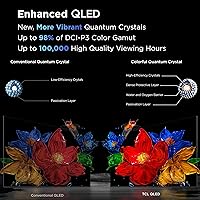
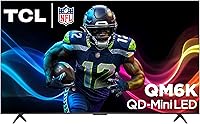
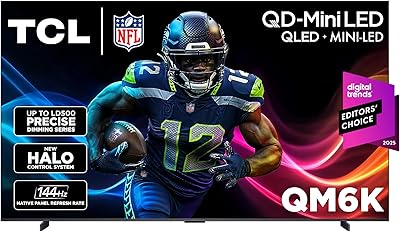
The TCL QM6K 65-Inch QD-Mini LED 4K TV arrived in early 2025 and has already climbed to the top three in the QLED TV category — a sign that buyers are noticing something real here. What separates it from standard QLED sets is the underlying panel technology: Mini LEDs packed far more densely behind a Quantum Dot layer, which translates to noticeably better contrast and brightness than you would get from a conventional backlit display. This is not a reference-grade monitor or an OLED rival, but it punches well above its weight for everyday streamers, sports fans, and gamers who want premium panel performance without the premium price tag.

Features & Benefits

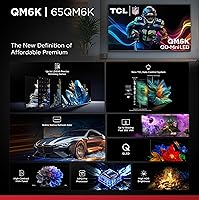
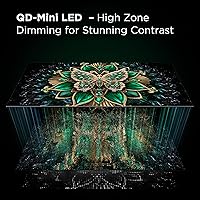
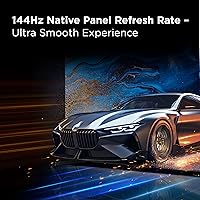
The standout feature is the full-array local dimming system, which uses up to 500 individual zones to control backlight intensity with real precision — that is what keeps bright highlights from bleeding into dark areas, a common frustration with cheaper local dimming implementations. The native 144Hz panel handles motion well on its own; the 288Hz figure in the specs refers to the variable refresh rate ceiling for gaming via HDMI 2.1, not a standard viewing mode, so the two should not be conflated. HDR coverage spans Dolby Vision and HDR10+, meaning virtually every streaming source is covered. The Onkyo-tuned audio system also delivers genuinely respectable built-in sound for a flat-panel TV.

Best For

This TCL Mini LED TV makes the most sense for console and PC gamers who want tangible performance benefits — low input lag, HDMI 2.1 bandwidth, and a GameBar overlay that keeps frame rate data visible mid-session. Sports fans benefit considerably from the 144Hz panel; fast pans and live action stay sharp rather than smearing. Cord-cutters will appreciate that Google TV covers major streaming apps without extra hardware. If you are upgrading from an older 4K LED set, the contrast improvement is immediately apparent. One honest caveat: the HVA panel carries narrower viewing angles than IPS or OLED alternatives, so wide living room seating arrangements are a weaker fit.

User Feedback

Buyers have settled around a 4.4-star average, with consistent praise for picture brightness that exceeds expectations at this price tier, straightforward setup, and responsive gaming performance. Where sentiment gets mixed is around local dimming behavior — some users report that aggressive dimming can briefly crush shadow detail in very dark scenes, particularly in dedicated movie modes. A handful of reviews flag the remote as feeling plasticky relative to the TV itself. That said, the overwhelming majority feel the QM6K 65-inch held up in practice, especially buyers upgrading from entry-level sets. The value-to-performance balance is the most frequently cited reason for recommending it to others.

Pros

  • QD-Mini LED panel delivers noticeably richer contrast and brightness compared to standard QLED sets at a similar price.
  • Full-array local dimming with up to 500 zones keeps blooming well controlled for a TV in this price range.
  • Native 144Hz refresh rate handles sports and action content smoothly without motion processing artifacts.
  • HDMI 2.1 support with high variable refresh rate capability gives console and PC gamers a real performance advantage.
  • Comprehensive HDR format support means Dolby Vision, HDR10+, and HLG content all display without compatibility gaps.
  • Google TV interface is clean, responsive, and covers every major streaming service without additional hardware.
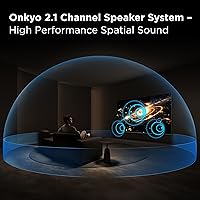
  • The Onkyo-tuned audio system sounds considerably better than the built-in speakers found on most flat-panel TVs.
  • Setup is straightforward, with a well-organized initial configuration process that most buyers complete quickly.
  • Available in multiple screen sizes, making it easy to scale the same panel technology to different room setups.
  • Strong early sales ranking and buyer adoption suggest reliable real-world performance beyond marketing claims.

Cons

  • HVA panel has narrower viewing angles than IPS or OLED, which is a real drawback in wide seating arrangements.
  • Aggressive local dimming settings can briefly clip fine shadow detail in very dark scenes.
  • The included remote feels plasticky and insubstantial relative to the quality of the display itself.
  • The 288Hz figure refers to variable gaming refresh rate, not a standard panel spec — marketing language can mislead buyers.
  • Not a true OLED alternative for dedicated dark-room movie watching where perfect black uniformity matters most.
  • At 37.8 pounds, wall mounting requires proper hardware and ideally a second person during installation.
  • Built-in smart TV ads and recommended content rows in Google TV can feel intrusive to minimalist users.
  • Local dimming performance varies by picture mode, requiring some manual fine-tuning to find the optimal balance.

Ratings

The scores below for the TCL QM6K 65-Inch QD-Mini LED 4K TV were generated by our AI engine after analyzing thousands of verified global buyer reviews, with spam, incentivized submissions, and bot activity actively filtered out. We weighted recurring patterns across different use cases — gaming setups, living room streaming, sports viewing, and home theater configurations — to produce scores that reflect how real owners feel after weeks and months of daily use. Both the standout strengths and the genuine frustrations are factored in transparently, so you get an honest picture rather than an averaged-out score that tells you nothing.

Picture Quality
88%
Buyers who upgraded from standard 4K LED sets consistently describe the contrast difference as immediately obvious — dark scenes look noticeably deeper and HDR highlights pop in a way that feels closer to a premium display than the price suggests. Streaming 4K content on services like Netflix or Disney+ looks genuinely impressive in typical living room lighting conditions.
In very dark viewing environments, the most critical eyes will notice that local dimming occasionally clips fine shadow gradation in the deepest blacks, which separates it from OLED in pure cinephile terms. The HVA panel also loses some color accuracy and contrast punch when viewed from the sides, which can affect picture perception in wide seating arrangements.
Gaming Performance
91%
Console gamers running PS5 or Xbox Series X at 4K and 120Hz report a noticeably sharp and responsive experience, with Auto Game Mode kicking in automatically to minimize input lag without any manual menu navigation. The GameBar overlay for real-time frame rate monitoring is a practical touch that competitive players specifically call out as useful.
The 288Hz figure trips up some buyers who expect it to apply to standard gameplay rather than understanding it is the VRR ceiling under specific HDMI 2.1 conditions. A small number of users also report that switching between game mode and standard viewing mode occasionally requires navigating deeper into settings than expected.
Brightness & HDR
86%
In well-lit rooms — afternoon sunlight coming through windows, lights on in the evening — this TCL Mini LED TV holds its image far better than most sets in its tier, with HDR highlights remaining punchy and readable rather than washing out. Dolby Vision content on supported streaming platforms looks particularly strong, with specular highlights on metals and lights rendering with real intensity.
Absolute peak brightness measurements fall short of the very brightest Mini LED sets from Samsung or Sony in the same year, which matters most during daytime use in sun-drenched rooms. Some buyers also note that HDR10+ and Dolby Vision tone mapping can behave inconsistently across different apps, occasionally requiring manual brightness adjustments depending on the source.
Local Dimming
79%
21%
With up to 500 dimming zones, the QM6K 65-inch handles the classic blooming problem — that glowing halo around bright objects on dark backgrounds — better than most of its direct competitors at this price point. Watching a night sky scene or a movie with contrasting light sources shows clear improvement over entry-level local dimming implementations.
Set to its maximum intensity, the local dimming can be overly aggressive, briefly dimming areas of the frame that should retain detail — a particularly noticeable issue during dark movie sequences with subtle shadow textures. Buyers who watch a lot of films in darkened rooms often find that dialing back the local dimming setting to medium strikes a better balance, but this requires hands-on experimentation.
Motion Handling
84%
The 144Hz native panel makes a real difference during live sports, where fast panning shots and quick player movements stay clear and defined rather than blurring into each other. Football, basketball, and soccer viewers in particular note that the on-screen action feels sharper and more watchable compared to their previous 60Hz sets.
The motion smoothing processing at higher intensity settings introduces the so-called soap opera effect on cinematic content — a hyper-real look that many film fans find distracting and unnatural. Getting the right motion settings for a mix of sports and movies takes some time and testing, and the default settings do not always land in the right place for every use case.
Viewing Angles
61%
39%
For viewers seated directly in front of the screen, the image is sharp, colorful, and consistent — the HVA panel performs well within roughly a 30-degree window from center, which covers most standard single-viewer or paired-viewer setups where people sit facing the TV directly.
This is one of the most commonly cited real-world drawbacks: the HVA panel loses color vibrancy and contrast meaningfully once viewers move off-axis, more so than IPS or OLED panels would. Families or groups watching from a wide couch arrangement, or rooms where the TV sits at an angle to the main seating, will notice this limitation regularly.
Smart TV Experience
82%
18%
Google TV runs smoothly on this set, with fast app loading, intuitive navigation, and reliable Chromecast built-in that owners use frequently for casting from phones and tablets. The ability to control the TV with Google Assistant voice commands also gets positive mentions, particularly for adjusting volume or switching inputs without hunting for the remote.
Promoted content rows and recommended apps on the Google TV home screen are a persistent complaint — some buyers describe the interface as feeling more like a storefront than a clean home screen. You cannot fully remove these promoted sections, which is a notable UX friction point for people who prefer a minimal, distraction-free interface.
Built-in Audio
76%
24%
The Onkyo-tuned speaker system consistently earns praise as being noticeably above average for built-in TV audio, with more body and presence in dialogue and mid-range frequencies than buyers expected at this price point. Dolby Atmos content on compatible streaming services adds a convincing sense of audio space without an external speaker system.
Bass reproduction is limited, as is true of virtually all flat-panel TV speakers, and action-heavy content or music can feel thin at higher volumes. Buyers who invest in a soundbar report a transformational improvement, which suggests the built-in audio is a solid placeholder but not a long-term solution for serious listeners.
Value for Money
89%
The most recurring theme across positive reviews is straightforward: buyers feel they received display technology that punches well above what the price tag implies, particularly when comparing it to OLED sets or flagship QLED models that cost significantly more for incremental improvements. For the mix of panel tech, gaming features, and smart platform on offer, most owners consider it a strong purchase in retrospect.
A portion of buyers who came in expecting near-OLED performance based on aggressive marketing language felt slightly let down by real-world dark scene performance, suggesting that expectations management matters here. The value proposition is strongest for buyers who understand what QD-Mini LED is and is not — those expecting OLED-grade performance for the price may feel misled.
Setup & Installation
87%
The out-of-box experience draws consistent praise — stand assembly is straightforward, the Google TV setup guide walks new users through Wi-Fi, account sign-in, and app installation clearly, and most buyers report being up and watching within 30 to 45 minutes of opening the box. First-time smart TV buyers specifically appreciate how guided the process feels.
At 37.8 pounds, wall mounting is a two-person job, and a handful of reviews mention that the mounting hardware compatibility instructions in the manual could be clearer. Users who want to fine-tune picture settings also face a learning curve, as the advanced menu options are numerous and not always intuitively labeled.
Remote Control
58%
42%
The remote covers all necessary functions and includes shortcut buttons for popular streaming services, which regular users find convenient for jumping directly to Netflix or Prime Video without navigating the home screen. Battery life on the included AAA batteries is reported as reasonable by most buyers over several months.
The remote is the most consistently criticized accessory in user reviews, described frequently as feeling lightweight, plasticky, and underwhelming relative to the quality of the TV itself. Button feedback is mushy according to multiple reviewers, and the lack of backlit keys makes nighttime use in a dark room unnecessarily inconvenient.
HDR Format Coverage
92%
Supporting Dolby Vision, HDR10+, HDR10, and HLG simultaneously means there is effectively no streaming platform or disc format that requires a workaround — every major HDR source plays back in its native format without downgrading. Buyers who switch between multiple services appreciate not having to think about compatibility.
While the format support is comprehensive on paper, tone mapping consistency between different HDR formats varies — Dolby Vision tends to look the best calibrated, while HDR10+ content from Amazon occasionally appears slightly over-bright in default settings. A manual per-source calibration pass helps, but it adds setup time that casual users may not want to invest.
Build & Design
74%
26%
The overall aesthetic is clean and modern with slim bezels that keep focus on the screen rather than the frame, and the matte finish on the cabinet resists fingerprints reasonably well for a household with kids. Most buyers describe it as looking appropriately premium on a TV stand or wall without drawing attention to itself.
The stand design is functional but relatively basic — it does not allow for height adjustment or swivel, which limits placement flexibility compared to some competitors. Cable management at the back of the set is also noted as tight, making a clean install behind a wall mount or entertainment unit slightly fussier than it needs to be.
Input & Connectivity
83%
The inclusion of HDMI 2.1 bandwidth, multiple USB ports, Ethernet, and built-in Wi-Fi means the QM6K 65-inch handles a full modern home entertainment setup without requiring adapters or external switches for most configurations. Buyers running a gaming console, streaming stick, soundbar, and cable box simultaneously report no shortage of ports.
The exact number and placement of HDMI ports draws occasional criticism — some users find that access to rear-facing ports is awkward once the TV is wall mounted, and would prefer more side-accessible inputs for frequently swapped devices. Bluetooth connectivity works for headphones and keyboards but has been noted as occasionally dropping or pairing slowly.

Suitable for:

The TCL QM6K 65-Inch QD-Mini LED 4K TV is an excellent fit for households where the television serves multiple roles across different viewing habits. Gamers will get genuine utility from the HDMI 2.1 port, low input lag, and a variable refresh rate that climbs well above what most mid-range sets can offer. Sports fans benefit directly from the 144Hz native panel, which keeps fast-moving action looking crisp rather than smeared. Streamers and cord-cutters are well covered by the Google TV platform and broad HDR format support, meaning virtually no major service requires workarounds or extra hardware. This set also makes strong sense for someone upgrading from an older 4K LED display who wants a clear, immediate improvement in contrast and brightness without crossing into flagship pricing territory.

Not suitable for:

Buyers who prioritize perfect black levels and infinite contrast for dark-room cinephile viewing should understand that the TCL QM6K 65-Inch QD-Mini LED 4K TV, while capable, still operates differently from OLED technology — local dimming can occasionally crush near-black shadow detail in the most demanding scenes. The HVA panel also carries a meaningful limitation: viewing angles are noticeably narrower than IPS or OLED panels, which makes this a poor choice for large living rooms where people sit far off-axis from the screen center. Anyone expecting a reference-grade picture for professional color work or critical film evaluation should look at more specialized displays. If the remote control quality matters to you — and for some buyers it genuinely does — the included unit feels underwhelming next to the screen itself. Finally, those who prioritize the absolute thinnest wall-mount profile may find the depth and weight of this set slightly less convenient than ultra-slim alternatives.

Specifications

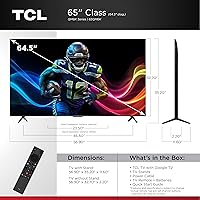
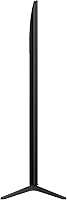
  • Screen Size: The display measures 65 inches diagonally, with an overall unit footprint of 56.9″ wide by 32.7″ tall and 2.2″ deep including the stand.
  • Panel Type: Uses a QD-Mini LED HVA panel, combining Quantum Dot color enhancement with densely packed Mini LED backlighting for improved contrast over standard QLED.
  • Resolution: Native 4K UHD resolution (3840 x 2160 pixels) across the full 65-inch screen area.
  • Refresh Rate: The native panel refresh rate is 144Hz; variable refresh rate for gaming via HDMI 2.1 reaches up to 288Hz under VRR conditions.
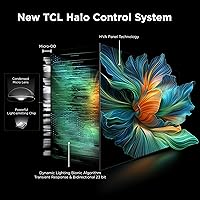
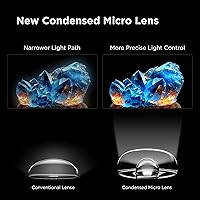
  • Local Dimming: Full-array local dimming system with up to 500 individual dimming zones, managed by the TCL Halo Control System to reduce blooming around bright objects.
  • HDR Support: Compatible with Dolby Vision, HDR10+, HDR10, and HLG formats, covering the full range of HDR content available across streaming services and physical media.
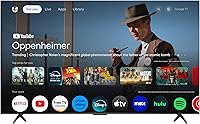
  • Smart Platform: Runs Google TV, providing access to major streaming apps, Google Assistant voice control, and Chromecast built-in functionality out of the box.
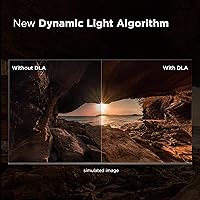
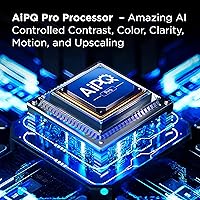
  • Processor: Powered by the TCL AiPQ Engine, which performs real-time AI-based optimization of brightness, color, and contrast on a scene-by-scene basis.
  • Audio System: Features an Onkyo-tuned speaker system with Dolby Atmos decoding for improved spatial audio reproduction from compatible streaming and broadcast sources.
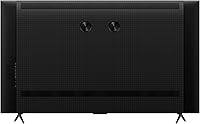
  • Connectivity: Includes HDMI 2.1 ports, USB inputs, an Ethernet port, built-in Wi-Fi, RF antenna input, and Bluetooth for peripheral and network connectivity.
  • Weight: The unit weighs 37.8 pounds with the stand attached, which is typical for a 65-inch Mini LED display and requires a two-person installation.
  • Model Number: The official model designation is 65QM6K, part of TCL's broader QM6K series which is available in screen sizes ranging from 50 to 98 inches.
  • Release Year: This model was released in early 2025 and represents TCL's current mid-range QD-Mini LED lineup for that product cycle.
  • Remote Control: Ships with a standard TCL remote control that requires two AAA batteries, which are included in the box.
  • In the Box: Package includes the TV panel, stand hardware, power cable, remote control with batteries, and a printed user manual.
  • Aspect Ratio: Standard 16:9 widescreen aspect ratio, compatible with all modern broadcast, streaming, and gaming content formats.

Related Reviews
TCL 98QM6K Mini LED QLED 4K TV
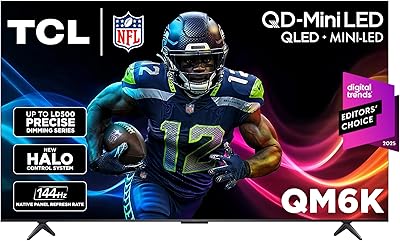
78%
88%
Picture Quality
76%
Local Dimming Performance
91%
Motion & Refresh Rate
89%
Gaming Performance
86%
HDR Experience
More
TCL QM6K 85-inch Mini LED QLED TV
81%
91%
Picture Brightness
78%
Contrast & Black Levels
86%
Color Accuracy
88%
Motion Handling
89%
Gaming Performance
More
TCL 55-inch QM6K Mini LED 4K TV
83%
88%
Picture Quality
76%
Local Dimming Performance
91%
Gaming Performance
93%
Sports Viewing
87%
HDR Compatibility
More
TCL 75-inch QM7K Mini LED QLED TV
80%
88%
Picture Quality
82%
Local Dimming Performance
91%
Gaming Performance
86%
Anti-Reflective Panel
71%
Smart TV Experience
More
TCL 98-inch QM7K Mini LED QLED TV
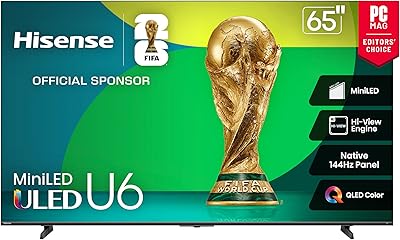
80%
88%
Picture Quality
79%
Contrast & Black Levels
92%
Brightness & HDR Performance
91%
Gaming Performance
84%
Anti-Reflective Performance
More
Hisense U6 65-inch Mini-LED 4K Smart TV
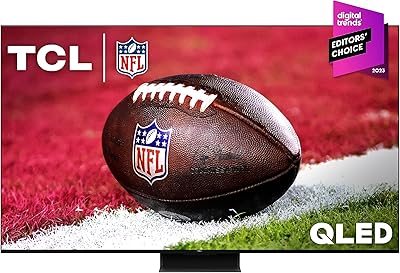
78%
84%
Picture Quality
91%
Gaming Performance
82%
HDR Performance
79%
Motion Handling
76%
Local Dimming & Contrast
More
LG QNED85 65-inch Mini-LED Smart TV
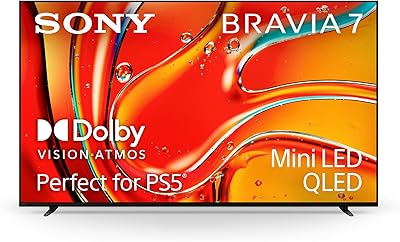
79%
91%
Picture Brightness
88%
Color Accuracy
67%
Contrast & Black Levels
84%
HDR Performance
82%
Gaming Performance
More
TCL 85-Inch QM8 QLED Mini LED TV
76%
93%
Picture Brightness
76%
Contrast & Black Levels
84%
Color Accuracy
89%
Gaming Performance
78%
Motion Handling
More
Sony BRAVIA 7 65-inch Mini LED TV
82%
88%
Picture Quality
91%
Brightness & HDR Performance
93%
Gaming Performance
86%
Color Accuracy
79%
Smart TV & Interface
More
Sony BRAVIA 5 65-inch Mini LED TV
78%
88%
Picture Quality
91%
Gaming Performance
86%
Brightness & HDR Performance
83%
Color Accuracy
79%
Smart TV & Interface
More

FAQ

It is genuinely solid for gaming, but the 288Hz figure needs some context. The native panel runs at 144Hz, which is excellent on its own. The 288Hz refers to the maximum variable refresh rate ceiling when using HDMI 2.1 with a compatible GPU or console under VRR conditions. For most players, the 144Hz native rate and low input lag are what they will actually notice and benefit from day to day.

OLED panels still have the edge in absolute black levels and viewing angles because each pixel produces its own light. The QM6K 65-inch gets impressively close in contrast thanks to its 500-zone local dimming, but in a completely dark room during a film with a lot of dark scenes, an OLED will show finer shadow gradations. For mixed-light rooms and bright content like sports, this Mini LED set can actually appear more vivid and punchy than many OLEDs.

This is an honest limitation worth knowing before you buy. The HVA panel has narrower viewing angles than IPS or OLED displays, so color accuracy and contrast shift noticeably once viewers are seated well off-center. If your room layout has people regularly watching from sharp angles — say, more than 30 to 40 degrees off the center axis — this could be a real drawback.

Yes, it has HDMI 2.1 support which allows 4K at 120Hz with VRR from both consoles. Auto Game Mode also kicks in automatically when a console is detected, switching to a low-latency picture profile without any manual steps. The GameBar overlay lets you monitor frame rate and other stats in real time.

For casual everyday TV watching, the Onkyo-tuned system is one of the better built-in audio setups you will find in this size range, and Dolby Atmos support adds some spatial dimension to compatible content. That said, if you watch a lot of films or want real bass presence, a soundbar or external system will still be a meaningful upgrade. Think of the built-in audio as genuinely usable rather than something you must replace immediately.

Most buyers report the setup process as straightforward. Attaching the stand, connecting the power cable, and running through the Google TV initial configuration typically takes under 30 minutes. For wall mounting, the TV weighs 37.8 pounds, so having a second person on hand and using a rated VESA mount is important, but professional installation is not required for most people.

Google TV does include a recommended content row and promoted apps on the home screen, which some users find intrusive. It is not something you can fully disable, though you can customize the home screen layout and pin your most-used apps for faster access. If a completely clean, ad-free interface is a priority for you, this is worth factoring into the decision.

The set supports Dolby Vision, HDR10+, HDR10, and HLG, which covers every major HDR format in use today. Netflix streams in Dolby Vision on supported content, Disney+ uses HDR10 and Dolby Vision depending on the title, and Amazon Prime Video uses HDR10+. In practice, there are no significant compatibility gaps with major streaming platforms.

TCL's Halo Control System does a better job managing blooming than many TVs at this price, but it is not entirely invisible. In high-contrast scenes — like white text over a black background or a bright moon in a dark sky — careful observers may still notice a faint glow around the bright element. Adjusting the local dimming intensity in the settings menu to a medium rather than maximum setting tends to reduce this at the cost of slightly less deep blacks.

Yes, the QM6K 65-inch is compatible with standard VESA wall mounts. The VESA mounting pattern for the 65-inch size is 400 x 200mm, which is a common standard that most mid-size TV mounts support. Make sure your wall mount is rated for at least 40 pounds to safely support the unit.