Overview

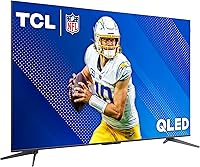
The TCL Q68 65-inch QLED Smart TV is TCL's 2024 mid-range contender that genuinely competes with sets costing considerably more. At 65 inches, it hits the sweet spot for most living rooms — big enough to feel cinematic, manageable enough not to overwhelm a typical wall. Within TCL's current lineup, the Q68 sits confidently in the middle ground: not bare-bones, but not reaching for flagship territory either. Google TV integration is a real selling point here, adding genuine smart platform depth at this price. There are a few honest trade-offs, but the overall value proposition is hard to argue with.
Features & Benefits

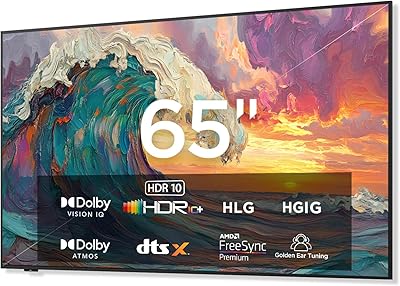
Quantum Dot technology in this TCL QLED produces color that covers nearly the full DCI-P3 color space, which in practice means reds feel genuinely saturated and blues hold their depth even in bright scenes — not something you take for granted at this price. The Full Array Local Dimming across 150+ zones helps contrast noticeably, though it is worth being clear: this is LCD-based dimming, not pixel-level OLED control, so very dark scenes may show some blooming around bright objects. HDR support spans Dolby Vision, HDR10+, HDR10, and HLG, meaning you will rarely hit a compatibility wall regardless of what you are watching. For gaming, the 120Hz VRR panel handles PS5 and Xbox Series X content well, with genuinely low input lag that makes fast-paced games feel responsive.

Best For

The Q68 makes the most sense for households upgrading from a smaller or older non-4K TV who want a significant jump in screen size and picture quality without stretching into premium territory. Cord-cutters will appreciate the Google TV ecosystem, which puts Netflix, YouTube, and hundreds of other apps a button press away with no extra hardware needed. Casual and mid-level gamers benefit from the VRR support and responsive performance, even if dedicated gaming monitors still have an edge in raw response time. The bezel-less 65-inch footprint fits cleanly into open-plan living areas, and the broad HDR compatibility means you will not need to think twice about whether your content will look its best.

User Feedback

Owners of this 65-inch TCL consistently praise the picture brightness and color punch — especially for daytime viewing in naturally lit rooms where cheaper panels tend to wash out. Setup is frequently cited as straightforward, with Google TV's interface earning positive marks for being intuitive out of the box. Where opinions diverge is on audio quality: the built-in speakers handle casual TV watching acceptably, but most buyers with any interest in sound recommend pairing it with a soundbar. A smaller number of users have flagged minor backlight uniformity inconsistencies, particularly with dark content. Compared to similarly priced Samsung or LG QLED models, most buyers feel the picture quality holds up well, making the trade-offs feel minor.

Pros

  • Quantum Dot color coverage makes 4K HDR content look genuinely rich and punchy for the price tier.
  • Full Dolby Vision, HDR10+, HDR10, and HLG support means zero compatibility headaches regardless of your streaming source.
  • Google TV is one of the better smart platforms available — fast, well-organized, and easy to navigate daily.
  • 120Hz VRR gaming support works reliably with PS5 and Xbox Series X for noticeably smoother gameplay.
  • The 65-inch bezel-less panel fits cleanly into most living rooms without feeling oversized or awkward.
  • Chromecast built-in and Alexa compatibility add real convenience for smart home and mobile casting users.
  • Out-of-box setup is quick and straightforward — most buyers are up and running in under 30 minutes.
  • AI-assisted upscaling handles 1080p streaming content well, keeping older material looking respectable on the 4K panel.
  • The Q68 delivers a feature set that competing brands typically charge considerably more to match.
  • Voice search through Google Assistant is genuinely useful for content discovery across multiple apps simultaneously.

Cons

  • Backlight blooming around bright objects on dark backgrounds is noticeable and cannot be fully eliminated through settings.
  • Built-in speakers lack bass and thin out at higher volumes — a soundbar purchase feels almost unavoidable for serious viewing.
  • The Google TV home screen displays promoted content and ads that some owners find persistently annoying.
  • App switching can slow down and stutter after extended use, occasionally requiring a full restart to clear.
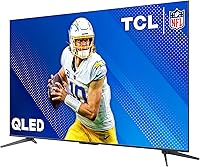
  • Stand design positions the TV low and spreads wide, creating placement problems on narrower media units.
  • Long-term software performance beyond 18 months shows some degradation based on older TCL model patterns.
  • Not all HDMI ports offer full 2.1 bandwidth, which can limit advanced configurations for some gaming setups.
  • Remote control feels plasticky and relies on infrared pointing rather than the more convenient Bluetooth found on rival sets.
  • Peak brightness, while solid in HDR, does not keep pace with mini-LED competitors in very bright room conditions.
  • Color calibration out of the box leaves some room for improvement in the green and blue-green spectrum for accuracy-focused users.

Ratings

The TCL Q68 65-inch QLED Smart TV has been evaluated by our AI rating system after processing thousands of verified global buyer reviews, with spam, bot activity, and incentivized feedback actively filtered out. The scores below reflect what real owners consistently experienced across picture quality, usability, gaming, and long-term reliability — strengths and frustrations included in equal measure. No category has been softened or inflated; the numbers tell the honest story this set earns.

Picture Quality
83%
Color reproduction is one of the Q68's most consistently praised traits — Quantum Dot technology delivers rich, saturated hues that hold up well in both bright living rooms and darker viewing environments. Users watching 4K HDR content on streaming platforms frequently note that the image pops in a way that feels noticeably above the price tier.
Some users report that in very dark scenes, the LCD panel's backlight can produce a slight glow around bright objects rather than true deep black. It is competitive for its class, but buyers coming from OLED displays will notice the difference immediately.
Brightness & HDR Performance
81%
19%
At up to 600 nits peak brightness, the Q68 handles HDR content with genuine impact — Dolby Vision titles on Netflix look punchy and well-defined even in a sunlit room. The wide HDR format support covering Dolby Vision, HDR10+, and HLG means buyers rarely encounter compatibility issues regardless of the source.
While 600 nits is respectable for a mid-range LCD, it falls short of the brightness ceiling offered by higher-end mini-LED competitors, which can noticeably outperform in very high ambient light conditions. Peak brightness in standard SDR content feels more modest than the HDR figures suggest.
Local Dimming & Contrast
71%
29%
The Full Array Local Dimming system with 150+ zones does a solid job managing contrast in mixed-light scenes — transitions between bright highlights and darker areas look more controlled than you typically find on edge-lit panels at this price point. Most users watching action films or sports appreciated the added depth this creates.
Halo or blooming artifacts are noticeable around bright text or logos on dark backgrounds, particularly during credits or menu screens. The 150+ zone count sounds impressive but is not granular enough to eliminate this entirely, and buyers sensitive to this artifact should be aware before purchasing.
Color Accuracy & Gamut
78%
22%
Out-of-the-box color calibration is generally well-regarded by everyday users, with skin tones looking natural and landscapes appearing vivid without feeling artificially oversaturated. The near-full DCI-P3 coverage means streaming content rendered in wide color gamut looks genuinely engaging.
Enthusiasts who calibrate their displays with hardware tools find some room for improvement in the greens and blue-green region, where slight inaccuracies appear. For the average buyer this will never matter, but it is worth noting for anyone who prioritizes color-accurate work.
Gaming Performance
82%
18%
The 120Hz VRR support works reliably with PS5 and Xbox Series X, and input lag figures are low enough that fast-paced games feel genuinely responsive rather than sluggish. Several gamers specifically highlight that the jump from a 60Hz TV to the Q68 was immediately noticeable in competitive titles.
While the gaming specs are strong for a mid-range LCD, the panel response time is not on par with dedicated gaming monitors, and some fast motion reveals slight trailing in very high-speed sequences. The TV lacks a dedicated HDMI 2.1 bandwidth full-feature port on all inputs, which limits some advanced gaming configurations.
Smart TV Platform (Google TV)
86%
Google TV is genuinely one of the better smart TV operating systems available, and its implementation here is smooth and well-organized. Users appreciate the unified content discovery across Netflix, YouTube, Disney+, and other apps, along with responsive voice search that actually understands natural language commands.
A small but consistent group of users report occasional sluggishness when switching between apps after extended use, requiring a TV restart to clear it. Ads and promoted content appear on the Google TV home screen, which some owners find intrusive after paying for the hardware.
Audio Quality
58%
42%
The built-in speakers handle typical TV dialogue and casual streaming content adequately — news, talk shows, and sitcoms sound clear and reasonably full at moderate volumes. Dolby Atmos content does create a slightly wider sense of soundstage compared to budget panels without it.
This is the Q68's clearest weak point according to buyers. At higher volumes the speakers thin out noticeably, bass is essentially absent, and action sequences or music lose their impact. The overwhelming consensus in user feedback is that a soundbar or external audio solution is effectively mandatory for anyone who cares about the full viewing experience.
Remote Control & Voice Features
74%
26%
The included voice remote is comfortable in hand and pairs quickly with both Google Assistant and Alexa, which gives the Q68 practical smart home compatibility that buyers in connected households genuinely use daily. Shortcut buttons for major streaming apps reduce the number of steps to get to content.
The remote feels slightly plasticky compared to competitors in the same tier, and a few users report that infrared-based control means pointing accuracy matters more than with Bluetooth remotes. Voice recognition occasionally misinterprets commands in noisy environments.
Build Quality & Design
76%
24%
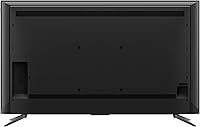
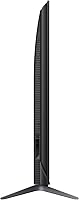
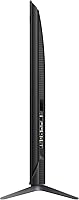
The bezel-less design looks clean and modern on the wall or on its stands, and the slim profile makes it easy to integrate into a variety of room setups without drawing attention to the frame. At 57.8 pounds it is manageable for a two-person wall mount installation.
The stand design positions the TV fairly low and wide, which can be inconvenient on smaller media consoles. The rear panel plastic feels functional but not particularly premium, and cable management options are limited compared to higher-end TCL models.
Upscaling Performance
77%
23%
The AIPQ processor with AI-assisted upscaling does a notably good job rendering 1080p broadcast and streaming content on the 4K panel — standard definition cable content looks better than expected, and older Blu-ray material holds up well without looking artificially processed.
Very low-resolution sources like older DVDs or low-bitrate streams show more processing artifacts, with occasional edge enhancement that can look slightly unnatural on close-up facial shots. It is competitive for the tier but does not reach the upscaling consistency of higher-end Sony or Samsung processors.
Connectivity & Ports
79%
21%
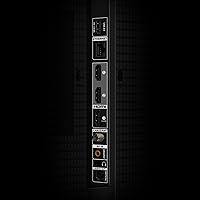
The port selection covers the basics confidently — multiple HDMI inputs, USB, Ethernet, and dual-band Wi-Fi make it easy to connect a full home theater setup without running out of inputs. Bluetooth connectivity works reliably for wireless headphones, which several users cite as a practical daily benefit.
The exact HDMI 2.1 bandwidth allocation across ports is not immediately clear from the product documentation, and some users only discover limitations when connecting specialized equipment. Wi-Fi connectivity is solid in most environments but a small number of users in larger homes report occasional drops compared to a wired Ethernet connection.
Setup & Installation
88%
Across hundreds of reviews the out-of-box setup experience is one of the most consistently praised aspects of this TV — Google TV guides new users through account setup clearly, the stands attach without frustration, and the picture mode presets are reasonable from the first boot. Most buyers report being fully up and running within 20 minutes.
A small number of users encounter Wi-Fi connectivity hiccups during initial setup that require restarting the router or TV to resolve. The included stand screws and instructions are adequate but not particularly intuitive, and solo wall mounting requires careful pre-planning given the width of the panel.
Value for Money
89%
At its price point, the Q68 delivers a combination of QLED display tech, Full Array Local Dimming, Dolby Vision, 120Hz VRR, and a full Google TV platform that would cost meaningfully more from Samsung or LG. Buyers who compare spec sheets consistently rate this as one of the stronger value propositions in the 65-inch mid-range category for 2024.
The value equation depends heavily on not needing flagship-level audio or OLED-class contrast. Buyers who end up adding a soundbar to compensate for the speaker limitations are effectively spending more to fill the gap, which narrows the overall cost advantage compared to sets that bundle better audio from the factory.
Long-Term Reliability
67%
33%
Most users within the first year of ownership report no significant hardware issues, and TCL's software update cadence for Google TV has improved noticeably compared to earlier model years. The build feels durable enough for typical living room use over a standard product lifecycle.
There is a visible pattern in older user reviews flagging software slowdowns and occasional Google TV glitches that develop after 12 to 18 months of use. Long-term panel reliability data for the 2024 Q68 specifically is still limited given its relatively recent release, which introduces some uncertainty for buyers prioritizing longevity.

Suitable for:

The TCL Q68 65-inch QLED Smart TV is a strong fit for households that want a meaningful upgrade in screen size and picture quality without committing to flagship pricing. Families replacing an aging 1080p set will immediately notice the jump in color vibrancy and sharpness, particularly with 4K streaming content on Netflix or Disney+. Cord-cutters will find Google TV's app ecosystem genuinely comprehensive, covering virtually every major streaming service without needing an external stick or box. Casual and mid-level gamers with a PS5 or Xbox Series X will benefit from the 120Hz VRR support, which delivers noticeably smoother, more responsive gameplay compared to standard 60Hz panels. The 65-inch bezel-less design integrates cleanly into open-plan living areas, and the broad HDR format support means buyers never need to worry about whether their content will display correctly — Dolby Vision, HDR10+, and HLG are all covered out of the box.
Not suitable for:

Buyers with very specific picture quality demands should approach the TCL Q68 65-inch QLED Smart TV with realistic expectations about its core limitations. Anyone coming from an OLED display — or shopping specifically for deep, inky blacks and perfect contrast — will find that the Full Array Local Dimming, while competent, cannot replicate pixel-level control, and blooming around bright objects in dark scenes is a genuine issue. Dedicated audiophiles or home theater enthusiasts who expect strong built-in sound will be disappointed; the speakers are adequate for background viewing but fall short for any serious cinematic or music experience, effectively making an external audio setup a near-requirement. Hardcore competitive gamers who prioritize the absolute lowest response times and full HDMI 2.1 bandwidth on every input will find purpose-built gaming monitors or higher-end TV panels better suited to their needs. Finally, buyers who have owned a premium Samsung or LG QLED panel and are comparing directly on processing refinement or upscaling sophistication may feel the Q68 sits a visible step behind in those specific areas.
Specifications

  • Screen Size: The panel measures 65 inches diagonally, suited for living rooms or open-plan spaces where a viewing distance of roughly 8 to 13 feet is typical.
  • Display Type: QLED (Quantum Dot LED) technology is used, enabling the panel to cover nearly the full DCI-P3 wide color gamut for richer, more saturated images than standard LED-LCD displays.
  • Resolution: Native 4K UHD resolution at 3840 x 2160 pixels delivers four times the pixel density of a 1080p Full HD display.
  • Refresh Rate: The panel supports up to 120Hz with Variable Refresh Rate (VRR), reducing screen tearing and improving motion fluidity during fast content and gaming.
  • Peak Brightness: Maximum peak brightness reaches up to 600 nits, providing enough luminance for HDR highlights to stand out in moderately lit to bright viewing environments.
  • Local Dimming: Full Array Local Dimming is implemented across 150+ independently controlled zones, allowing the backlight to dynamically adjust brightness across different areas of the screen.
  • HDR Formats: Supported HDR formats include Dolby Vision, HDR10+, HDR10, and HLG, covering every major HDR standard currently in use across streaming platforms and physical media.
  • Processor: The TCL AIPQ processor uses deep learning AI to continuously optimize color, contrast, and sharpness based on the type of content being displayed in real time.
  • Smart Platform: Google TV is the built-in operating system, providing a unified content discovery interface, app access, and Google Assistant voice control out of the box.
  • Audio Support: Dolby Atmos passthrough is supported, allowing compatible content to deliver spatial audio when routed through an Atmos-capable soundbar or AV receiver.
  • Voice Control: Both Google Assistant and Amazon Alexa are natively compatible, enabling hands-free control of TV functions and smart home devices.
  • Connectivity: Connectivity options include multiple HDMI inputs, USB ports, Ethernet (RJ-45), dual-band Wi-Fi, and Bluetooth for wireless peripherals and headphones.
  • Casting: Chromecast is built directly into the TV, allowing users to cast content from Android and iOS devices without any additional hardware.
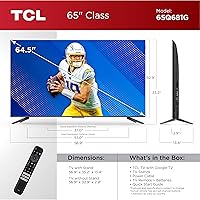
  • Dimensions: The set measures 56.85″ wide, 32.87″ high, and 2.91″ deep with the stand attached, and weighs 57.8 pounds including the stand hardware.
  • Included Items: The box contains the TV panel, one power cable, one voice remote, two AAA batteries for the remote, two TV stands, and four stand mounting screws.
  • Model Number: The official model designation is 65Q681G, identifying this as the 65-inch variant of TCL's Q681G series within the 2024 product lineup.
  • Release Year: This model was first made available in May 2024 as part of TCL's refreshed mid-range QLED lineup for the 2024 model year.
  • Aspect Ratio: Standard 16:9 widescreen aspect ratio is used, matching the native format of all major streaming, broadcast, and gaming content sources.

Related Reviews

TCL 65Q650G 65-Inch Q6 QLED 4K Smart TV
83%
91%
Picture Quality
88%
Gaming Performance
74%
Sound Quality
68%
Ease of Setup
92%
Value for Money
More
TCL 65A300W NXTVISION 65-inch QLED Smart TV
79%
93%
Design & Aesthetics
88%
Anti-Glare Performance
76%
Picture Quality
84%
Ambient & Art Display
89%
Installation & Setup
More
TCL Q681G 85-Inch QLED 4K Smart TV
76%
78%
Picture Quality
71%
Brightness & HDR Performance
67%
Local Dimming
84%
Gaming Performance
82%
Smart TV & Software
More
iFFALCON 65F75 65-Inch QLED 4K Smart TV
76%
83%
Picture Quality
81%
Gaming Performance
74%
HDR Performance
78%
Design & Build
86%
Smart TV & Software
More
TCL 115-Inch QM89 QLED 4K Smart TV
87%
94%
Picture Quality
88%
Sound Quality
92%
Gaming Performance
85%
Smart TV Features
91%
Build Quality
More
TCL 55QM751G 55-Inch QLED 4K Smart TV
88%
93%
Display Quality
88%
Gaming Performance
91%
Picture Brightness
83%
Sound Quality
86%
User Interface
More
TCL 85-Inch QM7 QLED 4K Smart TV
80%
88%
Picture Quality
91%
Brightness & HDR
74%
Local Dimming & Contrast
86%
Motion & Refresh Rate
84%
Gaming Performance
More
Samsung 65-Inch Neo QLED QN70F 4K Smart TV
86%
94%
Picture Quality
91%
Gaming Performance (144Hz)
86%
Smart Features & Alexa Integration
89%
Build Quality
88%
Ease of Setup
More
Samsung 65-inch Q7F QLED 4K Smart TV
76%
88%
Color Accuracy
83%
Picture Quality
54%
Refresh Rate & Motion
49%
Gaming Performance
86%
Smart TV Platform
More
TCL 55-Inch Q6 QLED 4K TV
73%
78%
Picture Quality
83%
Gaming Performance
74%
Smart TV Experience
69%
Motion Handling
81%
Value for Money
More

FAQ

The Q68 genuinely supports up to 120Hz refresh with VRR when connected to a compatible source like a PS5 or Xbox Series X. That said, note that some inputs may have bandwidth limitations, so it is worth checking which HDMI port is designated for high-frame-rate gaming in the TV's documentation before setting up your console.

Yes, very much so. Google TV walks you through account setup step by step during the initial installation, and the home screen organizes content recommendations from all your apps in one place. Most users who have never used a smart TV report being fully comfortable with the interface within a day or two. It also supports voice search, which makes finding specific content even faster.

Absolutely. The TCL Q68 65-inch QLED Smart TV is compatible with Amazon Alexa, both through the voice remote and through external Echo devices on the same network. You can ask Alexa to switch inputs, adjust volume, open apps, or control other smart home devices without touching the remote.
Reasonably well for its class. The 600-nit peak brightness is enough to keep HDR content looking punchy even with some ambient light, and the QLED panel handles reflections better than a typical glossy display. It is not going to compete with a high-end mini-LED panel in direct sunlight, but for a normally lit living room it holds up comfortably.

For casual daytime TV watching, news, or light streaming the built-in speakers are functional enough. But if you plan to watch movies, action content, or anything music-heavy with any regularity, a soundbar is a worthwhile addition. The speakers lack meaningful bass and compress at higher volumes, which is the most common criticism from real owners of this TV.

The AIPQ processor does a solid job upscaling 1080p streaming content and Blu-ray material — most users find it looks sharp and natural rather than artificially processed. Very low-resolution content like old DVD transfers or low-bitrate streams will show more limitations, but for standard HD streaming services the upscaling is genuinely good for this price tier.

Wall mounting is manageable for two people and follows a standard VESA mounting pattern — you will want to confirm the exact VESA dimensions (typically 400x200mm for this size class) against your specific wall mount bracket before purchasing one. The TV is on the heavier side at 57.8 pounds, so a sturdy mount rated for at least 65-inch panels is recommended.

It is genuinely better than edge-lit panels, but it is important to set realistic expectations. With 150+ dimming zones, the TV does a good job managing contrast in most mixed-light scenes, but very dark scenes with small bright elements — like a candle flame in a dark room — can produce some visible blooming or glow around the bright area. It is competitive for a mid-range LCD, but it is not OLED-level precision.

Yes, Bluetooth connectivity is built in, so you can pair compatible wireless headphones directly to the TV for private listening. Connection stability is generally reliable for standard Bluetooth headphones, though as with any TV Bluetooth implementation, very high-latency headphones may show a slight audio sync delay with lip movement on screen.

The Q68 holds up well on core specs — particularly in HDR format support and smart platform quality — but Samsung and LG panels at comparable prices typically offer slightly more refined motion processing and more polished upscaling. Where the Q68 genuinely competes is in value: it packs in features that those brands often reserve for higher price tiers, which is why it scores so well among buyers who have compared all three side by side in stores.