
Overview

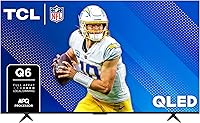
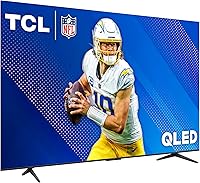
The TCL Q681G 85-Inch QLED 4K Smart TV lands squarely in the mid-range segment, offering a genuinely large-screen experience without demanding a flagship price. Built around a QLED Pro quantum dot panel, it is the kind of TV that makes you reconsider how much you actually need to spend for a satisfying living room setup. The 2024 model year brings Google TV into the mix, a meaningful upgrade over TCL's older smart platform. It supports Dolby Vision, HDR10+, and HLG — broad format coverage that matters in practice. Just don't expect OLED-level blacks; this is a strong performer for its class, not a premium flagship challenger.

Features & Benefits

The Full Array Local Dimming system, with over 150 independently controlled zones, is one of the standout practical advantages of this 85-inch TCL QLED. It noticeably deepens blacks and improves contrast in darker scenes — not to the level of a premium mini-LED or OLED panel, but well beyond what edge-lit sets deliver. The native 120Hz panel with 144Hz variable refresh rate is legitimately useful for gaming, not a marketing checkbox. Colors are rich and punchy thanks to near-full DCI-P3 coverage, and the AIPQ deep-learning processor handles upscaled content competently. Peak brightness tops out around 600 nits, which works fine in most rooms but can feel underwhelming against direct sunlight.

Best For

The Q681G hits a sweet spot for a fairly specific buyer profile. If you have a large living room and want maximum screen size without stretching the budget, this large-screen TCL is hard to argue against at 85 inches. Sports and gaming households will appreciate the 120Hz smoothness on fast-moving content, and cord-cutters get a well-rounded smart platform in Google TV without needing a separate streaming stick. Compared to similarly priced Hisense U-series sets, the Q681G trades blows competitively — neither dominates cleanly. It is genuinely versatile for everyday use across streaming, casual gaming, and movies. Buyers chasing the absolute best picture should look at step-up mini-LED options instead.

User Feedback

Verified buyers consistently praise color vibrancy and sheer size for the price, with many noting the out-of-box picture quality exceeds expectations for a non-premium brand. Setup earns good marks too — Google TV makes the initial experience relatively painless for first-timers. On the critical side, local dimming blooming around bright objects in dark scenes is a genuine recurring complaint; it shows up noticeably in night scenes with subtitles or on-screen logos. Built-in audio is the other honest weak point — functional for news and casual viewing, but a soundbar makes a real difference. A handful of users report sporadic Wi-Fi drops and remote pairing quirks, though these appear isolated rather than systemic.

Pros

  • 85 inches of screen at this price point is genuinely difficult to beat in the current market.
  • Quantum dot color coverage makes streaming content look vivid and punchy right out of the box.
  • Full Array Local Dimming with 150-plus zones delivers noticeably better contrast than edge-lit rivals at this size.
  • Native 120Hz and 144Hz VRR support are real, hardware-level gaming features — not just software tricks.
  • Google TV is a clean, well-supported smart platform that most users find intuitive from day one.
  • Dolby Vision, HDR10+, and HLG support means the Q681G handles virtually any HDR source you throw at it.
  • Built-in Chromecast removes the need for a separate streaming device for most households.
  • Setup is straightforward and the Google TV onboarding process gets you watching quickly.
  • Alexa and Google Assistant integration works reliably for voice control of both the TV and smart home devices.
  • The AIPQ processor upscales lower-resolution content competently, keeping cable and older streaming sources looking decent.

Cons

  • Local dimming can cause visible blooming around bright objects like subtitles against dark backgrounds.
  • Peak brightness around 600 nits struggles in rooms with strong ambient light or direct sunlight exposure.
  • Built-in speakers are underwhelming for anything beyond background news or casual daytime viewing.
  • Some users report intermittent Wi-Fi connectivity drops that require manual reconnection.
  • The remote control has occasional pairing and responsiveness issues noted by a subset of verified buyers.
  • At 115 pounds, wall-mounting this large-screen TCL is a two-person job and requires a heavy-duty bracket.
  • Black uniformity is not consistent across the full panel, with some backlight variance visible on flat dark scenes.
  • Compared to premium mini-LED sets at a higher price tier, overall HDR peak performance leaves a noticeable gap.
  • The aggressive local dimming presets can cause distracting dimming transitions during mixed bright-and-dark scenes.
  • Long-term software update consistency from TCL remains less proven than from Sony or Samsung at comparable sizes.

Ratings

The scores below reflect AI-driven analysis of verified global buyer reviews for the TCL Q681G 85-Inch QLED 4K Smart TV, with spam, bot-generated, and incentivized feedback actively filtered out before scoring. Each category is evaluated on real-world performance patterns reported by confirmed purchasers across diverse use cases, from dedicated home theater setups to mixed-use family living rooms. Both the standout strengths and the honest pain points are reflected transparently, so you can make a genuinely informed decision.

Picture Quality
78%
22%
Colors are a consistent highlight across verified buyer feedback — the quantum dot panel produces vivid, punchy images that hold up well during sports broadcasts, nature documentaries, and streaming movies. Most users report being pleasantly surprised by how good the picture looks straight out of the box without manual calibration.
Black levels and shadow detail fall noticeably short of what OLED and premium mini-LED panels deliver, which becomes more apparent during dark cinematic scenes. Buyers coming from a higher-end TV will notice the gap; those upgrading from an older budget or edge-lit set will likely be impressed.
Brightness & HDR Performance
71%
29%
In a standard living room with controlled or indirect lighting, the 600-nit peak brightness handles daytime viewing comfortably and HDR highlights on streaming content look genuinely dynamic. Dolby Vision content on Netflix and Disney+ produces well-saturated highlights that make the HDR implementation feel worthwhile.
In brighter rooms with direct sunlight or large uncovered windows, the peak brightness ceiling becomes a real limitation — the image washes out and HDR impact is largely lost. Compared to higher-brightness mini-LED competitors in the same size category, the HDR punch is noticeably weaker in challenging lighting conditions.
Local Dimming
67%
33%
The Full Array Local Dimming system with 150-plus zones does a solid job improving perceived contrast compared to simpler edge-lit panels, and most users watching sports or well-lit streaming content never encounter the system's limitations in a meaningful way.
Blooming around bright objects on dark backgrounds — subtitles, logos, and scoreboards in particular — is a recurring complaint from users who watch a lot of cinematic or night-sky content. The dimming transitions can also be distracting in scenes that rapidly shift between dark and bright areas, which is a known limitation of zone-based dimming at this price tier.
Gaming Performance
84%
The native 120Hz panel and genuine 144Hz VRR support make this large-screen TCL a legitimate gaming display, not just a TV with gaming buzzwords in the spec sheet. Console gamers pairing this with a PS5 or Xbox Series X report smooth, responsive gameplay with no motion blur complaints during fast-paced titles.
Precise input lag measurements are not officially published by TCL, which makes it harder to compare directly against gaming monitors or more transparently specced competitors. Hardcore competitive gamers who prioritize sub-10ms response times should verify real-world latency measurements from independent testing sources before committing.
Smart TV & Software
82%
18%
Google TV earns consistent praise for its clean layout, fast app loading, and reliable access to every major streaming platform without any notable gaps. First-time smart TV users especially appreciate how intuitive the onboarding process is, with recommendations and content aggregation working well from day one.
A small but recurring group of users report sluggish menu performance after extended use, likely related to memory management as the Google TV app library grows. Software update scheduling can occasionally interfere with use at inconvenient times, which some buyers flag as mildly annoying in longer-term ownership.
Motion Handling
79%
21%
Fast-motion content — live sports, action films, and 60fps gaming — looks impressively fluid on the 120Hz panel, and sports fans in particular call this one of the TV's strongest real-world traits. Motion smoothing can be adjusted or disabled entirely for viewers who prefer a more cinematic, film-like cadence.
At the default out-of-box settings, motion interpolation processing can introduce an artificial soap-opera effect on movie content that bothers some viewers, requiring manual adjustment to correct. Users who are not comfortable tweaking picture settings may not realize this is adjustable and end up watching content in a non-ideal mode.
Color Accuracy
76%
24%
Quantum dot color coverage across the DCI-P3 color space means streaming-optimized content looks vibrant and natural, with skin tones and natural colors rendering convincingly for a mid-range display. Most users do not need to make significant color corrections for the picture to look appealing across a range of content types.
Out-of-box calibration is tuned to look impressive in a showroom rather than accurate in a home, meaning color temperature runs a little warm and whites can look slightly yellowish until adjusted. Buyers who want precise color fidelity for content creation or reference-grade accuracy will need to invest time in manual calibration or professional setup.
Build Quality & Design
73%
27%
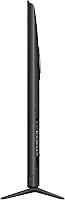
The bezel-less design makes the 85-inch panel look clean and modern on a media console, and most buyers report that the physical build feels sturdy enough for long-term use without any flex or creaking. The slim depth of under 3 inches keeps the set from dominating the room visually even at this imposing size.
The plastic finish on the rear housing and stand legs feels functional rather than premium, which is a reasonable expectation at this price point but noticeably less refined than Sony or Samsung builds of comparable size. The stand design, while stable, is fairly wide and requires a media console of at least 65 inches to accommodate it comfortably.
Audio Quality
52%
48%
The built-in speakers handle dialogue and everyday content — news, talk shows, daytime TV — at acceptable volume levels without obvious distortion, which covers the basic needs of a secondary room setup or background viewing scenario.
Bass response is nearly absent and overall volume ceiling is limited for a screen this size, making the built-in audio a weak point that multiple verified buyers flag as the TV's most disappointing real-world characteristic. Virtually everyone who watches movies or listens to music through this set ends up recommending a soundbar as a near-mandatory companion purchase.
Connectivity
86%
The inclusion of HDMI, USB, Ethernet, Bluetooth, and dual-band Wi-Fi covers essentially every connection scenario a typical household would need, and the HDMI 2.1 port support for high-bandwidth gaming sources is a practical strength. Built-in Chromecast works reliably for casting from phones and tablets, which many users rely on daily.
A subset of users report intermittent Wi-Fi drops that require manual reconnection, particularly on busier dual-band networks where channel interference is higher. The number of HDMI ports may feel limiting for users with multiple gaming consoles, streaming sticks, and AV receivers all competing for inputs simultaneously.
Setup & Installation
88%
The Google TV setup process is consistently praised for being fast and intuitive, walking new users through account linking and app installation without requiring any technical knowledge. Stand assembly is straightforward with the included hardware, and most solo users get the TV operational within 30 minutes of opening the box.
Wall mounting a 115-pound TV safely requires a second person and a proper stud-anchored wall bracket rated for the weight and size, which adds cost and effort that some buyers underestimate when purchasing. The included documentation does not provide strong guidance on optimal wall-mount configurations or VESA specifications in a user-friendly way.
Remote Control
69%
31%
The included voice remote integrates well with both Google Assistant and Alexa, and quick-access streaming buttons for major platforms reduce the number of steps needed to start watching content. Voice commands for search and smart home control work reliably in most tested environments.
Some verified buyers report intermittent Bluetooth pairing dropouts requiring the remote to be re-paired, which is a frustrating recurring issue rather than a one-time setup hiccup. The remote's physical build feels lightweight and plasticky compared to the premium remotes offered by Samsung and LG at similar price points.
Upscaling Performance
74%
26%
The AIPQ deep-learning processor handles standard HD cable content and lower-resolution streaming sources with a reasonable degree of clarity, reducing the softness and noise that basic scalers often produce. Users who watch a mix of 4K and non-4K content daily will find the upscaling keeps the picture looking acceptable across both.
Upscaled content still falls noticeably short of native 4K sharpness, and older standard-definition sources can look soft and artifact-heavy even with processing applied. The gap between upscaled and native 4K is more visible on an 85-inch screen than it would be on a smaller display, simply due to the pixel density and viewing distance involved.
Value for Money
89%
At 85 inches with genuine 120Hz, VRR, Full Array Local Dimming, and a complete smart TV platform, the Q681G delivers a level of feature density per dollar that is difficult to match in its size category. Buyers consistently describe it as punching above its weight relative to similarly priced large-format competitors from other brands.
The value equation weakens slightly once you factor in the near-mandatory soundbar purchase and the brightness limitations that may push some buyers toward a pricier alternative. Buyers in sunlit rooms or those seeking reference-grade picture quality will ultimately spend more to address the set's shortcomings than the initial purchase price suggests.

Suitable for:

The TCL Q681G 85-Inch QLED 4K Smart TV is a strong fit for households that want a genuinely large screen without paying flagship prices. If your living room has the wall space and seating distance to justify 85 inches, this TV rewards that commitment with punchy, vibrant quantum dot color that looks impressive on streaming content and sports alike. Casual and mid-core gamers will find real value here — the native 120Hz panel and 144Hz variable refresh rate are legitimate hardware capabilities, not padded marketing claims. Cord-cutters benefit from Google TV's well-organized interface, which surfaces streaming apps cleanly and eliminates the need for an external stick or box. Sports fans in particular will appreciate how smooth fast motion looks on a screen this size, where judder and blur are far more noticeable than on a smaller set.

Not suitable for:

The TCL Q681G 85-Inch QLED 4K Smart TV is not the right call for buyers who prioritize absolute picture fidelity over screen size. If you watch a lot of dark, cinematic content — think moody prestige dramas or late-night movies in a light-controlled room — the local dimming blooming around bright objects will likely bother you, and an OLED or high-end mini-LED panel would serve you much better. The 600-nit peak brightness, while adequate in typical living rooms, falls noticeably short in sun-drenched spaces with large windows and no blackout options. Serious home theater enthusiasts who have already invested in a calibrated projector setup or a premium Sony or Samsung OLED will find this 85-inch TCL underwhelming by comparison. The built-in audio is also a real limitation for anyone who cares about sound quality; budgeting for a soundbar is practically a requirement, not an optional upgrade.

Specifications

  • Screen Size: The panel measures 85 inches diagonally, making it one of the larger consumer TV sizes available for standard living room installations.
  • Display Technology: QLED Pro quantum dot technology is used to expand the color gamut, covering nearly the full DCI-P3 color space for richer, more saturated images.
  • Resolution: Native 4K UHD resolution (3840 x 2160 pixels) delivers four times the pixel density of a standard 1080p Full HD display.
  • Refresh Rate: The panel runs natively at 120Hz, with variable refresh rate support extending up to 144Hz for compatible gaming sources.
  • Peak Brightness: Rated at up to 600 nits peak brightness, which is sufficient for most indoor environments but may be limiting in very bright or sunlit rooms.
  • Local Dimming: Full Array Local Dimming is implemented across 150-plus independently controlled backlight zones to improve contrast and reduce light bleed.
  • HDR Formats: Compatible with Dolby Vision, HDR10+, HDR10, and HLG, covering the full range of HDR standards used across streaming, disc, and broadcast sources.
  • Processor: The TCL AIPQ processor uses deep learning AI to optimize picture settings including color accuracy, contrast, and sharpness in real time.
  • Smart Platform: Google TV is the built-in operating system, offering a curated content interface with access to all major streaming apps and built-in Chromecast functionality.
  • Voice Assistants: Both Google Assistant and Amazon Alexa are supported natively, allowing hands-free control of the TV and compatible smart home devices.
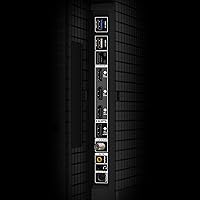
  • Connectivity: The set includes HDMI, USB, Ethernet, Bluetooth, and dual-band Wi-Fi, covering both wired and wireless connection needs for most home setups.
  • Audio Support: Dolby Atmos passthrough is supported, allowing compatible soundbars or AV receivers to decode object-based surround audio from streaming and disc sources.
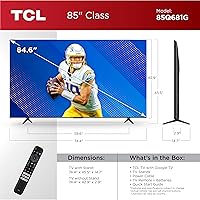
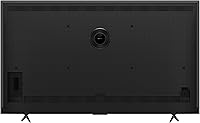
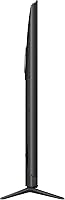
  • Dimensions: With the stand attached, the TV measures 74.41″ wide, 42.87″ tall, and 2.87″ deep.
  • Weight: The set weighs 115.8 pounds with the stand, which makes two-person installation strongly advisable for both wall mounting and stand setup.
  • Included Items: The box includes one power cable, one voice remote, two AAA batteries for the remote, two TV stand legs, and four stand screws.
  • Aspect Ratio: Standard 16:9 widescreen aspect ratio, matching the native format of all HD, 4K, and UHD broadcast and streaming content.
  • Model Number: The official model identifier is 85Q681G, specific to the 85-inch variant of the Q681G series released in 2024.
  • Release Year: This model was introduced in 2024, representing TCL's current mid-range QLED lineup with updated processing and smart TV features.

Related Reviews
TCL 85-Inch QM7 QLED 4K Smart TV
80%
88%
Picture Quality
91%
Brightness & HDR
74%
Local Dimming & Contrast
86%
Motion & Refresh Rate
84%
Gaming Performance
More
TCL 85-Inch Q651G QLED Smart TV
75%
81%
Picture Quality
63%
Contrast & Black Levels
84%
Color Accuracy
79%
Gaming Performance
77%
Motion Handling
More
TCL 85-Inch QM8 QLED Mini LED TV
76%
93%
Picture Brightness
76%
Contrast & Black Levels
84%
Color Accuracy
89%
Gaming Performance
78%
Motion Handling
More
TCL 55QM751G 55-Inch QLED 4K Smart TV
88%
93%
Display Quality
88%
Gaming Performance
91%
Picture Brightness
83%
Sound Quality
86%
User Interface
More
TCL 115-Inch QM89 QLED 4K Smart TV
87%
94%
Picture Quality
88%
Sound Quality
92%
Gaming Performance
85%
Smart TV Features
91%
Build Quality
More
Samsung Q80D 85-Inch QLED 4K Smart TV
82%
88%
Picture Quality
74%
Contrast & Black Levels
93%
Brightness
91%
Motion Handling
89%
Gaming Performance
More
TCL 65Q650G 65-Inch Q6 QLED 4K Smart TV
83%
91%
Picture Quality
88%
Gaming Performance
74%
Sound Quality
68%
Ease of Setup
92%
Value for Money
More
TCL 65A300W NXTVISION 65-inch QLED Smart TV
79%
93%
Design & Aesthetics
88%
Anti-Glare Performance
76%
Picture Quality
84%
Ambient & Art Display
89%
Installation & Setup
More
TCL 55-Inch Q6 QLED 4K TV
73%
78%
Picture Quality
83%
Gaming Performance
74%
Smart TV Experience
69%
Motion Handling
81%
Value for Money
More
TCL Q65 98-Inch QLED Smart TV
75%
78%
Picture Quality
74%
HDR Performance
83%
Gaming Performance
71%
Motion Clarity
91%
Screen Size & Impact
More

FAQ

The Q681G has a genuine native 120Hz panel, not a motion-interpolated simulation. That matters especially for gaming, where true 120Hz input handling reduces latency. The 144Hz VRR figure refers to the variable refresh rate ceiling for compatible consoles and PCs, which is also a real hardware feature.

It handles moderately lit rooms just fine, but if you have a south-facing room flooded with afternoon sunlight and no blinds, 600 nits of peak brightness can feel a bit limited. Rooms with controllable lighting or indirect natural light are where this large-screen TCL really performs at its best. If your space is genuinely very bright, you might want to look at sets rated at 1000 nits or higher.

With 150-plus dimming zones, contrast is noticeably better than what you get from cheaper edge-lit panels — dark scenes have more depth and less overall greyness. That said, the dimming algorithm can be aggressive at times, causing visible blooming around bright objects like white subtitles sitting against a black background. It is a common trade-off at this price tier and something to be aware of if you watch a lot of dark, cinematic content.

Yes, both consoles connect over HDMI and the TV supports 4K at 120Hz along with VRR, which both the PS5 and Xbox Series X can take advantage of. You will want to make sure you are using an HDMI 2.1-capable port on the TV for those higher bandwidth connections. Auto Low Latency Mode is also supported, so the TV switches to its game picture preset automatically when a console is detected.

For most people, the built-in Google TV is more than sufficient — it covers Netflix, Disney+, Max, Hulu, YouTube, and just about every other major streaming service. The interface is well organized and receives regular updates from Google. If you are already deep in the Apple ecosystem and rely on AirPlay heavily, you might still want an Apple TV 4K plugged in, but for everyone else, the built-in platform handles daily streaming needs without issue.

The physical mounting process is straightforward if you have the right hardware, but at 115 pounds this is a firm two-person job — one person cannot safely manage it alone. You will need a wall mount rated for at least 85 inches and the appropriate VESA pattern. Make sure you are anchoring into wall studs rather than just drywall, especially at this weight.

The built-in speakers are functional for everyday use like news, talk shows, and casual daytime viewing, but they lack bass and volume depth for movies or music. Most buyers who care about audio quality at all end up adding a soundbar, and honestly it makes a substantial difference. Think of the internal speakers as a fallback rather than a primary audio solution.

Yes, Dolby Atmos passthrough works with compatible streaming content on Netflix, Disney+, and other apps that offer Atmos tracks. If you connect a Dolby Atmos-capable soundbar via HDMI ARC or eARC, the TV will pass the audio signal through for full decoding. The built-in speakers themselves cannot reproduce spatial audio in a meaningful way, so a compatible soundbar is needed to actually hear the Atmos effect.

Long-term reliability data is still accumulating given this is a 2024 model, but the feedback so far skews positive on build quality and panel durability. The more commonly reported issues are software-related — occasional Wi-Fi drops and remote connectivity quirks — rather than hardware failures. TCL's warranty and customer support track record at this tier is adequate, though it is not as polished as Sony or Samsung's service experience.

For a 4K panel at 85 inches, most display experts and THX guidelines suggest a viewing distance of roughly 5.5 to 7 feet for a fully immersive experience, though 8 to 10 feet is more typical for standard living room seating. At true 4K resolution on a screen this size, you can sit closer than you might expect without seeing individual pixels, which is one of the real practical advantages of 4K at large screen sizes.