Overview

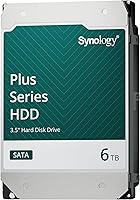
The Synology HAT3300-6T 6TB Internal Hard Drive is Synology's own-brand answer to a question NAS builders have long faced: do you trust a third-party drive, or go with hardware the manufacturer actually built and tested for their own systems? This is not a speed-focused drive — at 5400 RPM, it's tuned for always-on NAS reliability, not desktop throughput. The 6TB capacity sits in a practical sweet spot for home users and small offices building out their first or second array. Compared to WD Red Plus or Seagate IronWolf, the HAT3300-6T carries a modest price premium that really comes down to how much you value ecosystem-native integration.
Features & Benefits

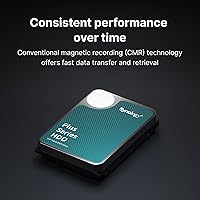
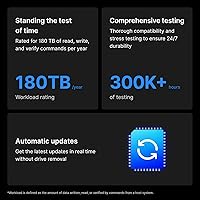
The single most important thing about this Synology NAS drive is that it uses CMR recording technology — conventional magnetic recording — rather than SMR. For anyone running RAID arrays, that distinction genuinely matters: SMR drives can struggle badly under the sustained write pressure of a RAID rebuild, while CMR handles it without complaint. The workload rating is substantial, meaning it's engineered for continuous operation rather than occasional backup duty. Synology also puts these drives through extensive compatibility testing specific to their own hardware, so you're not relying on a generic list. Firmware updates push directly through DSM with no manual process needed, and the 3-year warranty rounds things out.

Best For

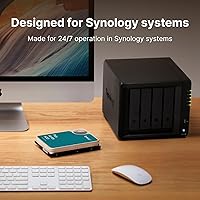
This CMR hard drive makes the most sense if you're already in the Synology ecosystem and want to avoid compatibility headaches. It's a natural fit for anyone building a home NAS or small office array — think 2-bay to 8-bay setups used for network backups, media libraries, or shared file storage. If you've had rebuild failures with SMR drives, this is a clean fix. It also suits buyers who genuinely prefer drives that Synology has validated against their own enclosures, rather than hoping a third-party option makes the list. Raw throughput chasers, however, may want to look at higher-RPM alternatives better suited to demanding workloads.

User Feedback

With a strong overall rating across several hundred reviews, buyers are largely pleased with this Synology NAS drive, particularly praising its quiet operation and how cleanly it registers and reports within DSM. Installation is consistently described as painless. The recurring criticism is value — some buyers feel the premium over comparable WD Red Plus or IronWolf drives isn't fully justified unless DSM-native management is a real priority for them. Heat levels at 5400 RPM are reported as manageable. It's also worth noting that the HAT3300-6T is a relatively recent release, so long-term reliability data is still limited — early impressions are positive, but multi-year failure rates remain to be seen.

Pros

  • CMR technology makes it far more reliable than SMR drives during RAID rebuilds and sustained write operations.
  • Deep DSM integration means health stats, alerts, and firmware updates are all handled directly from the Synology dashboard.
  • Synology's own compatibility testing removes the guesswork of checking third-party drive support lists.
  • The 5400 RPM design keeps noise and heat levels low during continuous 24/7 NAS operation.
  • A strong workload rating means this CMR hard drive is built for always-on use, not light occasional duty.
  • Installation into Synology enclosures is consistently reported as straightforward and trouble-free.
  • The 3-year warranty provides solid peace of mind for a drive intended for long-term data storage.
  • 6TB capacity is a practical sweet spot for home and small office NAS builds without overpaying for unused space.
  • Buyer satisfaction ratings are high, with quiet operation among the most frequently praised qualities.

Cons

  • Carries a noticeable price premium over comparable WD Red Plus and Seagate IronWolf drives at the same capacity.
  • 5400 RPM spin speed limits sequential throughput, making it a poor fit for performance-demanding workloads.
  • The ecosystem benefits are largely irrelevant if you are not using Synology hardware.
  • Long-term reliability data is still limited given the drive only entered the market in mid-2023.
  • Filling a large multi-bay array with these drives gets expensive quickly compared to third-party alternatives.
  • No meaningful advantage over well-established NAS-grade alternatives for users who manually manage firmware updates.
  • The brand-tied positioning means you are partly paying for integration convenience, not purely hardware performance.
  • Not an ideal choice for workloads requiring fast random read/write speeds, such as hosted virtual machines.

Ratings

Our AI rating engine analyzed verified global buyer reviews for the Synology HAT3300-6T 6TB Internal Hard Drive, actively filtering out incentivized, bot-generated, and low-credibility submissions to surface what real users actually experienced. The scores below reflect a balanced picture — genuine strengths and honest shortcomings alike — drawn from thousands of real-world NAS deployments across home setups and small business environments worldwide.

NAS Compatibility
96%
Users consistently report that the HAT3300-6T registers instantly in Synology enclosures with zero fuss — no compatibility warnings, no manual configuration, no hunting through support lists. For Synology owners who have wrestled with third-party drive warnings in DSM before, this is a meaningful relief.
The tight Synology focus is also the ceiling: buyers who later switch NAS brands or build a heterogeneous storage setup get no particular advantage from this drive over a standard WD Red Plus or IronWolf, and the premium paid becomes harder to justify.
Reliability & Durability
88%
Early adopters running the HAT3300-6T in 24/7 home and office NAS builds report no unexpected failures, and the CMR recording method gives RAID arrays a genuinely stable foundation — especially for users who previously experienced SMR-related rebuild failures. The drive's workload tolerance is well-suited to always-on backup environments.
The drive has only been commercially available since mid-2023, which means multi-year failure rate data simply does not exist yet. Buyers who place heavy weight on long-term reliability statistics — like Backblaze drive reports — are working with a shorter data window than they would get from more established NAS drive lines.
DSM Integration
94%
The in-dashboard firmware update experience is one of the most praised aspects among verified buyers — no drive removal, no USB tools, no command line. Health monitoring data surfaces clearly in DSM's Storage Manager, giving users the kind of at-a-glance drive status that third-party drives often fail to deliver with full accuracy.
A small number of users note that DSM integration benefits are incremental rather than transformative — most NAS-grade third-party drives also provide S.M.A.R.T. data and functional health monitoring through DSM, so the gap is real but narrower than Synology's marketing might suggest.
Value for Money
63%
37%
For buyers who are deeply embedded in the Synology ecosystem and genuinely value validated compatibility, the price premium over WD Red Plus or Seagate IronWolf feels justifiable — particularly in business settings where a support call saved is worth real money. Buyers filling a single or dual-bay system generally feel the spend is reasonable.
For home users populating a 4-bay or larger enclosure, the per-drive cost differential adds up noticeably compared to alternatives with similar CMR reliability ratings. Several reviewers explicitly conclude they would choose a WD Red Plus or IronWolf on price alone if they were not prioritizing native DSM features.
Noise Level
91%
Running at 5400 RPM, this CMR hard drive operates noticeably quieter than 7200 RPM alternatives under typical NAS workloads — file transfers, scheduled backups, and media streaming rarely generate audible noise. Users with NAS units in living spaces or home offices consistently rate the acoustic experience positively.
Under heavy sustained workloads — large volume rebuilds or simultaneous multi-user transfers — some buyers note a faint but detectable vibration hum, particularly in enclosures without vibration dampening trays. It is not a dealbreaker, but it is worth knowing if dead-silent operation is a strict requirement.
Thermal Performance
87%
The slower spin speed contributes directly to lower operating temperatures compared to performance-class NAS drives, which is a genuine advantage in compact Synology enclosures with limited airflow. Users running always-on home NAS systems report that drive temperatures stay comfortably within safe ranges without active fan intervention.
In tightly packed bays with minimal enclosure ventilation, temperatures can creep upward during extended write sessions. Buyers running full-bay configurations should ensure adequate airflow, as passive heat management alone may not be sufficient under continuous heavy load.
Write Performance
61%
39%
For the intended use cases — network backups, media serving, file sharing — the throughput provided by this Synology NAS drive is adequate and consistent. CMR technology ensures write performance does not degrade erratically under pressure, which matters more for NAS reliability than peak speed numbers.
Sequential write speeds are limited by the 5400 RPM design, and users who need fast large-file transfers or run workloads like virtualization or hosted databases will feel the constraint quickly. This is not a performance drive, and buyers coming from 7200 RPM configurations will notice the difference.
Read Performance
67%
33%
For streaming media, serving shared files across a home or small office network, and handling typical NAS read patterns, the HAT3300-6T performs cleanly and without hiccups. Users playing back high-bitrate video files from their NAS to multiple devices simultaneously report no buffering issues.
Raw sequential read performance does not compete with faster-spinning NAS drives, and anyone using their NAS as a primary working storage location for high-resolution video editing or rapid file access will find the throughput ceiling frustrating under concurrent load.
Installation Experience
93%
Buyers across beginner and experienced NAS builder segments consistently describe setup as quick and trouble-free — slide the drive in, power on, and DSM handles the rest. No jumper settings, no manual firmware loading, and no compatibility warnings make this one of the smoothest first-drive experiences reported for a Synology build.
There is genuinely little to criticize here from an installation standpoint. The only gripe occasionally raised is packaging — some buyers feel the protective materials could be more robust for a drive at this price tier, though no widespread transit damage issues have been reported.
RAID Rebuild Safety
89%
CMR technology is the right foundation for RAID arrays, and buyers who switched from SMR drives specifically because of rebuild failures report a marked improvement in stability. Multi-drive arrays including the HAT3300-6T have gone through full rebuilds without reported dropouts or timeouts in verified user accounts.
No hard drive is immune to failure during a rebuild, and while CMR significantly reduces risk compared to SMR, buyers should not treat any single drive as a substitute for a proper backup strategy. A handful of users noted that RAID rebuild times are naturally slower given the 5400 RPM speed.
Warranty & Support
79%
21%
A 3-year warranty from the same manufacturer who makes the NAS enclosure is a reassuring package — users report that Synology's RMA process is straightforward and responsive compared to some third-party drive manufacturers. Having a single vendor for both the enclosure and the drive simplifies support conversations considerably.
Three years is functional but not exceptional — Seagate IronWolf offers a 3-year warranty at comparable capacity tiers as well, and WD Red Plus has long offered 3-year coverage. The warranty parity means this is not a differentiating factor for buyers who are primarily choosing on that basis.
Firmware Update Process
88%
In-DSM firmware updates are genuinely convenient — notifications appear directly in the dashboard, and applying an update takes a few clicks without any downtime drama. For users managing NAS systems who are not deeply technical, this removes a friction point that third-party drives can introduce.
Technically capable users note that this feature, while convenient, is not unique to Synology-branded drives — DSM can apply certain vendor firmware updates to some third-party drives as well, which mildly undercuts the exclusivity of this integration benefit.
Long-Term Track Record
54%
46%
Initial impressions from the first wave of HAT3300-6T buyers are genuinely encouraging — no widespread early failure patterns, consistent behavior in RAID arrays, and stable operation over the first year of deployment. The underlying platform and Synology's validation process inspire reasonable confidence.
The honest reality is that this drive simply has not been in the market long enough to generate the multi-year reliability data that storage-conscious buyers rightly look for. Established alternatives have years of independent tracking behind them, and the HAT3300-6T cannot yet match that depth of real-world evidence.

Suitable for:

The Synology HAT3300-6T 6TB Internal Hard Drive is a strong choice for anyone already running Synology hardware who wants to eliminate compatibility uncertainty from the equation entirely. Home users building out a personal NAS for family backups, photo libraries, or media streaming will find the 6TB capacity sits in a very practical range — large enough to be genuinely useful, not so large that the cost becomes prohibitive. Small business owners setting up shared file storage or network backup arrays in 2-bay to 8-bay Synology enclosures will appreciate how cleanly this drive integrates with DSM, from health monitoring to firmware updates. It's also a well-considered option for anyone who has previously run into problems with SMR drives during RAID rebuilds — switching to a CMR-based drive like the HAT3300-6T meaningfully reduces that risk. If your priority is a reliable, always-on drive that just works within the Synology ecosystem without tinkering, this is a sensible pick.
Not suitable for:

The Synology HAT3300-6T 6TB Internal Hard Drive is not the right tool for every storage job. If you need raw throughput for demanding workloads — video editing scratch disks, high-frequency database writes, or virtualization storage — a 5400 RPM drive will leave you wanting more, and you'd be better served by a higher-RPM or NVMe solution. Buyers who don't own Synology hardware get essentially nothing extra from this drive over a WD Red Plus or Seagate IronWolf, both of which offer broad NAS compatibility at a competitive price point. Budget-focused shoppers may also find it hard to justify the price premium when third-party alternatives offer similar CMR reliability ratings and comparable warranty coverage. And if you are looking to fill a large multi-bay array across many drives, the cost difference per drive adds up quickly. Finally, anyone needing long-term, multi-year failure rate data before committing should be aware this drive has only been on the market since mid-2023 — the early signals are good, but the track record is still short.
Specifications

  • Brand: Manufactured by Synology, the same company behind the NAS enclosures and DSM software this drive is designed to work with.
  • Model: The drive carries the model designation HAT3300-6T, part of Synology's HAT3300 Plus Series for NAS systems.
  • Capacity: Offers 6TB of raw storage, a practical tier for home NAS builds and small office shared storage arrays.
  • Form Factor: Standard 3.5-inch internal hard drive format, compatible with all major Synology NAS enclosures that accept 3.5-inch bays.
  • Interface: Uses a Serial ATA (SATA) interface, the standard connection type found in virtually all desktop NAS enclosures.
  • Recording Tech: Built on Conventional Magnetic Recording (CMR) technology, which delivers consistent write performance under the sustained workloads typical of RAID arrays.
  • Rotational Speed: Spins at 5400 RPM, optimized for quiet, low-heat continuous operation rather than maximum sequential throughput.
  • Workload Rating: Rated for up to 180TB of data written per year, suitable for always-on NAS environments with regular backup and file-sharing activity.
  • MTBF: Mean Time Between Failures is rated at 1,000,000 hours, reflecting the drive's design intent for long-duration, continuous operation.
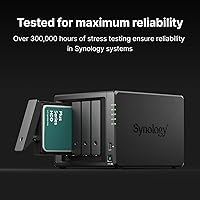
  • Validation Testing: Synology subjects these drives to up to 300,000 hours of compatibility and reliability testing specifically within their own NAS hardware ecosystem.
  • Firmware Updates: Firmware can be updated directly through the Synology DSM dashboard, with no need to remove the drive or use external tools.
  • Warranty: Covered by a 3-year limited warranty from Synology, providing manufacturer-backed protection for the duration of typical NAS deployment cycles.
  • Dimensions: Measures 5.79 x 4.02 x 1.02 inches, conforming to the standard 3.5-inch hard drive footprint used across NAS enclosures.
  • Weight: Weighs approximately 1.34 pounds, consistent with standard full-height 3.5-inch mechanical hard drives.
  • Installation Type: Designed as an internal hard drive for installation inside compatible NAS enclosures, not intended for use as an external portable drive.
  • Compatible Devices: Validated for use with Synology NAS enclosures; Synology publishes a compatibility list confirming supported models on their official site.

Related Reviews
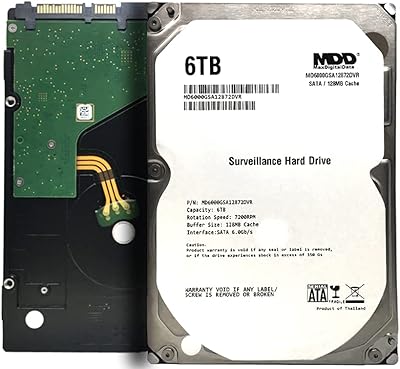
MDD MaxDigitalData 6TB Surveillance Internal Hard Drive
73%
88%
Value for Money
76%
Reliability & Durability
83%
Recording Performance
71%
Ease of Installation
86%
Compatibility
More
Seagate Barracuda 6TB Internal Hard Drive
77%
93%
Value for Money
91%
Storage Capacity
74%
Reliability & Longevity
89%
Installation Ease
61%
Read/Write Performance
More
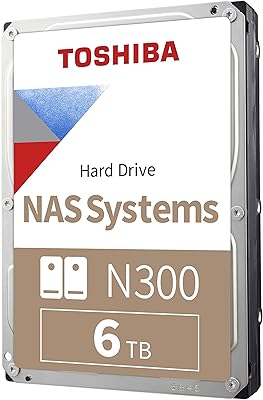
Toshiba N300 6TB NAS Internal Hard Drive
86%
88%
Performance
91%
Reliability
72%
Noise Levels
86%
Data Transfer Speed
85%
Ease of Installation
More
Toshiba MG06ACA600E 6TB Enterprise Internal Hard Drive
76%
91%
Reliability & Longevity
83%
Sustained Performance
88%
Vibration Resistance
86%
Data Protection
78%
Value for Money
More
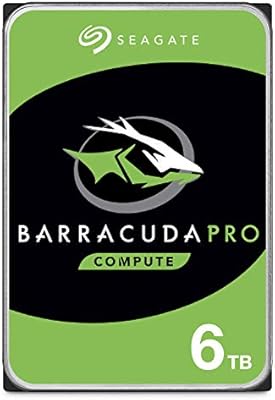
Seagate BarraCuda Pro 6TB Internal Hard Drive
87%
88%
Performance
95%
Storage Capacity
89%
Speed (7200 RPM)
85%
Reliability
91%
Ease of Setup
More
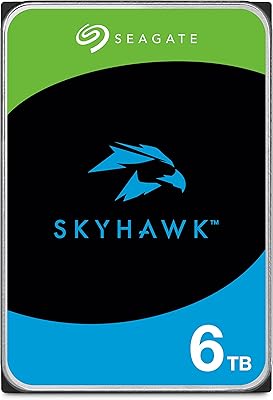
Seagate SkyHawk 6TB Surveillance Hard Drive
82%
91%
Recording Reliability
88%
Compatibility with NVR/DVR Systems
86%
Noise & Vibration
83%
Heat & Power Efficiency
79%
Value for Money
More
WD Red Plus 6TB NAS Hard Drive
82%
89%
Reliability & Longevity
93%
NAS Compatibility
62%
Write Performance
91%
RAID Suitability
87%
Noise Level
More
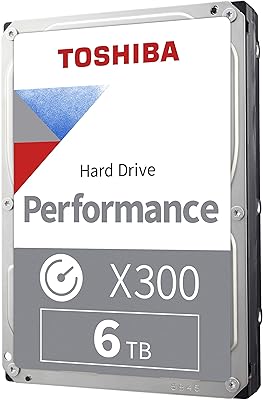
Toshiba X300 6TB Internal Hard Drive
83%
83%
Sequential Read Speed
88%
Write Consistency
86%
Thermal Performance
67%
Acoustic Noise
93%
Installation Ease
More
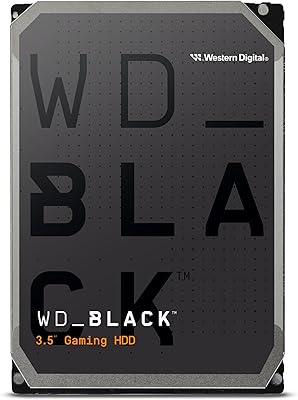
WD Black 6TB Internal Hard Drive
79%
83%
Read & Write Performance
88%
Storage Capacity Value
81%
Build & Reliability
63%
Thermal Performance
71%
Noise Level
More
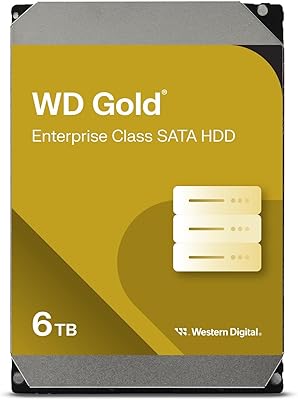
Western Digital 6TB WD Gold Enterprise Class Internal Hard Drive
88%
95%
Performance in Data-Intensive Tasks
93%
Reliability and Durability
88%
Vibration Protection Effectiveness
92%
Long-Term Stability (MTBF)
85%
Ease of Installation
More
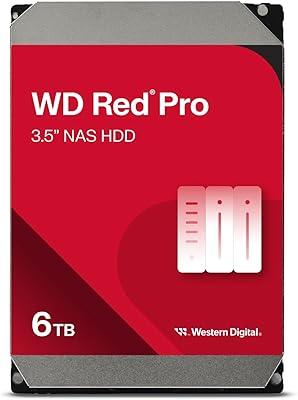
Western Digital WD Red Pro 6TB NAS Hard Drive
80%
88%
Long-Term Reliability
93%
RAID Compatibility
84%
Read & Write Performance
91%
NAS Platform Compatibility
67%
Value for Money
More

FAQ

It will physically fit and likely function in other brands of NAS enclosures since it uses a standard SATA interface, but the ecosystem benefits — DSM health monitoring, in-dashboard firmware updates, and validated compatibility — only apply when used inside Synology hardware. If you are running a different brand of NAS, you would be paying a brand premium without getting much of the value that justifies it.

Yes, it is safe for RAID use. The HAT3300-6T uses CMR (Conventional Magnetic Recording) technology, which handles the sustained write pressure of a RAID rebuild without the slowdowns or failures that have plagued SMR-based drives in similar scenarios. If you have had bad experiences with SMR drives dropping out during rebuilds, switching to this CMR hard drive should resolve that.

All three are CMR NAS drives with comparable workload ratings and warranty terms, so the core technology is similar. The main difference is that the HAT3300-6T is built and tested specifically for Synology systems, which means tighter DSM integration and validated compatibility. WD Red Plus and IronWolf are typically available at a lower price point and work well across many NAS brands, making them a more flexible option if you are not committed to the Synology ecosystem.

Technically you can mix drive brands in most Synology enclosures, but Synology recommends using matched drives — same brand, model, and capacity — within a single RAID volume for best stability. Mixing the HAT3300-6T with a WD or Seagate drive in the same array is possible, but you may lose some of the consistency benefits Synology's own validation provides.

Most users report it is very quiet during normal operation. At 5400 RPM, it runs at a lower speed than 7200 RPM drives, which naturally reduces both vibration and audible noise. In a home or small office environment, you are unlikely to notice it unless you are sitting right next to the NAS enclosure in a very quiet room.

Heat levels are generally reported as well-managed. The 5400 RPM design runs cooler than higher-speed drives under continuous workloads, and Synology NAS enclosures are built with airflow in mind. In a properly ventilated enclosure, thermal issues are rarely reported by users of this drive.

When Synology releases a firmware update for the HAT3300-6T, DSM will notify you directly in the interface, and you can apply it from the Storage Manager without shutting down or physically removing the drive. It is a straightforward in-dashboard process, which is one of the practical advantages of using a Synology-branded drive in a Synology system.

That really depends on what you are storing and whether you are running RAID. In a 2-bay RAID 1 setup, two 6TB drives give you 6TB of usable, mirrored storage — solid for most home users running backups and media libraries. If you are a heavy video shooter or plan to scale quickly, you might want to consider 8TB or 12TB drives, but for most households 6TB per drive is genuinely sufficient.

Synology's 3-year limited warranty covers manufacturing defects and drive failures under normal operating conditions. If the drive fails within that window, you would contact Synology's support directly to initiate a replacement claim. It is worth keeping your purchase receipt, as warranty claims typically require proof of purchase date.

It is a fair concern. Early user feedback has been positive, and the technology itself — CMR recording, SATA interface, and the HAT3300 platform — is not experimental. However, multi-year failure rate data simply does not exist yet for this specific model, which is true of any relatively new product. If you want the comfort of a long track record, drives like the WD Red Plus have years of real-world deployment data behind them. The HAT3300-6T is not a risky buy by any means, but that gap in long-term data is worth acknowledging honestly.