Overview

The SUUNTO Sonic Open-Ear Bone Conduction Headphones take a fundamentally different approach to workout audio: instead of blocking your ears, they transmit sound through your cheekbones, leaving your ear canals completely open. SUUNTO is best known for GPS watches and outdoor gear, so entering the headphone space makes sense — their target buyer is already running trails or cycling roads. This open-ear design means you stay aware of traffic, trail hazards, and other people around you, which no traditional in-ear headphone can offer. That said, be clear-eyed: this is a workout companion built for awareness and convenience, not for audiophile listening sessions.
Features & Benefits

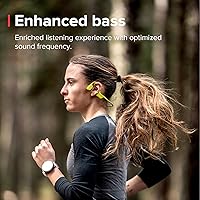
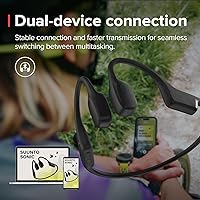
The SUUNTO Sonic runs on a Qualcomm QCC3044 chip, which brings two genuinely useful things: Bluetooth 5.2 multipoint connectivity so you can stay paired to your phone and laptop at the same time, and aptX-Adaptive support for cleaner audio streaming. The bone conduction driver has been tuned to push more energy into the low end — bass is noticeably better than older bone conduction units, though it still will not satisfy anyone used to a sealed in-ear. Battery life sits at a solid 10 hours, and a 5-minute fast charge buys 90 minutes of playback — genuinely useful when you forget to top up before a run. The dual microphones with cVc noise suppression handle calls reasonably well outdoors, and the IP55 rating covers sweat and light rain but not full immersion.

Best For

This open-ear headset makes the most sense for people who need to stay connected to their surroundings. Outdoor runners and cyclists are the obvious fit — hearing approaching traffic or a fellow trail user matters far more than perfect audio reproduction in those situations. Office workers who want low-key background audio without completely tuning out colleagues will also appreciate the open design. If you already own a SUUNTO watch, pairing both through the app unlocks live voice feedback during workouts — lap splits, pace alerts — which is genuinely useful mid-run. Commuters who constantly switch between a work laptop and a phone will value the dual-device pairing, and anyone who finds in-ear buds physically uncomfortable over long sessions has a strong reason to consider this.

User Feedback

With 179 ratings averaging 4 out of 5 stars, buyers are largely satisfied with these bone conduction headphones, and comfort is the most consistent praise — people describe wearing them through two-hour runs without any pressure or hotspots. The lightweight titanium frame earns repeated mentions across reviews. On the critical side, sound leakage at high volume is a real complaint: crank these up in a quiet room and nearby people will hear your audio. Bass, while improved over older bone conduction designs, still sounds thin compared to any sealed headphone. Call quality gets mixed marks — fine in moderate wind, noticeably degraded in heavier gusts. Fit varies slightly by head shape, but durability complaints are rare and appear to reflect isolated cases rather than a broader pattern.

Pros

  • Open-ear design keeps you fully aware of traffic and trail hazards without removing the headphones mid-run.
  • At just 30.6 grams, these bone conduction headphones are light enough to forget you are wearing them on long training days.
  • Ten hours of battery covers back-to-back marathon training sessions without needing a top-up.
  • A five-minute fast charge delivers 90 minutes of playback — a practical lifesaver when you forget to charge the night before.
  • Multipoint pairing lets the SUUNTO Sonic stay connected to both your phone and laptop simultaneously, with automatic audio switching.
  • The titanium alloy and silicone frame holds its shape through months of daily use without feeling fragile or cheap.
  • Bone conduction bass response is noticeably stronger than older-generation competitors in the same category.
  • The QCC3044 chip keeps Bluetooth stable and dropout-free across typical everyday range distances.
  • SUUNTO watch owners unlock live voice workout feedback — pace, laps, and alerts — directly through the headphones mid-session.
  • Dual microphones with cVc suppression handle calls cleanly in moderate noise environments like city streets or indoor gyms.

Cons

  • Sound leakage at volumes above 70 percent is clearly audible to people sitting nearby — not suitable for quiet shared spaces.
  • The proprietary magnetic charging cable is easy to lose and impossible to replace with a standard cord.
  • Call quality degrades noticeably in strong wind, which is a real problem for cyclists using these at speed.
  • aptX-Adaptive only works with compatible Android devices, leaving iPhone users on standard Bluetooth audio quality.
  • Buyers with narrower or wider-than-average head shapes may find the transducer pads sit slightly off-position, affecting both sound and stability.
  • The companion app offers little practical value for users outside the SUUNTO watch ecosystem.
  • Touch controls occasionally register accidental inputs when repositioning the headset or wiping away sweat mid-run.
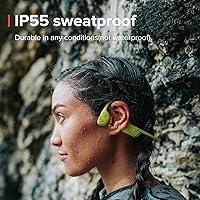
  • IP55 protection is frequently misunderstood — the word waterproof in marketing has led to damage from shower use and heavy rain exposure.
  • Video content reveals a mild but perceptible audio-to-lip-sync drift due to the 85-millisecond latency.

Ratings

The SUUNTO Sonic Open-Ear Bone Conduction Headphones earned an overall 4-star average across 179 verified global ratings, and our AI-driven scoring system processed that feedback while actively filtering out incentivized reviews and bot-generated submissions to surface what real buyers actually experience. The scores below reflect both the genuine strengths that keep users coming back and the friction points that caused disappointment — nothing is glossed over.

Comfort & Wearability
88%
Buyers consistently highlight how little these feel on the head during long sessions — the titanium wraparound frame distributes weight evenly so there is no pressure buildup even after two hours of running. Users with sensitive ears who abandoned traditional in-ear buds call this a genuine relief.
A small number of buyers with narrower or larger-than-average heads report that the frame sits slightly off the cheekbone transducer pads, which reduces both sound quality and secure fit. It is a minority experience, but worth trying on before committing.
Situational Awareness
93%
This is the core reason most people buy this open-ear headset, and it delivers without compromise. Cyclists and road runners report hearing approaching cars, trail warnings, and ambient cues just as clearly as they would without headphones on — the ear canals stay fully unobstructed.
At high volumes the bone conduction vibration itself can create a slight masking effect on very high-pitched environmental sounds. It is subtle, but users who rely on hearing bicycle bells or high-frequency alerts in urban environments have flagged it.
Sound Quality
67%
33%
For a bone conduction design, the low-end tuning is a noticeable step up from older-generation competitors. Bass-heavy tracks during a gym session feel more present than most users expected, and the optimized frequency curve keeps mid-range vocals relatively clear for podcasts and calls.
Audiophiles or anyone coming from sealed in-ear headphones will find the overall sound thin and lacking depth — this is a physics limitation of bone conduction, not a design failure. High-volume listening also introduces some vibrational buzz that breaks immersion on complex tracks.
Battery Life
86%
Ten hours of continuous playback covers most real-world use cases comfortably, including back-to-back marathon training days. The fast-charge feature is practically useful — a five-minute top-up before a run buys 90 minutes of audio, which has saved multiple buyers who forgot to charge overnight.
The proprietary magnetic charging cable is a point of vulnerability — losing it means the headphones are unusable until a replacement arrives, and users who travel frequently have found it annoying to carry yet another non-standard cable alongside their other gear.
Call Quality
71%
29%
In moderate urban noise and mild wind, the dual microphone setup with cVc suppression performs well enough that call recipients rarely complain. Office workers using these at a standing desk or during a light walk report clear, natural-sounding voice transmission.
In stronger wind — a common scenario for outdoor cyclists — call quality degrades noticeably, with wind noise bleeding into the microphone feed. Several reviewers specifically flagged this as a problem on bike rides above 20 km/h, which limits the usefulness for one of its target audiences.
Bluetooth Connectivity
84%
Multipoint dual-device pairing works reliably in practice — switching audio from a work laptop to an incoming phone call happens automatically without manual intervention. The Qualcomm QCC3044 chip keeps the connection stable up to the rated 10-meter range with no reported dropout issues in everyday environments.
aptX-Adaptive compatibility is limited to Android devices with matching hardware, meaning iPhone users get standard SBC or AAC quality instead. This is a common Qualcomm codec limitation, but it is worth flagging for users who pair primarily with Apple devices.
Sound Leakage
58%
42%
At moderate listening volumes — roughly 50 to 60 percent of maximum — leakage is minimal enough for open office use without bothering nearby colleagues. Users who primarily listen to podcasts or spoken audio at comfortable levels report no meaningful social friction.
Crank the volume past 70 percent and leakage becomes clearly audible to people within a meter or two. This is a fundamental bone conduction trade-off, but buyers who expected better isolation based on the marketing copy expressed frustration when testing in quiet environments like libraries or shared workspaces.
Build Quality & Durability
82%
18%
The titanium alloy and silicone combination feels premium for the price tier — the frame flexes without feeling fragile, and the silicone coating resists minor scratches from being tossed into a gym bag. Durability complaints in the review pool are genuinely rare.
The charging port and magnetic connector area received a few mentions of wear over several months of daily use. Nothing catastrophic, but users who train every day in humid conditions noted that the connector area showed early signs of corrosion, suggesting the IP55 rating offers limited long-term protection at the contact points.
Water & Sweat Resistance
74%
26%
IP55 coverage handles sweaty training sessions and light rain runs without issue — the vast majority of active users report no problems after months of regular outdoor use. This rating is genuinely adequate for the intended use cases of running and cycling.
IP55 is not waterproof, and some buyers discovered this the hard way by wearing them in the shower or during a heavy downpour. The rating is clearly disclosed, but the word waterproof appearing in the product title created confusion and led to a handful of avoidable returns.
App Integration
69%
31%
For SUUNTO watch owners, the companion app adds practical workout value — receiving spoken lap times and average pace mid-run without glancing at a watch is a genuine convenience that users in this ecosystem appreciated. Battery level monitoring in the app is clear and reliable.
For users without a SUUNTO watch, the app offers limited day-to-day value beyond switching sound modes. Non-SUUNTO users found the app underwhelming and reported that it added unnecessary friction to what could have been a simpler setup experience.
Fit Stability During Exercise
79%
21%
The wraparound titanium frame stays put during running, HIIT sessions, and cycling without bouncing or shifting. Most users with average head sizes report zero adjustment needed mid-workout, which is a meaningful practical advantage over clip-on or ear-hook designs.
Users with very fine hair or smooth skin around the frame contact points noted occasional slippage during high-intensity interval sessions involving rapid head movement. Adding a slight bend adjustment to the frame resolved the issue for most, but it requires some initial experimentation.
Latency
77%
23%
At 85 milliseconds, audio latency is low enough for podcast and music playback without any perceptible lag. Fitness app audio cues and voice prompts sync well with movement, which matters for users relying on interval timer audio during structured training.
For video content — YouTube, Netflix, or video calls on a laptop — the 85ms latency becomes occasionally noticeable as a slight lip-sync drift. It does not ruin the experience, but users who frequently consume video media found it mildly distracting during longer viewing sessions.
Value for Money
81%
19%
Given the Qualcomm chip quality, multipoint pairing, fast charging, and brand credibility from SUUNTO, the pricing sits in a competitive spot within the entry-level bone conduction segment. Buyers who evaluated alternatives at similar price points frequently chose this for the app ecosystem and codec support.
A few buyers felt the sound leakage and audio quality limitations were hard to justify even at this price, especially when some lesser-known brands offer comparable hardware for less. Users who prioritized pure audio fidelity felt they paid for features they could not fully use.
Controls & Usability
72%
28%
The combination of physical buttons and touch controls gives enough flexibility for mid-run operation without pulling out a phone. Volume, playback, and call answer functions are accessible without looking, which users appreciated during outdoor sessions.
The touch sensitivity caused occasional accidental input — particularly when adjusting the headset position mid-run or wiping sweat from the frame. A few buyers also noted that the button layout required a short learning curve before muscle memory kicked in reliably.

Suitable for:

The SUUNTO Sonic Open-Ear Bone Conduction Headphones are built for people whose environment demands that they stay aware of the world around them while still having audio in their ears. Road runners and cyclists are the clearest beneficiaries — hearing approaching traffic, a barking dog, or a fellow rider calling out without ever having to yank an earbud out is a safety advantage that no traditional headphone can replicate. Office workers in open-plan spaces will also find this open-ear headset practical for low-volume background listening that does not cut them off from colleagues or phone calls. If you already own a SUUNTO GPS watch, pairing both devices through the companion app adds a layer of real workout utility — spoken lap splits and pace feedback mid-run are genuinely useful in ways that staring at a wrist display is not. Commuters who move between a work laptop and a smartphone throughout the day will appreciate the dual-device pairing that handles those transitions automatically. Anyone who finds in-ear buds physically painful or simply cannot wear over-ear headphones during exercise has a strong practical reason to consider these bone conduction headphones as a long-term daily driver.

Not suitable for:

The SUUNTO Sonic Open-Ear Bone Conduction Headphones are a poor fit for anyone whose primary goal is audio quality. Bone conduction physics limit how much bass and soundstage these can produce — if you care deeply about how music actually sounds and currently use premium in-ear or over-ear headphones, this open-ear headset will feel like a downgrade in every sonic dimension. People who listen at high volumes in quiet shared spaces should also think twice, because sound leakage becomes socially problematic above moderate levels — libraries, quiet offices, or shared commutes are environments where these draw unwanted attention. iPhone users hoping to take full advantage of the aptX-Adaptive codec will be disappointed to learn that the codec is Android-only, leaving Apple device owners with standard wireless audio quality. If you train in heavy rain or plan to rinse gear after a muddy trail run, the IP55 rating is not sufficient — it handles sweat and light drizzle, but submersion or direct water jets can cause damage despite the word waterproof appearing in marketing copy. Finally, buyers without a SUUNTO ecosystem watch will find the companion app adds minimal value and may feel like an unnecessary layer of setup complexity.

Specifications

  • Weight: The headset weighs 30.6 grams, making it one of the lighter options in the bone conduction category and comfortable for extended wear during training sessions.
  • Frame Material: The wraparound frame is constructed from titanium alloy with a silicone outer coating, providing a balance of flexibility, durability, and skin-friendly contact.
  • Driver Type: A dynamic bone conduction driver transmits audio vibrations through the cheekbones directly to the inner ear, keeping the ear canals fully unobstructed.
  • Bluetooth Version: Bluetooth 5.2 is supported via the Qualcomm QCC3044 chip, enabling stable wireless connectivity with lower power consumption compared to older Bluetooth versions.
  • Audio Codec: aptX-Adaptive codec support delivers higher-quality, lower-latency audio streaming on compatible Android devices; standard SBC or AAC applies to other device types.
  • Multipoint Pairing: The headset can maintain simultaneous Bluetooth connections to two separate devices, allowing automatic audio switching without manual re-pairing.
  • Audio Latency: Audio latency is rated at 85 milliseconds, which is adequate for music and podcast playback but may produce a slight lip-sync drift during video content.
  • Microphones: Two built-in HD microphones are paired with cVc echo cancellation and noise suppression technology to improve voice clarity during calls in noisy environments.
  • Battery Life: A fully charged battery provides up to 10 hours of continuous playback at moderate volume levels, sufficient for two back-to-back marathon training sessions.
  • Fast Charging: Five minutes of charging via the magnetic cable delivers approximately 90 minutes of playback, and a full charge from empty takes around one hour.
  • Battery Capacity: The internal lithium polymer battery has a capacity of 140 mAh, contributing to the headset's low overall weight and compact form factor.
  • Water Resistance: An IP55 rating protects against sweat and light rain exposure during outdoor sports, but the headset is not suitable for submersion or direct water rinsing.
  • Bluetooth Range: Wireless range is rated at 10 meters under typical conditions, which covers standard use cases like keeping a phone in a jersey pocket or gym bag nearby.
  • Connectivity: The headset connects wirelessly via Bluetooth only; there is no 3.5mm headphone jack or wired audio input option.
  • Controls: Playback and volume are managed through a combination of physical buttons and touch controls on the frame, with additional settings available through the SUUNTO companion app.
  • App Compatibility: The SUUNTO app is available for iOS and Android and enables battery monitoring, sound mode switching, and voice workout feedback when paired with a compatible SUUNTO watch.
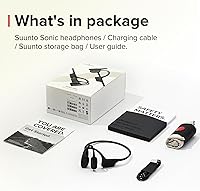
  • Included Contents: The retail package includes the headset, a proprietary magnetic USB charging cable, and a printed user manual; no carrying case is included.
  • Charging Interface: Charging is handled through a proprietary magnetic connector rather than a universal USB-C port, which means the included cable must be kept on hand for recharging.
  • Audio Driver: Sound is produced by a dynamic driver unit housed within a shell structure engineered to reduce sound leakage at moderate listening volumes.
  • Recommended Use: The headset is rated for outdoor sports including running, cycling, and snowboarding, as well as office and commuting use where ambient awareness is a priority.

Related Reviews

Xmenha xx288 Open-Ear Bluetooth Headphones
79%
88%
Wearing Comfort
81%
Fit Stability During Activity
93%
Ambient Sound Awareness
63%
Sound Quality
79%
Battery Life
More
STAR4EVER X19S Open-Ear Bluetooth Bone Conduction Headphones
85%
91%
Comfort & Fit
72%
Sound Quality
88%
Battery Life
65%
Bluetooth Connectivity
85%
Build Quality & Durability
More
AfterShokz Aeropex Open-Ear Wireless Bone Conduction Headphones
87%
91%
Comfort and Fit
85%
Sound Quality
94%
Waterproof Performance
89%
Battery Life
88%
Ease of Use
More
AfterShokz Air AS650CR Open-Ear Wireless Bone Conduction Headphones
87%
94%
Comfort and Fit
82%
Sound Quality
80%
Battery Life
88%
Ease of Use
90%
Build Quality
More
Aurotlu Q16-H3 Open Ear Wireless Earbuds
82%
93%
Wearing Comfort
84%
Secure Fit During Activity
88%
Battery Life
67%
Sound Quality
86%
Bluetooth Connectivity
More
NUPLEA Q71 Open-Ear Clip-On Earbuds
71%
83%
Wearing Comfort
79%
Stability During Exercise
62%
Sound Quality
44%
Sound Leakage
57%
Microphone & Call Quality
More
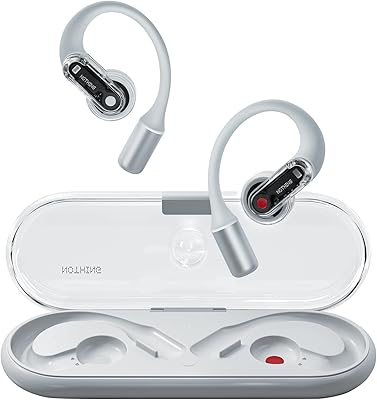
Nothing Ear (Open) Open-Ear Earbuds
79%
91%
Wearing Comfort
83%
Workout Stability
74%
Sound Quality
77%
Call Quality
49%
Sound Leakage
More
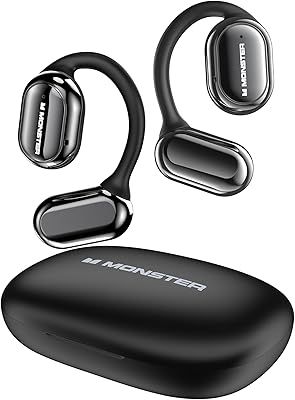
Monster AC100 Open-Ear Bluetooth Headphones
76%
88%
Battery Life
79%
Comfort & Fit
67%
Sound Quality
83%
Bluetooth Stability
71%
Call Quality
More
OJW Open Ear Wireless Sport Headphones
80%
93%
Battery Innovation
88%
Wearing Comfort
86%
Waterproofing
84%
Workout Stability
74%
Audio Clarity
More
Raycon Bone Conduction Headphones RBB842
74%
91%
Water Resistance
93%
Situational Awareness
87%
Battery Life
63%
Audio Quality
82%
Fit & Stability
More

FAQ

No — and this is genuinely important to understand before buying. The IP55 rating means these bone conduction headphones can handle sweat and light rain without any issue, but they are not designed for submersion or direct water exposure from a tap or showerhead. If you run in heavy rain regularly, that is likely fine. Swimming laps or showering in them risks permanent damage.

They pair with iPhones just fine over standard Bluetooth, so you will get full playback and call functionality. The one thing iPhone users miss out on is the aptX-Adaptive codec, which is an Android-only feature due to Apple's ecosystem restrictions. In practical terms this means audio quality is good but not at the highest tier the hardware is capable of delivering.

At low to moderate volume levels — around 50 percent — leakage is subtle enough that a colleague sitting a meter away is unlikely to hear it clearly. Push past 70 percent and it becomes more audible. If your office is very quiet or you sit in close proximity to others, keeping volume restrained is the polite approach with any open-ear headset.

Yes, and buyers consistently confirm this in real-world use. Five minutes on the magnetic charger genuinely gives you around 90 minutes of playback — it is not a theoretical spec that falls short in practice. It has become a go-to feature for runners who forget to charge the night before a morning session.

Not strictly, but the app is significantly more useful if you own one. Without a SUUNTO watch, the app mainly lets you monitor battery level and toggle between sound modes — functional but not exciting. Pair it with a compatible SUUNTO GPS watch, however, and you unlock live voice feedback during workouts: spoken lap times, pace updates, and training alerts delivered through the headphones mid-run.

The titanium wraparound frame sits behind the head and holds the transducer pads against the cheekbones without relying on ear hooks or ear canal insertion. For most head sizes, the fit is secure through running, HIIT, and cycling. Buyers with very narrow or wide heads occasionally note that the pads do not sit flush, which affects both sound transmission and stability, so it is worth noting if you have an unusual head size.

Yes — multipoint pairing is one of the more practical features here. You can keep the SUUNTO Sonic connected to your work laptop and your phone simultaneously, and when a call comes in on the phone it switches over automatically. It is a genuine convenience for anyone who moves between devices throughout the day.

In calm or mildly windy conditions the dual microphones and noise suppression do a reasonable job — call recipients generally report clear audio. The limitation shows up in stronger wind, particularly above around 20 km/h, where wind noise bleeds into the microphone feed enough to cause complaints on the other end. If you plan to take calls regularly while cycling at speed, this is a known weak point.

It depends on your expectations. The SUUNTO Sonic Open-Ear Bone Conduction Headphones have been tuned to push more energy into the low end than older bone conduction designs, and casual music listening — pop, hip-hop, electronic — is enjoyable at moderate volumes. Podcasts and spoken audio are where they genuinely shine. If you have spent time with quality sealed in-ear headphones and care about soundstage and bass depth, the comparison will feel like a step back, which is an honest limitation of the technology rather than a specific design flaw.
This is one of the more frustrating aspects of the design. The headset uses a proprietary magnetic charging cable rather than a standard USB-C connector, so you cannot grab any nearby cable to top it up. Replacement cables are available through SUUNTO and third-party sellers, but losing the original means the headphones are temporarily unusable until a replacement arrives — worth keeping a spare if you travel frequently.