

Overview
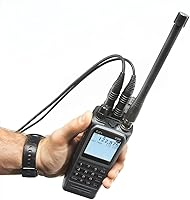
The Sporty's PJ2+ COM Aviation Handheld Radio arrived in early 2024 as a genuinely useful option for general aviation pilots who want a capable backup comm without the complexity of older handhelds. This isn't a scanner for hobbyists — it's built with working pilots in mind. The most immediately obvious design decision is the oversized screen paired with a large keypad, making frequency entry far less fumble-prone when you're already heads-down in a bumpy cockpit. Compared to earlier Sporty's models, the ergonomic improvements are real and noticeable. Think of this pilot radio as a smart secondary comm or emergency fallback — not a replacement for panel avionics.
Features & Benefits
The PJ2+ COM covers the full 118–174 MHz aviation band across 760 channels, which means you're not hunting for CTAF or ATIS frequencies on a restricted device. At 6 watts PEP, transmit power gives a real — if modest — edge over the 5W units that populate this price tier. Connectivity is flexible: standard GA headset jacks handle the cockpit, and a 3.5mm earbud port covers ramp use without your full headset. NOAA weather is one button away, which matters when you're doing a quick preflight check. The automatic noise limiter keeps received audio clean, and dual power options — six AA batteries plus USB Type-C — provide the kind of redundancy that sensible pilots appreciate.
Best For
This aviation handheld is a natural fit for student pilots who want something intuitive within reach during training — the large keypad and uncomplicated menu layout mean less heads-down time fumbling for frequencies. Experienced GA pilots who need a cockpit-ready backup without a steep learning curve will find it equally practical. On the ramp, ground crew benefit from the loud, clear audio even in high-noise environments. Pilots who regularly fly through areas of shifting weather will genuinely use the quick NOAA access. And for those attending fly-ins or traveling between airports, this pilot radio is portable and self-contained — no installation required.
User Feedback
With around 80 ratings and a 4.6-star average — solid for a radio that launched in early 2024 — buyer sentiment leans noticeably positive, though the sample size is still modest. Pilots who have used the PJ2+ COM in real flight conditions tend to praise audio clarity and how quickly they can pull up the right frequency without squinting. On the downside, a handful of reviewers flag the 12.8-ounce weight as tiring during long carry days, and battery drain seems faster than expected under heavy use. The absence of any water resistance is worth noting for variable conditions. Compared to Icom and Yaesu alternatives, this aviation handheld earns points for ease of use, though competitors offer deeper scanning functionality.
Pros
- The oversized screen and large keypad make frequency tuning fast and accurate, even with gloves on.
- At 6 watts PEP, transmit power edges out most competing 5W handhelds in this category.
- NOAA weather is accessible without navigating menus — one dedicated button does the job.
- Dual headset options — standard GA jacks and a 3.5mm port — cover nearly every cockpit and ramp setup.
- The automatic noise limiter noticeably cleans up received audio in high-interference environments.
- USB Type-C backup power input adds useful flexibility alongside the standard AA battery operation.
- 760-channel coverage across the full aviation band handles cross-country and multi-field use without gaps.
- The last-frequency flip-flop button is a small but practical touch that saves real time on approach.
- Early buyer ratings skew strongly positive, with audio clarity and ease of use cited repeatedly.
- A one-year repair-or-replace warranty provides reasonable coverage for a mid-range aviation accessory.
Cons
- Battery drain under active use is faster than some pilots expect — carry spares on longer trips.
- Zero water resistance makes outdoor preflight use in rain a genuine concern worth planning around.
- At 12.8 ounces with batteries installed, the PJ2+ COM feels noticeably heavy during extended all-day carry.
- Only 20 scannable memory channels is limiting for pilots who frequent many different fields.
- Real-world transmit range falls well short of the 10-mile spec in flat terrain or low-altitude ground use.
- Icom and Yaesu alternatives offer deeper scanning functionality for pilots who need advanced channel management.
- The review base of roughly 80 ratings is still small — long-term durability data is not yet well established.
- No backlight brightness adjustment mentioned — screen legibility in direct sunlight may vary.
- Runs on AA batteries only with no rechargeable lithium pack option included or offered as an accessory.
- Not suitable as a primary comm solution — pilots expecting panel-mount performance will find it falls short.
Ratings
Our AI rating engine analyzed verified buyer reviews for the Sporty's PJ2+ COM Aviation Handheld Radio from across multiple global platforms, actively filtering out incentivized, duplicate, and bot-generated feedback to surface genuine pilot and ground crew experiences. The scores below reflect an honest synthesis of what real users praised and where they ran into friction — no categories were softened or omitted to protect the overall impression. Both the standout strengths and the recurring pain points are represented transparently so you can make a well-informed decision.
Ease of Use
Screen Legibility
Audio Clarity
Transmit Performance
Build Quality
Battery Life
NOAA Weather Access
Headset Compatibility
Portability
Keypad Design
Value for Money
Frequency Coverage
Setup & Learning Curve
Warranty & Support
Suitable for:
The Sporty's PJ2+ COM Aviation Handheld Radio is squarely aimed at general aviation pilots who want a dependable, no-fuss backup comm they can actually operate under pressure. Student pilots benefit most — the oversized screen and large keypad reduce the cognitive load of tuning CTAF or unicom frequencies during busy training flights when mental bandwidth is already stretched. Experienced GA pilots who want a ready-to-go emergency radio stowed in their flight bag will appreciate how quickly they can reach NOAA weather or flip back to the last-used frequency without digging through submenus. Ground crew and ramp workers get genuine value from the clear audio and standard GA headset jack compatibility in loud environments. Fly-in travelers and pilots hopping between unfamiliar fields also fit well here — this pilot radio needs no installation and is operational in seconds.
Not suitable for:
Pilots looking to replace a panel-mounted primary comm should look elsewhere — the Sporty's PJ2+ COM Aviation Handheld Radio is a backup tool, and treating it as anything else sets unrealistic expectations. The advertised 10-mile range is a best-case figure; real-world performance depends heavily on terrain, altitude, and atmospheric conditions, so anyone needing consistently long-range ground-level communication will likely be disappointed. At 12.8 ounces with six AA batteries required, this aviation handheld is on the heavier side for extended carry, which may frustrate pilots or crew who need something lighter for all-day use. The complete absence of water resistance is a genuine concern for outdoor preflight use in rain or humid conditions. And if advanced scanning features, airband memory depth, or programmable channel flexibility matter to you, competing units from Icom or Yaesu may offer more capability for the technically demanding buyer.
Specifications
- Brand & Model: Manufactured by Sporty's under the model designation PJ2+ COM, first available in January 2024.
- Frequency Range: Covers 118–174 MHz, encompassing the full VHF aviation communication band used in general aviation.
- Channel Count: Supports 760 channels across the covered frequency range, with 20 user-programmable scannable memory channels.
- Transmit Power: Delivers 6 watts PEP output, providing a modest but real advantage over the 5W handhelds common in this category.
- Headset Jacks: Equipped with standard general aviation dual-plug headset jacks and a separate 3.5mm earbud port for flexible audio connectivity.
- Power Source: Operates on 6 AA batteries at 9V and also accepts USB Type-C input as a backup power source.
- Dimensions: The unit measures 1.75″ deep by 2″ wide by 6″ tall, making it compact enough for a flight bag side pocket.
- Weight: Weighs 12.8 ounces with batteries installed, which is on the heavier end for a handheld aviation radio.
- Water Resistance: Carries no water resistance rating and should be kept away from rain, moisture, and humidity during outdoor use.
- Display: Features an oversized screen designed for easy readability in varying cockpit lighting conditions without squinting.
- Keypad Design: Uses a large-button keypad layout intended to reduce input errors during flight when fine motor precision is limited.
- Weather Access: Provides quick single-button access to NOAA weather broadcasts without requiring navigation through menu layers.
- Noise Limiter: Includes an automatic noise limiter that reduces cockpit background interference on both transmit and receive.
- Flip-Flop Button: A dedicated last-frequency flip-flop button allows instant toggling between the active and previously used frequency.
- Voltage: Operates at a nominal 9V, supplied by six AA batteries wired in series within the battery compartment.
- Talking Range: Rated to a maximum of 10 miles under ideal conditions; real-world range varies significantly with terrain and altitude.
- Warranty: Backed by a one-year manufacturer warranty covering defects in workmanship and parts under normal use conditions.
Related Reviews

Icom IC-A16B Aviation Handheld Radio
Uniden PRO501HH 40-Channel Handheld CB Radio
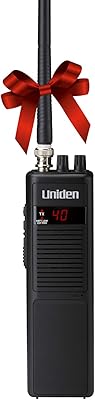
Uniden PRO401HH 40-Channel Handheld CB Radio
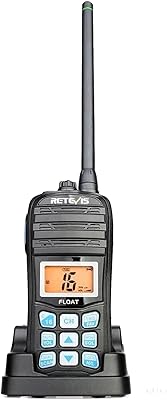
Retevis RT55 Handheld Marine Radio
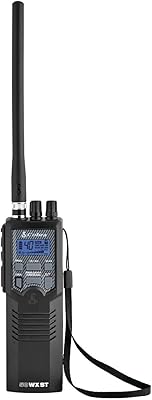
Cobra HH50WXST Handheld CB Radio
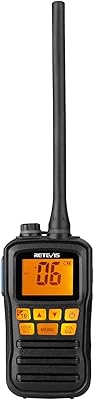
Retevis RM01 Handheld Marine Two-Way Radio
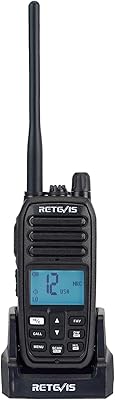
Retevis RM21 Handheld Marine VHF Radio
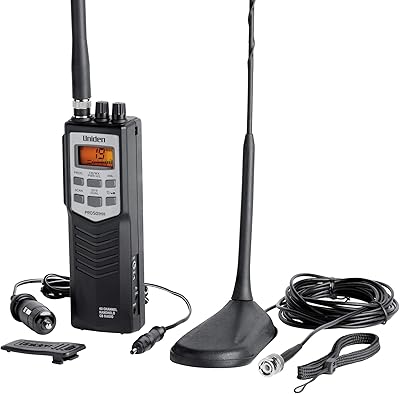
Uniden PRO501TK 40-Channel Handheld CB Radio
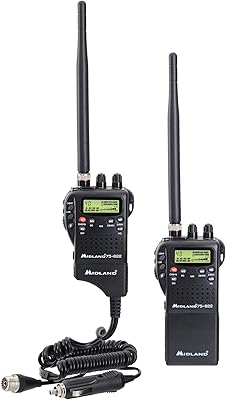
Midland 75-822 Handheld CB Radio