
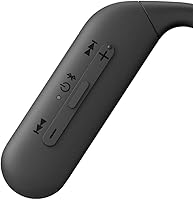
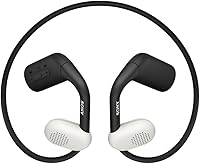
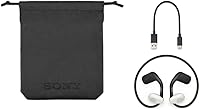
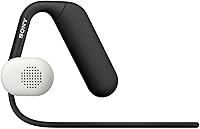
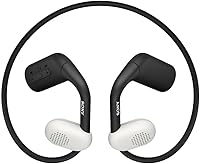
Overview

The Sony Float Run Open-Ear Sport Headphones take a genuinely different approach to workout audio — instead of plugging your ears, they sit just off the ear canal so you can hear the world around you while still listening to music. That trade-off is the whole point. Runners who've felt anxious blocking out traffic, or who simply hate the stuffed-up feeling of in-ear buds after an hour, will understand the appeal immediately. The Float Run launched in early 2023 as a mid-range wireless option from Sony, built around a lightweight plastic frame that barely registers on your head during a long run.

Features & Benefits

The off-ear fit is what makes or breaks this open-ear headset for most people, and the good news is it holds up well during movement. IPX4 water resistance means sweat and a light drizzle won't cause damage — solid protection for outdoor training. Battery life sits at 7 hours of playback, which covers most training runs without a mid-session charge. On-unit media controls let you skip tracks or answer calls without fumbling for your phone, a small detail that genuinely matters mid-run. The dynamic drivers produce a wider, more natural sound than in-ear alternatives, though don't expect deep bass — open-ear physics simply don't allow for it.

Best For

The Float Run makes the most sense for outdoor runners who need to hear traffic, cyclists sharing the road, or anyone on trails where situational awareness isn't optional. It's also a strong pick for athletes who find in-ear buds irritating after extended wear — no ear canal pressure is a real comfort advantage on longer sessions. Hat wearers and sunglass users will appreciate that the design doesn't fight with their gear the way over-ear cups do. If you want one pair that handles both gym sessions and morning runs, Sony's sport headphone is a reasonable answer. Not the right call for commuters or anyone who needs isolation.

User Feedback

Buyers who run outdoors consistently praise the comfort — many describe forgetting they're even wearing the Float Run after a few miles, which says a lot. Fit stability during actual runs gets solid marks too, with few complaints about shifting or bouncing. On the critical side, some users note the audio lacks punch compared to sealed headphones; volume on busy streets is a genuine limitation given the open design. Call quality draws mixed reactions — the mic works, but wind noise on calls is a commonly cited outdoor issue. Battery life meets most buyers' expectations, and while a handful find the price slightly steep versus competing options, Sony's build quality tends to quiet those concerns after extended use.

Pros

  • The open-ear design lets you hear traffic, voices, and surroundings without removing the headphones.
  • Comfort over long runs is a genuine strength — no ear canal pressure means fatigue is much reduced.
  • IPX4 water resistance handles sweat and light rain reliably during outdoor training sessions.
  • Seven hours of battery covers most training days without needing a mid-session top-up.
  • The lightweight plastic build is barely noticeable on your head, even after an hour of running.
  • On-unit media controls work well for skipping tracks without pulling out your phone mid-run.
  • Compatible with virtually any Bluetooth device, so switching between phone and laptop is painless.
  • The stable fit holds during high-movement activity better than many open-ear competitors.
  • Sunglasses and hat wearers will appreciate that the Float Run does not conflict with either.

Cons

  • Bass response is noticeably weak — open-ear designs simply cannot compete with sealed headphones on low-end audio.
  • Volume ceiling is lower than in-ear alternatives, which becomes a problem in noisy outdoor environments.
  • Wind noise during outdoor calls can make the built-in mic frustrating for regular phone use.
  • The 10-meter Bluetooth range is modest and can drop in crowded wireless environments like city parks.
  • Three-hour charging time is on the longer side if you frequently drain the battery fully.
  • Audio leakage is significant — people nearby can hear what you are listening to at higher volumes.
  • Not ideal for indoor gym use, where ambient noise is lower and audio quality expectations are higher.
  • The open format offers zero passive noise blocking, which some users find distracting in shared spaces.

Ratings

The scores below for the Sony Float Run Open-Ear Sport Headphones were generated by our AI system after analyzing verified buyer reviews from global markets, with spam, incentivized, and bot-flagged submissions actively filtered out before scoring. Each category reflects the honest distribution of real user experiences — strengths and frustrations weighted equally — so you get a picture that is useful for making a decision, not just reassuring.

Wearing Comfort
91%
Buyers consistently describe the off-ear fit as one of the most comfortable sport audio experiences they have had, especially during runs exceeding an hour. No ear canal pressure means none of that stuffed or sore feeling that plagues in-ear buds after extended sessions, and most users say they genuinely forget the Float Run is on their head.
A small number of users with unusually small ears report the earpieces feel slightly loose and require repositioning during wear. The fit is not universally adjustable, so it works better for some head and ear geometries than others.
Situational Awareness
94%
This is arguably the Float Run's most praised attribute — runners, cyclists, and hikers repeatedly call out how natural it feels to hear traffic, voices, and surroundings without removing the headset. Users who previously ran with one earbud out say this open-ear headset replaced that workaround entirely and feels much more intentional.
A few buyers note that in very loud environments — busy city intersections or construction zones — the combination of ambient noise and audio competing at the same volume level can feel disorienting rather than helpful. It takes a short adjustment period for some users.
Fit Stability
83%
For most runners, the Float Run stays in place during steady-pace road running and light trail use without constant readjustment. Users doing interval training and cycling also report solid retention across varied movement patterns, which is a meaningful differentiator from looser open-ear competitors.
At sprint pace or during high-agility movements like agility drills, some buyers note slight shifting that requires a quick manual reset. The stability is good for running but not quite at the level of winged in-ear sport buds designed specifically for high-intensity movement.
Audio Quality
61%
39%
For an open-ear format, the Float Run sounds wider and more natural than most competing options, with a clear midrange that works well for podcasts, voice calls, and moderately complex music. Users who primarily listen to spoken-word content or acoustic music tend to rate audio quality positively.
Bass response is noticeably limited — this is an inherent physical constraint of the open-ear format, not a Sony-specific flaw, but buyers expecting punchy low-end from workout music will be disappointed. Volume ceiling is also lower than sealed alternatives, which becomes a real problem on noisy streets where competing ambient sound can simply drown out the audio.
Battery Life
78%
22%
Seven hours of playback covers most buyers' typical training week comfortably — the majority of users report charging once every two or three days with regular use. Buyers doing daily morning runs of 45–90 minutes find the battery rarely requires mid-week emergency charging.
Ultra-distance runners and users who chain multiple sessions in a day without access to a charger sometimes find the battery runs short. The 3-hour charge time is on the longer side; there is no fast-charge feature, which feels like a missed opportunity at this price point.
Water & Sweat Resistance
82%
18%
IPX4 holds up well to heavy sweat sessions and being caught in a light rain mid-run, which is exactly the protection most outdoor athletes need day-to-day. Multiple buyers have used the Float Run through months of regular outdoor training with no water-related degradation reported.
IPX4 is not a particularly high water resistance rating, and buyers who train in heavy rain or near water — open-water swimmers, rowers, or rainy-climate runners — should be aware it does not protect against sustained water exposure. Some users expected a higher resistance rating given the sport positioning.
Microphone Quality
58%
42%
In calm indoor or low-wind outdoor conditions, the built-in mic produces clear enough audio for quick calls and voice assistant commands. Buyers who primarily use it for brief check-in calls while running find it acceptable for the purpose.
Wind noise is the dominant complaint — at any meaningful running pace outdoors, the mic picks up enough wind interference to make calls frustrating for the person on the other end. Users who regularly take longer calls during outdoor workouts consistently flag this as a significant limitation.
Build Quality
74%
26%
The all-plastic construction feels intentionally lightweight rather than cheap, and most buyers report no creaking, cracking, or structural issues after months of regular sport use. Sony's manufacturing consistency means units across different buyers tend to perform to the same standard.
The plastic construction does not inspire premium confidence when you first hold the Float Run, and a subset of buyers feel the build quality does not fully match the pricing. There is no carrying case included, which increases the risk of damage during transit or bag storage.
Bluetooth Connectivity
76%
24%
Bluetooth 5.0 delivers stable connections in most real-world running environments — parks, neighborhood streets, and gym floors — with no dropout issues reported under normal conditions. Pairing is quick and reconnection on power-up is automatic and reliable.
The 10-meter range is modest, and in congested wireless environments like busy city parks or races with hundreds of devices nearby, some users report occasional brief dropouts. Compared to competitors offering extended range, this is a mild but real limitation.
Controls & Usability
79%
21%
The on-unit integrated controls work well for the core mid-run tasks — skipping a track, adjusting volume, or answering a call without pulling out your phone. Buyers appreciate the ability to manage playback without breaking stride or removing gloves in cold weather.
The control layout takes a few runs to memorize by touch alone, and a handful of users report accidental button presses during fit adjustments. There is no companion app for EQ customization or firmware management, which more feature-conscious buyers find limiting.
Compatibility
88%
Bluetooth 5.0 with broad backward compatibility means the Float Run pairs cleanly with virtually any device a typical runner owns — iPhones, Android phones, tablets, and laptops all connect without issue. Multi-device switching is straightforward enough for daily use across different contexts.
There is no multipoint connectivity, meaning you cannot be simultaneously connected to two devices and switch between them without manually disconnecting and re-pairing. For users who move frequently between a phone and a laptop this is a minor but recurring annoyance.
Value for Money
67%
33%
For buyers who genuinely need the situational awareness benefit — outdoor runners, cyclists, safety-conscious commuters — the Float Run delivers a genuinely useful feature set at a justifiable price. The Sony brand backing also provides reasonable confidence in durability and support compared to cheaper open-ear alternatives.
For buyers who are not specifically drawn to the open-ear format, competing closed or in-ear sport headphones at a similar price point offer meaningfully better audio quality and additional features like ANC or longer battery life. The value case weakens considerably if situational awareness is not a priority.
Design & Aesthetics
72%
28%
The minimalist profile sits cleanly on the ear without the bulky look of traditional over-ear sport headphones, and runners who care about a streamlined appearance during workouts appreciate how unobtrusive it looks. The black colorway is understated and does not clash with most workout gear.
The design is functional rather than distinctive, and some buyers feel it lacks the visual premium of competitors at a similar price. The single color option limits personalization, and a few users note it can look slightly utilitarian compared to more stylized sport audio options.

Suitable for:

The Sony Float Run Open-Ear Sport Headphones were built with a very specific runner in mind, and if you match that profile, they deliver well. Road runners and cyclists who train in traffic are the clearest fit — keeping one ear on the environment isn't a nice-to-have, it's a safety habit, and this open-ear headset supports that without requiring you to run with one earbud out. Athletes who've struggled with ear fatigue, pain, or that clogged sensation from in-ear buds after 45-plus minutes will find the off-ear format genuinely refreshing. Hikers and trail runners benefit too, since hearing footsteps, wildlife, or other people on a path matters in ways it doesn't on a treadmill. The Float Run also suits anyone who regularly wears glasses or a hat during workouts, since the design doesn't conflict with either. If you want one wireless pair that moves between a morning run and a casual afternoon walk without feeling overkill, this open-ear headset covers that ground comfortably.

Not suitable for:

The Sony Float Run Open-Ear Sport Headphones are a poor match for anyone who treats audio quality as the primary purchase criteria. Open-ear physics mean bass response is limited and overall volume ceiling is lower than sealed alternatives — on a noisy street, you may find yourself pushing the volume higher than is comfortable just to hear the music clearly. Commuters or gym-goers who rely on noise isolation to focus will get almost nothing from this design; the open format lets in everything by intention. If you do a significant portion of your training indoors on machines, closed-back earbuds or over-ear headphones will almost certainly sound better for the same budget. Buyers who make frequent hands-free calls outdoors should also be cautious, as wind noise can degrade mic performance noticeably. Finally, anyone who prefers a rich, bass-forward listening experience during workouts will likely find Sony's sport headphone underwhelming compared to in-ear alternatives at a similar price point.

Specifications

  • Brand: Manufactured by Sony under the Float Run product line, model number WIOE610/B.
  • Form Factor: Open-ear, off-ear style that sits just outside the ear canal without inserting into it.
  • Bluetooth Version: Uses Bluetooth 5.0 for stable wireless connectivity with a range of up to 10 meters.
  • Battery Life: Delivers up to 7 hours of continuous playback on a full charge.
  • Charging Time: Requires approximately 3 hours to charge fully from empty.
  • Water Resistance: Rated IPX4, protecting against sweat and light splashing from any direction.
  • Audio Driver: Equipped with dynamic drivers tuned for a wider, more natural open-air soundstage.
  • Noise Control: No active or passive noise cancellation — fully open design by intent.
  • Microphone: Built-in microphone supports hands-free calls and voice assistant access.
  • Controls: Integrated media controls on the unit handle playback, volume, and call management.
  • Compatibility: Works with smartphones, tablets, laptops, desktops, and Bluetooth-enabled smart speakers.
  • Cable: Fully wireless with no headphone jack or audio cable included or supported.
  • Material: Housing and frame constructed from lightweight plastic, keeping overall worn weight minimal.
  • Earpiece Shape: Open-ear curved earpiece designed to rest against the outer ear without sealing the canal.
  • Release Date: First made available in February 2023.

Related Reviews
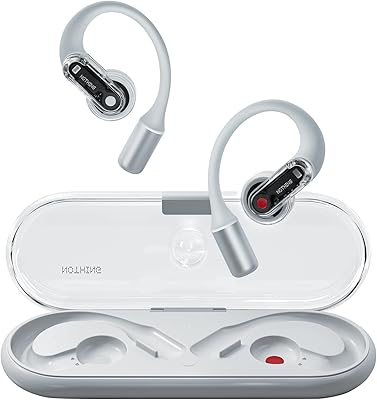
Nothing Ear (Open) Open-Ear Earbuds
79%
91%
Wearing Comfort
83%
Workout Stability
74%
Sound Quality
77%
Call Quality
49%
Sound Leakage
More
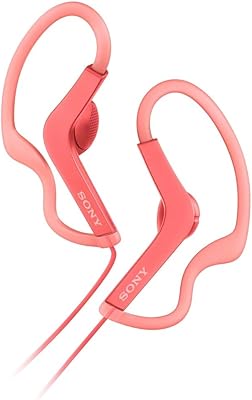
Sony MDR-AS210/P Sport In-ear Headphones
79%
88%
Comfort and Fit
74%
Sound Quality
91%
Water Resistance
65%
Durability
80%
Ease of Use
More
DEMICEA LibreRun Pro X13 Open Ear Sport Headphones
83%
78%
Sound Quality
91%
Comfort & Ergonomics
85%
Battery Life
92%
Waterproof Performance
72%
Connectivity & Bluetooth
More
DEMICEA LibreRun X6 Open Ear Sport Headphones with 32GB Storage
87%
85%
Audio Quality
92%
Comfort & Fit
88%
Battery Life
93%
Water Resistance
90%
Bluetooth Connectivity
More
Monster AC100 Open-Ear Bluetooth Headphones
76%
88%
Battery Life
79%
Comfort & Fit
67%
Sound Quality
83%
Bluetooth Stability
71%
Call Quality
More
OJW Open Ear Wireless Sport Headphones
80%
93%
Battery Innovation
88%
Wearing Comfort
86%
Waterproofing
84%
Workout Stability
74%
Audio Clarity
More
Sony MDR-EX155AP
Sony MDR-EX155AP
76%
74%
Sound Quality
81%
Microphone & Call Performance
68%
Fit & Comfort
61%
Build Quality & Durability
88%
Value for Money
More
UGREEN 45785 Open Ear Wireless Headphones
79%
91%
Wearing Comfort
83%
Fit & Stability
74%
Sound Quality
89%
Battery Life
69%
Microphone & Call Quality
More
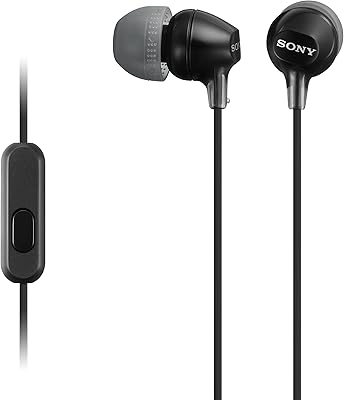
Sony MDREX15AP In-Ear Headphones
82%
85%
Sound Quality
90%
Comfort and Fit
70%
Build Quality
88%
Ease of Use (Controls)
65%
Bass Performance
More
TTQ CT26 Open-Ear Wireless Earbuds
81%
91%
Comfort & Wearability
88%
Fit Security During Activity
74%
Sound Quality
58%
Sound Leakage
87%
Battery Life
More

FAQ

The Float Run is specifically engineered for movement, and most runners report it stays put during normal running pace. The curved fit wraps around the ear rather than relying on ear canal pressure to grip, which actually helps with stability during repetitive motion. That said, if you have an unusually small or large ear, it may take a short adjustment period to find the right positioning.

The IPX4 rating covers both sweat and splashing water from any direction, so a light rain shower during a run is fine. What it does not cover is submersion or heavy downpours, so avoid wearing them in a thunderstorm or near open water. For normal outdoor training conditions, the protection is solid.

Honestly, you should go in with adjusted expectations. Open-ear designs cannot physically produce the same bass response or overall volume as sealed in-ear buds, because the sound is not directed into your ear canal. The Float Run sounds clear and wide, which is pleasant for casual listening, but if deep bass or high volume is important to you, in-ear alternatives will serve you better.

Yes, as long as your phone supports Bluetooth — which virtually every smartphone made in the last decade does — you are good to go. Bluetooth 5.0 on the headset is backward compatible with older Bluetooth versions, so there are no compatibility concerns with standard Android or iOS devices.

At moderate volumes in a quiet room, yes, people nearby can hear what you are playing. Open-ear headphones leak sound by design since nothing is sealing the audio in. For outdoor use this is rarely an issue, but using them in a library, office, or on public transit would likely bother people around you.

It feels much lighter and less present than over-ear cups — there is no clamping pressure on your head and nothing covering your ears. The earpieces rest gently against the outer ear, which most users describe as almost unnoticeable after a few minutes. It is a very different sensation from both in-ear buds and traditional over-ear headphones.

You can, and the mic works fine in calm conditions. The main limitation is wind — at speed or in a breeze, wind noise picked up by the mic can make your voice harder to hear on the other end. For occasional quick calls it is acceptable, but if you regularly take long calls while training outdoors, the mic performance may frustrate you.

Seven hours covers most training scenarios comfortably — that is roughly two decent-length run sessions before needing to charge. Charging takes about 3 hours, so plugging in overnight is the easiest routine. If you do ultra-distance training or back-to-back long sessions without access to a charger, you may find the battery a tighter fit.

Yes, and this is one of the more practical advantages of the open-ear format. Because nothing hooks over a standard glasses arm or sits on top of a hat brim in the traditional sense, most users find no interference at all. Runners and cyclists who wear caps or sport sunglasses regularly find this headset fits into their existing gear setup without awkward adjustments.

Initial pairing follows the standard Bluetooth process — hold the power button until the indicator flashes, find the device in your phone's Bluetooth settings, and confirm the connection. After that first pairing, this open-ear headset will reconnect automatically each time you power it on within range of your paired device, with no extra steps needed.

Where to Buy