Overview

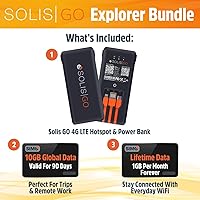
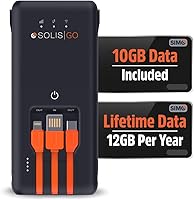
The SIMO Solis Go Mobile Hotspot Power Bank sits in an interesting spot in the travel tech market — it's a global Wi-Fi device and a portable charger in one, which means one fewer item to juggle on the road. Unlike local SIM cards or roaming plans, this travel hotspot needs no contracts and no card swapping; you land, you connect. A lifetime data allowance is included from day one, and the whole setup runs through an app rather than any manual configuration. That convenience is real. At its price point, though, there are genuine tradeoffs — and knowing them upfront saves disappointment later.
Features & Benefits

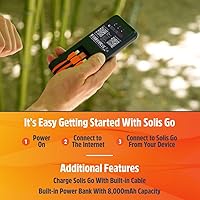
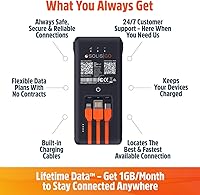
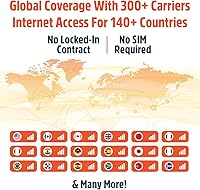
The Solis Go runs on a virtual multi-carrier network spanning 300-plus carriers across more than 140 countries, automatically latching onto the strongest available signal as you move — no manual switching required. Battery life is rated up to 48 hours, and built-in charging cables let you top off your phone directly from the unit without digging for accessories. Up to 20 devices can connect simultaneously on dual-band Wi-Fi, though real-world performance softens noticeably when you push past 8 or 10 active connections. Speeds run on 4G LTE, which covers a wide range in practice — solid in major cities, patchier in remote or less-serviced areas.

Best For

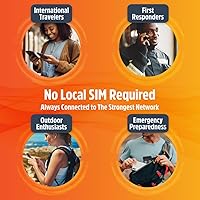
This pocket Wi-Fi and charger combo suits frequent international travelers best — people crossing multiple borders who want one device that simply works without prep at each new destination. Remote workers and digital nomads find particular value here, since tracking down local SIMs in every country is slow and unreliable. Small groups can share the connection across phones, tablets, and laptops without much coordination. It's also a practical pick for anyone who finds eSIM setup frustrating or whose devices don't support it. The built-in power bank makes a real difference on long transit days when wall outlets are nowhere in sight.

User Feedback

Owners consistently highlight how straightforward initial activation is — app-based setup sidesteps the usual SIM card fumbling, and coverage earns solid marks across Europe, Southeast Asia, and parts of Latin America. The combined hotspot-and-charger form factor resonates with travelers who dislike carrying multiple devices. Where the feedback turns critical: 1GB per month runs out fast for anyone on video calls or light streaming, and purchasing extra data can add up quickly. Speed complaints surface in thinner-coverage regions, and several longer-term owners note that app reliability has wavered across certain software updates — a factor worth considering before a long international trip.

Pros

  • Works across 140-plus countries with no SIM swapping — just power it on and connect.
  • The lifetime monthly data allowance means ongoing value even for infrequent travelers.
  • Built-in charging cables reduce the accessories you need to carry.
  • Automatically selects the strongest available carrier signal without manual input.
  • The Solis app makes topping up data and monitoring usage genuinely straightforward.
  • Dual-band Wi-Fi handles a mix of device types without requiring manual band selection.
  • Up to 48-hour battery life holds up well across full travel days in real-world use.
  • No contract or recurring subscription required to keep the device active.
  • The 10GB global bonus data included at purchase provides immediate flexibility.

Cons

  • 1GB of monthly data runs out fast for anyone doing video calls or light streaming.
  • Additional data top-up costs can add up significantly on longer trips.
  • Real-world speeds in rural or less-serviced regions are often noticeably slower than expected.
  • Connecting more than 8 to 10 devices simultaneously leads to a drop in per-device performance.
  • The Solis app has received mixed long-term reviews, with some users reporting reliability issues after software updates.
  • At nearly 15 ounces, this pocket Wi-Fi and charger combo is bulkier than a standalone hotspot.
  • Travelers staying in a single country for weeks will likely pay more for data than with a local SIM.
  • Customer support response times have drawn criticism from users troubleshooting connectivity issues abroad.

Ratings

The scores below reflect AI-synthesized analysis of verified global buyer reviews for the SIMO Solis Go Mobile Hotspot Power Bank, with spam, bot-generated, and incentivized submissions actively filtered out before scoring. Ratings are drawn from travelers, remote workers, and frequent flyers across North America, Europe, Asia, and Latin America to give a geographically balanced picture. Both the genuine strengths and the recurring frustrations are represented here without sugarcoating either side.

Global Coverage
88%
Travelers hopping between European cities, Southeast Asian countries, and South American destinations consistently report the Solis Go connecting without any manual intervention. The automatic carrier switching across 300-plus networks is a real convenience when you land somewhere new at midnight and just need your phone to work.
A meaningful subset of users traveling in rural parts of Africa, Central Asia, and remote island destinations report weak or unusable signals. The breadth of country support is impressive on paper, but depth of coverage within those countries is inconsistent.
Ease of Setup
91%
First-time activation is one of the most praised aspects across user feedback. Downloading the Solis app, registering the device, and getting online typically takes under five minutes — a genuine relief for travelers who do not want to wrestle with configuration at an airport.
A recurring frustration surfaces when users switch phones or reinstall the app, with some reporting login issues or device re-registration problems that required contacting support. The experience is smooth when everything goes right, but recovery from account hiccups can be slow.
Battery Life
83%
On light-to-moderate use with a handful of connected devices, the Solis Go routinely lasts full travel days without needing a recharge — a practical advantage during long-haul flights, all-day city exploration, or back-to-back transit legs where outlets are scarce.
Heavy users connecting 10 or more devices, or running it continuously in areas with poor signal where the radio works harder to maintain a connection, report battery life dropping noticeably short of the 48-hour rating. Real-world heavy-use figures are closer to 20 to 28 hours.
Data Value
54%
46%
The lifetime 1GB-per-month baseline means the device always has some usable data, which is genuinely useful for light travelers who only need to check maps and send messages. The included 10GB global bonus gives new users a meaningful head start before needing to purchase additional data.
Anyone using this as their primary connection for remote work or frequent video calls will exhaust the included monthly data within days. Top-up packages through the Solis app can become a significant ongoing expense, and several long-term owners feel the per-GB pricing is steep relative to regional alternatives.
Connection Speed
67%
33%
In well-connected urban environments — major European capitals, Tokyo, Singapore, New York — users report speeds that handle video calls and standard browsing without noticeable lag. For most travel use cases in tier-one cities, the 4G LTE connection feels reliable and responsive.
Speed consistency is the most polarizing aspect of this travel hotspot in user feedback. Rural areas, developing markets, and some mid-sized cities deliver significantly slower throughput, and a portion of users describe connections that technically exist but are too slow for anything beyond basic messaging.
Power Bank Function
74%
26%
The built-in charging cables earn consistent appreciation from users who value consolidating their carry-on gear. Being able to top off a smartphone directly from the hotspot during a long bus ride or between airport gates is a genuinely practical bonus most competing devices do not offer.
The charging output is not particularly fast, and the device's primary battery is sized to run the hotspot, not to serve as a high-capacity charger. Users expecting to fully recharge a tablet or a large-battery Android phone will be disappointed — it works best as an emergency top-up rather than a primary charging solution.
App Experience
62%
38%
When the Solis app is functioning well, it provides a clear, accessible view of data usage, remaining balance, and current connection status. Purchasing data top-ups inside the app is straightforward, and the interface is clean enough that non-technical users can navigate it without confusion.
App reliability is a consistent pain point in longer-term owner feedback, with several users flagging bugs introduced through updates that affected data display accuracy or caused intermittent disconnects. The overall experience is acceptable but noticeably below the polish standard of premium travel tech apps.
Multi-Device Performance
61%
39%
For a small travel group — two or three people each with a phone and perhaps a laptop — the Solis Go handles simultaneous connections without obvious degradation. Families on vacation sharing a connection across four to six devices generally report a workable experience for everyday tasks.
The advertised 20-device support creates expectations that real-world performance does not meet at scale. Beyond 8 to 10 active connections, users report measurable slowdowns, and trying to run video calls on multiple devices simultaneously produces frustrating results regardless of the local network quality.
Portability & Design
78%
22%
The self-contained design with built-in cables means one less thing to lose in a bag, and the form factor fits comfortably in a jacket pocket or the outer pocket of a daypack. Travelers who previously carried a separate hotspot and power bank find consolidating both into one device a genuine quality-of-life improvement.
At nearly 15 oz, this pocket Wi-Fi and charger combo is noticeably heavier than a standalone hotspot or a basic eSIM setup, which matters to ultralight travelers. A few users mention the build feels slightly plasticky given the price, though there are no widespread reports of physical durability failures.
Value for Money
58%
42%
For travelers who genuinely move between multiple countries on a single trip and want a zero-prep connectivity solution, the upfront cost is easier to justify. The lifetime data component adds long-term value that a one-trip SIM card purchase simply cannot offer.
Budget-conscious travelers and those visiting one or two destinations will likely find better per-trip value in a local SIM or a regional eSIM plan. The ongoing cost of data top-ups means the total cost of ownership over a year of regular travel can climb well past the initial device price.
Customer Support
49%
51%
Some users report satisfactory resolution when reaching out through the Solis app's support channel for straightforward issues like data balance questions or basic troubleshooting. The knowledge base documentation covers common setup scenarios adequately for first-time users.
Response times for more complex issues — particularly account recovery, connectivity failures in specific countries, or billing disputes — draw repeated criticism across user reviews. Several travelers describe being stuck without a working connection abroad while waiting on support replies, which is a serious reliability concern.
Long-Term Reliability
66%
34%
Users who have owned the Solis Go for one to two years generally report that the hardware itself remains functional without physical degradation. The lifetime data commitment continues to deliver its monthly allowance, and regular travelers find the device a dependable part of their kit over time.
The primary uncertainty around long-term ownership centers on the service infrastructure rather than the hardware. Users worry — with some justification based on forum feedback — about how sustainable the lifetime data promise is and whether app or network changes could affect the device's core functionality years down the road.

Suitable for:

The SIMO Solis Go Mobile Hotspot Power Bank is a strong match for frequent international travelers who cross multiple borders and want a single device that works without hunting down local SIMs at every destination. Digital nomads and remote workers will appreciate having a reliable connection backup that doesn't depend on finding a trustworthy café network or negotiating a short-term data plan in an unfamiliar language. Small travel groups — families, friend groups, or work teams on the road — benefit from sharing one connection across several devices rather than each person paying for separate roaming. It's also a genuinely good fit for travelers who find eSIM setup confusing or whose older devices simply don't support it. The built-in power bank function adds meaningful utility on long layovers or full-day excursions when a wall outlet isn't an option.
Not suitable for:

The SIMO Solis Go Mobile Hotspot Power Bank is a harder sell for people who stay primarily in one country for extended periods, since a local SIM or regional plan will almost always deliver faster speeds at a lower ongoing cost. Heavy data users — anyone relying on it for video calls, streaming, or large file transfers — will likely find the included monthly allowance exhausted within days, and the cost of purchasing additional data can climb quickly. Travelers expecting consistent high-speed performance in rural areas or less-developed regions should temper their expectations, as 4G LTE coverage quality varies significantly depending on which local carriers the virtual network connects to. If you're already comfortable managing eSIMs and travel primarily to well-supported destinations, a dedicated eSIM service might offer better value without the added bulk. Anyone who needs more than 10 devices connected simultaneously at full speed will also find real-world performance falls short of the device's technical ceiling.
Specifications

  • Brand: Manufactured by SIMO Holdings Inc. under the Solis product line.
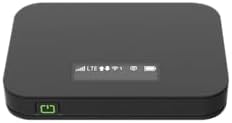
  • Model: Solis Go, model number SGO24.
  • Connectivity: Operates on 4G LTE via a virtual multi-carrier network spanning 300-plus carriers.
  • Wi-Fi Standards: Dual-band Wi-Fi supporting 802.11a, 802.11b, and 802.11ac protocols.
  • Country Coverage: Compatible with networks in 140-plus countries worldwide.
  • Max Devices: Supports up to 20 simultaneous Wi-Fi connections across phones, tablets, and laptops.
  • Battery Life: Rated for up to 48 hours of continuous operation on a single charge.
  • Power Bank: Functions as a portable charger with built-in cables for charging external devices directly.
  • Included Data: Comes with 1GB of high-speed data per month for the lifetime of the device, plus a 10GB global data bonus at activation.
  • SIM Requirement: No physical SIM card or carrier contract is required at any point.
  • App Required: The Solis app for iOS and Android is required for device setup, data management, and top-up purchases.
  • Dimensions: Package measures 7.83 x 4.29 x 2.05 inches.
  • Weight: Device weighs 14.9 oz, including the unit and built-in cables.
  • Special Feature: Supports Access Point Mode for flexible network configuration.
  • In the Box: Package includes the Solis Go unit, a charging cable, and a quick start guide.
  • Battery Type: Powered by one built-in lithium-ion battery.
  • Compatible Devices: Works with any Wi-Fi-enabled device, including smartphones, tablets, and laptops.

Related Reviews

Franklin T10 Mobile Hotspot
67%
74%
Value for Money
61%
Network Performance
54%
Battery Life
83%
Ease of Setup
88%
Portability
More
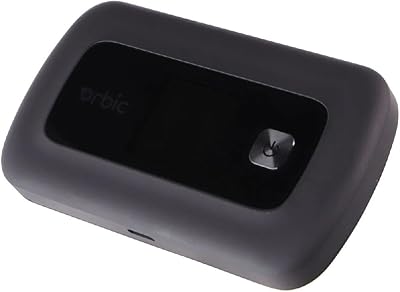
Orbic Speed 4G LTE Mobile Hotspot
73%
91%
Ease of Setup
88%
Portability
67%
Network Performance
74%
Battery Life
58%
Build Quality
More
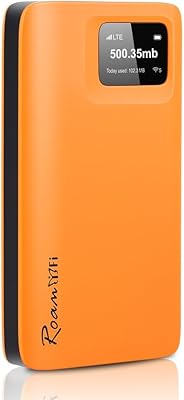
RoamFi RoamWiFi R10 Portable Mobile Hotspot
71%
92%
Ease of Setup
78%
International Coverage
61%
Data Value & Plan Inclusivity
69%
Connection Speed
71%
Battery Life
More
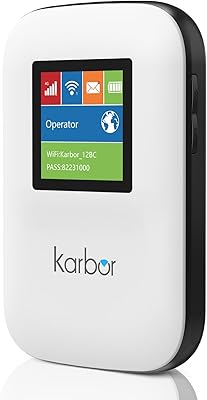
Karbor MF833-4G Portable 4G LTE WiFi Hotspot
71%
82%
Ease of Setup
71%
Network Coverage
63%
Connection Speed
58%
Data Plan Value
66%
Battery Life
More
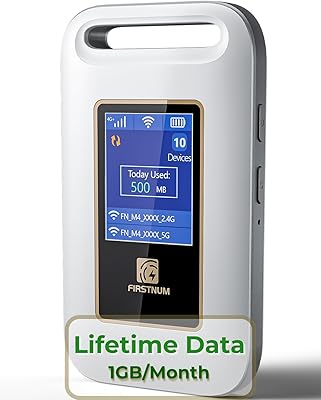
Firstnum M4 4G LTE Mobile Hotspot
84%
91%
Value for Money
94%
Ease of Use
92%
Portability
88%
Network Performance
83%
Battery Life
More
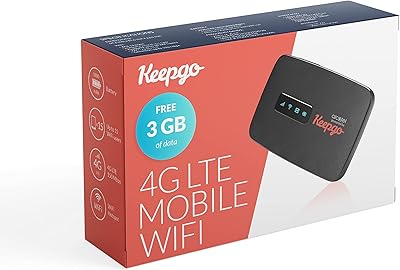
Keepgo Lifetime Global Travel WiFi Hotspot
71%
88%
Ease of Setup
81%
Country Coverage
58%
Data Pricing & Value
52%
Lifetime Data Clarity
67%
Connection Speed
More
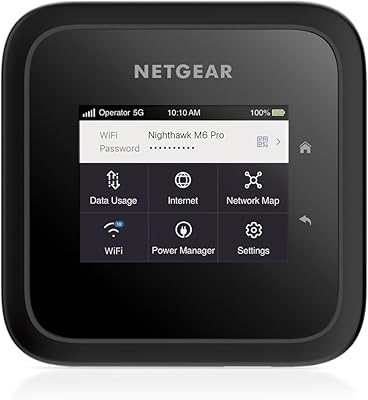
NETGEAR Nighthawk M6 Pro Mobile Hotspot MR6550
81%
91%
Performance & Speed
94%
Global Roaming & Carrier Compatibility
72%
Ease of Use & Setup
65%
Battery Life
90%
Connectivity & Device Support
More
TP-Link M7350 4G LTE Mobile Hotspot
85%
86%
Performance
92%
Portability
88%
Battery Life
90%
Ease of Use
80%
Connectivity
More
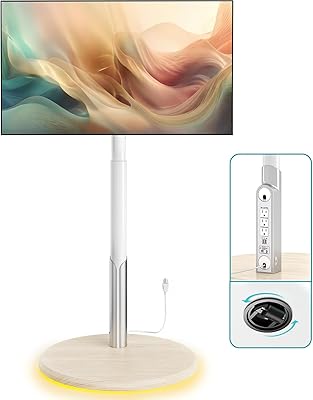
LLDEPLL Floor Mobile TV Stand with Power Outlet
86%
92%
Value for Money
89%
Build Quality
90%
Ease of Assembly
85%
Height Adjustment Mechanism
73%
Stability with Larger TVs
More
JBL BassPro Go Powered Subwoofer & Bluetooth Speaker
84%
88%
Audio Quality
91%
Bass Performance
77%
Portability
85%
Battery Life
84%
Ease of Installation
More

FAQ

No, that is the whole point of the Solis Go. It uses a virtual multi-carrier SIM built into the device, so it automatically connects to available local networks in each country without you ever touching a physical SIM card. You just power it on and connect through the app.

Honestly, it depends heavily on what you are doing. For checking maps, messaging apps, and light browsing, 1GB can stretch a couple of weeks. If you are on video calls, streaming anything, or working with large files, you will burn through it in a few days. Most regular users end up purchasing additional data top-ups through the Solis app for anything beyond casual use.

You purchase additional data directly inside the Solis app using regional or global data packages. Pricing varies by region and package size, and the cost can add up on longer trips, so it is worth budgeting for top-ups if you plan to use this travel hotspot as your primary connection.

Technically yes, but practically the experience degrades noticeably once you push past 8 to 10 active connections. The 20-device figure represents a technical ceiling, not a comfortable operational target. For a family of four each with a phone and a tablet, you will be fine. Running a full team meeting with everyone streaming simultaneously is a different story.

The SIMO Solis Go Mobile Hotspot Power Bank connects over 4G LTE, which covers a wide speed range in practice. In major cities across Europe, Japan, or North America, speeds are generally solid for video calls and browsing. In rural areas or countries with thinner carrier infrastructure, speeds can be considerably slower, and this is something several users have flagged in their feedback.

It can top off a smartphone meaningfully, and the built-in cables are a genuine convenience when you do not want to dig through your bag for a separate cable. That said, the primary battery is designed to keep the hotspot itself running for up to 48 hours, so do not expect it to fully charge a tablet multiple times over.

Initial setup is one of the more consistently praised aspects of this pocket Wi-Fi and charger combo. Most users get connected within a few minutes of downloading the app. The longer-term picture is a bit mixed — some users have reported the app behaving inconsistently after certain software updates, so it is worth keeping the app current and checking for any reported issues before a major trip.

Yes, that is one of its strongest practical points. The device scans for available carriers automatically when you arrive in a new country and connects without any manual setup. You do not need to select a country plan in advance, though you do need an active data balance in your account to get online.

The lifetime monthly data allocation is tied to the device itself and is designed to remain active as long as you own it, regardless of how often you travel. Unused monthly data does not roll over to the next month, however, so you are effectively losing that 1GB each month you do not use it — something to factor into the overall value calculation.

If you return to the same one or two destinations regularly, a local SIM or regional eSIM plan will almost always give you faster speeds and a lower per-GB cost. The Solis Go earns its place most clearly when you are moving between several countries on the same trip and want a single device that handles all of them without any preparation at each stop.