Overview

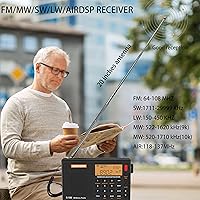
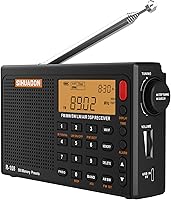
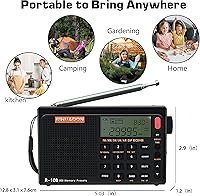
The RADIWOW R108 Portable Shortwave Radio arrived on the scene in 2020, carving out a spot between bare-bones pocket radios and the pricier enthusiast-grade receivers that serious hobbyists tend to favor. What sets the R108 apart at this price tier is its full band coverage — FM, AM, LW, SW, and Air band in a device that weighs just five ounces and slips into a shirt pocket. Dual power through Type-C USB and a swappable BL-5C battery means you are never scrambling for an outlet. It was clearly designed with older adults and travelers in mind, but anyone who values a capable, no-fuss portable will find plenty to like here.
Features & Benefits

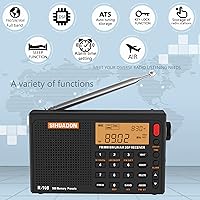
The DSP tuner chip is the real engine here — it pulls in stations with noticeably cleaner audio than you would expect from an analog tuner packed into something this compact. With 500 memory presets, you can organize FM favorites, international shortwave broadcasts, and aviation frequencies without re-scanning every time you power up. The backlit LCD screen makes late-night listening easy to manage, and the headphone jack keeps things quiet in hotels or on planes. Practical extras like a sleep timer and alarm clock round out the package, making the Radiwow receiver genuinely useful as a daily bedside companion, not just a dedicated tuner.

Best For

This pocket shortwave radio is a natural fit for travelers who want reliable audio without depending on Wi-Fi or mobile data — slip it in a bag, unfold the wire antenna on arrival, and you are ready. Shortwave hobbyists who also want to monitor aviation frequencies will appreciate having Air band built in, though it reads better as a bonus than a primary selling point. It makes a thoughtful practical gift for retirees or avid news listeners who enjoy international broadcasts and AM talk radio. Emergency preparedness users will value the dual power setup as a dependable offline backup when connectivity disappears.

User Feedback

Buyers consistently praise the R108 for its FM and shortwave sensitivity, noting stations come in cleaner than expected from something this small, and the build quality feels solid rather than flimsy — a real concern at this size. That said, honest reviews flag some friction: menu navigation has a learning curve, and new users often keep the manual handy through early sessions. Air band reception draws mixed reactions, with results varying noticeably by location. A handful of reviewers mention unit-to-unit inconsistency, so inspecting upon delivery is smart. Most buyers ultimately feel the value holds up well for a capable mid-range portable, though expectations around shortwave range should stay realistic.

Pros

  • Five-band coverage — FM, AM, LW, SW, and Air — is genuinely rare at this price point.
  • The DSP tuner delivers noticeably cleaner audio than analog alternatives in the same size class.
  • At just five ounces, this pocket shortwave radio is light enough to forget it is in your bag.
  • 500 memory presets mean you can organize stations across all bands without constant rescanning.
  • Dual power via USB-C and a swappable battery gives real flexibility on the road or during outages.
  • The backlit LCD screen makes nighttime operation easy without fumbling in the dark.
  • Sleep timer and alarm clock functions make the Radiwow receiver a capable bedside companion.
  • The included accessories — wire antenna, carrying pouch, battery, and cable — cover the basics right out of the box.
  • FM sensitivity earns consistent praise from buyers across a wide range of listening environments.
  • Its approachable interface and compact form make it a genuinely useful gift for experienced and casual listeners alike.

Cons

  • Air band reception is inconsistent and disappoints users who treat it as a primary feature.
  • Menu navigation has a real learning curve — the manual is not optional for first-time setup.
  • No NOAA weather band support is a notable gap for emergency preparedness buyers.
  • Single Side Band decoding is absent, limiting utility for serious shortwave enthusiasts.
  • Unit-to-unit quality variation has been flagged by multiple buyers, suggesting inconsistent manufacturing tolerances.
  • Battery life under heavy SW use can fall short of expectations set by the product listing.
  • Weak or distant shortwave signals push the DSP tuner to its limits fairly quickly.
  • The BL-5C battery format, while swappable, is less universally available than standard AA or AAA cells.
  • The R108 shares its design and branding with the SIHUADON label, which can create confusion when seeking support.
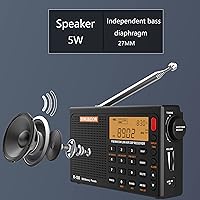
  • Small speaker output is adequate indoors but struggles in noisy outdoor environments without headphones.

Ratings

The scores below reflect an AI-driven analysis of verified global user reviews for the RADIWOW R108 Portable Shortwave Radio, with spam, bot-generated, and incentivized feedback actively filtered out before scoring. Each category captures both the genuine strengths buyers celebrate and the real frustrations that surface after extended use. Nothing is glossed over — the numbers reflect what actual listeners experience across a wide range of conditions and use cases.

FM Reception Quality
88%
FM performance is consistently the most praised aspect of the R108 across buyer reviews. Listeners in suburban and urban areas report pulling in local stations cleanly with minimal static, and the DSP chip does a noticeably better job suppressing interference than older analog pocket radios in the same class.
In rural or fringe-coverage areas, FM sensitivity does drop off more than some users expect from a mid-range receiver. A handful of buyers also note that strong nearby transmitters can bleed into adjacent frequencies, which the DSP does not always fully suppress.
Shortwave Reception
74%
26%
For casual shortwave listening — tuning into major international broadcasters during evening propagation windows — the Radiwow receiver holds its own respectably. Attaching the included wire antenna gives a meaningful sensitivity boost, and users in good RF environments report solid results on the 31m and 49m bands.
Weak or distant shortwave signals push the DSP tuner to its limits quickly, and without SSB support, utility and amateur frequencies are effectively off the table. Experienced DX listeners will find the R108 falls noticeably short of what dedicated shortwave portables can achieve at a similar or slightly higher price.
Air Band Reception
58%
42%
Having Air band at all in a device this compact is genuinely useful for listeners near busy airports or curious about tower communications. Users close to major aviation hubs report being able to pick up ground and approach frequencies well enough for casual monitoring.
Away from airports, Air band performance disappoints most buyers who try it as a primary feature. Signal drop-off is steep with distance, and reviewers consistently flag it as a secondary bonus rather than a reliable standalone capability — managing expectations here is critical before purchase.
AM / MW Reception
81%
19%
Nighttime AM listening — where the ionosphere bounces medium-wave signals across long distances — earns particular praise from buyers who use this pocket shortwave radio for news and talk radio. The DSP chip handles AM selectivity well enough that adjacent-channel interference is rarely a problem in typical home listening.
In electrically noisy environments, such as near switching power supplies or LED lighting, AM sensitivity does suffer noticeably. Some users also find that the built-in ferrite antenna orientation needs careful adjustment indoors to get the best signal, which can be fiddly.
LW Reception
72%
28%
For listeners in Europe or regions where longwave broadcasting remains active, the R108 handles LW adequately for a pocket-sized receiver. Users tuning into time signal stations and European national broadcasters on LW report workable results, especially in quiet RF environments.
LW is arguably the least-tested band by the majority of buyers, given its limited relevance in North America. Those who do use it note that sensitivity is acceptable but not impressive, and urban RF noise tends to impact LW more than other bands on this receiver.
Build Quality & Feel
83%
For its size and price tier, the R108 feels solid and purposeful in hand — not a flimsy toy. The casing has enough heft to feel durable, and the button layout earns consistent praise for being logically organized once users get past the initial learning phase.
A portion of buyers have flagged unit-to-unit consistency as an issue, with some reporting slightly loose battery compartments or buttons that feel less tactile than expected. It is not a widespread problem, but it appears often enough to suggest quality control is not perfectly uniform across production runs.
Portability & Size
93%
At five ounces and roughly the footprint of a large smartphone, this pocket shortwave radio disappears into a jacket pocket or travel bag without a second thought. Frequent flyers and backpackers consistently highlight its size as a standout advantage over bulkier portable radios that offer similar band coverage.
The compact form does mean the speaker is small, which limits volume in noisy outdoor environments. Users who prefer listening without headphones in parks or on patios find the output underwhelming at higher volumes, particularly on voice-heavy broadcasts.
User Interface & Ease of Use
63%
37%
Once the menu logic clicks, day-to-day operation becomes genuinely comfortable — switching bands, recalling presets, and adjusting the sleep timer all become second nature. Buyers who invested time in reading the manual report feeling confident with the interface within a few listening sessions.
Getting there is a friction point for many users, especially older adults or those new to digital tuners. The menu structure for programming memory presets and configuring the alarm is unintuitive without guidance, and the English manual, while included, has received criticism for its translation quality and clarity.
Sound Quality
77%
23%
Through headphones, audio quality is genuinely pleasant — FM music comes through with warmth and reasonable stereo separation, and voice-heavy AM and SW broadcasts are clear and fatigue-free for long listening sessions. Most buyers express satisfaction with the headphone output relative to what this size class typically delivers.
The onboard speaker is where expectations need adjusting. It is functional for quiet room listening, but it lacks bass and starts to distort at higher volume levels. Users expecting rich speaker audio from such a compact unit will likely be disappointed compared to larger tabletop alternatives.
Battery Life
69%
31%
With moderate use — a few hours of FM or AM listening per day — the BL-5C battery lasts comfortably through multiple days before needing a charge, which works well for light daily listeners or travelers who mostly use it in short bursts.
Heavy shortwave use or leaving the backlight on continuously drains the battery faster than many buyers anticipate. A few reviewers report noticing capacity degradation in the included battery sooner than expected, raising questions about the long-term cycle performance of the bundled cell.
Dual Power Flexibility
86%
The ability to run on USB-C while simultaneously charging the BL-5C battery is a practical advantage that travel users and emergency preparedness buyers consistently appreciate. Being able to top up from a power bank on a train or during a camping trip adds real-world utility that basic battery-only radios cannot match.
The BL-5C format, while swappable and affordable, is not as universally stocked as AA batteries in brick-and-mortar stores, which can be inconvenient in a pinch away from home without a charging cable. Some users also note the USB-C cable included is short, limiting placement options when plugged into a wall adapter.
Memory Preset System
79%
21%
Five hundred presets across all bands is a generous allocation that shortwave hobbyists genuinely make use of — organizing favorites by region, language, or time of day. Once populated, recalling stations is fast and removes the need for repeated scanning during regular listening routines.
Programming those presets is where the interface struggles most, as noted by multiple reviewers who found the process tedious and error-prone without the manual. There is no auto-naming for memory slots either, so station organization relies entirely on the user remembering which channel number corresponds to which frequency.
Sleep Timer & Alarm
82%
18%
The sleep timer works reliably and is straightforward to activate once you know the button sequence — many buyers specifically mention using it nightly for bedtime radio listening without worrying about battery drain. The alarm function adds genuine daily utility, effectively turning the R108 into a clock radio replacement for travel.
The alarm sound itself is a basic electronic beep rather than a radio-wake option, which some buyers find jarring. Setting the clock after a battery swap also requires re-entering the time manually, a minor but recurring annoyance flagged in multiple reviews.
Value for Money
76%
24%
For casual listeners, travelers, and gift buyers, the R108 delivers a compelling feature-to-price ratio — five bands, DSP tuning, dual power, and useful daily functions in a pocket-sized package is a hard combination to beat at this tier. Most satisfied buyers feel they received more than they expected based on the price.
Buyers coming from a serious shortwave or scanner background may feel the value proposition weakens when the Air band and SW ceiling become apparent. At the upper edge of casual-radio pricing, some feel the menu friction and quality consistency concerns are harder to forgive than they would be on a cheaper impulse buy.
Accessory Completeness
84%
The included accessory bundle is genuinely thoughtful — having the wire antenna, carrying pouch, battery, charging cable, and manual all in the box means the R108 is ready to use immediately without supplemental purchases. Buyers frequently mention appreciating the carrying pouch in particular for everyday transport.
The wire antenna, while functional, is basic and lacks any strain relief at the jack connection point, which a few users report fraying over time with regular use. The USB-C cable is also notably short, which limits flexibility when charging from a fixed outlet on a desk or nightstand.

Suitable for:

The RADIWOW R108 Portable Shortwave Radio is a strong match for anyone who wants broad band coverage in a device small enough to toss in a carry-on or jacket pocket. Travelers heading to areas with limited internet infrastructure will appreciate having FM, AM, LW, SW, and Air band access without relying on a data connection — it just works wherever you land. Shortwave hobbyists who enjoy tuning into international broadcasts or scanning aviation frequencies as a casual side interest will find the feature set genuinely satisfying for the size. It also makes a practical, well-rounded gift for news-loving retirees or family members who grew up with radio and want something modern but approachable. Emergency preparedness households benefit too, since the dual power system — USB charging alongside a swappable BL-5C battery — means the R108 stays useful even when the grid goes down.
Not suitable for:

Buyers expecting serious shortwave DX performance or professional-grade Air band monitoring should look elsewhere — the RADIWOW R108 Portable Shortwave Radio operates at a mid-range ceiling, and that ceiling becomes apparent when chasing weak or distant signals. Dedicated aviation listeners in particular will likely find the Air band sensitivity underwhelming compared to purpose-built scanners. If you dislike navigating menu-driven interfaces, be aware that this receiver has a learning curve that can frustrate users who prefer simple knob-and-dial controls. Those who prioritize NOAA weather band or Single Side Band decoding will also need to shop elsewhere, as neither feature is included. Finally, buyers expecting absolute unit-to-unit consistency should know that some variation in build and reception quality has been reported across user reviews.
Specifications

  • Band Coverage: The R108 receives five band types: FM, AM (MW), LW, SW, and Air band, covering a broad range of domestic and international broadcasts.
  • Tuner Technology: A DSP (Digital Signal Processing) chip handles all tuning, delivering cleaner signal separation and reduced noise compared to traditional analog tuner circuits.
  • Memory Presets: Up to 500 stations can be stored across all supported bands, allowing organized access to frequently used frequencies without rescanning.
  • Dimensions: The unit measures 5″ in length, 3″ in height, and 1.2″ in width, making it genuinely pocket-sized for everyday carry.
  • Weight: At 5 ounces with battery installed, the R108 is light enough to carry all day without adding noticeable bulk to a bag or jacket.
  • Power Sources: The receiver is powered by a rechargeable BL-5C lithium-ion battery and can also be charged or operated via a Type-C USB connection.
  • Included Battery: One BL-5C rechargeable lithium-ion battery is included in the box, so the unit is ready to use without a separate purchase.
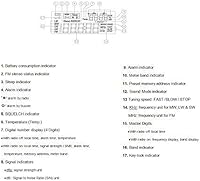
  • Display: A backlit LCD screen shows band, frequency, memory channel, time, and temperature, remaining readable in low-light or nighttime conditions.
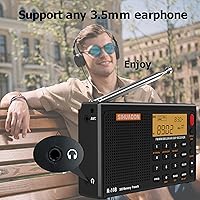
  • Headphone Output: A standard 3.5mm headphone jack allows private listening and is compatible with most wired earphones and headphones.
  • Antenna Options: The unit includes a built-in telescopic antenna alongside an external antenna jack that accepts the included wire antenna for improved SW and Air band reception.
  • Sleep Timer: A configurable sleep timer allows the radio to power off automatically after a set interval, useful for bedtime listening without leaving it running overnight.
  • Alarm Clock: A built-in alarm clock function lets the R108 serve as a wake-up device, independent of its radio listening functions.
  • Temperature Display: The LCD screen can display ambient temperature, adding a minor but practical utility beyond core radio operation.
  • Included Accessories: The box contains one USB charging cable, one wire external antenna, one BL-5C battery, one carrying pouch, and one English-language user manual.
  • Model Number: The official model designation is R108, sold under both the RADIWOW and SIHUADON brand names depending on the retail listing.
  • Availability Date: The R108 first became available in September 2020 and remains an active, non-discontinued product as of this writing.
  • Connectivity: The unit uses USB Type-C for charging and data power delivery; there is no Bluetooth, Wi-Fi, or wireless streaming capability.
  • Weather Band: NOAA weather band reception is not supported on this model, which is a consideration for buyers prioritizing emergency weather alerts.
  • Single Side Band: SSB (Single Side Band) decoding is not available on the R108, limiting its utility for amateur radio monitoring and utility frequency listening.
  • Manufacturer: The R108 is manufactured by RADIWOW, a brand specializing in portable DSP receivers aimed at the consumer and hobbyist market.

Related Reviews
Retekess TR629 Portable Shortwave Radio
83%
88%
Reception & Signal Quality
83%
Ease of Use
91%
Portability & Design
85%
Recording Function
80%
Battery Life
More
Retekess TR110 Portable Shortwave Radio
83%
88%
Reception Quality
91%
Portability
85%
Battery Life
83%
Ease of Use
89%
Weather Alert Functionality
More
XHDATA D368 Portable Shortwave Radio
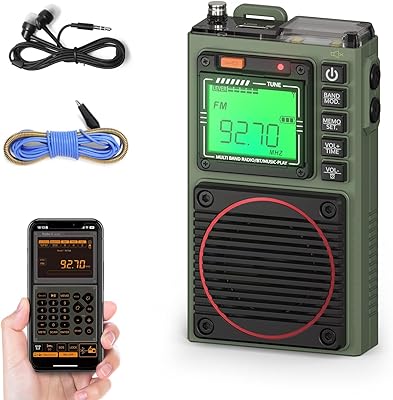
74%
84%
FM Reception Quality
71%
Shortwave Reception
58%
AM Reception Quality
66%
Build Quality & Durability
78%
Battery Life
More
Raddy RE40 Portable Shortwave Radio
83%
88%
Battery Life
91%
Portability
85%
Charging Options
94%
Weather Alerts
62%
Bluetooth Performance
More
Raddy RF75A Portable Shortwave Radio
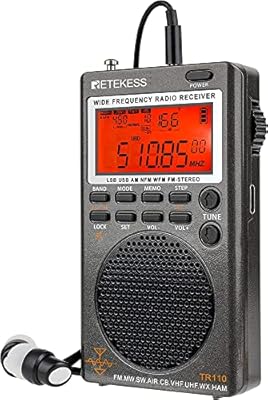
84%
91%
Reception Quality
70%
Battery Life
95%
Portability
88%
Bluetooth Connectivity
84%
App Control Experience
More
Raddy RF760 Portable Shortwave Radio Receiver
76%
83%
SSB Reception Quality
91%
Band Coverage Breadth
88%
NOAA Weather Alert
89%
Portability & Form Factor
52%
Audio & Speaker Quality
More
Greadio GR-T26 Portable AM FM Shortwave Radio
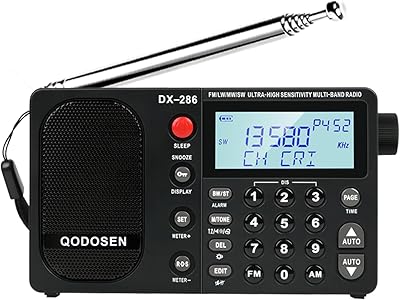
77%
93%
Ease of Use
88%
FM Reception
61%
Shortwave Reception
79%
AM Reception
72%
Speaker Quality
More
QODOSEN DX-286 Portable Shortwave Radio
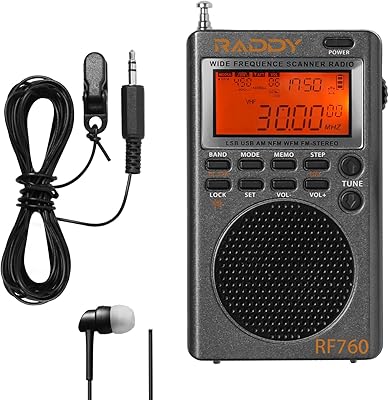
76%
88%
Reception & Sensitivity
91%
Shortwave Band Performance
79%
AM & FM Everyday Usability
67%
Build Quality & Materials
62%
Battery Life
More
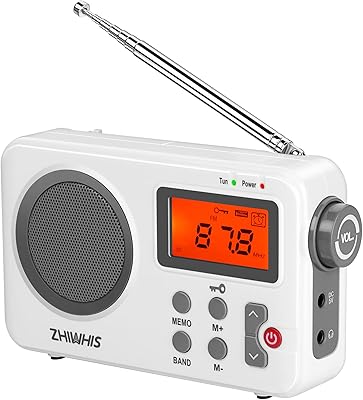
ZHIWHIS ZWS-8801 Portable AM/FM/Shortwave Radio
83%
88%
Reception Performance
90%
Portability & Size
85%
Ease of Use
75%
Sound Quality
82%
Battery Life
More
GPX R633B Portable Shortwave AM/FM Clock Radio
71%
83%
Value for Money
61%
Shortwave Reception
77%
AM/FM Performance
86%
Ease of Use
58%
Build Quality
More

FAQ

Yes, pretty much. The box includes the radio, a BL-5C rechargeable battery, a USB-C charging cable, a wire external antenna, a carrying pouch, and an English manual. You can be up and running within a few minutes of opening the package.

No, the R108 uses a BL-5C lithium-ion battery, which is a specific cell type originally common in older Nokia phones. The good news is that replacement BL-5C batteries are widely available and inexpensive online, but you cannot swap in standard AA or AAA cells.

It works, but temper your expectations. The Air band feature is a welcome addition for casual curiosity — listening to local tower communications near an airport, for instance — but it is not a substitute for a dedicated aviation scanner. Reception quality varies considerably by location and proximity to transmitters.

There is a bit of a learning curve with the menu system, particularly for setting up memory presets and the alarm clock. That said, basic AM and FM listening is straightforward from the start. Keeping the manual nearby for the first few sessions is genuinely recommended — it is not intimidating once you work through it.

The DSP chip does a solid job on stronger SW signals, and for listening to major international broadcasters it holds up well. Where it starts to show its limits is on weaker, more distant signals — a higher-end receiver with SSB support will outperform it in those situations. For casual shortwave listening, though, it is more than capable.

Yes, the R108 can be operated via the USB-C connection while simultaneously charging the internal battery. This is handy for extended listening sessions at a desk or bedside table where you want to preserve battery life for travel.

FM stereo is available through headphones. The built-in speaker outputs in mono, which is standard behavior for radios this size. If stereo FM matters to you, plug in a pair of earphones and the difference is noticeable.

It is a very practical choice for that use case. AM and FM reception are both strong suits of the Radiwow receiver, and the large preset memory means a listener can save all their favorite stations without fuss. The alarm clock and sleep timer also make it a genuinely useful daily companion, not just a novelty.

The included wire antenna makes a real difference on shortwave and Air band, where signal strength is more variable. For FM and strong AM stations, the telescopic antenna is usually sufficient on its own. If you are serious about pulling in weaker SW signals, connecting the wire antenna and orienting it carefully is worth the extra step.

Two things come up regularly: NOAA weather band and Single Side Band decoding are both absent from this pocket shortwave radio. Buyers coming from weather-alert radios or amateur radio backgrounds sometimes assume these are included given the feature count — they are not. If either is a must-have, you will need a different model.

Where to Buy