Overview

The Shure WH20TQG Dynamic Headset Microphone has been a dependable fixture in live performance and instruction for over two decades — and that kind of staying power means something. This isn't a mic you pick up on a whim; at its mid-range price, it's a considered purchase for working professionals who need hands-free reliability night after night. One critical detail to sort out before buying: the WH20TQG uses a TQG 4-pin mini connector, meaning it only pairs with compatible Shure wireless bodypack transmitters. If your system doesn't use that connector, this isn't your mic. With a 4.4-star average across more than 1,000 ratings, the track record speaks for itself.

Features & Benefits

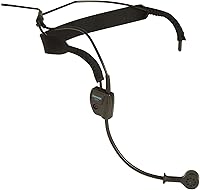
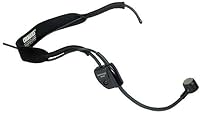
The wireframe headband on this headset mic is slim and adjustable, and the elastic keeps it planted even during aerobic-level movement — no constant readjustment required. The permanently attached cable is noticeably thicker and more durable than what you'd find on cheaper alternatives, which matters when you're coiling and uncoiling it after every show. The collapsible boom arm is a practical touch for anyone who travels with their gear. Sonically, the WH20TQG delivers a smooth dynamic response across the full 20 Hz–20 kHz range — honest, natural vocal reproduction rather than hyped highs. The cardioid polar pattern does solid work rejecting off-axis sound, and the high clipping threshold keeps distortion out of the picture even at high volumes.

Best For

Shure's dynamic headset is purpose-built for performers and presenters who move. Singers doing theatrical runs, fitness coaches burning through hour-long sessions, and corporate trainers circling a room — these are the people this headset mic was designed around. If you're already running a Shure wireless system with a TQG-compatible transmitter, this is a natural fit; the integration is clean and reliable. It's also a solid step up for anyone coming from a budget headset who wants noticeably better build and audio consistency without jumping to broadcast-grade territory. Where it won't serve you well is anywhere outside the Shure wireless ecosystem — verify your transmitter's connector before committing.

User Feedback

Across a wide range of verified buyers, the praise that surfaces most reliably centers on long-term durability — people mention using this headset mic through years of professional work with no structural issues. Sound consistency gets high marks too, especially from instructors and vocalists who need the same output show after show. The most common criticism is worth taking seriously: the TQG connector requirement locks you into a specific transmitter format, and buyers who overlooked that detail have found themselves stuck with an incompatible setup. A few reviewers noted the boom arm feels stiff out of the box, though it loosens with regular use. Compared to clip-on lavs at the same price, most users find the vocal clarity clearly superior.

Pros

  • Holds its position firmly during intense movement — no mid-show adjustments needed.
  • The permanently attached cable is notably more robust than what cheaper headset mics typically offer.
  • Collapsible boom arm makes it easy to pack flat without stressing the frame.
  • Natural vocal response across a full 20 Hz–20 kHz range, with no artificial hyping of highs or lows.
  • High clipping threshold handles loud environments without breaking into distortion.
  • Cardioid pickup pattern does a solid job keeping background noise out of the signal.
  • Has been in professional circulation for over 20 years — a meaningful indicator of sustained reliability.
  • Includes windscreen and clothing clip, so you're ready to perform straight out of the box.
  • At 7 oz, it's light enough to wear for long sessions without physical fatigue.
  • Consistent sound quality over multi-year use is a theme that runs through long-term owner reviews.

Cons

  • Locked to TQG-connector bodypack transmitters only — wrong system means the mic is simply unusable.
  • The boom arm can feel stiff and resistant when first adjusting it out of the box.
  • No XLR wired option in this version; buyers needing a standard wired setup must look elsewhere.
  • At this price, the absence of a hard-shell carrying case is a noticeable omission for gigging users.
  • Not suited for studio or podcast work where a condenser mic would deliver significantly better detail.
  • The black wireframe design is functional but won't disappear visually the way a lavalier mic can.
  • Buyers upgrading from a different wireless brand will likely need a new transmitter body, adding cost.
  • Sound output, while clean and natural, won't satisfy anyone expecting broadcast or studio-grade performance.

Ratings

The scores below reflect an AI-driven analysis of verified global user reviews for the Shure WH20TQG Dynamic Headset Microphone, with spam, bot-generated, and incentivized feedback actively filtered out to ensure accuracy. Ratings are drawn from real-world use across live performance, fitness instruction, theater, and corporate presentation scenarios. Both the standout strengths and the genuine frustrations buyers have encountered are transparently reflected in every category score.

Build Quality
88%
The reinforced attached cable and rigid wireframe consistently earn praise from users who put this headset through nightly gigging schedules or back-to-back fitness classes. Many report zero structural failures after two or three years of regular professional use, which is a meaningful benchmark at this price tier.
A subset of users noted that the elastic headband shows wear faster than the rest of the unit, losing some tension after extended daily use in humid or high-sweat environments. The boom hinge, while sturdy, can develop minor looseness over time with frequent repositioning.
Sound Quality
83%
For a dynamic headset mic in a live performance context, the vocal reproduction is clean and natural — users consistently describe it as honest rather than processed, which is exactly what singers and instructors need when their voice is amplified through a PA. It holds up well in louder stage environments without muddying or clipping.
This is not a studio microphone, and buyers expecting condenser-level detail or airy highs will be disappointed. A handful of reviewers noted it can sound slightly mid-heavy compared to premium condenser headsets, which becomes more noticeable in quiet speech settings or broadcast scenarios.
Fit & Comfort
81%
19%
Fitness coaches and live performers repeatedly highlight how well the WH20TQG stays in place during vigorous movement — something many comparable headsets fail at. The adjustable wireframe accommodates a wide range of head sizes, and the overall weight is low enough that prolonged wear rarely causes discomfort.
Some users with smaller heads find the fit slightly less snug than expected, requiring more frequent minor adjustments during early use before the frame settles in. The headband elastic can also press uncomfortably against glasses frames for users who wear eyewear during performances.
Connector Compatibility
61%
39%
For users already embedded in the Shure wireless ecosystem with a TQG-compatible bodypack transmitter, the connection is solid and reliable with no signal dropouts reported in normal operating conditions. The TA4F connector locks in securely and has a satisfyingly firm engagement.
This is the single most polarizing aspect of the headset mic. Buyers who did not verify their transmitter's connector type before purchasing have left frustrated one-star reviews almost exclusively about this issue. It is entirely non-functional outside of TQG-equipped Shure bodypacks, with no simple workaround adapter widely available.
Value for Money
77%
23%
Working professionals who use this headset regularly view it as good long-term value because the durability genuinely backs up the asking price over a multi-year lifespan. When compared to budget headsets that fail within months, Shure's dynamic headset tends to justify the investment through longevity alone.
For buyers who only need a headset mic occasionally or who don't already own a compatible Shure transmitter system, the cost feels steep given the connector limitation. The lack of a hard carry case at this price point is a minor but recurring complaint that chips away at the perceived value.
Noise Rejection
79%
21%
The cardioid polar pattern performs reliably in noisy live environments — gym instructors and stage vocalists specifically mention that the mic stays focused on their voice even when monitors, background music, or crowd noise are present. It handles typical live PA feedback scenarios better than omnidirectional alternatives.
In very close-quarters stage setups with monitor wedges positioned directly toward the performer, some users report needing careful gain structuring to avoid feedback. Off-axis rejection is solid but not exceptional, and ambient bleed can surface in smaller, reflective spaces.
Cable Durability
86%
The small-diameter attached cable is noticeably tougher than what comes on budget headsets, and professional users — particularly those coiling and uncoiling the cable daily — report that it resists the cracking and fraying that commonly plague cheaper mics after a few months of heavy use.
Because the cable is permanently attached, any damage requires professional servicing rather than a simple field replacement. Users who have experienced cable failure note that repair costs can be disproportionate to the mic's purchase price, making it a frustrating single point of failure.
Ease of Setup
84%
Plugging this headset mic into a compatible Shure bodypack is genuinely plug-and-play — no additional configuration is needed beyond basic gain setting on the transmitter. Stage managers and AV professionals appreciate that it can be handed to a presenter or performer with minimal instruction required.
The setup simplicity is contingent entirely on having the right transmitter. For users new to wireless systems who are assembling a rig from scratch, navigating Shure's connector ecosystem can feel confusing, and the product packaging does not spell out compatibility requirements as clearly as buyers would like.
Portability & Storage
74%
26%
The collapsible boom arm is a practical design choice that makes a real difference when fitting the headset into a mic bag, pelican case, or backpack alongside other gear. Touring musicians and traveling instructors consistently mention this as a feature they use and appreciate regularly.
Without a dedicated pouch or case included in the box, transporting the headset safely between gigs requires the buyer to source their own protective solution. The wireframe, while sturdy, can still be bent out of shape if it shifts around loosely in a crowded gear bag.
Boom Arm Adjustability
69%
31%
Once the boom arm is broken in through regular use, most users find it holds its position well and can be angled to place the capsule consistently close to the mouth — an important factor for predictable gain levels across different performances.
Out of the box, the boom arm is notably stiff, and several buyers have found the initial adjustment experience frustrating. Getting the exact positioning right takes some trial and error, and the stiffness can make fine-tuning feel imprecise until the joint loosens with repeated use.
Durability Over Time
87%
Long-term ownership reviews are among the most positive aspects of this headset mic. Multiple buyers with three-to-five years of professional use report that the mic continues to perform consistently with no degradation in sound quality, which is a strong indicator of component reliability.
The elastic headband is the most commonly cited component to show age first, gradually losing tension in high-use scenarios. A small number of users also report that the foam windscreen deteriorates faster than expected with regular washing, requiring periodic replacement.
Windscreen Effectiveness
72%
28%
The included foam windscreen does its job adequately in standard indoor performance environments, reducing plosive pops and breath noise enough that most singers and presenters use it without modification or replacement from day one.
In outdoor or high-airflow environments — outdoor fitness classes, open-air stages — the stock foam windscreen is less effective than users would hope, and a few reviewers noted they sourced aftermarket alternatives. The windscreen also degrades with frequent washing and may need replacing within a year of heavy use.
Headband Adjustability
76%
24%
The wireframe design allows for a reasonably wide range of head size accommodation, and the elastic band does most of the fine-tuning work automatically once the frame is roughly positioned. Theater and production teams appreciate being able to share the headset across different performers with minimal adjustment time.
Users at either extreme of the head size range — notably those with very small heads — report that the fit is less confident than for average-sized users. The adjustment mechanism is also purely manual with no click-stop sizing, which means the headset can subtly shift from its ideal position over a long performance.

Suitable for:

The Shure WH20TQG Dynamic Headset Microphone is built for working professionals who need a hands-free mic that can keep up with physical demands — not just survive them. Live singers performing theatrical or concert runs, fitness instructors leading high-energy classes, and corporate presenters who move around a room constantly will all find it handles the job without fuss. The secure elastic headband and rugged attached cable are clearly designed with repetitive daily use in mind, not occasional hobbyist sessions. If you're already operating within a Shure wireless ecosystem using a TQG-compatible bodypack transmitter, this headset slots in cleanly and reliably. It also makes strong sense for anyone stepping up from a cheap entry-level headset who wants a noticeable jump in build quality and vocal clarity without the cost of a broadcast-tier rig.

Not suitable for:

The Shure WH20TQG Dynamic Headset Microphone is essentially useless if you don't own a compatible Shure wireless bodypack transmitter with a TQG input — this is the single biggest source of buyer frustration, and it's worth being blunt about it. If your existing wireless system uses a different connector type, you'll need an adapter or a different mic entirely. It's also not the right tool for studio recording or podcasting; the dynamic capsule is voiced for live performance environments, not controlled acoustic settings where condenser mics typically shine. Budget-conscious buyers looking for a casual, occasional-use microphone will likely find the price hard to justify given how purpose-specific this tool is. And if you need a truly discreet mic — for broadcast television, film, or elaborate theatrical costuming — a lavalier or clip-on solution will be far less visible and more appropriate for those contexts.

Specifications

  • Model Number: The official model designation is WH20TQG, identifying this as the TQG connector variant in the WH20 headset family.
  • Connector Type: Uses a TA4F 4-pin mini connector (TQG), designed exclusively for Shure wireless bodypack transmitters with a matching TQG input.
  • Transducer Type: Dynamic transducer; no phantom power or battery required for the microphone element itself.
  • Polar Pattern: Unidirectional cardioid pattern, which focuses pickup on the speaker's voice while reducing bleed from off-axis ambient noise.
  • Frequency Response: Rated from 20 Hz to 20 kHz, providing a smooth, natural vocal response suited to live performance and spoken-word applications.
  • Signal-to-Noise Ratio: Specified at 78 dB, indicating a clean output signal with low self-noise relative to the microphone's sensitivity level.
  • Weight: The complete headset assembly weighs 7 oz (approximately 0.2 kg), keeping it light enough for extended wear during active use.
  • Dimensions: Packaged dimensions measure 7.7 x 6.3 x 3.2 inches, reflecting the folded footprint when the boom arm is collapsed for storage.
  • Cable Construction: Features an extra-strong, small-diameter cable permanently attached to the microphone housing, engineered to resist breakage under repeated flexing.
  • Boom Design: The microphone boom arm is collapsible, allowing the headset to fold flat for compact packing and transport between venues or sessions.
  • Headband Material: Constructed from a lightweight wireframe fitted with an elastic band that adjusts to different head sizes while maintaining a secure, stable fit.
  • Color: Available in black, offering a relatively low-profile appearance suitable for stage and presentation environments.
  • In The Box: Package includes the headset microphone, a foam windscreen for the capsule, and a clothing clip for cable management.
  • Compatibility: Designed specifically for use with Shure wireless bodypack transmitters equipped with a TQG (TA4F) input jack; not compatible with standard XLR or other connector types.
  • Power Source: The microphone element itself requires no separate power source; any required power is supplied by the connected wireless transmitter bodypack.
  • Brand: Manufactured by Shure Incorporated, a professional audio company with decades of experience in live sound and broadcast microphone design.
  • First Available: This model has been commercially available since July 2004, reflecting a long-standing and continuously supported product in the Shure lineup.
  • Recommended Use: Intended primarily for singing, live vocal performance, fitness instruction, and hands-free presentation scenarios requiring freedom of movement.

Related Reviews
Shure PGA48-XLR
Shure PGA48-XLR
83%
93%
Build Quality
86%
Vocal Clarity
91%
Value for Money
82%
Feedback Rejection
74%
Handling Noise
More
Shure PGA58
Shure PGA58
86%
93%
Build Quality
86%
Vocal Clarity
89%
Feedback Rejection
96%
Value for Money
84%
Switch Design
More
Shure SM57
Shure SM57
87%
98%
Build Durability
96%
High SPL Handling
91%
Signal Isolation
88%
Presence and Clarity
62%
Gain Requirement
More
Shure SM63LB Omnidirectional Dynamic Microphone
85%
93%
Build Quality
88%
Audio Clarity for Speech
84%
Omnidirectional Performance
94%
Durability in Field Use
81%
Handling Noise Rejection
More
Shure 545SD-LC
Shure 545SD-LC
87%
96%
Build Durability
93%
Instrument Recording
89%
Switch Reliability
88%
Feedback Rejection
97%
Vintage Aesthetic
More
Shure SM48 Handheld Dynamic Microphone

83%
91%
Build Quality
88%
Value for Money
74%
Sound Quality
89%
Feedback Rejection
83%
Handling Noise
More
Shure SM58-LC
Shure SM58-LC
90%
98%
Build Durability
86%
Vocal Clarity
92%
Feedback Rejection
89%
Handling Noise Suppression
94%
Room Noise Isolation
More
Shure SM57-X2U Dynamic Instrument Microphone
79%
93%
Instrument Recording Quality
91%
Build Quality & Durability
88%
Ease of Setup
84%
Value for Money
67%
USB Adapter Performance
More
Shure SM7B
Shure SM7B
83%
98%
Vocal Sound Quality
96%
Background Noise Rejection
94%
Build Quality & Durability
41%
Ease of Setup
88%
Plosive & Sibilance Control
More
Shure VP89L Long Shotgun Microphone
81%
94%
Directional Accuracy
88%
RF Interference Rejection
91%
Modular Capsule System
89%
Build Quality
62%
Value for Money
More

FAQ

It depends on which specific transmitter model you own. The WH20TQG is designed for bodypack transmitters with a TQG (TA4F 4-pin mini) input. Most Shure BLX, GLX-D, PGXD, and SLX-D bodypack transmitters use this connector, but you should confirm your transmitter's input type before ordering. Shure's website lists compatible systems for each headset variant.

No. The Shure WH20TQG Dynamic Headset Microphone terminates in a TQG 4-pin mini connector, not a standard XLR plug. It is built exclusively for wireless bodypack transmitters. If you need a wired version, Shure makes other WH20 variants with XLR or standard 3.5mm connections that would be a better fit.

Very secure in practice. The elastic headband combined with the adjustable wireframe keeps the headset in place even during aerobic-level movement. Multiple long-term users — fitness instructors in particular — report that it stays put through full classes without needing readjustment. That said, the fit does improve once the frame breaks in a little from regular use.

The boom arm can be repositioned to place the capsule at the right distance from your mouth, and it holds the set position once adjusted. It can feel stiff initially straight out of the box, which has surprised a few buyers, but it loosens up with regular use. The arm is also collapsible for storage, which is helpful when packing your gear.

For live vocal use, most users find this headset noticeably clearer and more consistent than comparably priced clip-on lavs. The cardioid pattern does a better job isolating the voice from room noise, and the dynamic capsule handles high sound pressure levels without distortion. Lavaliers have the advantage of being more discreet visually, but if audio quality is the priority, this headset generally wins the comparison.

The cable on the WH20TQG is permanently attached to the microphone housing and is not user-replaceable in the field. Shure did engineer it to be extra-durable for exactly this reason — it is noticeably more robust than what you get on budget headsets. If the cable is damaged, the microphone would need to go back to Shure or an authorized service center for repair.

The WH20TQG is designed to be worn on either ear. The wireframe headband is reversible, so you can position the boom on the left or right side depending on your preference or the requirements of your performance setup.

The foam windscreen can be removed and hand-washed with mild soap and water, then left to fully air dry before reattaching. For the headset frame and cable, a lightly dampened cloth works well — avoid soaking the mic capsule or using harsh chemical cleaners. Regular cleaning after sweaty sessions will extend the life of both the foam and the headband elastic.

It is workable for theater but not invisible. The black wireframe sits along the side of the head and the boom positions near the mouth, which may be noticeable depending on lighting and camera angle. For productions where the microphone absolutely cannot be seen, a flesh-tone lavalier is typically the standard choice. That said, many stage productions do use this headset successfully, especially in lower-budget or community theater contexts.

Several reviewers with years of daily or near-daily professional use report the WH20TQG still performing reliably after three to five years. The most common wear points over time are the elastic headband and the cable near the connector, so those are worth monitoring. Proper storage — not coiling the cable too tightly and using the collapsible boom when packing — makes a meaningful difference in long-term longevity.

Where to Buy