






Overview
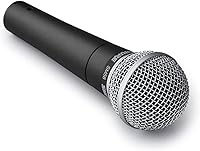
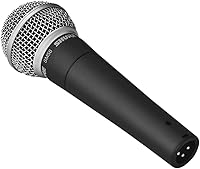
Picking up the Shure SM58-LC for the first time, you immediately notice its substantial weight and perfectly balanced feel in the hand. It has served as the definitive industry standard for live vocals since the mid-sixties, and for good reason. This dynamic mic uses a rugged capsule design that requires no phantom power, making it incredibly straightforward to use with any setup. You will need to provide your own XLR cable as the LC version does not include one, and you will need a mixer or audio interface to get going. The dark gray, die-cast metal body feels virtually indestructible, giving you the confidence that it can handle the rigors of a nightly touring schedule without ever failing during a performance.
Features & Benefits
Performance on stage is where this XLR vocal microphone truly shines. The cardioid pickup pattern is excellent at rejecting background noise and preventing feedback, even in loud environments. Shure tuned the frequency response with a specific midrange presence that helps your voice cut through a dense instrument mix with clarity and warmth. Inside the handle, an internal pneumatic shock-mount system works silently to soak up handling noise if you like to move around while performing. Additionally, the iconic spherical steel grille houses a built-in pop filter to tame harsh plosives and wind sounds. This combination of features ensures a clean, consistent sound regardless of whether you are in a quiet room or a crowded stadium, all while maintaining legendary durability.
Best For
While primarily known as the go-to choice for touring vocalists who need consistency, this stage staple is remarkably versatile for modern creators. It is particularly effective for podcasters recording in untreated home rooms, as its directional pickup ignores the echoes and street noise that often ruin recordings made with sensitive condenser mics. Music venues and rehearsal spaces should keep plenty of these on hand because they can survive accidental drops and general abuse that would break delicate studio gear. For any budget-conscious musician, this dynamic mic represents a lifelong investment in a tool that will likely never need replacing. Whether you are screaming in a metal band or hosting a quiet talk show, it provides a reliable, professional foundation for your audio chain.
User Feedback
Owners frequently praise this dynamic mic for being practically indestructible, with many units still working perfectly after decades of heavy use. There is a general consensus that it offers a predictable, warm sound that flatters almost any voice type right out of the box. Some users do point out a slight lack of high-end air and detail when compared to expensive studio condenser models, which is a trade-off for its extreme durability. However, most find that its ability to ignore room reflections far outweighs the need for clinical precision in home environments. It remains a beloved tool because it removes the stress of gear failure, allowing performers to focus entirely on their delivery without worrying about their hardware.
Pros
- Built with a die-cast metal body that is famous for surviving extreme touring conditions and accidental drops.
- The cardioid polar pattern effectively isolates your voice from loud background instruments and room noise.
- Features a tailored frequency response with a midrange boost that helps vocals stay clear and present in any mix.
- The internal pneumatic shock-mount system significantly reduces thumping sounds when holding the microphone by hand.
- Requires no batteries or phantom power, making it a reliable plug-and-go option for any analog mixer.
- The integrated spherical mesh grille and pop filter help mitigate annoying breath sounds and wind noise.
- This stage staple holds its resale value remarkably well compared to almost any other entry-level piece of audio gear.
- Designed to handle extremely high sound pressure levels without distorting, making it useful for loud singers and instruments.
Cons
- Does not include an XLR cable in the box, requiring an additional purchase before you can start recording.
- The limited high-end frequency response can result in a lack of detail compared to modern condenser microphones.
- Requires a significant amount of gain from an audio interface, which may reveal hiss in lower-quality preamps.
- As a strictly analog device, it lacks the convenience of USB connectivity or onboard digital controls.
- The heavy weight can cause some cheaper, lightweight microphone stands to droop or tip over during use.
- The enamel finish on the handle is prone to chipping and showing wear after years of heavy contact.
- Very close proximity is required to get a strong signal, which can be restrictive for performers who move a lot.
- The Shure SM58-LC design hasn't been updated in decades, making it feel less innovative than newer competitors.
Ratings
Our team synthesized thousands of verified global reviews to evaluate the Shure SM58-LC, providing a transparent look at its real-world performance. By using advanced AI to filter out incentivized noise and spam, we've pinpointed the genuine strengths and recurring frustrations shared by professional touring musicians and home hobbyists alike.
Build Durability
Vocal Clarity
Feedback Rejection
Handling Noise Suppression
Room Noise Isolation
Value for Money
Plosive Management
Versatility
Ease of Use
Aesthetics & Finish
Suitable for:
The Shure SM58-LC is the definitive choice for performing vocalists and public speakers who need a reliable workhorse that won't fail under the pressure of live events. Its directional pickup pattern makes it especially effective for podcasters and streamers working in noisy, untreated rooms where background fans or echo can ruin a recording. Venue owners and rehearsal space managers will find this stage staple invaluable because it can withstand years of physical abuse and accidental drops. It is also an ideal starting point for home studio owners on a budget who want a versatile, professional tool that maintains its value over time. If your priority is durability and a predictable, warm sound that cuts through a mix, this is the safest investment you can make.
Not suitable for:
While legendary, the Shure SM58-LC is not a one-size-fits-all solution for every recording scenario. Audiophiles or studio engineers seeking clinical precision and high-frequency "air" for delicate acoustic instruments or orchestral recordings may find the sound too dark or limited. It is also not suitable for those looking for a plug-and-play solution, as it requires an external audio interface and a separate XLR cable to function. Content creators who prefer to record from a distance or need to capture multiple people with one device should avoid this dynamic mic in favor of a sensitive condenser. Finally, if you are looking for modern features like onboard gain controls or a headphone jack directly on the body, this traditional analog design will likely feel too basic for your needs.
Specifications
- Microphone Type: This is a dynamic microphone that uses a moving coil capsule to convert sound into an electrical signal.
- Polar Pattern: The cardioid unidirectional pattern focuses on sound from the front while rejecting noise from the sides and rear.
- Frequency Response: The range spans from 50 to 15,000 Hz with a tailored midrange boost for vocal clarity.
- Output Impedance: The rated impedance is 150 ohms with an actual impedance of 300 ohms for connection to low-impedance microphone inputs.
- Sensitivity: At 1 kHz, the open circuit voltage is -54.5 dBV/Pa (1.85 mV).
- Connector Type: The output is a professional three-pin male XLR connector integrated into the handle.
- Housing Material: The handle is constructed from dark gray, enamel-painted, die-cast metal for heavy-duty protection.
- Grille Design: The spherical head is made of matte-finished steel mesh and includes an integrated pop filter.
- Product Weight: The unit weighs approximately 310 grams or 10.9 oz without the cable or stand adapter.
- Physical Dimensions: The total length is 162mm (6.38″) with a maximum grille width of 51mm (2″).
- Shock Mount: An internal pneumatic shock-mount system is built in to isolate the capsule from mechanical vibrations.
- Included Adapter: The box includes an A25D break-resistant swivel stand adapter that rotates 180°.
- Storage Bag: A zippered vinyl storage bag is provided to protect the finish when the gear is not in use.
- Power Requirement: As a passive dynamic microphone, this model does not require batteries or external phantom power.
Related Reviews
Shure SM57

Shure 545SD-LC

Shure SM81-LC
Shure BLX24R/SM58-H11
Shure SLX2/SM58 Handheld Wireless Microphone Transmitter
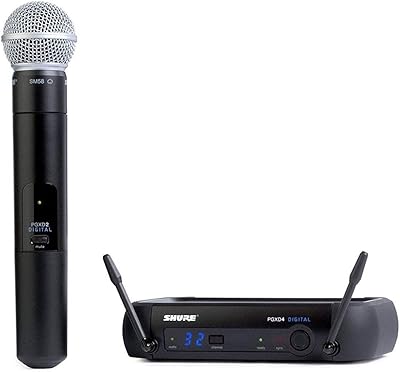
Shure PGXD24/SM58 Digital Wireless Microphone System
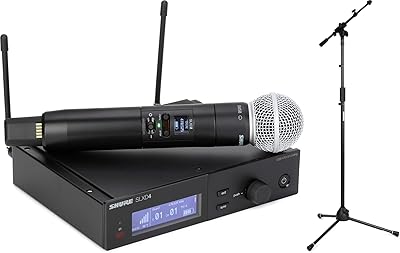
Shure SLXD24/SM58 Wireless Microphone System
YUTIANHOME 500ft OM3 Armored LC-LC Fiber Cable
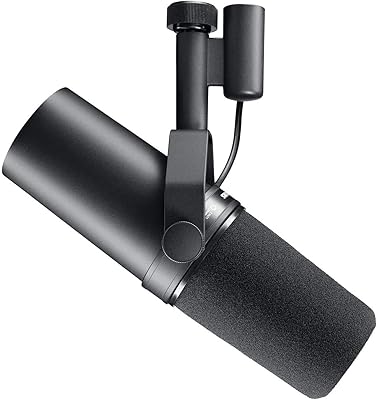
Shure SM7B