Overview

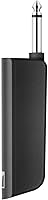
The Sennheiser XSW-D Instrument Base Set is Sennheiser's answer to musicians who want to cut the cable without wrestling with frequency coordination or bodypack harnesses. It runs on 2.4 GHz, which means it's legal to use in virtually every country — no licenses, no paperwork. The transmitter and receiver plug directly into your instrument's output jack and your amp's input, so setup is quick. At around $290, it sits in a comfortable middle ground: not a budget toy, but not the kind of investment that keeps you up at night either.
Features & Benefits

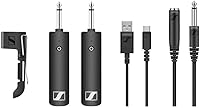
The plug-on form factor is what sets this wireless instrument set apart from most competitors. You plug the transmitter into your guitar's output jack, the receiver into your amp, and you're done — no belt clips, no tape, no extra gear cluttering your rig. The system automatically finds a clean channel, which is a real relief at a busy venue. Battery life is rated at five hours, though real-world use can vary depending on the charge level you start with. Recharging via USB during a set break is a practical plus. The 106 dB signal-to-noise ratio means tone-conscious players won't notice any degradation.

Best For

The XSW-D base kit is a strong fit for gigging guitarists and bassists who want a clean stage without hauling extra bodypack gear. If you travel internationally for performances, the license-free 2.4 GHz band is a practical advantage — no fussing over regional RF regulations. The 250-foot range covers most club stages and rehearsal rooms, though heavy wireless traffic or thick walls can chip away at that figure, so large outdoor festivals may push its limits. Players who would rather charge a device than stock AA batteries will appreciate the rechargeable setup. Not built for major touring rigs, but solid for working musicians.

User Feedback

Sennheiser's plug-on wireless system holds a 3.9-star rating across 184 reviews — a score that reflects a genuinely mixed experience. Buyers most often praise ease of setup and the clean, transparent signal, especially compared to older analog systems they had used previously. The compact size earns consistent mentions too. On the downside, a notable number of users report that real-world battery life falls short of the five-hour claim, particularly after repeated charge cycles. Occasional dropouts in crowded RF environments also surface in negative reviews. Some buyers question the value at this price when budget alternatives exist, but Sennheiser's reputation tends to tip undecided buyers toward the purchase.

Pros

  • Plug-on design eliminates bodypacks entirely — no clips, no harness, no extra hardware.
  • Auto channel selection means the system is ready to perform without any manual RF setup.
  • License-free 2.4 GHz operation works out of the box in virtually every country.
  • Signal quality is clean and transparent, holding up well even at moderate gain settings.
  • USB charging during set breaks reduces downtime and eliminates the need for spare batteries.
  • 250-foot range covers the vast majority of club stages and rehearsal rooms comfortably.
  • The XSW-D base kit is compact enough to store in almost any gig bag or case pocket.
  • Sennheiser's manufacturing consistency means most buyers experience zero hardware failures during regular gigging.
  • Setup from unboxing to a working wireless signal typically takes under two minutes.

Cons

  • Real-world battery life regularly falls short of the five-hour spec after a few months of use.
  • Dense Wi-Fi environments or venues with many 2.4 GHz devices can trigger occasional dropouts.
  • No charging dock is included, making simultaneous charging of both units slightly awkward.
  • Battery level indicators are limited, making it difficult to quickly check remaining charge on a dark stage.
  • At around $290, the price is hard to justify if the plug-on form factor is not specifically what you need.
  • The plastic housing around the connector points shows wear under heavy touring conditions over time.
  • Instruments with recessed output jacks or non-standard configurations may require adapters not included.
  • Effective range in real environments with walls and interference is often noticeably less than 250 feet.
  • No dedicated case or carrying pouch is included for the transmitter and receiver units.

Ratings

The Sennheiser XSW-D Instrument Base Set has been scored by our AI system after processing verified buyer reviews from multiple global markets, with spam, bot-generated, and incentivized feedback actively filtered out. The result is an honest breakdown of where this wireless instrument set genuinely delivers and where real-world performance falls short of expectations. Both the strengths that keep musicians loyal to this kit and the friction points that give buyers pause are transparently reflected in every category below.

Ease of Setup
93%
Players across skill levels consistently describe the setup as near-instant — plug the transmitter into the guitar jack, plug the receiver into the amp, and the system pairs itself. There is no menu to navigate, no frequency scanning, and no manual pairing process. For musicians who just want to play, this is a genuine relief.
A small number of users running multiple 2.4 GHz devices simultaneously report that the auto-channel system occasionally takes a moment to settle, which can be mildly disruptive right before a set. It is a rare complaint, but worth noting for busy stage environments.
Signal Quality
88%
The 106 dB signal-to-noise ratio translates well in practice — most guitarists and bassists report that the tone coming through the amp is clean and transparent, with no noticeable coloration compared to a cable. For players who are particular about their sound, this level of fidelity is one of the kit's strongest selling points.
At the outer edges of the rated 250-foot range, or in venues with dense wireless traffic, a handful of users report brief signal instability. It is not a constant problem, but players at larger or more crowded venues should factor in the RF environment before assuming the full range is always available.
Battery Life
61%
39%
Under ideal conditions and with freshly charged units, some users do reach close to the five-hour mark — enough to cover a full rehearsal or a standard club set with breathing room. The USB charging convenience also means topping up between sets is easy and doesn't require carrying spare batteries.
This is the most consistently contested spec in user reviews. A meaningful portion of buyers find real-world battery life lands closer to three to four hours, particularly after the units have gone through several charge cycles. For longer gigs or back-to-back performances without a break, the five-hour claim should be treated as an optimistic ceiling rather than a reliable baseline.
Wireless Range
74%
26%
For club stages, rehearsal rooms, and smaller venues, 250 feet is comfortably more than most players will ever need. Guitarists who roam the front of house or move between stage positions report zero issues within typical indoor performance distances.
The rated range assumes open space with minimal interference, which rarely reflects real venues. Thick walls, active Wi-Fi networks, and other 2.4 GHz devices can noticeably reduce effective range. Outdoor festival use or large theatre stages may push this kit to its limits.
Build Quality & Durability
71%
29%
The plug-on units feel solid in hand and the connector housings show little flex under normal gigging conditions. Sennheiser's manufacturing standards are generally trusted by musicians, and most buyers report no physical failures after months of regular use.
A subset of long-term users note that the plastic housing shows wear around the connector points after extended touring use. The units are not ruggedized, and a hard knock or accidental drop could be a concern for players who are rough on their gear.
Form Factor & Portability
91%
The plug-on design genuinely removes the bodypack from the equation — no belt clips, no transmitter dangling off a strap button, no additional mounting hardware. Guitarists performing in tight spaces or moving frequently across the stage find the minimal footprint a real practical advantage.
The plug-on style, while clean, does add a small amount of physical protrusion at both the guitar output and the amp input. Players using guitars with recessed output jacks or tightly packed pedal boards occasionally report a slightly awkward fit.
Interference Resistance
76%
24%
The automatic channel allocation works well in most venues, scanning and locking onto a clean frequency without any user input. In moderately busy RF environments, the system typically handles competing signals without audible artifacts.
Dense wireless environments — venues with many active Wi-Fi access points, crowded festival backstages, or locations where multiple 2.4 GHz systems are running simultaneously — can challenge the interference management. A few users report dropouts in exactly these conditions, which is a structural limitation of the 2.4 GHz band itself.
Charging Convenience
82%
18%
USB charging is a practical choice for working musicians. The ability to charge both units simultaneously during a break, using the same cables already in most gear bags, reduces the logistical burden of keeping the kit powered. Reaching 50 percent charge in roughly one hour is a reasonable turnaround.
There is no charging dock included, which means managing two separate cables during a quick break requires a bit of organization. Some buyers also note that charge indicators could be clearer, making it harder to quickly judge remaining battery at a glance before going on stage.
Value for Money
66%
34%
For musicians who genuinely need the plug-on form factor and worldwide license-free operation, the price reflects a fairly specialized capability. Sennheiser's brand reliability and the clean audio performance give buyers confidence that they are not paying purely for a name.
At around $290, the kit draws regular comparisons to both cheaper analog systems and more capable digital alternatives. Buyers who do not specifically need the plug-on form factor often find that similarly priced competitors offer longer battery life or better range. The value proposition narrows significantly if the unique form factor is not a priority.
Compatibility
79%
21%
The standard 6.3 mm quarter-inch plug format covers the vast majority of electric guitars, basses, and acoustic-electric instruments. Most buyers report plug-and-play compatibility with their existing gear without any adapters required.
Players using instruments with non-standard output configurations, or those wanting to connect to equipment with XLR-only inputs, will need adapters not included in the kit. A small number of users also report firmware-related quirks with specific amp or interface setups, though these cases appear infrequent.
Noise Floor & Tone Transparency
86%
Tone-sensitive players — particularly those running clean amp settings where any signal degradation would be immediately obvious — consistently note that the wireless signal sounds practically indistinguishable from a quality cable. The low noise floor holds up well even at higher gain settings.
Players using extended dynamic range instruments, or those running very low-output pickups, occasionally report that the headroom feels tighter than expected. It is a nuanced complaint, but players in more demanding recording or studio scenarios may notice it where a live audience never would.
Indicator & Feedback System
58%
42%
The system does provide basic visual feedback on connection status, which is enough for a quick pre-show check. Players who just need confirmation that the link is active get what they need without much fuss.
Multiple buyers express frustration with the limited battery and status indicators, particularly the lack of a clear numeric or segmented battery display. On a dimly lit stage, quickly assessing how much charge is left is harder than it should be for a kit in this price range.
International Usability
94%
The license-free 2.4 GHz band is one of the strongest practical arguments for this kit among touring musicians. Players who move between North America, Europe, and Asia report using the same unit everywhere without any regulatory adjustments or documentation.
While the frequency band is globally available, the actual RF congestion in different markets varies. Highly urbanized venues in certain regions may present more competing signals on 2.4 GHz, which can affect performance in ways that are harder to predict than with dedicated UHF systems.
Brand Reputation & Support
81%
19%
Sennheiser's standing in the professional audio world carries real weight in buyer decisions. Many users explicitly cite the brand name as a trust factor, and those who have needed support report generally positive experiences with product assistance and warranty handling.
Some buyers feel the brand premium is priced into the hardware in a way that isn't always justified by the spec sheet alone. A few users report slower-than-expected response times for support tickets related to firmware issues, which is a minor but recurring frustration in negative reviews.

Suitable for:

The Sennheiser XSW-D Instrument Base Set was built for a specific kind of player, and for that player it genuinely delivers. Gigging guitarists and bassists who perform regularly at clubs, rehearsal spaces, and mid-sized venues will find the plug-on form factor removes a real logistical headache — no bodypack, no strap-mounted transmitter, just plug in and go. Musicians who travel internationally for performances get practical value from the license-free 2.4 GHz band, since there is no need to research regional RF regulations or carry different hardware for different markets. Players who prioritize a fast, reliable setup over maximum configurability will appreciate that the system auto-pairs and auto-selects channels without any intervention. Those who have grown tired of buying and managing AA batteries will also find the USB rechargeable design a cleaner long-term solution, especially for frequent performers.
Not suitable for:

The Sennheiser XSW-D Instrument Base Set is not the right tool for every musician, and being honest about that saves a lot of buyer frustration. Players who perform at large outdoor festivals, theatres, or any venue where range and RF reliability are non-negotiable should consider a dedicated UHF system instead — the 2.4 GHz band, while convenient, shares space with Wi-Fi and other consumer devices in ways that can cause unpredictable behavior at high-traffic events. Musicians who need more than five hours of continuous use — or who regularly play back-to-back long sets without a meaningful break — may find themselves caught short, since real-world battery performance often falls below the rated ceiling after extended ownership. Players on a tighter budget who do not specifically need the plug-on form factor will likely find better value elsewhere, since similarly priced competitors offer longer battery life or stronger range specs. Studio musicians and home recording users will also likely find the investment hard to justify, as the kit's strengths are entirely stage-oriented.
Specifications

  • Brand: Manufactured by Sennheiser, a German audio company with a long-standing reputation in professional and consumer audio equipment.
  • Model: XSW-D Instrument Base Set, model number 508493, first made available in January 2019.
  • Frequency Band: Operates on the 2.4 GHz ISM band, which is license-free and legally usable in most countries worldwide without registration.
  • Frequency Setup: Channel allocation is fully automatic — the system scans and selects a clean frequency at power-on without any manual input required.
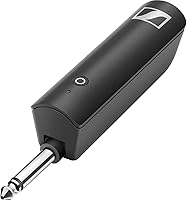
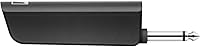
  • Transmitter Type: Plug-on transmitter with a 6.3 mm (1/4″) jack connector that inserts directly into the instrument's output socket.
  • Receiver Type: Plug-on receiver with a 6.3 mm (1/4″) jack connector designed to plug directly into an amplifier or audio interface input.
  • Estimated Range: Rated wireless range is approximately 250 ft (76 m) in open, unobstructed conditions; real-world performance varies with environment.
  • Battery Life: Rated at up to 5 hours of continuous use per full charge under optimal conditions; actual performance may be shorter in practice.
  • Charging: Both units charge via USB; a single hour of charging is sufficient to reach approximately 50% battery capacity.
  • Power Source: Powered by built-in rechargeable Lithium-Ion batteries; two cells are included and pre-installed in the kit.
  • Signal-to-Noise Ratio: Specified SNR of 106 dB, indicating a low noise floor suitable for tone-sensitive instrument applications.
  • Transmission Type: Digital wireless transmission, providing encrypted signal transfer and resistance to signal interception compared to analog systems.
  • Weight: The complete kit weighs approximately 12 oz (340 g), covering both the transmitter and receiver units together.
  • Dimensions: Packaged kit dimensions are 9.4 x 4.5 x 2.8 inches (23.9 x 11.4 x 7.1 cm).
  • Color: Both transmitter and receiver units are finished in matte black.
  • Polar Pattern: Unidirectional signal pickup pattern, optimized for direct instrument source connection rather than ambient sound capture.
  • Compatibility: Designed for use with any instrument featuring a standard 6.3 mm (1/4″) output jack, including electric guitars, basses, and acoustic-electric instruments.
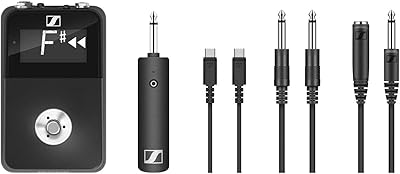
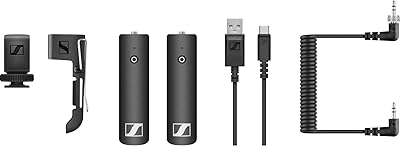
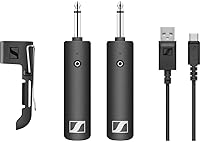
  • Included Contents: Kit includes the XSW-D plug-on transmitter, XSW-D plug-on receiver, and USB charging cables; no separate charging dock is provided.

Related Reviews

Sennheiser XSW-D Lavalier Set
87%
98%
Setup Speed
96%
Portability
91%
Audio Fidelity
64%
Battery Endurance
82%
Signal Stability
More
Sennheiser XSW-D Pedalboard Set
87%
87%
Performance
94%
Portability
80%
Battery Life
91%
Ease of Use
85%
Sound Quality
More
Sennheiser XSW-D Vocal Set Wireless Microphone System
86%
92%
Ease of Setup
89%
Sound Quality
86%
Battery Life
75%
Range & Connectivity
93%
Portability
More
Sennheiser AVX-MKE2 SET-4-US
89%
96%
Audio Clarity
94%
Wireless Stability
91%
Ease of Setup
89%
Build Quality
90%
Portability
More
Pyle PDKM7 7-Piece Drum Microphone Kit
75%
91%
Value for Money
67%
Audio Quality
74%
Build Quality
83%
Ease of Setup
88%
Carry Case Quality
More
Sennheiser ew 512P G4 Lavalier Wireless Set
88%
94%
Audio Quality
92%
Wireless Range
89%
Portability & Design
90%
Setup & Ease of Use
72%
Battery Life
More
PURA D′OR Curly & Classy Shampoo & Conditioner Set
89%
94%
Curl Definition
91%
Hydration Performance
89%
Frizz Control
87%
Scalp Nourishment
92%
Softness & Smoothness
More
Saloniture Aluminum Salon Instrument Tray with Rolling Base
84%
89%
Stability & Durability
75%
Ease of Assembly
92%
Mobility & Casters
86%
Tray Size & Organization
80%
Height Adjustment Mechanism
More
Sennheiser e 609 Silver
87%
96%
Guitar Cabinet Performance
98%
Ease of Placement
93%
Build Durability
89%
Feedback Rejection
41%
Vocal Versatility
More
Gelish Dynamic Duo Foundation Base & Top It Off Sealer Gel Set
85%
90%
Ease of Application
91%
Curing Time
87%
Chip Resistance
89%
Finish Quality
85%
Durability (Wear Time)
More

FAQ

No, the XSW-D base kit operates on the 2.4 GHz ISM band, which is license-free in the vast majority of countries including the US, Canada, the UK, EU member states, Australia, and most of Asia. It is one of the practical advantages of this system for musicians who tour internationally — you do not need to research local RF regulations or apply for permits before performing.

Realistically, under two minutes from opening the case to a working wireless signal. You plug the transmitter into your guitar's output jack, plug the receiver into your amp's input, power both units on, and the system pairs itself automatically. There are no menus, no frequency scans, and no manual pairing steps.

It depends on how the units have been maintained and how many charge cycles they have seen. Fresh out of the box, many users do approach the five-hour mark. However, after extended ownership and repeated charging, a number of buyers report practical battery life settling closer to three to four hours. If your sets run long, it is worth charging the units fully and keeping a USB power bank nearby as a backup option during breaks.

Yes, as long as your acoustic-electric guitar has a standard 6.3 mm output jack, the transmitter will plug straight in. The system works with any passive or active pickup that outputs through a quarter-inch socket, so most acoustic-electric instruments are compatible without any adapters.

Generally yes, but with some caveats. The automatic channel selection handles moderate interference well. In venues with an unusually dense number of active Wi-Fi networks or other 2.4 GHz devices — think large hotels, convention spaces, or festival backstage areas — you may occasionally experience brief signal instability. For most club and rehearsal room environments, interference is rarely an issue.

No, neither a dedicated case nor a carrying pouch is included in the kit. The units are compact enough to fit in most gig bags, but if you want a protective case for transport you will need to source one separately.

This is a genuine limitation that several users flag. The indicator system provides a basic status light but does not display a precise battery percentage or segmented level. On a dimly lit stage, quickly assessing remaining charge is harder than it should be. Getting into the habit of fully charging both units before every performance is the most reliable workaround.

The Sennheiser XSW-D Instrument Base Set supports running multiple units simultaneously, and the automatic channel allocation is designed to avoid conflicts between co-located systems. That said, the more 2.4 GHz devices active in the same space, the more congested the band becomes. Running two or three systems in the same rehearsal room typically works without issue, but pushing to five or more units in a small space is less predictable.
The system uses digital transmission, which includes signal encryption as part of the 2.4 GHz digital protocol. In practical terms, this means a nearby musician with a receiver cannot accidentally or intentionally lock onto your signal the way they could with an analog wireless system.

Sennheiser does release firmware updates for the XSW-D series, and these are applied via the USB connection using Sennheiser's Smart Assist app. A small number of users have reported minor compatibility quirks that were resolved after updating firmware, so it is worth checking for updates if you experience unexpected behavior. The process is straightforward but does require a smartphone or tablet with the app installed.