Overview

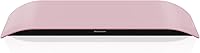
The BlueAnt Soundblade 2.1 Desktop Soundbar is a low-profile unit designed to tuck neatly under your monitor — at just 2.13 inches tall, it barely registers visually on the desk. Unlike most audio upgrades, it packs a 2.1 channel setup with a built-in subwoofer into a single bar, so there's no secondary woofer box to route cables around. The 23-inch width means it spans most standard monitors cleanly, though it's worth measuring your desk before buying. It comes in a bold pink finish — a deliberate aesthetic choice that works for any buyer who wants desktop hardware that stands out. The box includes a remote, two USB-C cables, and a 3.5mm AUX cable.
Features & Benefits

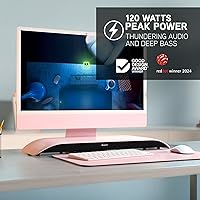
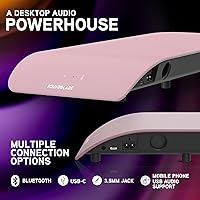
The Soundblade's headline number is 120 watts, but it's important to understand that figure represents peak output, not a continuous RMS rating — the actual sustained power is lower. That said, the hardware behind it is solid: an 80mm neodymium subwoofer combined with dual neodymium drivers and dual voice coils. In practical use, the low-end punch is noticeable for a bar this thin. Connectivity covers three options — USB-C with auto-switching, Bluetooth 5.3, and a 3.5mm input — so switching from a PC to a phone is straightforward. Three onboard EQ presets handle music, movies, and gaming, and the included remote keeps adjustments off the keyboard entirely.

Best For

BlueAnt's desktop soundbar is a strong fit for a fairly specific type of buyer. Remote workers and home-office setups benefit most — it delivers a noticeable step up from built-in laptop audio without taking up meaningful desk space. Gamers on PC or PS5 will appreciate the subwoofer-driven low-end during action sequences. Streaming a lot of film and TV? The bass response adds weight to cinematic content that stereo-only bars just can't replicate. MacBook and Mac users in particular will enjoy USB-C plug-and-play with zero driver fuss. If you've spent time building a clean, minimal desk setup, this under-monitor soundbar fits into that aesthetic without demanding attention.

User Feedback

Buyers are generally surprised by how much bass this under-monitor soundbar produces — for a unit that slips under a 27-inch screen, the low-end presence tends to exceed most expectations. That's the most common thread in positive reviews. On the critical side, a few users report that pushing the volume to its upper limits introduces some compression and distortion, and the Bluetooth connection occasionally needs re-pairing after waking a PC from sleep. The remote draws mixed reactions — handy for some, plasticky and underwhelming for others. Longer-term owners generally report consistent performance over months of daily use, which is a reassuring data point for mid-range hardware.

Pros

  • Built-in subwoofer delivers genuine bass presence without requiring a separate woofer box anywhere on the desk.
  • USB-C auto-switching lets MacBook and PC users plug in and start listening immediately with zero driver installation.
  • Three connectivity options — USB-C, Bluetooth 5.3, and 3.5mm AUX — cover virtually every source device scenario.
  • At just 2.13 inches tall, the Soundblade tucks under most monitors without blocking a pixel of screen space.
  • The included remote handles volume and EQ adjustments without the user ever reaching over the keyboard.
  • Three onboard EQ presets let you shift the audio character for music, dialogue, or gaming in seconds.
  • Bluetooth 5.3 maintains a stable, low-latency wireless link suitable for pairing a phone or tablet alongside a PC.
  • The full in-box kit — two USB-C cable variants, an AUX cable, remote, and batteries — means no extra purchases needed.

Cons

  • The 120W figure is a peak marketing number, not a continuous RMS rating — real sustained output is considerably lower.
  • At 23 inches wide, this under-monitor soundbar will not physically fit all desk setups or monitor stand configurations.
  • Pushing volume toward its upper limit can introduce audible compression, most noticeable during bass-heavy audio.
  • A corded AC power connection is always required, making a fully cable-free desk setup impossible.
  • The remote's build quality draws mixed buyer reactions — several owners describe it as plasticky for the price tier.
  • Bluetooth occasionally needs re-pairing after a PC wakes from sleep, which disrupts multi-device workflows.
  • The limited warranty provides less long-term coverage than some competing brands at a comparable price point.
  • No true surround or multi-channel support means it cannot replace a dedicated home-theater or gaming surround system.

Ratings

The BlueAnt Soundblade 2.1 Desktop Soundbar has been scored by our AI system after analyzing thousands of verified buyer reviews from global markets, with spam, bot-submitted, and incentivized feedback actively filtered out. The scores below reflect the full picture — where this under-monitor soundbar consistently impresses and where real users have run into genuine frustrations. Both the wins and the rough edges are represented honestly.
Sound Quality
83%
For a bar this slim, the overall sound signature impresses most buyers who've used it as a daily driver. Dialogue clarity during streaming is a consistent highlight — voices cut through without sounding thin or harsh, and the 2.1 channel separation gives music a broader stage than you'd expect from a sub-3-inch tall unit.
At the higher end of the volume range, some buyers report the sound starts to feel compressed and loses the crispness it has at moderate levels. It also won't satisfy anyone coming from a proper bookshelf speaker setup — the soundstage, while decent for a desktop bar, is still limited by the single-enclosure form factor.
Bass Performance
87%
This is where the Soundblade consistently surprises people. The 80mm neodymium subwoofer produces a low-end punch that feels disproportionate to how thin the unit is, and buyers regularly describe the bass during action films or gaming sessions as a standout feature — the kind of impact that makes upgrading from laptop speakers feel immediately worthwhile.
Push bass-heavy content loud and the low-end can start to distort before the overall volume reaches uncomfortable levels — it is a known ceiling for the driver size. Buyers who want deep, room-filling bass for larger spaces will find the subwoofer hits its limits faster than a standalone external woofer would.
Build Quality
78%
22%
The main bar unit itself feels solid and well-finished — the chassis has a rigidity that makes it feel planted and durable on the desk. Most buyers report that after months of daily use, the unit shows no signs of wear or degradation, and the low-profile housing resists flexing even when cables are regularly plugged and unplugged.
Where the build quality takes a noticeable dip is in the accessories — specifically the remote, which many users find plasticky against the bar's more confident finish. A few buyers have also noted that the rubber feet could grip smooth desk surfaces more securely, as the bar can shift slightly when adjusting cables.
Value for Money
76%
24%
For buyers replacing basic laptop or monitor speakers, the value proposition is genuinely strong — the price unlocks a 2.1 channel system with three connectivity modes and a full accessory kit, all in one unit. The included cables and remote mean there is no extra spend after purchase, which counts for something at this tier.
Buyers upgrading from better desktop speakers or a dedicated stereo set may feel the value gap narrows considerably at this price point. Competitors in the same range offer broader audio staging, and the limited warranty terms add uncertainty for buyers factoring long-term ownership costs into their decision.
Connectivity
91%
Three input modes — USB-C with auto-switching, Bluetooth 5.3, and 3.5mm AUX — is a genuinely practical spread for a desktop unit. The USB-C auto-switching is particularly valued by users who move between a MacBook and a PC on the same desk; the soundbar detects the active source and shifts without any manual input needed.
The main gap is the absence of an optical input, which would have made it easier to connect to TVs or older source equipment. There is also no headphone output jack, which buyers who regularly switch between speakers and headphones throughout the workday may find limiting.
Setup & Ease of Use
89%
Getting the Soundblade running on a Windows or Mac machine via USB-C takes under a minute with no software involved — it shows up as a standard audio device and works immediately. The physical remote and onboard EQ presets mean there is no app to install, no account to create, and no learning curve for the core controls.
Switching inputs manually when auto-switching does not trigger requires cycling through options via the remote, which is less intuitive than a dedicated input button would be. A handful of users also mention that the initial Bluetooth pairing occasionally takes a few extra steps, particularly on Android devices.
Design & Aesthetics
84%
The low-profile chassis genuinely disappears under most monitors — buyers who have invested time in building a clean desk setup consistently praise how the bar adds audio without adding visual noise. The pink colorway is a deliberate design statement that photographs well and has drawn positive remarks from buyers who wanted something beyond the standard black rectangle.
The 23-inch span is wider than some buyers anticipate, and it can look imposing on narrower desks or fail to center cleanly under smaller monitors. The bold pink colorway, while popular with many buyers, divides opinion and limits the bar's visual fit in more understated or professionally styled desk setups.
Remote Control
58%
42%
Having a physical remote is something buyers genuinely appreciate in daily use — being able to adjust volume and cycle through EQ presets without reaching past the keyboard is a small but real quality-of-life improvement. The AAA batteries included in the box mean it is ready to use on day one without a separate trip to the store.
The remote is arguably the weakest part of the package — multiple buyers describe it as feeling cheap and noticeably lighter in build than the soundbar itself. Its compact size means it can easily slide behind desk items, and the range of controllable functions is narrower than buyers familiar with TV soundbar remotes might expect.
Bluetooth Stability
72%
28%
For most straightforward use cases — streaming music from a phone while working, or pairing a tablet for casual TV audio — Bluetooth 5.3 performs well with quick initial pairing and a stable connection during active sessions. Users in smaller home offices report no dropouts during regular listening.
A recurring complaint from multi-device households is that the connection occasionally drops or needs manual re-pairing after a connected PC wakes from sleep mode. Users who frequently switch Bluetooth sources between a phone, a tablet, and a laptop also find the re-pairing process less smooth than on some competing units.
Desk Fit & Form Factor
79%
21%
The 2.13-inch height profile is genuinely slim — it slides under the vast majority of standard monitors with room to spare, and buyers who have replaced satellite speakers with this single bar consistently comment on how much desk space it frees up. The tabletop footprint keeps cable runs clean and predictable.
The 23-inch width is the form factor's real Achilles heel — it cannot fit under narrow monitor stands with a low horizontal crossbar, and on compact desk rigs it can look oversized. Buyers with smaller setups or tightly configured multi-monitor arrangements should measure their available clearance carefully before purchasing.
Volume Ceiling
67%
33%
At moderate to mid-high volume levels, this under-monitor soundbar fills a standard home office room comfortably — loud enough for clear audio during work calls or gaming sessions, with the sound staying controlled and clean in that range. Users in small to medium rooms rarely feel the need to push it further.
The 120W peak figure has set unrealistic expectations for some buyers — once the sustained output limit is reached, compression and distortion become audible, and the bar does not scale into larger rooms at full blast. Buyers wanting to fill a living room or open-plan space at high volume will find the real-world ceiling lower than that headline rating implies.
EQ Flexibility
63%
37%
The three onboard presets offer a practical shortcut for users who do not want to dig into software settings — cycling from a music profile to a gaming-oriented setting takes one remote press, and the tonal difference between presets is noticeable enough to be genuinely useful across different content types.
Three fixed presets is a limited toolkit for anyone with specific tuning preferences — there is no companion app, no parametric EQ, and no way to create or save custom profiles. Audio enthusiasts who enjoy dialing in precise bass or treble adjustments will find this system frustratingly coarse.
Gaming Performance
77%
23%
Gamers running PS5 or PC titles through USB-C or AUX get a noticeable improvement in spatial presence and low-end impact compared to monitor speakers — explosions, bass-heavy scores, and environmental effects carry weight that flat desktop audio simply cannot deliver. The gaming EQ preset adds a low-mid boost that enhances immersion in action-heavy genres.
This is not a surround sound or virtual 3D audio system — competitive gamers who rely on precise directional cues for positional awareness in shooters will still want a dedicated headset. Bluetooth audio also introduces latency that makes it unsuitable for rhythm games or any title where tight audio sync is critical.
Long-term Reliability
74%
26%
Buyers who have owned BlueAnt's desktop soundbar for several months to over a year generally report consistent audio performance — no driver degradation, no crackle at moderate volumes, and stable physical construction throughout. The brand has a reasonably solid track record in consumer audio, and warranty claims appear handled without major friction based on user accounts.
The limited warranty terms are not fully specified upfront, which makes it harder to evaluate long-term ownership risk against alternatives with clearer coverage. A small subset of users have reported intermittent Bluetooth connectivity issues developing over time, suggesting some units may drift in wireless performance with extended daily use.
In-box Contents
86%
The accessory bundle is comprehensive by mid-range standards — a USB-C to USB-C cable, a USB-C to USB-A cable, and a 3.5mm AUX cable cover every likely connection scenario, and the remote ships with AAA batteries already included. Buyers frequently mention the out-of-box experience as one of the more satisfying aspects of the purchase.
The remote's build quality drags down what would otherwise be a near-perfect box contents score — for the overall package price, buyers expect more than a lightweight plastic controller. A printed quick-start reference is also absent, which some less tech-savvy users have flagged as a small but unnecessary friction point.

Suitable for:

The BlueAnt Soundblade 2.1 Desktop Soundbar is purpose-built for the kind of buyer who wants noticeably better audio at their desk but isn't willing to surrender space to satellite speakers or a separate subwoofer box. Remote workers and home-office users will find it particularly compelling — it delivers a real step up from the thin, hollow sound of built-in laptop or monitor speakers without adding any meaningful desk clutter. PC and console gamers who want bass impact and better spatial presence during gameplay will also get solid value here, especially those running a PS5 or gaming PC through USB-C or Bluetooth. Mac and MacBook users deserve a specific mention: the USB-C auto-switching connection means zero setup friction — plug it in and it simply works. Anyone who spends a lot of time streaming films and TV at a desk will also appreciate the added low-end weight that a 2.1 system brings to movie soundtracks compared to a standard stereo bar.

Not suitable for:

The BlueAnt Soundblade 2.1 Desktop Soundbar is not the right pick for buyers who prioritize audio fidelity above all else or who regularly push volume to its limits for long sessions — at peak output, some users report audible compression that a proper hi-fi setup would not produce. The 23-inch width is a hard physical constraint: if your desk is narrow or your monitor stand has a low clearance bar, this unit may simply not fit without some rearranging. Buyers chasing a completely cable-free workspace will also hit a wall, since the bar requires a corded AC power connection regardless of which audio input is active. Anyone comparing this to proper bookshelf speakers or a standalone 2.1 surround system should recalibrate expectations — the 120W headline is a peak figure, not a continuous RMS rating, so real-world output is more modest than that number suggests. Those needing true multi-channel surround or a multi-room audio solution will find this unit too narrow in scope for their needs.

Specifications

  • Dimensions: The bar measures 23″ wide, 8.58″ deep, and 2.13″ tall, sized specifically to sit flat beneath a standard desktop monitor.
  • Weight: The unit weighs 7.48 lbs, providing enough mass to remain stable on a desk surface without requiring any additional securing.
  • Peak Output: Rated at 120W peak power output — this is a peak figure, not a continuous RMS rating, so sustained real-world output levels will be lower.
  • Channel Config: Configured as a 2.1 system, combining two full-range stereo drivers with a dedicated built-in subwoofer in a single enclosure.
  • Subwoofer Driver: The built-in subwoofer uses an 80mm neodymium driver to handle low-frequency reproduction within the slim chassis.
  • Tweeter Drivers: Two neodymium tweeter drivers, each fitted with dual voice coils and racetrack cone geometry, manage mid and high-frequency output.
  • Connectivity: Supports three input methods: USB-C with automatic source switching, Bluetooth 5.3 wireless audio, and a 3.5mm analog AUX jack.
  • Bluetooth Version: Equipped with Bluetooth 5.3, which offers improved connection stability and lower latency compared to older Bluetooth specifications.
  • EQ Modes: Three onboard EQ presets are accessible via the included remote, with profiles broadly optimized for music, cinematic content, and gaming.
  • Remote Control: A physical remote control is included in the box and runs on two AAA batteries, which are supplied with the unit.
  • Power Source: Operates on corded AC power only; no battery mode is available, so the unit must remain within reach of a wall outlet at all times.
  • Compatible Devices: Officially compatible with PC, Mac, PS5, gaming consoles, smartphones, and tablets across all three available input types.
  • Included Cables: Box contains a USB-C to USB-C cable, a USB-C to USB-A cable, and a 3.5mm to 3.5mm AUX cable.
  • Mounting Type: Designed exclusively for tabletop placement; the unit rests flat on the desk surface and is not compatible with wall or VESA mounting.
  • Warranty: Covered by a limited manufacturer warranty; buyers should confirm the specific duration and claim process directly with BlueAnt at time of purchase.
  • Color Options: The reviewed unit is the Pink color variant; buyers should check current product listings to confirm which colorways are available.

Related Reviews

Puxinat BT103 2-in-1 32-Inch Soundbar
74%
83%
Value for Money
71%
Sound Quality
67%
Bass Performance
88%
Design & Versatility
86%
Setup Experience
More
Hisense HS214 2.1ch Soundbar
72%
74%
Sound Quality
58%
Bass Performance
81%
Dialogue Clarity
88%
Setup & Connectivity
79%
Value for Money
More
Creative Stage 2.1 Soundbar
78%
84%
Bass & Low-End Performance
73%
Audio Clarity & Midrange
91%
Connectivity & Input Range
86%
TV ARC Reliability
67%
Bluetooth Performance
More
Yenjuty SD03 2-in-1 Detachable Soundbar
71%
83%
Value for Money
71%
Sound Quality
78%
Detachable Design
86%
Connectivity
81%
Bluetooth Performance
More
VIZIO Elevate SE SL512X 5.1.2 Soundbar
75%
86%
Dolby Atmos Performance
83%
Surround Sound Immersion
71%
Subwoofer Bass Quality
88%
Build Quality & Design
81%
Setup & Installation
More
Creative Pebble Plus
77%
78%
Bass Performance
74%
Treble & Midrange Clarity
67%
Soundstage & Imaging
71%
Volume Output
58%
Distortion at High Volumes
More
TCL Q75H 5.1.2 Channel Soundbar
76%
78%
Sound Quality
67%
Atmos Performance
82%
Subwoofer Integration
86%
Dialogue Clarity
93%
Setup Experience
More
Head & Shoulders Green Apple 2-in-1 Shampoo
81%
91%
Dandruff Control
67%
Conditioning Performance
88%
Scent Experience
86%
Value for Money
89%
Daily Usability
More
Philips TAB7305 2.1 Soundbar with Wireless Subwoofer
69%
81%
Bass Performance
67%
Dialogue Clarity
89%
Setup & Installation
62%
Wireless Subwoofer Reliability
78%
Value for Money
More
Philips B5306 2.1-Channel Soundbar with Subwoofer
74%
91%
Ease of Setup
88%
Roku TV Integration
83%
Bass Performance
66%
Dialogue Clarity
61%
Wireless Subwoofer Reliability
More

FAQ

The BlueAnt Soundblade 2.1 Desktop Soundbar stands just 2.13 inches tall, which clears most standard monitors without obscuring any part of the display. The more practical constraint is width — at 23 inches, it is a long bar, so check whether your desk or monitor stand has the horizontal clearance before ordering. If your setup is on the narrow side, it is worth measuring first.
No drivers required. Connect it via the included USB-C cable and your Mac immediately recognizes it as an audio output device — nothing to configure. It is one of the cleaner use cases for this soundbar, especially for users who want zero setup friction.

The 120W figure is the peak output rating, not a continuous RMS wattage, which is the more meaningful number for how loud something actually plays over time. Sustained listening happens at a lower effective power level — that is simply how peak ratings work across the industry. The bar is genuinely loud enough for desk use, but treat that headline number as a marketing convention rather than a promise of sustained volume.

Yes, but only one source plays actively at a time. The USB-C input uses auto-switching, so when your PC sends audio, it takes priority automatically. When your computer goes idle or silent, you can switch inputs manually via the remote to pick up audio from a Bluetooth-paired phone or tablet.

No app needed. The three presets are built directly into the hardware and toggled from the included remote. They are broadly tuned for music, dialogue-heavy content like film and TV, and gaming. One button press cycles between them — quick and completely software-free.

It is functional but not a standout part of the package. A number of buyers describe it as plasticky relative to the soundbar itself, which has a noticeably more solid feel. Volume, EQ switching, and input adjustments all work reliably — it just does not feel premium in the hand, which is a common trade-off at this price tier.

Yes — this under-monitor soundbar is listed as compatible with PS5, and you can connect via USB-C, 3.5mm AUX, or Bluetooth depending on your console setup. For gaming specifically, USB-C or AUX will generally deliver lower latency than Bluetooth, which can matter when audio timing is important.

Day-to-day performance is generally solid, but some buyers have reported that the connection occasionally needs to be manually re-paired after a PC wakes from sleep mode. It is not a universal complaint, but worth knowing if your machine sleeps frequently throughout the day. Pairing with phones and tablets tends to be more consistent and trouble-free.

AC power only — there is no built-in battery. A power cable will always run from the unit to a wall socket, so factor that into your desk cable management plan. For a permanent desk setup this is rarely a meaningful issue, but it does rule out any kind of portable use.

For most people making that jump, yes — the difference is immediately apparent. The built-in 80mm subwoofer produces low-end that laptop speakers simply cannot generate, and it is one of the things buyers consistently mention being surprised by given how slim the bar is. At moderate volumes the bass is full and present; just note that pushing it to its upper limits can introduce some audible compression.

Where to Buy