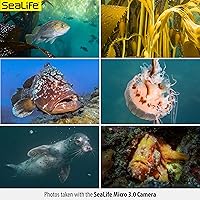
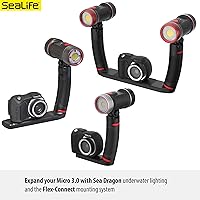
Overview

The SeaLife Micro 3.0 64GB Underwater Camera is built from the ground up for recreational divers and snorkelers who want reliable results without wrestling with bulky housings or O-ring maintenance. At this price point, you are paying for something genuinely different: a permanently sealed body that eliminates flooding risk entirely — a concern that haunts anyone who has ever watched saltwater creep into a housing mid-dive. The 64GB of internal storage means no fumbling with memory cards before a descent. This is not a professional cinema tool, but it was never meant to be. Think of the Micro 3.0 as a capable point-and-shoot designed specifically for the underwater world.
Features & Benefits

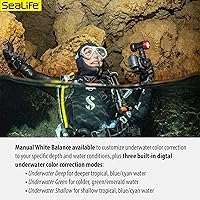
The 16MP sensor captures sharp stills and smooth 4K footage at 30fps — solid for most dive conditions when lighting cooperates. What really stands out is the 0.1-second shutter response: when a curious sea turtle darts past, you rarely get a second chance, and this underwater camera keeps up. Three built-in underwater color correction filters handle the blue-green shift that plagues most underwater shots, while manual white balance gives experienced shooters finer control. RAW file support is a genuine bonus for anyone who edits seriously in post. Wireless transfer via the SeaLife app works, though it is not the fastest option — more on that shortly.

Best For

This underwater camera is a natural fit for recreational scuba divers and snorkelers who want dedicated underwater imaging without housing complexity. If you have ever spent 20 minutes pre-dive checking O-rings and applying silicone grease, the appeal of a sealed body is immediately obvious. It suits travel divers well too — the rubber-armored shell handles the knocks of a dive bag without complaint, and at 11.6 ounces it adds little to your kit. Beginners benefit from scene modes that automate most shooting decisions, while RAW shooters get enough editing flexibility in post. The 60-meter depth rating comfortably covers advanced recreational dive limits.

User Feedback

With a 3.7 out of 5 rating across 119 reviews, SeaLife's sealed camera lands in mixed territory — respectable but not glowing for this price tier. Divers who bought it specifically for underwater use tend to rate it higher, praising build confidence and how intuitive it feels once beneath the surface. Criticism clusters around a few consistent points: optical zoom is limited, low-light performance in murky or deeper conditions is average at best, and the WiFi transfer experience is unreliable enough to frustrate. App compatibility issues on Android are mentioned repeatedly. Casual shooters diving in clear, tropical waters will likely find the positives outweigh the frustrations.

Pros

  • Permanently sealed, O-ring-free construction eliminates the most common and costly cause of underwater camera failure.
  • Depth-rated to 200 feet, covering virtually all recreational and advanced recreational dive limits.
  • The 0.1-second shutter response keeps up with fast-moving marine life — missed shots are far less common.
  • 64GB of built-in storage means no memory card swaps or pre-dive prep.
  • RAW file support gives serious photographers full control in post-production.
  • Built-in color correction filters produce accurate underwater colors straight out of the camera, no editing required.
  • Compact and rubber-armored body holds up well to the rough treatment of travel and dive bags.
  • 10fps burst mode at full resolution is genuinely useful when shooting unpredictable wildlife.
  • 1080p at 120fps opens up smooth slow-motion replay of underwater moments.
  • One-year manufacturer warranty provides a basic safety net on a premium investment.

Cons

  • A 3.7 out of 5 average rating across 119 reviews is below what buyers should expect at this price tier.
  • Low-light and deep-water image quality is average at best — murky conditions expose the sensor's limits quickly.
  • Optical zoom is severely limited, making distant subjects difficult to capture without swimming closer.
  • WiFi transfer speeds are slow and connection reliability is inconsistent enough to frustrate regular users.
  • The companion app has reported compatibility issues on certain Android devices, disrupting post-dive workflows.
  • No ability to expand storage beyond the built-in 64GB if shooting habits grow over time.
  • Above-water image and video quality does not justify the price compared to general-purpose cameras.
  • Casual buyers who dive only a few times a year may struggle to recoup value relative to renting or cheaper alternatives.

Ratings

Our AI rating engine analyzed verified global buyer reviews for the SeaLife Micro 3.0 64GB Underwater Camera, actively filtering out incentivized, bot-generated, and low-quality submissions to surface what real divers and snorkelers actually experienced. Scores reflect an honest, balanced synthesis — strengths are credited where earned, and recurring pain points are weighted transparently into every category.

Waterproofing & Sealing
94%
The permanently sealed, O-ring-free construction is the single most praised aspect across the entire review pool. Divers who previously dealt with flooded housings describe the confidence of not having any seals to inspect or grease before a dive as genuinely liberating — especially on liveaboard trips where replacement O-rings are hard to find.
A small number of reviewers noted that because the body cannot be opened, any internal hardware failure means sending the entire unit for service rather than a simple field fix. This is an inherent trade-off of the sealed design, not a defect, but it is worth factoring in.
Image Quality
73%
27%
In bright, shallow tropical water the 16MP sensor produces sharp, well-exposed stills with pleasing color, especially when the built-in correction filters are dialed in correctly. Burst shooting at 10 frames per second gives you a genuine chance of capturing a reef fish mid-turn or a turtle surfacing for air.
Move into darker, deeper, or murky water and the limitations show quickly — noise creeps in, fine detail softens, and the fixed f/2.8 aperture cannot compensate for poor ambient light. Users shooting in temperate or low-visibility conditions consistently rated image quality lower than those diving clear tropical reefs.
Video Quality
71%
29%
4K at 30fps produces smooth, watchable footage in well-lit conditions, and the 1080p at 120fps slow-motion mode is a legitimate highlight — it captures the fluid motion of fish schools and coral fans in a way that standard frame rates simply cannot. Several travel vloggers praised the footage quality for social media use.
In low ambient light or at depth beyond 15 meters, 4K footage loses sharpness and the electronic stabilization does not fully compensate for surge or current. Without an external video light, evening or deep dives yield noticeably grainy, flat-looking footage that falls short of what the spec sheet implies.
Ease of Use
88%
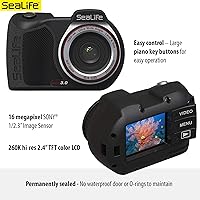
The Piano Key button layout is consistently praised by beginners who find it intuitive to operate with thick dive gloves on. Preset scene modes remove the guesswork from exposure and color settings, so first-time underwater photographers can focus entirely on framing and composition rather than menus.
A handful of more experienced photographers felt the menu system was too simplistic to access advanced settings quickly during a dive. Switching between shooting modes mid-dive requires more button presses than competing cameras, which can mean missing a fleeting shot while navigating.
Build Quality
91%
The fully rubber-armored body absorbs impacts well — reviewers regularly mentioned dropping it on boat decks or knocking it against rocks with no resulting damage. The overall construction feels solid and purpose-built rather than plasticky, which matches the price tier and builds long-term confidence in the product.
At 11.6 ounces, it is heavier than some compact alternatives, and a few users noted that the rubber coating picks up fine scratches and scuffs over time, especially on sandy or coral-heavy dives. Cosmetic wear does not affect performance, but it does age the camera's appearance faster than expected.
Color Correction
79%
21%
The three built-in digital color filters do a convincing job of compensating for the red and orange absorption that strips warmth from underwater images. For divers who have no interest in post-processing, shooting with the correct filter engaged at the right depth produces results that genuinely look like a professional touched them up.
The filters are digitally applied rather than optical, which means at depths beyond 20 meters they start to introduce a slightly artificial-looking warmth rather than truly restoring lost color. Manual white balance helps, but dialing it in correctly mid-dive requires practice that casual users rarely invest time in developing.
WiFi & App Performance
47%
53%
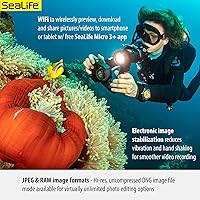
When the connection works, the SeaLife Micro 3+ app offers a genuinely useful remote viewfinder and one-tap wireless transfer that impresses divers who try it for the first time. The concept of reviewing and sharing images from a boat deck immediately after surfacing is well-executed in theory.
In practice, this is the most consistently criticized aspect of the camera across all reviewed platforms. Android users report dropped connections, failed transfers, and app crashes at a frustrating rate, and even iOS users note that transfer speeds are slow enough to make USB the more practical daily option. The app has not received updates frequently enough to address long-standing complaints.
Zoom Capability
38%
62%
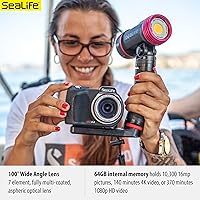
The 100-degree wide-angle lens is exactly right for capturing expansive reef landscapes, wide wreck shots, and close-focus macro work — scenarios where pulling back is more useful than zooming in. Wide-angle coverage is genuinely well-suited to the underwater environment where subjects are often large or close.
There is virtually no meaningful optical zoom, which is a real limitation when marine life keeps its distance. Digital zoom degrades quality noticeably, and reviewers who wanted to photograph shy or distant fish found themselves repeatedly frustrated by the inability to close in optically. This is perhaps the camera's most significant functional gap.
Low-Light Performance
52%
48%
At shallower depths with good surface light, the sensor handles the available illumination reasonably well, and the 0.1-second shutter response helps freeze motion without requiring a higher ISO. For daytime dives in clear water above 15 meters, low-light is rarely a significant obstacle.
Push past 20 meters, dive in the late afternoon, or enter a dark swim-through and the image quality drops in a hurry. The absence of a powerful built-in flash means that without an external strobe or video light, nighttime and deep dives produce noisy, underexposed results that disappoint divers who did not budget for additional lighting accessories.
Storage & File Management
76%
24%
64GB of sealed internal storage is genuinely generous for most dive trips — shooting a mix of RAW stills and 4K video, most users can cover several days of diving without needing to offload files. The peace of mind from not needing to handle a memory card in wet or sandy conditions is a practical benefit that gets underappreciated.
The inability to expand storage is a hard ceiling that heavy shooters will eventually hit, particularly on week-long liveaboards without regular laptop access. Once storage fills, the only options are deleting files in-camera or aborting dives to offload — neither of which is ideal.
Depth Rating & Reliability
89%
Individual depth testing to 200 feet gives technical and advanced recreational divers a meaningful margin of safety beyond the 40-meter recreational limit. Reviewers who regularly dive to 30 or 40 meters report consistent, reliable performance with no pressure-related anomalies — the rating appears to reflect real-world durability, not just a marketing claim.
A small minority of reviewers reported post-dive condensation inside the lens at extreme depth, which suggests that while the seal is robust, temperature differentials in very cold water at depth can occasionally affect optical clarity. This appears rare but is worth noting for cold-water divers.
Value for Money
59%
41%
For divers who deeply value the sealed design and want to avoid housing complexity permanently, the price premium carries real justification — the total cost of ownership versus a camera-plus-housing setup is competitive once accessories are factored in. Buyers who use it frequently on dive trips tend to feel the investment was worthwhile.
At this price point, a 3.7 out of 5 average rating signals that a meaningful portion of buyers felt the value proposition did not fully deliver. Casual divers, above-water shooters, and anyone expecting action-camera-level video performance in all conditions are likely to feel the cost is hard to justify against cheaper alternatives.
Portability & Travel
86%
The compact footprint and rubber-armored shell make this one of the more travel-friendly dedicated underwater cameras available. It fits easily in a carry-on, survives the rough handling of dive bag packing and unpacking, and does not require the additional protective case that a fragile housing system demands.
The 11.6-ounce weight, while manageable, is noticeably heavier than an action camera body alone, and divers who pack ultralight will feel the difference across a full week of gear hauling. The included wrist strap is functional but basic — a lanyard or tray mount is a worthwhile addition for serious dive use.
Battery Life
67%
33%
For a typical single-tank dive of 45 to 60 minutes, battery life is more than sufficient, and most users report getting through two dives comfortably on a single charge when not continuously running 4K video. The built-in rechargeable cell eliminates the cost and logistics of carrying spare battery packs.
Because the battery is sealed inside the camera, there is no option to swap in a fresh cell between dives on a multi-tank day. Heavy 4K video shooters doing three or more dives consecutively will need access to a charging point between sessions, which is not always available on dive boats or remote liveaboards.

Suitable for:

The SeaLife Micro 3.0 64GB Underwater Camera is purpose-built for recreational scuba divers and snorkelers who want a dedicated imaging tool without the stress of housing maintenance. If you have ever lost sleep before a dive trip worrying about a leaking O-ring, the permanently sealed design alone makes a compelling case — there are simply no seals to fail. It suits travel divers particularly well, since the compact rubber-armored body survives the chaos of a gear bag and the 64GB of onboard storage means one less thing to pack or forget. Beginners will appreciate the scene modes and built-in color correction filters that handle the tricky underwater color shift automatically, while more experienced shooters who want RAW files for editing have that option too. Divers who regularly push past 40 meters will also find the 60-meter depth rating covers their needs without upgrading to a more expensive technical setup.
Not suitable for:

The SeaLife Micro 3.0 64GB Underwater Camera is a harder sell for buyers who primarily shoot above the surface, since the feature set and price point are optimized entirely for underwater use — a GoPro or mirrorless camera will outperform it on land by a wide margin. Videographers chasing cinematic quality in low-visibility or deep water will run into the sensor's limitations quickly; this camera performs best in well-lit, shallow tropical conditions, not murky temperate dives. There is no optical zoom to speak of, which rules it out for anyone hoping to capture distant marine life without physically swimming closer. If you rely heavily on a smartphone app for workflow — transferring shots immediately after a dive — the inconsistent WiFi and app reliability issues reported by multiple buyers could become a genuine frustration. Budget-conscious shoppers who already own a GoPro and a quality housing may find it difficult to justify the premium price difference for the sealed convenience alone.
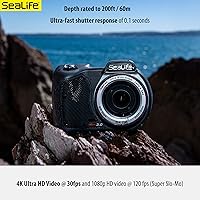
Specifications

  • Image Sensor: 16MP IMX083 CMOS sensor with a 1/2.3″ format for detailed stills and high-resolution video capture.
  • Photo Resolution: Shoots up to 16MP stills in single and continuous burst mode, with simultaneous 8MP capture while recording 4K video.
  • Video Resolution: Records 4K Ultra HD at 30fps and 1080p HD at 120fps for smooth slow-motion playback.
  • Depth Rating: Permanently sealed and individually depth-tested to 200 feet (60 meters) with no O-rings required.
  • Lens: 100° wide-angle lens with a 19mm equivalent focal length and aspherical lens correction for minimal distortion.
  • Aperture: Fixed aperture of f/2.8 across the full shooting range.
  • Storage: 64GB of built-in internal storage with no external memory card slot; supports USB transfer to computer.
  • File Formats: Captures images in JPEG and uncompressed RAW (.DNG) format; video is saved as MP4.
  • Shutter Speed: Ultra-fast 0.1-second shutter response with a burst mode of 10 frames per second at full 16MP resolution.
  • Display: 2.4″ TFT color LCD screen for framing shots and reviewing footage underwater or on the surface.
  • Connectivity: Built-in Wi-Fi enables wireless image transfer and remote camera control via the SeaLife Micro 3+ smartphone app.
  • Color Correction: Three built-in digital underwater color correction filters plus manual white balance for accurate color at varying depths.
  • Body Construction: Fully rubber-armored, shock-resistant, and permanently sealed with no O-rings, hatches, or flood-prone entry points.
  • Weight: Camera weighs 11.6 ounces, making it compact and manageable for single-hand operation underwater.
  • Battery: Rechargeable Lithium Ion battery is built in and charges via the included USB connection.
  • Stabilization: Electronic image stabilization is built in to reduce motion blur during handheld underwater shooting.
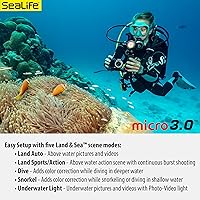
  • Shooting Modes: Includes five Land and Sea scene modes, time-lapse, upside-down shooting mode, and picture-in-video capture.
  • Warranty: Covered by a 1-year limited manufacturer warranty against defects in materials and workmanship.

Related Reviews
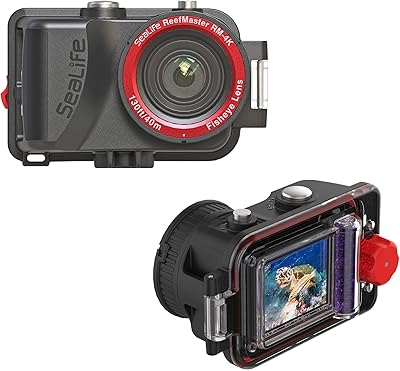
SeaLife ReefMaster RM-4K Underwater Camera
84%
91%
Video Quality
88%
Image Quality
65%
Battery Life
92%
Build Quality
89%
Ease of Use
More
KCEVE KC-303X Triple Monitor KVM Switch
78%
88%
Setup & Installation
83%
Video Signal Quality
79%
Switching Speed & Reliability
71%
Remote Controller
81%
USB Peripheral Performance
More
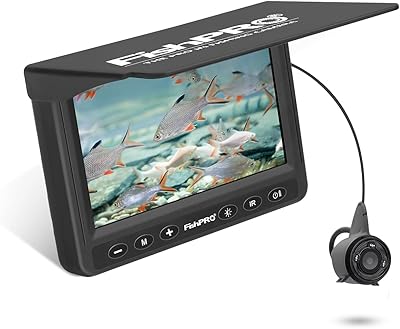
FishPro 2026 Underwater Fishing Camera 4.3″
78%
83%
Image Clarity
79%
Low-Light & IR Performance
86%
Monitor Quality
74%
Battery Life
88%
Cable Quality & Durability
More
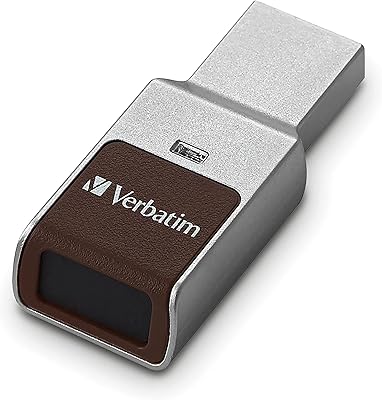
Verbatim 64GB Fingerprint Secure USB 3.0 Flash Drive
85%
74%
Fingerprint Authentication Accuracy
88%
Data Transfer Speed
85%
Build Quality and Durability
91%
Ease of Use
92%
Encryption and Security Features
More
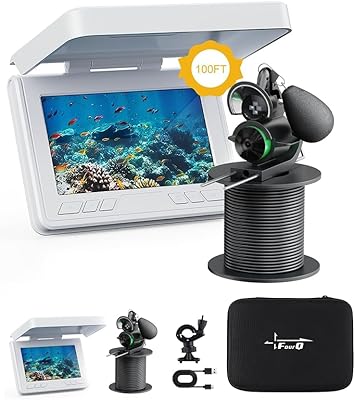
FourQ Underwater Fishing Camera 4.3-inch HD Display
86%
88%
Display Quality
91%
Battery Life
85%
Portability
89%
Ease of Setup
84%
Durability
More
ikuai 3.5″ USB 3.0 Hard Drive Enclosure
80%
93%
Ease of Setup
71%
Build Quality
62%
Cable Quality & Reliability
88%
Drive Compatibility
74%
Data Transfer Speed
More
myFirst Camera 3 Kids Digital Camera
72%
76%
Image Quality (Daylight)
51%
Low-Light Performance
74%
Video Quality
83%
Macro Lens
81%
Ease of Use
More
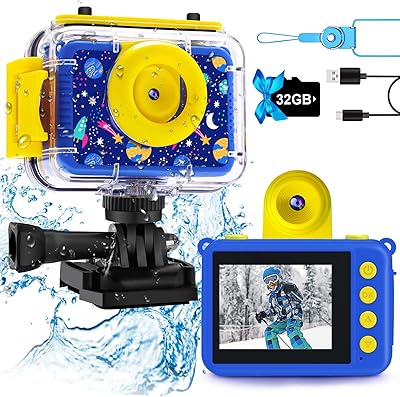
GKTZ Kids Waterproof Action Camera
79%
78%
Waterproofing Reliability
91%
Ease of Use for Kids
83%
Build Durability
61%
Image Quality
67%
Video Quality
More
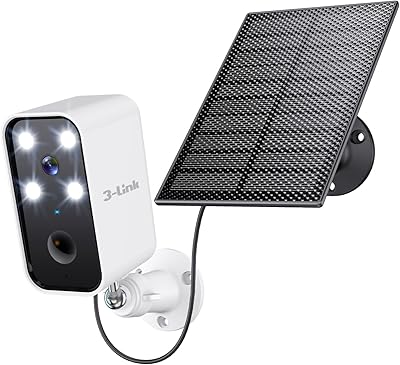
3-Link Battery Camera TB1 S Solar Security Camera
84%
91%
Setup & Installation
89%
Motion Detection Reliability
88%
Solar Charging Efficiency
83%
Night Vision Performance
85%
Weather Resistance
More
StarTech PEXUSB3S3GE USB 3.0 PCIe Card
75%
83%
Ease of Installation
78%
USB Port Performance
57%
Ethernet Reliability
61%
Build Quality
68%
Value for Money
More

FAQ

Correct — the body is permanently sealed at the factory with no doors, hatches, or O-rings for the user to manage. There is nothing to grease, inspect, or replace before a dive. This is one of the Micro 3.0's most practical advantages over traditional housings.

You have two options: connect the camera to a computer via USB for a straightforward file transfer, or use the built-in Wi-Fi with the SeaLife Micro 3+ app to transfer wirelessly to your phone. Keep in mind that several users have reported the Wi-Fi connection can be slow and occasionally unreliable, so USB tends to be the more dependable method for transferring large batches.

No — the camera has no memory card slot, so 64GB is the fixed storage ceiling. For most dive trips that is plenty, but if you shoot heavily in RAW or record a lot of 4K video, you will want to offload files to a laptop or hard drive between sessions.

Yes, it is one of the more beginner-friendly options in the dedicated underwater camera category. The five preset scene modes handle most shooting decisions automatically, and the built-in color correction filters take care of the blue-green cast that typically ruins underwater shots. You do not need to understand white balance or exposure to get decent results on your first dive.

A GoPro with a quality housing costs roughly the same or less and often produces competitive video quality, especially above water. The key trade-off is the housing itself — O-ring maintenance, flood risk, and pre-dive prep are ongoing concerns. SeaLife's sealed camera removes that stress entirely, which for many divers is worth the price premium. If you shoot primarily above water or want better low-light performance, a GoPro setup may suit you better.

The camera is individually depth-tested and rated to 200 feet, which is 60 meters. That covers all recreational dive limits and most advanced recreational dives. Technical divers going beyond that depth would need to look at more specialized equipment.

Yes, it captures uncompressed RAW files in .DNG format alongside JPEG. RAW files retain all the image data the sensor captures, giving you far more flexibility to adjust exposure, color, and detail in editing software afterward. For casual shooters, JPEG is perfectly fine, but underwater photography often benefits from post-processing, so having the RAW option is a genuine plus.

Honestly, this is the weakest link in the experience. User reviews consistently flag the Wi-Fi transfer as slow and the app as occasionally unstable, particularly on some Android devices. It works, but do not count on it as your primary transfer workflow if you need reliability. USB transfer to a computer is the safer routine.

It works perfectly well for snorkeling — the wide-angle lens and color correction filters are just as useful in shallow reef environments as they are at depth. The compact size and one-handed controls make it easy to handle even while floating at the surface.

The Micro 3.0 ships with a protective case, a wrist strap, and a USB charging cable. A strobe or video light is not included, and for deeper or darker dive conditions you will likely want to add an external light source — the camera has no built-in flash rated for serious underwater use.

Where to Buy