Overview

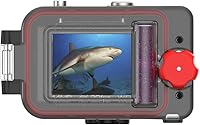
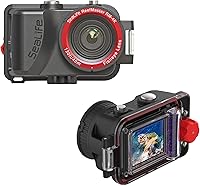
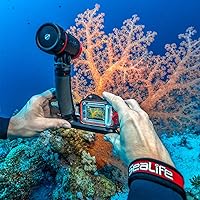
The SeaLife ReefMaster RM-4K Underwater Action Camera isn't a generic action cam retrofitted with a waterproof case — it was designed from the ground up for life below the surface. The two-part system pairs a compact inner camera with a dedicated aluminum and polycarbonate housing rated to 130 feet, making it genuinely dive-ready rather than just splash-resistant. Priced in the mid-to-premium range, it occupies a practical middle ground between cheap waterproof point-and-shoots and the kind of professional dive rig that costs more than the trip itself. Having launched in late 2017, it's worth asking how it holds up — and the honest answer is: better than you might expect, though not without trade-offs.
Features & Benefits

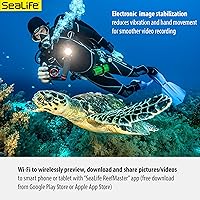
What sets the RM-4K apart from a GoPro in a dive case is the inclusion of dedicated underwater white balance modes — Shallow and Deep — that actively compensate for the color absorption that happens as you descend. The 140° fisheye lens captures wide reef scenes well, and while 4K sounds impressive on paper, underwater visibility will often be the limiting factor on image quality before resolution ever is. Electronic image stabilization and a 4-button control layout mean you can operate it confidently with one gloved hand. The housing's O-ring sealing system is thoughtfully engineered, and the standard 1/4-20 mount opens the door to Sea Dragon lights and third-party trays. The ReefMaster Wi-Fi app lets you review footage without cracking the housing open.

Best For

This dive camera is a strong fit for recreational scuba divers and snorkelers who want something purpose-built but don't want to manage a complex housed mirrorless system. If you dive a few times a year on vacation, this is exactly the kind of grab-and-go kit that makes sense. It's also a genuine step up for anyone coming from a basic waterproof compact, offering dedicated dive modes and expandability those cameras simply can't match. The optional macro and close-up lenses extend its versatility nicely for reef photography. That said, if you shoot video seriously and want manual exposure control or the ability to swap lenses mid-trip, this is not the right tool — you'll hit its limits fairly quickly.

User Feedback

Buyers consistently praise the reliable waterproof seal and the noticeably better color rendition in shallow water compared to generic action cameras at similar depths. The ease of use underwater — especially the simple button layout — comes up repeatedly as a genuine plus. On the flip side, the fixed-focus lens struggles in low-light or murky conditions, and the small LCD makes it hard to judge focus or framing while diving. Battery life at 4K, roughly 1.2 hours, is tight for a full dive session, so a spare battery is almost non-negotiable. A few users noted a learning curve with the O-ring seal, and many flagged that no memory card is included — you'll need a V30/U3-rated card, which is easy to overlook at checkout.

Pros

  • Dedicated underwater white balance modes produce noticeably better color than a generic action cam at comparable depths.
  • The two-part housing system is purpose-engineered for diving, not a compromise afterthought.
  • Waterproof to 130 feet — deep enough for most recreational dive certifications without extra gear.
  • The 4-button control layout is genuinely operable with one gloved hand underwater.
  • Electronic image stabilization reduces the shaky-footage problem common with compact underwater cameras.
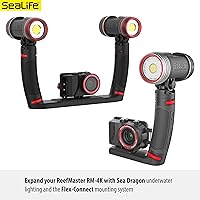
  • Standard 1/4-20 mount makes it straightforward to add Sea Dragon lights or a third-party tray later.
  • The ReefMaster Wi-Fi app lets you offload and share footage without opening the housing after a dive.
  • Burst shooting and time-lapse modes give reef photographers more creative options than most dive compacts offer.
  • At 7.1 ounces, the RM-4K is light enough to carry on dive trips without meaningfully adding to luggage weight.
  • The removable battery means you can carry a spare and swap it between dives rather than waiting for a charge.

Cons

  • Battery life at 4K sits around 1.2 hours — tight for a full dive session, so a spare battery is essentially mandatory.
  • No memory card is included, and you specifically need a V30/U3-rated card, which catches many buyers off guard.
  • The fixed-focus lens struggles in low-light or murky conditions where autofocus would make a meaningful difference.
  • The 2.0-inch LCD is too small and low-resolution to judge sharpness or framing with any confidence underwater.
  • The O-ring sealing system requires careful maintenance and has a learning curve that new divers sometimes underestimate.
  • The fisheye field of view is excellent for reefs but limits versatility for anything requiring a natural perspective.
  • Launched in 2017, the sensor technology lags behind newer competitors at a similar price point.
  • No manual exposure controls means you are relying entirely on the camera to make the right decisions in tricky lighting.
  • The wide-angle fisheye lens causes geometric distortion that may bother buyers expecting straight-horizon shots.
  • Ecosystem accessories like macro lenses and lights are sold separately, meaning the real cost of a complete kit is higher than the base price suggests.

Ratings

Our AI rating engine analyzed thousands of verified global reviews for the SeaLife ReefMaster RM-4K Underwater Action Camera, actively filtering out incentivized, bot-generated, and duplicate submissions to surface what real divers and snorkelers genuinely experienced. Scores reflect both the consistent strengths buyers praised across multiple dives and the recurring frustrations that showed up regardless of skill level or location. Nothing has been smoothed over — where the RM-4K earns its price, the scores reflect it, and where it falls short, that is reflected just as clearly.

Waterproofing Reliability
91%
The vast majority of buyers reported zero leaks even after repeated dives across multiple trips, with several users logging the camera well past 60 feet without incident. The engineered O-ring closing mechanism consistently earned trust from divers who had previously experienced failures with generic waterproof cases.
A smaller but notable group of users reported water ingress after extended ownership, most often traced back to O-ring wear or improper sealing technique rather than a manufacturing defect. The maintenance curve is real — divers who do not regularly inspect and grease the seal are taking on unnecessary risk.
Underwater Color Accuracy
83%
The dedicated Underwater Shallow and Deep white balance modes produced noticeably warmer, more naturalistic color at recreational dive depths compared to generic action cameras relying on Auto white balance alone. Snorkelers and shallow-reef divers in particular were pleased with how little post-processing their shots needed.
Below 40 feet, even the dedicated modes struggle to fully compensate for the loss of red wavelengths, and footage can still trend toward a blue-green cast without supplemental lighting. Users diving in low-visibility or turbid water found the color modes less effective than in clear tropical conditions.
Ease of Use Underwater
88%
The 4-button control layout was repeatedly singled out by buyers as one of the most genuinely operable underwater interfaces they had used — even with thick neoprene gloves in colder water. Switching between photo and video modes mid-dive felt natural after just one or two sessions.
The small LCD makes it genuinely difficult to confirm you are in the right mode or that framing is correct while submerged, particularly in bright shallow water where glare compounds the screen's low resolution. A few users accidentally triggered burst mode when intending to shoot single frames.
Video Quality
74%
26%
In well-lit, clear water at shallow depths, 4K footage captured colorful reef scenes with good detail and acceptable dynamic range for a camera at this price tier. Electronic image stabilization meaningfully reduced the jittery handheld look that plagues many compact dive cameras.
The 4K label carries expectations the sensor cannot fully meet in real diving conditions — murky water, backscatter, and limited ambient light below 30 feet all degrade footage faster than resolution can compensate. The absence of any manual exposure controls means you are entirely dependent on the camera's automatic decisions in challenging scenes.
Battery Life
61%
39%
The removable battery design is a practical advantage that most competitors lack — being able to swap a depleted cell on the dive boat between sessions is far more convenient than waiting for a camera to recharge via USB. For single-dive days, the roughly 1.2-hour 4K runtime is just sufficient.
For back-to-back dives or full-day liveaboard trips, one battery is simply not enough, and buying a spare adds to the total cost of ownership. Several users noted the battery drained faster than expected in cold water, which compounds the issue for divers in temperate regions.
Build Quality & Housing
86%
The aluminum and polycarbonate construction felt premium and purposeful compared to the plastic dive housings bundled with cheaper action cameras, and buyers appreciated that the housing did not flex or creak under pressure at depth. The compact form factor made it easy to hold one-handed or mount on a tray without adding significant drag.
Some buyers noted that the inner camera felt less robust than the housing itself, and a handful reported minor cosmetic wear on the polycarbonate panels after regular use in sandy or gritty dive environments. The housing, while well-made, is proprietary, meaning damage to it requires SeaLife-specific replacement parts.
Still Image Quality
71%
29%
At shallower depths with good ambient light, 14MP stills of reef scenes were detailed enough for social sharing and standard print sizes, with the wide-angle lens capturing the expansive underwater environment well. Burst mode proved useful for photographing fast-moving marine life like fish or sea turtles.
The fixed-focus lens cannot adjust for close subjects the way autofocus would, making precise framing a guessing game for anything smaller than a hand-sized reef feature. High ISO settings introduced noticeable noise in dimmer conditions, limiting the camera's usefulness during twilight or night dives.
Expandability & Accessories
82%
18%
The standard 1/4-20 mount opened the door to a meaningful ecosystem of lighting and tray accessories, and buyers who added a Sea Dragon dive light reported a dramatic improvement in color saturation and overall footage quality. The ability to attach optional macro and close-up lenses gave the system genuine versatility beyond wide-angle reef shots.
The accessories are all sold separately at additional cost, meaning the base price understates what a well-equipped setup actually runs. A few users found that the mounting system, while standard in size, required adapters for some popular third-party arm configurations.
Wi-Fi & App Experience
67%
33%
Being able to review footage and download clips to a smartphone directly from the boat — without cracking open the housing — was genuinely appreciated, especially on liveaboard trips where sharing images between dives was part of the experience. The ReefMaster app connected reliably in most users' experience.
The app interface itself received mixed reviews, with some users finding it slow to load previews of 4K footage and others reporting occasional dropped connections requiring a restart. App updates have been infrequent, and a minority of Android users reported compatibility issues with newer operating system versions.
Value for Money
72%
28%
For a purpose-built dive camera with a solid housing, dedicated underwater scene modes, and a genuinely expandable ecosystem, buyers who dove regularly found the value proposition reasonable compared to the cost of a mirrorless system with a proper underwater housing. First-time underwater photographers especially felt they got a meaningful step up from basic waterproof compacts.
Given its 2017 launch date, the sensor technology is showing its age relative to newer competitors entering the same price bracket, making the cost harder to justify for buyers comparing it to more recently released alternatives. The missing memory card and mandatory V30/U3 speed class requirement add unexpected day-one cost.
Low-Light Performance
53%
47%
With an external Sea Dragon light attached, performance in darker conditions improved considerably, and users who invested in supplemental lighting were meaningfully more satisfied. The ISO range extends to 3200, providing some flexibility in marginal conditions.
Without added lighting, performance in dark or deep water is genuinely poor — high ISO values produced soft, noisy images that disappointed users expecting more from a mid-to-premium priced camera. This is one area where the age of the sensor is most apparent compared to newer competitors.
Setup & Learning Curve
77%
23%
Most buyers felt comfortable with the camera's basic operation after a single dry run on land, and the compact two-part system was straightforward to assemble compared to full underwater housing rigs for mirrorless cameras. The ReefMaster app setup was quick and did not require account creation.
The O-ring sealing process requires consistent attention and care that some first-time dive camera owners underestimated, leading to anxiety before early dives until the routine became second nature. The requirement to use a specific memory card speed class is not prominently called out in the packaging, catching some buyers off guard.
Portability & Weight
89%
At 7.1 oz fully assembled, the RM-4K slips into a dive BCD pocket or carry-on bag without adding meaningful weight or bulk to travel gear. Buyers on dive holidays specifically praised how little space it took in luggage compared to any housed mirrorless or DSLR setup.
The two-piece inner camera and housing system means there are more components to track and assemble compared to single-body waterproof cameras, which can feel like a minor inconvenience when gearing up quickly on a moving dive boat. Losing or damaging the inner camera without the housing — or vice versa — leaves you without a functional unit.

Suitable for:

The SeaLife ReefMaster RM-4K Underwater Action Camera is a strong match for recreational scuba divers and snorkelers who want a purpose-built underwater camera without the complexity or cost of a professional dive housing system. If you take one or two dive trips a year and want something reliable that you can hand to your dive buddy or mount on a tray without reading a technical manual, this fits that brief well. Travelers who used to rely on a basic waterproof compact will notice a real improvement in color accuracy, particularly in the 15-to-40-foot range where the dedicated underwater white balance modes do their best work. It also suits divers who want room to grow — the standard 1/4-20 mount means you can add proper dive lights later without replacing the whole setup. Reef photographers who want to experiment with macro shooting will appreciate that optional close-up lenses are available in the same ecosystem.
Not suitable for:

The SeaLife ReefMaster RM-4K Underwater Action Camera has real limitations that make it a poor fit for certain buyers, and it is worth being direct about them. If you shoot video seriously — meaning you care about manual exposure control, flat color profiles for post-processing, or shooting in genuinely dark or low-visibility water — this camera will frustrate you quickly. The fixed-focus lens cannot adapt to changing distances the way an autofocus system can, and the small 2.0-inch LCD makes it difficult to review footage critically while you are still in the water. Professional underwater videographers or photographers who already own a mirrorless or DSLR system will find far more capable housed alternatives at a comparable or only moderately higher investment. And if you are shopping for a camera to use primarily above the surface with only occasional dips, the fisheye field of view and dive-optimized feature set make it a poor general-purpose choice.
Specifications

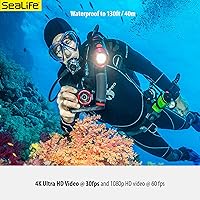
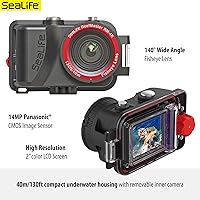
  • Video Resolution: Records up to 4K video, with additional options including 2.7K, 1080p, and 720p to balance quality and storage usage.
  • Still Resolution: Captures 14MP still images using a CMOS sensor, suitable for reef photography and wide underwater scenes.
  • Waterproof Depth: The housing is rated waterproof to 130 ft (40 m), covering the full range of recreational scuba diving depths.
  • Field of View: The fixed 140° diagonal fisheye wide-angle lens has a 2.5 mm focal length, equivalent to approximately 14 mm in 35 mm film terms.
  • Focus System: Uses an instant fixed-focus lens with a focus range from 12 inches (30 cm) to infinity, requiring no autofocus adjustment.
  • Shutter Speed: Shutter speed ranges from 1/25 to 1/2000 second, giving adequate range for most underwater and action shooting scenarios.
  • ISO Range: ISO can be set manually from 100 to 3200, or left on Auto, though high ISO values in dark water will introduce visible noise.
  • Battery: Powered by a removable 900 mAh lithium-ion battery that provides approximately 1.2 hours of 4K video recording or over 500 still images per charge.
  • Storage: Accepts microSDHC and microSDXC cards up to 128 GB; a Video Speed Class V30 (U3) rated card is required for 4K recording, and no card is included.
  • Display: Features a 2.0-inch TFT LCD color display with 230K resolution (240 x RGB x 320), which is functional but limited for critical framing review.
  • White Balance: Offers seven white balance modes including Auto, Underwater Shallow, Underwater Deep, Daylight, Cloudy, Tungsten, and Fluorescent.
  • Shooting Modes: Supports Single shot, Burst (3, 7, 15, or 30 photos at 1 photo per second), Time Lapse Photo, and Time Lapse Video modes.
  • Stabilization: Electronic image stabilization (EIS) is built in to reduce camera shake and hand movement during video recording.
  • Mount Type: The housing features a standard 1/4-20 threaded mount, compatible with SeaLife Sea Dragon lights, trays, and most third-party underwater accessories.
  • Housing Materials: The outer housing is constructed from aluminum and polycarbonate (PC), providing a balance of durability and manageable weight for diving.
  • Weight: The complete system — housing with inner camera and battery installed — weighs 7.1 oz (202 g), making it easy to carry on dive trips.
  • Dimensions: The underwater housing measures 1.9″ x 4.1″ x 2.6″ (4.9 cm x 10.5 cm x 6.6 cm); the inner camera unit is 1.3″ x 2.3″ x 1.6″.
  • Shockproof Rating: Rated shockproof to 3 ft (1 m), offering basic drop protection for handling above the surface.
  • Connectivity: Built-in Wi-Fi connects to the free ReefMaster app (iOS and Android) for wireless image preview, download, and social sharing without opening the housing.
  • Sealing System: The housing uses a proprietary O-ring closing mechanism engineered to apply consistent and optimal pressure on the seal, reducing the risk of uneven compression.

Related Reviews
Snapshot 4K Waterproof Action Camera
65%
81%
Value for Money
57%
Video Quality
76%
Waterproof Performance
54%
Battery Life
83%
Ease of Setup
More
HLS 4K Waterproof Action Camera
81%
88%
Video Quality
90%
Build Quality and Durability
70%
Battery Life
85%
Ease of Use
93%
Waterproof Performance
More
Tonfarb D70 4K Waterproof Underwater Camera
71%
83%
Value for Money
71%
Waterproofing Reliability
58%
Image Quality
91%
Ease of Use
87%
Dual-Screen Design
More
icefox i8 Action Camera
70%
88%
Value for Money
67%
Video Quality
83%
Waterproofing & Durability
71%
Stabilization (EIS)
74%
Battery Life
More
RunCam ScopeCam2 4K Action Camera
72%
84%
Build Quality
88%
Battery Life
71%
Video Quality
91%
Ease of Mounting
48%
Digital Zoom
More
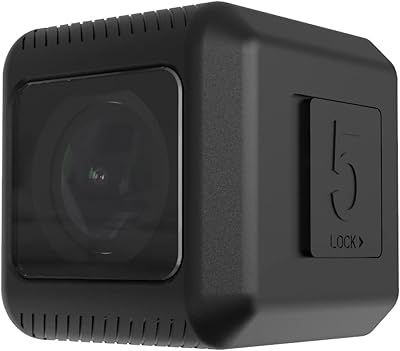
RunCam 5 4K Action Camera
76%
83%
Image Quality
67%
Video Stabilization
94%
Weight & Form Factor
89%
Battery Life
91%
Mount Compatibility
More
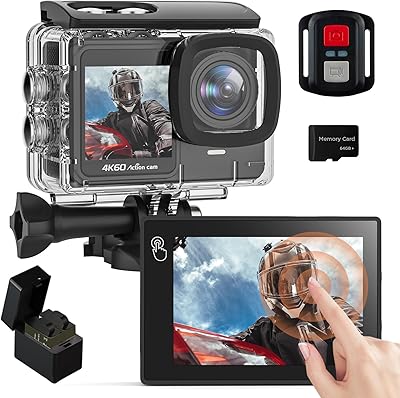
Yolansin 4K Touchscreen Waterproof Action Camera
73%
83%
Value for Money
58%
Video Quality
89%
Bundle Completeness
79%
Ease of Use
63%
Battery Life
More
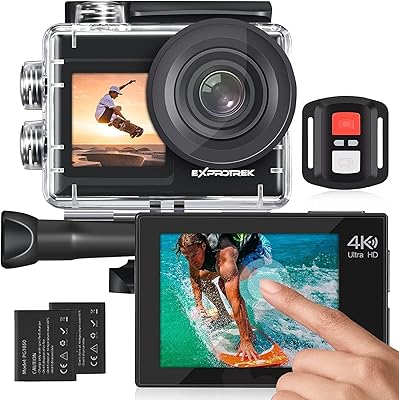
Exprotrek E68 4K Waterproof Action Camera
77%
78%
Video Quality
74%
Photo Quality
71%
Image Stabilization
88%
Waterproofing & Durability
68%
Battery Life
More
icefox i7 Action Camera
71%
72%
Video Quality
84%
Battery Life
78%
Waterproofing
68%
Image Stabilization (EIS)
88%
Value for Money
More
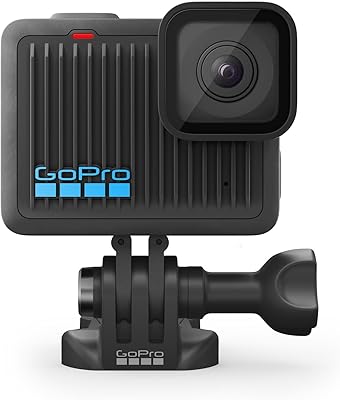
GoPro Hero 4K Action Camera
75%
94%
Portability & Size
78%
Video Quality
92%
Ease of Use
88%
Waterproofing
51%
Battery Life
More

FAQ

No, a memory card is not included and needs to be purchased separately. More importantly, you cannot use just any microSD card — you specifically need one rated Video Speed Class V30 or UHS Speed Class 3 (U3) to reliably record 4K video. A standard Class 10 card may cause dropped frames or recording errors, so check the label before buying.

It is genuinely well-suited to beginners, mainly because the 4-button control system is simple enough to operate underwater without much practice. The dedicated underwater white balance modes handle color correction automatically, so you are not manually adjusting settings mid-dive. That said, you will want to spend some time on land practicing the housing seal process before your first dive.

The housing uses a proprietary closing mechanism designed to apply even pressure across the O-ring, but you should always inspect the O-ring before each dive for hair, sand, or debris that could break the seal. Apply a thin layer of silicone grease to the O-ring regularly, and always do a shallow water test before descending to depth. Many experienced divers make this a pre-dive ritual rather than an afterthought.

The housing is rated to 130 ft (40 m), which covers the maximum depth for most recreational open-water dive certifications. That said, ratings are tested under controlled conditions, so maintaining the O-ring carefully and not exceeding the rated depth are both important. If you dive to the limit regularly, periodic O-ring inspection and replacement become more critical.

This is a water physics issue, not a camera defect. Water absorbs red and orange wavelengths as you descend, which no amount of resolution can fix on its own. Make sure you are using the Underwater Shallow or Underwater Deep white balance modes rather than Auto, and consider adding a Sea Dragon dive light — artificial lighting at close range makes the single biggest difference to underwater color quality.

The housing features a standard 1/4-20 threaded mount, which is a universal size compatible with many third-party trays, arms, and clamps — not just SeaLife products. However, GoPro's proprietary frame and finger-mount accessories use a different attachment system, so those specific items will not fit directly. Any accessory that uses a 1/4-20 thread will work fine.

At 4K recording, expect roughly 1.2 hours of continuous video before the battery is depleted. A typical recreational dive runs 45 to 60 minutes, so one charge will often get you through a single dive but not two back-to-back. The battery is removable, so buying a spare and swapping between dives on the boat is the most practical solution.

Yes, SeaLife offers optional Super Macro and Close-Up lenses that attach to the RM-4K housing, which is one of the more practical advantages of this system. The base fixed-focus lens has a minimum focus distance of about 12 inches, so for very small subjects — nudibranchs, blennies, or coral polyps — the macro add-on makes a real difference. Just keep in mind these lenses are sold separately.

The camera creates its own local Wi-Fi network that your phone connects to directly, so you do not need internet access or a router. Once connected through the free ReefMaster app, you can preview images and videos and download them to your phone. It works well on a dive boat or anywhere you do not have regular Wi-Fi, which is often exactly when you want to share footage.

The sensor and core hardware are showing their age at this price point when compared to newer competitors, and that is a fair thing to weigh. What keeps the RM-4K relevant is the purpose-built dive housing, the dedicated underwater scene modes, and the expandable accessory ecosystem — things a newer generic action cam in a waterproof bag cannot match. If underwater-specific features and build quality matter more to you than having the latest sensor, it still holds up reasonably well for recreational use.