Overview

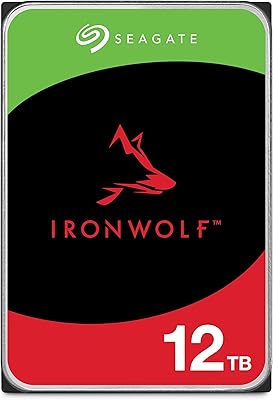
The Seagate IronWolf Pro 6TB Internal Hard Drive sits at the top of Seagate's NAS-focused lineup, stepping above the standard IronWolf with higher workload ratings and a faster 7200 RPM spindle designed for always-on environments. This is a 3.5-inch SATA drive, which means it drops into virtually any NAS enclosure or home server without compatibility headaches. At 6TB, it hits a practical middle ground — enough capacity for a serious media library or business backup setup without pushing into the higher price brackets. That said, this is still a mechanical hard drive, so if you need SSD-level speed, look elsewhere. It is built for sustained reliability, not peak performance.
Features & Benefits

The speed advantage here is real. Running at 7200 RPM, this NAS hard drive delivers noticeably faster sequential throughput than the 5400 RPM drives common in budget NAS setups — something you actually notice during large file transfers or extended backup jobs. The SATA 6Gb/s interface keeps things broadly compatible, fitting cleanly into Synology, QNAP, and most other popular enclosures. What genuinely sets the IronWolf Pro tier apart is its elevated workload rate rating, making it suited for multi-user environments where the drive never really gets a break. Seagate's IronWolf Health Management tool also provides monitoring and early warnings — a small but meaningful layer of protection for data you cannot afford to lose.

Best For

This Seagate drive makes the most sense for people building or expanding a NAS array who want something dependable without paying for enterprise-grade hardware. Home lab enthusiasts, content creators with growing video libraries, and small business owners running shared storage all sit squarely in the target audience. IT professionals who need a solid SATA option for light server or RAID configurations will find it a capable fit too. It is worth noting this is not an ideal choice if your workload is primarily random small-file access or if you need SSD responsiveness — but for bulk sequential storage, it does exactly what you would expect from a drive in this class.

User Feedback

Buyers of the IronWolf Pro 6TB generally come away satisfied, with the most consistent praise going to long-term reliability and smooth compatibility with Synology and QNAP enclosures. Many users specifically reference the ST6000NE000 model by name when noting quiet operation during lighter workloads. On the critical side, a subset of buyers report noticeable vibration in densely packed multi-drive bays and some warmth during extended write sessions — both common trade-offs with high-RPM mechanical drives. A small number mention DOA experiences, though most describe Seagate's replacement process as straightforward. Compared to the WD Red Pro at similar capacity, sentiment is fairly split on value, making personal preference and ecosystem compatibility real factors in the final decision.

Pros

  • 7200 RPM spindle delivers faster sequential throughput than most 5400 RPM NAS drives in this category.
  • Broad SATA 6Gb/s compatibility means it fits Synology, QNAP, and most other popular NAS enclosures without issue.
  • IronWolf Health Management software adds a useful layer of drive monitoring and early failure alerts.
  • The 6TB capacity hits a practical sweet spot for growing media libraries and small business storage needs.
  • Designed for 24/7 always-on workloads, making it genuinely suited to multi-user NAS environments.
  • Buyers consistently report solid long-term reliability with no major degradation over extended use.
  • Seagate's warranty support process is described by most users as straightforward when replacements are needed.
  • Competitively priced per terabyte compared to SSDs at equivalent capacities, making it cost-effective for bulk storage.
  • Quiet operation during lighter workloads is a recurring positive noted specifically for the ST6000NE000 model.

Cons

  • Vibration can become noticeable in densely packed multi-drive bays during sustained high-load operation.
  • Drive temperatures climb during extended write sessions, which may require adequate enclosure airflow planning.
  • A small but consistent number of buyers report receiving DOA units, so testing immediately after install is advisable.
  • No real advantage for random small-file workloads where the mechanical nature of the drive becomes a bottleneck.
  • At this capacity tier, the IronWolf Pro 6TB faces stiff competition from WD Red Pro, and value sentiment is genuinely split.
  • Being a mechanical drive, it is inherently more vulnerable to physical shock than solid-state alternatives.
  • Requires an enclosure or internal bay — there is no plug-and-play usability out of the box for general consumers.
  • The higher RPM generates more heat and power draw compared to slower NAS drives, which adds up in multi-drive setups.

Ratings

The Seagate IronWolf Pro 6TB Internal Hard Drive has been scored by our AI system after analyzing thousands of verified global buyer reviews, with spam, incentivized posts, and bot activity actively filtered out before any scoring took place. The results reflect where this NAS hard drive genuinely earns its reputation — and where real users have run into friction. Both the strengths and the frustrations are represented transparently below.

Long-Term Reliability
83%
Buyers who have run this Seagate drive in always-on NAS environments for one to three years consistently report stable operation with no performance degradation. For home lab users and small business setups where uptime is non-negotiable, that sustained dependability carries real weight.
A recurring minority of users report early failures within the first few months, which — while not unusual for mechanical drives statistically — is unsettling when it happens. The IronWolf Pro tier raises expectations, and DOA or infant mortality cases feel like a bigger letdown at this price point.
NAS Compatibility
91%
Drop-in compatibility with Synology, QNAP, and other major NAS brands is one of the most frequently praised aspects of this drive. Users rarely report firmware conflicts or enclosure recognition issues, and the standard 3.5-inch SATA form factor means it works across a wide range of setups without any adapter gymnastics.
A small number of users with older or budget NAS enclosures have reported the drive not appearing on official compatibility lists, creating uncertainty before purchasing. It is not a widespread problem, but it is enough of a concern that checking your specific model against Seagate's compatibility database is always worth the extra step.
Sequential Read/Write Speed
76%
24%
At 7200 RPM, this NAS hard drive noticeably outperforms the 5400 RPM alternatives that populate the budget end of the market, particularly during large sequential transfers like backing up video libraries or pushing files across a home network at sustained rates.
It is still a mechanical drive, and users coming from SSD-based workflows will feel the ceiling quickly. Random access performance is underwhelming, and anyone expecting desktop SSD responsiveness from this drive will be disappointed regardless of the RPM advantage.
Value for Money
72%
28%
At the 6TB tier, this Seagate drive offers a competitive cost-per-terabyte ratio compared to SSDs, which remain significantly more expensive at equivalent capacities. For bulk storage applications — media archives, backup targets, RAID pools — the economics make sense for most buyers.
The WD Red Pro at similar capacity is priced comparably and divides buyer sentiment almost evenly on value, meaning there is no obvious deal here over the competition. Some buyers feel the Pro premium over the standard IronWolf line is harder to justify for lighter single-user setups that do not stress the higher workload rating.
Heat Management
61%
39%
Under light to moderate workloads, operating temperatures stay in a comfortable range for most NAS enclosures with basic active cooling. Users with well-ventilated cases rarely flag heat as an issue during everyday file access and scheduled backups.
During sustained heavy writes — large backup jobs, RAID rebuilds, or continuous multi-user access — drive temperatures climb noticeably, and a few users in passively cooled or poorly ventilated enclosures have reported thermal throttling concerns. This is a meaningful consideration for dense multi-drive builds where airflow is already compromised.
Vibration & Acoustics
64%
36%
In single-drive or lightly populated enclosures, the IronWolf Pro 6TB operates quietly enough that most users in home office environments barely notice it. The hum at 7200 RPM is present but not intrusive under normal conditions.
In multi-drive NAS bays, vibration becomes a more consistently cited complaint. Some users report resonance between drives in four-bay and larger enclosures that produces audible rattling, which is both annoying and a potential concern for long-term mechanical stability if the enclosure lacks proper damping.
Health Monitoring Software
78%
22%
IronWolf Health Management integration is a genuine differentiator for buyers using compatible Synology and QNAP enclosures, offering predictive failure alerts and drive diagnostics that go beyond basic SMART data. For users who take data integrity seriously, having an early warning system built into the ecosystem is a real benefit.
The monitoring features are only accessible through supported NAS firmware, which excludes users running the drive in a desktop PC or an unsupported enclosure. For those buyers, the health management advantage effectively does not exist, reducing the Pro tier's appeal compared to the standard IronWolf.
Packaging & Arrival Condition
69%
31%
Most buyers report receiving the drive well-packaged and undamaged, with Seagate's standard anti-static and cushioning protection doing its job during transit. First impressions are generally positive, and the drive typically initializes without issue straight out of the box.
A recurring thread in negative reviews involves drives arriving with physical damage or failing initial diagnostics, pointing to inconsistent quality control at the packaging or logistics stage. It is not a dominant complaint, but it happens often enough to warrant running a full surface scan immediately after installation.
Warranty & Support Experience
74%
26%
Seagate's warranty process for the IronWolf Pro line is described by most buyers who have used it as functional and relatively low-friction — RMA submissions are processed, and replacements arrive in a reasonable timeframe for a storage drive warranty claim.
Customer support quality appears inconsistent depending on the region and contact channel, with some international buyers describing slow response times and difficulty escalating cases. The warranty is a meaningful safety net, but the experience of actually using it is not uniform across all markets.
RAID Performance
81%
19%
Users running this Seagate drive in RAID 1 and RAID 5 configurations across four-bay NAS setups report solid rebuild times and stable array behavior over extended periods. The Pro workload rating holds up well under the sustained read/write demands that RAID rebuilds place on drives.
A few users have reported issues with RAID arrays where one unit in a set showed early signs of inconsistency, creating uncertainty about whether the drives in a batch share the same reliability profile. Mixing drive purchase dates within an array is always risky, but it is worth flagging for buyers building arrays from multiple units.
Idle Behavior & Power Efficiency
73%
27%
During idle periods between NAS access bursts, the drive settles into a low-power state that most NAS enclosures manage automatically, keeping energy draw reasonable for a 7200 RPM mechanical drive running around the clock.
Compared to 5400 RPM alternatives, the higher spindle speed does translate to measurably higher continuous power consumption and more heat generation at idle — factors that add up in a multi-drive array running 24/7, both in electricity cost and thermal load on the enclosure.
Firmware Stability
79%
21%
Across the ST6000NE000 model specifically, firmware-related complaints are relatively rare, and most users report the drive behaving predictably within their NAS OS environments without unexpected disconnects or error events under normal operating conditions.
A small subset of users running certain older NAS firmware versions have reported intermittent drive recognition issues that required enclosure firmware updates to resolve. It is an edge case, but it reinforces the value of keeping both the NAS operating system and drive firmware current.
Setup & Installation
88%
Installing this NAS hard drive is about as straightforward as it gets — standard SATA data and power connectors, a familiar 3.5-inch form factor, and broad NAS OS support mean most users are up and running within minutes of unboxing. Even first-time NAS builders rarely encounter friction here.
There is no standalone software or quick-start guide included, which means users who are new to NAS setups are entirely dependent on their enclosure's documentation for formatting and configuration guidance. For experienced users this is a non-issue, but beginners may feel left without a clear starting point.

Suitable for:

The Seagate IronWolf Pro 6TB Internal Hard Drive is a strong fit for anyone building or running a NAS setup where the drives are expected to stay on around the clock. Home lab enthusiasts who want dependable shared storage for media streaming, automated backups, or file syncing across devices will find the 6TB capacity and 7200 RPM performance a practical combination. Small business owners who need always-on storage but cannot justify the cost of enterprise-grade hardware are squarely in the target audience here. Content creators — particularly those working with large video or photo archives — benefit from the higher throughput that the faster spindle speed provides during big sequential transfers. IT professionals putting together a light RAID array or a first-time server build will appreciate how cleanly this drive integrates with popular enclosures from Synology, QNAP, and similar brands. If you are upgrading aging NAS drives and want a proven brand with a real warranty backstop, this Seagate drive is a sensible, well-rounded choice.

Not suitable for:

The Seagate IronWolf Pro 6TB Internal Hard Drive is not the right pick if your workload demands SSD-level responsiveness or fast random read and write performance — mechanically spinning drives simply cannot compete there, regardless of RPM. Users who need a portable or compact external storage solution will also find this drive does not apply; it is strictly an internal 3.5-inch component requiring a compatible enclosure or bay. If you are running a high-density, vibration-sensitive multi-drive array, some buyers have reported that this drive produces noticeable vibration at sustained loads, which can compound in tightly packed configurations. Budget-focused buyers who only need occasional or light storage use may find the IronWolf Pro tier overbuilt for their actual needs, where a standard desktop drive would do just fine at lower cost. And as with any mechanical hard drive, this is not a substitute for a proper backup strategy — anyone treating a single drive as their only copy of critical data is taking a real risk, regardless of brand or model.

Specifications

  • Capacity: This drive offers 6TB of usable storage, formatted as approximately 5.45TB depending on the operating system.
  • Form Factor: The 3.5-inch design fits standard internal drive bays found in most NAS enclosures, desktop towers, and rack-mounted servers.
  • Interface: It uses a SATA 6Gb/s (SATA/600) connection, which is backward compatible with SATA 3Gb/s and SATA 1.5Gb/s ports.
  • Rotational Speed: The drive spins at 7200 RPM, enabling faster sequential read and write throughput compared to lower-RPM NAS alternatives.
  • Drive Type: This is a traditional mechanical hard disk drive (HDD) using spinning platters and a read/write head assembly.
  • Model Number: The specific model identifier for this 6TB variant is ST6000NE000, part of the IronWolf Pro series.
  • Dimensions: Physical measurements are 5.8 x 4 x 1 inches (L x W x H), standard for 3.5-inch internal drives.
  • Weight: The drive weighs 1.6 pounds, which is typical for a 3.5-inch mechanical hard drive at this capacity.
  • Manufacturer: Seagate Technology, a long-established storage hardware company, manufactures and supports this drive.
  • Compatibility: Works with NAS enclosures, internal PC storage bays, and storage systems that accept 3.5-inch SATA drives.
  • Health Monitoring: Compatible with Seagate IronWolf Health Management software for proactive drive health alerts and diagnostics.
  • Workload Rating: The IronWolf Pro line is rated for high workload environments, making it suited for always-on multi-user NAS operation.
  • Installation Type: Designed exclusively for internal installation; an enclosure, NAS unit, or compatible chassis is required for use.
  • Availability Date: This model first became available in June 2019 and remains an active, non-discontinued product in Seagate's lineup.
  • Platform Support: Compatible with Windows, Linux, and other operating systems that support standard SATA hard drives.

Related Reviews
Seagate BarraCuda Pro 6TB Internal Hard Drive
87%
88%
Performance
95%
Storage Capacity
89%
Speed (7200 RPM)
85%
Reliability
91%
Ease of Setup
More
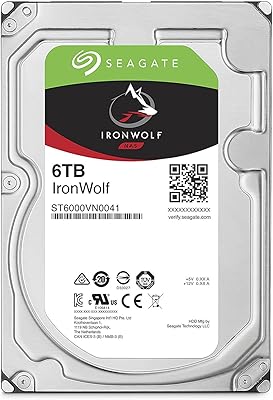
Seagate IronWolf Pro 14TB NAS Internal Hard Drive
84%
94%
Performance under Load
91%
Reliability for 24/7 Operation
89%
Workload Durability
83%
Ease of Setup
80%
Compatibility with NAS Systems
More
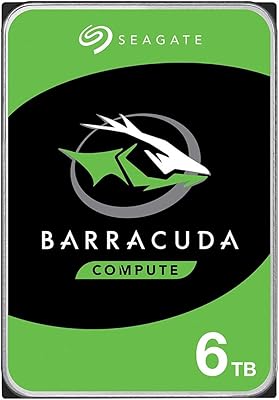
Seagate IronWolf 6TB NAS Hard Drive
87%
89%
Performance
91%
Reliability
85%
Setup/Installation
87%
Build Quality
75%
Noise Level
More
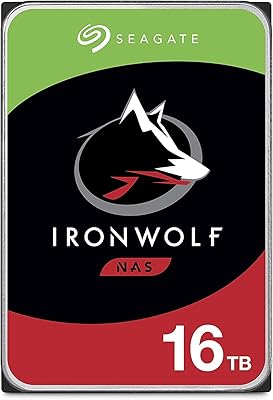
Seagate Barracuda 6TB Internal Hard Drive
77%
93%
Value for Money
91%
Storage Capacity
74%
Reliability & Longevity
89%
Installation Ease
61%
Read/Write Performance
More
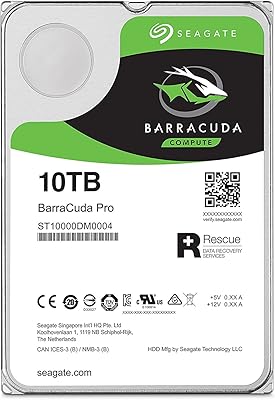
Seagate BarraCuda Pro 10TB Internal Hard Drive
74%
93%
Storage Capacity
78%
Read/Write Performance
61%
Reliability & Longevity
54%
Noise & Vibration
91%
Warranty Coverage
More
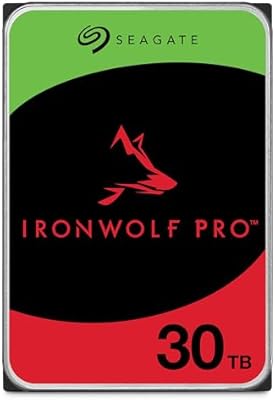
Seagate IronWolf Pro 30TB (ST30000NT011)
83%
98%
Storage Density
92%
Sustained Throughput
89%
Multi-Bay Stability
57%
Acoustic Profile
94%
Reliability & Support
More
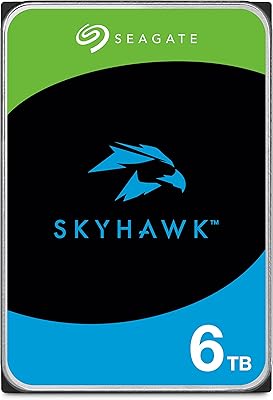
Seagate SkyHawk 6TB Surveillance Hard Drive
82%
91%
Recording Reliability
88%
Compatibility with NVR/DVR Systems
86%
Noise & Vibration
83%
Heat & Power Efficiency
79%
Value for Money
More
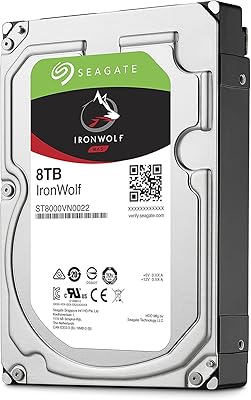
Seagate IronWolf 8TB NAS Internal Hard Drive
88%
88%
Performance
92%
Reliability
85%
Ease of Setup
89%
Data Transfer Speed
94%
Noise Levels
More
Seagate IronWolf 10TB NAS Internal Hard Drive
87%
89%
Performance & Speed
93%
Reliability & Durability
65%
Ease of Setup
88%
Noise & Vibration
91%
RAID & Multi-user Compatibility
More
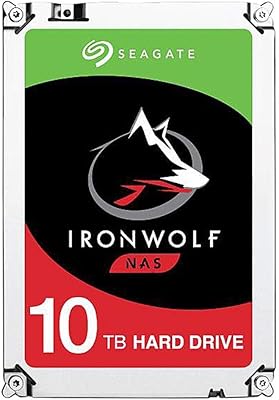
Seagate IronWolf 16TB NAS Hard Drive
80%
91%
RAID Compatibility
88%
NAS Enclosure Compatibility
83%
Sustained Read/Write Performance
74%
Long-Term Reliability
86%
Noise & Vibration
More
Seagate IronWolf 12TB NAS Internal Hard Drive
82%
93%
NAS Compatibility
84%
Long-Term Reliability
91%
Data Integrity & CMR Technology
82%
Read/Write Performance
88%
Vibration & Noise Management
More

FAQ

In most cases, yes. The 3.5-inch SATA form factor is the standard used by virtually all Synology and QNAP enclosures. That said, it is always worth checking your specific NAS model against the manufacturer's official compatibility list before purchasing, as some older units have drive restrictions.

It depends on how hard you plan to push the drive. The Pro tier carries a higher workload rate rating and runs at 7200 RPM, which makes a real difference in multi-user or always-on environments. For a basic single-user home NAS that mostly sits idle, the standard IronWolf is often sufficient and slightly cheaper. If your NAS runs continuously or serves multiple users, the Pro is worth the step up.

Both are well-regarded NAS drives at this capacity, and the choice often comes down to personal brand preference or enclosure ecosystem. The IronWolf Pro 6TB and WD Red Pro trade very similarly in real-world performance benchmarks. Some users favor WD for slightly lower reported vibration in dense arrays, while others prefer Seagate's health monitoring software integration. Neither is a clear winner across the board.

No special software is required to use it as a storage drive. It functions as a standard SATA HDD out of the box. However, if you want to use Seagate's IronWolf Health Management monitoring features, you will need to install that separately — and it is only available through compatible NAS firmware on supported enclosures, not as a standalone desktop application.

Most users describe it as quiet during lighter workloads like file browsing or low-traffic NAS access. At 7200 RPM, it does produce a subtle hum that is more noticeable than 5400 RPM drives, and sustained heavy read/write sessions generate audible activity. It is not disruptively loud, but if your NAS sits in a bedroom or quiet workspace, it is worth factoring in.

Yes, it is well-suited for RAID configurations. The IronWolf Pro line is specifically designed with NAS and RAID use in mind, and its higher workload rating helps it handle the sustained read/write demands that RAID rebuilds place on drives. Just make sure all drives in your array share compatible firmware and capacity when possible.

Run a diagnostic immediately after installation — do not wait. If it fails to initialize or shows errors right away, contact Seagate support for a replacement claim. Most buyers who have gone through this process describe it as relatively straightforward. Keep your purchase receipt and note the drive serial number, as you will need both to initiate a warranty case.

It runs warmer than a 5400 RPM drive, yes. Under heavy sustained loads, some users report temperatures that require adequate airflow in the enclosure. If your NAS has active cooling — even just a basic fan — it handles the heat fine in most configurations. For passive or fanless enclosures, thermal management becomes something to plan around.

That really depends on your current library size and how fast it is growing. For most home users storing backups, a photo collection, and some video content, 6TB per drive is a comfortable starting point, especially in a multi-drive NAS where you can expand later. If you are already pushing past 4TB of data or work with 4K video regularly, stepping up to 8TB or 10TB upfront may save you from a premature upgrade.

No — and this applies to any single hard drive, regardless of brand or quality. Mechanical drives can fail without warning, and even well-built NAS drives are not immune. The standard advice is to follow a 3-2-1 backup approach: three copies of your data, on two different media types, with one stored off-site or in the cloud. This drive is a reliable piece of that strategy, not the whole solution.