Overview

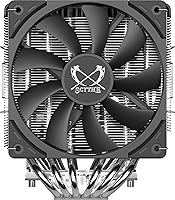
The Scythe Fuma 3 Twin Tower CPU Cooler represents exactly what Scythe has built its reputation on over the years: serious thermal engineering packaged without the premium price tag. Scythe is a Japanese brand with a long history of producing quietly effective coolers, and the Fuma line has matured into one of the most respected mid-range options available. At just under 155mm tall, this twin-tower air cooler fits comfortably in most standard mid-tower cases without the clearance anxiety that taller flagship coolers bring. It supports both LGA1700 and AM5 out of the box — no adapter hunting required. Just don't expect it to replace a 240mm AIO on a heavily overclocked flagship chip.
Features & Benefits

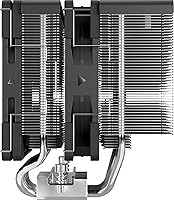
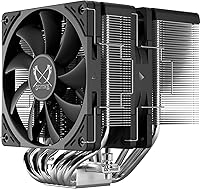
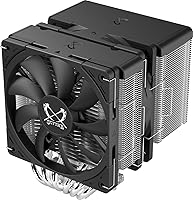
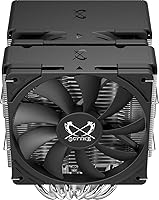
Six heat pipes feed into a dual fin-stack arrangement, and that matters because it spreads heat across a larger surface area than a single tower can manage — you get better thermal headroom under sustained CPU loads. The Double Reverse fan method is the headline engineering trick here: the front fan spins counterclockwise while the middle fan runs clockwise, which cuts down on airflow turbulence between the stacks and improves static pressure without pushing the noise floor up. The heatsink is also offset backward, and the fin edges are trimmed to keep tall RAM kits from creating clearance conflicts. Scythe also swapped in a metal LGA1700 backplate on this revision — a practical fix over the plastic used in earlier generations. The slim front fan slot keeps the overall build width in check.

Best For

The Fuma 3 makes the most sense for builders pairing it with mainstream workhorses — think Intel Core i5 and i7 or AMD Ryzen 5 and 7 class CPUs — where it can handle sustained loads without breaking a sweat acoustically. Case compatibility is worth thinking through: this Scythe cooler clears most mid-tower builds with ease at under 155mm, but tighter mATX cases or small-form-factor enclosures may be a squeeze. If quiet computing matters to you — home office, light content work, late-night gaming — the near-silent fan ceiling is a genuine draw. AM5 platform adopters will appreciate the native socket support without needing aftermarket brackets. And if you're upgrading from a stock cooler or a basic single tower, the step up in thermal performance is immediately noticeable.

User Feedback

Buyers who've put this twin-tower air cooler through real-world use tend to highlight two things quickly: installation ease and a meaningful drop in CPU temps compared to whatever they were running before. The mounting hardware is considered well-organized, and the process is straightforward for most standard builds. On noise, the consensus is consistent — even under load, this Scythe cooler stays impressively quiet. Where things get nuanced is physical fit. A recurring complaint comes from mATX case owners who found clearance tighter than expected around the motherboard area and nearby capacitors. Long-term fan reliability doesn't surface as a widespread concern, which is a good sign for durability. Overall, buyer sentiment leans positive but with a clear note: measure your case before ordering.

Pros

  • Delivers genuine high-end air cooling performance without crossing into premium price territory.
  • Near-silent operation under typical workloads makes it ideal for quiet home office and bedroom builds.
  • Native LGA1700 and AM5 support means no additional brackets or adapters on modern platforms.
  • The Double Reverse fan configuration reduces airflow turbulence between the towers in a way that competing designs don't replicate.
  • Updated metal retention backplate for Intel LGA1700 fixes a known weak point from earlier Fuma generations.
  • Offset heatsink and trimmed fin edges give standard-height RAM kits more breathing room than most twin-tower coolers allow.
  • Installation hardware is well-organized and the mounting process is considered straightforward by builders of all experience levels.
  • The Fuma 3 runs reliably over extended ownership periods with no widespread early failure patterns reported.
  • Broad Intel socket support spanning legacy and current platforms makes it a practical long-term investment across system upgrades.
  • The sandblasted aluminum top cover keeps the build looking clean and intentional without adding unnecessary bulk.

Cons

  • Compact and mATX case owners face real clearance risks — measure your chassis before buying.
  • Tall RAM heatspreaders can conflict with the front fan position and may require repositioning or memory replacement.
  • At nearly 3.7 pounds, long-term socket stress is a legitimate concern for builders who transport their systems regularly.
  • The plastic fan retention clips feel noticeably less refined than the rest of the cooler's construction.
  • Instruction documentation is thin for less common supported sockets, which can frustrate first-time builders on non-standard platforms.
  • Long-term fan bearing durability data is still limited given the cooler's relatively recent launch date.
  • Stock fans are competent but fall short of the tactile and acoustic quality that premium aftermarket fans offer.
  • Builders chasing extreme overclocks on high-TDP flagship processors will find the thermal headroom tighter than they'd like.

Ratings

The scores below reflect an AI-driven analysis of verified global user reviews for the Scythe Fuma 3 Twin Tower CPU Cooler, with spam, incentivized, and bot-flagged submissions actively filtered out before any scoring was applied. Ratings were built by weighing real ownership experiences across a wide range of builds, use cases, and regional markets — not by averaging star counts alone. Both the standout strengths and the recurring friction points are reflected transparently in every category.

Thermal Performance
91%
Buyers running mid-to-high-end processors consistently report CPU temps dropping by double digits compared to their previous single-tower or stock coolers under sustained workloads like rendering and gaming sessions. The dual fin-stack arrangement with six heat pipes manages heat distribution across a wide surface area, which translates to stable temperatures even during longer stress periods.
A handful of users pushing heavily overclocked flagship CPUs — particularly 13th and 14th gen Intel parts with elevated power limits — found the Fuma 3 working near its ceiling rather than coasting. It is a capable air cooler, but buyers chasing extreme overclocks should set realistic expectations about its upper thermal limits.
Noise Level
93%
Acoustic performance is one of the most consistently praised aspects across verified reviews. Users in quiet home office and bedroom setups specifically called out how hard it is to hear the cooler at all during moderate workloads, and even under sustained load the fan noise stays unobtrusive compared to competing twin-tower designs at similar price points.
At its absolute maximum fan speed, the cooler is no longer silent — a small number of users running extreme workloads noted a noticeable but not unpleasant hum at peak RPM. For the vast majority of typical usage scenarios this is irrelevant, but buyers who run prolonged all-core workloads regularly should be aware.
Build Quality
87%
The overall construction feels appropriately solid for its category. The sandblasted aluminum top cover gives the cooler a clean, finished look rather than the bare utilitarian appearance of many budget alternatives, and the metal fin stack itself shows no flex or sharp-edge issues that some cheaper coolers are known for.
A few users noted that the plastic clips used to secure the fans to the heatsink feel slightly less premium than the rest of the build. It is a minor observation and does not appear to affect long-term function, but buyers with tactile expectations of a flagship product may notice the contrast.
Installation Experience
88%
The mounting process receives consistent positive mentions, particularly from builders who dread the heatsink installation stage. The included hardware is well-organized, the instructions are clear, and the updated metal backplate for LGA1700 systems addresses a widely reported frustration from earlier revisions of this cooler that used a plastic equivalent.
Installation in tighter cases — especially when the motherboard is already populated with RAM and a GPU — requires patience given the cooler's physical footprint. A small number of mATX builders flagged that working around adjacent components during mounting added meaningful time to their build.
Case Compatibility
74%
26%
At just under 155mm tall, the Fuma 3 clears most standard mid-tower cases without issue. Buyers in full-tower and mid-tower ATX builds rarely raised clearance as a concern, and the offset heatsink design provides meaningful breathing room for motherboard-side components compared to symmetrical twin-tower alternatives.
This is the most recurring friction point in verified reviews. Builders using smaller mATX or compact cases need to check their chassis clearance specs carefully before purchasing. Several users reported the cooler fitting but leaving almost no margin, and a smaller number found it did not fit their specific case at all.
RAM Clearance
71%
29%
The trimmed fin tips and backward-offset heatsink design give the Fuma 3 better RAM compatibility than many twin-tower coolers of similar size. Buyers using standard-height memory kits report no interference issues, and the slim front fan slot contributes to keeping the left side of the board accessible.
Tall aftermarket RAM kits — particularly those with large heatspreaders exceeding around 40mm in height — can create genuine clearance conflicts with the front fan position. This is a known limitation of the twin-tower form factor generally, and several users with high-profile DDR5 kits had to adjust fan positioning or swap memory entirely.
Socket & Platform Compatibility
94%
Native support for both AM5 and LGA1700 without requiring aftermarket brackets is a practical advantage that buyers specifically call out positively. The breadth of supported Intel sockets also makes the cooler a strong candidate for users building on older platforms or planning a long-term retention of the cooler across multiple system generations.
Documentation for some older supported sockets is sparse in the included instruction sheet, and a few users building on legacy Intel HEDT platforms like X99 reported needing to cross-reference online resources to confirm proper installation steps. Not a widespread issue, but worth noting for non-mainstream builds.
Value for Money
89%
The Fuma 3 lands in a competitive price bracket where most alternatives either underperform thermally or require significantly more investment to match its acoustic profile. Buyers who compared it directly against competing air coolers in the same range consistently felt the purchase was well-justified by the results.
Buyers who expected AIO-class performance purely based on the twin-tower form factor occasionally expressed mild disappointment. The value proposition is strong, but it depends entirely on having realistic expectations — it outperforms its price, not its category ceiling.
Fan Quality & Airflow Design
83%
The Double Reverse fan configuration is not just a marketing footnote — buyers who swapped in alternative fans and then reinstalled the stock ones noticed the difference in airflow smoothness. The counter-rotating arrangement visibly reduces the turbulence between the two towers that plagues coolers using two identically spinning fans.
The fan blades themselves are functional rather than exceptional, and enthusiasts who have experience with premium standalone fans from Noctua or be quiet! may find the stock fans underwhelming in terms of blade construction. Long-term fan bearing durability also lacks sufficient review data to rate confidently at this point.
Aesthetics
78%
22%
The black sandblasted top cover gives the cooler a restrained, professional look that holds up well in builds where the side panel window faces the cooler. Buyers who prefer understated designs without RGB lighting specifically appreciate that Scythe kept the finish clean and purposeful rather than decorative.
Users who expect the cooler to serve as a visual centerpiece in an RGB-forward build will find it plain. There is no lighting integration and no premium-tier machined finish on the fin stack — the aesthetics are solid but clearly utilitarian, which is a trade-off the price point implies.
Weight & Physical Footprint
69%
31%
For a dual-tower cooler, the weight is managed reasonably well, and most buyers who installed it on vertical-mounted boards or transport their system occasionally did not report structural concerns with the motherboard mounting over time.
At nearly 3.7 pounds, the Fuma 3 is not lightweight, and buyers transporting their system regularly or using particularly thin mATX boards expressed some concern about long-term stress on the socket area. This is a category-wide limitation rather than a unique flaw, but it is a real consideration for LAN party builders.
Packaging & Included Accessories
81%
19%
The mounting hardware arrives well-organized and sorted, which buyers consistently appreciated as a small but meaningful quality-of-life detail. The included thermal paste is adequate for a clean initial application without needing to source a third-party compound right away.
The instruction manual has been flagged by some international buyers as difficult to follow, with diagrams that are not always clear for less experienced builders. A digital or expanded multilingual guide would address this, but for confident builders it is a non-issue.
Long-Term Reliability
82%
18%
Buyers who have owned the Fuma 3 for a year or more report stable fan operation and consistent thermal performance with no measurable degradation. Scythe as a brand has a track record in this regard, and early ownership data for this revision reflects that history.
The review base for multi-year ownership is still relatively limited given the cooler launched in late 2023, so long-term reliability scores carry more uncertainty than categories with larger data sets. No widespread early failure patterns have surfaced, which is a positive signal but not a guarantee.

Suitable for:

The Scythe Fuma 3 Twin Tower CPU Cooler is the kind of purchase that makes the most sense for builders who want strong, reliable thermal performance without paying a premium for water cooling they don't actually need. If you're putting together a system around a mainstream high-performance processor — an Intel Core i5 or i7, an AMD Ryzen 5 or 7 — this Scythe cooler will handle your workloads comfortably while staying near-silent under typical daily use. It's also a natural fit for AM5 platform adopters who want native socket support without hunting for aftermarket mounting kits. Builders working with cases that top out around 155mm of CPU cooler clearance will appreciate that this twin-tower air cooler doesn't demand the headroom that taller flagship alternatives require. And if you're upgrading from a stock cooler or a basic single-tower unit, the thermal improvement you'll feel is immediate and noticeable — particularly if your current cooler has been struggling under sustained loads.
Not suitable for:

The Scythe Fuma 3 Twin Tower CPU Cooler is not the right choice for every build, and being honest about that matters. If you're running a heavily overclocked flagship CPU — one that's pulling well above its rated TDP — this cooler will eventually hit its ceiling, and a 240mm or 280mm AIO will serve you better in that scenario. Compact case builders should also approach this with caution: the physical footprint of a dual-tower cooler is substantial, and several mATX chassis simply don't provide enough internal clearance or working room for a comfortable installation. Buyers running tall aftermarket RAM kits with large heatspreaders may also encounter front-fan clearance conflicts that require repositioning or, in some cases, swapping memory entirely. Finally, if you're building a showcase system where the cooling solution is expected to anchor an RGB lighting scheme, the Fuma 3's restrained aesthetic won't deliver on that front — it's purposefully understated, not visually expressive.
Specifications

  • Form Factor: Twin tower side-flow design with dual fin stacks arranged for lateral airflow across the heatsink body.
  • Dimensions: The cooler measures 5.43″ long by 5.04″ wide by 6.06″ tall, making it one of the more compact options in the dual-tower category.
  • Height: At 154mm total height, the cooler fits comfortably in most standard mid-tower cases with a 155mm or greater CPU cooler clearance rating.
  • Weight: The assembled cooler weighs approximately 3.66 pounds, which is typical for a dual-tower heatsink with two fans and a full heat pipe array.
  • Heat Pipes: Six copper heat pipes, each 6mm in diameter, run from the CPU contact base through both fin tower stacks to distribute heat efficiently under load.
  • Fan Configuration: Ships with two fans arranged in a Double Reverse configuration — the front fan spins counterclockwise and the center fan spins clockwise to reduce inter-stack turbulence.
  • Max Fan Speed: Both fans are rated to a maximum rotational speed of 2500 RPM under full PWM control.
  • Noise Level: Rated at 28.6 dB at maximum fan speed, placing it among the quieter dual-tower coolers available at this price tier.
  • Power Connector: Each fan uses a standard 4-pin PWM connector, allowing motherboard fan headers to automatically regulate speed based on CPU temperature.
  • Voltage & Wattage: Operates at 12V with a combined fan draw of 35 watts at full load, well within the capacity of any standard motherboard fan header.
  • Front Fan Profile: The front fan uses a slim 15mm thick frame, reducing the overall width footprint and improving clearance for tall memory modules on the left side of the board.
  • Heatsink Material: Fin stacks are constructed from aluminum with a metal build throughout, and the top cover features a black sandblasted aluminum finish for a clean, matte appearance.
  • Retention System: Includes an updated metal backplate for Intel LGA1700 systems, replacing the plastic backplate used in earlier revisions of the Fuma line.
  • Intel Compatibility: Supports Intel sockets LGA 1150, 1151, 1155, 1156, 1200, 1700, 2011, 2011 V3, and 2066 without requiring additional adapter hardware.
  • AMD Compatibility: Fully compatible with AMD AM4 and AM5 sockets out of the box, covering current Ryzen 7000 series processors and the prior Ryzen 5000 generation.
  • Heatsink Offset: The heatsink body is deliberately shifted rearward relative to the mounting point to reduce interference with motherboard components and capacitors near the socket area.
  • Fin Tip Design: The top and rear edges of the fin stacks are trimmed to reduce potential clearance conflicts with tall VRM heatsinks and other structures near the CPU socket.
  • Model Number: The official model designation for this cooler is SCFM-3000, assigned by Scythe for product identification and warranty purposes.

Related Reviews
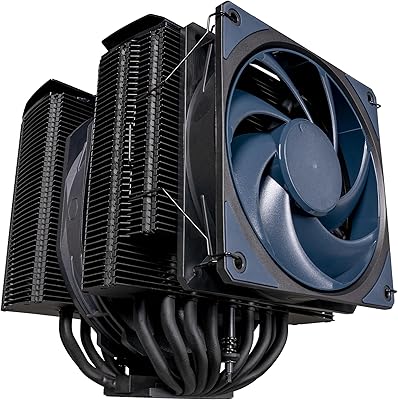
Cooler Master MasterAir MA824 Stealth CPU Cooler
81%
88%
Thermal Performance
91%
Noise Level
93%
RAM Clearance
72%
Installation Experience
89%
Build Quality & Materials
More
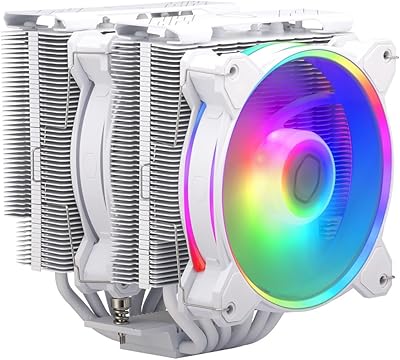
Cooler Master Hyper 622 Halo Dual Tower CPU Cooler
82%
83%
Thermal Performance
88%
Noise Level
89%
Ease of Installation
67%
RAM Clearance
86%
Build Quality
More
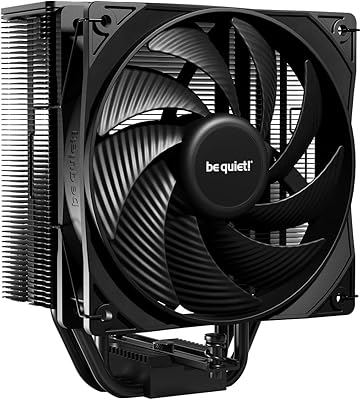
be quiet! Pure Rock 3 CPU Cooler
83%
83%
Thermal Performance
79%
Noise Level
91%
Installation Experience
88%
RAM Clearance
93%
Value for Money
More
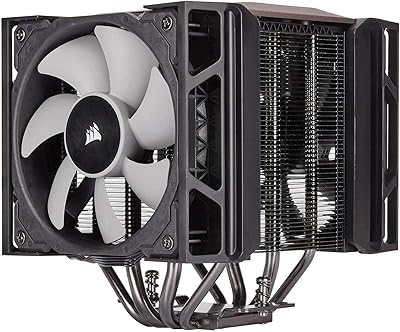
Corsair A115 High-Performance Tower CPU Air Cooler
87%
94%
Cooling Performance
88%
Ease of Installation
80%
Noise Level
92%
Compatibility with CPUs
90%
Build Quality
More
Noctua NH-D12L Low-Height Dual-Tower CPU Cooler
87%
88%
Cooling Performance
92%
Noise Level
94%
RAM Compatibility
91%
Ease of Installation
89%
Build Quality
More
be quiet! Pure Rock Pro 3 CPU Cooler
84%
83%
Thermal Performance
88%
Noise Level
79%
RAM Clearance
91%
Ease of Installation
86%
Value for Money
More
Scythe Mugen 6 Dual Fan CPU Cooler
83%
88%
Thermal Performance
91%
Noise Level
86%
Build Quality
93%
Installation Experience
74%
RAM Compatibility
More
Cooler Master V8 GTS High Performance CPU Cooler
84%
90%
Cooling Performance
88%
Ease of Installation
65%
Fan Noise
92%
Build Quality
85%
Aesthetic Appeal (LED Lighting)
More
Cooler Master Hyper 212 Halo CPU Air Cooler
84%
88%
Cooling Performance
91%
Noise Level
85%
Ease of Installation
89%
Build Quality
80%
RGB Aesthetics
More
Cooler Master Hyper 212 Black CPU Cooler
79%
83%
Thermal Performance
79%
Noise Level
93%
Value for Money
76%
Installation Experience
81%
Build Quality
More

FAQ

In the vast majority of mid-tower ATX cases, yes — the cooler sits just under 155mm tall, which clears the CPU cooler height limit of most standard enclosures. That said, you should always check your specific case's listed CPU cooler clearance spec before ordering, since some mid-towers with side-panel radiator mounts or angled structures have tighter internal measurements than their advertised clearance suggests.

Yes, native AM5 support is included out of the box with no extra brackets or adapter kits needed. The mounting hardware ships ready for AM5, so you can install it directly onto a Ryzen 7000 series board without any additional purchases.

Possibly, and this is worth checking carefully before you buy. The slim 15mm front fan helps, and the offset heatsink design gives standard-height memory kits plenty of room. However, RAM kits with heatspreaders taller than roughly 40mm can conflict with the front fan position. If you're running high-profile DDR5 sticks, check the exact heatspreader height against the cooler's fin stack position before committing.

Under typical workloads like gaming or moderate multitasking, most users describe it as nearly inaudible from a normal seated distance. At its absolute peak fan speed it produces a gentle hum, but it rarely needs to spin that hard in well-ventilated cases. If you keep your case airflow reasonable, you will likely forget the cooler is running most of the time.

For mainstream Core i7 and Ryzen 7 processors running at stock or modestly adjusted settings, this Scythe cooler handles sustained loads without pushing the CPU into thermal throttling territory. Where it gets stretched is on processors running at very high sustained power targets — heavily unlocked Intel 13th or 14th gen parts, for example. For those specific use cases, a 240mm AIO gives you more comfortable headroom.

The current revision ships with the updated metal LGA1700 backplate. Scythe addressed the plastic backplate issue that drew criticism in earlier Fuma variants, and the metal replacement is included in this box without needing to contact support or order a replacement part separately.

Most buyers rate it as straightforward, and the hardware comes sorted and organized, which helps a lot when you're working through a mounting process for the first time. The instructions are clear for standard socket installations. If you're building on a less common supported socket, you may want to cross-reference Scythe's online documentation alongside the included sheet, as some legacy platform steps are described briefly.

It makes a measurable difference in how airflow behaves between the two fin stacks. When two fans spin in the same direction, they create competing vortices where the airstreams meet in the middle, which increases turbulence and slightly reduces effective pressure. Running them in opposite directions eliminates that conflict. Whether you can hear or feel the difference in everyday use depends on your build, but it is a genuine engineering decision, not a label feature.

It depends heavily on the specific case. Some mATX enclosures provide enough internal volume and clearance for the Fuma 3, but many compact mATX builds have tighter spatial constraints around the socket area and adjacent components. Several real buyers have flagged this as a frustration after purchasing. If you are building in a smaller mATX chassis, measure your case's CPU cooler clearance and internal motherboard-to-panel distance carefully before buying.

Yes, thermal paste is included in the box. The quality is adequate for a clean initial installation and typical use — you won't be leaving significant performance on the table by using what's provided. If you want to extract every last fraction of a degree for a more demanding build, swapping in a premium aftermarket compound like Thermal Grizzly or Noctua NT-H1 is always an option, but it is not necessary for most users.