Overview

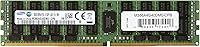
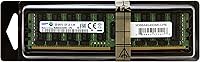
The Samsung M386A4G40DM0-CPB 32GB DDR4 Server RAM is a purpose-built enterprise memory module — not something you slot into a gaming rig or workstation. Samsung introduced it in early 2015, and it has remained relevant across server platforms requiring DDR4-2133 LRDIMM support. The LRDIMM designation is worth understanding: unlike standard registered DIMMs, load-reduced modules use a dedicated buffer chip that absorbs electrical load before it reaches the memory controller. This lets servers populate more slots per channel without overtaxing the CPU — a meaningful advantage when you are pushing toward maximum memory density in a rack environment.
Features & Benefits

Each module delivers 32GB of DDR4 SDRAM at 2133 MHz, hitting a PC4-17000 bandwidth rating that handles database reads, VM memory allocation, and comparable server workloads reliably. The 288-pin DIMM follows the JEDEC DDR4 standard and runs at 1.2 volts, keeping power draw and heat output reasonable inside a dense chassis. The Quad Rank (4Rx4) layout maximizes per-slot capacity, while ECC support continuously scrubs memory for single-bit errors before they escalate into crashes or corruption. One hard constraint worth repeating: this 32GB LRDIMM cannot share a system with RDIMM, UDIMM, or non-ECC modules. Always confirm against your server's qualified vendor list before ordering.

Best For

This 32GB LRDIMM is squarely aimed at IT administrators expanding memory in legacy enterprise servers — Dell PowerEdge, HP ProLiant, and IBM System X platforms that still support DDR4-2133 load-reduced configurations. It also fits small data centers running virtualization stacks or database engines where raw memory capacity directly drives performance. If your server supports quad-rank LRDIMMs and you need to push toward its memory ceiling, this Samsung OEM module offers a cost-aware path compared to replacing hardware outright. What it absolutely is not suited for is any consumer setup. No desktop, no laptop, no workstation — server environments only.

User Feedback

Across 81 ratings, a 4.3-star average suggests this ECC server RAM mostly lands in the hands of buyers who did their homework and got exactly what they needed. Server admins frequently highlight stable performance under continuous load and the reassurance of a genuine Samsung OEM part. Negative experiences, when they appear, almost always trace back to compatibility oversights — buyers who skipped checking the QVL and found the module unsupported in their specific platform. A segment of reviewers also points to solid value for shops maintaining older server infrastructure. Widespread quality defects are notably absent, which is consistent with Samsung's track record at this tier.

Pros

  • 32GB per slot is a substantial capacity for servers that support quad-rank LRDIMMs, reducing the number of modules needed.
  • Samsung OEM origin gives IT teams confidence in component quality for long-running production workloads.
  • ECC error correction actively catches and fixes single-bit memory errors before they cause crashes or data loss.
  • The LRDIMM buffer reduces memory controller load, making dense multi-channel configurations more stable.
  • Low 1.2V operating voltage keeps power consumption and heat output manageable inside loaded server chassis.
  • JEDEC DDR4 compliance ensures this ECC server RAM adheres to a well-established, widely supported standard.
  • Buyers who verify compatibility upfront consistently report straightforward installation with no configuration headaches.
  • Holds up well under sustained continuous load, according to admins running it in production environments.

Cons

  • Strictly server-only — no compatibility whatsoever with consumer desktops, laptops, or workstation boards.
  • Cannot be mixed with RDIMMs, UDIMMs, or non-ECC modules, making partial upgrades in mixed-memory systems impossible.
  • Buyers must cross-reference their server's qualified vendor list before purchasing, or risk an incompatible and non-refundable order.
  • DDR4-2133 is an older speed tier; servers standardized on faster DDR4 or DDR5 will need different modules entirely.
  • With only 81 ratings, the feedback pool is relatively small, making it harder to assess reliability across a wide range of server models.
  • The quad-rank configuration is not universally supported — some servers cap rank count per channel, limiting how many of these modules you can install.
  • No official compatibility list is bundled with the module itself, placing the full burden of verification on the buyer.

Ratings

Our AI rating engine analyzed verified buyer reviews worldwide for the Samsung M386A4G40DM0-CPB 32GB DDR4 Server RAM, actively filtering out incentivized, bot-generated, and low-signal feedback to surface what real server administrators actually experienced. Scores reflect both the genuine strengths that keep IT professionals coming back and the friction points that have caused returns or frustration. Nothing has been smoothed over — if a category has a real problem, it shows in the number.

Reliability & Stability
91%
Among buyers who installed this 32GB LRDIMM in verified compatible servers, long-term stability is the most consistently praised quality. Server admins running virtualization stacks and database workloads around the clock report no unexpected reboots, correctable error spikes, or performance degradation over extended uptime periods.
A small subset of users noted early instability that turned out to stem from improper slot population order rather than the module itself — a reminder that quad-rank LRDIMMs often require specific channel-filling sequences outlined in the server's memory configuration guide.
Compatibility Clarity
52%
48%
For buyers who did the homework upfront — pulling the server's QVL and confirming the M386A4G40DM0-CPB part number was listed — the installation experience was clean and uneventful. The module was recognized immediately and the system posted without any manual BIOS intervention in most reported cases.
Compatibility is the single largest pain point in the feedback pool. A notable share of negative reviews came from buyers who did not verify their server model against the QVL and ended up with an incompatible, non-returnable module. The product listing's warnings, while present, were clearly not prominent enough for all buyers.
ECC Performance
88%
The error-correcting capability of this ECC server RAM is well-regarded by administrators running critical workloads where data integrity is non-negotiable. Several server operators noted that their system event logs showed correctable errors being quietly handled in the background — exactly what ECC is supposed to do during sustained production use.
ECC performance is inherently difficult to evaluate without server-level monitoring tools, and some buyers had no visibility into whether it was functioning at all. Admins who did not check their BIOS or IPMI logs missed confirmation that the ECC mode was even active after installation.
Memory Density Value
83%
At 32GB per slot, this Samsung server memory module allows IT teams to dramatically increase total system RAM without exhausting all available DIMM slots — a real advantage in platforms with limited slot counts. For shops trying to extend the useful life of aging server hardware without a full platform replacement, the per-slot capacity is a meaningful win.
The quad-rank design, while enabling high density, comes with a ceiling: not all compatible platforms allow all slots to be populated at full rank when using 4Rx4 modules. Buyers who planned to fill every slot sometimes found themselves restricted to fewer active slots than expected.
Installation Experience
77%
23%
Buyers who followed their server's memory population guidelines reported an installation process that was no more complex than any other server DIMM swap. The module seated securely, the retention clips engaged cleanly, and the system recognized the full 32GB on the first boot in the majority of compatible configurations.
Users unfamiliar with LRDIMM-specific slot population rules encountered confusion. Some servers require memory to be installed in a specific sequence across channels, and skipping this step led to either reduced capacity recognition or POST failures that initially looked like hardware defects.
Build & Component Quality
89%
The Samsung OEM pedigree is tangible here — the PCB feels substantial, component placement is precise, and the load-reduction buffer chip is clearly a genuine Samsung part rather than a third-party substitute. Experienced server technicians who handle memory regularly noted the module felt consistent with what they expect from Samsung's enterprise production line.
A small number of buyers purchasing from secondary or third-party sellers raised concerns about authenticity, reporting subtle label inconsistencies. This is not a Samsung manufacturing issue per se, but it reinforces the importance of sourcing this ECC server RAM from reputable, authorized channels.
Value for Money
74%
26%
For organizations maintaining older server infrastructure that explicitly requires DDR4-2133 LRDIMMs, sourcing this module is considerably more cost-effective than upgrading to a newer platform. Admins who priced out alternatives noted that Samsung-branded server memory at this capacity tends to carry a premium but also carries lower risk of failure or compatibility surprises than generic alternatives.
Buyers comparing this module to newer DDR4-2400 or DDR5 options sometimes felt the price-per-GB ratio was harder to justify given the older speed tier. For platforms that support faster memory, the cost efficiency argument weakens relative to what is available on the current market.
Thermal Performance
86%
Operating at 1.2V, this 32GB LRDIMM runs cool enough that admins in densely packed 1U and 2U chassis reported no thermal throttling or memory-related temperature warnings during sustained heavy workloads. The low voltage design directly contributes to a manageable thermal envelope in space-constrained server environments.
Some buyers with very high ambient temperatures in their server room, or with inadequate chassis airflow, noted that the buffer chip on the LRDIMM ran slightly warmer than unbuffered alternatives. This is an inherent characteristic of the LRDIMM architecture rather than a defect, but it is worth noting for thermally constrained installations.
Documentation & Guidance
47%
53%
The module ships with the core specification data that an experienced server administrator needs — the part number alone is enough to locate the relevant QVL entries and technical documentation from the server manufacturer's support portal.
No printed documentation, compatibility guide, or quick-reference card is included with the module itself. For IT generalists or less experienced buyers, this creates a real gap — particularly for understanding LRDIMM-specific installation rules, mixed-rank restrictions, and QVL verification steps that are not obvious from the packaging.
Workload Throughput
81%
19%
Administrators running VMware ESXi, Hyper-V, and Linux KVM environments reported smooth memory allocation across virtual machines with no perceptible lag during VM spin-up or memory ballooning events. The combination of 32GB capacity and ECC correction keeps workload throughput consistent over long operational periods.
At DDR4-2133, throughput is capped relative to higher-frequency DDR4 or DDR5 alternatives. Workloads that are acutely latency-sensitive or bandwidth-bound may see a measurable difference compared to modules running at 2400 MHz or above, particularly in platforms that can support faster memory.
Seller & Supply Reliability
63%
37%
When purchased through primary or well-known distribution channels, buyers received genuine modules that matched the listed specifications. Several IT purchasers noted fast fulfillment times and accurate packaging, which matters when a server is offline and waiting on parts.
The secondary market for this module introduces meaningful risk. Reviews mentioning counterfeit concerns or modules that failed within a short period disproportionately came from purchases through lesser-known third-party sellers. The onus is on the buyer to vet their source, which adds friction to an already technically demanding purchase decision.
Platform Longevity
69%
31%
For organizations committed to squeezing more life out of DDR4-era server hardware, this Samsung server memory module remains a practical upgrade path. It is still an active, non-discontinued part, which means replacement units and bulk purchasing for multi-node deployments remain feasible.
DDR4-2133 as a specification is aging, and as data center hardware refresh cycles push toward DDR5 platforms, the long-term relevance of this module narrows. Buyers should weigh whether investing in LRDIMM capacity on aging servers makes more sense than accelerating the transition to a newer platform generation.

Suitable for:

The Samsung M386A4G40DM0-CPB 32GB DDR4 Server RAM is the right call for IT administrators and data center operators who need to push available memory higher in platforms that support DDR4-2133 load-reduced DIMMs. If you are managing a Dell PowerEdge, HP ProLiant, or IBM System X server running virtualization stacks, busy databases, or multi-tenant workloads, this 32GB LRDIMM gives you meaningful headroom per slot without forcing a full hardware refresh. The LRDIMM architecture is specifically valuable when your server supports multiple memory channels and you want to populate them densely — the onboard buffer chip offloads electrical stress from the memory controller, which matters at scale. Samsung's OEM reputation also carries weight here: this is not a generic white-label module, and for production environments where stability over months of continuous uptime is non-negotiable, that provenance matters. Budget-conscious shops maintaining older server infrastructure will find this a cost-aware alternative to sourcing newer platforms entirely.
Not suitable for:

If you are a home user, PC builder, or anyone without a server that explicitly supports DDR4-2133 ECC LRDIMMs, the Samsung M386A4G40DM0-CPB 32GB DDR4 Server RAM is simply not an option — and attempting to install it in a desktop or laptop will get you nowhere. This is not a matter of configuration; consumer motherboards physically and electrically cannot use load-reduced server DIMMs. Beyond the consumer incompatibility, even buyers with legitimate server hardware need to be careful: this 32GB LRDIMM cannot coexist with registered (RDIMM), unbuffered (UDIMM), or non-ECC memory in the same system, so mixed-memory configurations are off the table entirely. If your server has already moved to DDR4-2400 or DDR5, this module will not slot into a faster-spec platform without potential compatibility issues. Anyone who skips checking their server's qualified vendor list before purchasing is taking a real risk of an expensive return.

Specifications

  • Capacity: Each module provides 32GB of DDR4 SDRAM, making it one of the higher-density single-slot options available for compatible server platforms.
  • Memory Type: DDR4 SDRAM with ECC (Error-Correcting Code) support, specifically configured as a Load Reduced DIMM (LRDIMM) for enterprise server use.
  • Speed: Operates at 2133 MHz with a PC4-17000 bandwidth rating, meeting the DDR4-2133 specification defined by the JEDEC standard.
  • Form Factor: Standard 288-pin DIMM layout measuring 5.25 x 0.06 x 1.18 inches, designed exclusively for server motherboard memory slots.
  • Rank Config: Quad Rank (4Rx4) organization allows maximum memory density per slot on server platforms that support multi-rank LRDIMM modules.
  • ECC Type: Load Reduced ECC (LRDIMM) — distinct from Registered (RDIMM) and Unbuffered (UDIMM) ECC types, and incompatible with either in a shared system.
  • Voltage: Runs at 1.2V, keeping power draw and thermal output within acceptable limits for densely populated server chassis.
  • Standard: Fully compliant with the JEDEC DDR4 specification, ensuring adherence to industry-defined electrical and timing requirements.
  • Part Number: The official Samsung part number is M386A4G40DM0-CPB, which should be used when cross-referencing server qualified vendor lists (QVLs).
  • Manufacturer: Manufactured by Samsung, a leading OEM supplier of server-grade memory components used in enterprise data center environments worldwide.
  • Weight: The module weighs 0.704 ounces, consistent with a standard full-length server DIMM with an onboard load-reduction buffer chip.
  • Compatibility: Compatible with select enterprise server systems only — including certain Dell PowerEdge, HP ProLiant, and IBM System X platforms that explicitly support DDR4-2133 LRDIMMs.
  • Incompatibility: Cannot be used alongside RDIMM, UDIMM, or non-ECC memory modules; mixing memory types in the same system is not supported.
  • Consumer Use: This module is not compatible with desktop computers, laptops, workstations, or any consumer-grade PC hardware under any configuration.
  • Date Available: First made available in March 2015, the module has remained a relevant option for legacy and current server builds requiring DDR4-2133 LRDIMM memory.
  • Discontinuation: As of the available product data, Samsung has not discontinued this module, and it remains listed as an active part.

Related Reviews
Samsung M471A4G43MB1 32GB DDR4 Laptop RAM
80%
94%
Reliability & Longevity
96%
Installation Ease
81%
Compatibility Range
72%
Value for Money
83%
Performance at Rated Speed
More
Samsung M378A1K43BB1-CPB 8GB DDR4 RAM
83%
96%
Reliability & Stability
88%
Compatibility
93%
Installation Experience
91%
Value for Money
67%
Memory Speed Performance
More
A-Tech 32GB DDR4 3200MHz Desktop RAM
81%
91%
Installation Ease
74%
System Compatibility
83%
Performance at Rated Speed
86%
Value for Money
82%
Long-term Reliability
More
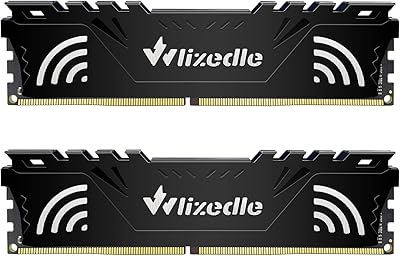
Wlizedle DDR4 3200MHz 32GB Desktop RAM Kit
79%
91%
Value for Money
88%
Installation Ease
74%
XMP & BIOS Compatibility
83%
System Performance Impact
81%
Thermal Performance
More
Samsung 16GB DDR4 3200MHz SODIMM Laptop RAM
82%
93%
Reliability & Longevity
91%
Installation Ease
83%
System Compatibility
78%
Real-World Performance
84%
Value for Money
More
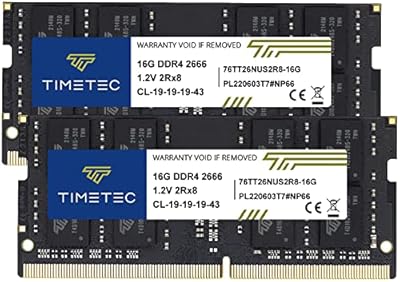
Timetec 32GB Kit (2x16GB) DDR4 2666MHz SODIMM
83%
91%
Value for Money
78%
Compatibility
93%
Installation Experience
82%
Performance Impact
87%
Long-Term Reliability
More
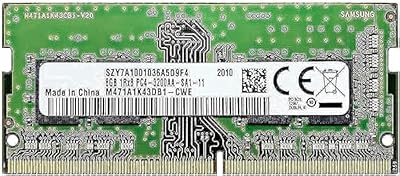
Samsung 8GB DDR4 3200MHz SO-DIMM Laptop RAM
83%
86%
Performance
79%
Compatibility
91%
Value for Money
93%
Installation Ease
89%
Reliability
More
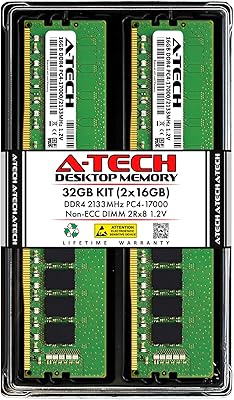
A-Tech 32GB DDR4 2133MHz Desktop RAM
79%
88%
Value for Money
94%
Installation Ease
69%
Compatibility
86%
Stability & Reliability
61%
Memory Speed
More
TEAMGROUP T-Create Expert 32GB DDR4 Desktop RAM
81%
93%
Overall Stability
88%
XMP Compatibility
79%
Thermal Performance
91%
Build Quality
74%
Value for Money
More
fanxiang RGB DDR4 32GB 3600MHz RAM
80%
88%
Value for Money
91%
Installation Ease
79%
XMP & BIOS Compatibility
82%
Gaming Performance
84%
RGB Aesthetics
More

FAQ

No — and this is not a minor caveat. The Samsung M386A4G40DM0-CPB 32GB DDR4 Server RAM is a load-reduced ECC DIMM built exclusively for enterprise server hardware. Consumer motherboards, whether for gaming, home office, or workstation use, do not support LRDIMM modules electrically or physically in any meaningful way. If you are shopping for a desktop or consumer PC upgrade, this is the wrong product entirely.

Think of it this way: an UDIMM is an unbuffered stick — straightforward, used in most consumer systems. An RDIMM adds a register chip that helps with signal integrity in servers. An LRDIMM goes a step further by adding a full data buffer that absorbs the electrical load before it hits the memory controller, which allows you to populate more slots per channel without overwhelming the CPU. The trade-off is that LRDIMMs are not interchangeable with RDIMMs or UDIMMs, even in servers that support ECC memory.

The safest approach is to pull up your server's official qualified vendor list (QVL), which is typically found on the manufacturer's support page for your exact server model and firmware revision. Search for the part number M386A4G40DM0-CPB and confirm it appears for your platform. If it does not appear by that exact part number, do not assume compatibility — server memory requirements can be very model-specific, even within the same product family.

No. This 32GB LRDIMM cannot coexist with RDIMM, UDIMM, or non-ECC modules in the same server. Most server platforms require all installed memory to share the same ECC type and rank configuration. Installing mixed types typically results in the system failing to POST or defaulting to a degraded memory mode. If you plan to upgrade with this module, you would need to either replace all existing sticks with compatible LRDIMMs or verify the server supports a mixed-buffer configuration — which is uncommon.

No — this ECC server RAM is rated for DDR4-2133 and will operate at that speed regardless of what the server platform supports at maximum. If your server's memory controller and CPU support DDR4-2400 or higher, the system will likely downclock to match this module's rated speed when it is installed. For platforms where speed headroom matters, you would want to source a module rated at your target frequency.

That depends entirely on your server's memory topology — specifically the number of memory channels, slots per channel, and whether the platform supports quad-rank LRDIMMs at full capacity. Some server platforms limit the number of quad-rank modules per channel to avoid stability issues. Your server's technical guide or memory population rules document will spell out exactly how many modules are supported and in which slot order they should be installed.

In most enterprise server platforms, ECC is enabled automatically when ECC-capable memory is detected. However, it is worth checking your BIOS or system management interface to confirm ECC mode is active after installation. Some systems log correctable memory errors to the event log, which can be a useful indicator that ECC is doing its job. If you are unsure, your server's BIOS documentation will outline where to verify the setting.

It is well matched for memory-intensive server tasks: virtual machine hosting, containerized application environments, database servers, and similar workloads where large amounts of addressable RAM directly improve performance. The 32GB per-slot capacity is particularly useful when you need to maximize total installed memory within a limited number of DIMM slots. It is not optimized for latency-sensitive workloads where lower-rank or lower-CAS-latency modules might be preferred.

The overall feedback from server administrators who purchased this module through verified channels is positive — the 4.3-star average across more than 80 ratings reflects a product that generally performs as expected in compatible systems. The recurring theme in negative reviews is not hardware failure, but compatibility mistakes made before purchase. Buyers who vetted the module against their server's QVL beforehand almost universally report clean installations and stable long-term operation.

This is a genuine OEM Samsung module carrying Samsung's own part number, not a third-party equivalent or rebadged product. When purchasing, it is worth verifying that the seller is a reputable one, since the server memory secondary market does include counterfeit or remarked modules. Checking that the PCB markings and label match the official Samsung part number (M386A4G40DM0-CPB) on receipt is a reasonable precaution if you are sourcing from an unfamiliar vendor.

Where to Buy