Overview

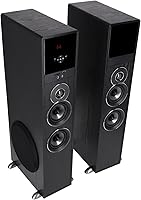
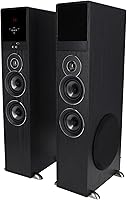
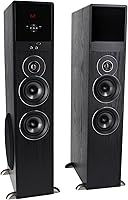
The Rockville TM80B is an all-in-one powered tower speaker system built for home entertainment enthusiasts who want real impact without assembling a traditional receiver-and-speaker setup. At its core are dual 8-inch subwoofers housed in a floor-standing MDF cabinet — a combination that gives it a physical presence most shelf systems simply cannot match. Connectivity covers a lot of ground: Bluetooth, USB, SD card, FM radio, and wired auxiliary inputs for TVs or older gear. There are even two microphone inputs for karaoke, which is not something you typically find at this level. Worth clarifying upfront: this is a 2.0 stereo system, not a multi-channel surround setup.

Features & Benefits

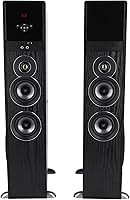
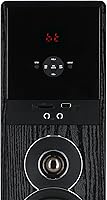
The driver lineup inside this tower speaker system is more layered than the cabinet's slim profile suggests. Two 8-inch subwoofers handle the low end, four full-range drivers fill in the midrange, and a pair of silk dome tweeters keep the highs clean and defined. Amplification sits at 200W RMS — the number that actually matters for sustained listening — with eight EQ presets and manual bass and treble controls for dialing in your preferred sound. Bluetooth connectivity reaches roughly 45 meters, and the USB and SD card slots mean you can play audio directly without needing a phone nearby. A glass LCD screen and included remote control round out a package that looks and operates tidily in any living room.

Best For

This all-in-one speaker unit makes the most sense in apartments or mid-size living rooms where the idea of managing a separate receiver, amplifier, and subwoofer sounds more like a project than a hobby. It is a natural fit for anyone who entertains regularly — the built-in mic inputs mean karaoke nights need no extra hardware at all. Daily Bluetooth listeners who switch between phones, tablets, and a TV will appreciate having every connection type consolidated in one box. If your current setup is a decade-old shelf system and you want noticeably more bass, this tower delivers a clear step up. Large open-plan spaces, however, may find it undersized for filling the room comfortably.

User Feedback

Owners consistently highlight two things: bass output that surprises for the cabinet size, and how quickly the whole unit is up and running straight out of the box. Families who bought it specifically for karaoke report it holding up well across multiple gatherings. On the critical side, a number of longer-term owners have flagged that the plastic control panel shows wear after extended use — worth noting for anyone who reaches for the physical buttons more than the remote. The LCD display also draws complaints in bright rooms where it becomes hard to read. And while volume output satisfies most buyers in normal-sized spaces, those with larger rooms occasionally wish for a bit more headroom.

Pros

  • Bass output is impressively strong for a floor-standing cabinet of this size and price range.
  • Built-in mic inputs with echo and volume control make karaoke nights genuinely hassle-free.
  • Bluetooth, USB, SD card, FM radio, and auxiliary inputs cover nearly every source a household needs.
  • Most buyers are up and running within ten minutes — setup is refreshingly straightforward.
  • The MDF cabinet with chrome accents and glass LCD looks noticeably more polished than competing units at similar prices.
  • Eight EQ presets plus manual bass and treble dials give practical tuning flexibility for different content types.
  • Bluetooth range holds reliably across a normal apartment or floor of a house.
  • The included remote handles daily controls without requiring users to interact with the unit directly.
  • Replacing a shelf system or soundbar with this tower speaker system delivers a clear, immediately noticeable bass upgrade.

Cons

  • The plastic front control panel shows wear and button mushiness after extended daily use.
  • Chrome trim on some units has been reported to bubble or peel within the first year.
  • The LCD display is difficult to read in well-lit rooms or near natural light sources.
  • Peak wattage figures are marketing ceilings — sustained real-world output is considerably more modest.
  • The remote has no backlight, making it awkward to use during darkened movie viewing sessions.
  • FM reception quality is heavily dependent on local signal strength and the basic supplied antenna.
  • Midrange detail compresses audibly when the unit is pushed to high volumes for long periods.
  • The EQ preset labels are vague enough that users typically cycle through all eight by ear to find a preference.
  • Bluetooth performance degrades noticeably when walls or a body obstruct the line of sight to the source device.

Ratings

The Rockville TM80B has been scored by our AI engine after parsing and filtering verified global buyer reviews — removing incentivized, duplicate, and bot-flagged submissions to surface what real owners actually experience. Across categories from sound performance to long-term durability, both the standout strengths and the genuine frustrations are reflected honestly in every score below.

Bass Performance
83%
The dual 8-inch subwoofers consistently impress owners who previously relied on compact shelf systems or soundbars. In apartments and living rooms up to roughly 400 square feet, the low-end output lands with a weight and physicality that feels disproportionate to the cabinet size — movie nights and bass-heavy music benefit noticeably.
Buyers with larger open-plan spaces report that the bass presence thins out and loses authority when pushed to fill the room. A handful of reviewers note occasional boominess at higher volumes in rooms with hard floors, suggesting the tuning skews toward impact over precision.
Sound Clarity
74%
26%
The silk dome tweeters keep vocals and high-frequency detail reasonably clean, and the layered driver configuration handles mixed genres — pop, rock, spoken-word content — without obvious harshness. Most casual listeners find the overall sound balanced enough for daily background and foreground listening.
Critical listeners who have spent time with dedicated bookshelf or component systems will notice midrange compression at louder volumes. Instruments in complex mixes can feel slightly smeared, and the speaker does not quite resolve fine detail the way a purpose-built hi-fi setup would.
Karaoke Functionality
88%
Having two quarter-inch mic inputs built directly into the unit, each with its own volume and echo adjustment, is genuinely useful for family gatherings and small parties. Hosts report being able to hand two mics to guests and start singing within minutes — no mixer, no adapter hunt, no extra purchase required.
The echo effect, while fun, can become artificial-sounding at higher settings, and the mic preamp is not powerful enough for professional-style use. A small number of users note a faint background hiss through the mic channels during quiet passages between songs.
Connectivity Range
81%
19%
Bluetooth pairing is fast and the roughly 45-meter rated range holds up well in practice — users report staying connected from adjacent rooms without frequent dropouts. Having USB and SD card slots alongside FM radio means the unit handles nearly every source format a household is likely to have.
There is no aptX or higher-quality Bluetooth codec support noted by users, meaning audio purists streaming lossless files will not capture the full quality benefit. The FM tuner, while functional, receives mixed feedback on antenna sensitivity in areas with weak signal.
Setup & Ease of Use
91%
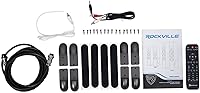
Setup is consistently praised as one of this tower speaker system's clearest strengths. Most owners describe unboxing to first sound in under ten minutes — plug in power, pair a phone, adjust the bass dial, and the unit is ready. The included remote handles the most common controls without requiring a trip to the back of the cabinet.
The onscreen menu navigation for EQ presets can feel unintuitive without the manual, and a few buyers mention the manual itself is sparse on detail for the less obvious input-switching sequences. First-time users of the mic echo feature occasionally struggle to find the right balance without trial and error.
Build Quality
66%
34%
The MDF cabinet feels solid and the overall visual presentation — chrome accents, rounded edges, glass LCD — reads as noticeably more polished than similarly priced alternatives. The cabinet itself shows no flex or rattle during moderate to high volume playback, which speaks to reasonably competent assembly.
Long-term owners raise legitimate flags about the plastic control panel along the front face, which shows wear, discoloration, and occasional button mushiness after a year or more of regular use. The chrome trim on some units has also been reported to bubble or peel at the edges, suggesting the finish is decorative rather than durable.
LCD Display
58%
42%
The glass LCD screen gives the unit a modern look and provides basic track and input information at a glance. In dim evening viewing conditions — which is genuinely when most home theater use happens — it reads clearly enough for navigation.
In a well-lit living room or near a window, the display becomes difficult to read without stepping closer, which partially defeats the purpose of the remote control. Several buyers specifically call out the low contrast and brightness as a design shortcoming that feels mismatched with an otherwise stylish exterior.
Volume Output
72%
28%
For rooms in the 200 to 450 square foot range, the real-world volume output is strong enough that most owners never push past 70 percent. Movie soundtracks and music both reach comfortable social listening and light party levels without audible strain in appropriately sized spaces.
The 800W peak figure is a marketing ceiling, not a sustained operating reality — actual continuous output is far more modest. Buyers expecting to fill a large basement, outdoor patio, or open-concept great room are likely to find the system undersized, and a few reviewers report dynamic compression when the unit is pushed hard for extended periods.
EQ & Sound Customization
77%
23%
Eight onboard EQ presets cover a practical spread of listening scenarios — movie mode, vocal-forward settings, bass-boosted options for parties — and the manual bass and treble dials give quick, tangible adjustments. Most users find at least two or three presets genuinely useful for their main listening habits.
Without a parametric equalizer or app-based control, the customization ceiling is relatively low for anyone who wants granular tuning. The preset labels are also vague enough that owners often cycle through all eight by ear rather than selecting by name with confidence.
Design & Aesthetics
84%
The polished black MDF finish with chrome detail and a glass front panel stands out favorably in living room settings where most budget tower speakers look visibly utilitarian. At just over 31 inches tall, the footprint is narrow enough to fit beside a TV console without dominating the space.
The overall aesthetic is decidedly style-forward, which means a minority of buyers in more understated or minimalist interiors find it visually loud. The chrome accents in particular polarize opinions — some love the premium suggestion, others feel it ages the design toward an early-2010s aesthetic.
Remote Control
71%
29%
The included remote handles volume, source switching, playback controls, and EQ selection, which covers the practical daily-use cases without requiring the user to interact with the unit directly. Range is adequate for typical living room distances.
The remote feels lightweight and plasticky in hand, and a number of reviewers report the button response becoming inconsistent after six to twelve months. There is no backlight, which makes it genuinely awkward to use in a darkened room during movie watching — the most likely use scenario.
Value for Money
79%
21%
Compared to building an equivalent system from separate components — amplifier, subwoofer, towers, and cabling — this all-in-one speaker unit offers a compelling cost-per-feature ratio. The karaoke inputs alone represent genuine added value that competing systems at a similar price simply do not include.
While the price point feels fair at purchase, the durability concerns reported by longer-term owners introduce a hidden cost-over-time risk. Buyers who prioritize longevity over initial outlay may find themselves weighing a replacement sooner than expected, which erodes the initial value calculation.
Wireless Streaming Stability
76%
24%
Day-to-day Bluetooth stability is solid for standard streaming from phones and tablets within a normal room distance. Pairing is quick, the connection re-establishes automatically when returning within range, and dropouts during casual listening sessions are infrequent.
A subset of users report occasional stuttering when the source device is in a pocket or behind a body, suggesting the Bluetooth antenna placement is not optimal. Walls between rooms also reduce range more than the rated specification implies in practice.
FM Radio Reception
61%
39%
The FM tuner adds a genuinely useful fallback for users who still rely on broadcast radio, and for those with strong local signals, it works cleanly without interference from other electronics in the unit.
Reception quality is heavily dependent on the supplied antenna and local signal strength, and buyers in urban high-rise environments or signal-weak areas report poor results. The tuner lacks RDS station name display on some firmware versions, making manual station hunting more tedious than it should be.

Suitable for:

The Rockville TM80B is a strong match for anyone living in an apartment or mid-size home who wants a single powered unit to handle music, movies, and occasional parties without the complexity of a separate receiver, amplifier, and subwoofer chain. Families who host gatherings regularly will appreciate the built-in microphone inputs — no extra hardware needed to get a karaoke session going, which is a genuinely rare convenience at this price tier. Daily Bluetooth streamers who bounce between a phone, a tablet, and a TV will find the broad connectivity options a practical fit for how most households actually consume media. If your current setup is an aging shelf system or a basic soundbar and you have been craving more bass presence, this tower speaker system delivers a clear and noticeable upgrade without requiring a room redesign. It also suits buyers who still want FM radio or physical USB and SD card playback alongside modern wireless options — a combination that is increasingly hard to find in one box.

Not suitable for:

Buyers expecting true multi-channel surround sound should look elsewhere — the Rockville TM80B is a 2.0 stereo system, and no amount of EQ adjustment will replicate the spatial immersion of a dedicated 5.1 or 7.1 home theater configuration. Anyone furnishing a large open-plan living area, a basement entertainment room, or an outdoor space will likely find that this all-in-one speaker unit runs out of authority before it fills the space convincingly. Serious music listeners with a trained ear for detail — those who notice midrange compression or want to hear fine instrument separation in complex recordings — will be better served by purpose-built hi-fi components. The long-term build durability of the front control panel and chrome trim has raised enough concern from extended owners that buyers who want a unit to last five or more years of heavy daily use may want to factor that risk into their decision. Finally, anyone who relies on a remote control in a darkened room will find the lack of backlighting a persistent and legitimate inconvenience.

Specifications

  • Peak Power: The system delivers a peak power output of 800W, with a continuous RMS rating of 200W for sustained listening sessions.
  • Driver Complement: Each cabinet houses two 8″ subwoofers, four full-range mid drivers, and two 1″ silk dome tweeters for a layered frequency response.
  • Cabinet Material: The enclosure is constructed from MDF (medium-density fiberboard) with a polished black finish, chrome accent trim, and rounded edges.
  • Dimensions: Each tower measures 12.99″ deep by 6.3″ wide by 31.9″ tall, making it compact enough for placement beside a standard TV console.
  • Weight: The unit weighs 41.9 pounds, which is substantial enough to stay stable on a hard floor without additional anchoring.
  • Channel Config: This is a 2.0 stereo system — two channels, left and right — and does not support multi-channel surround sound configurations.
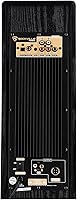
  • Connectivity: Input options include Bluetooth, USB-A, SD card slot, FM radio tuner, and a wired auxiliary input for TVs, smartphones, and legacy audio sources.
  • Bluetooth Range: Bluetooth connectivity is rated to approximately 45.72 meters (around 150 feet) in open-air conditions without obstructions.
  • Mic Inputs: Two 1/4-inch microphone jacks are built in, each with independent volume and echo adjustment controls on the front panel.
  • EQ & Tuning: Eight onboard EQ presets are available alongside manual bass and treble dial controls for direct, hands-on sound adjustment.
  • Display: A glass-fronted LCD screen on the cabinet face shows active input source, volume level, and playback information.
  • Remote Control: A handheld remote control is included and manages volume, input switching, playback, and EQ preset selection from across the room.
  • Power Source: The unit is corded electric, requiring a standard 120V AC wall outlet — there is no battery or rechargeable power option.
  • Frequency Response: The system is rated down to 20 Hz on the low end, targeting deep bass reproduction for music and cinematic audio content.
  • Mounting Type: Designed exclusively as a floor-standing unit; no wall-mount bracket or ceiling-mount compatibility is provided or recommended.
  • Warranty: The product is covered by a limited manufacturer warranty — buyers should confirm the exact duration and terms directly with Rockville at time of purchase.

Related Reviews
Rockville RKL80MW
Rockville RKL80MW
88%
93%
Sound Clarity
89%
Volume Output
95%
Waterproof Durability
91%
Build Quality
82%
LED Lighting Effects
More
Rockville HP5S-8
Rockville HP5S-8
87%
94%
Sound Clarity
91%
Bass Response
88%
High-Frequency Detail
86%
Build Quality
90%
Water Resistance
More
Rockville DBM12 Marine Amplifier
86%
89%
Performance
91%
Durability
86%
Audio Quality
78%
Ease of Installation
92%
Build Quality
More
Rockville DOLBY BAR 500W
87%
94%
Audio Clarity
91%
Bass Response
90%
Dolby Digital Performance
88%
Setup & Installation
87%
Connectivity Options
More
Rockville DBM25 Marine Amplifier
86%
88%
Sound Performance
91%
Build Quality
85%
Ease of Installation
92%
Bass Control Convenience
89%
Waterproof Durability
More
Rockville W10K6D2 V2 10″ Subwoofer
83%
91%
Bass Performance
88%
Build Quality
73%
Ease of Installation
85%
Sound Clarity
89%
Power Handling
More
Rockville RPB25 Portable Bluetooth Speaker
83%
83%
Sound Quality
88%
Battery Life
91%
Portability
87%
Build Quality
80%
Bluetooth Connectivity
More
Rockville Punisher 10D1 10″ Subwoofer
88%
96%
Bass Performance
91%
Sound Clarity
88%
Build Quality
85%
Thermal Management
83%
Ease of Installation
More
Rockville RTB80A Powered Subwoofer, 8″
86%
88%
Sound Quality
92%
Bass Performance
85%
Installation Ease
89%
Build Quality
90%
Portability
More
Rockville BASS Blaster 12 Subwoofer
84%
89%
Bass Performance
83%
Sound Customization
75%
LED Lighting Feature
90%
Build Quality
92%
Value for Money
More

FAQ

It ships as a single powered tower unit. The listing references a stereo system because the cabinet contains both left and right channel drivers internally, but you are receiving one physical tower, not a pair. If you want true stereo separation across a room, you would need two units.

Yes — the auxiliary input works well for TVs with a standard headphone or RCA output. You can also pair it wirelessly via Bluetooth if your TV supports Bluetooth audio output. Just check which audio outputs your TV has before deciding which connection method to use.

In a typical living room or apartment space it performs well at party volumes without strain. For larger open spaces like a basement, garage, or outdoor area, it may feel underpowered when pushed hard. It is best matched to rooms under roughly 400 to 500 square feet for confident, full-volume performance.

Yes, microphones are not included — but any standard dynamic microphone with a quarter-inch plug will work with the built-in mic jacks. Many affordable dynamic mics come with quarter-inch adapters, so you have plenty of options without spending much.

Just plug a formatted USB drive or SD card loaded with MP3 or other supported audio files into the corresponding slot on the front panel, then use the source button to switch to USB or SD input. The unit reads the files directly and the remote lets you skip tracks without walking over to the speaker.

It can, especially in rooms with hard floors and walls that reflect sound. The manual bass dial gives you direct control to reduce the low end without hunting through menus, so dialing it back a notch or two from maximum is usually enough to keep it comfortable in tighter spaces.

Generally yes, within a normal home environment, though walls and physical obstructions do reduce the effective range compared to the rated specification. Most users report reliable connectivity within the same room or one room over — beyond that, occasional brief interruptions are possible.

Basic controls like volume, source selection, bass, and treble are accessible directly on the front panel, so the remote is a convenience rather than a necessity. That said, the remote is genuinely useful for EQ preset switching and playback control without getting up, especially during movies or longer listening sessions.

It is not rated for outdoor or water-resistant use, so permanent outdoor installation is not advisable. For a sheltered patio or covered outdoor area in dry conditions it may work temporarily, but exposing it to moisture, humidity, or direct weather will void the warranty and risk damaging the electronics.

Reception quality depends heavily on your location and the supplied antenna. In areas with strong local FM signals it works cleanly and is a handy feature for background radio listening. In urban high-rise buildings or low-signal areas, reception can be weak and prone to static, so it is more of a bonus feature than a primary selling point.