Overview

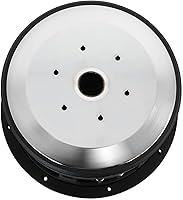
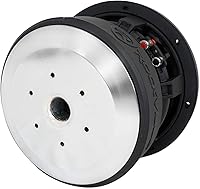
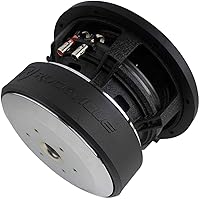
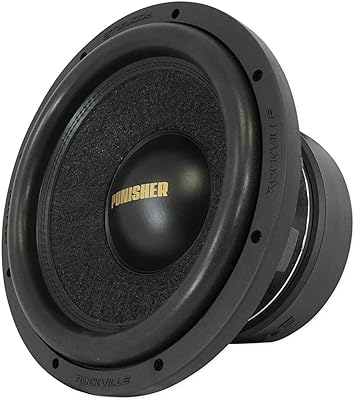
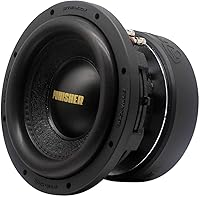
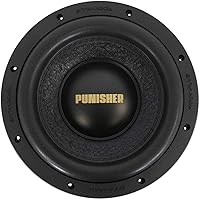
The Rockville Punisher 10D1 10-inch Car Subwoofer is a high-output driver built for enthusiasts who want serious bass, not a modest bump in volume. This is a competition-oriented sub with a 246 oz Y35 magnet and a beefy 3-inch voice coil — physical specs that signal real engineering ambition rather than spec-sheet padding. Crucially, it carries CEA-2006 compliance, meaning the power ratings aren't inflated marketing fiction. Set your expectations accordingly: this Rockville subwoofer is purpose-built for custom enclosures and high-current amplifiers. If you're hunting a drop-in upgrade for a stock system, this isn't the right fit. If you're building something deliberate and dialed-in, it absolutely deserves a serious look.
Features & Benefits

The number to pay attention to here is 1250W RMS — that's the continuous power this 10-inch competition sub can actually handle, and it's a strong figure for this segment. The 3-inch four-layer OFC voice coil is rated to withstand 250°C, which matters when you're pushing hard during extended sessions. An aluminum heat-dissipation ring helps carry thermal stress away from the coil assembly before it becomes a problem. The dual 1-ohm configuration gives real wiring flexibility — run the coils in parallel for a 0.5-ohm final load or in series for 2 ohms, depending on your amplifier's sweet spot. The 246 oz magnet keeps motor force strong, preventing the cone from getting sluggish on tight, transient bass hits.

Best For

The Punisher 10D1 is squarely aimed at SPL-focused builds — think ported or bandpass enclosures tuned for maximum output rather than flat, reference-grade frequency response. It suits buyers who already own, or plan to buy, an amplifier capable of driving a low-impedance load without clipping. If your priority is audiophile accuracy, this 10-inch competition sub probably isn't your driver — it's built for impact and authority. Those upgrading from a budget subwoofer will notice a meaningful leap in output. Custom installers willing to put in proper box design work will get the most from this Rockville subwoofer; a sloppy enclosure will genuinely hold it back and undersell what it can do.

User Feedback

Buyers consistently point to the output-per-dollar ratio as the standout strength — most feel the bass authority exceeds what the price tier typically delivers. Build quality also draws frequent praise, particularly around the magnet structure and basket, which feel substantial rather than hollow. That said, a few recurring concerns are worth knowing upfront. At over 40 pounds, installation planning matters — don't underestimate the mounting demands. Several users found that a poorly matched or undersized enclosure left the bass sounding loose and unimpressive, confirming that this driver rewards proper box tuning. Amplifier compatibility also surfaces occasionally; some buyers had to revisit their amp pairing once the low-impedance wiring demands became clear in practice.

Pros

  • Strong 1250W RMS rating holds up in real-world use when paired with a properly matched amplifier.
  • The 246 oz magnet delivers tight motor control that keeps fast bass transients clean and defined.
  • CEA-2006 compliance means the power ratings are not inflated — a rare and meaningful reassurance in this segment.
  • Dual 1-ohm coil configuration gives builders genuine flexibility to hit 0.5-ohm or 2-ohm final loads depending on their amp.
  • Build quality consistently draws praise, particularly the cast basket and magnet assembly, which feel genuinely robust.
  • Bass output relative to price is one of the strongest value arguments in the 10-inch enthusiast subwoofer category.
  • The aluminum heat-dissipation ring keeps the voice coil stable during extended high-output listening sessions.
  • Buyers upgrading from budget subs report a noticeable and immediate leap in bass authority and presence.
  • Works exceptionally well for hip-hop, EDM, and bass-heavy genres where impact and depth are the primary goals.

Cons

  • At over 40 pounds, mounting this 10-inch competition sub requires a sturdy, purpose-built enclosure — no shortcuts.
  • Wiring the dual voice coil incorrectly is a common early mistake that can stress or damage the amplifier.
  • Generic or pre-built enclosures consistently underdeliver the bass response this driver is capable of producing.
  • The limited warranty terms are vague, and some buyers report slow or unclear customer support responses.
  • New car audio builders frequently underestimate the total system cost when the amplifier and enclosure are factored in.
  • Sustained clipping from an underpowered or mismatched amplifier can cause voice coil stress over time.
  • Surround wear has been reported after intensive use, especially in vehicles exposed to wide temperature swings.
  • Documentation for impedance wiring options is thin and can leave less experienced installers guessing.

Ratings

The scores below were generated by AI after systematically analyzing verified buyer reviews from around the world for the Rockville Punisher 10D1 10-inch Car Subwoofer, with spam, bot-submitted, and incentivized feedback actively filtered out before scoring. Each category reflects the real distribution of praise and frustration found across hundreds of genuine owner experiences. Both the standout strengths and the recurring pain points are represented transparently — no category has been softened to flatter the product.

Bass Output & Impact
91%
This is where the Punisher 10D1 earns most of its goodwill. Owners running it in properly tuned ported enclosures consistently describe the bass as authoritative and chest-thumping, particularly on hip-hop and EDM tracks. For a 10-inch driver in this price range, the output volume genuinely surprises people.
A handful of buyers found the bass came across as boomy rather than tight when the enclosure wasn't well matched to the driver's specs. At lower volumes or in underpowered setups, the sub loses some of that punch and can sound sluggish.
Build Quality
88%
The magnet assembly and cast basket draw frequent compliments from buyers who have handled enough subwoofers to know what quality construction feels like. The overall weight and rigidity give a strong impression that this driver is built to take real punishment over time.
A few users noted that the dust cap finish felt slightly inconsistent, and some questioned the long-term durability of the surround under sustained high-excursion use. These concerns are a small minority, but they surface often enough to register.
Power Handling
86%
The 1250W RMS rating holds up in real-world use when the sub is properly broken in and matched with an amplifier that isn't underdelivering. Owners running it at sustained high output during extended listening sessions report no thermal failures, which reflects well on the voice coil and heat management design.
It is worth stressing that the 5000W peak figure is a burst measurement, not a sustained capability — buyers who sized their amplifiers around that number ran into trouble. A few experienced voice coil stress when the amp was clipping heavily rather than delivering clean power.
Value for Money
89%
For the enthusiast segment, the price-to-output ratio is one of the strongest arguments for this Rockville subwoofer. Buyers repeatedly note that comparable magnetic mass and voice coil specs from better-known brands would cost significantly more, making this a compelling choice for budget-conscious builders who refuse to compromise on output.
The value story weakens slightly if you factor in the full system cost — you need a capable amplifier and a purpose-built enclosure to get the most from it, which adds to the overall investment. Budget buyers who expected a plug-and-play solution were less satisfied.
Enclosure Compatibility
74%
26%
When paired with a well-designed ported or bandpass box tuned to the driver's parameters, the bass response tightens up noticeably and the sub performs closer to its potential. Builders who did their homework on box volume and port tuning length consistently report satisfying results.
This is one of the more common friction points in user reviews. Buyers who used generic or pre-built enclosures often found the bass underwhelming or poorly defined. The driver demands proper enclosure work, and that requirement isn't always clearly communicated at the point of purchase.
Thermal Management
82%
18%
The aluminum heat-dissipation ring and the high-temperature OFC voice coil work together to keep the driver stable during aggressive listening sessions. Several owners who run the sub daily on long commutes with high headunit volume report no signs of thermal degradation after extended ownership.
At sustained maximum output over long periods — think competition-day use rather than daily driving — a few users noticed the voice coil warming noticeably. It stays within rated parameters, but cautious users may want to build in occasional rest periods during extreme use.
Wiring & Impedance Flexibility
83%
The dual 1-ohm coil configuration gives builders genuine options: wire in parallel for a 0.5-ohm final load to squeeze maximum power from a stable amplifier, or wire in series for 2 ohms if your amp is better suited to that range. That kind of flexibility is genuinely useful when matching to real amplifier specs.
For buyers newer to car audio, the impedance wiring options create confusion rather than convenience. Several reviewers admitted they initially wired the sub incorrectly, either stressing their amplifier or underperforming the driver. The documentation could do more to guide less experienced installers.
Installation Experience
63%
37%
Experienced installers who have worked with heavy subwoofers before reported no major surprises during the mounting and wiring process. The terminal connections are well-placed, and the basket dimensions are standard enough to fit common custom enclosure builds without unusual modifications.
At over 40 pounds, this 10-inch competition sub is genuinely heavy for its size, and several buyers underestimated the effort required for secure mounting. Combined with the enclosure requirements, first-time installers frequently found the overall process more demanding than anticipated.
Low-Frequency Extension
79%
21%
In a properly tuned ported enclosure, the sub reaches convincingly low, producing resonant bass that fills a vehicle cabin without the thin, peaky quality found in lesser drivers. Owners using it for hip-hop and electronic music specifically call out the sub-bass extension as a highlight.
For music with complex low-frequency content — orchestral recordings or well-produced acoustic tracks — the extension can sound somewhat one-dimensional. This driver is clearly optimized for impact over nuance, which may disappoint buyers expecting broader tonal range.
Magnet Strength & Motor Force
87%
The 246 oz Y35 ferrite magnet is a physically imposing component that translates directly into strong motor control and fast cone response. Buyers who have owned lighter-magnet subs notice the difference in how cleanly the cone tracks rapid bass transients, particularly in fast electronic music.
The sheer magnet mass is also the main contributor to the sub's weight, which creates the installation challenges noted elsewhere. There is a real physical trade-off here, and buyers need to account for that before committing to a mounting location.
Cone & Surround Durability
76%
24%
The cone material handles high-excursion use without audible distortion under most realistic conditions. Regular daily drivers who are not pushing the sub to its absolute limits report the surround remaining intact and compliant well into their ownership period.
A small but visible segment of reviews mentions surround wear or stiffening after intensive use, particularly in climates with significant temperature swings. The competition-grade demands placed on this driver can accelerate wear if the sub is pushed hard without allowing thermal recovery time.
Compatibility with Amplifiers
71%
29%
When matched with a stable, clean amplifier that is comfortable at low impedance loads, this Rockville subwoofer performs consistently and without complaint. Owners who did their amplifier research upfront report smooth, reliable long-term operation.
This is a recurring issue in negative reviews: buyers whose amplifiers were not rated for 0.5-ohm or even 2-ohm operation experienced instability, clipping, or amplifier shutdown. The sub itself was usually fine, but the system mismatch created frustrating troubleshooting sessions.
Brand Reliability & Warranty
67%
33%
Rockville has developed enough of a track record in the enthusiast market that most buyers feel comfortable with the brand behind this product. For the price tier, the limited warranty provides at least some reassurance for buyers who are concerned about long-term support.
The limited warranty coverage draws skepticism from some buyers who feel the terms are vague about what is and is not covered. A few users reported difficulty getting timely responses from customer support when pursuing warranty claims, which tempers confidence in after-purchase protection.
Noise & Distortion at High Volume
73%
27%
At reasonable to high output levels within the sub's clean operating range, distortion is well-controlled and the bass remains defined. Owners who keep their gain structure clean from the head unit through the amplifier report a quiet, distortion-free listening experience at demanding volumes.
At or near clipping — either from the amplifier or from a poorly calibrated gain structure — the sub introduces audible distortion that becomes difficult to ignore. A few buyers attributed this to the sub itself, though in most documented cases the issue traced back to upstream signal quality.

Suitable for:

The Rockville Punisher 10D1 10-inch Car Subwoofer is purpose-built for car audio enthusiasts who are serious about their builds and already understand what goes into a high-output system. If you are constructing a ported or bandpass enclosure and have an amplifier capable of driving a low-impedance load cleanly, this driver will reward that investment with genuinely impressive bass output for the price. It is a strong fit for SPL competitors looking to get more performance per dollar without stepping up to boutique-brand pricing. Buyers upgrading from an entry-level subwoofer will notice a real and immediate difference in authority and cone control, particularly on bass-heavy music like hip-hop, trap, and hard electronic genres. Custom installers who are comfortable calculating enclosure volume and port tuning will unlock the best this driver has to offer, turning what looks like a spec-sheet gamble into a well-calibrated system that punches well above its weight class.
Not suitable for:

The Rockville Punisher 10D1 10-inch Car Subwoofer is not the right choice for buyers who want a straightforward, no-fuss upgrade they can drop into an existing setup without planning. If you do not already own — or plan to purchase — an amplifier rated to handle 1-ohm or sub-1-ohm loads, this driver will either underperform or stress your equipment. Casual listeners who primarily enjoy acoustic, jazz, classical, or any music where bass accuracy and tonal balance matter more than raw impact will likely find this sub one-dimensional in character. The weight alone — over 40 pounds — makes it impractical for anyone without a secure, custom-fabricated mounting solution. Buyers expecting the 5000W peak power figure to reflect real sustained capability will be disappointed; that number is a burst measurement, and sizing an amplifier around it is a recipe for a mismatched system. If your budget does not extend to a proper enclosure build on top of the driver cost, the overall experience will fall short of what this sub is actually capable of delivering.
Specifications

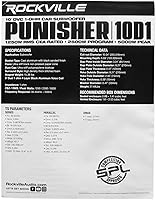
  • Subwoofer Size: The driver features a 10-inch cone diameter, balancing low-frequency extension with manageable enclosure volume requirements.
  • Peak Power: Rated at 5000W peak, which represents a short-burst maximum and should not be used as the basis for amplifier selection.
  • RMS Power: Continuous RMS power handling is 1250W, the figure that actually matters when matching this driver to an amplifier.
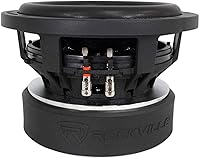
  • Voice Coil: A 3-inch, 4-layer oxygen-free copper voice coil is used, rated to withstand temperatures up to 250°C during sustained high-output use.
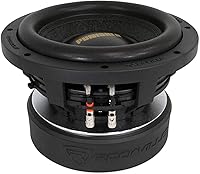
  • Impedance: Dual 1-ohm configuration allows wiring in parallel for a 0.5-ohm final load or in series for a 2-ohm final load.
  • Magnet Assembly: A 246 oz Y35 ferrite magnet provides strong motor force for tight cone control and fast transient bass response.
  • Heat Management: An aluminum heat-dissipation ring is integrated into the motor structure to draw thermal energy away from the voice coil gap during extended use.
  • Compliance Standard: The product is CEA-2006 compliant, meaning its published power ratings follow a standardized measurement methodology rather than unverified marketing figures.
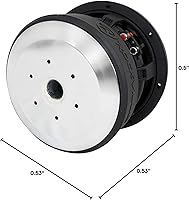
  • Dimensions: The overall unit measures 13″ in depth, 13″ in width, and 13″ in height.
  • Weight: The subwoofer weighs 40.5 lbs (18.39 kg), a significant consideration for mounting and installation planning.
  • Enclosure Type: No enclosure is included; the driver requires a separately purchased or custom-built ported or bandpass box tuned to its parameters.
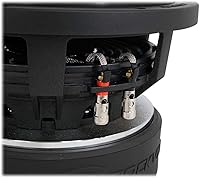
  • Connectivity: Wired connection via standard push-terminal binding posts; no wireless or Bluetooth functionality is present.
  • Power Source: Corded electric, drawing power from the vehicle's electrical system through a dedicated amplifier — no battery or USB power support.
  • Color: Available in black with a standard finish on the basket and dust cap.
  • Warranty: Covered by a limited warranty from Rockville; buyers should confirm specific terms and claim procedures directly with the manufacturer before purchase.
  • Compliance UPC: Universal Product Code is 819216027141, corresponding to the 10-inch dual voice coil 1-ohm variant specifically.
  • Audio Driver Type: Dynamic driver design, which is the standard transducer technology used in high-excursion subwoofer applications.
  • Surround Config: Single subwoofer unit in a 1.0 mono configuration, intended to be used as part of a larger amplified car audio system.

Related Reviews

Rockville Punisher 12D1 12-inch Car Subwoofer
83%
92%
Bass Performance
89%
Durability
75%
Installation Ease
88%
Build Quality
83%
Cooling & Heat Management
More
Rockville Punisher 10D2 10″ 5000W Dual 2-Ohm Car Subwoofer
88%
93%
Bass Performance
89%
Build Quality
91%
Power Handling
85%
Sound Clarity
88%
Installation Flexibility
More
CT Sounds OZONE-10-D4 10-inch Car Subwoofer
84%
91%
Bass Performance
88%
Power Handling
92%
Value for Money
85%
Sound Clarity
86%
Build Quality
More
CT Sounds STRATO-10-D2 10 Inch Dual 2 Ohm Car Subwoofer
87%
91%
Bass Performance
89%
Build Quality & Durability
92%
Power Handling
88%
Sound Clarity
83%
Ease of Installation
More
Rockville RWS10CA 10″ Amplified Car Subwoofer
79%
91%
Ease of Installation
76%
Bass Output & Performance
88%
Value for Money
79%
Build Quality
61%
Thermal Management
More
DS18 SLC-10S 10-Inch Car Subwoofer
78%
88%
Value for Money
79%
Bass Output & Impact
83%
Build Quality
67%
Power Handling (RMS)
86%
Ease of Installation
More
Alphasonik NSW410 10-inch Car Subwoofer
84%
88%
Bass Performance
92%
Value for Money
85%
Ease of Installation
90%
Build Quality
87%
Durability
More
Orion XTR104D 10-Inch Car Subwoofer
75%
83%
Bass Output Quality
81%
Build Quality
78%
Value for Money
61%
Power Handling Accuracy
58%
Enclosure Sensitivity
More
Pyramid WH10 10-Inch Car Subwoofer Speaker
83%
92%
Value for Money
85%
Sound Quality
89%
Installation Ease
74%
Bass Depth
80%
Build Quality
More
Pyramid PW1048USX 10-Inch 500W Car Subwoofer
83%
88%
Bass Performance
92%
Value for Money
85%
Build Quality
90%
Ease of Installation
82%
Sound Clarity
More

FAQ

You need an amplifier that is rated stable at 0.5 ohms if you plan to wire the coils in parallel, or at 2 ohms if you wire them in series. The practical target is an amp delivering around 1000W to 1500W RMS at your chosen impedance — that keeps you within the driver's continuous handling range without pushing into clipping. Avoid undersized amps; a clipping amplifier does more damage to a subwoofer than a powerful one running cleanly.

A ported enclosure tuned to approximately 30–35 Hz will get the most bass output from this driver, and that is what most owners building for SPL or daily impact use. A bandpass box is another option if you want even more efficiency in a narrow frequency band, which suits competition use. Sealed boxes will work but will noticeably limit the output potential and are not really the intended use case for this driver.

The 5000W figure is a peak burst measurement — it describes a very brief spike under controlled conditions, not sustained output. The number you should base your amplifier and wiring decisions on is the 1250W RMS rating, which reflects continuous real-world handling. The Rockville Punisher 10D1 10-inch Car Subwoofer is CEA-2006 compliant, so the RMS figure is independently standardized and trustworthy.
Yes, but you need to plan your impedance carefully. Running two drivers wired in parallel off one amp will drop the final impedance significantly — potentially to 0.25 ohms if each is already at 0.5 — and most amplifiers are not stable that low. Wiring both subs in series is the safer route for a single-amplifier setup, bringing the total load to a manageable 4 ohms and keeping your amp in its stable operating range.

Breaking in a subwoofer like this one is genuinely worthwhile. For the first several hours of use, keep the volume moderate — you are allowing the surround and spider to loosen and reach their designed excursion range. Pushing the sub hard right out of the box can stress those components before they have fully relaxed, potentially affecting long-term compliance and bass extension.

Technically yes, but the performance will likely disappoint you. This driver is optimized for ported or bandpass loading — in a sealed box, the output and low-frequency extension will be noticeably limited, and the efficiency advantage that makes this Rockville subwoofer appealing largely disappears. If you are committed to a sealed enclosure, this is probably not the right driver for that application.

The dual voice coil gives you wiring flexibility rather than doubling the power handling. By choosing whether to wire the two coils in parallel or in series, you can set the final impedance to 0.5 ohms or 2 ohms — which lets you match the sub to whatever load your amplifier runs most efficiently at. It is a genuinely useful feature if you understand how to use it, but it requires some basic knowledge of series and parallel wiring to get right.

It depends on how you define beginner. If you are new to car audio but willing to research enclosure design, impedance wiring, and amplifier matching, you can absolutely make this work with patience. If you are expecting a straightforward swap with minimal planning, this 10-inch competition sub will likely frustrate you — it demands proper system integration to perform as intended, and the weight alone makes physical installation non-trivial.

It weighs just over 40 pounds, which is substantial for a 10-inch driver. Most of that weight comes from the large magnet assembly. It matters primarily during installation — securing a driver this heavy in a vehicle requires a well-built, solid enclosure and confident mounting hardware. If your box is flimsy or your mounting position is awkward, the weight becomes a real practical issue.

This driver is clearly tuned and optimized for bass-heavy genres — hip-hop, trap, EDM, and hard electronic music are where it genuinely shines. The emphasis is on impact, depth, and volume rather than flat, neutral frequency response. If you primarily listen to rock, pop, or acoustic genres where bass accuracy and integration with midrange matter, you may find this sub sounds overpowering or one-dimensional in a typical cabin environment.

Where to Buy