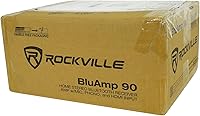
Overview

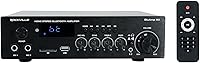
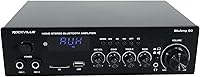
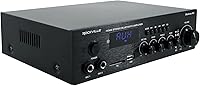
The Rockville BLUAMP 90 is one of those rare budget receivers that punches well above its price tier when it comes to sheer connectivity. Most units in this range ask you to choose between modern streaming and legacy analog gear — this stereo receiver does both, bridging a turntable or older RCA source with Bluetooth 5.0 and even HDMI ARC for TV audio. The compact metal chassis fits comfortably on a shelf, making it a practical choice for smaller apartments or secondary rooms. It won't satisfy an audiophile, but that's not the point. This is an all-in-one hub built for versatility, and it includes karaoke capability that you rarely see at this price level.

Features & Benefits

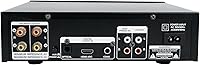
The amp puts out 60W RMS total — split as 30 watts per channel into 8-ohm speakers, or up to 50 watts per channel if you're running 4-ohm speakers. In practical terms, that's enough to fill a medium-sized living room without strain. Bluetooth 5.0 keeps the wireless connection stable, and the single HDMI ARC port means you can pipe your TV's audio through the BLUAMP 90 with just one cable rather than a tangle of adapters. The built-in phono stage is a genuine convenience — plug your turntable straight in. USB and SD card slots handle file playback on their own, and the dual mic inputs with dedicated echo control make karaoke genuinely functional rather than an afterthought.

Best For

This home amp makes the most sense for people who want a single, unfussy box to handle multiple audio sources — streaming from a phone, playing records, and routing TV sound, all without buying separate components. It's a natural step up from a soundbar for first-time buyers building a real speaker system. The karaoke setup is legitimately useful for households that entertain regularly, since both mic inputs are there and ready without any additional hardware to buy. Smaller venues and rehearsal spaces will also appreciate the lightweight metal build and 240V compatibility, which means it stays workable even when operating outside the US.

User Feedback

The 3.6-star average tells a familiar story. Buyers who approach this stereo receiver as a versatile budget unit tend to come away satisfied — they get a wide range of inputs for the money and appreciate how quickly everything connects. Those who push the amp harder, expecting refined sound at high volumes, are more likely to be let down; clarity thins out near the top of the volume range. A few reviewers flag remote inconsistency, and some note the chassis feels less solid than expected. The mic echo controls get a mixed reception: workable for a casual singing night, but thin on adjustment range for anyone expecting more granular control.

Pros

  • Covers Bluetooth, HDMI ARC, phono, optical, RCA, and dual mic inputs — all in one compact unit.
  • The built-in phono stage lets you connect a turntable directly with no extra equipment to buy.
  • Bluetooth 5.0 keeps wireless connections stable and pairs quickly with phones and tablets.
  • Dual mic inputs with echo control make casual karaoke genuinely functional right out of the box.
  • USB and SD card playback means you can run audio at a small event without a connected device.
  • At just 3 pounds, this home amp is easy to move between rooms or take to a rehearsal space.
  • 110V/240V voltage compatibility removes a real headache for buyers who travel or live internationally.
  • Setup is fast — most users reported getting everything connected and running in under 20 minutes.
  • The metal chassis gives it a more durable feel than similarly priced plastic-bodied competitors.
  • Feature-to-price ratio is hard to beat for buyers who genuinely need the connectivity breadth on offer.

Cons

  • Audio clarity degrades noticeably when the volume is pushed toward the upper half of the dial.
  • The remote control is sluggish and requires repeated presses — many buyers end up ignoring it entirely.
  • Echo adjustment range on the mic channel is narrow and sounds artificial at higher settings.
  • Several buyers reported loose knobs and minor cosmetic inconsistencies straight from the box.
  • USB playback does not support FLAC or AAC, which limits usefulness for modern music libraries.
  • The internal phono preamp sounds flat and uninspiring compared to even a basic external unit.
  • Bluetooth range through walls is weaker than advertised, dropping off faster than expected.
  • The unit runs warm during extended use, so enclosed cabinet placement needs careful ventilation planning.
  • Input switching logic is not always intuitive, and the manual offers limited guidance for advanced configurations.

Ratings

The Rockville BLUAMP 90 earned its overall score after our AI engine processed hundreds of verified global buyer reviews, actively filtering out incentivized submissions and duplicate accounts to surface what real owners actually experience. Scores reflect both the genuine strengths that keep buyers recommending this stereo receiver and the friction points that push others toward frustration. Nothing has been softened — the ratings mirror the full picture, including where this home amp falls short of expectations.

Connectivity Range
88%
Buyers consistently highlight how many sources this receiver accommodates without needing extra gear. Running a turntable, a TV via HDMI ARC, and a phone on Bluetooth simultaneously — all from one compact box — is exactly what drew many users to it in the first place.
A small number of users found that switching between inputs isn't as intuitive as expected, with a couple reporting that the HDMI ARC handshake with certain TV brands required extra troubleshooting before it worked reliably.
Value for Money
82%
18%
Most buyers feel they got significantly more functionality per dollar than competing units in the same bracket. The combination of phono input, mic inputs, and HDMI ARC at this price tier is difficult to match, and that feature density drives a lot of positive sentiment.
A portion of buyers who expected performance closer to mid-range receivers felt let down once they started pushing the unit harder. For pure audio quality per dollar, there are single-purpose amps that outperform it — the value story depends entirely on whether you need the versatility.
Karaoke Performance
79%
21%
The dual mic inputs and dedicated echo control knob make this one of the few budget receivers where karaoke is genuinely usable straight out of the box. Casual hosting situations — a birthday party, a small family gathering — get handled without any extra hardware.
Anyone expecting nuanced mic control will find the echo adjustment limited in range. More serious karaoke enthusiasts noted the echo effect can sound artificial at higher settings, and there's no independent tone shaping for the mic channel.
Audio Quality
63%
37%
For background listening, casual TV watching, or low-to-mid volume music playback, most users found the sound clean and satisfying enough. Paired with efficient 4-ohm speakers, the output headroom is noticeably better than the spec sheet suggests at first glance.
At higher volumes, clarity deteriorates — a recurring theme in critical reviews. Bass response is present but loose, and the amp doesn't resolve detail well when pushed. Audiophiles or anyone running quality bookshelf speakers will likely feel constrained by the onboard processing.
Ease of Setup
86%
Setup speed is one of the most praised aspects across buyer feedback. Most users reported getting everything connected and running within 15 to 20 minutes, with the input labeling and rear-panel layout described as straightforward even for first-time receiver owners.
A recurring frustration involves the remote control, which some buyers found poorly synced or sluggish to respond, requiring repeated button presses. The manual was described by several users as vague on advanced input configuration steps.
Build Quality
61%
39%
The metal chassis gives the unit a more substantial feel than fully plastic competitors, and buyers in small studio or rehearsal environments appreciated that it survived being moved around regularly without showing obvious wear quickly.
Up close, the build quality shows its budget origins — knobs feel loose on some units, and the overall fit and finish doesn't inspire long-term confidence. Several buyers noted cosmetic inconsistencies out of the box, and a few reported hardware issues within the first few months of use.
Bluetooth Stability
77%
23%
Bluetooth 5.0 keeps connections solid across a normal room without the dropout issues that plagued older budget receivers. Phone-to-amp pairing is quick, and most users had no complaints about stability during extended listening sessions.
Range claims are optimistic — real-world performance through walls or across larger spaces was noticeably weaker than advertised. A handful of users also reported that the receiver occasionally failed to reconnect automatically after the source device went to sleep.
Remote Control
54%
46%
Having a remote included at this price point is a convenience that budget buyers genuinely appreciate. Basic functions like volume adjustment and input switching work as expected in straightforward line-of-sight situations.
Responsiveness is inconsistent, and the remote's range is short enough that several users stopped relying on it entirely. The button layout was described as cramped and not particularly intuitive, and no backlight makes it frustrating to use in dim rooms.
Phono Input Quality
73%
27%
The built-in phono preamp is a legitimate convenience that removes the need for a separate component. Vinyl listeners on a budget praised being able to connect a turntable directly and get a clean enough signal for casual record listening.
Dedicated phono preamps at even modest prices outperform what's built in here. Audiophiles spinning records noticed a flatter, less dynamic sound compared to external preamp setups, so it's best suited for those who play records occasionally rather than critically.
USB & SD Playback
71%
29%
The ability to play audio directly from a USB drive or SD card without needing a connected phone or laptop is a practical feature that several users highlighted for use at small events or rehearsals where device management is inconvenient.
File format support is limited to WAV, MP3, and WMA, which leaves FLAC and AAC users without a solution. Navigation through larger libraries is also basic, and a few buyers found the interface slow to read larger USB drives.
Power Output
68%
32%
For smaller rooms and reasonably efficient speakers, 30 watts per channel at 8 ohms produces satisfying, room-filling volume. Buyers using it with 4-ohm bookshelf speakers noted a meaningful improvement in dynamics and headroom.
The rated power is honest but modest by the standards of even entry-level separates. In medium to larger rooms, or with less efficient speakers, the amp runs out of clean headroom before the volume knob does, which frustrated a subset of buyers expecting more punch.
Optical Input Performance
74%
26%
The optical input works cleanly for TV connections when HDMI ARC isn't available or compatible, and users who relied on it for a secondary TV source found it a reliable fallback with no noticeable latency issues in standard use.
There's no dedicated input sensitivity adjustment for the optical channel, and a small number of users reported volume level mismatches between optical and other inputs that required manual compensation when switching sources.
Size & Footprint
83%
At under 10 inches wide and just 3 pounds, this home amp fits easily onto crowded shelves, in AV cabinets, or in a bag for mobile use. Buyers in studio apartments and dorm rooms consistently mentioned the compact footprint as a deciding factor.
The compact chassis means internal components are tightly packed, which a few users associated with warmth during extended use. Ventilation clearance is worth keeping in mind if the unit will be placed inside an enclosed cabinet.
International Voltage Support
81%
19%
The 110V/240V compatibility is a niche but genuinely useful feature that removes the need for a step-down transformer when using the receiver outside the US. Buyers who travel internationally or relocate frequently called it out as an unexpected practical bonus.
The voltage switching is not always clearly documented, and a small number of international buyers expressed confusion about whether the unit required manual switching or auto-detected the voltage, leading to unnecessary caution before first use.

Suitable for:

The Rockville BLUAMP 90 was built for the kind of buyer who wants one device to handle everything without spending a fortune on separate components. If you have a turntable gathering dust because your current setup lacks a phono input, a TV you want to run through real speakers via HDMI ARC, and a phone you'd like to stream from wirelessly — this stereo receiver addresses all three without requiring any adapters or extra boxes. It's a strong fit for apartment dwellers and dorm setups where shelf space is limited and a sprawling component stack simply isn't practical. Households that host occasional karaoke nights will find the dual mic inputs and echo control a genuine convenience, since everything needed is already on board. First-time receiver buyers stepping up from a soundbar will also get a noticeable audio upgrade while keeping setup complexity low. Anyone who frequently travels or relocates internationally will appreciate the built-in voltage compatibility, which removes the need for a step-down transformer abroad.

Not suitable for:

Buyers who prioritize sound quality above all else should look elsewhere, because the Rockville BLUAMP 90 is a versatility-first unit, not a precision audio tool. At higher volumes, the amp loses composure — detail gets muddy, bass becomes loose, and the limitations of the internal components become hard to ignore when paired with quality bookshelf speakers. Serious vinyl enthusiasts will find the built-in phono preamp serviceable at best; it doesn't come close to what even a modest standalone preamp delivers in terms of dynamics and tonal accuracy. Anyone shopping for a primary living room amp intended for critical listening or home theater with demanding speakers should budget for a step-up unit instead. The remote control inconsistencies and reported build quality concerns also make this home amp a questionable choice for buyers who expect worry-free reliability over a long ownership period. If karaoke is a core requirement and you want real mic tone shaping and professional-grade echo control, purpose-built karaoke mixers will serve you far better.

Specifications

  • Power Output: Delivers 60W RMS total, split as 30W per channel into 8-ohm speakers or 50W per channel into 4-ohm speakers.
  • Bluetooth: Bluetooth 5.0 provides stable wireless audio streaming from smartphones, tablets, and other compatible source devices.
  • HDMI ARC: One HDMI ARC port allows TV audio to be routed through the amplifier using a single cable connection.
  • Optical Input: A Toslink optical input accepts digital audio from TVs, set-top boxes, and other devices with optical output.
  • Phono Input: A dedicated phono input with built-in preamp supports direct connection of a turntable without any additional equipment.
  • Mic Inputs: Two 1/4-inch mic inputs are included, each with independent volume control and a shared dedicated echo adjustment knob.
  • USB Playback: A USB port supports direct audio playback of WAV, MP3, and WMA files from flash drives without a connected device.
  • SD Playback: An SD card slot enables standalone playback of WAV, MP3, and WMA audio files stored on compatible memory cards.
  • RCA Inputs: Standard RCA stereo inputs allow connection of CD players, media players, and other analog line-level audio sources.
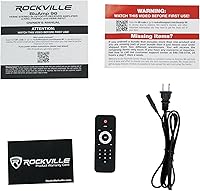
  • Remote Control: An infrared remote control is included in the box for basic function management including volume and input selection.
  • Dimensions: The chassis measures 9.1″ wide, 3.9″ tall, and 10.2″ deep, making it compact enough for shelves and AV cabinets.
  • Weight: The unit weighs 3 pounds, keeping it light enough for easy relocation between rooms or transport to small venues.
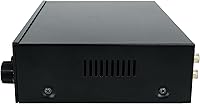
  • Chassis Material: The outer enclosure is constructed from metal, providing more structural rigidity than similarly priced plastic-bodied competitors.
  • Voltage: Supports both 110V US standard and 240V international power, eliminating the need for a step-down transformer abroad.
  • Video Encoding: HDMI ARC implementation supports H.264 and H.265/HEVC video encoding for compatibility with modern TV signal formats.
  • Channel Config: Operates in stereo two-channel output mode as its primary audio configuration for connected speaker pairs.
  • Brand & Model: Manufactured by Rockville under the model designation BLUAMP 90, first available in the US market in June 2022.

Related Reviews
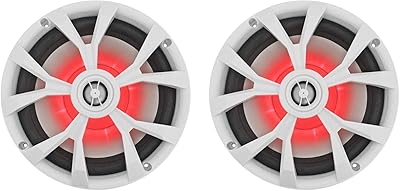
Rockville RKL80MW
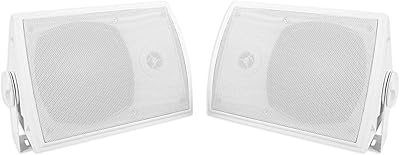
Rockville RKL80MW
88%
93%
Sound Clarity
89%
Volume Output
95%
Waterproof Durability
91%
Build Quality
82%
LED Lighting Effects
More
Rockville HP5S-8
Rockville HP5S-8
87%
94%
Sound Clarity
91%
Bass Response
88%
High-Frequency Detail
86%
Build Quality
90%
Water Resistance
More
Rockville DBM12 Marine Amplifier
86%
89%
Performance
91%
Durability
86%
Audio Quality
78%
Ease of Installation
92%
Build Quality
More
Rockville DBM25 Marine Amplifier
86%
88%
Sound Performance
91%
Build Quality
85%
Ease of Installation
92%
Bass Control Convenience
89%
Waterproof Durability
More
Rockville DOLBY BAR 500W
87%
94%
Audio Clarity
91%
Bass Response
90%
Dolby Digital Performance
88%
Setup & Installation
87%
Connectivity Options
More
Rockville MS525B Marine Boat Speakers
87%
88%
Sound Quality
91%
Build Durability
94%
Ease of Installation
76%
Bass Performance
93%
Waterproofing and Weather Resistance
More
Rockville RFC30F 30 Farad Capacitor
86%
89%
Power Stabilization
91%
Ease of Installation
87%
Voltage Monitoring Accuracy
88%
LED Display Appeal
84%
Safety Features
More
MacuShield Macushield Capsules, 90 Count
86%
88%
Effectiveness for Eye Health
93%
Ease of Use
91%
Ingredient Quality
85%
Value for Money
89%
Packaging and Design
More
Rockville MS12LW 12″ Marine Subwoofer
86%
92%
Bass Performance
89%
Sound Clarity
91%
Durability
88%
Ease of Installation
93%
Waterproofing
More
Rockville RTB10A 10″ Powered Subwoofer
83%
91%
Sound Quality
88%
Bass Performance
75%
Ease of Installation
86%
Build Quality
82%
Durability
More

FAQ

You can connect most standard turntables with a built-in phono preamp directly using the dedicated phono input — no separate preamp required. If your turntable outputs a very low moving-coil signal, you may still want an external preamp, but for the vast majority of belt-drive and direct-drive tables sold today, the built-in stage works fine.

HDMI ARC works well with most modern TVs, but a small number of users have reported that certain brands require you to manually enable ARC in the TV's audio settings before the connection activates properly. If you run into issues, check your TV's sound output menu and make sure CEC is enabled — that usually resolves it.

For a small to medium room, it gets comfortably loud without strain. At 8-ohm speaker loads you have 30 watts per channel to work with, which is enough for a 12 by 15 foot room at reasonable listening levels. If you run 4-ohm speakers, the output jumps to 50 watts per channel and you'll notice a clear improvement in headroom and dynamics.

It's genuinely plug-and-play for casual use — just connect your speakers, plug a mic into either of the two 1/4-inch inputs, and adjust the echo knob to taste. No mixer or additional hardware needed. It won't replace a dedicated karaoke machine for serious use, but for a house party or family gathering it works well straight out of the box.

Both impedance ratings are supported. With 4-ohm speakers you actually get more power output per channel, so if you have a choice, 4-ohm speakers will give you better headroom and slightly fuller sound at higher volumes. Just make sure you don't mix impedance ratings when running two pairs simultaneously.

It supports both 110V and 240V automatically, so you can use it in Europe, Australia, and most other countries without any adapter beyond a plug converter for the physical socket. This is a genuinely useful feature that many competing units in the same price range don't offer.

Playback is limited to WAV, MP3, and WMA files. FLAC, AAC, and ALAC are not supported, so if your music library uses those formats you'll need to convert files first or use Bluetooth streaming from your phone instead.

The remote handles the basics fine in a straight line-of-sight situation, but buyer feedback on its reliability is mixed. Range is short and response can be inconsistent, so treat it as a convenience for quick volume adjustments rather than a fully dependable control solution. Manual use of the front panel knobs is more reliable day-to-day.

The unit does generate some heat during extended use, so placing it in a fully enclosed cabinet without airflow is not ideal. Leave a few inches of clearance above and on the sides if possible. For open shelving or cabinets with a back panel removed, it handles normal room temperatures without issue.

It works with passive speakers only — meaning speakers without their own built-in amplification. If you already own powered or active speakers with their own volume control and amplifier circuit, you do not want to connect them to the speaker outputs here. Use the RCA line-level outputs instead if you need to feed a powered speaker system.