Overview

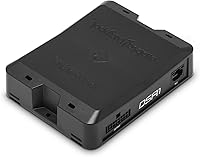
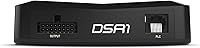
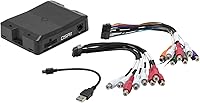
The Rockford Fosgate DSR1 8-Channel Signal Processor borrows its core engine from the same processor platform found in the brand's 3Sixty.3, but it's built around one very specific job: replacing the factory amplifier and speakers in select Ford and Chrysler vehicles. Physically, it's compact enough to mount out of sight, coming in at just over an inch thick with a footprint close to five by four inches. What separates this DSP unit from older processors is the tuning workflow: instead of hauling a laptop out to the parking lot, you handle adjustments through a phone app, which fits its premium positioning in the brand's lineup. It's clearly built for owners who want their stock dash and steering wheel controls intact while still getting a real sound quality upgrade underneath.
Features & Benefits

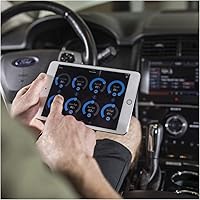
Where this signal processor earns its price tag is in the depth of tuning available. With 245 bands of equalization, you can shape frequency response far more precisely than a basic single-band processor allows, and the adjustable crossovers with selectable slopes mean you can protect tweeters and midranges from frequencies they shouldn't be handling. Time alignment of up to 10ms is included too, which corrects for the fact that your left speaker is rarely the same distance from your ear as your right one. Connectivity is broad: Bluetooth 4.0 handles wireless setup, while high-level, balanced differential, RCA, and SPDIF inputs cover nearly any source you'd want to run into it. The companion app is what ties it together, turning what used to be a laptop-and-cable chore into something you can do from the driver's seat in a few minutes.

Best For

This DSP unit makes the most sense for Ford and Chrysler owners who want better sound without losing factory features like steering wheel controls, climate displays, or backup camera integration, since the Maestro module handles that translation for compatible models. It's also a solid pick for DIY enthusiasts who don't mind learning a tuning app instead of paying a shop for every adjustment down the road. Installers benefit too, since the unit isn't locked to Maestro-equipped vehicles alone; the high-level, RCA, and SPDIF inputs mean it can function as a flexible standalone processor in other platforms. If your factory amp is underpowered, failing, or you just want a meaningful step up in sound, the DSR1 is built specifically to replace it without ripping out the rest of the dash.

User Feedback

Feedback from owners tends to circle around the same handful of points. Most agree the upgrade in sound clarity over a stock factory system is obvious almost immediately, which is really the whole reason to spend this kind of money on a processor in the first place. On the downside, several buyers mention that getting the Maestro integration programmed correctly took longer than expected, especially for anyone tackling it without prior installation experience. A few reviews also bring up occasional hiccups with Bluetooth app connectivity, though most consider it a minor inconvenience rather than a dealbreaker. The most common piece of practical advice from current owners is to double-check exact vehicle compatibility before buying, and to budget for professional installation if you want to actually use the full range of tuning options available.

Pros

  • Keeps factory dash, steering wheel controls, and displays fully intact during the upgrade
  • 245 bands of equalization allow far more precise tuning than basic processors offer
  • Selectable crossover slopes help protect speakers from frequencies that could damage them
  • Time alignment up to 10ms corrects for uneven speaker-to-ear distances in the cabin
  • Phone app tuning means no laptop or extra cables needed for adjustments
  • Wide range of inputs, including RCA and SPDIF, supports flexible source setups
  • Works as a standalone processor even outside Maestro-compatible Ford and Chrysler vehicles
  • Owners consistently report a noticeable jump in sound clarity over stock systems
  • Backed by a full 1-year warranty and Rockford Fosgate's reputation for build quality

Cons

  • Maestro integration can take real time and patience to program correctly
  • Only works as a true factory replacement in specific Ford and Chrysler models
  • Bluetooth app connectivity occasionally hiccups, according to some owner reports
  • Realizing its full tuning potential generally requires professional installation, adding to total cost
  • Not a simple plug-and-play solution for buyers wanting minimal setup effort
  • Premium price puts it out of reach for casual shoppers wanting basic equalization only
  • Vehicle compatibility must be double-checked carefully before purchase to avoid a poor fit
  • Tuning app learning curve may frustrate buyers without prior car audio experience

Ratings

These scores for the Rockford Fosgate DSR1 8-Channel Signal Processor were generated by AI after analyzing verified user reviews from car audio buyers worldwide, with spam, bot activity, and incentivized feedback filtered out before scoring. Each category below reflects what real owners consistently praised and where they ran into friction, so you're seeing the genuine trade-offs rather than a polished marketing summary. Both the strengths, like its tuning depth, and the pain points, like the Maestro learning curve, are represented as transparently as possible.
Sound Quality & EQ Precision
92%
With 245 bands of equalization, owners consistently describe a level of tonal control that's hard to find outside far more expensive systems. Daily commuters and weekend audiophiles alike report being able to dial out muddiness and boost clarity in ways their factory system never allowed.
That same depth of control means casual listeners who just want better sound out of the box can feel overwhelmed by the sheer number of adjustable parameters. A few reviewers mention needing several sessions before landing on a tuning they were happy with.
Build Quality
88%
The compact surface-mount housing feels solid once installed, and the unit tucks away cleanly behind a dash or under a seat without drawing attention. Long-term owners report no issues with heat or vibration during regular daily driving.
A handful of buyers note the small form factor makes wiring connections a bit fiddly during installation, especially in tight factory mounting locations. It's not a unit designed for easy field servicing if something does go wrong.
Vehicle Compatibility (Maestro Integration)
78%
22%
For owners with a supported Ford or Chrysler model, the integrated Maestro module is the main reason to buy this DSP unit in the first place, since it keeps steering wheel controls and factory displays working normally. Reviewers in compatible vehicles consistently call this the standout feature.
Compatibility is strictly limited to specific model years and trims, so buyers outside that list don't get any of the automatic integration benefits. Several reviews mention frustration after assuming broader compatibility than what the vehicle list actually supports.
App & Bluetooth Connectivity
81%
19%
Tuning from a phone instead of a laptop is repeatedly cited as a major convenience, letting owners make quick adjustments from the driver's seat in just a few minutes. The wireless setup also makes return visits for fine-tuning far less of a hassle.
Some reviewers describe occasional dropped connections or app lag during tuning sessions, which can interrupt an otherwise smooth workflow. It's not described as a dealbreaker, but it's a recurring enough comment to mention.
Installation Ease
56%
44%
Owners who've done car audio installs before describe the wiring and mounting process as manageable once you understand the layout, particularly compared to running a full standalone amp and speaker set. The surface-mount design at least keeps the physical footprint small.
Programming the Maestro module correctly is consistently flagged as the hardest part, with many buyers recommending professional installation rather than attempting it solo. First-time installers report the learning curve being steeper than expected.
Value for Money
84%
Given the depth of tuning options, factory integration, and app-based control, most reviewers feel the price is justified compared to piecing together a separate amp, processor, and Maestro adapter. It's positioned as a premium, all-in-one solution rather than a budget upgrade.
Buyers who only need basic equalization or don't drive a Maestro-compatible vehicle may feel they're paying for integration features they can't fully use. It's not the most cost-effective option for simple sound upgrades.
Time Alignment Accuracy
87%
The up to 10ms of time alignment is frequently praised for correcting the unevenness of in-cabin speaker placement, giving a more centered, cohesive soundstage. Enthusiasts tuning by ear say this feature alone noticeably tightens up imaging.
Getting time alignment dialed in precisely takes patience and often a few rounds of trial and error, especially for owners new to the concept. It's not something most casual listeners will bother fully optimizing.
Crossover Flexibility
85%
Adjustable crossovers with selectable slopes give installers real control over protecting tweeters and midranges from frequencies they shouldn't handle. Reviewers setting up multi-speaker systems appreciate not being locked into fixed crossover points.
The number of crossover options can be intimidating for buyers without prior DSP experience, leading some to leave settings at default rather than fully optimizing them. Documentation on best practices isn't always intuitive for beginners.
Input Versatility
89%
Having high-level, balanced differential, RCA, and SPDIF inputs all on one unit means it adapts to a wide range of source setups, not just Maestro-compatible vehicles. Installers especially value being able to reuse this DSP unit across different projects.
With so many input types available, some first-time users report initial confusion about which input to use for their specific setup. A clearer quick-start input guide would help newer installers.
Factory Feature Retention
91%
On supported vehicles, owners repeatedly highlight how seamlessly steering wheel controls, climate readouts, and backup cameras keep functioning after the swap. This is often cited as the deciding factor over cheaper, non-integrated processors.
This benefit only applies to specific compatible vehicles, so it offers no advantage at all for buyers outside the supported list. A few owners felt this wasn't made clear enough before purchase.
Standalone Use (Non-Maestro Vehicles)
75%
25%
Thanks to its varied input options, this signal processor still functions well as a general-purpose DSP in vehicles without Maestro support, giving installers flexibility beyond Ford and Chrysler applications. Several reviewers use it this way successfully in other builds.
Buyers in non-Maestro vehicles miss out on the automatic factory integration that makes this unit stand out, leaving fewer reasons to choose it over competing processors at a similar price. The premium positioning feels less justified in that scenario.
Warranty & Support
82%
18%
The full 1-year warranty gives buyers reasonable peace of mind, and Rockford Fosgate's reputation for reliable car audio gear adds extra confidence to the purchase. Most owners report no issues needing warranty service after installation.
A 1-year warranty is on the shorter side for a premium-tier processor at this price point, especially compared to longer coverage on some competing products. Buyers planning to keep their vehicle long-term may wish for extended protection.
Signal-to-Noise Performance
86%
Reviewers running multiple input types simultaneously note a clean, low-noise signal even with balanced differential connections in electrically noisy vehicles. This makes it a solid pick for builds with multiple amplifiers and tight wiring runs.
A few owners report needing careful grounding and shielding practices to avoid alternator whine, which isn't unique to this unit but is worth flagging for first-time installers. Improper installation can introduce noise that's mistaken for a product flaw.
Learning Curve & Documentation
60%
40%
Owners willing to invest time say the tuning app and processor settings eventually start to make sense and reward the effort with genuinely fine-tuned sound. Online forums and installer communities help fill in gaps left by the manual.
Several buyers describe the official documentation as thinner than expected given the complexity of the features, pushing many toward YouTube tutorials or professional installers. This adds frustration for those expecting a more guided setup process.

Suitable for:

The Rockford Fosgate DSR1 8-Channel Signal Processor is the right call if you drive a compatible Ford or Chrysler model and want a real sound upgrade without tearing out the factory dash, steering wheel controls, or backup camera display. It's also a strong fit for DIY car audio enthusiasts who don't mind learning a tuning app and are willing to spend time getting the equalization, crossovers, and time alignment dialed in correctly. Installers working across different vehicle platforms will appreciate that the inputs aren't locked exclusively to Maestro-equipped cars, since the high-level, RCA, and SPDIF connections give it flexibility as a standalone processor elsewhere. Anyone replacing a failing or underpowered factory amplifier, rather than starting from scratch with aftermarket speakers and a head unit, will get the most value here. In short, it suits buyers who care about keeping a stock appearance while still chasing genuinely better sound.
Not suitable for:

Buyers who just want a quick plug-and-play fix should think twice, since getting the most out of the Rockford Fosgate DSR1 8-Channel Signal Processor usually means a learning curve with the Maestro programming and tuning app. If your vehicle isn't on the supported Ford or Chrysler compatibility list, you lose the main reason to choose this unit over a more generic processor. Casual listeners who are satisfied with their factory sound, or who only want a modest bump in volume, probably don't need this level of tuning depth. It's also not the best match for anyone unwilling to pay for professional installation, since incorrect setup can leave a lot of its capability unused. Budget-focused shoppers comparing processors purely on price will likely find simpler, cheaper options that cover their basic needs.
Specifications

  • Channels: This unit provides 8 channels of processed output for multi-speaker car audio systems.
  • Equalization: It offers 245 bands of equalization for precise frequency adjustment across all channels.
  • Crossovers: Adjustable crossovers with selectable slopes are included to protect speakers from damaging frequencies.
  • Time Alignment: Time alignment of up to 10ms per channel is available to correct for uneven speaker-to-ear distances.
  • High-Level Inputs: It includes 4-channel high-level inputs with automatic signal sense turn-on.
  • Balanced Inputs: 4-channel balanced differential inputs are built in for noise-resistant signal connections.
  • Auxiliary Input: An auxiliary RCA input is provided for connecting additional audio sources.
  • Digital Input: An SPDIF coaxial input allows for a digital audio connection.
  • Wireless Connectivity: Bluetooth 4.0 connectivity enables wireless tuning and setup from a paired device.
  • Tuning App: A companion app for iOS and Android handles real-time tuning adjustments.
  • Vehicle Integration: An integrated iDatalink Maestro module enables factory amplifier replacement in select Ford and Chrysler vehicles.
  • Mounting: The unit uses a surface mount design for installation.
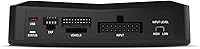
  • Dimensions: Physical dimensions measure 1.26 x 5.12 x 4.04 inches.
  • Voltage: It operates on a 12.5V DC automotive power supply.
  • Weight: The unit weighs 8 ounces.
  • Warranty: It is covered by a full 1-year manufacturer warranty.
  • Processor Platform: It is built on the same processor platform used in Rockford Fosgate's 3Sixty.3.

Related Reviews

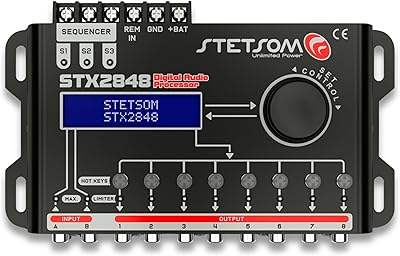
Stetsom STX 2848 8-Channel DSP Crossover Equalizer
78%
91%
Sound Quality
93%
EQ Flexibility
89%
Crossover Performance
87%
Time Alignment
78%
Build Quality
More
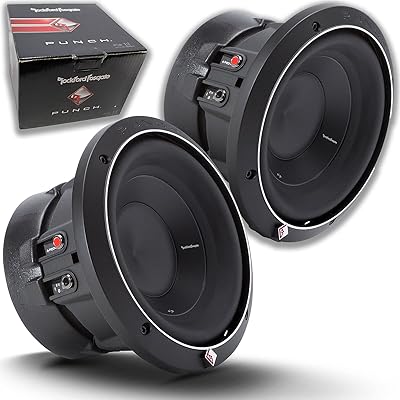
Rockford Fosgate P2D2-8 8-inch Car Subwoofer
82%
88%
Bass Accuracy & Punch
91%
Build Quality
83%
Value for Money
71%
Enclosure Compatibility
86%
Wiring Flexibility
More
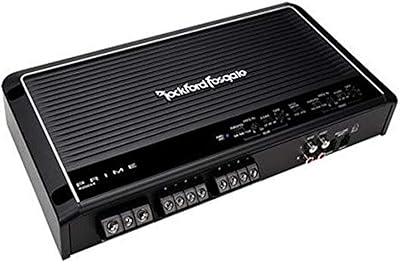
Rockford Fosgate R300X4 Prime 4-Channel Amplifier
87%
88%
Performance
91%
Ease of Installation
85%
Build Quality
87%
Thermal Management
84%
Sound Output
More
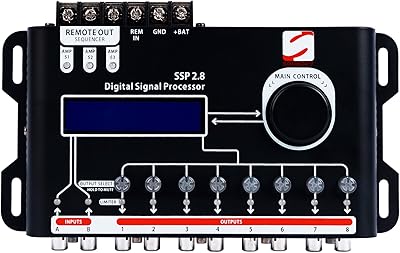
Soundfy SSP 2.8 Digital Signal Processor
80%
84%
Sound Quality
88%
EQ Flexibility
91%
Crossover Performance
87%
Output Routing
52%
Ease of Setup
More
Rockford Fosgate P300-8P 8-inch Amplified Subwoofer
80%
88%
Ease of Installation
74%
Bass Output & Impact
86%
Build Quality
79%
Sound Clarity & Bass Definition
91%
Enclosure Size & Fitment
More
Rockford Fosgate Punch P600X4 4-Channel Amplifier
87%
93%
Sound Clarity
91%
Build Quality
88%
Power Output
89%
Installation Experience
71%
Value for Money
More
Rockford Fosgate Punch P1000X2 1000-Watt 2-Channel Amplifier
86%
93%
Sound Performance
91%
Power Output
88%
Installation Ease
72%
Thermal Management
89%
Durability and Build Quality
More
Rockford Fosgate PBR400X4D 4-Channel Car Amplifier
80%
96%
Size & Form Factor
81%
Power Output
78%
Installation Experience
83%
Sound Quality
89%
Heat Management
More
Rockford Fosgate P400X4 Punch 4-Channel Amplifier
83%
88%
Sound Quality
91%
Value for Money
83%
Ease of Installation
86%
Build Quality
67%
Thermal Management
More
Rockford Fosgate PBR300X4 4-Channel Car Amplifier
79%
84%
Sound Quality
93%
Form Factor and Size
87%
Installation Ease
76%
Power Delivery
82%
Value for Money
More

FAQ

Only certain models. The Maestro integration is built around specific factory wiring and infotainment setups, so you'll need to confirm your exact year, make, and model against the supported vehicle list before buying. If your vehicle isn't on that list, this signal processor can still work, but you'd lose the steering wheel control and display retention that makes it special for Maestro-supported cars.

Yes. Thanks to the high-level, balanced differential, RCA, and SPDIF inputs, this DSP unit functions as a flexible standalone processor in plenty of other setups, you just won't get the automatic factory integration that Maestro-supported vehicles get.

It's not a beginner-friendly weekend project, especially the Maestro programming side. Most owners report a real learning curve getting everything dialed in, and professional installation is commonly recommended if you want to use its full tuning potential without a lot of trial and error.

No, that's actually one of the bigger selling points here. The companion iOS and Android app lets you adjust EQ, crossovers, and time alignment right from your phone instead of hauling a laptop out to the car.

There's no real comparison. With 245 bands of equalization plus adjustable crossovers and time alignment, you get a level of frequency control that basic single-band processors simply can't match.

Most of the time, yes, and it's convenient for quick on-the-fly adjustments. A handful of owners have mentioned occasional connectivity hiccups with the app, though it's generally described as a minor annoyance rather than a consistent problem.

On supported Ford and Chrysler vehicles, yes, that's the whole point of the integrated Maestro module. It's designed to replace the factory amp and speakers while keeping those factory features functioning normally.

You get the digital processor unit itself; cabling, mounting hardware, and vehicle-specific harnesses are typically sold separately or handled by your installer depending on your setup.

Yes. The Rockford Fosgate DSR1 8-Channel Signal Processor is built around the same core processor platform as the 3Sixty.3, but it adds the Maestro module and app-based tuning specifically for factory-integration use cases.
It comes with a full 1-year manufacturer warranty, and like most Rockford Fosgate gear, it has a reputation for solid build quality. Just keep in mind it's a 12.5V DC automotive component, so it should be installed and wired properly to avoid electrical issues.