Overview

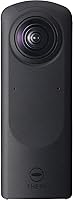
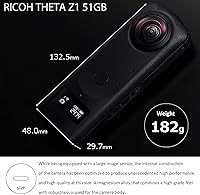
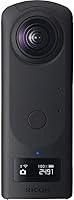
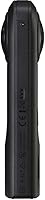
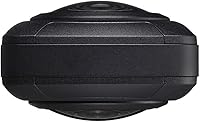
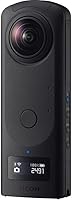
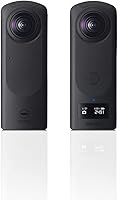
The Ricoh Theta Z1 51GB 360° Camera is Ricoh's most capable spherical camera, built squarely for professionals who need more than a budget 360° device can offer. The headline upgrade is straightforward: 51GB of internal storage — roughly 2.7 times what the previous model held — meaning you can shoot an entire property walkthrough or a full day of documentary footage without scrambling for space. Underneath that sits a dual 1-inch sensor design that separates this camera from the crowded field of smaller-sensor competitors. This is not a casual point-and-shoot tool. If you are serious about image quality in 360°, this dual-sensor spherical camera is worth the significant investment.

Features & Benefits

The dual 1-inch back-illuminated sensors are the real story here. In high-contrast situations — think a sun-drenched patio shot through a glass door, or a dimly lit corridor with bright windows at the far end — this camera holds detail in both shadows and highlights in a way smaller sensors simply cannot. Still images land at a genuine 23MP with precise stitching, and shooting RAW+ gives full post-production control. Video tops out at 4K with built-in stabilization and a 4-channel microphone array that captures spatial audio. Storage supports roughly 110 minutes of 4K footage before you hit a wall. USB 3.0 Type-C and fast Wi-Fi keep offload times reasonable.

Best For

The Theta Z1 was clearly designed with a specific type of shooter in mind. Real estate photographers will get the most mileage from it — the HDR processing is practically purpose-built for interiors where windows blow out every other camera. Architecture professionals and interior designers rely on it for accurate spatial documentation that flat photography cannot replicate. It also appeals to documentary and travel filmmakers who want proper 360° video without hauling a multi-camera rig. VR content producers appreciate the RAW output and consistent stitching for post-production workflows. There is also a growing contingent of insurance adjusters and surveyors who use this dual-sensor spherical camera to capture full-scene documentation in a single shot.

User Feedback

Owners of the Theta Z1 tend to be vocal about what they love and what frustrates them. Low-light performance gets consistent praise — many note it outperforms every other 360° camera they have tried in dim conditions. RAW support is a recurring highlight for users who edit professionally. On the downside, the companion mobile app is a frequent complaint, particularly on Android, where connectivity can lag or drop unexpectedly. Battery life is another tension: video shooters especially recommend buying a spare or two for full-day shoots. Close-range stitching sometimes produces visible artifacts along the seam — not a dealbreaker, but worth knowing going in. Long-term owners still call this 360° camera the most dependable option at its level.

Pros

  • Dual 1-inch sensors produce noticeably cleaner images in low-light and high-contrast scenes than any comparable 360° camera.
  • RAW+ shooting gives professionals full tonal control in post, a capability most 360° cameras at lower price points simply do not offer.
  • 51GB of internal storage means a full day of real estate or documentary work without stopping to offload files mid-shoot.
  • HDR processing handles bright windows in dark interiors — one of the hardest real estate photography challenges — with reliable accuracy.
  • At 6.4 ounces, the Theta Z1 fits in a jacket pocket and travels alongside a standard camera kit without adding meaningful weight or bulk.
  • 4-channel spatial audio captures immersive sound that genuinely enhances VR and documentary 360° video playback.
  • Built-in image stabilization makes handheld 4K 360° footage usable in real-world walk-through scenarios.
  • USB 3.0 Type-C offloading is fast enough that file transfer does not become a workflow bottleneck at the end of a shoot day.
  • Long-term owners consistently rate this dual-sensor spherical camera as the most dependable premium 360° option available.
  • High-precision stitching at normal shooting distances produces clean, invisible seams in virtual tour and architectural imagery.

Cons

  • The companion Android app is unreliable — connection drops and sluggish response are common complaints that affect live shooting workflows.
  • Battery life under sustained 4K video recording is short enough that buying a spare battery should be treated as a mandatory additional cost.
  • Close-range stitching artifacts are a real limitation; subjects within roughly one meter of the lens will show visible seam imperfections.
  • No meaningful weather sealing makes outdoor fieldwork in rain or dusty environments a genuine risk for a camera at this price.
  • The lens elements are exposed and unprotected during transport, and the included accessories offer minimal protection for day-to-day carrying.
  • Post-processing RAW files requires capable hardware and compatible software — the workflow demands are significantly higher than JPEG-only shooting.
  • Video specifications have not kept pace with the broader camera market, leaving some users wanting more than 4K output at this investment level.
  • The automatic HDR mode occasionally over-processes moderately lit scenes, producing an unnatural tone-mapped look that requires manual intervention.
  • Enthusiast or part-time creators who do not regularly need RAW output or 1-inch sensor performance will struggle to justify the premium over more affordable 360° alternatives.
  • Fingerprints and dust accumulate quickly on the protruding lenses, and cleaning before every critical shoot becomes a necessary habit rather than an occasional task.

Ratings

The Ricoh Theta Z1 51GB 360° Camera earns its reputation as the gold standard in professional spherical imaging, but no camera at this price tier is without trade-offs. The scores below were generated by AI after analyzing thousands of verified global buyer reviews, with spam, bot-submitted, and incentivized feedback actively filtered out. Both the standout strengths and the genuine frustrations are reflected honestly so you can make an informed decision.

Image Quality
93%
Users consistently describe the output from this dual-sensor spherical camera as the cleanest they have seen from any single-unit 360° device. The 1-inch sensors handle indoor real estate shots and outdoor landscapes with noticeably less noise, fringing, and blown-out highlights than competing models.
A small but vocal group of buyers note that the theoretical 23MP figure does not always translate perfectly in heavy stitching zones, particularly when subjects are within arm's reach of the lens. Perfectionists shooting at close range may find the results fall slightly short of the spec-sheet promise.
Low-Light Performance
91%
This is arguably where the Theta Z1 pulls furthest ahead of rival 360° cameras. Shooting dimly lit interiors, evening street scenes, or candlelit venues produces images with controlled grain and far less smearing than you get from smaller-sensor alternatives. Many real estate photographers cite this as the single reason they upgraded.
Even with the larger sensors, truly dark environments — underground spaces, unlit warehouses — will still reveal noise at higher ISO settings. It handles low light better than anything else in this category, but it is not a miracle worker in complete darkness.
Video Quality
84%
The 4K 360° footage looks sharp and holds up well in post-production, and the built-in stabilization makes handheld walking shots usable rather than nauseating. The 4-channel microphone captures spatial audio that genuinely enhances immersive playback, which documentary and VR creators find valuable.
Some users feel that at this price point, the video specs should push beyond 4K given where the broader camera market has moved. Color grading the footage also requires careful work, as dynamic range in video mode does not quite match what the stills produce.
Stitching Accuracy
78%
22%
For most real-world shooting distances — architectural interiors, outdoor landscapes, virtual tour walkthroughs — the stitching is precise and the seam line is essentially invisible in the final image. Long-term professional users describe it as the most consistent stitching they have experienced in this format.
Close-range subjects, typically anything within about one meter of the camera body, can show visible stitch artifacts along the equatorial seam. This is a known physical limitation of dual-lens 360° designs, not a defect, but it catches first-time buyers off guard if they are not warned in advance.
Build Quality & Design
88%
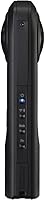
The Theta Z1 feels genuinely premium in hand — the body is compact at just 6.4 ounces but does not feel fragile or plasticky. The physical button layout is intuitive enough that experienced shooters can adjust settings without pulling out the app for every change.
The camera lacks weather sealing, which is a real limitation for surveyors and outdoor professionals who work in unpredictable conditions. A few users have also noted that the lens protectors accumulate fingerprints and dust quickly, requiring frequent cleaning before critical shoots.
Internal Storage
89%
The jump to 51GB is not a minor footnote — it meaningfully changes how you work in the field. Being able to store over 900 RAW+ files or nearly two hours of 4K footage without reaching for a cable mid-shoot gives professionals the confidence to focus on capturing rather than managing files.
Despite the generous capacity, there is no option to expand storage via microSD in a way that feels fully integrated into the workflow. Some heavy video shooters still find themselves offloading at the end of each full day, wishing the internal capacity pushed even further.
HDR Performance
87%
The HDR processing is particularly well-tuned for interior-to-exterior shots — exactly the kind of lighting challenge that defeats most cameras in the real estate context. Bright windows in the background of a room shot retain detail that would normally require manual bracketing and blending in post.
The automatic HDR mode does not always make the right call in moderately lit scenes, occasionally applying tone mapping where a standard exposure would have looked more natural. Experienced users tend to shoot in manual mode once they understand the lighting behavior of the camera.
App & Connectivity
61%
39%
Wi-Fi transfer is noticeably faster than on earlier Theta models, and the iOS version of the companion app works reliably for basic remote triggering, live preview, and file management during a typical shoot day. The USB 3.0 Type-C connection makes tethered offloading quick when you are back at a desk.
Android users have a rougher experience — connection drops, delayed preview, and occasional app crashes are common complaints that surface repeatedly in user feedback. The app itself feels like it has not kept pace with the hardware, and several professionals end up relying almost entirely on USB rather than Wi-Fi to avoid frustration.
Battery Life
58%
42%
For a focused shoot session — a real estate walkthrough, a short documentary setup, or a series of architectural stills — a single charge gets most users through their immediate work without issue. The included lithium-ion battery is sufficient for moderate, task-specific use.
Heavy video shooters and all-day event documentarians consistently flag battery life as a genuine pain point. The general recommendation from experienced owners is to buy at least one spare battery before your first professional job, treating it as an expected additional cost rather than a surprise.
RAW File Support
92%
RAW+ output is one of the features that makes this dual-sensor spherical camera feel like a real professional tool rather than a consumer gadget. Photographers who edit in Lightroom or Capture One appreciate the full tonal latitude it provides, especially for recovering shadow detail in high-contrast interior scenes.
RAW file sizes are substantial, and users who are not prepared for the storage and processing demands can find their editing workflow slows down. Not every 360°-compatible editing application handles the proprietary RAW format natively, which adds an occasional conversion step for some users.
Ease of Use
74%
26%
For a camera with this level of technical capability, the physical operation is approachable. Single-button shooting is available for quick capture, and most professionals get comfortable with the core workflow within a day or two of regular use.
The learning curve steepens considerably once you move into manual exposure, RAW shooting, and advanced Wi-Fi workflows. Newcomers to 360° photography often feel overwhelmed by the companion app settings and the post-processing requirements, making this a poor starting point for beginners.
Value for Money
71%
29%
For professional real estate photographers, VR content studios, and architectural firms, the output quality and workflow efficiency justify the premium price in a fairly direct way — the camera pays for itself when clients can see the difference in virtual tour quality. Long-term owners rarely express regret about the purchase.
For enthusiasts or part-time creators, the price is difficult to rationalize against what more affordable 360° cameras can now produce. You are paying significantly for the 1-inch sensors and RAW support, and if your workflow does not genuinely require those capabilities, the value proposition gets much harder to defend.
Portability
86%
At 6.4 ounces, this is one of the few professional-grade cameras in any category that fits in a coat pocket. Travel photographers and surveyors appreciate being able to pack it alongside a regular camera kit without dedicating a separate bag to it.
The lens elements protrude on both sides and are unprotected during transport, which makes casually dropping it into a bag without a case a risky habit. The included accessories for protection feel minimal given the premium price, and a proper carrying case is effectively a required additional purchase.
4-Channel Audio
79%
21%
Spatial audio captured by the 4-channel microphone array adds a genuine dimension to immersive video content that mono or stereo 360° cameras simply cannot replicate. VR producers and documentary filmmakers specifically single this out as one of the more underappreciated features of the Theta Z1.
The microphones are sensitive enough to pick up handling noise and ambient hum in quieter environments, which requires thoughtful placement or an external recorder for critical audio work. Some users note that wind noise in outdoor settings is more pronounced than expected for a camera at this level.

Suitable for:

The Ricoh Theta Z1 51GB 360° Camera is purpose-built for professionals who depend on spherical imagery as a core part of their work, not an occasional novelty. Real estate photographers will find it particularly well-matched to their needs — the HDR processing alone handles the notoriously tricky interior-to-exterior window shot better than any rival single-unit 360° camera on the market. Architecture and interior design professionals benefit from the 23MP resolution and RAW+ output, which give them the tonal flexibility needed for accurate, print-ready spatial documentation. VR content studios and documentary filmmakers who want immersive 4K footage with spatial audio — without managing a multi-camera rig — will appreciate how much production-ready output a single device this size can generate. Inspectors, surveyors, and insurance adjusters also represent a strong fit: one shot captures an entire scene with enough resolution to zoom in and examine fine details during review. If your livelihood or serious creative work depends on 360° imaging quality, the Theta Z1 makes a compelling and practical case for itself.

Not suitable for:

Casual users, hobbyists, or anyone who shoots 360° content only occasionally should think carefully before committing to a camera at this price point, because the Ricoh Theta Z1 51GB 360° Camera is genuinely difficult to justify unless spherical imaging is a regular professional need. Beginners to 360° photography will face a steeper learning curve than expected — between manual exposure settings, RAW post-processing workflows, and a companion app that does not always behave reliably on Android devices, the early experience can be frustrating. Anyone hoping to shoot 360° video as a primary use case should also be aware that battery life under sustained recording is limited enough that a spare battery is essentially a required accessory. Photographers who frequently shoot close-range subjects — product photography, tight interior spaces, or scenes where people stand within a meter of the camera — will encounter stitch artifacts that no firmware update is likely to fully eliminate, given the physical reality of dual-lens design. Finally, buyers without access to capable editing software and hardware should know that RAW files from this camera are large and demand real processing power; the output quality is only as good as the post-production pipeline behind it.

Specifications

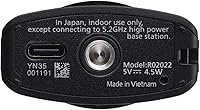
  • Sensor Type: Dual 1-inch back-illuminated CMOS sensors deliver improved light capture, reduced noise, and suppressed ghosting and flare compared to smaller-sensor 360° cameras.
  • Still Resolution: Still images are captured at approximately 23MP with an equirectangular output of roughly 6720x3360 pixels, equivalent to a 7K spherical image.
  • Internal Storage: 51GB of built-in storage accommodates approximately 6,350 JPEG still images, 900 RAW+ files, or up to 110 minutes of 4K video without any external media.
  • Video Resolution: 4K DCI 2160p 360° video recording is supported with built-in image stabilization for smoother handheld and walk-through footage.
  • Aperture: Maximum aperture of f/2.1 across the dual lens units supports low-light shooting without requiring excessive ISO amplification.
  • Focal Length: Maximum focal length of 2.6mm per lens unit is optimized for full spherical coverage with minimal blind spots at the poles.
  • Audio System: A 4-channel microphone array records spatial audio in AAC or Linear PCM formats, enabling immersive sound playback in VR and 360° video environments.
  • HDR Processing: Onboard HDR image processing automatically corrects dynamic range in high-contrast scenes, such as bright window exteriors captured from dark interior spaces.
  • Image Formats: The camera supports RAW+ and JPEG capture modes simultaneously, giving photographers full post-production flexibility without sacrificing a quick-review file.
  • Connectivity: USB 3.0 Type-C port and high-speed Wi-Fi provide two distinct transfer paths, with wired offloading being significantly faster for large RAW file batches.
  • Weight: The camera body weighs 6.4 ounces, making it one of the lightest professional-grade 360° cameras available for field and travel use.
  • Dimensions: The body measures 9.1 x 9.1 x 9.1 inches in its retail packaging; the camera unit itself is compact enough to fit in a standard coat pocket.
  • Battery: One rechargeable lithium-ion battery is included in the box; it provides adequate power for moderate shoot sessions but is widely considered insufficient for full-day video work.
  • Audio Formats: Supported audio formats include AAC and Linear PCM, covering both compressed delivery output and lossless archival recording needs.
  • Stabilization: Electronic image stabilization is applied to 4K 360° video output, reducing motion blur and camera shake during handheld or walk-through shooting scenarios.
  • Manufacturer: The camera is designed and manufactured by Ricoh, a Japanese imaging and electronics company with decades of professional camera development experience.
  • Model Number: The official Ricoh model number for this unit is 910830, corresponding to the 51GB black variant of the Theta Z1 lineup.
  • Release Date: This product was first made available for purchase on May 4, 2021, as an upgraded storage variant of the original Theta Z1 platform.

Related Reviews
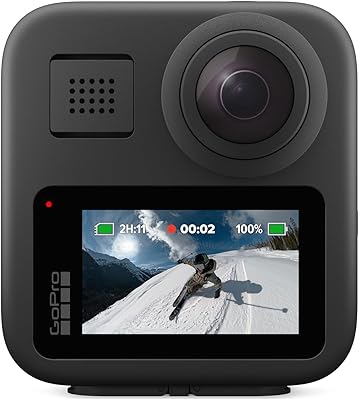
GoPro MAX 360 Action Camera
76%
88%
360 Video Quality
91%
Dual-Mode Versatility
83%
Pole Removal & Stitching
54%
Battery Life
93%
Waterproofing
More
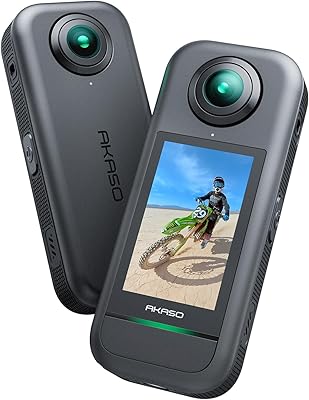
AKASO 360 Action Camera
74%
81%
Video Quality (Daylight)
52%
Low-Light Performance
74%
Stabilization (360-SuperSmooth)
88%
Invisible Selfie Stick Effect
79%
Photo Quality (72MP Mode)
More
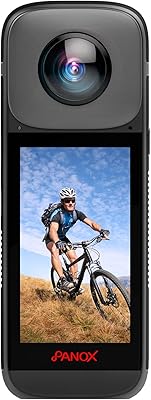
PANOX V2 360 Camera
PANOX V2 360 Camera
82%
91%
Stabilization Performance
88%
Live Streaming Quality
85%
Ease of Use
83%
Build Quality
75%
Battery Life
More
Insta360 X3 360° Action Camera
81%
88%
Video Quality (360 Mode)
93%
Stabilization Performance
91%
Reframing Flexibility
84%
App & AI Editing Experience
79%
Build Quality & Durability
More
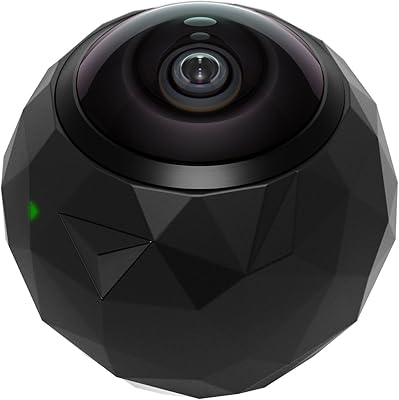
360fly 360° HD Video Camera
84%
89%
Video Quality
75%
Battery Life
91%
Build Durability
85%
Ease of Use
80%
App Performance
More
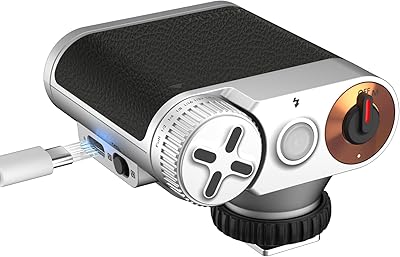
VILTROX Z1+ Retro Shoe-Mount Flash
78%
84%
Build Quality & Materials
91%
Retro Design & Aesthetics
73%
Flash Output & Power
78%
Recycle Time
82%
Optical Slave Functionality
More
LITYMOL ZY-C9 360° Solar Security Camera
74%
91%
Ease of Installation
78%
Solar Charging Performance
84%
Video Clarity & Resolution
88%
Pan-Tilt Coverage
72%
Night Vision Quality
More
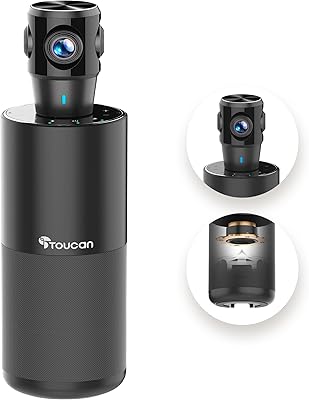
TOUCAN SC360 360-Degree Conference Camera
77%
88%
360-Degree Coverage
84%
Microphone Performance
67%
AI Speaker Tracking
63%
Video Resolution & Clarity
93%
Ease of Setup
More
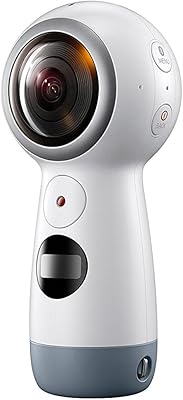
Samsung Gear 360 (2017 Edition) 4K Camera
82%
91%
Video Quality
88%
Portability
65%
Battery Life
80%
Build Quality
85%
Ease of Use
More
OFYOO Light Bulb Security Camera 360° PTZ
86%
88%
Video Quality
94%
360° Coverage
79%
Night Vision Clarity
82%
Motion Detection Sensitivity
93%
Ease of Setup
More

FAQ

Yes, it works with Google Street View through the official Theta app, and the equirectangular image output is compatible with most major virtual tour platforms including Matterport workflows, Kuula, and Momento360. Real estate photographers in particular find the integration straightforward once the basic workflow is set up.

The Ricoh Theta app handles remote shutter control, live preview, shooting mode selection, and Wi-Fi file transfer. On iOS it generally works without major issues, but Android users report inconsistent behavior — connection drops, delayed preview, and occasional crashes are common complaints. If you are primarily an Android user, plan to rely more on the USB Type-C cable for file offloading to keep your workflow predictable.

Yes, the Theta Z1 supports RAW+ mode, which saves both a RAW file and a JPEG simultaneously. Processing the RAW files requires software that supports the Ricoh Theta RAW format — Lightroom with the appropriate plugin or Ricoh's own Theta Stitcher application are the most common options. The files are large and editing them demands reasonably capable hardware, so factor that into your post-production setup before committing.

Battery life varies considerably depending on what you are doing — still photography sessions can stretch a few hours, but sustained 4K video recording drains the battery noticeably faster. Most professional video shooters carry at least one spare battery as standard practice. The camera can be powered via USB while connected, but it is not designed for continuous tethered recording in the way some mirrorless cameras are.

It is arguably the strongest single-unit option available for real estate use. The HDR processing is particularly well-suited to the core challenge of real estate interiors — balancing a bright window exterior against a darker room interior — and the 23MP resolution holds up well when clients zoom into virtual tour imagery. The 51GB storage means you can shoot an entire multi-property day without transferring files between locations.

Stitching quality is excellent at typical shooting distances — architectural interiors, outdoor scenes, and standard property walkthroughs all come out clean. The limitation to know about is close-range stitching: anything within roughly one meter of the camera body can show visible artifacts along the equatorial seam where the two lenses meet. This is a physical constraint of any dual-lens 360° design, not a defect specific to this camera.

The core imaging hardware — dual 1-inch sensors, lens design, and processing engine — is the same. The headline difference is storage: the original Theta Z1 shipped with around 19GB of internal memory, while this variant provides 51GB, which is roughly 2.7 times larger. For professionals who shoot RAW files or extended video, that extra capacity meaningfully changes how often you need to offload in the field.

No, the Theta Z1 does not carry an official weather sealing or dust resistance rating. For outdoor professionals — surveyors, insurance adjusters, construction documentarians — this is a genuine limitation worth planning around. Using a protective case during transport and avoiding shooting in rain or dusty conditions are standard precautions that experienced owners recommend.

Video is recorded in MP4 format at 4K resolution, with audio in either AAC or Linear PCM. The equirectangular 360° footage is compatible with most major editing applications that support 360° video, including Adobe Premiere Pro and DaVinci Resolve. Color grading the footage takes some practice — the dynamic range in video mode is good but requires deliberate exposure choices to get the most out of it in post.

Honestly, probably not as a first camera. The Theta Z1 is designed for users who already understand 360° workflows, RAW editing, and the limitations of dual-lens stitching. If you are new to spherical imaging, starting with a more affordable Theta model to learn the format makes more practical sense — then stepping up to this camera once you know your workflow and genuinely need the 1-inch sensor quality and RAW output.

Where to Buy