


Overview

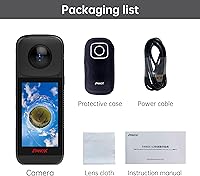
The PANOX V2 360 Camera for Motorcycle is built with a specific rider in mind — not the casual weekend shooter, but the serious adventure documenter who wants full spherical coverage without juggling a rig of separate cameras. What sets it apart from typical action cams is the combination of dual-lens capture, a fully functional Android 10 OS, and built-in GPS — features you rarely see bundled together at this price tier. It launched in late 2023, which means long-term reliability data is still thin. The spec sheet looks strong on paper, but as any rider knows, what holds up on a product page doesn't always hold up at highway speeds on a vibrating machine.

Features & Benefits

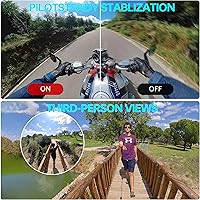
At the heart of this ride-ready 360 camera are two 200-degree fisheye lenses, each backed by a 1/2-inch Sony CMOS sensor. That sensor size matters on a moving vehicle — it captures more light and contrast detail when you're alternating between shade and open road. Video maxes out at 5.7K at 30 frames per second, and the PilotSteady stabilization is the key test here: motorcycle engines produce constant vibration that lesser stabilization algorithms struggle to compensate for. The ability to live stream in 4K via the PANOX app is a practical tool for touring creators. Add 6GB of RAM for on-device AI editing and GPS geotagging, and this cam carries a serious feature set in a compact 5.2-inch chassis.

Best For

This motorcycle 360 cam is a natural fit for riders who document long tours and want every angle captured without thinking about camera placement. Live-streaming adventurers will appreciate the built-in RTMP and SRT support, which removes the need for a separate encoder or relay device. The AI-assisted editing tools are a real time-saver for creators who don't want to spend hours in post-production after a ride. That said, this camera asks something of its owner — patience with a newer brand, comfort with Android customization, and a willingness to learn the PANOX app. Riders who want something they can just mount and forget, or those who need a verified waterproof rating for wet conditions, should look elsewhere; no IP rating is listed.

User Feedback

Buyers who have used the PANOX V2 on actual rides generally highlight the video stabilization quality as a standout — footage from highway stretches tends to look impressively smooth given the conditions. On the flip side, a recurring complaint involves the companion app, with some users reporting inconsistent connectivity and a steeper-than-expected learning curve for live streaming setup. Battery endurance during long rides or active streaming sessions comes up frequently, with several owners recommending carrying a backup power source. Build quality and mount durability draw mixed opinions. The one-year global warranty is a reasonable safety net, though because PANOX is still building its support track record, it's worth factoring that into the buying decision alongside the otherwise competitive spec offering.

Pros

  • PilotSteady stabilization handles highway-speed motorcycle vibration better than most single-lens action cameras.
  • Dual 1/2-inch Sony CMOS sensors produce solid dynamic range for alternating shade and open-road sunlight.
  • Built-in RTMP, RTSP, and SRT support enables direct live streaming to major platforms without extra hardware.
  • Android 10 OS with APK sideloading gives power users a level of flexibility no competing action cam currently matches.
  • On-device AI editing and auto-tracking let creators reframe and cut footage directly from the camera itself.
  • Built-in GPS automatically geotags panoramic content, making route documentation accurate and easy to organize later.
  • MicroSD support up to 1TB means all-day recording without constantly swapping cards or managing storage mid-ride.
  • The 3-inch, 500nit touchscreen is bright enough to navigate settings and review clips in direct sunlight.
  • 6GB of RAM keeps the camera responsive during demanding tasks like simultaneous AI editing and live streaming.
  • The included battery and one-year global warranty add practical reassurance for buyers planning long-distance adventure tours.

Cons

  • No IP rating is listed anywhere, leaving rain resistance and waterproofing completely unverified for real riding conditions.
  • The companion PANOX app has drawn complaints about connectivity drops and a steeper-than-expected initial setup process.
  • Battery endurance during active live streaming sessions is a recurring concern, often requiring a backup power source.
  • As a newer brand, PANOX has a thinner track record for long-term firmware support and accessible repair options.
  • Stitching accuracy at close range can be inconsistent, particularly for subjects within arm's reach of the lenses.
  • The 8K video mode is capped at 10 frames per second, making it impractical for any fast-motion footage.
  • Mount durability under sustained engine vibration has drawn mixed feedback from buyers logging extended mileage.
  • Third-party accessory compatibility is limited compared to the broader ecosystems around Insta360 or GoPro Max.
  • The Android OS layer introduces a degree of complexity that casual or first-time 360 camera users may find off-putting.

Ratings

The scores below for the PANOX V2 360 Camera for Motorcycle were generated by our AI system after analyzing verified purchase reviews from buyers worldwide, actively filtering out spam, bot-submitted ratings, and incentivized feedback to surface what real owners actually experience on the road. Each category score reflects both the genuine strengths and the recurring frustrations that emerge across the global review pool, weighted by how this camera is realistically used in the field. Nothing has been softened to flatter the brand — if a category scores poorly, it is because the evidence consistently points that way.

Video Quality
83%
Riders who have taken this cam on highway tours report that 5.7K 360 footage holds up well in post-production, with enough detail to reframe shots without visible pixelation. Dynamic range handles mixed lighting — shade to open road transitions — better than many competitors at this price tier. The Sony CMOS sensors contribute meaningfully to image clarity in favorable conditions.
Low-light footage — think dusk rides or tunnel passes — shows increased noise compared to cameras with larger sensors or wider apertures. A handful of buyers note that colors can appear slightly oversaturated straight out of camera, requiring correction in editing. At 8K, the 10fps cap limits the mode's practical utility to near-stationary shots only.
Stabilization
81%
19%
For a camera aimed at motorcycle riders, the PilotSteady stabilization delivers where it matters most: highway cruising on paved roads produces footage many buyers describe as surprisingly fluid, with motion coherence that previously required a dedicated gimbal. Even under sustained engine vibration, subjects in the frame stay anchored without the jittery micro-movements common in cameras lacking this technology.
On rough terrain — unpaved trails, broken pavement, cobblestones — the stabilization struggles to fully compensate and footage can still look shakier than expected. Some users also report that stabilization performs more consistently in standard recording modes than in higher-resolution modes, where processing load appears to reduce its effectiveness marginally.
App Experience
58%
42%
The PANOX app covers the basics most riding creators need: remote camera control, footage preview, basic reframing, and streaming setup. For riders who primarily want to frame a shot and hit record, the app does enough without requiring deep technical knowledge, and iOS and Android availability means most users can get started without additional hardware.
Connectivity drops between the camera and the app are the most commonly cited frustration, with some users spending several minutes reconnecting before a ride. The live streaming setup has a learning curve that catches many buyers off guard, and the overall UI feels less refined than what users expect given the price point.
Battery Life
61%
39%
Under standard 360 video recording at moderate resolution, the battery holds up reasonably well for shorter rides and day trips, getting most users through one to two hours of continuous shooting. The included battery means riders are not immediately out of pocket for accessories on day one, which is a minor but appreciated convenience.
Battery life is the most common practical complaint from touring riders, particularly those who live-stream — streaming, GPS, Wi-Fi, and high-resolution recording together drain the battery far faster than standard recording alone. Most long-distance riders end up relying on a power bank mounted to the bike, adding setup complexity the spec sheet does not prepare you for.
Live Streaming
78%
22%
The combination of RTMP, RTSP, and SRT protocol support puts this cam ahead of most action cameras for live broadcasting, and riders who configure it correctly report reliable 4K streaming to YouTube and Facebook over a strong 5G hotspot. Multi-platform streaming from a single device is a real advantage for touring content creators who want to broadcast without extra equipment.
Initial streaming configuration is where most buyers hit a wall — setting up RTMP keys, adjusting bitrate, and maintaining a stable hotspot connection on the road involves more technical effort than many expect. A weak mobile signal can cause visible stream degradation, and the app does not always recover cleanly from an interrupted session without a manual reconnect.
Photo Quality
77%
23%
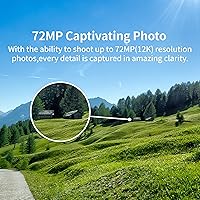
The 12K photo mode gives touring photographers meaningful resolution to crop and reframe without losing detail, and the GPS geotagging means every shot is automatically mapped to a location along the route. HDR mode handles high-contrast roadside scenarios — bright sky above a shaded mountain road — with reasonable accuracy.
Photo output in lower light or at faster shutter speeds — common when capturing moving subjects — can appear softer than the headline resolution suggests. Some buyers also note that DNG files require more processing effort to look their best compared to JPG output, which applies aggressive noise reduction by default.
Build Quality
72%
28%
The slim 5.2-inch body feels solid in hand, and most buyers report it survives the daily rigors of handlebar mounting without cracking or developing rattles over the first few months of use. The compact profile also means it does not catch excessive wind drag at highway speeds, which is a practical consideration for motorcycle mounting.
No IP water resistance rating is published, which is a meaningful gap for a camera marketed to motorcycle riders — rain is an occupational hazard for many tourers, not an edge case. Some buyers also report the mount connection point shows wear under sustained engine vibration, raising questions about long-term durability on rougher routes.
GPS Accuracy
84%
The built-in GPS module consistently receives positive feedback for accuracy, with most riders reporting that geotags align correctly with their actual route when reviewed on a mapping platform. The automatic geotagging is particularly valued by adventure tourers who want a passive log of where each piece of footage was captured, without managing a separate GPS device.
GPS lock at cold start can be slower than expected, particularly in urban canyons or built-up areas where satellite acquisition is harder. Some users also report occasional location drift through long tunnels or GPS-shaded sections, which is a hardware limitation worth knowing about if precise route documentation is a priority.
Ease of Setup
63%
37%
Riders who invest time upfront report that the camera becomes manageable once they understand the Android-based interface and have run through the app pairing process a couple of times. The 3-inch touchscreen also helps experienced users adjust settings directly on the device without needing the app for every change.
For first-time 360 camera users or anyone accustomed to a plug-and-play action cam, the setup is a genuine friction point — pairing, streaming protocol configuration, and navigating the Android environment all take more time than the packaging suggests. Several buyers openly admit they nearly returned the camera before the workflow clicked for them.
Audio Quality
69%
31%
The dual built-in microphones do a reasonable job capturing ambient sound during slower rides and stationary recording, and the 2-channel AAC format provides enough fidelity for travel vlogs and basic narration. For riders who record at lower speeds or use the camera off the bike, the audio output is acceptable without requiring an external microphone.
At highway speeds, wind noise is a significant and consistent problem, with microphone audio often becoming unusable above 50 mph without post-processing or an external windshield. Riders who need clean ride-along commentary will almost certainly need to invest in an external microphone or a Bluetooth communication system to supplement the built-in mics.
Touchscreen
76%
24%
The 3-inch screen is a meaningful step up from the tiny displays common on most action cameras, giving riders enough real estate to review footage, adjust settings, and frame shots while parked without squinting. At 500nit brightness, it remains legible in most outdoor conditions, including direct sunlight during midday rest stops.
The 854×480 resolution is noticeably low for a device running Android 10 — text appears slightly soft and small UI elements require careful tapping, especially with gloves on. Some users also report that touch sensitivity decreases in cold weather, which is a real concern for riders in cooler climates where gloves are a daily necessity.
Value for Money
74%
26%
For a camera that bundles GPS, Android OS, dual Sony sensors, native 360 streaming, and on-device AI editing into a single device, the hardware-to-price ratio is difficult to fault on paper. Riders who fully use the live streaming and AI editing features are getting functionality that would otherwise require a more complex and expensive multi-device setup.
The value calculation shifts for buyers who encounter persistent app issues, require rain protection, or compare this cam against Insta360 or GoPro models with more mature ecosystems and stronger resale value. Being a newer brand means long-term investment factors — firmware longevity, accessory availability, repair options — carry more uncertainty than they would with an established market player.
Stitching Quality
71%
29%
For the footage types most motorcycle riders capture — open road scenes, mountain passes, wide urban intersections — the stitching is clean enough that the seam goes unnoticed during normal playback. The automatic stitching pipeline requires no manual adjustment for standard recording, which is a practical convenience for riders who want to shoot and share without extra editing steps.
Stitching artifacts become visible when subjects are within two to three feet of the camera, particularly near the seam boundary between lenses — a standard limitation of dual-lens 360 designs. Riders who mount the camera close to their helmet or body may notice ghosting or distortion around the seam during tight cornering footage.
AI Editing Tools
79%
21%
The on-device AI editing tools let riders reframe shots, apply auto-tracking, and export clips without touching a computer or phone, which is a real advantage for content creators on multi-day tours. Tourers who want to post highlight footage from a rest stop will find the keyframe editing and automated perspective tools useful for quick social media content.
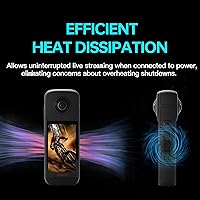
The AI tools are capable but inconsistent — auto-tracking can lose subjects in fast or complex scenes, and extended on-device editing causes the camera to run noticeably warm. Riders who need precise color grading or multi-clip control will still require a desktop workflow, as the on-device tools are a shortcut, not a full substitute.
Brand Support
62%
38%
PANOX backs the camera with a one-year global warranty, which is a reasonable baseline for a device at this price, and early buyers report that warranty claims have largely been addressed. The Android OS also allows firmware updates to be applied directly to the device, suggesting an ongoing improvement roadmap that could address current software pain points.
As a brand that launched in late 2023, PANOX has a thin support history — community forums, third-party repair availability, and long-term firmware commitment are all unproven compared to the ecosystems around Insta360 or GoPro. Some buyers report slow or unclear communication when contacting support, which is a meaningful risk factor for a purchase at this price point.

Suitable for:

The PANOX V2 360 Camera for Motorcycle is the right tool for riders who approach their trips as content projects, not just commutes. Motorcycle tourers covering long routes and wanting immersive, all-angle documentation without mounting multiple cameras will find this cam a natural fit for their workflow. Content creators who live-stream rides to YouTube or Facebook will appreciate having RTMP, RTSP, and SRT support built in, removing the need for an external encoder or a secondary device acting as a relay. The on-device AI editing and auto-tracking features make this motorcycle 360 cam especially useful for solo riders who want presentable footage without a full post-production setup waiting at home. Tech-comfortable adventurers who are willing to explore Android customization — sideloading apps, adjusting system settings — will also unlock far more from this device than someone expecting a set-it-and-forget-it experience.

Not suitable for:

The PANOX V2 360 Camera for Motorcycle is a poor match for riders who prioritize simplicity and want to hit record without dealing with app configuration, stitching settings, or multi-platform connectivity setup. Because no IP rating appears anywhere in the official documentation, anyone who regularly rides in heavy rain or plans to hose down their gear should factor in the real possibility that this cam offers no verifiable water resistance. Buyers who are drawn to the 360 action camera category but want the ecosystem depth of established players like Insta360 or GoPro will find the newer brand a harder sell — not because the specs are weak, but because community resources, firmware maturity, and third-party accessory availability are still catching up. Riders who need a proven long-term workhorse with years of user data behind it should also pause here, since the late-2023 launch means real durability over time remains an open question. Finally, those expecting this ride-ready 360 camera to double as a casual everyday camera may find the fisheye correction workflow more overhead than their use case actually warrants.

Specifications

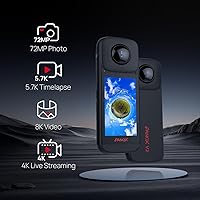
  • Photo Resolution: Still images are captured at up to 12K (11968×5984) in full-sphere mode and 5.7K (5760×2880) in reduced-resolution mode, with support for both DNG and JPG formats.
  • Video Resolution: Supported video modes include 5.7K at 30fps, 4K at 60fps, 2.5K at 120fps, and 8K at 10fps for near-static panoramic capture.
  • Image Sensor: Two 1/2-inch Sony CMOS sensors — one per lens — form the imaging core of the camera and handle all light capture for both video and stills.
  • Lens: Dual 200-degree fisheye lenses provide overlapping fields of view that combine to produce full 360-degree spherical coverage.
  • Touchscreen: The built-in display measures 3.0 inches with a resolution of 854×480 pixels and a brightness rating of 500nit for outdoor readability.
  • Operating System: Android 10 is installed natively on the camera, including support for APK sideloading to install compatible third-party applications.
  • RAM: 6GB of internal RAM supports simultaneous on-device tasks including AI editing, auto-tracking, and live streaming without significant slowdown.
  • Storage: External storage is handled via MicroSD card rated U3 V30 or higher, with supported capacities ranging from 64GB up to 1TB; no card is included.
  • Live Streaming: Live streaming is supported at up to 4K at 30fps using RTMP, RTSP, and SRT protocols for direct broadcast to platforms like YouTube and Facebook.
  • Connectivity: Dual-band Wi-Fi covering both 2.4GHz and 5GHz bands is built in, with 5G network compatibility for mobile hotspot tethering on the go.
  • GPS: A built-in GPS module automatically geotags panoramic photos and videos with location data for route tracking and content organization.
  • Audio: Two built-in microphones record 2-channel AAC audio, with support for connecting an external dual-channel microphone setup.
  • Weight: The camera body weighs 1.1 pounds without any mounting accessories attached.
  • Dimensions: The body measures 0.7 × 1.9 × 5.2 inches, with an elongated form factor suited for handlebar, helmet, or chest mounting.
  • Battery: One lithium metal battery is included in the box; no specific milliamp-hour rating is published in the official specifications.
  • Warranty: PANOX provides a one-year global warranty covering manufacturing defects and device failures from the date of purchase.

Related Reviews
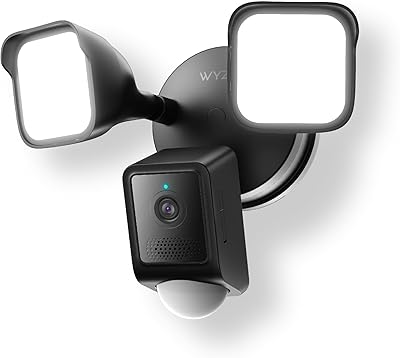
WYZE Floodlight v2 Outdoor Security Camera
75%
83%
Video Clarity
67%
Color Night Vision
91%
LED Brightness
62%
Motion Detection
54%
Wi-Fi Connectivity
More
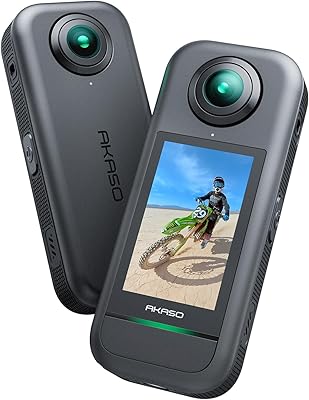
AKASO 360 Action Camera
74%
81%
Video Quality (Daylight)
52%
Low-Light Performance
74%
Stabilization (360-SuperSmooth)
88%
Invisible Selfie Stick Effect
79%
Photo Quality (72MP Mode)
More
GoPro MAX 360 Action Camera
76%
88%
360 Video Quality
91%
Dual-Mode Versatility
83%
Pole Removal & Stitching
54%
Battery Life
93%
Waterproofing
More
Insta360 X3 360° Action Camera
81%
88%
Video Quality (360 Mode)
93%
Stabilization Performance
91%
Reframing Flexibility
84%
App & AI Editing Experience
79%
Build Quality & Durability
More
AKEEYO-710Pro EIS Motorcycle Camera
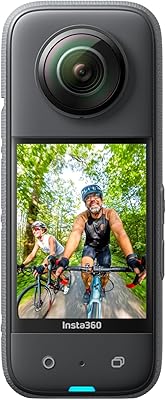
88%
93%
Video Quality
91%
Stabilization Performance
88%
Build Quality
90%
Waterproof Durability
84%
Ease of Setup
More
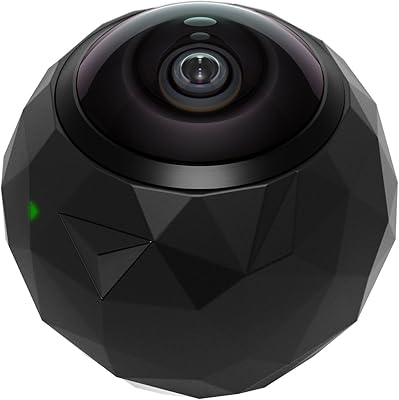
360fly 360° HD Video Camera
84%
89%
Video Quality
75%
Battery Life
91%
Build Durability
85%
Ease of Use
80%
App Performance
More
Ricoh Theta Z1 51GB 360° Camera
81%
93%
Image Quality
91%
Low-Light Performance
84%
Video Quality
78%
Stitching Accuracy
88%
Build Quality & Design
More
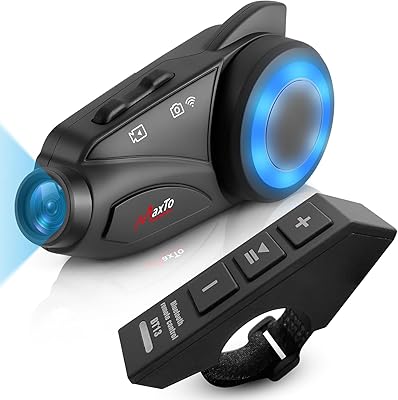
MAXTO M3 Motorcycle Bluetooth Headset with Camera
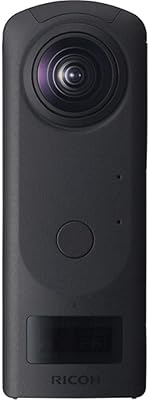
74%
83%
Value for Money
74%
Intercom Clarity
61%
Intercom Range
67%
Camera Video Quality
78%
Build Quality & Durability
More
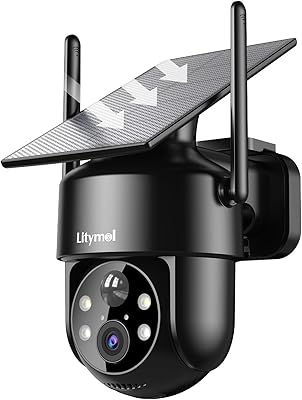
LITYMOL ZY-C9 360° Solar Security Camera
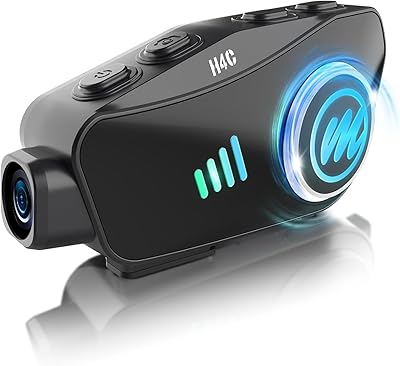
74%
91%
Ease of Installation
78%
Solar Charging Performance
84%
Video Clarity & Resolution
88%
Pan-Tilt Coverage
72%
Night Vision Quality
More
Moman H4C Motorcycle Helmet Headset Camera
73%
78%
Video Quality
71%
Audio Quality
83%
Bluetooth Connectivity
76%
Battery Life
67%
Build Quality
More

FAQ

The PilotSteady stabilization system is specifically designed to handle the kind of persistent, high-frequency vibration that motorcycle engines produce — which is a much harder problem than walking or cycling footage. Most buyers report noticeably smooth results at highway speeds, particularly on paved roads. Very rough or unpaved surfaces may still produce some residual motion, and a secure, tight mount makes a real difference in how well the stabilization can do its job.

No memory card is included. You will need a MicroSD card rated at least U3 V30, which means it can sustain the write speeds required for high-resolution 360 video without dropping frames or corrupting files. A 128GB to 256GB card is a practical starting point for most riders, though the camera supports up to 1TB if you plan to go long distances without offloading footage.

The camera handles the streaming process itself and does not need a phone to encode or relay the signal. What it does need is an active internet connection, and since there is no built-in SIM card slot, you will typically tether to your phone as a mobile hotspot while riding. The dual-band Wi-Fi keeps that connection relatively stable when the signal is decent, but streaming over 5G or a strong LTE connection will produce more consistent results than a weak signal.

PANOX does not publish an IP water resistance rating for this camera, which means there is no independently verified protection level to point to. Light drizzle may not cause immediate damage, but riding in heavy rain, direct spray from puddles, or any scenario involving submersion is a genuine risk without a protective housing. If wet-weather riding is part of your regular routine, this is a significant gap that should factor heavily into your decision.

Recording 5.7K 360 video will drain the battery faster than lower-resolution modes, and live streaming draws considerably more power than standard recording. In practice, most riders get somewhere in the range of one to two hours of active use under normal conditions. For any tour longer than a couple of hours, carrying a portable power bank or a spare battery is a sensible precaution rather than an optional extra.

The PANOX V2 360 Camera for Motorcycle competes seriously on hardware specs, and in some areas — such as the built-in Android OS, the larger touchscreen, and native RTMP/SRT streaming support — it actually offers features those cameras do not. The honest trade-off is brand maturity: Insta360 and GoPro have larger user communities, more refined companion apps, and longer firmware update histories. If you are comfortable with a newer brand and willing to troubleshoot occasionally, the PANOX V2 offers a strong hardware package; if you want a proven ecosystem with abundant tutorials and accessories, the established brands have a clear edge.

Yes, the Android 10 OS supports APK sideloading, so you are not locked into only what PANOX provides out of the box. This opens the door to custom streaming apps, alternative remote control tools, or specialized media players. That said, not every Android app is optimized for the camera's specific hardware configuration, so some trial and error is expected, and not everything will work as smoothly as it would on a phone.

For most road footage — open landscapes, wide scenery, overhead perspectives — the dual 200-degree lenses stitch together cleanly enough that the seam is hard to notice. Stitching becomes more visible when objects are very close to the camera, especially near the boundary line between the two lenses, which is a known characteristic of dual-lens 360 designs across all brands. Keeping the camera mounted at a moderate distance from large nearby objects helps minimize this effect.

The camera uses a standard action camera mount interface that is compatible with a wide range of third-party mounts. Whether a motorcycle-specific mount is included depends on the bundle configuration at the time of purchase, so check the listing carefully. Given that the camera weighs 1.1 pounds, it is worth investing in a quality handlebar or helmet mount with some vibration damping — a flimsy mount will undermine the stabilization system regardless of how good the software is.

Not necessarily. The PANOX app on iOS or Android handles basic editing, reframing, and export directly from your phone, and the camera itself has on-device AI editing tools for quick turnaround content. For more precise 360 editing on a computer, the camera exports standard equirectangular MP4 files that are compatible with editors like Adobe Premiere Pro and DaVinci Resolve. The mobile workflow is convenient for social media posts, but complex projects with color grading or multi-clip sequences will still benefit from a desktop setup.