Overview

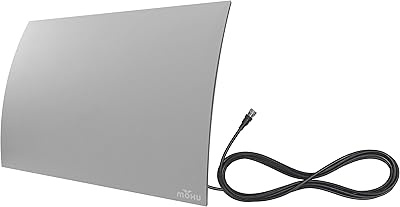
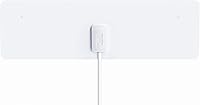
The RGTech Monarch 40 Indoor HDTV Antenna is RGTech's answer for households looking to ditch their cable subscription and pull in free local channels without running wires through walls or mounting hardware on a roof. It is literally paper-flat, closer to a laminated card than anything resembling a traditional antenna, and its clean white finish lets it blend into most walls or window frames without drawing attention. RGTech advertises a 40-mile reception range, which sounds generous, but that figure assumes ideal conditions. In practice, this flat indoor antenna delivers its best results for viewers sitting within roughly 20 to 25 miles of their nearest broadcast towers.
Features & Benefits

The Monarch 40 does not need to be aimed — multidirectional reception means it captures signals from multiple directions simultaneously, which matters when local towers are scattered across different parts of the horizon. It uses UWB technology to cover a broader frequency range, pulling in UHF, VHF, and FM signals without switching modes. The built-in 4G filter is a quietly useful feature; cellular interference is one of the more common culprits behind pixelated or dropped signals, and filtering it out makes a real difference in congested areas. Weighing under 3 ounces and stretching just over 12 inches, this paper-thin antenna also works with USB TV tuners and DVB-T receivers, not only standard coaxial inputs.

Best For

This flat indoor antenna is a natural match for renters and apartment dwellers who cannot install anything permanent — peel the backing, stick it to a wall or window, run a channel scan, and you are done. People in urban areas or close suburbs tend to get the most out of it, often landing 20 or more local channels in a single scan. It also works well as a secondary TV solution, whether that is a spare bedroom set or a travel setup that moves between locations. Anyone using a USB tuner on a laptop or a DVB-T receiver will find it compatible without adapters. The appeal is straightforward: local channels, no monthly fee, no complicated setup.

User Feedback

Buyers close to broadcast towers are generally happy — they appreciate the quick, tool-free setup, the tidy look, and a channel count that often exceeds expectations. Those are real strengths. The frustrations, though, are equally consistent: users in rural areas or buildings with thick concrete walls frequently report fewer channels and unreliable signal, and the 40-mile range claim draws pointed skepticism across multiple negative reviews. Reception variance tied to local terrain and building materials is a theme that comes up again and again. On a more neutral note, most people find the included coaxial cable an adequate length for standard placements. Fringe-signal locations are where this antenna clearly struggles, and that is worth knowing before buying.

Pros

  • Dead-simple setup: peel, stick, scan, and you are watching free TV in under ten minutes.
  • The multidirectional design means no fussing with positioning or pointing at a specific tower.
  • At under 3 ounces and roughly 12 inches across, the Monarch 40 fits almost anywhere without cluttering your space.
  • The built-in 4G LTE filter actively reduces cellular interference, which genuinely helps in urban environments packed with signal noise.
  • Compatible with USB tuners and DVB-T receivers, so it works beyond just the standard coaxial TV input.
  • The flat white panel is discreet enough to blend into most walls or window frames without looking out of place.
  • No subscription, no activation, no ongoing cost — just free local channels after a one-time purchase.
  • Users in strong-signal areas consistently report channel counts that meet or exceed expectations after a single scan.
  • The included coaxial cable is adequate length for most typical living room or bedroom placements.
  • Covers UHF, VHF, and FM frequencies, giving it a broader signal range than many basic flat antennas.

Cons

  • The 40-mile range claim is overstated for many real-world locations — expect closer to 20 to 25 miles of reliable performance.
  • Reception drops off significantly in buildings with concrete walls, metal framing, or low-floor apartments surrounded by taller structures.
  • Rural buyers and those in fringe-signal zones report consistently poor or unusable results.
  • No amplifier is included, which puts this flat indoor antenna at a disadvantage in weaker signal areas compared to boosted competitors.
  • Channel count can vary wildly depending on your zip code and local tower density, making results hard to predict before buying.
  • The coaxial cable, while adequate, is not especially long — positioning options may feel limited in larger rooms.
  • Signal quality can fluctuate during heavy weather, which is a known limitation of passive indoor antennas at this tier.
  • Not ideal as the sole antenna if your household has multiple TVs, since each set needs its own antenna or a signal splitter.

Ratings

The scores below reflect an AI-driven analysis of verified buyer reviews for the RGTech Monarch 40 Indoor HDTV Antenna, collected from multiple global markets and filtered to remove incentivized, bot-generated, and outlier feedback. Each category is scored on the honest balance of real-world satisfaction and recurring frustration — nothing is glossed over. Where this flat indoor antenna shines, the data shows it clearly; where it falls short, that is reflected just as transparently.

Signal Reception Quality
71%
29%
In urban apartments and close-in suburban homes within 20 miles of broadcast towers, users consistently report strong, stable signals with solid channel counts after a single scan. The multidirectional design means fewer dead spots and no frustrating tower-hunting sessions.
Reception drops off noticeably beyond 25 miles and becomes genuinely unreliable past 30 miles. Buildings with concrete walls or ground-floor units surrounded by taller structures frequently see weaker, intermittent signals that disrupt viewing during key moments.
Ease of Setup
93%
Nearly every buyer mentions how fast and intuitive the setup is — peel, stick, plug into the coaxial port, run a channel scan, and you are watching free TV within minutes. There is no instruction manual needed, and no tools are required under any circumstance.
A small number of users find that repositioning the antenna after the initial stick-down is messier than expected, as the adhesive backing loses some grip after being peeled away. First placement really matters, so picking the right spot before committing is worth a few extra minutes.
Range Accuracy
48%
52%
For buyers who happen to live close to well-positioned broadcast towers, the Monarch 40 delivers on its core promise without any fuss. In those favorable situations, the claimed range feels plausible and the channel count reflects it.
The 40-mile range claim is the most consistently criticized aspect across verified reviews. Buyers beyond 25 to 30 miles regularly report a dramatic drop in usable channels, and many feel the marketing sets expectations that the hardware cannot reliably meet in average real-world conditions.
Build & Design Quality
78%
22%
The paper-flat form factor is genuinely impressive for a functional antenna — it barely registers visually on a white wall or window frame. Users in rented apartments specifically call out how unobtrusive it looks compared to bulkier alternatives they have tried before.
The physical construction feels minimal, and a few users question long-term durability given how thin and lightweight the unit is. The coaxial connector junction at the base of the antenna is cited by some as a potential weak point if the cable is frequently bent or moved.
4G LTE Interference Filtering
82%
18%
Buyers in dense urban areas with heavy cellular traffic notice a genuine improvement in signal clarity compared to basic unfiltered antennas they have used previously. The filtering runs passively with no setup required, which means cleaner reception without any extra steps.
The benefit is largely invisible in lower-density areas where cellular interference is already minimal, making it a feature some rural buyers feel adds no practical value for them. A handful of users in extremely LTE-saturated environments still experience occasional pixelation, suggesting the filter has limits.
Channel Count
69%
31%
Metro-area users frequently report 20 or more channels after a channel scan, which comfortably covers the major networks, local news, and several sub-channels. For cord-cutters replacing cable for basic viewing, this is often more than enough.
Channel availability is highly location-dependent, and users in smaller markets or on the fringe of broadcast coverage may see only a handful of watchable channels. The variance between users in different cities makes it hard to set consistent expectations before purchase.
Compatibility
88%
The standard 75 Ohm coaxial connection plugs directly into virtually any modern TV without adapters, and the added compatibility with USB TV tuners and DVB-T receivers makes this paper-thin antenna unusually versatile for its size and price tier.
A small number of users with older television models report minor compatibility quirks during channel scanning, though these appear isolated rather than systemic. There is no built-in amplifier, which may limit usability for certain tuner configurations that work better with a boosted signal.
Value for Money
77%
23%
Buyers who live in well-served signal areas feel the Monarch 40 represents excellent value — you pay once, scan once, and get local channels indefinitely with no monthly cost. The comparison to even a single month of a basic cable or streaming package makes the math favorable.
For buyers in weaker signal areas who end up with only a few usable channels, the value proposition collapses quickly. There are amplified alternatives available at a modest price increase that would serve fringe-area users considerably better, making this feel like a missed opportunity for those buyers.
Placement Flexibility
74%
26%
The ultra-thin profile and lightweight build mean this antenna can go almost anywhere — on a window, flat on a wall, or even tucked behind a picture frame. Users with unconventional room layouts appreciate that it does not demand a dedicated shelf or stand.
The cable length limits how far from a window or wall the TV can realistically sit, and some buyers wish a longer cable were included as standard. The adhesive, while functional, also restricts placement to relatively smooth surfaces; textured walls reduce the stick reliability.
Performance in Challenging Buildings
43%
57%
In well-situated apartments with large windows and thin exterior walls, even challenging urban buildings can yield acceptable results. A few buyers in older brick buildings report workable signal when the antenna is placed right against the window glass.
Concrete construction, metal-reinforced walls, and basement or ground-floor units are recurring themes in negative reviews. Signal strength in these environments is often too weak for reliable viewing, and without an amplifier there is no built-in way to compensate for the attenuation.
Cable Quality & Length
66%
34%
Most buyers find the included coaxial cable adequate for a standard placement near the TV, and the connection feels secure without any obvious quality issues at the plug ends. For typical bedroom or living room setups, the included length usually covers the distance comfortably.
Buyers with TVs positioned further from windows or in open-plan spaces occasionally find the cable too short, requiring a separate purchase. The cable itself is functional but not premium — a few users note minor signal degradation when bending it tightly around corners or furniture edges.
Long-Term Reliability
61%
39%
Many buyers who have owned the Monarch 40 for a year or more report that it continues to function without any degradation in signal performance under typical conditions. The passive design — no powered components — means there is simply less to fail over time.
A subset of longer-term owners note that the adhesive backing eventually loses its grip, particularly in warm rooms or near south-facing windows with direct sun exposure. The ultra-thin form factor also raises durability questions if the antenna is moved frequently between locations.
Performance for Rural Users
34%
66%
In the rare case where a rural home sits unusually close to a regional broadcast tower, some users do manage to pull in a handful of channels. The multidirectional design at least means no manual pointing is required even in these edge cases.
Rural buyers represent the most consistently disappointed segment in the verified review pool. Fringe-signal environments expose the fundamental limitation of a passive, unamplified flat antenna, and the gap between the claimed 40-mile range and actual rural performance is stark and recurring.

Suitable for:

The RGTech Monarch 40 Indoor HDTV Antenna is a genuinely practical pick for cord-cutters who live within roughly 20 to 25 miles of their local broadcast towers and want free access to network channels without a monthly bill. Renters and apartment dwellers are probably the most natural fit here, since the flat, adhesive-backed design can be stuck to a wall or window without drilling anything or violating a lease. It is also a smart secondary antenna — think bedroom TVs, kitchen sets, or a travel kit — where running a larger antenna simply is not worth the trouble. People already using USB TV tuners on laptops or DVB-T receivers will appreciate that this flat indoor antenna connects without adapters or extra hardware. If your primary goal is pulling in local news, network primetime, and sports broadcasts for free, and you live in a reasonably signal-dense area, this is a low-hassle way to get there.
Not suitable for:

The RGTech Monarch 40 Indoor HDTV Antenna is not the right call for viewers who live in rural areas or far outside the broadcast footprint of their local towers. The advertised 40-mile range is an optimistic ceiling that assumes clear line-of-sight and minimal interference — real-world conditions in fringe areas, dense forests, or hilly terrain will often produce disappointing results. Buyers in buildings with thick concrete or metal-reinforced walls should also temper expectations, since those materials absorb signal before it even reaches the antenna. Anyone chasing distant or weak stations beyond 30 miles will likely need an amplified antenna or an outdoor solution instead. This paper-thin antenna is also not a fit for households primarily interested in cable-replacement streaming or satellite content — it only captures free over-the-air broadcast signals, nothing more.
Specifications

  • Brand: Manufactured by RGTech, a company specializing in consumer reception hardware.
  • Model: Monarch 40, a flat passive indoor HDTV antenna first available in January 2017.
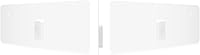
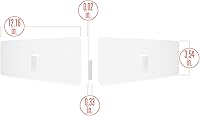
  • Dimensions: The antenna measures 12.16 x 3.54 x 0.33 inches, making it slim enough to lie flat against any wall or window.
  • Weight: At just 2.61 ounces, the Monarch 40 is light enough to be held in place by its adhesive backing without additional mounting hardware.
  • Form Factor: Paper-flat panel design with a clean white finish intended to blend discreetly into standard interior walls and window frames.
  • Claimed Range: RGTech rates the antenna at up to 40 miles, though real-world performance typically peaks between 20 and 25 miles under normal indoor conditions.
  • Reception Type: Multidirectional reception captures signals from multiple directions simultaneously without requiring manual aiming or repositioning.
  • Technology: Uses UWB (Ultra Wide Band) technology to support a broader capture of frequencies across both UHF and VHF bands.
  • Signal Filter: Built-in 4G LTE interference filter actively blocks cellular frequencies that can degrade broadcast signal quality in urban environments.
  • Compatible Signals: Supports UHF, VHF, and FM signal bands, covering the full range of standard over-the-air broadcast frequencies.
  • Impedance: 75 Ohm impedance matches the coaxial input standard used on virtually all modern televisions without requiring an adapter.
  • Device Support: Compatible with standard coaxial TV inputs, USB TV tuners, DVB-T receivers, and DAB radio devices.
  • Color: Available in white, designed to blend into typical interior walls and window surrounds.
  • Manufacturer Status: The product is not discontinued and remains actively available from RGTech as of the latest product data.
  • UPC: The Universal Product Code for this model is 853420007018, useful for verifying authenticity at retail.

Related Reviews
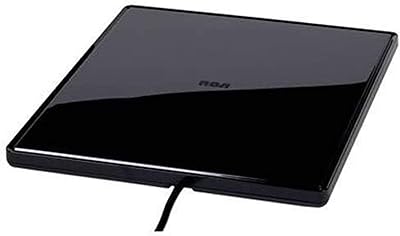
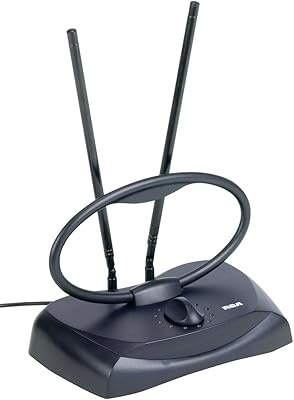
RCA ANT1360E Indoor HDTV Antenna
75%
76%
Signal Reception
91%
Ease of Setup
63%
Amplifier Performance
78%
Channel Count
71%
Build Quality
More
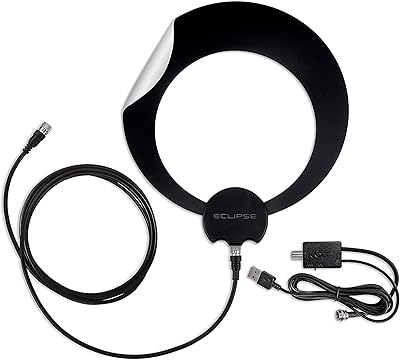
Antennas Direct ClearStream Eclipse Indoor TV Antenna
77%
74%
Signal Reception
67%
Amplifier Performance
93%
Design & Profile
91%
Ease of Setup
62%
Cable Length
More
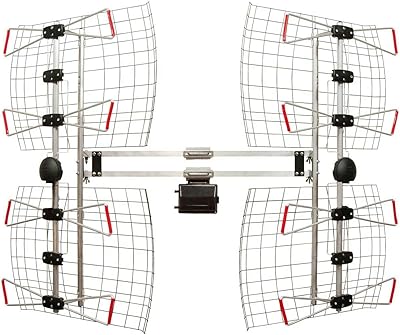
Antennas Direct DB8e Outdoor TV Antenna
73%
83%
Signal Reception
88%
Build Quality
86%
Weather Durability
58%
Ease of Installation
71%
Value for Money
More
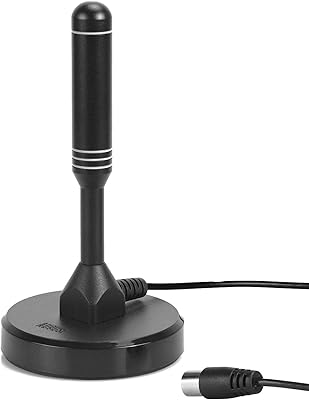
August DTA240 Indoor/Outdoor TV Antenna
78%
72%
Signal Reception
91%
Ease of Setup
88%
Magnetic Base Usability
67%
Build Quality
63%
Cable Length
More
RCA ANT121Z Indoor TV Antenna
71%
78%
Signal Reception (VHF)
41%
Signal Reception (UHF)
94%
Ease of Setup
57%
Build Quality
72%
Value for Money
More
One for All 14432 HDTV 1080p Antenna
85%
88%
Reception Performance
93%
Ease of Setup
85%
App Experience
79%
Signal Stability
84%
Build Quality
More
Mohu Gateway Indoor TV Antenna
86%
87%
Signal Reception
92%
Setup and Installation
89%
Design and Aesthetics
90%
Value for Money
84%
Durability and Build Quality
More
RCA ANT751E Yagi HDTV Antenna
85%
88%
Reception Quality
90%
Durability
85%
Installation Ease
89%
Signal Range
82%
App Integration (Signal Finder)
More
Vansky VS-TX01 HDTV Antenna
85%
88%
Signal Reception
91%
Ease of Installation
85%
Range
84%
Build Quality
93%
Compatibility with HDTVs
More
ANTOP AT-211B Indoor TV Antenna
71%
72%
Signal Reception
67%
Amplifier Performance
91%
Ease of Setup
63%
Build Quality
58%
VHF Channel Support
More

FAQ

No tools required at all. The antenna has a peel-and-stick backing, so you just choose a spot on your wall or window, press it down, run the coaxial cable to your TV, and do a channel scan from your TV's settings menu. Most people are up and running in under ten minutes.

In ideal conditions — think a ground-floor apartment with clear line-of-sight to towers and no thick walls — 40 miles is technically possible. Realistically though, most users get dependable results within about 20 to 25 miles of their local broadcast towers. If you are on the edge of that range, your building materials and local terrain will play a big role in what you actually receive.

Higher placement generally wins. A window on an upper floor facing the direction of your local towers is usually the sweet spot. If you are not sure where your towers are, the website AntennaWeb or TVFool can show you a signal map for your address. Avoid placing the Monarch 40 behind large metal objects or inside cabinets.

Yes, and this is one of its more versatile features. This flat indoor antenna works with USB TV tuner sticks and DVB-T receivers in addition to standard televisions. As long as your device has a coaxial input or compatible adapter, you should be good to go.

It can, but lower floors are harder on any indoor antenna. Signals weaken when they have to pass through multiple floors, concrete foundations, or surrounding buildings. If you are in a basement or a street-level unit in a dense area, you may get fewer channels than someone on a higher floor, and a signal amplifier might help.

It genuinely helps in areas where LTE signals are dense — which describes most cities. Without filtering, cellular frequencies can bleed into the broadcast band and cause pixelation or dropped signals. The Monarch 40 handles this passively, so you do not have to do anything; it just runs in the background.

That depends almost entirely on where you live. Buyers in major metro areas often report picking up 30 or more channels after a scan, while someone in a smaller market 25 miles from the nearest tower might only get 10 to 15. Checking a site like AntennaWeb with your address will give you a realistic estimate before you buy.

You can split the signal using a coaxial splitter, but be aware that splitting weakens the signal. If your reception is already strong, a two-way splitter usually works fine. If you are in a marginal signal area, splitting may cause one or both TVs to lose weaker channels. A powered splitter or amplifier can help offset the loss.

For most standard setups — antenna near a window, TV within a typical room distance — the included cable works fine. If your TV is far from the nearest window or in a large room, you might want a cable extension. Standard coaxial extension cables are inexpensive and easy to find.

Probably not reliably. This paper-thin antenna is a passive device with no amplification, which means it depends on a reasonably strong incoming signal. Rural areas with towers spread out beyond 25 to 30 miles, rolling terrain, or heavy tree cover are where it consistently underperforms. For those situations, an amplified outdoor or attic antenna is a better match.