Overview

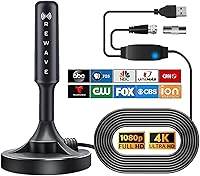
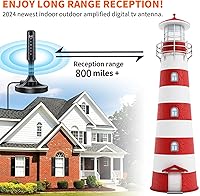
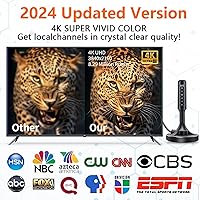
The Rewave Amplified Indoor HD TV Antenna is a compact, wallet-friendly way to receive free over-the-air broadcast channels without a monthly subscription. An amplified indoor antenna boosts weak signals from nearby broadcast towers, which matters a lot for households cutting cable or supplementing a streaming service with local news. That said, the 800-mile range claim deserves real skepticism — no indoor antenna realistically pulls signals from that distance. Actual reception depends on how close you are to local towers, what your walls are made of, and the terrain around your home. Go in with realistic expectations and this unit may genuinely surprise you.

Features & Benefits

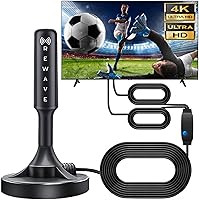
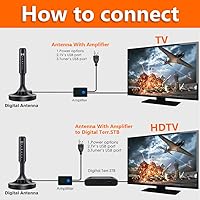
The Rewave antenna plugs into any TV with a standard coaxial input — no adapters needed for most sets made in the past two decades. Once connected, you run a quick channel scan and the TV finds whatever it can pick up locally. Signals come through in 720p or 1080p using the ATSC broadcast standard, so you get genuine HD on compatible channels rather than a compressed stream. The unit is small enough to sit flat on a shelf or press against a window, which helps when experimenting with placement for better reception. At roughly the size of a paperback, repositioning it takes no effort at all.

Best For

This indoor antenna is a solid fit for people living within a reasonable distance of their local broadcast towers — suburban neighborhoods and smaller cities are the sweet spot. It is particularly well-suited for renters and apartment dwellers who cannot mount an outdoor antenna or run cable through walls. It also works well as a supplemental setup for streaming households that still want local news, live network sports, or primetime shows without paying for them. Placing it in a bedroom or kitchen as a no-subscription secondary TV is another practical use case. One purchase, no recurring charges.

User Feedback

Buyers close to broadcast towers consistently praise the Rewave antenna for its hassle-free setup and solid HD reception on the major networks — the install process genuinely takes only a few minutes, and that convenience earns it considerable goodwill. The more critical feedback comes from users in rural or fringe areas, who find that actual channel counts land well below the marketed 200, and that reception fades during storms despite claims of all-weather stability. A smaller group notes this signal booster makes a meaningful difference in weak-signal homes near urban centers. Balanced verdict: strong value for suburban buyers near towers, but rural users should temper expectations before purchasing.

Pros

  • Simple plug-and-scan setup takes only a few minutes with no tools required.
  • Compact size makes it easy to reposition near a window for better signal.
  • Connects to virtually any TV with a standard coaxial input, including older sets.
  • Delivers genuine HD picture quality on local channels via the ATSC broadcast standard.
  • A one-time purchase with no subscription or monthly fees attached.
  • Works well for picking up major free networks like ABC, CBS, and NBC in suburban areas.
  • Lightweight and small enough to use discreetly as a secondary bedroom or kitchen TV antenna.
  • Users close to broadcast towers report consistent channel reception on the main networks.
  • Ranked among the top 300 in its category on Amazon, reflecting solid buyer volume.

Cons

  • The 800-mile range claim is a marketing exaggeration — real-world reach is a fraction of that figure.
  • Rural and fringe-area buyers frequently report disappointment with channel counts and signal stability.
  • Reception can degrade noticeably during storms despite all-weather stability claims.
  • Actual number of receivable channels varies widely by location and rarely hits the advertised 200.
  • Performance depends heavily on placement, meaning trial-and-error repositioning is often necessary.
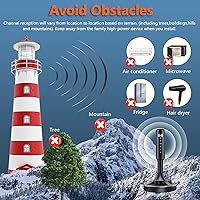
  • Building materials like thick brick or concrete walls can significantly reduce signal strength.
  • No outdoor mounting hardware or weather-resistant casing for users who want a permanent exterior setup.
  • The amplifier adds a small level of noise to very weak signals, which can worsen reception in fringe zones.

Ratings

The scores below for the Rewave Amplified Indoor HD TV Antenna were generated by our AI system after processing verified buyer reviews from multiple global markets, with spam, bot-submitted, and incentivized feedback actively filtered out before analysis. Each category reflects the honest distribution of real user experiences — not a polished average — so both standout strengths and recurring frustrations are represented transparently.

Ease of Setup
91%
Users across skill levels consistently describe installation as one of the fastest they have experienced with any antenna — plug in the coaxial cable, connect the USB power lead, run a channel scan, and you are done in under five minutes. Renters and first-time cord-cutters in particular appreciate that no drilling, no ladder, and no instruction manual deep-dives are required.
A small number of buyers note that the cable length is just barely enough for certain room configurations, forcing them to rearrange furniture to get the antenna close enough to a window. A longer included cable would eliminate this friction entirely.
Signal Reception Quality
67%
33%
In suburban neighborhoods within 40 to 60 miles of broadcast towers, this signal booster regularly pulls in the major networks — ABC, CBS, NBC, and Fox — in clean 1080i or 720p HD. Users in those conditions describe a noticeably stable picture with minimal pixelation under normal weather.
Reception drops off sharply for buyers in rural areas or homes with thick masonry walls, where signal consistency becomes unreliable. Several users report that channels locked in during initial scanning would disappear entirely the following day with no change in placement.
Range Accuracy
29%
71%
In densely populated metro areas where broadcast towers are practically around the corner, the amplifier does provide a meaningful boost over a passive antenna, helping pull in signals that might otherwise hover at the edge of detection.
The advertised 800-mile range is widely criticized in user feedback as a serious exaggeration, and it is — no consumer indoor antenna operates anywhere near that figure. Buyers who purchased based on that claim and live more than 70 miles from towers were almost universally disappointed with real-world results.
Channel Count
53%
47%
Users in major metro areas like Los Angeles, Chicago, and New York report channel counts in the 60 to 80 range, which covers all the major networks plus a solid selection of sub-channels including news, weather, and foreign-language broadcasts.
The advertised figure of up to 200 channels sets expectations that reality rarely meets outside the densest broadcast markets. Buyers in mid-size cities frequently land between 20 and 40 channels, and rural users sometimes report single digits, which generates significant disappointment relative to the marketing.
Value for Money
82%
18%
At its price point, this indoor antenna represents a genuinely compelling one-time cost compared to ongoing cable or satellite subscriptions. For users in good reception areas who just want local news and network primetime, the return on that single purchase starts paying off almost immediately.
Buyers who struggle with reception feel the value proposition collapses quickly — if you can only reliably pull in two or three channels, the price feels steep relative to a refund hassle. The value rating is heavily location-dependent, which the product packaging does not adequately communicate.
Build & Materials
61%
39%
The antenna feels adequately assembled for its price tier, and the flat, lightweight form factor makes it easy to reposition without worrying about it tipping over or damaging surfaces. Most users describe it as visually unobtrusive against a wall or window.
The plastic housing feels thin and somewhat cheap to the touch, and the coaxial cable included in the box is notably stiff and difficult to route neatly. A handful of buyers report the USB power connector becoming loose after repeated repositioning.
Weather Resilience
48%
52%
Under normal overcast or light rain conditions, most users in good-reception areas report no meaningful drop in picture quality, which suggests the amplifier is doing its job under routine weather variation.
Heavy rain, thunderstorms, and high winds consistently trigger signal degradation or complete channel dropouts based on user feedback, directly contradicting the all-weather stability claims made in product marketing. This is a recurring complaint rather than an isolated edge case.
Placement Flexibility
74%
26%
The compact footprint means it fits on a narrow windowsill, behind a TV, on top of a media cabinet, or even taped flat to a wall using the included adhesive strip. Users appreciate being able to experiment with positioning without committing to a permanent mount.
Getting the best signal often requires careful trial-and-error placement near windows, which can look untidy in a well-decorated room. Users with TVs located far from exterior walls find the included cable length limits where they can realistically position the antenna for optimal reception.
TV Compatibility
88%
The standard coaxial connection means this signal booster works with virtually every TV sold in the past two decades regardless of brand, including Samsung, LG, Sony, Vizio, and TCL sets. Users with older non-smart HDTVs report no compatibility issues whatsoever.
On rare occasions, buyers using very old analog-tuner televisions discover they need a digital converter box, which is not mentioned clearly in the packaging. This is a minor edge case but still causes confusion for a segment of less technically experienced buyers.
Amplifier Performance
63%
37%
In edge-of-range situations — say 50 to 65 miles from towers — the built-in amplifier does make a measurable difference compared to passive antennas at a similar price, helping lock onto signals that would otherwise break up or drop entirely.
In locations very close to powerful broadcast towers, the amplifier can actually overload the tuner and cause channels to drop out, a known phenomenon called amplifier saturation. Some users close to towers report better results after bypassing the amplifier entirely, which is not a workflow the product supports.
Packaging & Unboxing
77%
23%
The box arrives in decent condition and the components are laid out clearly, making it easy to identify every part at a glance. Most buyers describe the unboxing as straightforward, with no confusing component labeling.
The included instruction sheet is minimal and does not address common troubleshooting scenarios like what to do when a channel scan returns zero results. New antenna users who encounter setup issues are left to search online for solutions on their own.
Long-Term Durability
56%
44%
Users who have owned this indoor antenna for several months without moving it report that it continues to perform at the same level as when first set up, suggesting the components hold up adequately under normal stationary use.
Reports of signal degradation over time, loose connectors, and cable fraying near the coaxial plug suggest that the build is not engineered for longevity. Buyers who frequently reposition the unit report wear on the connection points faster than expected.
Customer Support
58%
42%
A portion of users who reached out to the manufacturer report receiving helpful responses and, in some cases, replacement units for units that arrived defective, which is a positive sign for a budget-tier product.
Response times are inconsistent, and a notable share of buyers who contacted support for troubleshooting received generic replies that did not address their specific reception problems. Post-purchase support quality appears to vary significantly depending on when and how contact is made.

Suitable for:

The Rewave Amplified Indoor HD TV Antenna is a practical pick for cord-cutters who live within a reasonable distance of their local broadcast towers — typically within 50 to 70 miles in suburban or smaller urban areas. Renters and apartment dwellers who cannot mount an outdoor antenna or drill through walls will find it especially useful, since it requires nothing more than a coaxial port and a free outlet. It also works well for streaming-first households that still want access to free local news, network primetime, or live sports without adding another monthly bill. Setting it up as a secondary TV solution in a bedroom or kitchen is a genuinely smart use case — low cost, no ongoing fees, and minimal setup effort. Budget-conscious buyers who want a one-time purchase rather than a subscription will likely feel they got good value here, provided their location supports solid OTA reception.

Not suitable for:

Buyers in rural areas or regions far from broadcast towers should be cautious before purchasing the Rewave Amplified Indoor HD TV Antenna, as its real-world performance drops sharply the further you get from transmission infrastructure. The advertised 800-mile range is a significant overstatement — no amplified indoor antenna of this size and price tier realistically approaches that distance, and expecting it to do so will lead to frustration. People living in homes with thick concrete or brick walls, heavily wooded surroundings, or hilly terrain may also find reception inconsistent regardless of placement. If you are after a large channel count in a fringe reception area, this signal booster is unlikely to deliver on that front either — actual available channels depend entirely on what towers are broadcasting near you. Households that need completely reliable, weather-stable reception for critical viewing should also consider an outdoor or attic-mounted antenna instead.

Specifications

  • Brand: This antenna is sold under the REWAVE brand and manufactured by BMBDZSW.
  • Dimensions: The unit measures 5.91″ x 4.02″ x 1.73″, making it small enough to sit on a shelf or press flat against a window.
  • Weight: The antenna weighs 8.1 ounces, light enough to reposition easily without any mounting tools.
  • Color: Available in black, which blends discreetly with most TV setups and entertainment furniture.
  • Signal Formats: Supports over-the-air broadcasts in 720p and 1080p HD via the ATSC digital broadcast standard.
  • Connection Type: Uses a standard coaxial (RF) connector, compatible with virtually all TVs and digital converter boxes that have a coaxial input port.
  • Amplification: Includes a built-in signal amplifier designed to boost weak OTA signals in areas with moderate distance from broadcast towers.
  • Advertised Range: The manufacturer claims a reception range of up to 800 miles, though real-world performance is typically closer to 50–70 miles under favorable conditions.
  • Channel Count: The product advertises reception of up to 200 channels, though actual available channels depend entirely on local broadcast infrastructure.
  • Compatibility: Works with smart TVs, standard HDTVs, and older sets paired with a digital-to-analog converter box, as long as a coaxial input is present.
  • Setup Method: Installation involves plugging in the coaxial cable and power lead, then running a channel scan through the TV menu — no tools or technical experience required.
  • Use Environment: Primarily designed for indoor use, though the manufacturer also markets it for light outdoor or sheltered placement.
  • Power Source: Powered via a USB cable connected to a TV USB port or standard USB wall adapter, which is typically included.
  • ASIN: The Amazon Standard Identification Number for this product is B0DDT61HZ4.
  • Market Ranking: Ranked #258 in the TV Antennas category on Amazon as of its most recent recorded ranking.
  • Release Date: This antenna was first made available for purchase in August 2024.
  • Package Contents: The package includes one antenna unit, a coaxial cable, a USB power cable, and basic setup instructions.
  • Weather Resistance: The manufacturer states the antenna is usable in various weather conditions, though indoor signal quality can still be affected by heavy storms or atmospheric interference.

Related Reviews
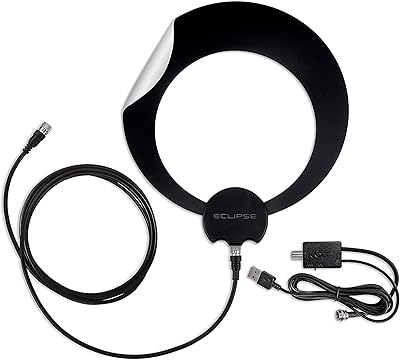
Antennas Direct ClearStream Eclipse Indoor TV Antenna
77%
74%
Signal Reception
67%
Amplifier Performance
93%
Design & Profile
91%
Ease of Setup
62%
Cable Length
More
UltraPro 47331 Amplified Indoor TV Antenna
77%
74%
Signal Reception Quality
91%
Ease of Setup
88%
Design & Aesthetics
67%
Amplifier Performance
71%
Channel Count
More
ARNOTTCASA Amplified HD Digital TV Antenna
74%
71%
Signal Reception
83%
Value for Money
88%
Ease of Setup
63%
Amplifier Performance
61%
Build Quality
More
Mohu Leaf Plus Amplified Indoor TV Antenna
75%
72%
Signal Reception
54%
Range Accuracy
68%
Amplifier Performance
89%
Design & Aesthetics
91%
Ease of Setup
More
Philips Crystal Amplified Indoor TV Antenna SDV3237N/27
84%
85%
Signal Quality
91%
Setup Ease
82%
Range Performance
89%
Compatibility
84%
Design & Build
More
GE Hover Amplified HD Digital TV Antenna 37075
85%
88%
Reception Performance
91%
Picture Quality
85%
Ease of Installation
87%
Value for Money
83%
Build Quality
More
Philips SDV7219N/27 Indoor TV Antenna
75%
72%
Signal Reception
61%
Amplifier Performance
88%
Design & Aesthetics
83%
Ease of Setup
79%
VHF Channel Pickup
More
Winegard FL5500A FlatWave Amped Digital HD Indoor TV Antenna
86%
88%
Signal Reception
91%
Ease of Setup
90%
Value for Money
84%
Range Performance
87%
Build Quality
More
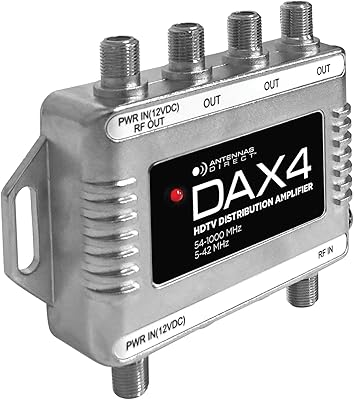
Antennas Direct DAX4 4-Output TV Antenna Distribution Amplifier
86%
87%
Signal Quality & Performance
91%
Ease of Installation
85%
Build Quality & Durability
92%
Value for Money
78%
Weather Resistance
More
ANTOP AT-211B Indoor TV Antenna
71%
72%
Signal Reception
67%
Amplifier Performance
91%
Ease of Setup
63%
Build Quality
58%
VHF Channel Support
More

FAQ

The honest answer is that the 800-mile figure is marketing language and should not be taken literally. Real-world indoor antennas, even amplified ones, typically reach broadcast towers within 50 to 70 miles under good conditions. That said, if you live in a suburban area reasonably close to local towers, this signal booster can pull in ABC, CBS, NBC, and other free over-the-air channels in solid HD. Check a site like antennaweb.org to see which towers are near you before buying.

Yes, as long as your TV has a coaxial input port, you are good to go. Older sets manufactured after the U.S. digital broadcast transition in 2009 typically have a built-in ATSC tuner and will work directly. If your set predates that era and uses an analog tuner only, you would need an inexpensive digital converter box in between.

Start by placing the Rewave Amplified Indoor HD TV Antenna near a window that faces the direction of your local broadcast towers. Higher placement generally helps — on top of a bookshelf or near an upper window works better than behind a TV cabinet. If reception is poor, try moving it a few feet in either direction and running a fresh channel scan each time, since even small position changes can make a noticeable difference.

The manufacturer says it is suitable for light outdoor use, but it is not a purpose-built outdoor antenna and has no weatherproofing rating. Short-term sheltered placement on a covered balcony or porch is probably fine, but leaving it fully exposed to rain or extended sun is not recommended.

This depends almost entirely on where you live. The advertised 200 channels is the upper ceiling under ideal conditions in a major metro area, but most users receive somewhere between 20 and 60 channels. People in rural or fringe-signal areas may get fewer than 10. Running a free check on antennaweb.org or rabbitears.info before purchasing gives you a realistic preview of what is actually available in your zip code.

Yes, the built-in amplifier requires power to function — it draws power through a small USB cable. If you unplug the power while leaving the coaxial cable connected, you may still receive some channels depending on your proximity to towers, but signal quality will likely drop. For best results, keep both the coaxial and USB power cables connected.

It can. Despite stability claims from the manufacturer, heavy rain, thunderstorms, and dense cloud cover can cause temporary signal drops or pixelation on some channels. This is a known limitation of over-the-air reception in general, not unique to this product. Most users find it clears up once the weather passes.

Yes, and it is worth doing. When you move this indoor antenna to a new position — even just a few feet — a fresh channel scan helps the TV lock onto the best available signals from the new placement. It only takes a minute or two and often results in picking up channels that were missed before.

Yes, the antenna connects via a standard coaxial port, which is universal across TV brands. Whether you have a Samsung, LG, Vizio, Sony, TCL, or any other brand with a coaxial input, setup is the same: plug in, power on, and run a channel scan from your TV settings menu.

A non-amplified antenna is a passive device that simply captures broadcast signals, while an amplified model like this one includes a small built-in booster that strengthens weaker signals before they reach your TV tuner. Amplified antennas tend to perform better at longer distances from towers, but they can also amplify noise and interference, which sometimes causes problems in areas already close to strong broadcast signals. If you are very close to towers — say within 20 miles — a basic non-amplified antenna might actually perform equally well or better.