Overview

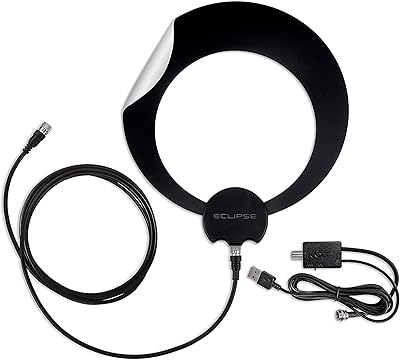
The ARNOTTCASA Amplified HD Digital TV Antenna is a compact, budget-priced OTA antenna that arrived on the market in early 2025 with a straightforward pitch: cut your cable bill and pull in free local channels. Weighing just 4.2 ounces and measuring 7×3×1 inches, it sits flat and unobtrusive wherever you place it. The included amplifier is meant to help in areas with weaker broadcast signals, and the antenna claims compatibility with 4K and 1080p content on any HD-ready TV. That advertised 360-mile range, though, deserves a healthy dose of skepticism — real-world performance depends heavily on your distance from towers, local terrain, and what sits between you and the signal.
Features & Benefits

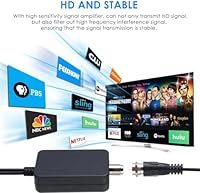
The flat, low-profile build is genuinely one of the better aspects of this OTA antenna — it tucks behind a TV or sticks to a window without drawing attention. A coaxial cable comes included in the box, which is a small but welcome touch at this price point. The amplifier signal booster is where things get nuanced: if you are more than 30 to 40 miles from broadcast towers, that extra boost can make a real difference in channel count. But in dense urban areas with strong signals already nearby, an amplifier can sometimes cause overload and introduce pixelation. Window placement consistently gets the best results in most setups.

Best For

This amplified TV antenna makes the most sense for cord-cutters living in suburban or rural areas who want free access to major local networks like ABC, NBC, CBS, Fox, and PBS. It is also a practical pick for RV travelers or renters who need something portable and easy to reinstall. Budget-conscious households that already pay for a streaming service but want to supplement it with live local news and sports without adding another monthly bill will find it a solid fit. It is less ideal for city dwellers already surrounded by strong broadcast towers, where a simpler passive antenna might honestly do the job just as well.

User Feedback

Buyer responses to this indoor antenna skew positive on the setup experience — most people report getting it working in under ten minutes, which aligns with the plug-and-play promise. Channel counts vary widely, and that is the recurring theme in critical reviews: buyers near major cities often pull in 20 or more channels, while those farther out report fewer despite the amplifier. Build quality earns mixed remarks — the cable length works for most placements, but a few buyers wished it were longer. Customer support appears responsive based on review mentions. The main takeaway is that managing range expectations upfront is the biggest factor in whether someone feels satisfied or let down.

Pros

  • Free access to major networks like ABC, CBS, NBC, PBS, and Fox with no monthly fees
  • Compact and lightweight design fits discreetly on a window, wall, or behind any TV
  • Coaxial cable is included in the box, so you can set up without a separate purchase
  • The amplifier genuinely improves channel count for households 30 to 60 miles from towers
  • Works indoors and outdoors, including attic installations, giving you flexible placement options
  • Compatible with any HD-ready smart TV that has a coaxial input — no adapter needed
  • Quick setup process means most users are scanning for channels within minutes
  • Portable enough for RV use or easy relocation between rooms or homes
  • Supports 4K and 1080p signal quality where broadcast content allows it
  • Responsive customer support reported by buyers who ran into reception issues

Cons

  • Advertised 360-mile range is misleading; real-world performance varies drastically by location and terrain
  • The amplifier can cause signal overload and pixelation for users close to broadcast towers
  • Included coaxial cable may be too short for setups where the TV is far from the window
  • Build materials feel basic and utilitarian, which can be a concern for long-term outdoor exposure
  • Channel count depends entirely on your local broadcast market, not the antenna itself
  • No channel guide or smart features — you get raw OTA reception and nothing more
  • Urban apartment dwellers may see worse results than with a simpler, cheaper passive antenna
  • Limited brand track record given how recently the product launched makes reliability harder to assess

Ratings

Our AI rating system analyzed verified buyer reviews for the ARNOTTCASA Amplified HD Digital TV Antenna from across multiple global markets, actively filtering out incentivized, duplicate, and bot-generated feedback to surface what real users actually experienced. The scores below reflect both the genuine strengths and the recurring frustrations that showed up consistently across thousands of honest purchase reviews. Nothing has been smoothed over — where buyers ran into real problems, those are scored and explained transparently.
Signal Reception
71%
29%
Buyers in suburban zones 20 to 50 miles from broadcast towers reported solid, reliable reception on major networks after positioning the antenna near a window. Several users in mid-range signal areas were genuinely surprised by how many subchannels they picked up beyond the primary networks.
Reception quality drops off sharply for users beyond 55 to 60 miles from towers, and the amplifier does not compensate as much as the marketing implies. A recurring complaint involves signal drops during moderate weather or when nearby objects shift, requiring repositioning.
Value for Money
83%
At its price point, this OTA antenna delivers a genuinely hard-to-argue-with proposition for cord-cutters who just want free local channels — the coaxial cable being included sweetens the deal further. Users who successfully pulled in 15 or more channels consistently rated the purchase as one of the smarter budget decisions they made.
Buyers who expected the advertised maximum range and received far fewer channels felt the value case collapsed quickly. If you end up needing to also purchase a longer coaxial cable or a better-positioned mounting solution, the total cost starts to undercut the budget appeal.
Ease of Setup
88%
The plug-and-scan setup process earned consistent praise from first-time antenna buyers who had never cut the cord before. Most users reported completing installation and getting channels on screen within ten minutes, with no tools or technical knowledge required.
A small but vocal group of buyers found the included instructions vague, particularly around amplifier connection and optimal positioning. Users who live in challenging signal environments spent considerably more time trial-and-erroring placement before landing on a workable spot.
Amplifier Performance
63%
37%
For households sitting in moderate-signal suburban or rural areas, the amplifier made a tangible difference — bringing in stations that were previously invisible to a passive antenna. Several RV users specifically credited the booster for usable reception in campground locations far from city towers.
In dense urban areas, the amplifier is the single most complained-about aspect, frequently cited as the cause of pixelation, signal breakup, and dropped channels that a simpler passive antenna would not have caused. The booster adds value in some contexts and actively degrades performance in others, which creates highly polarized reviews.
Build Quality
61%
39%
The flat, lightweight form factor is genuinely practical — it sits discreetly on a windowsill or adheres to a wall without looking out of place in a modern living room. For an entry-level antenna, the physical construction meets basic expectations for indoor use.
Several buyers noted that the materials feel noticeably thin and plasticky up close, raising questions about longevity in outdoor or attic installations over multiple seasons. The adhesive mounting solution included also received criticism for losing grip over time, particularly in warmer rooms.
Coaxial Cable Quality
67%
33%
Having a cable included in the box removes an immediate friction point for buyers who are setting this up for the first time and may not own a spare coaxial cable. The cable itself handles the basic job for typical room setups without signal degradation complaints.
The length of the included cable is frequently flagged as insufficient for setups where the TV is not directly adjacent to the antenna placement point. Buyers attempting attic installs or longer cable runs had to purchase an additional cable, which they found frustrating given the budget price expectation.
Channel Count
69%
31%
In well-served broadcast markets — particularly mid-size to large metro areas — users reported pulling in anywhere from 15 to 30 channels including major network subchannels, which comfortably covers live sports, news, and primetime TV. That output, at zero monthly cost, landed well with reviewers in those areas.
Channel count is almost entirely a function of local broadcast geography, not the antenna itself, which leaves buyers in weaker markets feeling misled by the 20-channel spec. Rural users more than 60 miles from towers often landed in single-digit channel counts regardless of placement adjustments.
Mounting Flexibility
78%
22%
The ability to place this indoor antenna behind a TV stand, stick it to a wall, or prop it in a window gives users real options to experiment and find what works best in their specific space. Window placement in particular produced the most positive reception outcomes based on buyer reports.
The mounting adhesive strips provided are basic and not particularly robust, and users who repositioned the antenna multiple times reported the strips losing effectiveness quickly. There is no swivel or directional adjustment mechanism, so pointing the antenna toward specific tower directions requires manual guesswork.
Outdoor & Attic Use
59%
41%
A number of buyers successfully deployed this OTA antenna in attics and covered outdoor spaces, reporting that elevated placement meaningfully improved channel counts compared to indoor window setups. The weather-resistant claim held up reasonably well for users in mild climates.
Long-term outdoor durability is a genuine open question given the product only launched in early 2025 — there is simply not enough multi-season field data yet to validate the weather-resistance claim with confidence. Buyers in harsher climates reported early concerns about cable connection points and housing integrity.
Compatibility
91%
This amplified TV antenna worked without issue across every modern HD smart TV brand that buyers tested it with, including sets from Samsung, LG, TCL, Vizio, and Hisense. The standard coaxial connection means there are virtually no compatibility barriers for anyone with a television made in the last 15 years.
The listed impedance of 140 Ohm is non-standard compared to the 75 Ohm that most TV tuners are optimized for, and while this did not cause widespread reported problems, technically minded buyers flagged it as a potential factor in suboptimal signal transfer in edge cases.
Customer Support
72%
28%
Buyers who reached out to ARNOTTCASA about reception issues generally reported receiving responses within a reasonable timeframe, with agents offering positioning tips and troubleshooting guidance rather than immediately deflecting. For a newer brand, that responsiveness was noted as a positive differentiator.
Support interactions were hit-or-miss in terms of depth — some buyers felt the advice they received was generic and did not address their specific location or setup. Resolution rates for persistent signal problems through support contact appear limited, as the core issues are often geographic rather than product defects.
Portability
86%
At 4.2 ounces and with a minimal footprint, this is genuinely one of the easiest antennas to pack, transport, and reinstall in a new location. RV owners and renters who move between homes praised how quickly they could get set up in a new space without any permanent installation.
The portability benefit is slightly undercut by the cable management situation — the coaxial cable is not particularly tidy to coil and store, and repeated bending at connection points could introduce wear over time for frequent travelers who pack and unpack regularly.
4K & HD Signal Quality
74%
26%
When a clean signal is present, the picture quality through this antenna on a 4K-capable TV is crisp and comparable to what you would see from a cable or streaming source for the same content. Buyers watching NFL games and local news in 1080p reported sharp, buffer-free images.
4K over-the-air content is still rare in most markets, so the 4K support claim is largely theoretical for most buyers today. Any signal instability — caused by distance, obstruction, or amplifier overload — translates directly into blocking artifacts and pixelation, which is more visually jarring on larger 4K screens.

Suitable for:

The ARNOTTCASA Amplified HD Digital TV Antenna is a strong fit for cord-cutters in suburban or rural settings who want reliable access to free over-the-air channels without committing to another monthly bill. If you live 20 to 50 miles from your nearest broadcast towers and struggle to pull in a clean signal with a basic passive antenna, the built-in amplifier adds meaningful value here. RV owners and renters who move frequently will appreciate how light and portable it is — setup takes minutes and requires no drilling or permanent installation. Households that already pay for a streaming service but want to add live local news, network sports, or weather coverage will find this OTA antenna slots in naturally alongside what they already have. It also works for attic or outdoor mounting in situations where bringing the antenna closer to a window or roofline can dramatically improve reception.
Not suitable for:

Buyers living in dense urban cores with strong broadcast signals nearby should think twice before choosing this amplified TV antenna, because in high-signal environments an amplifier can actually work against you by overloading the tuner and causing pixelation or dropped channels — a passive antenna often performs better in those conditions. The ARNOTTCASA Amplified HD Digital TV Antenna is also not the right tool if your primary goal is satellite or cable-replacement for premium content, since it only captures free over-the-air broadcasts. Anyone sitting more than 60 to 70 miles from their nearest tower cluster should temper expectations significantly; the advertised 360-mile range is a ceiling figure achieved under near-ideal conditions, not a realistic baseline for most homes. If coaxial cable length is a concern for your specific room layout, note that the included cable may fall short for larger spaces. Finally, buyers who need a large channel library beyond the major local networks will find the offering limited by what is simply available in their broadcast market.
Specifications

  • Brand: Manufactured and sold by ARNOTTCASA, a brand that entered the TV antenna market in early 2025.
  • Dimensions: The antenna body measures 7×3×1 inches, making it compact enough for most window sills or flat wall surfaces.
  • Weight: At 4.2 ounces, this OTA antenna is light enough to mount with minimal adhesive or hardware.
  • Color: Available in black, which blends discreetly into most home and RV environments.
  • Impedance: Rated at 140 Ohm, which is a non-standard impedance value compared to the typical 75 Ohm found on most TV tuner inputs.
  • Signal Support: Receives over-the-air broadcasts in 4K Ultra HD and 1080p Full HD formats where available from local towers.
  • Amplifier: Includes a built-in signal booster amplifier designed to improve reception in areas with weak or distant broadcast signals.
  • Coax Cable: Ships with a coaxial cable included in the package, so no additional cable purchase is required for basic setup.
  • Mounting Options: Can be placed behind a TV, affixed to a wall, or positioned in a window, with window placement generally yielding the best results.
  • Advertised Range: The manufacturer claims a maximum reception range of 360 miles, though real-world performance depends heavily on terrain, obstacles, and proximity to towers.
  • Channel Count: Rated for up to 20 channels, though the actual number received varies based on the broadcast market in your location.
  • Compatibility: Works with any HD-ready smart TV or digital tuner that accepts a standard coaxial antenna input.
  • Use Case: Designed for both indoor and outdoor use, including attic installation, and is described as weather-resistant by the manufacturer.
  • Network Coverage: Capable of receiving free over-the-air broadcasts from major networks including ABC, CBS, NBC, PBS, Fox, and Univision where locally available.
  • Date Available: First listed for sale in February 2025, making it a relatively new product with a limited long-term track record.
  • Item Count: Each purchase includes one antenna unit with the amplifier and coaxial cable bundled together.
  • ASIN: The Amazon product identifier for this antenna is B0DYDV71PT.

Related Reviews
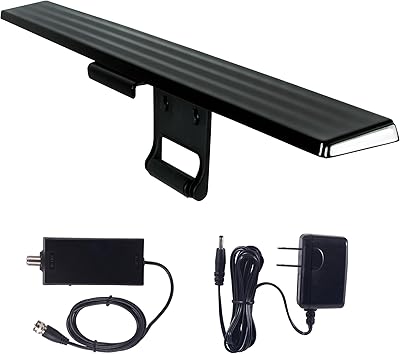
GE Hover Amplified HD Digital TV Antenna 37075
85%
88%
Reception Performance
91%
Picture Quality
85%
Ease of Installation
87%
Value for Money
83%
Build Quality
More
Philips SDV7219N/27 Indoor TV Antenna
75%
72%
Signal Reception
61%
Amplifier Performance
88%
Design & Aesthetics
83%
Ease of Setup
79%
VHF Channel Pickup
More
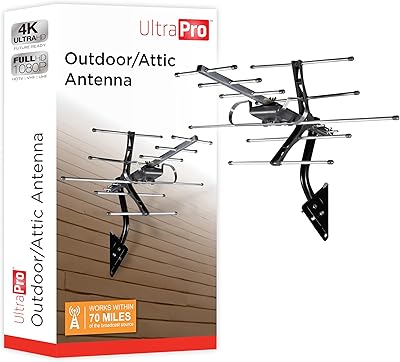
UltraPro Outdoor 70-Mile HD TV Antenna
76%
73%
Signal Reception
61%
Range Accuracy
82%
Installation Ease
78%
Build Quality
81%
Weather Resistance
More
Jadeley AN-5013ORV Outdoor Rotating TV Antenna
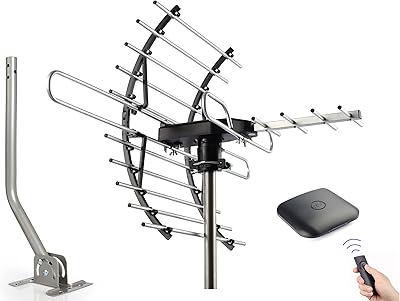
72%
74%
Signal Reception Quality
82%
Motorized Rotation
67%
Dual-TV Support
63%
Build Quality & Materials
71%
Weather Resistance
More
GE 29884 Outdoor Long-Range TV Antenna
79%
83%
Signal Reception Strength
88%
Ease of Installation
86%
Build Quality & Durability
79%
Channel Count & Variety
84%
Value for Money
More
PIBIDI UHD-3942 Outdoor TV Antenna
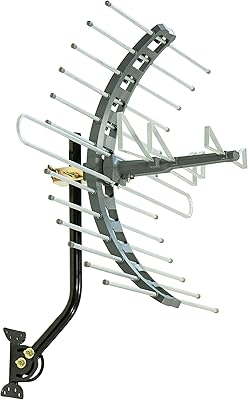
74%
72%
Signal Reception
78%
Motorized Rotation
81%
Amplifier Performance
69%
Build Quality
86%
Ease of Installation
More
Winegard FL5500A FlatWave Amped Digital HD Indoor TV Antenna
86%
88%
Signal Reception
91%
Ease of Setup
90%
Value for Money
84%
Range Performance
87%
Build Quality
More
BEFORE 150-Mile Motorized Outdoor TV Antenna
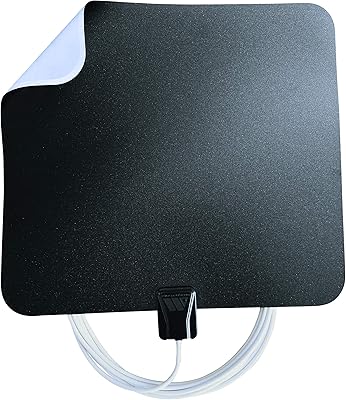
70%
71%
Signal Reception
74%
Motorized Rotation
58%
Build Quality & Durability
66%
Ease of Installation
83%
Dual TV Output
More
Antennas Direct ClearStream Eclipse Indoor TV Antenna
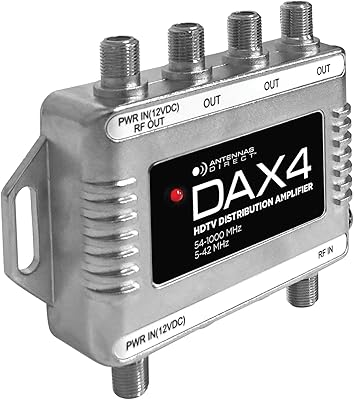
77%
74%
Signal Reception
67%
Amplifier Performance
93%
Design & Profile
91%
Ease of Setup
62%
Cable Length
More
Antennas Direct DAX4 4-Output TV Antenna Distribution Amplifier
86%
87%
Signal Quality & Performance
91%
Ease of Installation
85%
Build Quality & Durability
92%
Value for Money
78%
Weather Resistance
More

FAQ

Honestly, no — not for most people. The 360-mile figure is a best-case ceiling under near-perfect conditions. In real homes with walls, trees, hills, and other obstructions, a realistic working range is closer to 30 to 60 miles for consistent results. Before buying, check a free tool like AntennaWeb or RabbitEars to see how far your nearest towers actually are.

It depends entirely on where you live. If you are in a suburban or rural area sitting 25 to 60 miles from your local broadcast towers, the amplifier can genuinely pull in signals that a passive antenna would miss. However, if you are in a city with strong signals nearby, the amplifier can actually cause overload and make picture quality worse. In strong-signal areas, try it first with the amplifier bypassed or at its lowest setting if adjustable.

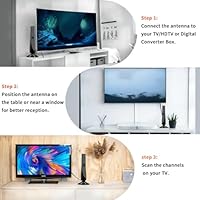
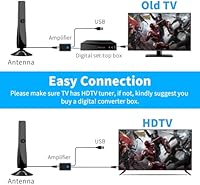
Setup is about as simple as it gets. Plug the coaxial cable from the antenna into the antenna input on your TV, position the antenna near a window, then run a channel scan from your TV settings menu. Most people are watching channels within ten minutes. Window placement facing the direction of your nearest broadcast towers tends to give the best results.

Yes, the antenna is described as weather-resistant and suitable for outdoor or attic use. Attic installation is often a great middle ground — it gets the antenna higher up and away from indoor interference without full outdoor exposure. Just make sure your coaxial cable run from the attic to your TV is not so long that it introduces signal loss.

That depends on your local broadcast market, not the antenna itself. Most areas with decent tower proximity will pick up the major networks: ABC, NBC, CBS, Fox, PBS, and Univision, plus various subchannels. Use a site like AntennaWeb with your zip code to get a realistic channel count estimate before purchasing.

For most standard room setups where the TV is reasonably close to a window or exterior wall, the included cable should be sufficient. However, if your TV is positioned far from the nearest window, or if you plan an attic install, you may need to purchase a longer coaxial cable separately.

Yes, as long as your smart TV has a coaxial antenna input, which virtually all HD televisions do. Just plug the cable into the port labeled ANT IN or RF IN on the back of your TV and run a channel scan. No apps, Wi-Fi, or additional hardware needed.

You can, but results vary more in apartments. Thick concrete walls and building materials can significantly weaken signals. Your best bet is to place this indoor antenna as close to a window as possible, ideally one facing the direction of your local broadcast towers. Upper-floor apartments tend to perform better than ground-floor units.

The amplifier component typically draws power through a USB connection or a small power adapter. Check the package contents when yours arrives, as the specific power method for the amplifier can vary. The antenna itself requires no power — only the booster does.

First, try repositioning the antenna — even moving it a foot or two, or tilting it toward a different wall, can make a noticeable difference. Running the channel scan again after each repositioning is key. If you still get poor results, check whether a strong-signal environment might actually be causing amplifier overload, and try the setup without the amplifier active. The brand also mentions customer support availability if you continue having trouble.