Overview

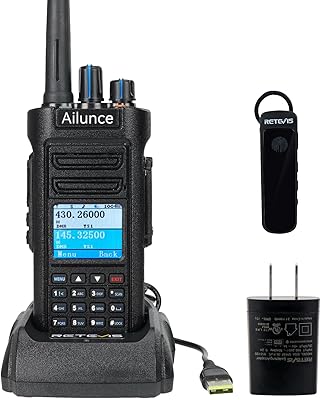
The Retevis RT97 GMRS Radio Repeater is a compact, portable base station built to extend the effective range of GMRS walkie-talkies — practical for farms, school campuses, and emergency response teams that cannot rely on cellular infrastructure. GMRS repeaters occupy a niche but increasingly useful corner of the radio world, and this GMRS repeater stands out by packing full-duplex capability and a built-in duplexer into a rugged, carry-anywhere enclosure. Traditional repeaters tend to be bulky fixed installations; the RT97 flips that assumption. Two things to know upfront: no antenna is included, and operating on GMRS frequencies requires a valid FCC license — a simple, no-exam process, but a real requirement.
Features & Benefits

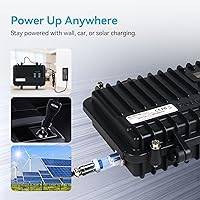
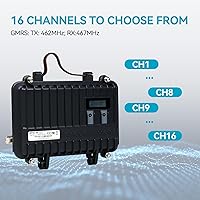
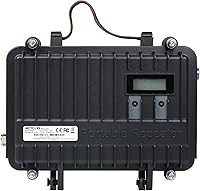
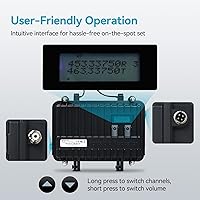
The RT97 runs in full-duplex mode, meaning it receives and transmits simultaneously through a single antenna port thanks to an integrated duplexer — no separate combiner needed. The LCD panel shows transmit and receive frequencies, active channel, and function status at a glance, which matters when adjusting settings in the field. Sixteen channels are available, with eight pre-programmed GMRS defaults that get you operational quickly. One quietly significant upgrade is the thicker feeder cable, which cuts 1 to 2 watts of signal loss compared to the previous version — a real-world difference over distance. Multiple power input options let you run this portable base station from a vehicle, generator, or fixed outlet.

Best For

This GMRS repeater is a strong match for anyone managing communications across wide, open terrain — think cattle ranches, large farms, or construction sites where direct radio-to-radio range simply falls short. School administrators and event coordinators who need reliable, infrastructure-free communication will find it practical, especially where cell coverage is unreliable. Emergency preparedness teams and CERT volunteers building off-grid communication plans will appreciate the portability and deployment flexibility. It also suits overlanding groups and trail clubs navigating hilly or forested routes. If you already run Retevis GMRS handhelds, cross-model compatibility with units like the RB48P or RT76P makes this an easy extension of an existing setup.

User Feedback

Buyers consistently highlight how approachable the setup process is compared to competing repeaters at this tier, and the rugged build quality earns repeated praise — people feel they are getting something that can take a knock in the field. That said, the most common frustration is discovering no antenna ships with the unit; it catches first-time buyers off guard, and the range improvements most users describe only materialize once a quality external antenna is added. The LCD is well-regarded for field readability. A smaller but notable thread of feedback points to channel programming carrying a learning curve, and a handful of users have noted inconsistent response times from customer support when troubleshooting issues.

Pros

  • Full-duplex operation means the repeater receives and transmits simultaneously, eliminating the awkward half-duplex delays common in simpler setups.
  • The built-in duplexer removes the need for a separate antenna combiner, which simplifies installation and reduces gear count in the field.
  • Eight pre-configured GMRS channels mean most users can get operational quickly without digging into manual programming from scratch.
  • The upgraded feeder cable meaningfully cuts signal loss compared to earlier versions — a real engineering improvement, not just a cosmetic refresh.
  • Its compact, drop-resistant housing makes this portable base station genuinely field-deployable, not just nominally portable.
  • The LCD panel clearly shows active frequencies and channel status, making on-the-fly adjustments manageable even in outdoor conditions.
  • Multiple power input options give users flexibility to run the RT97 from a vehicle, generator, or fixed power source depending on the situation.
  • Broad compatibility with several Retevis GMRS handhelds makes this a natural upgrade for teams already invested in that radio ecosystem.
  • Buyers consistently report that setup is less complex than competing repeaters at a similar tier, lowering the barrier for first-time repeater users.

Cons

  • No antenna is included in the box, which means buyers must source and purchase one separately before the unit can be used at all.
  • The programming learning curve is steeper than the marketing suggests — first-time radio users may need to invest time reading documentation or watching tutorials.
  • Customer support response times have drawn criticism from a noticeable share of buyers, which is a real concern if you run into a technical issue in the field.
  • At nearly six pounds and over a foot wide, this portable base station is not small enough to slip into a pack — it needs dedicated carrying space.
  • The GMRS license requirement catches some buyers off guard; it is not optional and adds an administrative step before legal operation.
  • Range improvements only fully materialize once paired with a quality external antenna, meaning total cost of ownership is higher than the unit price alone suggests.
  • Users outside the Retevis ecosystem may find limited guidance on integrating the RT97 with third-party GMRS radios.
  • The LCD, while functional, is not backlit brightly enough for some users operating in direct sunlight, according to field feedback.

Ratings

The Retevis RT97 GMRS Radio Repeater earns a nuanced scorecard built from AI analysis of verified buyer reviews worldwide — with spam, bot submissions, and incentivized feedback actively filtered out before scoring. Across categories ranging from signal performance to out-of-box readiness, both the genuine strengths and the recurring frustrations are reflected honestly. No category has been inflated to flatter the product, and no pain point has been softened to protect it.
Range Extension Performance
83%
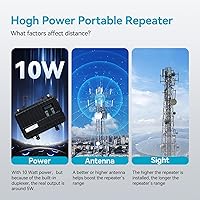
When paired with a quality external antenna mounted at a reasonable height, buyers consistently report dramatic improvements in handheld coverage across farms, ranches, and hilly terrain. The full-duplex operation means there is no perceptible delay at the relay point, which makes communication feel natural rather than stilted.
Range gains are highly antenna-dependent, and since no antenna ships with the unit, buyers who cheap out on that accessory often report underwhelming results and mistakenly attribute the limitation to the repeater itself. Terrain with heavy tree cover or urban interference reduces performance noticeably.
Ease of Setup
76%
24%
Relative to competing repeaters in this category, most buyers describe the initial setup as less intimidating than expected. The eight pre-loaded GMRS channels mean casual users can get a basic system running without touching the programming interface at all.
Moving beyond the defaults — adjusting tones, adding custom channels, or pairing with non-standard configurations — introduces a real learning curve that frustrates buyers without prior radio experience. The manual is functional but not especially beginner-friendly, and video resources are limited.
Build Quality & Durability
88%
The housing feels genuinely rugged rather than superficially tough — buyers who have used this portable base station in dusty farm environments, truck beds, and outdoor event setups consistently note that it holds up without cosmetic or functional degradation. The drop-resistant design gives field users real confidence.
At nearly six pounds and over a foot wide, the unit is more substantial than some buyers expect from something marketed as portable, and a few users have noted the casing corners can show wear after extended rough handling in field kits.
Full-Duplex Operation
91%
The simultaneous transmit-and-receive capability is the technical heart of this unit, and it delivers. Users coordinating teams across large properties report that conversations flow without the awkward half-duplex pauses that plague simpler relay setups, making this feel more like a real communication infrastructure.
Buyers coming from FRS or basic GMRS setups sometimes misunderstand how full-duplex repeater operation works, leading to configuration mistakes that are user error rather than hardware failure — but the documentation does not do enough to head off those misunderstandings proactively.
LCD Display Usability
71%
29%
The LCD panel is a genuine operational asset in most field conditions, giving users a clear read on active channel, transmit and receive frequencies, and function status without needing to guess or reference a separate device. It simplifies real-time monitoring during busy communication windows.
In direct, intense sunlight the display can become difficult to read — a recurring theme in feedback from users operating in open fields or on rooftops during midday. The lack of a strong backlight option limits its utility in some of the exact environments this repeater is marketed for.
Channel Configuration Flexibility
74%
26%
Sixteen channels with eight pre-configured GMRS defaults give users a reasonable working range without forcing immediate customization. For teams that operate on standard GMRS frequencies, the out-of-box channel layout is often sufficient for months of use without adjustment.
Users who need to configure custom CTCSS or DCS tones, or who want to program non-default channel plans, find the process more cumbersome than it should be at this price tier. There is no intuitive software tool bundled with the unit to assist with advanced programming.
Portability & Form Factor
78%
22%
Compared to traditional fixed repeater installations that require permanent rack mounting and dedicated cabling runs, this portable base station is genuinely deployable in a vehicle, a backpack cargo system, or a temporary field kit. Multiple power input options reinforce that flexibility in a way buyers appreciate.
The weight and footprint mean it does not disappear into a kit the way smaller accessories do — you need to plan space for it. Some overlanding and backpacking-adjacent users find it sits right at the edge of what they consider manageable for mobile deployment.
Out-of-Box Completeness
47%
53%
The core hardware unit itself arrives in solid condition and the build immediately communicates value. For buyers who already own a compatible GMRS antenna and understand the licensing requirements, the out-of-box experience is reasonably smooth and straightforward.
No antenna included is a serious omission at this price point, and it catches a disproportionately large share of buyers off guard — generating frustration and one-star reviews that are partly avoidable with better pre-purchase communication. The total cost of ownership is meaningfully higher than the unit price alone once a quality antenna is added.
Compatibility with Retevis Radios
86%
Buyers already running Retevis GMRS handhelds — including popular models like the RB48P and RT76P — report smooth, reliable integration with the RT97 without needing to make significant configuration changes to their existing handhelds. It functions as a natural extension of the Retevis ecosystem.
Compatibility assurance drops off noticeably once you move outside the Retevis lineup. Users pairing the repeater with third-party GMRS handhelds report that integration is possible but often requires more manual frequency and tone matching than the product documentation suggests.
Value for Money
69%
31%
For buyers who genuinely need repeater-class range extension and are using it regularly across large properties or for emergency preparedness, the hardware capability justifies the investment when compared to more expensive commercial alternatives with similar specifications.
Casual buyers or those with modest range needs who later factor in the additional antenna cost find the total spend difficult to justify. At this price tier, buyers reasonably expect more complete out-of-box readiness, and the gap between price and delivered experience drives a portion of the negative feedback.
Power Input Flexibility
84%
The ability to run from AC power for fixed installations or from a 12V vehicle source for mobile deployment is one of the more genuinely practical features of this unit. Buyers who use it across multiple deployment contexts — home base and field — specifically call this out as a meaningful differentiator.
Documentation on power input specifications and acceptable voltage ranges is thinner than it should be, and a handful of users have expressed uncertainty about safe power configurations when running the repeater from non-standard sources like solar setups or portable power stations.
Customer Support Experience
53%
47%
Retevis does provide support channels and has online resources covering common setup questions for this portable base station. For straightforward issues, some buyers report getting useful guidance without significant delay.
A consistent thread in user feedback flags slow or inconsistent response times from customer support, particularly for more technical configuration questions. Buyers who hit a setup wall and need real-time troubleshooting support find the experience notably below the standard set by the hardware itself.
Signal Loss Reduction (Cable Upgrade)
82%
18%
The upgrade to the thicker φ10.62mm feeder cable is an under-discussed improvement that radio-experienced buyers specifically appreciate. Cutting 1 to 2 watts of line loss is a meaningful gain in an RF system where every watt at the antenna translates to real-world range.
The practical benefit of the cable upgrade is largely invisible to buyers without RF engineering background, so it does not land as a compelling differentiator for the general audience. It is a genuine improvement that the product marketing does not effectively communicate to the buyers who might care most.

Suitable for:

The Retevis RT97 GMRS Radio Repeater is purpose-built for anyone who needs to push walkie-talkie coverage well beyond its natural line-of-sight limit — and has the practical setup to back that up. Farmers and ranchers coordinating across hundreds of acres will find the range extension genuinely transformative compared to running handhelds alone. School security teams, event coordinators, and facility managers who need reliable staff communication without depending on cellular networks are also a natural fit. Emergency preparedness groups, CERT volunteers, and off-grid communities building resilient communication plans will appreciate that this portable base station can run from a vehicle battery, a generator, or a wall outlet depending on deployment conditions. Overlanders and outdoor recreation groups navigating forested ridgelines or canyon terrain — where direct radio paths collapse — will get real, practical value from having a mobile repeater in the kit. If you are already running Retevis GMRS handhelds, the cross-model compatibility makes integrating the RT97 into an existing setup straightforward rather than a full system overhaul.

Not suitable for:

The Retevis RT97 GMRS Radio Repeater is not the right purchase for someone expecting a ready-to-transmit solution straight out of the box — no antenna is included, and sourcing a compatible external antenna is a mandatory additional step before the unit is functional. Beyond hardware, operating on GMRS frequencies in the United States legally requires an FCC license; casual buyers unfamiliar with radio licensing should factor in that administrative step before committing. Users who only need short-range communication — say, within a single building or across a small property — will find a repeater at this price point is significant overkill when a quality set of handhelds would suffice. Buyers expecting plug-and-play simplicity may run into a learning curve around channel programming, particularly those without prior experience configuring radio equipment. Anyone planning to use this with non-Retevis or non-GMRS radios should verify compatibility carefully, as the RT97 is designed around the GMRS ecosystem and is not a universal solution.
Specifications

  • Frequency Band: Operates exclusively on the GMRS (General Mobile Radio Service) band, requiring a valid FCC license for legal use in the United States.
  • Operation Mode: Full-duplex operation allows the unit to receive and transmit signals simultaneously without requiring the user to switch between modes.
  • Channels: Supports 16 total channels, with 8 pre-configured default GMRS channels ready to use out of the box.
  • Power Output: Delivers 10W on the transmit side and 5W on the receive side, providing strong signal coverage across wide open terrain.
  • Dimensions: The unit measures 6.69 x 12.2 x 11.02 inches, making it compact relative to traditional fixed repeater installations but requiring dedicated carry space.
  • Weight: Weighs 5.95 pounds, light enough for portable field deployment while still feeling solid and substantial in hand.
  • Display: An LCD screen shows transmit and receive frequencies, active channel number, and function status icons for at-a-glance monitoring.
  • Duplexer: Features a built-in duplexer that enables single-antenna operation, eliminating the need for a separate external antenna combiner.
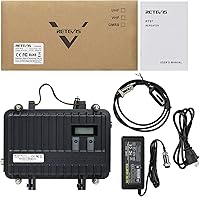
  • Feeder Cable: Ships with an upgraded φ10.62mm feeder cable that reduces signal power loss by approximately 1 to 2W compared to the previous φ4.88mm cable.
  • Power Options: Supports multiple power input configurations, allowing deployment from a vehicle battery, portable generator, or standard fixed AC outlet.
  • Battery: Requires one lithium-ion battery for operation; battery type should be confirmed against current Retevis documentation for correct specification.
  • Antenna: No antenna is included in the package; buyers must source and purchase a compatible external GMRS antenna separately before the unit can operate.
  • Compatible Radios: Confirmed compatible with several Retevis GMRS handhelds including the NR30S, RB48P, RT76P, and RB26, among other models in the Retevis lineup.
  • Housing: The enclosure is described as drop-resistant and dust-proof, designed to hold up under field conditions and regular portable deployment.
  • Color: Available in black only.
  • Wireless Standard: Operates on the Radio Frequency (RF) wireless communication standard within the single-band GMRS frequency class.
  • Best Sellers Rank: Ranked #503 in the Repeaters category on Amazon, reflecting a consistent mid-tier presence in a niche but active product segment.

Related Reviews

Retevis RA87 GMRS Mobile Radio
78%
88%
Transmit Power
84%
Repeater Channel Support
86%
Audio Clarity
83%
Ease of Installation
81%
CHIRP Compatibility
More
Retevis RA25 GMRS Mobile Radio
82%
91%
Audio Clarity
89%
Transmission Range
87%
Channel Versatility
84%
Ease of Installation
79%
Build Quality
More
Retevis HA1G GMRS Handheld Radio
79%
83%
Build Quality
88%
Waterproofing
86%
Battery Life
81%
Range & Repeater Performance
71%
Audio Clarity
More
Retevis RA86 GMRS Mobile Radio
85%
88%
Performance
91%
Audio Clarity
85%
Ease of Use
93%
NOAA Weather Alerts
65%
Installation Complexity
More
BTECH GMRS-V2 5W 200-Channel GMRS Radio
83%
91%
Build Quality
88%
Ease of Use
94%
Weather Resistance
75%
Range Performance
85%
Programming with CHIRP
More
BTECH GMRS-PRO GMRS Two-Way Radio
78%
91%
Build Quality & Durability
88%
GPS Accuracy & Location Sharing
84%
Bluetooth Performance
72%
Range & Signal Clarity
63%
App & Channel Programming
More
Retevis RT3S Dual Band DMR Ham Radio
72%
83%
Build Quality
88%
GPS Accuracy
91%
OpenGD77 Compatibility
41%
Ease of Setup
67%
Audio Quality
More
Retevis RT55 Handheld Marine Radio
86%
91%
Waterproof Performance
88%
Ease of Use
84%
Sound Quality
92%
Build Quality
72%
Battery Life
More
Retevis RM01 Handheld Marine Two-Way Radio
74%
83%
Waterproofing & Water Resistance
91%
Floating Ability
58%
Battery Life & Power System
74%
Audio Clarity & Receive Quality
81%
NOAA Weather Alert Reception
More
Radioddity GM-30 GMRS Handheld Two-Way Radio
81%
91%
Value for Money
88%
Audio Clarity
67%
Range Performance
74%
Ease of Use
83%
Build Quality
More

FAQ

Yes, absolutely. GMRS frequencies are licensed by the FCC in the United States, and operating a repeater on those frequencies without a license is illegal. The good news is that a GMRS license covers your entire immediate family, requires no exam, and is straightforward to obtain through the FCC website. Budget a small fee and a bit of paperwork, and you are covered.

No, and this is the most common surprise buyers report. The package does not include an antenna, so you will need to purchase a compatible GMRS external antenna separately before the unit can function. Factor that additional cost into your budget upfront rather than after the fact.

Actual range depends heavily on terrain, antenna quality, and installation height. Buyers who pair this portable base station with a quality external antenna and mount it at elevation report substantial improvements over direct handheld-to-handheld communication. In open, flat terrain like farmland, the results tend to be noticeably better than in forested or hilly areas.

The RT97 is designed around the GMRS standard, so in principle it can work with any GMRS-compatible radio tuned to the correct frequencies and tones. That said, Retevis specifically confirms compatibility with their own lineup, and real-world integration with third-party brands may require more manual configuration and troubleshooting on your part.

This GMRS repeater is fairly flexible on power input — it can run from a standard wall outlet for fixed installations, or from a vehicle battery or portable generator when deployed in the field. That versatility is one of the reasons it suits both permanent and mobile setups.

Compared to many competing units, buyers describe the initial setup as relatively approachable. The eight pre-configured GMRS channels mean you can get operational without touching the programming right away. That said, if you want to customize channels or tones, there is a learning curve, and spending time with the manual or Retevis support resources beforehand will save frustration.

A standard walkie-talkie communicates directly with another radio, and its range is limited by terrain, obstacles, and transmit power. The Retevis RT97 GMRS Radio Repeater acts as a relay station — it receives a signal on one frequency and simultaneously retransmits it on another, at higher power and often from a more advantageous position, which dramatically extends the effective range of your entire handheld radio fleet.

Both are supported. The unit is designed with enough flexibility to serve as a fixed base station in a permanent installation or be packed up and deployed in a vehicle or field kit. Multiple power input options are a big part of what makes that dual-use approach practical.

Feedback on this is somewhat mixed. Most users find it adequate for general use and field adjustments, but a handful have noted the display can be harder to read in direct, intense sunlight. It is functional, but if you are frequently operating in harsh midday sun, that is worth keeping in mind.

Your first stop should be Retevis documentation and their online resources, which cover most common setup and programming questions. If you need to contact their customer support directly, some buyers have reported that response times can be inconsistent, so building in some patience is advisable. Reaching out with a clear description of the issue and your radio configuration tends to get better results than a vague inquiry.