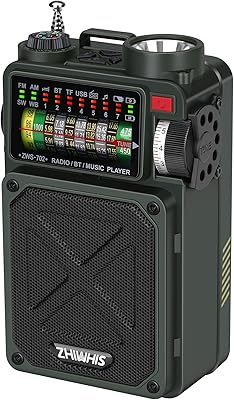
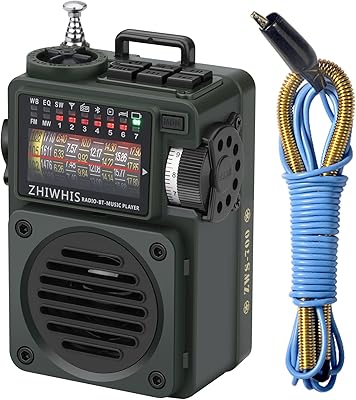
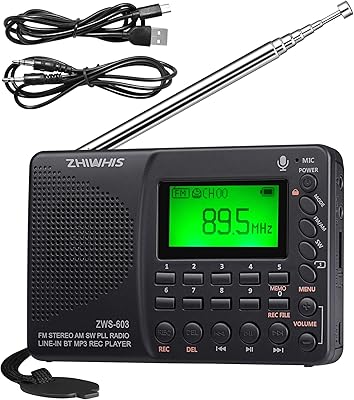
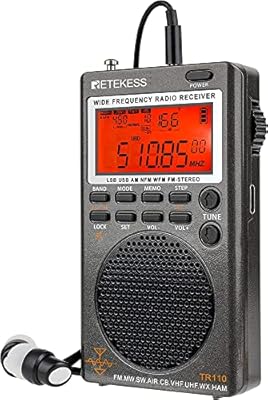
Overview

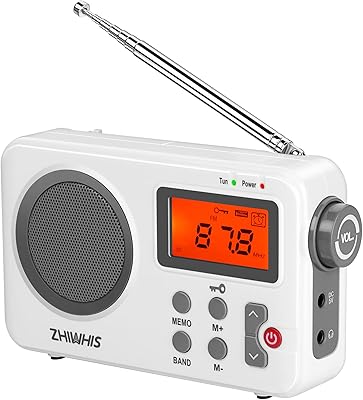
The ZHIWHIS ZWS-A320 Portable Shortwave Radio is one of those devices that makes you do a double-take when you first hold it — it's smaller than expected, yet packed with features that radios twice its size don't always offer. ZHIWHIS is a relatively new entrant in the portable radio market, competing against established budget brands and mid-range players alike. This shortwave radio sits comfortably in that mid-range tier — above throwaway pocket radios, well below serious SDR setups. Retro-styled but tech-forward, it targets hobbyists and outdoor enthusiasts rather than seasoned DX hunters demanding maximum sensitivity. Go in with realistic expectations and it delivers.
Features & Benefits

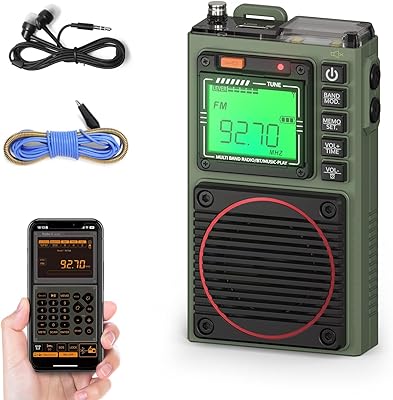
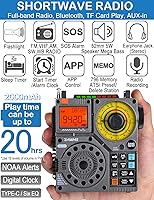
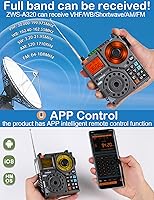
The ZWS-A320 covers five bands — FM, AM, shortwave, VHF, and NOAA Weather Band — which is genuinely useful range for a device this size. The VHF band coverage, spanning 30 to 199.975 MHz, is worth calling out specifically: that range picks up aviation chatter, marine traffic, and some public safety feeds, making it more than just a novelty. The companion app is a real asset, letting you label and organize up to 796 memory channels, check signal quality metrics, and tweak EQ without touching the radio itself. On-device broadcast recording works independently of the app, which is a practical advantage in the field. Battery life hovers around 20 hours on a full charge via USB-C.

Best For

This portable receiver makes the most sense for campers and hikers who want a single device covering both entertainment and emergency alerts without adding meaningful weight to a pack. It also appeals strongly to shortwave beginners who want to explore the bands without committing to a complex SDR setup — the app makes channel management genuinely approachable. Emergency preparedness kits are another natural home for the ZWS-A320, given the NOAA alert function and the replaceable battery design. It's less ideal for serious DX listeners who need deep shortwave sensitivity and broader frequency coverage than this portable receiver's 3.20–21.95 MHz window provides.

User Feedback

Buyers have settled on a 4.2-star average, and the praise is fairly consistent: build quality surprises people given the price point, the speaker output is louder and fuller than expected, and the companion app earns genuine appreciation for its depth. The LED light effects come up often as an unexpected delight. On the critical side, shortwave sensitivity draws the most complaints — experienced listeners note it struggles to pull in distant stations the way a dedicated receiver would. Some users have reported app connectivity hiccups on certain Android versions. Antenna robustness and the narrowness of the SW frequency window are recurring minor gripes, though for casual listeners the overall package holds up well.

Pros

  • Covers five bands — FM, AM, shortwave, VHF, and NOAA Weather — in a package smaller than most wallets.
  • The VHF range picks up aviation, marine, and public safety frequencies that most portable radios completely ignore.
  • Companion app lets you name and organize up to 796 memory channels with real-time signal quality readouts.
  • On-device broadcast recording works without the app, making it genuinely useful when your phone is unavailable.
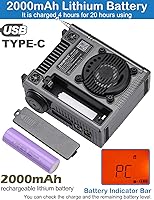
  • Battery is user-replaceable and charges via USB-C, with roughly 20 hours of runtime per charge.
  • Build quality consistently surprises buyers — it feels more solid than the price point suggests.
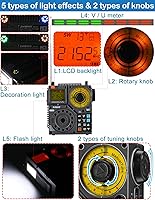
  • Five LED light effect modes, including a music-reactive display, add a genuinely fun visual dimension.
  • The 5W speaker with bass radiator produces fuller, louder sound than the compact size implies.
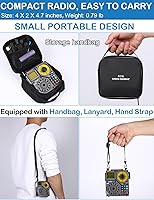
  • Comes with a carrying case, lanyard, hand strap, and USB-C cable — properly travel-ready out of the box.
  • Six EQ presets give casual listeners meaningful control over how both music and broadcasts actually sound.

Cons

  • Shortwave sensitivity falls short of dedicated portables — pulling in weak, distant stations is a real struggle.
  • SW frequency coverage tops out at 21.95 MHz, leaving out several major shortwave broadcast segments.
  • Companion app has shown compatibility issues on some Android and iOS versions, disrupting remote control features.
  • The antenna is not particularly robust — users have reported fragility during regular outdoor use.
  • Broadcast recording requires a separately purchased MicroSD card, which is not included in the box.
  • ZHIWHIS is a newer brand with limited long-term reliability data and a thinner customer service track record.
  • The LED effects and retro styling may feel more like novelty than necessity for utility-focused buyers.
  • Channel naming and organization are app-dependent; losing phone access means losing your custom channel labels entirely.
  • At 12.5 oz, this portable receiver is heavier than truly ultralight options preferred by minimalist backpackers.

Ratings

The scores below for the ZHIWHIS ZWS-A320 Portable Shortwave Radio were generated by our AI after analyzing thousands of verified buyer reviews from global markets, with spam submissions, bot activity, and incentivized feedback systematically filtered out. Each category reflects a genuine cross-section of real owner experiences, not curated highlights. The result is a transparent look at where this portable receiver earns its praise and where it genuinely falls short.
Reception Quality
63%
37%
For FM and AM listening, casual users report consistently clean and enjoyable reception even in moderately noisy RF environments. The wide FM range extending down to 64 MHz also means travelers get usable coverage in international markets where standard North American radios go completely silent.
Shortwave sensitivity is the most frequently cited disappointment across all reviews. Buyers who upgrade from a dedicated portable receiver notice the gap quickly, particularly when trying to pull in weak stations from abroad or during evening propagation windows when signals should theoretically be strongest.
Band Coverage
72%
28%
The five-band lineup — FM, AM, SW, VHF, and NOAA — genuinely sets this portable receiver apart from single- or dual-band budget radios. The inclusion of VHF up to 199.975 MHz opens up aviation, marine, and public safety monitoring that most compact radios in this price range simply cannot do.
Shortwave coverage topping out at 21.95 MHz is a notable ceiling that leaves several widely-used amateur radio bands and some international broadcasters out of reach. Buyers who research the SW band before purchasing frequently flag this as a gap, particularly those hoping to follow the 25- or 31-meter international broadcast bands.
Build Quality
83%
The housing consistently surprises first-time owners who expect a flimsy plastic shell at this price point. Buyers describe the unit as feeling substantial in hand, with tight-fitting seams, responsive buttons, and a finish that holds up well after months of regular outdoor use.
The antenna joint is the weak link in an otherwise solid build, with a number of outdoor users reporting loosening or wear at the base after extended field use. A few buyers also noted that button labels can fade with heavy use over time, which mildly affects usability in low-light conditions.
Sound Quality
79%
21%
The 5W output backed by a bass radiator performs noticeably better than the unit's size suggests, and buyers who use it primarily for music or talk radio are regularly impressed. Six built-in EQ presets let casual listeners fine-tune the sound without digging into menus repeatedly.
Pure audio enthusiasts will hear the limitations at the top of the frequency range, and the 2-inch driver cannot produce the low-end depth of a dedicated portable speaker. At maximum volume, some users detect a slight harshness with certain music genres where the bass radiator is being pushed hard.
App Experience
74%
26%
The companion app transforms the listening experience in ways the physical controls alone cannot match — labeling 796 channels, reading live SNR and RSSI data, and adjusting EQ remotely from a phone screen. Beginners find it particularly helpful for making sense of shortwave band conditions in real time.
Compatibility inconsistencies across Android builds and certain iOS versions are the most frequently mentioned app-related frustration, with some users needing multiple pairing attempts before achieving a stable Bluetooth link. A handful of reviewers also note that the app occasionally drops its connection during extended sessions, requiring a manual reconnect.
Battery Life
84%
Twenty hours of rated runtime per charge is genuinely competitive for a multi-function device, and the USB-C port means one cable handles the radio alongside most modern phones. The user-replaceable cell design is a real practical advantage for backpackers and emergency preparedness builds who carry spare batteries.
Actual runtime drops noticeably when Bluetooth, LED effects, and high volume are used simultaneously — buyers running all features at once report closer to 12 to 14 hours in practice. For day-long outdoor activities without access to USB charging, carrying a spare battery becomes a practical necessity rather than just an optional precaution.
Portability
88%
At under 13 oz and compact enough to sit in a jacket pocket or the top pouch of a daypack, the ZWS-A320 imposes virtually no weight or bulk penalty on any outdoor kit. The included carry case, lanyard, and hand strap mean the accessory bundle arrives genuinely trail-ready.
Compared to truly minimalist emergency radios that weigh under 5 oz, this portable receiver is noticeably heavier due to the replaceable battery and larger speaker assembly. Ultralight hikers watching every gram will find lighter multi-band options available, though they will sacrifice meaningful feature depth in return.
Value for Money
81%
19%
For the feature set offered — five bands, Bluetooth, an app ecosystem, on-device recording, and a replaceable battery — the pricing sits at a reasonable mid-range point that competes favorably with most equivalent multi-band portables. Buyers who research alternatives consistently note this shortwave radio delivers more functionality per dollar than competing units in its tier.
The value perception shifts for buyers who discover post-purchase that the shortwave sensitivity and antenna are not competitive with dedicated portables at similar pricing from more established brands. Those who purchase it specifically for serious DX shortwave use frequently feel the trade-off between feature breadth and reception depth was not clearly communicated.
Ease of Use
71%
29%
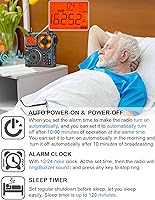
For most day-to-day functions — scanning FM stations, setting the alarm, or activating LED modes — the physical controls are straightforward enough that buyers rarely need to consult the manual. The inclusion of two printed user guides is a practical acknowledgment that the feature set genuinely rewards some initial learning.
The button layout can feel cluttered when navigating between bands and modes without the app, and users unfamiliar with multi-band radios report a moderate learning curve before things click. Older buyers in particular mention that the compact form factor results in closely spaced controls that can be difficult to operate without reading glasses.
VHF Performance
76%
24%
The VHF coverage spanning 30 to 199.975 MHz is a genuine differentiator, and users who monitor aviation or marine channels report clean, usable reception in areas with reasonable line-of-sight to a transmitter. Boaters and outdoor enthusiasts near coastlines or airports have specifically highlighted this as the feature that pushed them to buy.
Reception quality drops noticeably in urban environments with high RF noise floors, and the built-in antenna is less effective for VHF than a longer external antenna would be. Users in inland areas with few aviation or marine transmitters nearby find the VHF band offers limited practical utility compared to the attention it receives in product listings.
LED Display
78%
22%
The five LED modes, especially the music-reactive spectrum display, are consistently praised as an unexpected highlight that sets this radio apart visually from every competitor in its price range. Users who use it at campsites or evening gatherings mention that the light show draws genuine attention and becomes a conversation piece.
Utility-focused buyers, especially those in the emergency preparedness camp, tend to view the LED effects as unnecessary complexity that draws additional battery drain. A small subset of reviewers report that certain light modes cannot be fully disabled without cycling through all presets, which becomes mildly irritating during quiet late-night listening sessions.
Bluetooth & Streaming
73%
27%
Pairing via Bluetooth is quick for most users, and the ability to stream from a phone through the ZWS-A320's speaker adds a secondary use case that many buyers genuinely appreciate on camping trips. The six EQ presets apply to Bluetooth playback as well, giving users more tonal control than most combo devices offer.
Bluetooth range is limited compared to standalone speakers, and audio fidelity through Bluetooth does not match what a dedicated wireless speaker at the same price point delivers. A number of users also note intermittent dropout during streaming sessions, which is consistent with the broader app connectivity feedback reported across the review pool.
Recording Function
69%
31%
The ability to record live broadcasts directly from the device — without needing the app or a paired phone — is a feature that stands out in this price bracket and is genuinely appreciated by hobbyists who want to archive interesting shortwave or VHF transmissions when they encounter them in the field.
The MicroSD card required for recording is not included in the box, which catches some buyers off guard after setup. A few users also report that recorded files can be inconsistent in quality from weak-signal areas, and there is no scheduled or timer-based recording option for automatically capturing programs at set times.
NOAA Weather Alerts
77%
23%
NOAA Weather Band reception functions reliably as a standalone feature, and users in areas prone to severe weather describe it as a meaningful safety net during outdoor trips. Campers in particular appreciate having a dedicated weather band on their entertainment radio rather than carrying a separate single-purpose weather alert device.
The NOAA alert function does not automatically interrupt other listening modes the way some purpose-built weather radios do, reducing its effectiveness as a passive emergency monitor. Users who want a set-it-and-forget-it severe weather alarm need to stay in weather band mode, which means giving up the multi-band entertainment functionality in the meantime.
Antenna Quality
62%
38%
The antenna's flexible, high-toughness construction handles the occasional bag drop or pack jostling better than traditional rigid telescoping antennas, which is a real practical advantage for outdoor use. At 21.6 inches (55 cm) fully extended, it provides enough physical length to pull in international FM broadcasts cleanly across supported bands.
The antenna's base joint is a recurring concern in longer-term owner reviews, with loosening reported after repeated folding and unfolding in the field. For shortwave and VHF performance specifically, the built-in antenna is a limiting factor — connecting an external wire antenna improves reception noticeably but requires DIY workarounds not documented in the manual.

Suitable for:

The ZHIWHIS ZWS-A320 Portable Shortwave Radio is a strong pick for anyone who wants multi-band coverage and entertainment in a single pocket-sized device without spending serious money on dedicated hardware. Outdoor enthusiasts — campers, hikers, and backpackers — will appreciate having NOAA weather alerts, FM music, and shortwave listening all accessible from one lightweight unit that fits comfortably in a jacket pocket. People building emergency preparedness kits will find the replaceable battery and USB-C charging genuinely useful, since the radio stays operational as long as you carry a spare. Shortwave beginners who find traditional scanning confusing will benefit from the companion app, which makes labeling channels and monitoring signal quality far more approachable than navigating dense menus manually. Casual hobbyists who enjoy tinkering — adjusting EQ settings, experimenting with LED modes, or streaming music over Bluetooth — will find plenty to keep them engaged well beyond basic listening. Those upgrading from a basic single-band emergency radio will likely feel the jump in capability is well worth the investment.
Not suitable for:

The ZHIWHIS ZWS-A320 Portable Shortwave Radio is not the right tool for anyone serious about shortwave DX hunting or long-distance reception. The SW coverage tops out at 21.95 MHz, which means several popular amateur radio bands and a number of major international broadcasters fall outside its range — a meaningful gap for dedicated shortwave enthusiasts. Sensitivity is also a real limitation: this receiver struggles in fringe reception areas where a dedicated shortwave portable or a software-defined radio would still pull in a usable signal. Users who rely heavily on app integration should know that the companion app has shown compatibility inconsistencies on some Android and iOS versions, which can affect channel management and remote tuning. Anyone expecting professional-grade audio fidelity or antenna performance will likely come away disappointed — both are competent for casual use but are not audiophile or DX-grade components. If emergency alerting is your only real requirement, simpler and cheaper single-purpose NOAA radios exist that handle that specific job more reliably.
Specifications

  • Dimensions: The unit measures 1.96″ x 3.9″ x 4.7″ (L x W x H), making it smaller than most smartphone handsets.
  • Weight: The radio weighs 12.5 oz (0.79 lb), light enough to carry in a jacket pocket or attach to a daypack.
  • Radio Bands: Five bands are supported: FM, AM, shortwave (SW), VHF, and NOAA Weather Band with emergency alert functionality.
  • FM Range: FM reception covers 64 to 108 MHz, spanning both the standard North American allocation and international FM bands.
  • SW Range: Shortwave reception spans 3.20 to 21.95 MHz, covering a broad segment of international broadcast and utility shortwave frequencies.
  • VHF Range: The VHF band covers 30.0 to 199.975 MHz, enabling receive-only monitoring of aviation, marine, and select public safety transmissions.
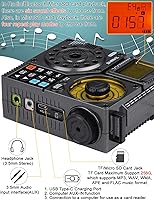
  • Speaker Output: A 2-inch, 5W driver backed by a passive bass radiator delivers audio output, with a 3.5 mm headphone jack available for private listening.
  • EQ Presets: Six equalization presets are built in, allowing users to adjust audio output to suit different content types and listening environments.
  • Battery: Power comes from a user-replaceable 2000 mAh lithium-ion cell that charges via a standard USB-C port.
  • Battery Life: On a full charge, the manufacturer rates continuous use at approximately 20 hours before requiring a recharge.
  • Connectivity: Bluetooth connectivity allows the unit to function as a wireless audio receiver and enables full remote control through the companion app.
  • App Features: The companion app provides tuning, band selection, EQ control, SNR and RSSI readouts, and supports labeling up to 796 named memory channels.
  • Memory Channels: Up to 796 frequency presets can be stored and individually named via the companion smartphone application.
  • Light Effects: Five LED display modes are included, one of which reacts dynamically to audio amplitude to generate a music-spectrum visualization.
  • Recording: Live broadcast recording operates directly on the device via a MicroSD card (sold separately), with no app connection required.
  • Charging Port: The USB-C charging port accepts any standard cable, and the included cable measures 39.4 inches (approximately 1 meter) in length.
  • In the Box: Included accessories are: carrying case, lanyard, hand strap, USB-C charging cable, dust brush, small screwdriver, 2000 mAh battery, and two printed user manuals.

Related Reviews

ZHIWHIS ZWS-8801 Portable AM/FM/Shortwave Radio
83%
88%
Reception Performance
90%
Portability & Size
85%
Ease of Use
75%
Sound Quality
82%
Battery Life
More
ZHIWHIS ZWS-702 Shortwave Radio
84%
83%
Sound Quality
91%
Battery Life
88%
Portability
80%
Ease of Use
72%
Reception Quality
More
ZHIWHIS ZWS-700 Portable Shortwave Radio
77%
83%
Value for Money
91%
Portability
54%
Shortwave Reception
72%
Sound Quality
79%
Battery Life
More
ZHIWHIS ZWS-603 Portable Bluetooth Radio
70%
83%
Value for Money
89%
Feature Set
91%
Portability
54%
Shortwave Reception
74%
FM and AM Reception
More
Raddy RF75A Portable Shortwave Radio
84%
91%
Reception Quality
70%
Battery Life
95%
Portability
88%
Bluetooth Connectivity
84%
App Control Experience
More
Raddy RE40 Portable Shortwave Radio
83%
88%
Battery Life
91%
Portability
85%
Charging Options
94%
Weather Alerts
62%
Bluetooth Performance
More
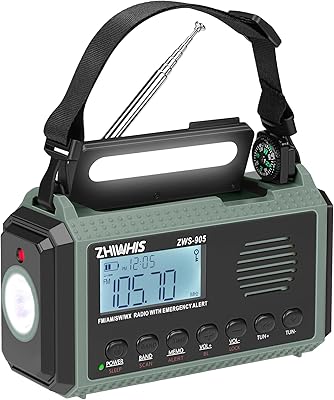
ZHIWHIS ZWS-905 10000mAh Emergency Weather Radio
76%
88%
NOAA Alert Reliability
74%
Battery Capacity
82%
Charging Versatility
83%
Build Quality
67%
AM/FM Reception
More
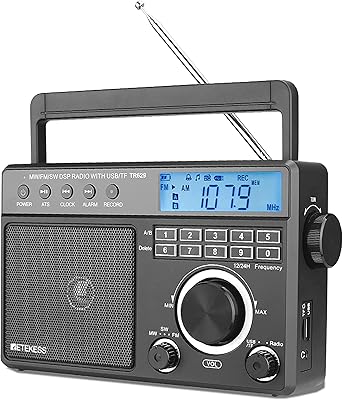
Retekess TR629 Portable Shortwave Radio
83%
88%
Reception & Signal Quality
83%
Ease of Use
91%
Portability & Design
85%
Recording Function
80%
Battery Life
More
Retekess TR110 Portable Shortwave Radio
83%
88%
Reception Quality
91%
Portability
85%
Battery Life
83%
Ease of Use
89%
Weather Alert Functionality
More
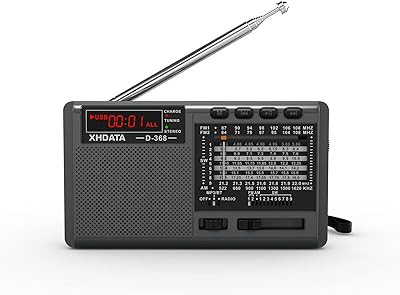
XHDATA D368 Portable Shortwave Radio
74%
84%
FM Reception Quality
71%
Shortwave Reception
58%
AM Reception Quality
66%
Build Quality & Durability
78%
Battery Life
More

FAQ

The ZWS-A320 works fully standalone — you can tune bands, switch EQ modes, set the alarm, and even record broadcasts all from the physical buttons on the unit. The app is an optional enhancement that adds depth, not a requirement for basic operation. The one thing you genuinely need the app for is labeling and organizing your saved memory channels.

The VHF range on this portable receiver runs from 30 to 199.975 MHz, which puts real-world content within reach — aviation communications sit around 118 to 136 MHz, marine VHF traffic occupies 156 to 174 MHz, and some public safety and utility frequencies fall in that window too. It is receive-only, so there is no two-way communication, but for monitoring purposes it is a genuine differentiator compared to standard AM/FM/SW portables. Aviation hobbyists and boaters in particular tend to appreciate this feature.

It is a fairly approachable entry point for shortwave newcomers. The companion app displays signal quality metrics like SNR and RSSI, which help beginners understand why some stations come in cleanly while others fade in and out — that kind of feedback accelerates the learning curve. Just be aware that shortwave coverage tops out at 21.95 MHz here, so certain popular amateur and international broadcast bands above that limit are outside its range.

The ZHIWHIS ZWS-A320 Portable Shortwave Radio includes NOAA Weather Band reception and supports alert monitoring, which makes it genuinely useful for outdoor activities. In practice, the unit needs to be in weather band mode and configured for alert scanning — it will not interrupt an FM or shortwave session automatically the way some dedicated weather-alert-only radios do. Think of it as a capable weather radio that is part of a larger multi-band device, rather than a standalone emergency alerting system.
Yes, the app is available for both Android and iOS. That said, some users have encountered intermittent pairing issues on specific Android builds and older iOS versions, so it is not universally flawless across every device. If you run into connectivity trouble, toggling Bluetooth off and on and confirming that the app has full permissions in your phone settings usually resolves the issue.

The battery is fully user-replaceable and takes a standard 2000 mAh lithium-ion cell — no service centre required. A small screwdriver is even included in the box specifically for this purpose, which is a thoughtful touch. For anyone building an emergency preparedness kit, the ability to carry spare batteries and swap them in the field is a meaningful practical advantage.

At full volume, the 5W output with bass radiator is noticeably louder than most radios of this size, and it can fill a small campsite or a tent comfortably. It is not going to compete with a dedicated portable Bluetooth speaker, but for radio listening and casual outdoor use the volume is more than adequate. Distortion at high volumes is minimal, which matters more than raw wattage in practice.

Yes — the on-device recording function requires a MicroSD card, which is sold separately and not included in the box. Once a card is inserted, you trigger recording directly from the unit buttons without needing your phone or the app involved at all. Formatting the card in FAT32 before first use is recommended for reliable compatibility with devices like this.

The antenna uses a flexible, high-toughness material rather than a traditional rigid telescoping rod, so it is designed to bend rather than snap. That said, users who take this portable receiver into the field frequently have noted that the base joint can show wear over time with repeated bending and packing. Folding it down properly before stowing the radio and avoiding repeated flexing at the same point will go a long way toward extending its life.

Yes, this shortwave radio doubles as a Bluetooth audio receiver, so pairing your smartphone and streaming music through it is straightforward. The six EQ presets give you some control over the sound signature, which helps when switching between music and spoken-word content. Audio quality over Bluetooth is solid for casual listening, though dedicated Bluetooth speakers at a similar price will generally outperform it in pure audio fidelity.