RadiArmor RADI-ANTI Air Tube In-Ear Headphones
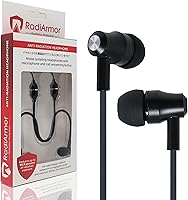

RadiArmor RADI-ANTI Air Tube In-Ear Headphones — image 1
RadiArmor RADI-ANTI Air Tube In-Ear Headphones — image 2
RadiArmor RADI-ANTI Air Tube In-Ear Headphones — image 3

RadiArmor RADI-ANTI Air Tube In-Ear Headphones — image 4
RadiArmor RADI-ANTI Air Tube In-Ear Headphones — image 5
RadiArmor RADI-ANTI Air Tube In-Ear Headphones — image 6
70%
30%

Overview

The RadiArmor RADI-ANTI Air Tube In-Ear Headphones occupy a specific niche that most headphone buyers never think about: what if the wire itself is part of the problem? Air tube headphones replace the final stretch of cable near your ear with a hollow acoustic tube, physically moving the speaker driver away from your head. RadiArmor has built its brand around this concept, offering a lineup of RF-reduction accessories for health-conscious consumers. These air tube earbuds sit in the mid-range price territory — not cheap enough to be disposable, not expensive enough to compete with premium audio gear. If you are coming in expecting studio-quality sound, you will be disappointed. But if EMF reduction is your priority, this headset is worth a serious look.

Features & Benefits

The core innovation here is the air tube design — a hollow tube replaces the last portion of wiring that would otherwise sit close to your ear. Combined with shielded cable construction, RadiArmor claims this setup cuts RF exposure by up to 99.9 percent compared to holding a phone to your ear, and around 98 percent versus standard headphones. Those figures come from third-party lab testing, according to the brand. Practically speaking, this RF-reducing headset also handles the basics well: the inline mic is adequate for calls, the volume and answer buttons work without fumbling, and two silicone tip sizes help dial in a comfortable, noise-isolating fit. One real caveat — if your phone lacks a 3.5mm port, you will need to purchase an adapter separately, and cheap ones can interfere with the inline controls.

Best For

These air tube earbuds make the most sense for a fairly specific type of buyer. If you spend a lot of time on phone calls and have developed concerns about long-term RF exposure, this headset removes that worry without requiring you to go fully wireless. They are also a reasonable step up for anyone already using basic wired earbuds who wants to add some EMF-conscious thinking to their routine without overhauling their setup. Commuters, remote workers, and people who log hours on the phone daily will find the lightweight build and tangle-resistant cable genuinely practical. Just be clear-eyed: if audio fidelity matters to you, these earbuds will leave you wanting more. This is a purpose-built tool, not a general-purpose listening upgrade.

User Feedback

Buyers who love the RadiArmor air tube headset tend to zero in on one thing: peace of mind. For people who have spent years holding a phone to their head, switching to this setup feels like a meaningful change, and comfort during long calls is frequently praised. The sound quality story is more complicated. The hollow tube design introduces a noticeable reduction in bass and overall audio richness — that is a physics limitation, not a manufacturing flaw, and honest reviewers make that clear. Call quality through the mic gets mixed marks: adequate in quiet settings, less impressive with background noise. A recurring frustration involves adapter compatibility on newer phones. Durability around the air tube junction has also been flagged as a potential weak point with extended daily use.

Pros

  • Air tube design physically distances the speaker from your ear, reducing RF exposure according to third-party lab testing cited by the brand.
  • Shielded wiring adds an extra layer of EMF reduction that standard headphone cables simply do not offer.
  • Lightweight at under 23 grams, so wearing these air tube earbuds for hours on calls does not cause fatigue.
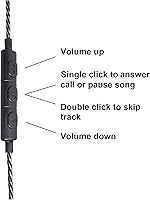
  • Inline controls for volume and call answering work reliably without needing to touch your phone.
  • Two silicone tip sizes included, making it easier to find a fit that actually stays in place and blocks ambient noise.
  • Tangle-resistant cable is a genuinely useful daily-carry feature that holds up well in a bag or pocket.
  • No charging required — plug in and go, with no battery anxiety ever.
  • One-year warranty provides reasonable coverage for a niche, mid-range accessory.
  • Works with any device that has a 3.5mm jack, so compatibility is broad across older phones, tablets, and laptops.

Cons

  • Bass response is noticeably weak due to the physics of sound traveling through a hollow tube — this is a real trade-off, not a fixable flaw.
  • Microphone performance drops off in noisy environments, making call clarity unreliable outside quiet settings.
  • No water or sweat resistance whatsoever, ruling out workouts or outdoor use in variable weather.
  • Modern smartphone users without a 3.5mm port must buy a separate adapter, adding cost and a potential point of failure.
  • Cheap or uncertified adapters can interfere with the inline volume and call controls, undermining a key convenience feature.
  • The air tube junction is a reported weak point for durability, with some users noting wear at that connection over time.
  • Passive noise isolation is adequate but not strong enough to block out loud commuting environments like subways or busy streets.
  • The EMF reduction figures are brand-commissioned lab results, not independently published peer-reviewed findings — buyers should weigh that carefully.

Ratings

The scores below reflect our AI-driven analysis of verified global buyer reviews for the RadiArmor RADI-ANTI Air Tube In-Ear Headphones, with spam, incentivized, and bot-generated feedback actively filtered out before scoring. Every category captures both the genuine strengths that keep repeat buyers coming back and the real frustrations that temper enthusiasm — nothing is glossed over. If you are weighing whether these air tube earbuds are right for your situation, this breakdown gives you the clearest, most honest picture available.

EMF Reduction Design
83%
For buyers who sought out these earbuds specifically to reduce RF exposure during long phone calls, the air tube mechanism delivers on its core promise at a conceptual level. The physical separation of the driver from the ear, combined with shielded wiring, gives health-conscious users a setup they can feel confident using daily without worrying about proximity to a radiating device.
The reduction figures are drawn from brand-commissioned third-party lab tests rather than independently published peer-reviewed research, which gives some scientifically cautious buyers pause. Users who want medical-grade validation before making a health-motivated purchase may find the evidence base thinner than expected.
Call Clarity
74%
26%
For everyday phone conversations in quiet environments — a home office, a calm commute, or a parked car — the inline mic and earpiece combination handles calls without issue. Volume levels are adequate, voices come through clearly enough, and the hands-free convenience is genuine for people who take multiple calls per day.
Background noise is a real problem for the microphone. Callers on the other end frequently notice interference during street-level commutes, busy offices, or outdoor environments. This RF-reducing headset is not built for noisy call environments, and that limitation shows up consistently in real-world user reports.
Audio Quality
51%
49%
For spoken-word content — podcasts, audiobooks, phone calls — the sound is functional and intelligible. Users who primarily use these air tube earbuds for voice rather than music tend to be satisfied with what they get, since clarity at mid and high frequencies is reasonable for the format.
Bass response is noticeably weak, and overall audio richness falls short of what a conventional dynamic earbud at this price delivers. The hollow air tube design is physically responsible for this limitation, and no amount of tip adjustment or EQ compensation fully corrects it. Music listeners are consistently disappointed.
Comfort & Fit
78%
22%
At under 23 grams total, these earbuds are genuinely light, and the two included silicone tip sizes give most users a fighting chance at finding a stable, comfortable seal. Long-call users — people spending two or three hours a day on the phone — frequently praise the lack of ear fatigue during extended sessions.
In-ear fit is always personal, and some users find that neither included tip size creates a reliable seal in their ear canal. The rounded tip shape works well for many but not all ear geometries, and no foam or wingtip alternatives are provided to compensate.
Build Quality
62%
38%
The cable feels reasonably sturdy for daily carry use, and the tangle-resistant construction holds up well compared to bare rubber cables. Users who handle the headset carefully and store it loosely tend to report a lifespan that meets expectations for a mid-range accessory.
The junction between the standard cable and the hollow air tube is the most consistently flagged durability weak point. With repeated bending — as happens naturally when the cable is stuffed into a pocket or bag daily — this connection area shows signs of wear sooner than the rest of the cable, occasionally leading to audio issues in one ear.
Microphone Quality
66%
34%
In controlled, quiet settings the built-in inline mic captures voice adequately for standard phone calls and basic voice messaging. It is sensitive enough to pick up a normal speaking voice without requiring the user to hold the mic closer to their mouth or speak louder than usual.
Noise rejection is weak, which becomes obvious in any moderately loud environment. Callers regularly report muffled or cluttered audio when the user is outdoors or in a shared space. For remote workers in open-plan offices or frequent outdoor callers, this microphone is a persistent frustration.
Inline Controls
71%
29%
The single-button inline module handles the core tasks — answering calls and nudging volume — without requiring the user to pull out their phone. For people whose phones live in a bag or jacket pocket during commutes, this is a practical convenience that works reliably when a quality adapter is used.
Control functionality is closely tied to adapter quality on phones without a 3.5mm port. Uncertified or low-cost adapters frequently break the volume control functionality, leaving users with a button that does nothing. This is a predictable but frustrating dependency that the product itself cannot resolve.
Adapter Compatibility
48%
52%
The headset works perfectly on any device with a native 3.5mm headphone jack — laptops, older smartphones, and tablets included — with zero compatibility friction and full control functionality out of the box.
A large and growing share of smartphone users no longer have a 3.5mm port, meaning an adapter is effectively a required accessory that is not included. The added cost, the risk of choosing a poor-quality adapter, and the potential loss of inline control function make this a genuine barrier for modern device users rather than a minor inconvenience.
Noise Isolation
69%
31%
The silicone tips create a passive seal that blocks a meaningful amount of ambient noise — enough to make calls and listen to audio without raising volume to uncomfortable levels in most indoor environments. Users on public transit report that background noise becomes manageable with a good tip fit.
Passive isolation has hard limits, and loud urban environments push past them. There is no active noise cancellation to fall back on, so subway noise, construction, or crowded public spaces bleed through at levels that disrupt both listening comfort and call concentration.
Portability
81%
19%
The tangle-resistant cable is a practical daily-carry feature that holds up better than bare rubber cables when the headset is loosely pocketed. The lightweight build means these air tube earbuds add virtually no weight to a commuter bag, and there is no case or charging hardware to remember.
The air tube section adds a slightly awkward rigidity to the cable compared to fully flexible standard earbuds, which can make it slightly more cumbersome to fold neatly into a small pocket or earbud pouch.
Value for Money
63%
37%
For buyers who specifically want an EMF-reducing wired headset with a mic and inline controls, the price is reasonable given the niche engineering involved. There are very few direct competitors offering the same combination of features, which limits comparison shopping and gives this RF-reducing headset a defensible position in its category.
Buyers who judge the headset purely on audio performance per dollar spent will find the value proposition weak. At this price tier, conventional dynamic earbuds offer significantly better sound quality, and the EMF benefit only justifies the premium for buyers who genuinely prioritize that feature above all else.
Warranty & Support
76%
24%
A one-year hassle-free warranty is a credible commitment for a niche accessory at this price point, and RadiArmor's relatively focused product lineup means support interactions tend to be handled by people familiar with the product rather than a generic call center.
Warranty terms are not extensively documented in publicly available detail, which makes it harder for buyers to know exactly what scenarios are covered before purchasing. Users who have needed to claim warranty service have had mixed experiences with response speed.
Setup & Ease of Use
87%
Plug in and go — there is genuinely nothing to configure, pair, update, or charge. For users who find wireless earbuds fussy or anxiety-inducing due to battery life and pairing issues, the simplicity of this wired setup is a legitimate relief that gets praised consistently.
The adapter requirement for modern phones introduces the one meaningful setup complication. Sourcing a certified adapter, testing that the controls work correctly with it, and potentially troubleshooting compatibility issues adds a setup step that should not exist in an otherwise frictionless product.

Suitable for:

The RadiArmor RADI-ANTI Air Tube In-Ear Headphones were built for a specific type of buyer, and they genuinely deliver for that person. If you spend a significant chunk of your day on phone calls — whether you are a remote worker, a sales professional, or simply someone who stays in close contact with family — and you have grown uneasy about holding a radiating device against your skull for hours at a time, these air tube earbuds offer a practical and low-effort solution. They are equally well-suited to health-conscious commuters who want a lightweight, no-fuss daily carry that does not require charging or Bluetooth pairing. People who are already skeptical of wireless technology and prefer wired setups will find this RF-reducing headset a natural fit, since it keeps the convenience of a corded connection while attempting to address the EMF concern that makes standard wired earbuds less appealing to them. Anyone working in a relatively quiet environment — a home office, a library, or a calm commute — will also get reasonable mileage out of the passive noise isolation and inline call controls.

Not suitable for:

The RadiArmor RADI-ANTI Air Tube In-Ear Headphones are not the right tool for buyers whose primary interest is audio quality. The hollow tube that defines the design introduces a physical limitation: sound traveling through air loses low-frequency energy, so bass response is noticeably thin compared to conventional dynamic earbuds at a similar price. If you plan to use these primarily for music listening rather than calls, you will almost certainly feel shortchanged. Buyers with newer smartphones that have dropped the 3.5mm jack entirely should also factor in the added friction and potential cost of a quality adapter, since cheap adapters can disrupt the inline controls. This RF-reducing headset is also not built for active use — there is no water or sweat resistance, so gym sessions, runs, or outdoor workouts in unpredictable weather are a bad match. Finally, anyone expecting peer-reviewed medical validation of the EMF reduction claims, rather than brand-sponsored third-party lab data, may find the product's core promise insufficiently substantiated for their standards.

Specifications

  • Driver Type: Dynamic drivers power each earbud, delivering the acoustic output through the hollow air tube to the listener's ear.
  • Impedance: The headset is rated at 16 Ohm impedance, making it compatible with standard smartphone and portable device outputs without an amplifier.
  • Connector: A standard 3.5mm (1/8-inch) stereo jack is used, requiring a separately purchased adapter for devices without a headphone port.
  • Cable Design: The cable features shielded wiring intended to reduce electromagnetic radiation transmission, with a tangle-resistant outer finish for daily use.
  • Microphone: An inline microphone is built into the cable, positioned to capture voice during calls without requiring a separate headset or speakerphone.
  • Inline Controls: A single inline button module handles volume adjustment and call answering, operable without removing the phone from a pocket or bag.
  • Ear Tips: Two sizes of silicone ear tips are included in the box to accommodate different ear canal sizes and improve passive noise isolation.
  • Earpiece Shape: The earpieces feature rounded in-ear tips designed to sit comfortably inside the ear canal for extended wear during calls or commuting.
  • Weight: The total headset weighs 22.68 g (0.8 oz), keeping it light enough for all-day wear without noticeable fatigue.
  • Form Factor: These are in-ear (IEM-style) earbuds with an over-cable air tube section that physically separates the driver from the ear canal.
  • Noise Control: Noise reduction is achieved passively through the silicone ear tip seal, with no active noise cancellation circuitry present.
  • Water Resistance: These earbuds carry no water or sweat resistance rating and are not suitable for use during exercise or in wet conditions.
  • Material: The earbud housings and inline control module are constructed from plastic, keeping the overall weight low.
  • Compatibility: These air tube earbuds work with any device equipped with a 3.5mm headphone jack, including older smartphones, tablets, laptops, and desktop computers.
  • Warranty: RadiArmor provides a one-year hassle-free warranty covering manufacturing defects from the date of purchase.
  • Package Contents: The box includes the headset itself plus an extra set of silicone ear tips; no adapter is included for USB-C or Lightning devices.
  • EMF Claim Basis: The brand states RF reduction figures are verified by a third-party lab, though these results are not independently published peer-reviewed findings.
  • Dimensions: The product packaging measures 8 x 4 x 1 inches, reflecting the compact, lightweight nature of the headset inside.

Related Reviews
ATMOSURE Air Tube EMF-Free Earphones

66%
81%
EMF Reduction Design
47%
Audio Quality
52%
Microphone Performance
49%
Build & Durability
74%
Comfort & Fit
More
AfterShokz Air AS650 Bone Conduction Headphones
75%
91%
Wearing Comfort
94%
Situational Awareness
54%
Audio Quality
88%
Secure Fit During Activity
58%
Sound Leakage
More
Kiwi Ears Altruva
Kiwi Ears Altruva
81%
91%
Sound Quality
93%
Soundstage & Imaging
88%
Build Quality
74%
Comfort & Fit
89%
Driver Performance
More
Nothing Ear (Open) Open-Ear Earbuds
79%
91%
Wearing Comfort
83%
Workout Stability
74%
Sound Quality
77%
Call Quality
49%
Sound Leakage
More
Linsoul Kiwi Ears Division Over-Ear Headphones
86%
92%
Sound Quality
89%
Comfort for Extended Use
75%
Noise Isolation
88%
Build Quality
85%
Ease of Use
More
Wyze Headphones WNCH1 Noise Cancelling Bluetooth Over-Ear Headphones
83%
87%
Noise Cancellation
91%
Battery Life
85%
Comfort for Extended Use
78%
Bluetooth Connectivity
65%
Microphone Quality
More
Kiwi Ears Ardor
Kiwi Ears Ardor
78%
88%
Sound Quality
67%
Active Noise Cancellation
93%
Battery Life
61%
Build Quality
82%
Comfort & Fit
More
Kiwi Ears Aventus
Kiwi Ears Aventus
77%
83%
Sound Quality
71%
Active Noise Cancellation
78%
Battery Life
81%
Build Quality
77%
Comfort & Fit
More
Edifier P841 Over-Ear Headphones
72%
73%
Sound Quality
81%
Comfort & Fit
67%
Build Quality
69%
Noise Isolation
54%
Microphone Quality
More
Sony MDR-EX155AP
Sony MDR-EX155AP
76%
74%
Sound Quality
81%
Microphone & Call Performance
68%
Fit & Comfort
61%
Build Quality & Durability
88%
Value for Money
More

FAQ

According to RadiArmor and a third-party lab they commissioned, the air tube design reduces RF exposure significantly compared to holding a phone directly to your ear or using conventional wired earbuds. That said, these figures are brand-supported lab results, not independently peer-reviewed medical research. If you are looking for absolute scientific consensus on EMF health risk, that conversation is still ongoing in the broader research community. What the design does do, physically, is move the speaker driver away from your head — which is the core mechanism behind the claimed reduction.

They can work, but you will need a separate 3.5mm adapter — either a Lightning adapter for older iPhones or a USB-C adapter for most modern Android phones and newer iPhones. The important thing is to use a manufacturer-certified or high-quality adapter. Cheap, uncertified adapters have been known to interfere with the inline volume and call controls, which defeats a big part of the convenience these earbuds offer.

Honestly, it is a noticeable step down in audio richness, particularly in the bass range. The hollow air tube that makes these earbuds special also introduces a physical limitation: low-frequency sound dissipates as it travels through the tube. For calls and spoken audio, this is rarely a problem. For music, especially genres that rely on bass, the difference compared to a conventional dynamic earbud at the same price is clear. Go in with realistic expectations and you will not be disappointed.

In quiet environments — a home office, a calm commute, or a library — the inline mic performs adequately for phone and video calls. In noisier settings like a busy street or a loud office, callers on the other end may notice more background interference. It is not a professional-grade mic, but it covers everyday call needs without issue for most users.

Most users find them comfortable enough for extended call sessions. At under 23 grams total, they are light, and the two included silicone tip sizes help you find a fit that does not put pressure on the ear canal over time. That said, comfort is personal — if you find in-ear earbuds generally uncomfortable, the design here will not change that experience.

It is not recommended. These air tube earbuds have no water or sweat resistance rating whatsoever, so moisture from exercise could damage the components over time. They are designed for seated or light daily use — commuting, office work, or phone calls — not physical activity.

Durability is a mixed bag based on user experience. The cable is tangle-resistant and holds up reasonably well with careful daily use. The area most commonly flagged for wear is the junction where the standard cable transitions into the hollow air tube — that connection point can weaken with repeated bending or rough handling. Treating the cable gently and storing it loosely (not tightly coiled) will extend the lifespan noticeably.

Both earbuds use the air tube design, delivering sound to each ear through separate hollow tubes. It is a true stereo setup, not a single-ear arrangement. Each side has its own tube running from the cable to the earbud tip.

You get the headset itself and one extra set of silicone ear tips in a different size. That is it — no adapter is included, no carrying pouch, and no charging cable (since these are wired and need none). If you need an adapter for your phone, plan to purchase one separately before your order arrives.

RadiArmor advertises it as a hassle-free warranty, which suggests they handle claims without excessive back-and-forth. For a mid-range niche product like this, a full year of coverage is reasonable. If you run into an issue, contacting their support directly with your purchase details is the standard path — keep your order confirmation handy just in case.