Overview

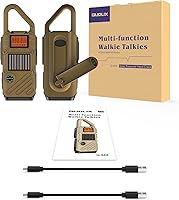
The QNIGLO Q668 Rechargeable Walkie-Talkie Weather Radio is one of those rare devices that tries to pack a surprising number of emergency functions into a single handheld unit. You get paired walkie-talkies, a NOAA weather radio, an LED flashlight, and a USB power bank — all in one chunky but manageable package. At 6.5 x 2.75 x 1.25 inches and just under a pound per unit, this emergency radio combo is not something you will forget is in your pack, but it is not unreasonably heavy either. QNIGLO is a lesser-known manufacturer, so long-term support and parts availability are worth factoring into your decision. No charging dock is included — just two USB-C cables.

Features & Benefits

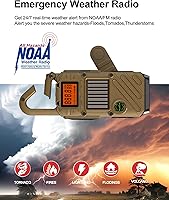
The Q668 walkie-talkie set covers the communication basics competently. The NOAA radio auto-scans all seven weather band channels and locks onto the strongest signal — genuinely useful when a storm rolls in and you need updates without fumbling through menus. On the walkie-talkie side, 22 FRS channels and 99 privacy codes give you enough flexibility to avoid interference from nearby radio users, and VOX hands-free mode is handy when your hands are occupied. The three-way charging setup — USB-C, solar panel, and hand crank — is a legitimate selling point for off-grid use, though the solar panel is small and charges slowly; do not expect fast top-ups from sunlight alone. The 2000mAh battery can trickle-charge a phone, but it holds roughly half the capacity of a modern smartphone battery, so manage expectations accordingly.

Best For

This hand-crank weather radio makes the most sense for campers, hikers, and households building an emergency preparedness kit who want one device that handles multiple roles. Families heading to areas with spotty cell service — think ski resorts, national parks, or crowded theme parks — will find the paired radios genuinely practical. The built-in power bank adds real value for off-grid trips where topping off a phone is otherwise impossible. That said, one important caveat: this device is not water resistant at all, which is a meaningful limitation for an outdoor-focused product. And if you need reliable communication beyond about a mile and a half in real-world terrain, a dedicated long-range radio setup will serve you better. Think of this as a capable everyday emergency tool, not a professional-grade unit.

User Feedback

With a 4.2-star average across 132 ratings, the Q668 walkie-talkie set earns cautiously positive marks from buyers. Reviewers commonly praise how straightforward the setup is and appreciate the NOAA reception, which reportedly works well without much fiddling. The flashlight and SOS features also get favorable mentions from emergency preparedness buyers. On the downside, real-world range is a recurring sore spot — performance in wooded or hilly terrain often falls noticeably short of the 1.5-mile maximum, which is already a modest figure. Some buyers also find the solar charging impractically slow for meaningful battery recovery. Customer service responsiveness appears to be a genuine positive, with QNIGLO reportedly addressing warranty claims within a reasonable window. Overall, most buyers feel they got fair value, but few are surprised by the limitations.

Pros

  • NOAA auto-scan locks onto the strongest weather channel quickly, making storm alerts genuinely easy to receive.
  • Three charging methods — USB-C, solar, and hand crank — mean you always have a backup option off-grid.
  • Comes as a ready-to-use pair with cables included, so there is nothing extra to buy out of the box.
  • VOX hands-free mode is a practical touch for hikers and cyclists who need communication without pressing buttons.
  • 99 privacy codes on 22 FRS channels give enough flexibility to avoid interference in crowded areas.
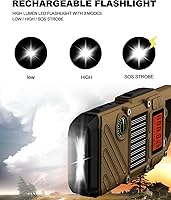
  • SOS alarm and strobe flashlight mode add real emergency signaling capability beyond basic communication.
  • Key lock prevents accidental setting changes, which is a small but genuinely useful feature during active outdoor use.
  • Built-in FM radio extends the device usefulness beyond emergencies for everyday listening.
  • 12-month warranty with reportedly responsive customer service adds a reasonable layer of purchase confidence.
  • Compact enough to toss in a go-bag without dominating the available space.

Cons

  • Zero water resistance is a serious oversight for a device aimed squarely at outdoor and emergency use.
  • Real-world communication range frequently falls short of the 1.5-mile maximum in anything but flat, open terrain.
  • The 2000mAh power bank output is too modest to fully recharge most smartphones even once.
  • Solar charging is extremely slow and should not be relied upon as a primary power recovery method.
  • At 15.5 ounces per unit, carrying both radios adds meaningful weight to an already loaded pack.
  • QNIGLO is a lesser-known brand with limited track record, which raises questions about multi-year durability.
  • No desktop charging dock is included, making simultaneous charging of both units less convenient.
  • VOX sensitivity may need adjustment in windy or noisy outdoor environments to avoid false transmissions.
  • 132 ratings is a relatively thin review base, making it harder to spot long-term reliability trends.
  • Hand-crank charging requires sustained effort for minimal power return, which can be frustrating in a real emergency.

Ratings

Our AI-generated scores for the QNIGLO Q668 Rechargeable Walkie-Talkie Weather Radio are derived from analyzing verified global buyer reviews, with spam, bot-submitted, and incentivized feedback actively filtered out before scoring. The ratings below reflect a balanced synthesis of what real users genuinely praised and where they consistently ran into frustration — nothing is glossed over. Both the strengths that make this emergency radio combo worth considering and the trade-offs that could be dealbreakers are transparently represented in every category.
NOAA Weather Reception
83%
Buyers consistently report that the NOAA auto-scan locks onto a strong signal quickly and reliably, even in rural areas with weaker broadcasts. For campers and households using this during storm season, the ability to get real-time severe weather alerts without manual tuning is one of the most appreciated features on the device.
A handful of users note occasional signal dropouts in areas with terrain interference, and the audio quality on weather broadcasts can sound tinny at higher volume levels. Reception performance also varies depending on the user's geographic distance from the nearest NOAA transmitter.
Walkie-Talkie Range
54%
46%
In open, flat environments like beaches or open fields, buyers report reasonably clear communication up to around a mile, which is adequate for most casual family or camping scenarios. The 22 FRS channels and 99 privacy codes give enough flexibility to find a clean, interference-free frequency in most recreational settings.
Real-world range in wooded areas, hilly terrain, or around buildings regularly falls well short of the advertised 1.5-mile ceiling — a recurring and significant complaint in buyer reviews. Users expecting reliable communication across a densely forested campsite or a ski resort with elevation changes are frequently disappointed by the practical limits.
Multi-Function Value
78%
22%
The combination of walkie-talkie, weather radio, flashlight, FM receiver, and power bank in a single purchase resonates strongly with buyers building emergency kits or go-bags on a budget. Getting two fully functional units with this feature breadth for the price is genuinely hard to match with individually purchased components.
Some buyers feel the multi-function approach leads to a device that does several things adequately but none of them exceptionally well. Users who already own a dedicated weather radio or a quality flashlight may find the combo nature more redundant than additive.
Charging Versatility
71%
29%
Having three distinct charging methods — USB-C, solar, and hand crank — is a real confidence booster for off-grid users and emergency preparedness households. The USB-C option charges at a normal pace for daily use, and knowing the hand crank and solar exist as backups provides meaningful peace of mind during extended power outages.
The solar panel is small and charges at a frustratingly slow rate, even under strong direct sunlight — buyers who expected it to meaningfully recharge the device during a day hike were often let down. Hand-crank charging requires sustained effort for minimal power return, which can feel more exhausting than reassuring in an actual emergency.
Power Bank Usefulness
51%
49%
The ability to push a small charge to a phone or USB device from a walkie-talkie is a genuinely clever inclusion, and buyers in genuine pinch situations — a dead phone with no outlet in sight — found it useful enough to be grateful for. It works, and for brief emergency top-ups, that matters.
At 2000mAh, the internal battery holds roughly half the charge of a typical modern smartphone, meaning a full phone charge is simply not achievable from a depleted unit. Several buyers describe the power bank output as underwhelming for anything beyond keeping a phone alive long enough to send a few messages.
Build Quality
67%
33%
Most buyers describe the housing as feeling solid enough for occasional outdoor use, with a grip texture that holds up reasonably well during hikes and camping trips. The buttons have a satisfying click and generally feel durable enough for the casual use cases this device targets.
The plastic construction does not inspire confidence for heavy-duty use, and the lack of any water or dust resistance rating is a meaningful concern given the outdoor positioning. A few buyers report issues with the hand-crank mechanism feeling flimsy after extended use, which raises durability questions over time.
Audio Clarity
72%
28%
Voice transmission clarity between the paired units is described as clean and intelligible in most conditions, which buyers appreciate during camping trips or family outings where miscommunication can be frustrating. The adjustable volume range allows users to dial in appropriate loudness for both quiet campsites and noisier outdoor environments.
Audio quality in the walkie-talkie mode degrades noticeably at the edges of range, where static and breaking voices become a real problem. The built-in speaker also produces a thin sound profile that some buyers find inadequate for weather radio listening in windy outdoor conditions.
Ease of Setup
84%
Buyers frequently highlight how quickly they got both units up and running out of the box, with no confusing pairing steps or technical knowledge required. The straightforward channel selection and auto-scan feature for NOAA make this accessible to older users or those unfamiliar with radio technology.
The user manual is reported by some buyers as sparse and occasionally unclear on less obvious functions like VOX sensitivity adjustment or switching between radio modes. Users wanting to customize privacy codes or explore deeper settings may find trial-and-error faster than following the documentation.
Flashlight Performance
69%
31%
The three-mode LED flashlight — High, Low, and Strobe — is a practical addition that buyers genuinely use during camping trips for tent illumination or trail navigation. The strobe mode paired with the SOS alarm creates a real dual-signal emergency capability that adds tangible safety value.
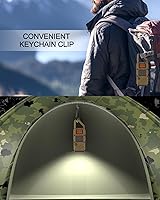
The flashlight output, while functional, is not particularly bright compared to a dedicated LED flashlight in the same price range, and buyers expecting a powerful beam for trail navigation in complete darkness may find it underwhelming. The keychain clip attachment for lantern use also feels lightweight and less secure than ideal for hanging from tent loops.
VOX Performance
61%
39%
Hands-free voice activation works reliably in calm, quiet conditions and is appreciated by buyers who use the radios while biking, climbing, or doing activities where pressing a button is impractical. When it works well, VOX meaningfully improves the experience for active outdoor use.
In windy or noisy outdoor environments, VOX sensitivity can trigger unintentionally from background noise, creating annoying interruptions for the person on the other end. Some buyers report needing to experiment with sensitivity levels to find a workable balance, which is less than ideal during an actual outing.
SOS & Emergency Features
77%
23%
The combination of audible SOS alarm and strobe flashlight mode gives this emergency radio combo a genuine distress signaling capability that goes beyond what most consumer walkie-talkies offer. Buyers building emergency kits specifically called out these features as meaningful additions that influenced their purchase decision.
The SOS function is only as useful as the device battery allows, and with no water resistance and a modest battery capacity, the emergency credentials have real-world limits. Users in survival situations relying solely on this device for rescue signaling may find the range, volume, and battery constraints more significant than the marketing suggests.
Weight & Portability
65%
35%
Each unit is compact enough to slip into a jacket pocket or clip to a bag, and for buyers who only carry one radio at a time, the size is manageable for day hikes and travel. The included keychain clip adds a handy attachment option for bags and tent loops.
At 15.5 ounces per unit, carrying both radios together adds nearly two pounds to your load, which is noticeable for ultralight backpackers or anyone already packing a heavy emergency kit. The chunky form factor also means the device does not sit as naturally in a shirt pocket as slimmer FRS radios on the market.
Compatibility
81%
19%
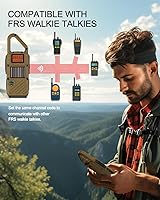
Operating on standard FRS frequencies makes the Q668 walkie-talkie set compatible with most consumer-grade two-way radios from brands like Motorola, Retevis, and Midland, which buyers with mixed radio kits found genuinely convenient. The broad privacy code support also helps avoid cross-talk when mixing brands in the field.
The device is FRS-only and does not support GMRS frequencies, which limits range expansion options for users who later upgrade to licensed GMRS radios. Buyers coming from GMRS ecosystems may find compatibility more limited than expected.
Warranty & Support
73%
27%
QNIGLO's 12-month warranty and reported responsiveness within 12 hours of contact is a positive differentiator for a smaller brand, and several buyers mention receiving helpful resolutions to issues without significant friction. The willingness to stand behind the product gives buyers more confidence than typical no-name alternatives at this price point.
As a lesser-known manufacturer, the long-term parts ecosystem and post-warranty support are uncertain compared to established brands with service centers and broader distribution. Buyers expecting the kind of multi-year support they might get from Motorola or Midland should factor in this brand-maturity gap before purchasing.

Suitable for:

The QNIGLO Q668 Rechargeable Walkie-Talkie Weather Radio was clearly designed with a specific buyer in mind: someone who wants one device to handle several emergency and outdoor communication roles without carrying a bag full of separate gear. It makes a strong case for households putting together a go-bag or emergency preparedness kit, since it covers NOAA weather monitoring, two-way radio communication, a flashlight, and a basic phone-charging backup in a single purchase. Campers and weekend hikers will find the hand-crank and solar charging options genuinely reassuring when outlets are days away, even if those charging methods are slow by modern standards. Families heading to ski resorts, national parks, or large outdoor events where cell service gets spotty will appreciate having a paired set of radios already in the car. If your main priority is practical, budget-conscious emergency readiness rather than high-performance specs, this emergency radio combo checks a lot of boxes at once.
Not suitable for:

Buyers who need rugged, weather-ready communication gear should look elsewhere, because the QNIGLO Q668 Rechargeable Walkie-Talkie Weather Radio carries no water resistance rating whatsoever — a notable gap for a device marketed toward outdoor use. Anyone expecting serious long-range performance will also be disappointed; real-world range in wooded or hilly terrain tends to fall well short of the 1.5-mile ceiling, which is already modest compared to dedicated FRS or GMRS radios in this price bracket. The 2000mAh battery is roughly half the capacity of a typical modern smartphone, so if you are counting on it to meaningfully recharge your phone during a multi-day trip, you will likely find it underwhelming. Professional users, search-and-rescue volunteers, or anyone needing reliable communication across larger distances should invest in purpose-built radio equipment instead. And if you are expecting the solar panel to serve as a meaningful primary charging source, reset those expectations — in practice it functions more as a last-resort trickle charger than a dependable power source.
Specifications

  • Brand: Manufactured by QNIGLO, a consumer electronics brand specializing in outdoor and emergency communication devices.
  • Model: The unit designation is Q668, as printed on the device and referenced in product documentation.
  • Dimensions: Each unit measures 6.5″ x 2.75″ x 1.25″, making it larger than a standard TV remote but compact enough for a jacket pocket.
  • Weight: Each walkie-talkie unit weighs 15.5 ounces, so carrying both adds just under two pounds to your pack.
  • Battery: A 2000mAh lithium-ion rechargeable battery is built into each unit and included at purchase; no additional batteries are required.
  • Charging Methods: Each unit supports three input methods: USB-C cable charging, a built-in solar panel, and a manual hand-crank generator.
  • Power Bank Output: The device can output USB power to charge phones or small electronics, drawing from its 2000mAh internal battery.
  • FRS Channels: The radios operate across 22 FRS channels within the 462–467 MHz frequency range, compatible with most standard FRS walkie-talkies.
  • Privacy Codes: 99 CTCSS/DCS privacy codes are available to reduce interference from other radio users on shared channels.
  • Max Talk Range: The manufacturer lists a maximum talking range of 1.5 miles, achievable primarily in open, flat terrain with no obstructions.
  • NOAA Weather: The built-in NOAA radio automatically scans all 7 WX weather band channels and locks onto the strongest available signal.
  • FM Radio: A built-in FM shortwave radio receiver allows users to tune into standard broadcast stations for news and entertainment.
  • Flashlight Modes: The integrated LED flashlight supports three output modes: High, Low, and Strobe, selectable via a dedicated button.
  • SOS Alarm: An audible SOS alarm is activated by long-pressing the Call button and can be combined with the Strobe flashlight mode for visual signaling.
  • VOX Support: Voice-activated transmission (VOX) is supported, enabling hands-free operation without pressing the push-to-talk button.
  • Key Lock: A key lock function disables the button inputs to prevent accidental changes to channel or volume settings during active use.
  • Water Resistance: This device carries no water resistance or IP rating and should be kept away from rain, splashes, and wet conditions.
  • In the Box: Each purchase includes 2 walkie-talkie units and 2 USB-C charging cables; no charging dock or carry case is included.
  • Warranty: QNIGLO provides a 12-month manufacturer warranty with customer support accessible through the order detail page or official contact channels.
  • Compatibility: The Q668 operates on standard FRS frequencies and is compatible with most third-party FRS walkie-talkies available on the market.

Related Reviews

Rapid Radios Nationwide LTE Two-Way Radio Set
78%
88%
Communication Range
91%
Audio Clarity
86%
Battery Life
83%
Ease of Setup & Pairing
89%
Encryption & Security
More
Cobra ACXT390 Walkie Talkies 2-Pack
75%
58%
Real-World Range
83%
Build Quality & Durability
67%
VOX Hands-Free Performance
79%
Battery Life
88%
Ease of Setup & Use
More
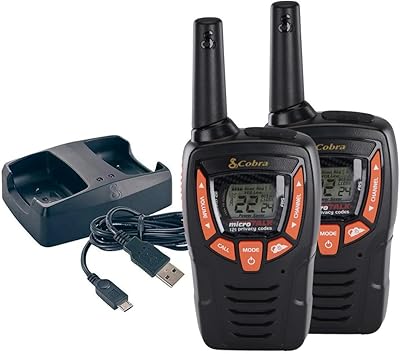
Cobra ACXT345 Rechargeable Two-Way Radio 2-Pack
76%
83%
Audio Clarity
54%
Range Performance
78%
Battery Life
81%
Build Quality & Durability
67%
Water Resistance
More
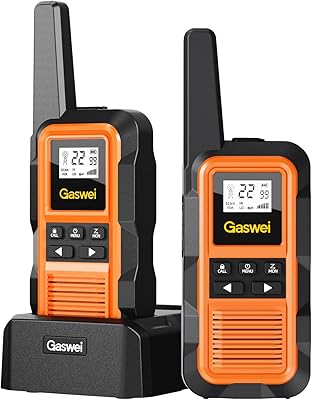
Gaswei G2pro Walkie Talkies
83%
89%
Durability & Build Quality
85%
Range Performance
80%
Ease of Use
83%
Battery Life
91%
Waterproof & Weather Resistance
More
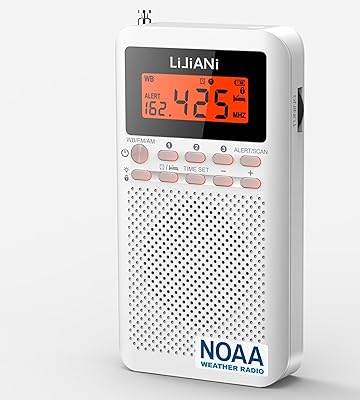
LIJIANI SH01 Portable NOAA Weather Radio
75%
83%
Reception Quality
81%
NOAA Weather Alert Performance
91%
Portability & Size
67%
Battery Life
88%
Ease of Use
More
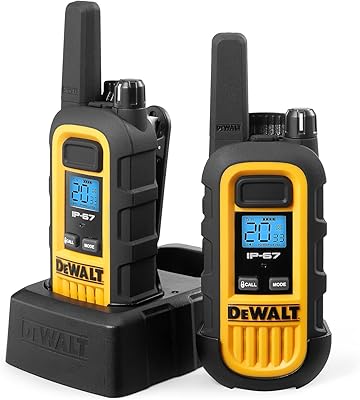
DEWALT DXFRS300 Walkie Talkies
85%
94%
Build Quality & Durability
88%
Battery Life
82%
Range & Signal Strength
91%
Waterproof & Weather Resistance
84%
Ease of Use & Setup
More
Audiocrazy AM FM NOAA Emergency Weather Radio
67%
83%
NOAA Reception
61%
Battery Life
58%
Build Quality
79%
Value for Money
62%
Bluetooth Performance
More
Baofeng UV-32 Walkie Talkie
85%
89%
Performance
92%
Battery Life
85%
Durability
82%
Ease of Use
88%
Bluetooth App Programming
More
Raynic NOAA Weather Radio 12000mAh
86%
88%
Performance in Emergencies
91%
Charging Options
83%
Signal Reception
89%
Flashlight & Lamp Effectiveness
85%
Ease of Use
More
RAOUOEN 30000mAh Emergency Weather Radio
85%
89%
Battery Life & Charging
91%
Performance in Emergencies
75%
Portability & Weight
84%
Sound Quality & Reception
87%
Ease of Use
More

FAQ

You have to switch between modes manually. The device functions as a walkie-talkie or a NOAA weather radio, but not simultaneously. That said, switching between the two is straightforward and takes only a button press or two.

Treat the 1.5-mile figure as a best-case ceiling, not an everyday expectation. In open fields with no trees or hills between users, you might get close to that. In forests, hilly terrain, or urban environments with buildings, expect noticeably shorter range — sometimes under half a mile. If reliable long-range communication is critical to your plans, a dedicated GMRS radio with a license would serve you better.

Yes, but temper your expectations. The 2000mAh battery in the QNIGLO Q668 Rechargeable Walkie-Talkie Weather Radio is roughly half the capacity of a typical modern smartphone battery, so you might get one partial charge out of it. It is genuinely useful in a pinch, but it is not a replacement for a dedicated power bank if phone charging is a priority for your trip.
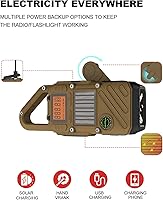
Quite a while — hand-crank charging is slow by nature, and the small generator here is no exception. Expect several minutes of continuous cranking to generate enough power for a short radio session or a brief flashlight use. Think of the hand crank as a last-resort emergency option rather than a routine charging method.

It works, but very slowly. Under strong direct sunlight, the solar panel produces a trickle of power that can help maintain battery levels over a long day, but it will not meaningfully recharge a depleted battery in any reasonable timeframe. In cloudy or shaded conditions, it is largely ineffective. Use USB-C charging whenever possible and treat solar as a supplementary emergency backup.

Yes, as long as the other radios operate on standard FRS frequencies (462–467 MHz). The Q668 walkie-talkie set is compatible with most consumer FRS radios on the market, so mixing with Motorola, Retevis, or similar brands on a matching channel and privacy code should work fine.

No, and this is worth taking seriously before you buy. The device carries no water resistance rating at all, meaning even light rain could potentially cause damage. If you are planning to use it kayaking, in heavy rain, or near water, you will want to keep it in a waterproof pouch or look for a different radio with an IP rating.

They each require individual charging since no dual-port dock is included in the box. You get two USB-C cables, so if you have a multi-port USB charger or a power strip handy, you can charge both simultaneously — you just need to supply the charger yourself.

The key lock disables all button inputs on the radio so that accidental presses during activity — like when the radio is clipped to a bag strap or in a pocket — do not change your channel, volume, or settings mid-trip. It is a simple but welcome feature that prevents a lot of frustrating mid-hike confusion.

QNIGLO offers a 12-month warranty and claims to respond to support inquiries within 12 hours through the order page or their official contact channels. Buyer feedback on this front is generally positive, with most users reporting that the brand was responsive when issues came up. That said, as a smaller manufacturer, the long-term parts and service ecosystem is more limited compared to major brands like Motorola.