

Overview

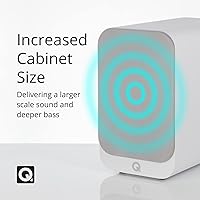
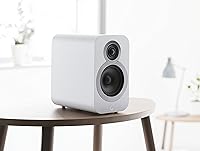
The Q Acoustics 3010i Bookshelf Speakers represent one of the stronger options in the entry-to-mid audiophile bracket — a pair of passive British-engineered speakers that consistently outperform what their compact cabinet suggests. Q Acoustics has built a genuine reputation in UK hi-fi circles for extracting real performance without demanding a premium outlay, and the 3010i carries that tradition forward. The cabinet is 25% larger than its predecessor, which translates into noticeably better bass body and a wider soundstage. The Arctic White finish looks genuinely modern and considered — the kind of speaker that complements a room rather than just occupying it. That said, these require a separate amplifier; they will not power themselves, which is worth knowing upfront.

Features & Benefits

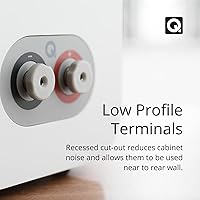
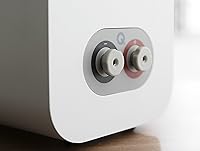
The decoupled 0.9-inch tweeter is probably the most technically interesting element here. By physically isolating it from the cabinet, Q Acoustics reduces the vibration that can muddy high-frequency detail — the result is a noticeably cleaner, wider stereo spread than you might expect from a speaker this size. The 4-inch bass driver works inside a reflex enclosure to reach down to 65 Hz, which is credible performance for such a compact cabinet. Internally, computer-aided P2P bracing stiffens the structure and reduces coloration — you hear less box and more music. The binding posts are recessed and low-profile, accepting banana plugs, which simplifies near-wall placement considerably. Nominal impedance sits at 6 ohms, broadly compatible with most modern amplifiers, though the 86 dB sensitivity means you will want something with genuine power reserves.

Best For

These compact bookshelf speakers are a natural fit for anyone stepping up from a soundbar or a Bluetooth speaker for the first time and wanting to understand what a proper stereo setup actually sounds like. They work best in small-to-medium rooms — a bedroom, a study, or a modest living room — where a larger floorstanding speaker would be physically and acoustically excessive. They also slot neatly into a home theater front stage when paired with a capable AV receiver. The key requirement throughout is an amplifier in the 50–100W range; anyone already owning one of those is well-positioned to get real value here. Style-conscious buyers will appreciate the clean, modern cabinet design that holds up on open shelving without looking like an afterthought.

User Feedback

Across a wide range of listener accounts, the most consistent observation is that the soundstage surprises — people expect a constrained, boxy sound from a speaker this compact and instead find something notably open and detailed. Bass comes up frequently too: described as punchy and well-defined rather than exaggerated, which makes Q Acoustics' 3010i particularly well-suited to acoustic music, jazz, and vocals. On the other side of the ledger, the 86 dB sensitivity draws fair attention. In larger rooms or with weaker amplification, the volume ceiling can feel limiting. Build quality earns consistent praise — the cabinet feels solid and well-finished, and the grille fit is tight. The included foam bungs, which let you tune bass port output, are a small but practical inclusion that experienced listeners tend to appreciate.

Pros

  • Delivers a surprisingly open, detailed soundstage for a speaker cabinet this compact.
  • Bass reaches down to 65 Hz — punchy and defined rather than boomy or exaggerated.
  • Decoupled tweeter design reduces cabinet resonance, producing cleaner, wider high-frequency dispersion.
  • Internal P2P bracing significantly reduces enclosure coloration, letting more of the music come through.
  • Compatible with most modern stereo amplifiers thanks to a 6-ohm nominal impedance.
  • Recessed binding posts accept banana plugs, making shelf and near-wall installation genuinely practical.
  • Arctic White finish is a design-forward departure from the typical black-box aesthetic.
  • Foam bungs allow bass port tuning for different room placements — a small but practical flexibility.
  • Build quality consistently impresses; the cabinet feels rigid and the grilles fit precisely.
  • The Q Acoustics 3010i Bookshelf Speakers represent a meaningful step up from entry-level options.

Cons

  • Require a separate amplifier or receiver — not suitable for buyers expecting a ready-to-use setup.
  • At 86 dB sensitivity, underpowered receivers will leave them sounding flat and underperforming.
  • Not well-suited to larger rooms where higher volume and greater acoustic headroom are needed.
  • No built-in amplification, Bluetooth, or streaming — purely passive with zero wireless functionality.
  • The 4-inch bass driver cannot reproduce sub-bass frequencies below 65 Hz without a subwoofer.
  • Total system cost rises meaningfully once a quality amplifier is factored into the budget.
  • First-time buyers often underestimate the amplifier pairing requirement and end up with a mismatched system.
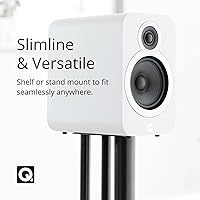
  • No wall-mount solution is included; buyers wanting wall-hanging placement will need third-party brackets.

Ratings

The scores assigned to the Q Acoustics 3010i Bookshelf Speakers were generated by our AI rating engine after analyzing thousands of verified buyer reviews across multiple global markets, with spam, bot-generated content, and incentivized feedback systematically filtered out before any scoring was applied. The resulting scorecard honestly reflects both the genuine strengths that make the 3010i pair a standout in the entry-to-mid hi-fi bracket and the real-world limitations — particularly around amplifier dependency and room size suitability — that some buyers encounter. Every category score is calibrated to give you a transparent picture of what these compact bookshelf speakers actually deliver in daily use, not a glossed-over endorsement.

Sound Quality
91%
Listeners stepping up from soundbars or mid-range Bluetooth speakers consistently describe the overall sound as a revelation — open, detailed, and spatially convincing in a way that smaller, less engineered cabinets rarely achieve. The decoupled tweeter and P2P-braced enclosure work together to keep the presentation clean and uncolored across the full frequency range.
At higher volumes with underpowered amplification, the overall presentation can feel slightly compressed, and the 86 dB sensitivity means the speaker leans heavily on whatever is driving it. In demanding listening environments, the sound quality ceiling is partly set by the amplifier rather than by the speakers themselves.
Soundstage & Imaging
88%
The 3010i pair's ability to project a wide, stable stereo image is the feature that surprises new owners most — placed correctly, they throw a convincing soundstage well beyond the physical cabinet edges, with instruments and voices sitting in defined, repeatable positions. This quality makes extended listening sessions genuinely engaging in a way that budget alternatives simply cannot match.
Optimal imaging requires careful placement — too close to side walls or in corners, the stereo picture narrows considerably. These compact bookshelf speakers also benefit from being positioned at ear height on dedicated stands rather than sitting flat on a shelf, and buyers who cannot accommodate that setup may not hear the imaging perform at its best.
Midrange Performance
92%
The midrange is where the 3010i pair earns its strongest praise — vocals sit clearly in the mix, acoustic instruments carry genuine body and texture, and the P2P-braced enclosure ensures minimal cabinet coloration bleeds into the frequency band where the human voice lives. Listeners who primarily play jazz, folk, or singer-songwriter material consistently single out the midrange as exceptional.
On very dense or complex recordings with multiple instruments competing in the midrange — certain orchestral or hard rock tracks — the presentation can feel slightly congested at higher listening levels. This is an inherent constraint of the cabinet size and driver surface area rather than a tuning problem, and most listeners will never push these speakers far enough to notice it.
Treble Clarity
89%
The 0.9-inch decoupled tweeter is arguably the most performance-defining element in the design, and it delivers — high frequencies are airy, extended to 30 kHz, and free of the harshness or sibilance that cheaper tweeter designs often introduce. String quartets and vocal consonants in particular benefit from how cleanly the upper register is rendered.
A small number of listeners with very revealing downstream equipment note that the tweeter can sound slightly forward on certain bright or poorly mastered recordings. This is a minor and system-dependent observation, but ears that are sensitive to treble fatigue may want to audition the 3010i pair before committing, particularly if paired with a bright-sounding amplifier.
Bass Performance
78%
22%
For a speaker with a 4-inch driver in a cabinet this compact, the bass response is genuinely creditable — punchy, controlled, and well-defined rather than exaggerated or one-note. Jazz double bass, acoustic guitar body resonance, and male vocals all come through with satisfying weight without sounding artificially boosted or slow.
The reflex enclosure reaches down to 65 Hz, which covers most music genres adequately, but listeners who favor deep electronic music or large orchestral works with significant sub-bass content will clearly notice the absence below that threshold. Adding a subwoofer resolves this cleanly, but it introduces additional cost and complexity that not every buyer wants.
Low-End Extension
71%
29%
Reaching 65 Hz from a 4-inch driver in a compact reflex enclosure is a genuine engineering accomplishment, and in practice the bass sounds tighter and better controlled than many similarly sized rivals manage. The foam bung system also lets listeners tune the port output when placing the speakers close to a rear wall, helping maintain bass definition rather than mud.
Below 65 Hz the response rolls off, and while this is inaudible on most music, it is a measurable limitation that will leave dedicated bass listeners unsatisfied without a subwoofer supplement. Some reviewers note that at high playback levels, very demanding bass passages can occasionally cause slight driver strain when the speakers are pushed close to their limits.
Build Quality
87%
Cabinet rigidity stands out consistently in buyer feedback — the enclosure feels solid and well-damped, with no audible cabinet talk or flex when you handle it or play demanding material. The grilles clip on with a precise, rattle-free fit and the Arctic White finish holds up well to everyday handling, with no widely reported issues of chipping or surface deterioration.
The binding post recesses, while practical for cable management, can make swapping speaker wire slightly fiddly when using thicker-gauge cable in a tight shelf installation. Some buyers note the included rubber grip pads are thin and occasionally shift during repositioning, though this is a minor accessory observation rather than a structural concern about the cabinet itself.
Value for Money
86%
In the mid-range bookshelf speaker bracket, these compact bookshelf speakers consistently outperform rivals at comparable or even higher price points — particularly in soundstage width, enclosure construction quality, and tweeter refinement. Buyers migrating from entry-level alternatives frequently describe the performance gap as larger than the price difference alone would suggest.
The total cost of ownership rises meaningfully once a quality amplifier is factored in, since that component is non-optional. Buyers entering the hi-fi space for the first time who budget only for the speakers themselves often find they need to spend considerably more to unlock the full performance these speakers are demonstrably capable of delivering.
Amplifier Compatibility
73%
27%
The 6-ohm nominal impedance sits in a range that most modern stereo amplifiers and AV receivers handle comfortably, and buyers with capable mid-range amplification consistently report the speakers responding well and scaling up noticeably with better source equipment. The 4-ohm minimum impedance dip is within the safe operating range for most quality receivers.
The 86 dB sensitivity is the practical limitation — pair these with a budget receiver below 40 watts per channel and the result is underwhelming, leaving buyers incorrectly concluding the speakers are mediocre. This is the single most frequently reported source of disappointment in user reviews, and it is entirely avoidable with the right amplifier pairing from the outset.
Design & Aesthetics
84%
The Arctic White finish reads as genuinely contemporary rather than as a generic electronics product, which matters to buyers living in modern, open-plan spaces where gear is on display rather than hidden in a cabinet. The proportions are compact and well-balanced, and the close-fitting grilles give the speakers a clean, finished appearance whether the grilles are on or removed.
Arctic White is the only color option available in this listing, which limits flexibility for buyers with darker wood furniture or cooler neutral-toned interiors. Fingerprints and dust also show more readily on the white surface than they would on a matte black cabinet, meaning occasional light cleaning is needed to keep the finish looking as intended.
Room Versatility
62%
38%
In their intended environment — a bedroom, study, home office, or modest living room — these compact bookshelf speakers perform confidently and fill the space with sound that feels appropriately scaled and well-controlled. The foam bung port-tuning option also gives listeners useful placement flexibility when working around shelves, rear walls, or constrained room dimensions.
Push these into a large open-plan room and the limitations surface quickly — the 86 dB sensitivity does not provide sufficient headroom to energize a big listening area, and the 4-inch driver cannot move enough air to maintain bass authority at distance. Users in larger spaces consistently describe the speakers as sounding thin and distant when asked to cover too much ground.
Setup & Installation
67%
33%
Once the amplifier is in place, connecting the 3010i pair is straightforward — the recessed binding posts accept banana plugs cleanly, and the low-profile cable exit does not protrude awkwardly from the back of the cabinet, which is a genuine practical advantage for shelf or near-wall installations. The included rubber grip pads help stabilize the speakers on smooth shelving surfaces.
The setup process is inherently more involved than active or powered alternatives because a separate amplifier must be sourced, connected, and configured before any sound is produced. First-time hi-fi buyers frequently underestimate the additional cabling, placement decisions, and source component choices involved, and the bundled manual offers limited practical guidance for those starting completely from scratch.
Sensitivity & Efficiency
64%
36%
For listeners with a well-matched amplifier, the 86 dB sensitivity is a non-issue — the speakers respond cleanly and dynamically within their design parameters, and the 6-ohm nominal load keeps amplifier current demand manageable. Buyers who paired these with a capable stereo integrated amplifier report that the speakers deliver genuine dynamic punch at moderate to moderately loud listening levels.
At 86 dB, these compact bookshelf speakers require noticeably more amplifier power to reach satisfying volume levels compared to more efficient rivals at similar price points. In larger rooms, or for buyers who listen at higher reference levels, this becomes a real constraint that narrows the speaker's practical applicability and raises the minimum viable spend on amplification.

Suitable for:

The Q Acoustics 3010i Bookshelf Speakers are a genuinely strong fit for music lovers ready to step beyond the compressed, low-fidelity sound of soundbars and Bluetooth speakers and commit to a proper stereo setup. They are particularly well-suited to small-to-medium listening environments — bedrooms, home offices, studio apartments, or a dedicated corner of a living room — where their compact footprint works in their favor rather than against them. Anyone who already owns a stereo amplifier or AV receiver capable of delivering around 50 watts or more per channel will find these compact bookshelf speakers easy to drive and consistently rewarding across a wide range of genres. First-time hi-fi buyers will appreciate that the 65 Hz low-end extension and decoupled tweeter deliver a performance tier that punches noticeably above the entry-level bracket. The Arctic White cabinet also makes the 3010i pair a natural choice for buyers who care how their gear looks on a shelf or in an open entertainment unit.

Not suitable for:

The Q Acoustics 3010i Bookshelf Speakers are a poor fit for anyone expecting a plug-and-play audio solution straight out of the box — these are passive speakers, which means they require a separate amplifier or AV receiver to produce any sound at all, and buyers who do not already own one need to factor that cost into their planning. The 86 dB sensitivity rating also means the 3010i pair is not well-suited to larger rooms or open-plan living spaces, where the volume ceiling will feel genuinely restrictive without an unusually powerful amplifier behind them. Buyers who want wireless convenience — Bluetooth streaming, Wi-Fi connectivity, or a single self-contained unit — will need to look at active or powered speaker alternatives instead. If sub-bass performance below 65 Hz is a priority, a dedicated subwoofer would need to be added to the system, increasing both cost and complexity. Anyone working with a very modest or low-power vintage receiver should also think carefully before committing, as undersized amplification is the most common reason these speakers fail to reach their potential.

Specifications

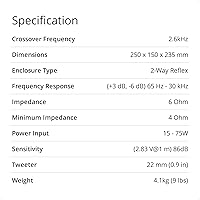
  • Enclosure Type: Each speaker uses a 2-way bass reflex enclosure with a front-firing port designed to extend low-frequency output.
  • Bass Driver: A 4-inch woofer handles all frequencies below the 2.6 kHz crossover point.
  • Tweeter: A 0.9-inch high-frequency driver is physically decoupled from the cabinet with a wide surround to minimize resonance transfer.
  • Frequency Response: Frequency response spans 65 Hz to 30 kHz, measured at +3 dB and −6 dB tolerances.
  • Sensitivity: Sensitivity is rated at 86 dB, measured at 2.83 V input at 1 meter distance.
  • Nominal Impedance: Nominal impedance is 6 ohms, making these speakers broadly compatible with modern stereo amplifiers and AV receivers.
  • Min Impedance: Minimum impedance dips to 4 ohms, so the driving amplifier should be stable into 4-ohm loads.
  • Power Input: Recommended amplifier power input ranges from 50 to 125 watts per channel.
  • Crossover: A passive crossover network divides the audio signal between the woofer and tweeter at 2.6 kHz.
  • Dimensions: Each speaker measures 5.91″ deep × 9.92″ wide × 9.96″ high.
  • Pair Weight: The combined weight of both speakers is approximately 19.6 lbs (8.9 kg).
  • Finish: Available in Arctic White with a smooth cabinet surface and color-matched speaker grilles.
  • Internal Bracing: Computer-aided point-to-point (P2P) internal bracing stiffens the enclosure to suppress resonance and reduce midrange coloration.
  • Binding Posts: Binding posts are recessed and low-profile, accepting bare wire or banana plugs up to 0.16″ in diameter.
  • In Box: Each pair ships with 2 speakers, 2 foam bungs, 2 speaker grilles, 8 rubber speaker grips, and a printed user manual.

Related Reviews
Orroplus OR-02 Powered Bookshelf Speakers
77%
83%
Sound Clarity & Midrange
61%
Bass Performance
91%
Connectivity & Input Range
78%
Bluetooth Performance
72%
Setup & Ease of Use
More
KEF Q150 Bookshelf Speakers
77%
93%
Sound Staging
91%
Vocal & Midrange Clarity
62%
Bass Performance
67%
Amplifier Compatibility
84%
Treble Smoothness
More
Sanyun SW208 3″ Bookshelf Speakers
86%
88%
Build Quality
84%
High-Frequency Clarity
91%
Mid-Range Warmth
78%
Bass Performance
93%
Control Ergonomics
More
Micca MB42X Bookshelf Speakers
81%
88%
Sound Quality
71%
Bass Performance
86%
Treble Clarity
84%
Midrange Accuracy
91%
Crossover Engineering
More
MEVOSTO DS19 Bookshelf Speakers
80%
83%
Sound Quality
79%
Bass Performance
91%
Connectivity & Input Options
86%
Bluetooth Performance
88%
USB Digital Audio
More
Edifier S2000MKIII Active Bookshelf Speakers
80%
89%
Sound Quality
91%
Treble & Detail
88%
Build Quality
87%
Connectivity
76%
Value for Money
More
Sanyun SW205
Sanyun SW205
78%
83%
Sound Quality
61%
Bass Performance
87%
Soundstage & Imaging
89%
Connectivity & Inputs
84%
Bluetooth Performance
More
Probox BT16 Bookshelf Speakers
75%
78%
Sound Clarity
54%
Bass Performance
84%
Bluetooth Stability
82%
USB DAC Quality
63%
Build Quality
More
RIOWOIS DS6800M Passive Bookshelf Speakers
73%
74%
Sound Clarity
51%
Bass Performance
71%
Treble Quality
82%
Build Quality
78%
Value for Money
More
KEF Q350 Bookshelf Speakers
86%
93%
Sound Quality
80%
Bass Performance
88%
Build Quality
91%
Design and Aesthetics
85%
Ease of Setup
More

FAQ

Yes — these are passive speakers, meaning they have no built-in amplification and will not produce sound on their own. You will need a separate stereo amplifier or AV receiver to power them. This is standard for hi-fi speakers at this level, and it gives you the flexibility to choose amplification that genuinely matches your budget and listening preferences.

The 3010i pair performs best when driven by an amplifier delivering 50 to 100 watts per channel into 6 or 8 ohms. The 86 dB sensitivity means they are not especially efficient, so pairing them with a very low-power unit — anything under 25 to 30 watts — will limit your volume headroom noticeably. Most mid-range integrated amplifiers from brands like Cambridge Audio, NAD, or Yamaha are well-matched options.

Honestly, not ideally. At 86 dB sensitivity with a 4-inch bass driver, these compact bookshelf speakers are engineered for small-to-medium spaces. In a large, open-plan room you may find the volume ceiling feels restrictive even with a capable amplifier behind them. For bigger spaces, a floorstanding speaker or a higher-sensitivity model would serve you better.

The foam bungs are used to partially or fully block each speaker's rear bass reflex port. Plugging the port reduces the amount of bass vented into the room, which helps if you have placed the speakers very close to a rear wall and are experiencing a muddy or overly pronounced low end. It is a simple but genuinely useful tuning tool that more experienced listeners tend to appreciate.

Not directly — the 3010i pair still requires an amplifier or AV receiver in the signal chain regardless of the source. If your TV has an optical, RCA, or HDMI ARC output, you can route that signal into a stereo amplifier or receiver and connect the speakers from there. This is actually a very popular and effective setup for clean, high-quality two-channel TV audio.

The 3010i cabinet is approximately 25% larger than the outgoing 3010, which translates into better bass extension and a noticeably wider soundstage. The tweeter has also been redesigned with a decoupled mounting system that reduces resonance transfer from the enclosure, and the internal P2P bracing is more refined. These are substantive engineering improvements rather than cosmetic changes.

These compact bookshelf speakers are particularly well-suited to acoustic-heavy genres — jazz, vocals, classical, and folk all benefit from the clean midrange and the defined, controlled bass response. That said, they handle rock and electronic music competently; they just will not rattle the walls, and deeply bass-heavy genres may leave you wanting a subwoofer for the lowest frequency weight.

For most everyday listening — pop, jazz, rock, and classical — the 65 Hz lower limit is genuinely adequate and sounds natural rather than thin or rolled-off. If you regularly listen to music with heavy sub-bass content, like deep electronic music or large-scale orchestral recordings, you may notice what is missing below that threshold. A subwoofer can always be added later, but most listeners find the built-in bass response satisfying without one.

The binding posts on the 3010i pair are recessed and low-profile, accepting both bare wire ends and banana plugs up to 0.16″ in diameter. The recessed design keeps cable profiles flush against the cabinet, which is particularly practical for shelf or near-wall placement. Standard 16 or 14 AWG speaker cable works well for most home setups.

They are an excellent entry point, provided you go in knowing that a separate amplifier is also required to complete the system. For a first-time hi-fi listener stepping up from a soundbar or Bluetooth speaker, the 3010i pair delivers a significant and immediately noticeable improvement in clarity, imaging, and dynamic range. Just factor the amplifier cost into your overall budget from the start so there are no surprises.