Overview

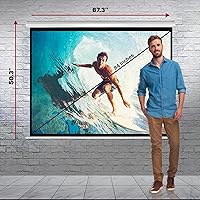
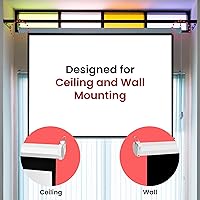
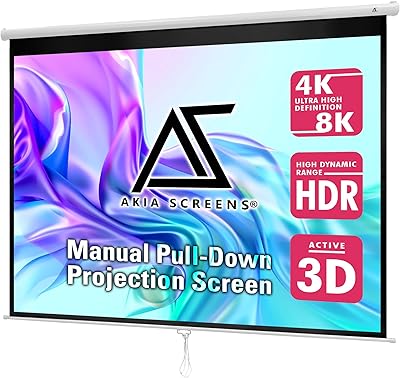
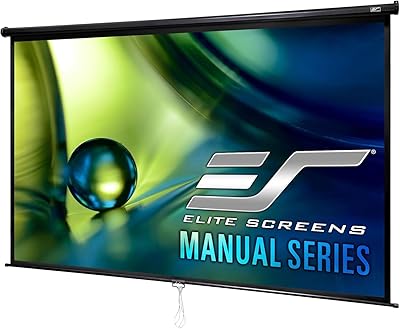
The Pyle PRJSM9406 84-inch Manual Projector Screen has been a steady market presence since 2013, and its #18 ranking in Projection Screens on Amazon tells you it has genuinely earned that spot. This pull-down screen targets home theater enthusiasts, classroom teachers, and small office teams who want a clean, functional display without the complexity or cost of a motorized setup. The actual viewing area measures 50.3″ x 67.3″ — respectable for the price tier — and mounting is straightforward thanks to two top loops for ceiling or wall installation. No frills, no remote, no motor. Just a reliable screen that goes up when you need it and stays put.
Features & Benefits

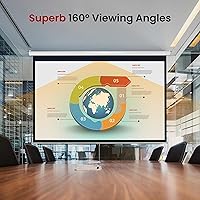
The standout feature here is the auto-locking mechanism — pull the screen to your preferred height, release gently, and it holds position without wobbling or creeping back up. That soft-release action takes a few tries to get right, but once you have the feel for it, it's reliably consistent. The matte white PVC surface does a solid job with color reproduction and handles wide off-axis viewing well, so people sitting at an angle still get a clear picture. The black masking border tightens up the image perimeter and improves perceived contrast noticeably. At just over 12 lbs, one person can install this alone, and the metal housing feels more solid than the price point might suggest.

Best For

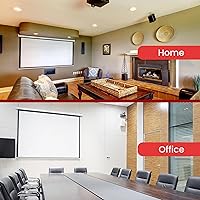
This manual projection screen is an easy recommendation for anyone who wants a proper big-picture experience without a big investment. Home theater users who don't need automation will appreciate that no remote or wiring is required — just mount it and pull. Teachers and presenters will find it reliable enough for daily classroom use without any fuss. It's also a smart pick for renters: the two-loop mounting leaves a small mark on walls or ceilings and comes down cleanly when it's time to move. Pairing this with an entry-level projector gives first-timers a complete functional setup at a fraction of what a motorized screen alone would cost.

User Feedback

With over 2,000 ratings averaging 4.5 stars, the Pyle 84-inch screen has clearly struck a chord with a wide range of buyers — home movie fans, teachers, and office managers alike. The most consistent praise centers on easy installation and the smooth, controlled pull-down feel. Where people get tripped up is the screen surface itself: some buyers notice light wrinkles or a slight curl right out of the box. The good news is these typically flatten out after a few uses; leaving the screen fully extended for a day or two speeds the process along. A few long-term users have flagged that the locking mechanism can loosen with heavy daily use, and it's worth noting this screen offers no ambient light rejection — a brighter room will wash out the image.

Pros

  • Installs solo in under an hour using just the two included mounting loops.
  • The auto-lock mechanism holds the screen firmly at any chosen height without drifting.
  • Matte white surface delivers accurate color reproduction and wide off-axis viewing angles.
  • The black masking border visibly sharpens contrast around the image edges.
  • At just over 12 lbs, this manual projection screen is easy to reposition or take down when needed.
  • A soft-release pull system lets you fine-tune screen height without snapping or jerking.
  • Over 2,000 buyer ratings averaging 4.5 stars reflects consistently positive real-world experience.
  • An 84-inch diagonal viewing area provides a cinematic feel at a wallet-friendly price point.
  • Compatible with any standard projector, making it an easy addition to an existing setup.
  • Light screen wrinkles from shipping typically self-correct after a few uses or a brief hang time.

Cons

  • No ambient light rejection means image quality drops noticeably in any lit room.
  • The 4:3 aspect ratio is a poor match for 16:9 widescreen content, leaving prominent black bars.
  • The locking mechanism may loosen noticeably after months of heavy daily use.
  • Screen surface can arrive with visible curling or wrinkles that take time to settle out.
  • Manual operation requires physical access to the screen each time, which limits placement flexibility.
  • The PVC surface can attract dust and is not as easy to clean as rigid screen alternatives.
  • No carrying case or storage solution is included, making transport awkward despite the light weight.
  • Ceiling or wall mount only — no floor-standing or tripod option for flexible room positioning.

Ratings

Our AI rating engine analyzed thousands of verified global reviews for the Pyle PRJSM9406 84-inch Manual Projector Screen, actively filtering out incentivized, duplicate, and bot-generated submissions to surface what real buyers actually experienced. The scores below reflect a balanced synthesis of genuine praise and honest frustration, so you can make a confident decision knowing both the strengths and the trade-offs are represented fairly.

Ease of Installation
91%
A large share of buyers — from first-time projector owners to seasoned educators — consistently praised how quickly this pull-down screen goes up. The two pre-attached mounting loops keep the process simple, and most solo installers report having it on the wall or ceiling in under an hour with basic household tools.
Ceiling mounting alone can get awkward since you need to hold the unit overhead while aligning the hooks, and a few buyers noted the included hardware guidance could be clearer. Those mounting into concrete or drywall without studs may need to source additional anchors independently.
Image Surface Quality
83%
The matte white PVC surface earns consistent praise for delivering clean, accurate color reproduction in darkened rooms. Teachers using it for slide presentations and home theater fans running movie nights both report that the image looks sharp and evenly lit across the full viewing area, with no obvious hot spots.
The surface is not designed for ambient light environments, and buyers in rooms with windows or overhead lighting report noticeable image washout. A small number of users also observed that the PVC material attracts dust over time and can be tricky to clean without leaving streaks.
Locking Mechanism
78%
22%
The auto-lock system works reliably for the vast majority of users, holding the screen steady at any chosen height without creeping back up mid-presentation. Office managers and classroom teachers particularly appreciate that they can set the screen quickly between sessions without fiddling with clamps or manual pins.
The soft-release technique takes some practice — a few buyers initially struggled to get a clean lock because they released the screen too abruptly. More critically, a segment of long-term users report the locking tension weakens after a year or more of heavy daily pulling, which can cause the screen to drift downward gradually.
Screen Flatness
67%
33%
Once the PVC material has had time to relax after unboxing, the majority of users find the screen lies flat enough for clean, distortion-free projection. Leaving the screen fully extended for a day or two after first use is the most commonly shared tip for getting a smooth result.
Arriving with visible curling or wrinkles is arguably the most common complaint across all reviews. Some buyers found the screen never fully flattened even after extended hang time, which creates subtle image distortion that is especially noticeable with text-heavy slides or fine-detail content.
Build Quality
74%
26%
The metal housing feels more solid than most buyers expect at this price point, and the roller mechanism operates smoothly without the flimsy rattling associated with the cheapest pull-down screens. For light to moderate use in a home or small office, the construction holds up without obvious signs of wear.
This is not a commercial-grade product, and buyers who subject it to heavy institutional use — multiple pulls per day in a busy classroom — tend to notice wear on the housing and spring tension within 12 to 18 months. The PVC surface is also susceptible to creasing if the screen is rolled up carelessly.
Value for Money
88%
Across all buyer segments, value for money is one of the most praised aspects of this manual projection screen. Home theater newcomers and budget-conscious educators repeatedly point out that it delivers a genuinely usable big-screen experience at a price that leaves room for a decent projector in the same budget.
Buyers who expected premium flatness, ambient light rejection, or a 16:9 widescreen format felt the value proposition was weaker for their specific needs. The trade-off is real: the price reflects a screen built for occasional, controlled-environment use rather than an all-conditions everyday workhorse.
Aspect Ratio Suitability
59%
41%
The 4:3 format works well for buyers using this screen with older projectors, document cameras, or standard presentation software where the classic square format is still the norm. Teachers displaying PowerPoint slides or spreadsheets often find the format perfectly adequate for their classroom workflow.
Modern buyers streaming HD films or YouTube content are frequently disappointed by the prominent black bars that appear along the top and bottom of the screen during 16:9 playback. This is a fundamental format mismatch that no setting or adjustment can fully resolve, and it catches a notable number of buyers off guard before purchase.
Ambient Light Performance
41%
59%
In a properly darkened room, the matte white surface performs well and buyers are generally satisfied with the brightness and evenness of the projected image. Those who set it up in dedicated home theater rooms or windowless conference spaces rarely complain about picture quality.
This screen has no ambient light rejection capability whatsoever, which means even modest room lighting causes serious image degradation. Buyers who installed it in living rooms with natural light or under bright ceiling fixtures report the picture becomes difficult to see clearly, making it impractical for daytime use without blackout curtains.
Pull-Down Operation
84%
Day-to-day operation is smooth and intuitive for most buyers. The pull-down motion feels controlled rather than snappy, and once the proper soft-release technique is learned, users describe locking the screen into position as a one-second action they don't have to think about during a presentation.
New users frequently need a few attempts to master the release technique, and pulling too fast or releasing too sharply can result in the screen snapping back up. Without any pull cord or handle, reaching the bottom of the screen can also require a slight stretch for shorter users once the screen is mounted at standard ceiling height.
Mounting Flexibility
62%
38%
The two-loop ceiling and wall mounting design keeps installation simple and the screen's light weight means the mount points do not need to bear much load. Renters especially appreciate that installation leaves minimal marks and the screen comes down cleanly when needed.
The screen offers no freestanding or floor-mounted configuration, which limits its usefulness to permanently or semi-permanently installed spaces. Buyers who needed a portable option for use in different rooms or offsite locations found this a significant restriction that is not always obvious from the product listing.
Size Accuracy
77%
23%
Buyers generally confirm that the physical dimensions match what is advertised. The 84-inch diagonal and 50.3″ x 67.3″ viewing area are consistent with real-world measurements reported by users, which is a more reliable result than is typical for budget projection screens that sometimes ship undersized.
A handful of buyers felt the 84-inch diagonal measurement was slightly misleading, as the actual usable image area feels smaller than what the number implies — particularly because the black masking border takes up a visible portion of the total screen width. Expectations set by the diagonal measurement alone can lead to minor disappointment.
Long-Term Durability
66%
34%
For buyers using the screen in a home theater or small office setting with light to moderate use, multi-year operation without any significant issues is commonly reported. The metal roller housing resists the kind of physical damage that would sideline cheaper all-plastic alternatives.
Institutional or heavy-use buyers describe a gradual decline in locking performance and spring tension after sustained daily operation. The PVC surface can also develop permanent creases if the screen is repeatedly rolled up unevenly or stored in a compressed position for long periods.
Off-Axis Viewing
81%
19%
The matte white surface diffuses reflected light broadly, which means viewers seated at an angle to the screen — such as students along the sides of a classroom — still get a reasonably clear and color-accurate image. This is one area where the surface material genuinely delivers on its spec sheet claim.
While off-axis performance is good for a budget screen, it does not match the consistency of higher-gain or tensioned screens at extreme viewing angles. Viewers seated past roughly 45 degrees from center may notice some light falloff and slight color shift compared to what those sitting directly in front experience.
Packaging & Unboxing
72%
28%
Most buyers report the screen arrives intact with no physical damage to the housing or roller, which is a reasonable result given how long and cylindrical the package is. The compact shipping profile also makes it manageable to carry into the room and position for installation without help.
The packaging itself provides little protection against the screen surface developing shipping creases, which is the root cause of the first-use wrinkle complaints so many buyers share. Better inner cushioning or a pre-extended hang instruction card in the box could address this common frustration before it becomes a negative review.

Suitable for:

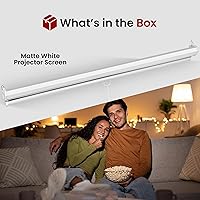
The Pyle PRJSM9406 84-inch Manual Projector Screen is a natural fit for anyone who wants a big-screen experience without the complexity or cost of a motorized setup. Home theater enthusiasts on a practical budget will find the 84-inch diagonal viewing area genuinely satisfying for movie nights, and the straightforward ceiling or wall mounting means most people can have it up and running in under an hour without a second pair of hands. Teachers and professors will appreciate how quickly the screen rolls down and locks in place between lessons — there are no remotes to lose or motors to troubleshoot. Small offices and conference rooms that host occasional presentations rather than daily all-day use will get reliable mileage out of this manual projection screen without over-investing in equipment. Renters especially benefit here, since the minimal two-loop mounting leaves virtually no trace when removed, making it easy to take along to the next place.
Not suitable for:

Buyers with demanding or frequent presentation environments should think carefully before committing to the Pyle PRJSM9406 84-inch Manual Projector Screen. The matte white surface has no ambient light rejection capability, which means any room with windows or overhead lighting will noticeably wash out the projected image — controlled, darkened spaces are essentially a requirement for a good picture. Anyone expecting 16:9 widescreen content to fill the frame perfectly will also be disappointed, as the 4:3 aspect ratio leaves black bars when playing modern HD video. Heavy daily use — such as in a busy classroom pulled up and down multiple times a day — may eventually wear on the locking mechanism, based on long-term user reports. If you need motorized operation, a tab-tensioned surface for edge-to-edge flatness, or a screen rated for bright-room projection, this pull-down screen simply is not designed to meet those needs.

Specifications

  • Display Size: The screen measures 84 inches diagonally, providing a large viewing surface suitable for home theaters, classrooms, and small conference rooms.
  • Viewing Area: The active projection surface measures 50.3″ wide by 67.3″ tall, giving a clear picture of the usable image space after the black border is accounted for.
  • Aspect Ratio: The screen uses a 4:3 aspect ratio, which is best suited for standard-format presentations, older video content, and document display rather than modern widescreen media.
  • Surface Material: The projection surface is made from matte white PVC, which diffuses light evenly and supports wide off-axis viewing without hot-spotting.
  • Frame Material: The outer housing and roller mechanism are constructed from metal, providing structural rigidity that keeps the screen rolling and retracting evenly over time.
  • Border: A black masking border surrounds the projection surface to absorb stray light at the edges and improve the perceived contrast of the projected image.
  • Mounting Type: The screen is designed for permanent ceiling or wall mounting using two integrated top loops included with the unit.
  • Mechanism: A manual pull-down system with an auto-locking mechanism allows the screen to be set and held at any height along its travel range without additional hardware.
  • Item Weight: The complete unit weighs 12.17 lbs, light enough for a single person to lift and mount without assistance in most ceiling or wall configurations.
  • Packed Dimensions: The packaged unit measures 72.5 x 4.8 x 5.2 inches, shipping in a compact cylindrical form that is manageable to transport and store before installation.
  • Model Number: The official model designation is PRJSM9406, which can be used to identify compatible accessories or verify the correct product when ordering.
  • Brand: The screen is sold under the Pyle brand and manufactured by Sound Around, a consumer electronics company with a broad catalog of audio and visual products.
  • Mounting Hardware: Two top mounting loops are pre-attached to the housing; no additional mounting bracket or special hardware is required for standard ceiling or wall installation.
  • First Available: This model has been available on the market since August 2013, indicating a long production run with consistent availability and established user feedback.
  • Sales Rank: The screen holds a top-20 ranking in the Projection Screens category on Amazon, reflecting sustained buyer interest and a high volume of positive reviews over time.
  • Total Ratings: As of the latest data available, this manual projection screen has accumulated over 2,091 customer ratings with an average score of 4.5 out of 5 stars.
  • Gain Rating: The matte white PVC surface has an approximate gain of 1.0, meaning it reflects light evenly in all directions without amplifying brightness toward any single viewing angle.
  • Ambient Light: This screen has no ambient light rejection (ALR) coating, so it performs best in fully or partially darkened rooms rather than brightly lit environments.

Related Reviews
Elite Screens M84UWH 84-inch Projector Screen
80%
88%
Image Quality
91%
Value for Money
74%
Build Quality
86%
Ease of Installation
83%
Auto-Lock Mechanism
More
Akia Screens 110-inch Manual Projector Screen
87%
91%
Ease of Installation
87%
Build Quality
90%
Screen Performance
92%
Value for Money
88%
Compatibility with Projectors
More
Akia Screens 100″ Manual Pull-Down Projector Screen
80%
88%
Image Quality
91%
Ease of Installation
86%
Screen Material & Coating
74%
Build Quality & Housing
71%
Auto-Lock Mechanism
More
Elite Screens M120H 120-Inch Manual Pull-Down Projector Screen
87%
91%
Ease of Setup
87%
Image Quality
92%
Build Quality
88%
Value for Money
89%
Compatibility with 4K/8K/3D
More
Elite Screens M110H 110-inch Projector Screen
80%
88%
Image Quality
71%
Screen Flatness
78%
Build Quality
84%
Installation Experience
83%
Auto-Lock Mechanism
More
Elite Screens QuickStand QS150HD 150-inch Manual Pull Up Projector Screen
87%
94%
Ease of Setup
88%
Portability
91%
Image Quality
85%
Build Quality
72%
Screen Tension
More
Elite Screens QuickStand 180-inch Portable Projector Screen
77%
91%
Setup Speed
88%
Screen Image Quality
86%
Build Quality
58%
Portability
67%
Value for Money
More
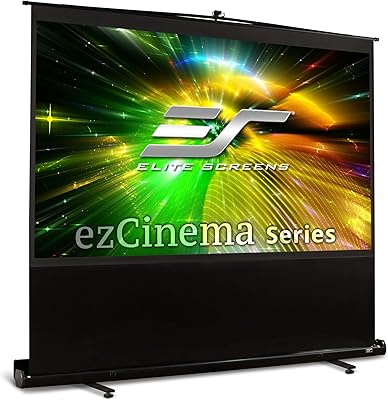
Elite Screens ezCinema 150-inch Manual Projector Screen
79%
88%
Image Quality
84%
Screen Flatness
71%
Ease of Setup
83%
Build Quality
57%
Portability
More
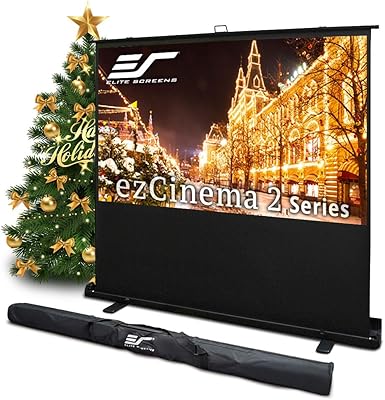
Elite Screens ezCinema 2 70-inch Manual Floor Pull Up Projector Screen
86%
88%
Ease of Setup
90%
Portability
91%
Image Quality
84%
Build Quality
89%
Value for Money
More
Elite Screens Manual M100UWH 100-inch
78%
83%
Screen Image Quality
79%
Build Quality
76%
Auto-Lock Mechanism
81%
Screen Flatness & Tension
88%
Ease of Installation
More

FAQ

The unit ships with two pre-attached top mounting loops, which is all you need for a basic ceiling or wall installation. You will need to supply your own screws or hooks appropriate for your wall or ceiling material, but no special brackets are required. Most buyers have it up in under an hour using standard hardware.

Yes, this is a very common experience with this type of rolled PVC screen. The material gets compressed during shipping and can take a little time to relax. Leave the screen fully extended for 24 to 48 hours and the wrinkles typically flatten on their own. Running through a few normal pull-down and retract cycles also helps speed things along.

Honestly, not ideally. The matte white surface has no ambient light rejection capability, so a bright room will wash out the projected image noticeably. For the best picture quality, you want a darkened or at least dim environment. If your space has significant natural or artificial light you cannot easily control, you may want to consider a screen with an ALR coating instead.

The screen is 4:3 aspect ratio, which is the older square-ish format. It will technically display 16:9 widescreen content from any projector, but you will see black bars along the top and bottom of the image since the content does not fill the full screen height. If most of your use involves modern HD video or movies, a 16:9 screen would be a better fit.

The screen uses a spring-loaded auto-lock system. You pull it down to your desired height, then release it gently and it clicks into position. The key is the soft release — if you let go abruptly it may not catch cleanly. Once locked, it holds reliably without drifting. A small number of long-term users have noted the lock can feel less firm after years of heavy daily use, but for moderate use it holds up well.

Most people install it solo without much trouble. The unit weighs just over 12 lbs, which is manageable for one person. The process involves marking your mount points, attaching two hooks or screws, and hanging the loops over them. Ceiling installs can be trickier alone simply because you need to hold it overhead while aligning, so having a second pair of hands for that step does make life easier.

It works with any projector regardless of brand — this is just a passive reflective surface. The key variable is matching your projector's throw distance and aspect ratio output to the screen size. Any short-throw, standard, or long-throw projector can use it, as long as you position the projector at the correct distance to fill or fit within the 50.3″ x 67.3″ viewing area.

Use a soft, lint-free cloth dampened slightly with water for general dust or light smudges. Avoid abrasive cloths, paper towels, or any chemical cleaning agents, as these can damage the matte PVC coating. For anything more stubborn, a very diluted mild soap solution applied gently and wiped dry usually works without leaving residue.

This is designed as an indoor screen only. The PVC surface is not weather-resistant and the metal housing can corrode with moisture exposure. Even occasional outdoor use in humid or wet conditions would shorten its lifespan considerably. For outdoor movie nights, look for screens specifically rated for outdoor use with water-resistant materials.

This particular pull-down screen is ceiling and wall mount only — there is no built-in stand or tripod option. If you need a portable, free-standing solution that you can move between rooms or take to different locations, you would need a separate tripod projector screen. This manual projection screen is best suited for permanent or semi-permanent installation in one spot.