Overview

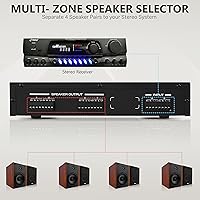
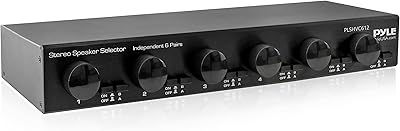
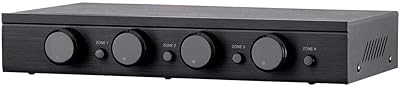
The Pyle PLSHVC412 4-Channel Speaker Selector is a mid-range distribution box built for anyone who wants music flowing through multiple rooms without buying a separate amplifier for each space. The core idea is simple: one amp in, up to four independent speaker pairs out. What separates this unit from the cheaper plastic options crowding the market is its aluminum housing and built-in heat sink, which suggest a manufacturer that thought about sustained use rather than just a quick sale. That said, be clear about what this is — a signal distribution device, not a power upgrade. It divides your amp's output; it does not add to it. Setup is genuinely straightforward, even for first-timers.
Features & Benefits

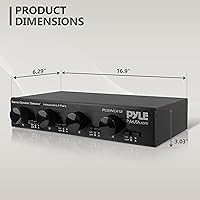
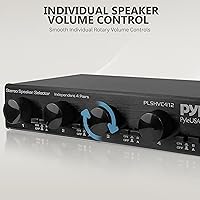
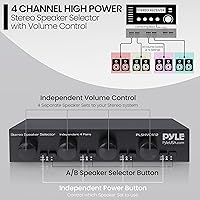
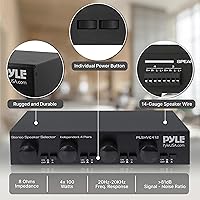
Each of the four channels on this speaker selector has its own push-button switch and a dedicated volume knob, so you can silence the kitchen speakers without touching the living room level. It accepts wire up to 14 gauge, covering most standard home runs comfortably. On the power side, understand the math before you buy: the amp input handles up to 100W RMS, but each speaker output delivers around 18W RMS — that power is shared, not multiplied. The aluminum chassis with a passive heat sink manages heat during long listening sessions without a fan. A 3.5mm auxiliary input adds connection flexibility, and at roughly 6.29 by 16.92 inches, it slots cleanly into most AV shelving or rack setups.

Best For

The Pyle unit is a strong match for homeowners who want background audio in two or three rooms — kitchen, patio, and den, for example — all fed from a single receiver. Home theater enthusiasts adding ceiling or outdoor fill speakers to an existing setup will find it equally capable. It also suits small offices or boutique retail spaces where zone-based control matters but a full commercial system is overkill. If you enjoy straightforward wiring projects, this is your speed. One firm note: this four-zone controller is built for 8-ohm speakers. If your speakers are rated at 4 ohms, the impedance mismatch can stress your amplifier, so check your specs carefully before purchasing.

User Feedback

With over 900 ratings averaging 4.3 stars and a position at #88 in Audio & Video Selector Boxes, this speaker selector has built a solid reputation — though not without caveats. Most buyers highlight easy wiring and reliable channel switching as standout positives, and the aluminum build earns consistent praise from people who have handled flimsier units before. The most recurring criticism worth noting: volume output per channel drops noticeably compared to a direct amp connection — an unavoidable trade-off with any distribution device. A smaller pattern in reviews flags volume knob inconsistency at very low settings. Buyers upgrading from a basic passive selector, however, tend to view the active per-channel volume control as a meaningful and worthwhile step forward.

Pros

  • Controls up to four independent speaker pairs from a single amplifier — no extra hardware needed.
  • Individual volume knobs per channel let you fine-tune each room without disrupting others.
  • Aluminum housing feels noticeably more robust than the plastic-shell alternatives at this price tier.
  • Passive heat sink keeps the unit cool during extended listening sessions without any fan noise.
  • Plug-and-play wiring is straightforward enough for a first-time installer to complete in under an hour.
  • Accepts speaker wire up to 14 gauge, which covers virtually all standard residential audio runs.
  • The 3.5mm auxiliary input adds a quick connection option alongside the standard binding posts.
  • Rack-friendly dimensions make it easy to integrate into an existing AV cabinet or shelf setup.
  • A 4.3-star average across more than 900 ratings reflects a consistently reliable ownership experience.
  • Buyers upgrading from a basic passive selector consistently note the active volume control as a worthwhile improvement.

Cons

  • Power is divided across zones, not duplicated — each speaker pair gets roughly 18W RMS, not the full amplifier output.
  • Strictly compatible with 8-ohm speakers; pairing with 4-ohm loads can damage both the selector and your amplifier.
  • Some users report the volume knobs feel inconsistent at very low settings, making fine adjustments tricky.
  • No smart home, app, or remote control support — every adjustment requires physical access to the unit.
  • Running all four zones simultaneously at higher volumes produces a noticeable drop in overall loudness and dynamic range.
  • No impedance protection circuit is mentioned, which means user error with mismatched speakers carries real risk.
  • The 3.5mm auxiliary input is a convenience feature, not a high-fidelity connection — signal quality may suffer at that jack.
  • Long cable runs from a distant amplifier can introduce signal degradation that the unit itself cannot compensate for.

Ratings

The scores below reflect our AI-driven analysis of verified global buyer reviews for the Pyle PLSHVC412 4-Channel Speaker Selector, with spam, bot-generated, and incentivized feedback actively filtered out before scoring. Each category is rated independently to give you an honest picture of where this four-zone controller genuinely delivers and where real-world frustrations surface. Both the strengths that keep buyers satisfied and the pain points that prompt returns are transparently baked into every number you see here.

Ease of Installation
91%
The vast majority of buyers — including many who described themselves as non-technical — reported completing the full wiring setup in under an hour without consulting a manual. Connecting the amp input and running four speaker wire pairs to the output terminals is straightforward, and the labeled terminals reduce guesswork significantly.
A small segment of buyers found the terminal screws slightly stiff out of the box, requiring more force than expected to seat thicker 14-gauge wire securely. First-timers who have never worked with speaker-level connections may still feel a moment of uncertainty before it all clicks.
Build Quality
83%
The aluminum chassis is a genuine differentiator at this price tier — buyers who had previously owned plastic-shell selectors consistently noted the Pyle unit felt more solid and heat-resistant in direct comparison. The overall fit and finish impressed enough people that build quality is one of the most frequently praised aspects across hundreds of reviews.
The volume knobs, while functional, feel noticeably less premium than the chassis itself — a few buyers described them as slightly loose or plasticky relative to the metal housing. Some users also noted minor cosmetic inconsistencies on the front panel finish, which does not affect performance but stands out on a unit that otherwise looks sharp.
Per-Channel Volume Control
74%
26%
For buyers upgrading from a passive selector with no zone-level control, the individual volume knobs on this four-zone controller represent a meaningful step forward in day-to-day usability. Being able to set the kitchen at a quiet hum while the patio runs louder — without touching the amplifier — is the kind of convenience that earns repeat praise in reviews.
At the low end of the knob's range, several users reported a dead zone or inconsistency where small adjustments produce no audible change and then suddenly jump in volume. This makes dialing in very quiet background levels frustrating, particularly for bedroom or late-night listening scenarios where subtle control matters most.
Power Distribution
61%
39%
For background listening across multiple rooms — the primary use case this speaker selector is designed for — the distributed output is entirely adequate. Users running modest speaker pairs for ambient audio in a home office, retail floor, or kitchen report satisfaction with the volume levels available to them across all active zones.
Anyone expecting full-amplifier-level dynamics from each zone will be disappointed. With all four channels active, the per-speaker output drops to around 18W RMS, which translates to a clearly audible reduction in loudness and punch compared to a direct amplifier connection — a recurring criticism in reviews from buyers who underestimated the power distribution trade-off.
Channel Switching Reliability
88%
The push-button activation on each channel is one of the most consistently praised mechanical elements across the review base. Buyers describe the switches as positive and tactile, with no ambiguity about whether a zone is on or off — a detail that matters when you are managing audio across multiple rooms from a single panel.
A small number of long-term users reported that push buttons on heavily used channels began to feel slightly mushy after extended daily operation over many months. This appears to be a minority experience rather than a systematic failure, but it is worth noting for buyers planning intensive, long-term use.
Thermal Management
86%
The aluminum body and integrated heat sink do a capable job of staying manageable even during multi-hour listening sessions with several zones active. Buyers who run this unit in enclosed AV cabinets report warm but not alarmingly hot surfaces, and the passive cooling design means zero fan noise contaminating the listening environment.
In fully sealed cabinets with no ventilation gap, some users noted the unit ran warmer than they were comfortable with during extended use. The heat sink needs at least minimal airflow to work effectively, which may require leaving a cabinet door cracked or cutting a ventilation slot — an easy fix, but one worth planning for.
Impedance Compatibility
58%
42%
For buyers with standard 8-ohm bookshelf or ceiling speakers — which covers the majority of the home audio market — the compatibility is straightforward and reliable. No additional impedance-matching accessories are required for a typical 8-ohm multi-room setup, keeping the installation simple and cost-effective.
The strict 8-ohm requirement is a hard cutoff that eliminates a meaningful segment of potential buyers, particularly those with 4-ohm tower speakers or certain imported speaker brands that default to lower impedance ratings. There is no built-in protection circuit to warn users of a mismatch, which places the burden of compatibility checking entirely on the buyer.
Value for Money
79%
21%
Buyers who went in with realistic expectations — background audio distribution, not audiophile-grade zone amplification — consistently rate the value proposition as solid. The aluminum build and per-channel volume control distinguish the Pyle unit from cheaper passive selectors that cost less but offer significantly less flexibility.
For buyers who discover the power distribution trade-off after purchase, the value equation feels less favorable. A handful of reviewers felt the pricing put the unit in a gray zone — more than a basic passive box, but not quite at the level where you get protection circuits, finer knob quality, or impedance safeguards.
Audio Signal Clarity
77%
23%
For the ambient and background listening scenarios this device is designed around, signal clarity is clean and free of the hiss or crosstalk that can plague cheaper units. Buyers using it with quality 8-ohm bookshelf speakers and a decent receiver report a transparent, uncolored signal through all active zones.
The 3.5mm auxiliary input, while a handy addition, draws some criticism for being a weak link in the signal chain — a few users noted a slight degradation in audio quality compared to the speaker-level binding post connections. At higher volumes with all zones running, some users also detected very faint background noise that was absent on direct connections.
Form Factor & Rack Fit
84%
At roughly 6.3″ wide and just over 3″ tall, the unit slots cleanly into most AV shelving and standard equipment racks without dominating the space. The weight is balanced well for a metal-chassis unit, and buyers consistently note that the front panel layout — buttons and knobs in a clean row — is intuitive and easy to read at a glance.
At 16.9″ deep, the unit runs longer than some buyers anticipated, which can be a problem in shallow AV cabinets or entertainment centers where rear clearance for wiring is already tight. A small number of buyers with compact furniture setups had to rethink their cable routing after realizing the depth did not fit their shelf configuration.
Wire Connectivity
81%
19%
Support for up to 14-gauge speaker wire covers the practical needs of most residential installations, including longer runs to rooms further from the central amplifier. Buyers report that the input and output terminals grip wire cleanly and hold connections securely without requiring specialized tools or crimp connectors.
The spring-clip style terminals, while easy to use, are not the most confidence-inspiring option for a unit positioned at this price level — buyers coming from receivers with proper binding posts often find the clip connections feel less secure by comparison. Routing eight separate speaker wire runs neatly behind the unit also requires careful planning to avoid a cable management headache.
Multi-Zone Flexibility
82%
18%
The ability to activate any combination of four zones independently — kitchen on, bedroom off, patio at half volume — gives this speaker selector a practical day-to-day flexibility that straightforward passive selectors simply cannot match. Families and small business owners particularly value not having to adjust the amplifier itself every time listening needs shift.
Four zones covers most home setups comfortably, but buyers in larger homes or commercial spaces occasionally find the four-channel limit a ceiling rather than a comfortable cap. There is no daisy-chain support to expand beyond four zones, meaning anyone who outgrows the configuration has to replace the unit entirely rather than expand it.
Long-Term Durability
73%
27%
The aluminum housing and passive cooling design suggest a unit built to outlast the plastic-shell alternatives common at lower price points. Many buyers who have owned the unit for a year or more report no degradation in switching performance or signal quality, which supports the impression of solid mid-range construction.
The volume knobs and push buttons are the most likely points of wear over time, and a subset of long-term users have reported reduced tactile quality in these controls after sustained daily use. Given that the mechanical controls are central to the product's value proposition, their longevity relative to the chassis quality is a legitimate concern.

Suitable for:

The Pyle PLSHVC412 4-Channel Speaker Selector is a practical solution for homeowners who want to extend their existing stereo or home theater receiver into multiple listening zones without the cost and complexity of a full multi-room audio system. If you have a decent amplifier and want to push audio to a patio, a guest room, a kitchen, and a home office all at once, this four-zone controller is built exactly for that scenario. Small business owners running background music in boutique shops, salons, or compact office environments will find the independent channel switching and per-zone volume control genuinely useful for day-to-day management. It also suits home theater enthusiasts who want to add fill or surround speakers to an existing setup without rerouting their entire signal chain. Buyers who are comfortable with basic speaker wire connections and value straightforward, app-free operation will feel right at home here.
Not suitable for:

The Pyle PLSHVC412 4-Channel Speaker Selector is not the right tool for audiophiles chasing high-fidelity, full-power listening in every room simultaneously — the power distribution math means each speaker pair receives a fraction of the amplifier's total output, so critical listening at high volumes across all four zones will disappoint. Anyone with 4-ohm speakers should look elsewhere entirely, as the unit is designed for 8-ohm loads and pairing it with lower-impedance speakers risks stressing both the selector and the connected amplifier. Buyers hoping for smart home integration, app-based control, or any form of digital signal processing will find this four-zone controller completely silent on those fronts — it is strictly analog and manual. Those planning a permanent, whole-home audio installation with in-wall wiring and high-power zone amplifiers will outgrow the Pyle unit quickly and would be better served by a dedicated multi-zone distribution amplifier from the start.
Specifications

  • Brand: Manufactured by Pyle Home under the model designation PLSHVC412.
  • Channels: Supports up to 4 independent stereo speaker pairs connected simultaneously or individually.
  • Amp Input Power: Accepts a maximum amplifier input of 100W RMS and 150W AVG from a connected stereo receiver or amplifier.
  • Speaker Output: Delivers up to 18W RMS and 50W AVG per speaker pair after signal distribution across active channels.
  • Impedance: Compatible exclusively with 8-ohm impedance speakers; not rated for 4-ohm speaker loads.
  • Wire Gauge: Accepts standard speaker wire up to 14 AWG for all input and output connections.
  • Connector Type: Features a 3.5mm auxiliary jack for supplemental input alongside standard spring-clip or binding post speaker terminals.
  • Housing Material: Chassis is constructed from aluminum for durability and passive heat dissipation during extended use.
  • Thermal Management: Integrated cabinet heat sink provides passive cooling without any fan or active airflow components.
  • Dimensions: Unit measures 6.29″ wide by 16.92″ deep by 3.03″ tall, suitable for standard AV shelving or rack mounting.
  • Weight: Weighs approximately 5.57 lbs, making it manageable for single-person installation in most AV setups.
  • Channel Control: Each of the four channels features an individual push-button power switch and a dedicated analog volume knob.
  • Installation: Designed for plug-and-play installation requiring no drivers, software, or technical configuration tools.
  • Compatible Devices: Intended for use with home theater receivers and stereo amplifiers as the primary signal source.
  • Market Rank: Ranked #88 in the Audio and Video Selector Boxes category on Amazon at the time of publication.
  • User Rating: Holds a 4.3-star average rating based on more than 900 verified customer reviews on Amazon.

Related Reviews

Pyle PLSHVC612 6-Channel Stereo Speaker Selector
88%
88%
Value for Money
91%
Build Quality & Durability
94%
Installation & Setup
85%
Volume Control Precision
90%
Compatibility with Home Theater Systems
More
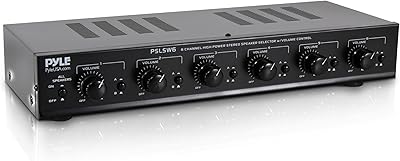
Pyle PSLSW6 6-Channel Speaker Selector
75%
88%
Ease of Setup
84%
Zone Control Flexibility
76%
Audio Clarity
73%
Build Quality
61%
Volume Knob Performance
More
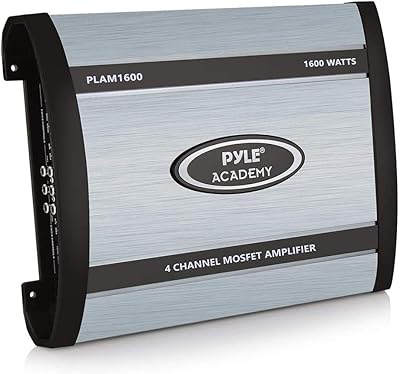
Pyle PLAM1600 4-Channel Car Amplifier
69%
74%
Value for Money
67%
Sound Quality
51%
Power Output Accuracy
83%
Ease of Installation
59%
Build Quality
More
Pyle PLMRMP4A 4-Channel Marine Amplifier
64%
61%
Value for Money
53%
Build Quality
67%
Waterproofing
58%
Power Output
79%
Ease of Installation
More
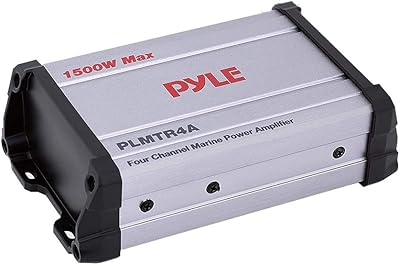
Pyle PLMTR4A 4-Channel Marine Amplifier
69%
78%
Value for Money
73%
Weatherproof Durability
41%
Power Accuracy
58%
Build Quality
86%
Installation Ease
More
Pyle PD3000BAH 4-Channel Bluetooth Amplifier
73%
83%
Value for Money
61%
Power & Amplification
88%
Connectivity & Input Range
74%
Bluetooth Performance
77%
CD/DVD Player Functionality
More
Pyle PLMRA402 4-Channel Marine Amplifier
69%
83%
Value for Money
81%
Ease of Installation
67%
Sound Quality
49%
Power Accuracy
62%
Build Quality
More
Pyle PLMRMB4CB 4-Channel Marine Amplifier
67%
78%
Value for Money
54%
Power Output
63%
Bluetooth Connectivity
61%
Water Resistance
58%
Build Quality
More
Monoprice SSVC-4.1 Speaker Selector
75%
88%
Impedance Protection Reliability
83%
Ease of Installation
74%
Build Quality
67%
Volume Control Performance
81%
Zone Control Flexibility
More
Pyle PLUTV44BTR 4″ Marine Tower Speakers
70%
81%
Waterproof Protection
62%
Sound Quality
44%
Bass Response
73%
Build Quality
84%
Ease of Installation
More

FAQ

No, and this is probably the most important thing to understand before buying. The unit distributes your amplifier's output across however many zones are active — it does not multiply power. If your amp puts out 100W RMS and you have all four zones running, each speaker pair is working with a fraction of that total, roughly 18W RMS per pair under load. For background music this is perfectly adequate; for loud, dynamic listening across all zones simultaneously, you may notice a drop in volume and impact.

Unfortunately, no. The Pyle PLSHVC412 4-Channel Speaker Selector is rated for 8-ohm speakers only. Running 4-ohm speakers through it creates an impedance mismatch that can overstress the selector itself and, more critically, push your amplifier into a load it was not designed to handle. Check your speaker documentation before purchasing — the 8-ohm requirement is firm.
Not at all. If you have ever connected speakers to a receiver before, this is the same process scaled up. You run your amplifier's speaker outputs into the selector's input terminals, then run individual speaker wires from each of the four output channels to your speaker pairs. A basic flathead or Phillips screwdriver is all you need for the terminal connections, and most buyers report completing the full install in under an hour.

Yes, all four zones can be active simultaneously. Each channel has its own push-button to enable or disable it independently, and a dedicated volume knob to set the level for that zone. You can have the kitchen at a low background level, the patio higher, and the living room off entirely — all from the front panel of the unit.

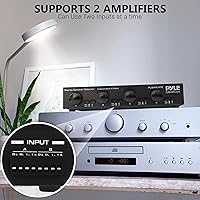
It works with either. You connect it to the speaker-level outputs of your receiver or amplifier — the same terminals where you would normally attach your main speakers. Just make sure the amp side is rated at 8 ohms and your total output does not exceed 100W RMS. Most home theater receivers with a Zone 2 or Zone B output are compatible without any issue.

Each channel's volume knob operates independently, so adjusting Zone 2 has no effect on Zones 1, 3, or 4. That said, a few buyers have noted that the knobs can feel slightly imprecise at very low settings, which can make fine-tuning quiet background audio a bit fiddly. At mid to high settings most users find the control smooth and predictable.

A passive selector just routes the signal — you control volume from your amplifier alone, which means every zone rises and falls together. The Pyle unit adds per-channel volume knobs, giving you individual zone control without touching the amp. Buyers who have used both consistently say the per-channel control is a meaningful quality-of-life improvement, especially in homes where different rooms need very different listening levels.

It does warm up during extended use, which is normal for any device passing audio current through multiple channels. The aluminum housing and integrated heat sink are specifically designed to dissipate that heat passively, meaning there is no fan and no active cooling required. As long as the unit is placed in a reasonably ventilated spot — not sealed inside a closed cabinet with no airflow — thermal buildup should not be a practical concern.

The unit accepts wire up to 14 AWG, which is the standard choice for most residential speaker runs of typical length. If your speaker cables are already in place and happen to be 16 AWG, those will work fine too. For very long runs — say, 50 feet or more — sticking closer to 14 AWG helps minimize resistance and keeps signal quality consistent across the longer distance.

No, this is a fully analog, manual device with no wireless connectivity, app support, or voice assistant integration. Every function — channel selection and volume adjustment — requires physical interaction with the front panel. If smart home or remote control functionality is important to your setup, you would need to look at a dedicated multi-zone distribution amplifier with network or IR control capabilities instead.

Where to Buy