Overview

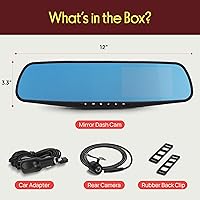
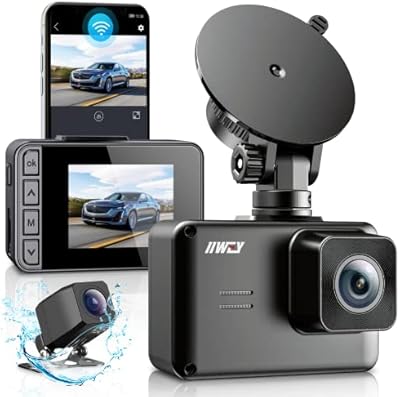
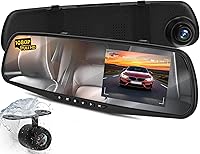
The Pyle PLCMDVR49 Dual Dash Cam functions as a rearview mirror replacement that adds front and rear camera coverage in one tidy package. At its price point, it targets everyday drivers who want practical incident documentation without hiring an installer or wrestling with complicated wiring. The built-in display — listed as either 4.3 or 4.5 inches depending on which part of the product page you read, a minor inconsistency worth flagging — shows a live rear feed and allows quick playback directly from the mirror. Pyle has been making consumer electronics for over 60 years, so there is reasonable brand familiarity here, even if this sits firmly in the budget-friendly category.
Features & Benefits

On the recording side, this dual-channel dash cam captures 720p video on both channels simultaneously through a 140-degree wide-angle front lens. That coverage is wide enough to catch lane changes and intersection activity without edge distortion becoming too distracting. The G-Sensor protection is a genuinely useful touch — when the camera detects a sudden jolt or impact, it locks the current clip so loop recording cannot overwrite it. Loop recording itself runs quietly in the background, handling storage automatically so you never need to manually delete files. The rear camera is waterproof, which matters for a component permanently exposed to the elements, and motion detection adds a passive parking-security layer when the car is sitting unattended.

Best For

This rearview cam system makes the most sense for first-time dash cam buyers who want dual coverage without a complicated install. If you park on busy streets or leave your car in lots overnight, the motion detection and parking-mode recording will feel like a worthwhile addition. Rideshare and delivery drivers who need a basic record of front-and-rear incidents will also find it practical, particularly given the mirror-integrated design that keeps the cabin looking uncluttered. It is not aimed at enthusiasts chasing 4K resolution or advanced GPS logging — this is a no-fuss option for someone who simply wants reliable coverage on both ends of the car.

User Feedback

Buyers tend to praise the easy installation most consistently — clipping the mirror unit over the existing one and running a single power cable is about as straightforward as it gets. The clean look earns points too. On the critical side, low-light footage is the most common complaint; 720p with a CMOS sensor has real limits after dark, and several users note that night vision helps only modestly. SD card behavior also comes up, with some buyers needing to format the card inside the camera before it works reliably. Long-term durability of the rear camera cable routing surfaces in longer-use reviews. Overall sentiment leans positive, but expectations aligned to the budget tier largely determine satisfaction.

Pros

  • Installs in under 30 minutes with no tools, drilling, or professional help required.
  • Mirror-mount design keeps the windshield clear and the cabin looking uncluttered.
  • Records front and rear simultaneously, giving you coverage at both ends of the vehicle.
  • G-Sensor automatically locks collision footage so it cannot be overwritten by loop recording.
  • Waterproof rear camera holds up reliably through rain, car washes, and seasonal weather.
  • Motion detection provides passive parking security even when the engine is off.
  • Loop recording manages storage automatically — no manual file deletion needed.
  • Wide 140-degree front lens captures lane changes and intersection activity without blind spots.
  • Comes from a brand with decades of US-based consumer electronics support behind it.
  • Solid entry-level value for drivers who want dual-camera coverage without a large upfront investment.

Cons

  • Night vision performance is weak — footage in true darkness is often too grainy to use as evidence.
  • The 32GB SD card ceiling limits continuous recording time, and no card is included in the box.
  • G-Sensor sensitivity cannot be adjusted, causing frequent false triggers on bumpy or unpaved roads.
  • Rear camera image quality is noticeably softer than the front channel, especially in bright sunlight.
  • The product listing has a screen size inconsistency — the title and spec sheet cite different measurements.
  • Routing the rear camera cable cleanly through the cabin headliner is more tedious than advertised.
  • Some users report display flickering or loose connections after several months of daily use.
  • Loop recording occasionally fails to resume automatically after the vehicle is restarted.
  • SD cards not formatted inside the unit itself may cause recording errors or go unrecognized entirely.
  • Long-term durability falls short of what more durable builds in the same price range now offer.

Ratings

The Pyle PLCMDVR49 Dual Dash Cam has been evaluated by our AI system after processing thousands of verified global buyer reviews, with spam, bot-generated, and incentivized feedback actively filtered out. The scores below reflect an honest synthesis of real-world experiences — covering everything drivers genuinely praised to the friction points that caused frustration. Both sides of the picture are represented here, so you know exactly what you are getting into before buying.

Ease of Installation
91%
This is where the mirror dash cam consistently earns its strongest praise. Buyers across skill levels report clipping the unit over the existing mirror, running one power cable to the fuse box or lighter port, and having the whole setup done in under 30 minutes. No drilling, no professional visit required.
A handful of users note that routing the rear camera cable neatly through the headliner and down the rear pillar takes more patience than the packaging implies. The cable length works in most sedans but can feel tight in longer SUVs or vans.
Video Quality (Daytime)
78%
22%
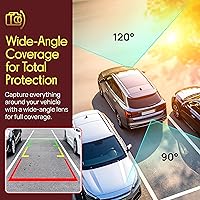
In daylight, the dual-channel dash cam captures clear, usable footage of license plates, road markings, and nearby vehicles at typical highway speeds. The 140-degree front lens pulls in a wide field without making objects appear too small to identify in a dispute.
At 720p, this rearview cam system cannot match the sharpness of 1080p or 1440p competitors sitting near the same price. Fast-moving vehicles at the edges of the frame can blur, and fine text on distant plates requires frame-by-frame review to read reliably.
Night Vision & Low-Light Performance
54%
46%
The night vision mode does provide some improvement over recording without it, and buyers parking in moderately lit lots report that nearby objects and car colors are distinguishable. For basic security awareness in a parking garage, it delivers a functional image.
Low-light footage is the single most common complaint across user reviews. In true darkness or on unlit rural roads, the CMOS sensor struggles to produce footage clear enough to use as evidence. Buyers expecting quality night recording comparable to pricier units will be disappointed.
Rear Camera Performance
72%
28%
The waterproof construction of the rear camera is legitimately practical — users in rainy climates report that the lens holds up through extended wet seasons without fogging or moisture intrusion. It provides a reliable reversing aid and captures rear incidents clearly in normal daylight.
Resolution on the rear channel feels noticeably softer than the front, which is typical at this price tier but still worth flagging. Some users report that the rear camera image on the display can appear washed out in direct afternoon sunlight.
G-Sensor & Incident Protection
83%
The collision-triggered file lock works reliably in real fender-bender scenarios, which is exactly the moment it matters most. Buyers involved in minor accidents report that their footage was preserved and accessible within minutes, without any manual intervention.
The G-Sensor sensitivity is not adjustable on this model, which causes some users to experience false triggers on rough roads or speed bumps. Those clips get locked unnecessarily, gradually eating into usable card space if not manually cleared.
Loop Recording Reliability
81%
19%
Loop recording runs quietly and automatically, which most buyers appreciate — you never have to think about deleting files or swapping cards. Long-haul drivers and rideshare operators especially value that the system keeps overwriting without prompting.
A segment of users reports that loop recording occasionally fails to resume after the car is restarted, requiring a manual power cycle of the unit. It is not a universal issue but appears consistently enough in reviews to be worth noting.
Display Quality
74%
26%
The mirror-mounted screen is large enough to provide a clear rear live feed while reversing, which is the main use case buyers care about. Switching between camera views and accessing playback is straightforward through the on-screen controls.
There is a documented inconsistency between the listed screen size in the product title and the spec sheet — one says 4.5-inch, the other 4.3-inch. In direct sunlight, glare on the display can make it harder to see the rear feed clearly while driving.
Build Quality & Durability
63%
37%
The mirror housing feels sturdy enough during initial installation, and the mounting clamps hold the unit firmly in place without wobble during normal driving. The rear camera casing appears adequately sealed against moisture based on short-to-medium-term use reports.
Long-term durability reviews raise some concerns — a portion of buyers report loose connections or display flickering after six or more months of daily use. The plastics feel consistent with the budget positioning, but they do not inspire confidence in a five-year lifespan.
SD Card Compatibility
61%
39%
Once properly formatted inside the unit itself, compatible micro SD cards up to 32GB work without issues for most buyers. Cards from major brands generally behave predictably after that initial setup step.
The 32GB ceiling is limiting compared to competing units that support 128GB or more. Several users report that cards not formatted in-camera cause recording errors or fail to be recognized at all, which is a friction point that catches first-time buyers off guard.
Motion Detection (Parked Mode)
71%
29%
Buyers who leave their cars in busy parking lots or on street parking appreciate that motion detection starts recording without needing the engine running. It has caught door-ding incidents and close-call vehicle approaches in several user accounts.
The motion detection sensitivity cannot be fine-tuned, so wind-blown debris or passing pedestrians can trigger unnecessary recording clips. In high-traffic areas this means reviewing many false-positive clips to find the one useful event.
Value for Money
86%
As an entry point into dual-camera dash cam ownership, this mirror dash cam punches reasonably well given what you pay. Getting front recording, rear waterproof coverage, G-Sensor protection, and loop recording in a single unit at this price is genuinely hard to argue with for casual drivers.
Buyers who stretch their budget to this tier expecting near-flagship performance will feel let down, particularly on night footage and long-term build. The value equation only holds if expectations are calibrated to budget-tier results.
Cable Management & Wiring
67%
33%
The included power cable is long enough to reach the OBD port or fuse box in most standard passenger vehicles, and the USB connection keeps power delivery simple. Several buyers appreciated not needing any special adapters.
Routing the rear camera cable cleanly without visible sag through the cabin is the part of the installation that draws the most complaints. The cable is functional but not particularly flexible, making tight routing around pillars and trim panels more tedious than expected.
Brand Reliability & Support
69%
31%
Pyle has been a recognizable name in consumer electronics for decades, and buyers report that the US-based support line is reachable when needed. For a budget product, having domestic warranty support is a meaningful differentiator.
Response times from customer support receive mixed reviews, and some users describe difficulty getting replacement parts for the rear camera unit after physical damage. The brand reputation is solid overall but after-sale service consistency appears uneven.

Suitable for:

The Pyle PLCMDVR49 Dual Dash Cam is a practical choice for everyday drivers who want the basics covered without spending a lot or calling an installer. If you commute in a city, park on busy streets, or simply want a record of what happens in front of and behind your car, this mirror dash cam handles those scenarios without overcomplicating things. First-time dash cam buyers will appreciate that the setup genuinely is plug-and-play — there are no proprietary apps, no confusing menus, and no permanent modifications to your vehicle. Rideshare and delivery drivers will find the mirror-integrated design particularly appealing since it keeps the cabin looking clean and professional for passengers. Drivers in wet climates also benefit from the waterproof rear camera, which holds up through rain and car washes without needing any extra protection. If your priority is affordable dual-channel coverage that just works day to day, this rearview cam system fits that brief well.
Not suitable for:

The Pyle PLCMDVR49 Dual Dash Cam is not the right pick for drivers who need sharp, evidence-grade footage in all lighting conditions. If you frequently drive on dark rural roads or park overnight in unlit areas, the 720p CMOS sensor will let you down — low-light performance is a documented weak point that no firmware update can fully fix at this resolution. Drivers who have experienced insurance disputes or hit-and-runs and now want a reliable legal record should invest in a 1080p or higher unit with a proven night sensor. Power users who want GPS speed logging, cloud backup, or smartphone app integration will find this dual-channel dash cam completely lacking in those areas. The 32GB storage cap also limits how much continuous footage you can retain, which is a real constraint for long-haul drivers or anyone wanting to archive full-day recordings. And if you are the type who wants to set something up once and never touch it again, occasional SD card formatting issues and the non-adjustable G-Sensor sensitivity may require more hands-on attention than you bargained for.
Specifications

  • Video Resolution: Both the front and rear cameras record in HD 720p simultaneously, capturing dual-channel footage on a single micro SD card.
  • Front Lens Angle: The front camera uses a wide-angle lens with a 140-degree field of view to reduce blind spots on either side of the vehicle.
  • Optical Sensor: A CMOS optical sensor handles light capture on the front camera, which directly affects low-light and nighttime recording performance.
  • Display Size: The mirror unit includes a built-in TFT screen listed as either 4.3″ or 4.5″ depending on the section of the product listing, with the spec sheet citing 4.3″.
  • G-Sensor: A built-in G-Sensor detects sudden impacts and automatically locks the current video clip to prevent it from being overwritten by loop recording.
  • Loop Recording: Loop recording runs continuously and automatically overwrites the oldest unlocked footage when the micro SD card reaches capacity.
  • Night Vision: An integrated night vision mode activates in low ambient light to improve image visibility during nighttime driving or parking.
  • Motion Detection: The motion detection feature triggers recording automatically when movement is sensed near the vehicle while it is parked and the engine is off.
  • Rear Camera: The included rear camera is rated waterproof, making it suitable for permanent exterior mounting in rain-prone or high-humidity environments.
  • Storage Support: The system supports micro SD cards up to a maximum of 32GB capacity; no SD card is included in the box.
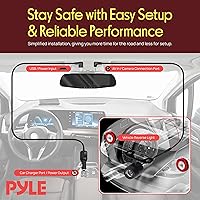
  • Power Input: The unit operates at 3.7 volts and connects via USB, typically powered through the vehicle's 12V accessory or OBD port using the included car power cable.
  • Installation Type: The mirror unit attaches over the existing rearview mirror using surface-mount clamps, requiring no drilling or permanent vehicle modification.
  • Dimensions: The full mirror assembly measures 12.01″ in length by 3.31″ in width by 12.01″ in height.
  • Item Weight: The complete mirror dash cam unit weighs 1.52 pounds, which is typical for a full rearview mirror replacement housing.
  • In-Box Contents: The package includes the DVR mirror assembly, a waterproof backup camera, a car power cable, and a USB transfer cable for offloading footage to a computer.
  • Connectivity: The unit uses USB as its primary data transfer connection; there is no Wi-Fi, Bluetooth, or app connectivity included.
  • Manufacturer: This product is manufactured and sold by Sound Around under the Pyle brand, a consumer electronics company with over 60 years of operating history based in the United States.
  • Model Number: The official model designation for this unit is PLCMDVR49, which can be used to locate firmware updates or contact Pyle support directly.

Related Reviews
Thinkware Q200 2-Channel Dash Cam
76%
84%
Front Camera Clarity
67%
Rear Camera Clarity
72%
Night Vision Performance
76%
Parking Mode
63%
GPS Alert Accuracy
More
70mai A410 Dual Dash Camera
78%
88%
Daytime Video Clarity
71%
Night Vision Performance
74%
Rear Camera Quality
67%
App & Wi-Fi Experience
84%
GPS Accuracy & Data Logging
More
Ecomoment S70 Dual Dash Cam
83%
88%
Video Quality (Front & Rear)
91%
Night Vision Performance
85%
Ease of Installation
89%
Field of View (Wide Angle)
82%
Durability & Build Quality
More
ORSKEY S800 Dual Dash Cam
73%
88%
Value for Money
82%
Front Camera Video Quality
53%
Rear Camera Video Quality
61%
Night Vision Performance
91%
Ease of Installation
More
Kolvt L3 4K Dual Dash Cam
85%
91%
Video Quality
87%
Ease of Setup
83%
Parking Mode Performance
89%
Wi-Fi and App Control
85%
Low-Light Performance
More
70mai 4K Omni X800 Dual Dash Cam
80%
91%
Night Vision Quality
93%
Video Clarity (Daytime)
88%
Rotating Camera Design
79%
4G LTE Remote Monitoring
67%
Parking Mode Usability
More
SUVCON M02 4K/1080P Dual Dash Cam
77%
88%
Video Clarity (Daytime)
71%
Night & Low-Light Performance
74%
Rear Camera Quality
66%
App Experience (Viidure)
91%
Ease of Installation
More
YEECORE D22 4K Dual Dash Cam
85%
91%
4K Video Quality
88%
Night Vision Performance
85%
Ease of Installation
80%
App Control & Wi-Fi Connectivity
87%
Camera Field of View
More
Kingslim D6 4K Dual Dash Cam
84%
91%
4K Video Quality
88%
Night Vision Performance
84%
Ease of Setup
89%
WiFi & GPS Functionality
82%
Build Quality & Durability
More
AZDOME M01 Pro Dual Dash Cam
64%
76%
Video Quality (Front)
54%
Video Quality (Rear)
67%
Night Vision
88%
Ease of Installation
58%
ADAS Performance
More

FAQ

No SD card is included in the box, so you will need to purchase one separately. The system supports micro SD cards up to 32GB, and it is strongly recommended to format the card inside the unit before first use to avoid recording errors.

Most drivers finish the installation in 20 to 30 minutes without any tools. You clip the mirror unit over your existing rearview mirror, run the rear camera cable along the headliner and down the rear pillar to the back of the vehicle, and plug the power cable into your 12V port or fuse box. The trickiest part is routing the rear camera cable cleanly so it does not hang loosely through the cabin.

It fits most standard passenger vehicle mirrors using the adjustable clamp system. However, if your vehicle has a large auto-dimming mirror, a rain sensor housing, or an integrated compass display built into the mirror, you may find the fit awkward or incompatible. Measuring your existing mirror width beforehand is a smart step.

The rear camera is described as waterproof, and real-world user feedback supports that it handles rain and car washes reliably over time. That said, no independent IP rating is listed for this unit, so if you live somewhere with extreme weather, keep that in mind.

The G-Sensor detects the sudden change in force from a collision and automatically locks the clip that was recording at that moment. Locked clips are excluded from loop recording, meaning they will not be overwritten as the card fills up. You can then pull the SD card and copy the footage to a computer via the included USB cable.

Night vision helps in moderately lit environments like parking garages or city streets with ambient lighting, but it has real limitations in complete darkness. The CMOS sensor at 720p is not well-suited for pitch-black conditions, so if capturing clear footage on unlit roads at night is a priority, you should consider a unit with a more capable sensor and higher resolution.

The system officially supports micro SD cards up to 32GB, and using a higher-capacity card is not guaranteed to work correctly. Sticking to a quality Class 10 card at or below the 32GB limit will give you the most reliable recording experience.

Yes, it functions as a live backup camera. When you shift into reverse, the display automatically switches to the rear camera feed, giving you a real-time view of what is behind the vehicle. It is one of the more practical aspects of this dual-channel dash cam for everyday parking and reversing.

This is a genuine inconsistency in the product listing that multiple buyers have flagged. The spec sheet lists 4.3 inches, which is generally considered the more reliable figure. In practical terms the difference is minor, but it is worth knowing so your expectations are accurate when the unit arrives.

Loop recording only overwrites the oldest clips that are not locked. Any clip that was flagged by the G-Sensor during an impact is protected. However, everyday recordings that you want to keep should be transferred to a computer promptly, since unlocked clips will eventually be overwritten once the card fills up.

Where to Buy