Overview

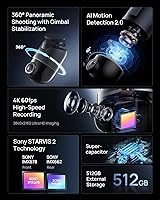
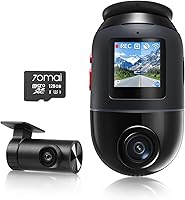
The 70mai 4K Omni X800 Dual Dash Cam arrived in early 2025 as a proper flagship — not just another spec-sheet refresh, but a genuinely different approach to in-car coverage. The defining feature is a 340° rotating front camera that lets a single unit sweep both the interior and exterior without requiring a separate cabin lens. At this tier, 128GB of storage is included in the box, which is a welcome relief compared to rivals that charge extra. The super capacitor design, replacing a lithium battery, is a quiet but meaningful detail for anyone dealing with brutal summers or frigid winters. Wi-Fi 6 and 4G LTE round out a well-equipped package.
Features & Benefits

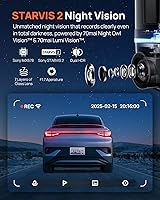
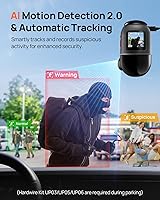
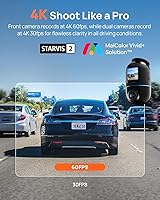
The Sony IMX678 sensor paired with STARVIS 2 technology is where the X800 earns its keep in real-world conditions. In practical terms, that means license plates in a dimly lit parking structure become legible rather than washed out — a meaningful difference if you ever need footage as evidence. The AI Motion Detection 2.0 tracks suspicious movement during parking while filtering benign triggers like passing headlights or swaying branches. One important caveat: full parking mode requires the UP05 hardwire kit, sold separately — factor that cost into your budget before purchasing. The 180-second pre-event emergency buffer and rapid Wi-Fi 6 clip transfers are genuinely practical bonuses, not just marketing checkboxes.

Best For

This rotating dash cam makes the most sense for drivers with real security concerns — people who park regularly on city streets, in airport lots, or anywhere unattended for hours. Rideshare drivers get particular value here: hands-free voice control and broad coverage means less fumbling while passengers are aboard. The super capacitor makes this 4G-connected camera worth serious consideration for anyone in climates where extreme heat or cold tends to kill battery-based units early. Fleet operators running trucks or RVs will appreciate the wide vehicle compatibility. That said, this is not an entry-level purchase — it rewards drivers who will actively use its connected monitoring features rather than those wanting a simple plug-and-forget setup.

User Feedback

Owners most consistently praise the night video quality, noting that footage from dark streets and parking structures holds up better than they expected based on prior cameras. The rotating camera concept also earns genuine enthusiasm — being able to reposition remotely via the app is something reviewers find more useful than they anticipated. On the downside, a recurring frustration is the mandatory additional purchase to unlock full parking mode; buyers feel this should be communicated more clearly upfront. Some users also flag occasional app hiccups, which matters when remote monitoring is a core reason to buy. Installation feedback skews positive overall, though less tech-savvy users recommend budgeting extra time for setup.

Pros

  • Night footage is sharp enough to read distant license plates in poorly lit conditions — a real-world capability gap over cheaper sensors.
  • The 340° rotating front camera covers both cabin and exterior without needing a separate interior unit.
  • 4G LTE remote live view lets you check on your parked car from anywhere with a cell signal.
  • A 128GB SD card is included in the box, which is a genuine money-saver compared to most rivals.
  • The super capacitor handles temperature extremes from 14°F to 140°F without the swelling or leakage risk of a lithium battery.
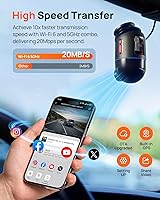
  • Wi-Fi 6 at 5GHz transfers 4K clips to your phone quickly, making post-incident sharing far less painful.
  • AI Motion Detection filters out common false triggers, so you are not drowning in irrelevant parking alerts.
  • The emergency pre-event buffer stores up to 180 seconds before a collision trigger — longer than most competitors offer.
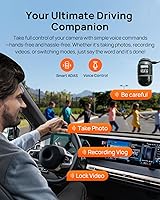
  • Voice control supports over 15 commands, keeping hands on the wheel for common actions.
  • Three-system GPS provides solid speed and location logging for insurance or legal documentation purposes.

Cons

  • Full 24/7 parking mode requires the UP05 hardwire kit, sold separately — an easy-to-miss added cost.
  • App reliability is a real dependency; if the 70mai app has stability issues, core remote features stop working.
  • The rotating camera head is physically bulkier than a standard dash cam, which some drivers find obtrusive on the windshield.
  • ADAS alerts can be oversensitive in dense urban traffic, leading to frequent warnings that drivers start ignoring.
  • Initial setup and pairing can take longer than expected, particularly for users unfamiliar with multi-step app configurations.
  • The rear camera is limited to 1080P, which feels like a mismatch given the premium 4K front sensor.
  • 4G LTE connectivity depends on an active data plan or SIM, adding a recurring cost consideration beyond the hardware.
  • The 70mai app ecosystem means you are locked into their software updates and support timeline for the life of the device.
  • At its price tier, the lack of built-in parking mode power without extra accessories feels like an incomplete package.

Ratings

The scores below reflect an AI-driven analysis of verified global buyer reviews for the 70mai 4K Omni X800 Dual Dash Cam, with spam, bot-generated, and incentivized feedback actively filtered out before scoring. This rotating dash cam earns strong marks in several critical areas, though a few real friction points keep it from a clean sweep across the board. Both the genuine strengths and the recurring buyer frustrations are transparently reflected in every category below.

Night Vision Quality
91%
Buyers consistently report that the Sony IMX678 sensor with STARVIS 2 captures usable footage in conditions where older sensors produce murky, detail-free frames. License plates in dim parking structures — a genuine real-world test — come back legible far more often than users expected based on prior dash cam experience.
In near-total darkness with zero ambient light, footage quality drops noticeably and color accuracy suffers. A handful of reviewers noted that the Night Owl processing occasionally over-brightens highlights, washing out detail in mixed lighting like streetlit intersections.
Video Clarity (Daytime)
93%
At 4K 60FPS, daytime footage is sharp enough to capture fast-moving vehicles, distant signage, and fine road detail without motion blur — something lower-frame-rate cameras struggle with during highway merges or intersections. The Maicolor Vivid+ processing keeps colors natural rather than oversaturated.
The rear camera's 1080P output feels like a real step down when viewed alongside front footage on the same timeline, and some buyers feel this imbalance is hard to justify at the premium price point. Wide-angle distortion at the edges of the 146° lens is also noticeable in footage reviewed frame by frame.
Rotating Camera Design
88%
The 340° rotating head is one of the most genuinely useful physical design choices in the dash cam category — rideshare drivers especially appreciate being able to sweep the camera toward the cabin between shifts without installing a separate interior unit. Remote repositioning via the app during parking mode adds real flexibility that fixed-mount rivals cannot offer.
The rotating mechanism adds noticeable bulk to the windshield footprint, and a few buyers who drive smaller cars found the unit visually intrusive. There are also occasional reports of the rotation joint feeling less precise after several months of daily adjustments, raising mild long-term durability questions.
4G LTE Remote Monitoring
79%
21%
When it works well, the ability to pull up a live feed of your parked car from across town is genuinely reassuring — especially for drivers who leave vehicles in public lots for extended periods. Real-time motion alerts with AI filtering mean most notifications are relevant rather than noise.
The experience hinges on users sourcing their own SIM card and data plan, which adds a recurring cost that is not always made clear before purchase. Stream reliability varies by carrier and signal strength, and several reviewers noted frustrating lag or dropped connections during live view sessions in areas with weaker 4G coverage.
Parking Mode Usability
67%
33%
The AI Motion Detection 2.0 does a credible job of distinguishing between a person walking past the car and benign movement like passing headlights or wind-blown debris, reducing the volume of pointless alert clips that drain storage. Time-lapse compression for long parking sessions is a practical storage-saving feature that several long-haul users praised.
The single biggest recurring complaint across buyer reviews is that the UP05 hardwire kit — required for continuous parking power — is sold separately with no prominent warning at point of sale. For many buyers, this feels like a hidden cost that changes the true price of getting the system fully operational, and the installation of the hardwire kit is not beginner-friendly.
App Experience
72%
28%
The 70mai app covers a solid feature set — live view, clip download, motion alert history, GPS track playback, and camera settings — all in a single interface that most users navigate without needing the manual. Wi-Fi 6 transfer speeds make pulling footage to a phone genuinely quick compared to older app-based dash cam systems.
App stability is a recurring concern, with a meaningful subset of reviewers reporting Bluetooth or Wi-Fi pairing failures after firmware updates or phone OS changes. For a camera whose most compelling features are app-dependent, this is a more serious problem than it would be on a simpler device.
ADAS Reliability
68%
32%
The forward collision and lane departure alerts are quick to trigger and use audio warnings that are hard to miss, which in genuine near-miss situations adds a useful layer of attention. Speed limit reminders work reliably on major highways where GPS map data is well established.
In dense city driving, ADAS sensitivity generates frequent false alerts — sudden braking in traffic, tight urban lane markings, and road construction zones all trigger warnings that drivers learn to tune out. Several reviewers mention disabling ADAS alerts entirely within the first week, which raises questions about whether the feature adds practical value for urban commuters.
Wi-Fi Transfer Speed
86%
At close range, Wi-Fi 6 at 5GHz delivers on its promise — downloading a several-minute 4K clip to a smartphone is a matter of seconds rather than the painful minute-plus waits common on older dash cams. This makes post-incident clip sharing practical in real time, even on the side of the road.
The 5GHz band has shorter range than 2.4GHz, so connection reliability drops if the phone is more than a few meters from the camera. A small number of users with older smartphones that lack Wi-Fi 6 support reported slower-than-expected transfer speeds, as the camera falls back to a lower connection standard.
GPS Accuracy
84%
Three-system GPS locks on quickly in open conditions and maintains reliable speed and location overlays on footage — useful for insurance documentation where speed at the time of an incident is disputed. Route playback in the app is smooth and accurate enough for reviewing longer drives.
GPS signal takes longer to acquire in urban canyon environments with tall buildings, and a few reviewers noted brief gaps in location data during tunnel sections. Speed readouts can also lag slightly behind actual vehicle speed during rapid acceleration, a minor but notable limitation for precision use cases.
Installation Experience
74%
26%
For a camera with this many features, the basic windshield installation is reasonably well documented — the included wiring crowbar tool and dual adhesive mounting options help, and most technically comfortable buyers report finishing within an hour. The 11.48-foot power cable gives enough slack to route it neatly around a windshield without visible bunching.
Running the rear camera signal cable the length of the cabin requires patience and some willingness to pull back trim panels, which is a stumbling block for buyers expecting a truly plug-and-play experience. Hardwire installation for parking mode takes the complexity up another level and is genuinely best left to a professional if you have never opened a fuse box.
Build Quality
81%
19%
The main unit feels solid and the rotating joint has a reassuring amount of resistance — it does not feel like it will slip out of position during vibration on rough roads. The super capacitor construction removes the lithium battery swelling risk that plagues some competing units after a year or two of heat exposure.
The plastic housing, while functional, does not feel as premium as the price tag might suggest when handled directly. A small number of long-term buyers have noted minor creaking from the rotation joint over time, though reported unit failures remain rare in current reviews.
Value for Money
71%
29%
The bundled 128GB SD card is a genuine offset against the sticker price — that alone saves a meaningful amount compared to buying separately. For buyers who will actively use the 4G monitoring, Wi-Fi 6 transfers, and rotating camera, the feature density relative to the cost is competitive within the premium tier.
For buyers who skip the 4G SIM or do not hardwire for parking mode, a significant portion of what they paid for goes unused — making the effective value much lower. The separately purchased UP05 kit pushes the true cost of a fully functional setup higher than many buyers anticipate at the time of initial purchase.
Voice Control
77%
23%
Support for over 15 commands covers the actions drivers actually want to trigger hands-free — capturing photos, locking clips, and starting or stopping recording — which is genuinely useful for rideshare drivers who cannot fuss with a touchscreen mid-trip. Recognition accuracy in quiet cabins is consistently rated positively.
Voice recognition struggles in noisy environments — highway wind, music, or a full car of passengers reduce reliability noticeably. The wake word also occasionally triggers from radio or passenger conversation, which some users find irritating enough to disable the feature after initial excitement wears off.
Temperature Resilience
89%
The super capacitor's rated tolerance from 14°F to 140°F covers real-world extremes well — buyers in Phoenix summers and Minnesota winters both report normal function where battery-based cameras from other brands have failed or swollen. This is a durable, long-term advantage over most competing designs.
At the extreme low end of the temperature range, first startup after a very cold night can take a few extra seconds before the camera is fully operational — a minor issue but one noted by users in northern climates who want instant-on recording the moment they start the car.

Suitable for:

The 70mai 4K Omni X800 Dual Dash Cam is built for drivers who think of their car as more than just transportation — it's a target. If you regularly park in public garages, city streets, or airport lots and want to know what's happening around your vehicle while you're away, this rotating dash cam delivers a level of remote awareness that most competitors simply cannot match. Rideshare and delivery drivers will find the combination of wide-angle coverage, hands-free voice commands, and interior sweep capability genuinely practical during active shifts. Anyone living somewhere that swings between extreme cold winters and scorching summers should also pay attention: the super capacitor means you won't come back to a heat-damaged or swollen battery after leaving the car baking in a parking lot all day. Fleet operators running mixed vehicle types — trucks, vans, RVs — get real value from the broad compatibility and 4G remote monitoring, which reduces the need to physically check each unit. If you're the kind of person who wants one connected device doing the job of what used to require two or three, this is a strong candidate.
Not suitable for:

If you just want a no-fuss dash cam that records while you drive and nothing more, the X800 is probably more camera than you need — and more expense. The 4G LTE parking monitor, which many buyers will consider a headline feature, requires purchasing the UP05 hardwire kit separately, so the out-of-box experience for parked surveillance is incomplete until you factor in that additional cost and installation step. Buyers who are not comfortable with app-dependent devices should also think carefully: remote live view, motion alerts, and parking monitoring all run through the 70mai app, and if pairing feels unreliable or the app update cycle lags, those features become frustrating rather than useful. This 4G-connected camera also sits at a premium price point that is hard to justify if your actual usage is a simple highway commute with minimal parking risk. Finally, drivers who prioritize a truly discreet, compact windshield footprint may find the rotating head design physically larger and more noticeable than a flat, flush-mounted alternative.

Specifications

  • Front Resolution: The front camera records at 3840x2160 (4K) at 60 frames per second for smooth, highly detailed footage.
  • Rear Resolution: The included RC14 rear camera records at 1080P, covering the back of the vehicle simultaneously with the front unit.
  • Front Sensor: A Sony IMX678 image sensor with STARVIS 2 technology is used to maximize light capture in low-light and nighttime conditions.
  • Field of View: The front camera covers a 146° wide-angle field of view, spanning approximately 8 lanes of traffic.
  • Camera Rotation: The front camera head rotates 340°, allowing effectively 360° coverage when combined with rear and sweep positioning.
  • Connectivity: The unit supports 4G LTE for remote access and 5GHz Wi-Fi 6 for high-speed local file transfers up to 20MB/s.
  • GPS System: A three-system GPS module provides precise speed monitoring and location tracking for route analysis and incident documentation.
  • Storage: A 128GB SD card is included; the camera supports cards from 32GB up to 512GB (U3 class or higher recommended).
  • Power Unit: The camera uses a super capacitor instead of a lithium battery, rated for operating temperatures between 14°F and 140°F.
  • Emergency Buffer: When a collision or impact is detected, the camera locks a clip containing up to 180 seconds before and 30 seconds after the event.
  • ADAS Features: Built-in Advanced Driver Assistance Systems provide real-time forward collision warnings, lane departure alerts, and speed limit reminders.
  • Voice Control: The camera responds to over 15 voice commands, including photo capture and recording start/stop, for hands-free operation.
  • Dimensions: The main unit measures 0.94 x 2.26 x 4.2 inches and weighs 1.65 pounds including its mounting hardware.
  • Mounting Type: Installation uses a windshield mount with both an electrostatic sticker and an adhesive sticker option included in the box.
  • Power Cable: A Type-C power cable measuring 11.48 feet is included, along with a dual USB car charger for connection to the vehicle.
  • Parking Mode: 24/7 parking monitoring with AI-filtered motion detection is available, but requires the UP05 hardwire kit, which is sold separately.
  • App Compatibility: The camera connects to the 70mai mobile app for remote live view, clip playback, motion alerts, and vehicle location tracking.
  • Transfer Speed: Wi-Fi 6 at 5GHz enables footage transfers at speeds up to 20MB/s, making downloading a full 4K clip to a smartphone practical within seconds.

Related Reviews

70mai A410 Dual Dash Camera
78%
88%
Daytime Video Clarity
71%
Night Vision Performance
74%
Rear Camera Quality
67%
App & Wi-Fi Experience
84%
GPS Accuracy & Data Logging
More
70mai A810 4K Dual Dash Cam
79%
92%
Video Quality
89%
Night Vision
78%
Value for Money
61%
Parking Mode
84%
Installation & Setup
More
IIWEY N2 4K Dual Dash Cam
83%
92%
Video Quality
84%
Ease of Use
89%
Durability
60%
Installation Process
90%
Wi-Fi Functionality
More
Thinkware U3000 4K Dual Dash Cam
86%
93%
Video Quality (4K Performance)
90%
Night Vision Performance
88%
Ease of Installation
85%
Radar Parking Mode
70%
App Connectivity & Control
More
Sarmert M572 4K Dual Dash Cam
85%
94%
Video Quality
89%
Ease of Installation
88%
Night Vision Performance
70%
Wi-Fi Connectivity
80%
App Experience
More
Kolvt L3 4K Dual Dash Cam
85%
91%
Video Quality
87%
Ease of Setup
83%
Parking Mode Performance
89%
Wi-Fi and App Control
85%
Low-Light Performance
More
Kingslim D6 4K Dual Dash Cam
84%
91%
4K Video Quality
88%
Night Vision Performance
84%
Ease of Setup
89%
WiFi & GPS Functionality
82%
Build Quality & Durability
More
DDPAI N5 Dual Front and Rear Dash Cam
77%
88%
Video Quality (Front)
71%
Video Quality (Rear)
74%
Parking Mode & Surveillance
82%
Wi-Fi Speed & App Experience
83%
GPS Accuracy & Logging
More
COOAU D20S 4K Dual Dash Cam
83%
91%
Video Quality (Daytime)
75%
Night Vision Performance
88%
Ease of Installation
82%
App Control and Software Experience
86%
GPS Accuracy and Tracking
More
YEECORE D22 4K Dual Dash Cam
85%
91%
4K Video Quality
88%
Night Vision Performance
85%
Ease of Installation
80%
App Control & Wi-Fi Connectivity
87%
Camera Field of View
More

FAQ

Yes, and this is worth knowing before you check out. The 24/7 parking monitor requires the UP05 hardwire kit, which is sold separately. Without it, the camera loses power when you turn off the ignition and cannot monitor your parked vehicle. If parking surveillance is a primary reason you are buying this camera, budget for that kit as part of your total cost.

The front camera head can be physically rotated up to 340°, which lets you angle it toward the cabin interior or sweep to cover different zones. When parking mode is active and AI Motion Detection triggers, the camera automatically tracks the moving subject. During normal driving, you position it where you want and it stays put.

The Sony IMX678 sensor with STARVIS 2 is a meaningful step up from average dash cam sensors, and real-world footage backs that up — plates in dimly lit parking structures are generally legible rather than blurred blobs of light. That said, in near-total darkness without any ambient light source, no camera is perfect. The 70mai 4K Omni X800 Dual Dash Cam handles typical urban low-light conditions well, which covers most practical scenarios.
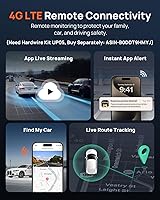
Yes, 4G connectivity requires an active SIM card with a data plan inserted into the unit. The camera does not come with a SIM or an included data subscription. If you primarily want app connectivity while parked at home or near a known Wi-Fi network, you can use the built-in Wi-Fi 6 instead without any ongoing cost.

A super capacitor charges and discharges much faster than a lithium battery and handles temperature extremes far better — it will not swell, leak, or degrade in a car that gets baking hot in summer or freezing in winter. The trade-off is that it holds very little energy on its own, which is why hardwired power is needed for extended parking mode. For daily driving and short-term power-cut saving, the capacitor is a more durable and safer solution than a built-in battery.

With Wi-Fi 6 at 5GHz, transfer speeds reach up to 20MB/s, so a typical incident clip can land on your phone in under a minute. You connect through the 70mai app, navigate to the clip, and download it directly. It is noticeably faster than older 2.4GHz dash cams, which is a real quality-of-life improvement when you need footage quickly after an incident.

This is a fair concern. In dense urban driving with frequent lane changes and stop-and-go traffic, ADAS systems on any camera can generate alerts that feel excessive. The X800 allows sensitivity adjustments through the app, so you can dial back how aggressively it triggers. Most users find a comfortable balance after a few days of tweaking, but if you are highly sensitive to audio alerts while driving, it requires some patience to calibrate.

The 1080P rear is functional and clear in daylight, but there is a noticeable quality gap compared to the front in challenging light conditions. For documenting rear-end incidents and capturing general road activity behind you, it does its job. If you specifically need high-resolution rear footage — say, for a commercial or fleet application — it is worth factoring that limitation into your decision.

The basic installation — attaching the windshield mount, running the power cable to the USB car charger, and connecting the rear cam cable — is manageable for most people and typically takes under an hour. Hardwiring for parking mode is a different story; that involves accessing the fuse box and is best handled by a professional installer if you are not comfortable with basic automotive electrical work. 70mai includes a wiring crowbar tool in the box, which helps with cable routing.

The super capacitor stores just enough energy to write and save the most recently recorded clip to the SD card before shutting down. So if your car battery dies or power is suddenly cut, you should not lose whatever was recording at that moment. It is not a long-term backup solution, but it prevents the frustrating scenario of losing critical footage right before a power failure.

Where to Buy