Overview

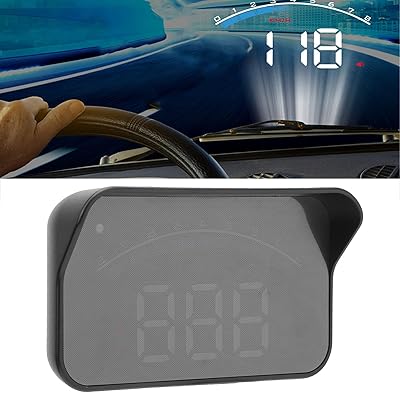
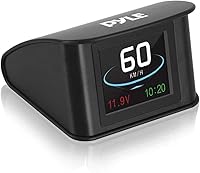
The Pyle PHUD19 2.6″ Car HUD Display is a straightforward, no-fuss accessory for drivers who want basic driving data projected closer to eye level without rewiring anything or cracking open a manual. The screen is compact — small enough to sit unobtrusively near the dash, though don't expect the wide, vivid projection you would get from a higher-end unit. Crucially, this HUD unit pulls all its data from GPS rather than your car's OBD-II port, which means it works with virtually any vehicle, including older models that lack a compatible diagnostic port. Think of it as a practical convenience tool, not a cockpit upgrade.

Features & Benefits

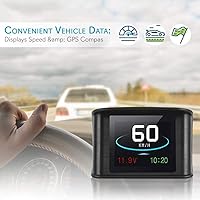
The Pyle heads-up display covers the essentials: current speed, distance traveled, trip and local time, compass heading, and even voltage — all fed through a GPS signal that refreshes consistently on open roads. Automatic brightness adjustment via an integrated light sensor genuinely helps at dusk or in direct sun, and the manual override gives you further control. The overspeed alert is a handy passive safety nudge, though its default threshold is set quite high for everyday driving and should be dialed down to something more practical. Power runs through a standard cigarette lighter cable, and the unit wakes and sleeps with your ignition — zero manual switching required.

Best For

This windshield speedometer makes the most sense for a specific kind of driver. If you're in an older car that predates modern OBD-II compatibility, or you frequently rent vehicles where plugging into the diagnostic port isn't an option, this HUD unit sidesteps that friction entirely. Commuters who want a quick at-a-glance speed check without looking down at the instrument cluster will find it earns its place. It's also a reasonable entry point for anyone curious about heads-up displays who doesn't want to spend significantly more just to test the concept. Truck and van drivers will appreciate the universal dash-mount flexibility.

User Feedback

Owners tend to appreciate how quickly this HUD unit gets up and running — no tools, no technical knowledge required. Nighttime visibility earns consistent praise, with the auto-brightness doing a respectable job keeping the display readable without becoming a distraction. That said, GPS-sourced speed data introduces a small but noticeable lag, particularly in dense urban areas where satellite signal can drop or fluctuate — it won't match the instant accuracy of an OBD-II connection. Some buyers wish the screen were larger, and a few flag that mounting on textured dashboards can feel unreliable over time. Overall, sentiment leans positive for this price tier, provided expectations stay grounded.

Pros

  • Completely plug-and-play — no tools, no wiring, and no technical knowledge needed to get up and running.
  • Works with virtually any vehicle since it uses GPS rather than requiring an OBD-II port.
  • Auto on/off with the ignition means you never have to think about powering it up or down.
  • The automatic brightness adjustment handles day-to-night transitions without manual fiddling.
  • Displays a genuinely useful mix of data: speed, time, distance, compass heading, and voltage in one compact unit.
  • Lightweight and unobtrusive — easy to reposition or move between vehicles.
  • Built-in overspeed alert adds a passive safety layer that some drivers find genuinely helpful on highways.
  • Nighttime visibility is a consistent bright spot, with the display remaining readable without washing out your field of view.

Cons

  • GPS-based speed readings can lag noticeably in urban areas, tunnels, or anywhere satellite signal is weak.
  • The screen size is compact enough that some drivers — especially those used to larger displays — find it easy to miss at a glance.
  • Mount adhesion can struggle on textured or curved dashboards, leading to wobble or repositioning over time.
  • The compass offers basic directional awareness only — there is no turn-by-turn routing or map integration whatsoever.
  • The default overspeed alert threshold is set far too high for everyday road use and requires manual adjustment to be practical.
  • LCD-type displays like this one can produce glare or reflection on the windshield in certain lighting conditions, particularly at low sun angles.
  • Build quality reflects the accessible price point — the plastic housing feels lightweight in a way that may concern long-term durability skeptics.
  • No Bluetooth, app connectivity, or smartphone integration of any kind, which limits expandability for tech-oriented drivers.

Ratings

The scores below reflect an AI-driven analysis of verified global buyer reviews for the Pyle PHUD19 2.6″ Car HUD Display, with spam, incentivized, and bot-generated feedback actively filtered out before scoring. Each category is evaluated based on recurring themes in real owner experiences — not manufacturer claims — so both the strengths and the friction points are represented honestly. Buyers at different expectation levels rated this unit differently, and those nuances are baked into every score.

Ease of Setup
91%
This is the category where the Pyle heads-up display earns its most consistent praise across all buyer segments. Owners repeatedly report that mounting the unit and plugging it into the cigarette lighter takes under five minutes with zero tools — an experience that holds up even for drivers with no tech confidence whatsoever.
A small number of buyers found the initial GPS sync took longer than expected in areas with weak satellite coverage, requiring a minute or two of patience before the speed reading stabilized. The included instructions are minimal, which creates brief confusion for first-time HUD users.
GPS Speed Accuracy
63%
37%
On open highways and suburban roads with clear sky exposure, the speed readout tracks closely enough to the instrument cluster that most commuters find it reliable for casual awareness. Drivers using it on rural routes or interstate driving report the lag is barely perceptible under steady cruising conditions.
In urban environments, tunnels, or areas with dense building interference, GPS lag becomes genuinely noticeable — sometimes showing a speed that's several seconds behind reality. This is a fundamental limitation of GPS-sourced data compared to OBD-II alternatives, and buyers who spend most of their time in city traffic will feel it regularly.
Display Visibility
71%
29%
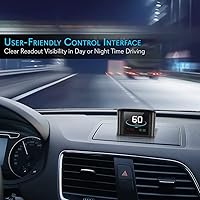
Nighttime and low-light driving is where this windshield speedometer performs best — the auto-brightness sensor dims the screen appropriately so it doesn't create a distracting hot spot in your peripheral vision. Many commuters who drive early mornings or evenings find the readout crisp and comfortable at those hours.
Direct sunlight is a real challenge for the 2.6″ LCD panel, with some buyers describing the display as washed out on bright summer afternoons even at maximum brightness. The small screen size compounds this issue — there's less surface area for the backlight to compete against ambient glare compared to larger HUD units.
Mount Stability
58%
42%
On flat, smooth dashboard surfaces the mount holds the unit securely through normal city and highway driving without noticeable vibration or drift. Drivers who move the unit between vehicles appreciate how quickly it detaches and reattaches without leaving permanent marks.
Textured or curved dashboards — common in trucks, older vans, and many European-market cars — give the adhesive mount real trouble, with owners reporting slippage especially in summer heat when dashboard temperatures spike. Several buyers resorted to aftermarket dash pads or double-sided tape to get reliable grip.
Screen Size
62%
38%
For drivers primarily checking speed and time at a glance, the compact footprint actually works in its favor — it fits neatly near the instrument cluster without blocking sightlines or taking up meaningful dash real estate. Compact car owners in particular find it proportionate to their interior.
Drivers upgrading from larger HUD units, or anyone used to modern factory-installed displays, will likely find the 2.6″ panel underwhelming in terms of presence and at-a-glance readability. Buyers over 45 or those with mild vision fatigue raised screen size as a frequent point of frustration.
Brightness Adjustment
77%
23%
The eight-step manual brightness range combined with the automatic light sensor gives drivers enough control to dial in a comfortable intensity across different driving environments. Most owners settle on auto mode and report it handles dusk-to-dark transitions without requiring manual intervention.
The auto-sensor occasionally lags when driving into sudden shade — like a parking garage or underpass — leaving the display momentarily too bright before it adjusts. A handful of buyers found the lowest brightness steps still slightly too intense for late-night driving in rural areas.
Windshield Reflection
54%
46%
Drivers with more upright windshield angles — common in trucks and some SUVs — report minimal ghost reflection issues, making the viewing experience cleaner than they expected at this price tier. The auto-dimming at night reduces the likelihood of distracting secondary reflections during after-dark driving.
Vehicles with steeply raked windshields, including most sedans and sports coupes, tend to pick up a faint but persistent ghost image of the screen on the glass, particularly at night. This is an inherent limitation of direct-view LCD HUDs and is not something adjustable brightness settings fully eliminate.
Compass & Navigation Aid
66%
34%
For drivers who just want a quick cardinal heading — useful on unfamiliar highway interchanges or rural backroads where phone signal is spotty — the GPS compass adds genuine utility without requiring a connected device. Truck drivers and van operators moving through large distribution areas mentioned it as a helpful supplemental reference.
The compass is directional orientation only — there is no routing, no mapping, and no integration with navigation apps, which disappoints buyers who assumed this would partially replace their phone's GPS. In dense urban areas, compass heading alone provides limited practical guidance.
Overspeed Alert
69%
31%
Once reconfigured to a realistic daily driving threshold, the alert functions as a low-friction passive reminder that several highway commuters found genuinely useful for staying within speed limits on long monotonous stretches. The alert is audible without being jarring.
The factory default threshold is set impractically high for road use, meaning buyers who don't explore the settings will get zero real-world benefit from this feature. The reconfiguration process is not clearly documented in the included instructions, creating unnecessary friction.
Vehicle Compatibility
88%
The GPS-only approach means this HUD unit works across an unusually broad range of vehicles — pre-OBD-II trucks, rental cars, commercial vans, and modern passenger cars all qualify with no compatibility checks needed. This universality is one of the most cited reasons buyers chose it over OBD-II-dependent alternatives.
Vehicles with non-standard 12V socket placements — where the lighter port sits far from the dashboard center — may end up with an awkwardly routed cable that's harder to manage cleanly. A small number of buyers also noted that some vehicles' ignition circuits don't perfectly trigger the auto on/off behavior.
Build Quality
56%
44%
For its price tier, the unit feels adequately assembled — there are no obvious rattles, loose seams, or stuck buttons out of the box, and most buyers report it holds together fine through regular daily use over several months.
The plastic housing feels noticeably lightweight in a way that raises durability questions for buyers accustomed to mid-range or premium accessories. A portion of long-term owners reported cosmetic wear and loose cable connections appearing after six to twelve months of continuous use.
Data Range
74%
26%
Displaying speed, distance, trip time, local time, compass heading, and voltage simultaneously on one small screen is genuinely more than buyers expect at this price point. The voltage readout in particular is a practical bonus that lets drivers catch early signs of battery or alternator issues.
There is no fuel level, engine RPM, or fault code readout since the unit has no vehicle system connection. Buyers who assumed more car-specific data would be available — similar to an OBD-II scanner display — find the GPS-only dataset limiting compared to what they envisioned.
Value for Money
79%
21%
Buyers who calibrated their expectations to the accessible price tier consistently rate this as a worthwhile purchase — especially those using it in older vehicles where no OBD-II HUD alternative would work at all. As a first-time HUD experience, the value proposition holds up solidly.
Buyers who compared it against slightly higher-priced OBD-II HUD units after purchase often felt the GPS accuracy trade-off wasn't worth the savings, particularly for city driving. Those with higher expectations coming from premium car accessories routinely rated value lower due to the plastic build and screen size.

Suitable for:

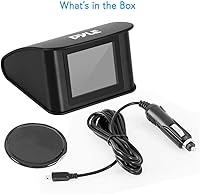
The Pyle PHUD19 2.6″ Car HUD Display is a strong fit for drivers who want a low-effort way to keep speed and basic trip data in their sightline without touching their car's diagnostic system. Because it relies entirely on GPS, it works just as well in a 2003 pickup as in a modern sedan — making it especially practical for owners of older vehicles, fleet drivers cycling through different vans or trucks, or anyone who frequently drives rentals. Commuters who find themselves constantly glancing down at the instrument cluster will appreciate having speed and time pushed up toward eye level, even if the screen footprint is modest. It also makes a lot of sense as a first HUD purchase for someone who's curious about the technology but isn't ready to spend significantly more to try it out. Setup genuinely requires no tools and no mechanical knowledge — just a free USB port on your cigarette lighter adapter and a flat surface near the dash.

Not suitable for:

Drivers who need pinpoint speed accuracy should know upfront that the Pyle PHUD19 2.6″ Car HUD Display sources all its data from GPS, which introduces a small but real lag — particularly noticeable in dense city driving or areas with poor satellite coverage. If you spend a lot of time navigating urban canyons or tunnels, the speed readout can drift or momentarily freeze, which is frustrating if you're relying on it for precision. This unit is also not the right call for drivers who want turn-by-turn navigation prompts, since the compass provides directional orientation only — not routing guidance. Those who expect a large, crisp projection similar to factory-installed HUDs in modern vehicles will likely find the compact LCD screen underwhelming. And if your dashboard has a heavily textured or curved surface, mount stability can become an ongoing annoyance rather than a one-time setup.

Specifications

  • Screen Size: The display measures 2.6″ diagonally, providing a compact but readable readout positioned near the driver's natural sightline.
  • Display Type: Uses a multicolor LCD panel rather than a reflective projection system, meaning the image appears on the screen itself rather than the windshield glass.
  • Data Source: All driving data is pulled from GPS satellites, requiring no connection to the vehicle's OBD-II diagnostic port.
  • Displayed Data: The unit shows current speed, distance traveled, trip time, local time, compass heading, and vehicle voltage simultaneously.
  • Brightness Control: Offers eight manual brightness levels plus an integrated ambient light sensor that automatically adjusts the display intensity for day and night conditions.
  • Overspeed Alert: A built-in audible alert triggers when speed exceeds a user-defined threshold, with the factory default set at 150 mph.
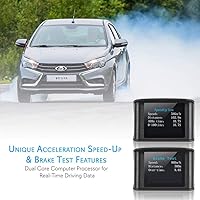
  • Processor: Equipped with a dual-core processor that handles real-time GPS data parsing and display refresh without noticeable stuttering under normal driving conditions.
  • Power Source: Draws power from a standard 12V cigarette lighter socket via the included USB cable, with no hardwiring or professional installation required.
  • Auto Power: The unit powers on and off automatically in sync with the vehicle's ignition, so there is no need to manually switch it each time you drive.
  • Dimensions: Physical footprint measures 1.82 x 2.88 x 2.68 inches, making it compact enough to sit on most dashboards without blocking forward visibility.
  • Weight: Weighs just 1.44 ounces, light enough that mount adhesion is not significantly stressed under normal driving vibration.
  • Material: The outer housing is constructed from plastic, which keeps weight low but reflects the accessible price positioning of the unit.
  • Compatibility: Designed for universal fitment across passenger cars, trucks, vans, and trailers — any vehicle with a working 12V cigarette lighter socket qualifies.
  • Compass: Includes a GPS-derived directional compass that displays cardinal and intercardinal headings to assist with general orientation during driving.
  • Performance Testing: Features built-in speed-up and braking performance test modes that measure acceleration and stopping metrics for informal driver feedback.

Related Reviews
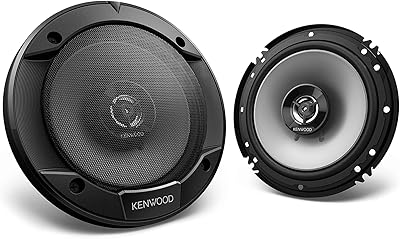
Kenwood KFC-1666S 6.5-inch Car Coaxial Speakers
76%
83%
Sound Quality vs. Factory Audio
61%
Bass Performance
79%
Treble & Clarity
91%
Installation Ease
67%
Build Quality & Materials
More
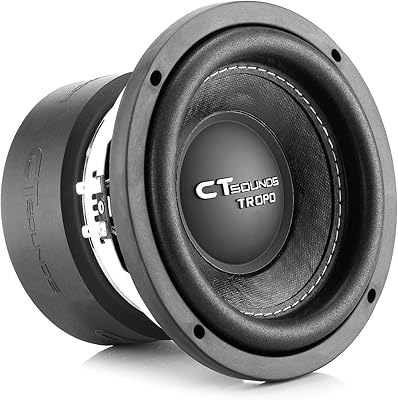
CT Sounds TROPO-6.5-D2 6.5-inch Dual 2 Ohm Car Subwoofer
86%
88%
Bass Performance
85%
Durability & Build Quality
89%
Power Handling
91%
Size & Fit for Tight Spaces
84%
Cooling Performance
More
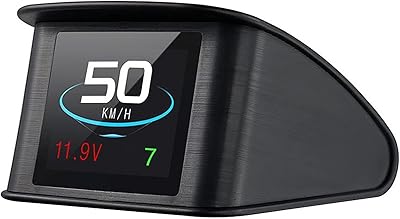
Toothbace 3.5-Inch OBD2 Car HUD Display
70%
91%
Ease of Installation
67%
Display Clarity
72%
Data Accuracy
88%
Value for Money
61%
Build Quality
More
TIMPROVE T600 GPS Car HUD Speedometer
73%
93%
Universal Compatibility
91%
Ease of Setup
67%
GPS Signal Reliability
71%
Display Readability
69%
Speed Accuracy
More
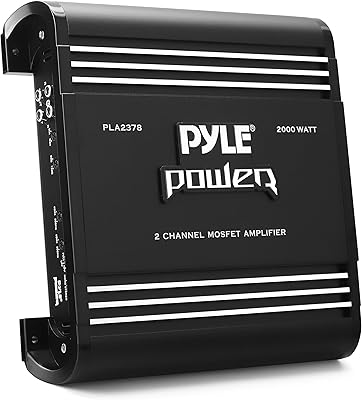
Pyle PLA2378 2-Channel Car Amplifier
72%
83%
Value for Money
51%
Power Output Accuracy
67%
Build Quality
88%
Ease of Installation
58%
Heat Management
More
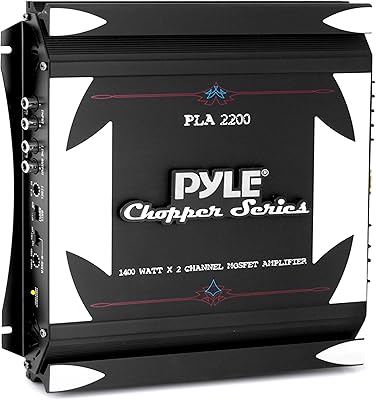
Pyle PLA2200 2-Channel Car Amplifier
67%
78%
Value for Money
83%
Ease of Installation
69%
Sound Clarity
54%
Power Output (Real-World)
61%
Build Quality
More
Pyle PLA2678 2-Channel Car Stereo Amplifier 4000W
85%
91%
Power Output
87%
Sound Clarity
84%
Build Quality
90%
Compact Design
67%
Thermal Management
More
Pyle PDMR6 6.5″ Car Audio Midrange Speaker
84%
86%
Sound Quality
90%
Installation Ease
88%
Value for Money
89%
Midrange Clarity
83%
Build Quality
More
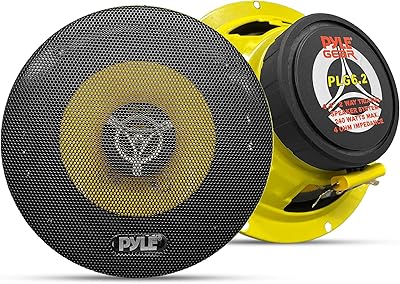
Pyle PLG6.2 Car Two Way Speaker System
81%
92%
Value for Money
89%
Ease of Installation
88%
Sound Quality at Mid-Range
67%
Sound Quality at High Volumes
75%
Bass Performance
More
JBL GX602 6.5″ 2-Way Coaxial Car Speakers
85%
89%
Sound Clarity
70%
Bass Performance
93%
Installation Ease
85%
Build Quality
82%
Durability
More

FAQ

Not exactly. The Pyle PHUD19 2.6″ Car HUD Display uses an LCD screen that you view directly, rather than projecting a transparent image onto the glass. Some drivers prop it at an angle to get a faint windshield reflection, but out of the box it functions more like a secondary dashboard screen positioned close to your line of sight.

Yes, and that's actually one of the stronger use cases for this unit. Because it pulls all its data from GPS rather than your vehicle's diagnostic port, it works with virtually any car or truck that has a 12V cigarette lighter socket — regardless of the model year or whether an OBD-II port is present.

On open roads with a clear sky, the GPS speed reading is generally close to your instrument cluster — usually within a couple of miles per hour. The gap widens in dense urban environments, tunnels, or anywhere satellite signal is intermittent, where the reading can lag or freeze briefly. If you need real-time precision, an OBD-II-based HUD will consistently outperform this one.

No tools needed at all. You mount the unit on or near your dashboard using the included mount, plug the USB cable into your cigarette lighter socket, and it powers on with the engine. The whole process typically takes under five minutes.

It won't. The built-in compass shows your current heading, which helps with general orientation, but the Pyle heads-up display has no mapping software and cannot connect to a navigation app. For turn-by-turn routing you would still need your phone or a dedicated GPS unit.

Most drivers find the display legible enough for a quick glance at speed or time, especially in lower-light conditions where the backlit LCD stands out well. In bright direct sunlight it can be harder to read, though the adjustable brightness helps. If you have vision concerns or prefer a larger readout, this screen size may feel limiting during daytime highway driving.

This is a real concern with LCD-type displays like this one. Depending on your windshield angle and interior lighting, the screen can cast a faint reflection on the glass, particularly at night. The auto-brightness feature reduces intensity in the dark, which helps, but drivers with steeply raked windshields may notice more reflection than those with upright glass.

A few owners with heavily textured or curved dashboards have reported that the adhesive or suction mount loses grip over time, especially in hot climates where heat softens adhesive pads. Placing a small piece of non-slip mat or dashboard pad underneath can significantly improve stability if the factory mount doesn't hold firmly.

It shouldn't at normal highway speeds — the factory default is set very high, well beyond typical legal limits. You will want to reprogram that threshold down to something realistic for your daily commute, otherwise the alert won't serve much practical purpose at the default setting.

Yes, that's a natural fit for this unit. Because it mounts without permanent adhesive and simply plugs into any cigarette lighter socket, swapping it between vehicles takes about a minute. The GPS setup is automatic, so there's no reconfiguration needed when you move it to a different vehicle.

Where to Buy