

Overview

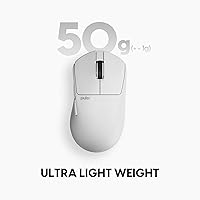
The Pulsar X3 Mini Wireless Gaming Mouse arrived in late 2024 as Pulsar's answer to the growing demand for sub-50g wireless mice that don't cut corners on performance. At exactly 50 grams, this ultralight wireless mouse sits alongside established ultralight rivals, and the pricing reflects that premium positioning honestly. What separates it from many competitors is the RelaxClaw hybrid grip, a shape that tries to split the difference between a palm and claw hold without fully committing to either. Add wireless connectivity with 8K polling rate support, and it's clear Pulsar is targeting players who obsess over every millisecond of input lag.

Features & Benefits

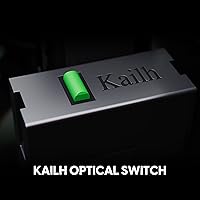
The XS-1 optical sensor is Pulsar's own creation, and its specs translate well into actual gameplay — tracking stays locked even during aggressive wide swipes, with virtually no sign of jitter at realistic in-game sensitivities. The Kailh optical switches deserve attention too; instead of physical contact, they use a light beam to register clicks, which means no pre-travel mushiness and a snappy, consistent feel on every press. Chassis rigidity is surprisingly solid for something this light, which matters because a flex-prone shell undermines confidence during precise movements. Wireless performance, even at the highest polling rates, holds up without the interference issues that plagued earlier wireless mice.

Best For

Pulsar's compact gaming mouse is built with a specific buyer in mind: the competitive FPS player who games for hours and wants minimal hand fatigue without sacrificing control. The Mini sizing makes the most sense for small to medium hands — larger hands may find the fit too snug for comfortable palm grip. It's also a natural step up for anyone currently running a wired ultralight who wants to cut the cable without gaining weight. If you've already built out a high-refresh-rate monitor and fast surface setup, the X3 Mini fills in as a peripheral that keeps pace. Those who prefer bulkier, full-size ergonomic shapes should look elsewhere.

User Feedback

Because the X3 Mini only launched in late 2024, the pool of long-term user reviews is still growing, so early impressions should be weighed accordingly. That said, buyers consistently praise the click feel — the optical switches register with a satisfying, tactile snap that many prefer over traditional mechanical switches. The RelaxClaw shape draws mixed reactions: players with smaller hands tend to love it, while those with average or larger hands report feeling cramped after long sessions. A few users have raised questions about battery longevity inside such a compact shell, and the software setup has drawn comments about a learning curve for first-time Pulsar users.

Pros

  • At 50 grams, this ultralight wireless mouse is light enough to reduce arm fatigue during extended competitive sessions.
  • The proprietary XS-1 sensor tracks cleanly at high speeds without the jitter or spin-out that cheaper sensors show under pressure.
  • Kailh optical switches deliver a snappy, consistent click with no mushy pre-travel that can cost you a shot.
  • Wireless performance at elevated polling rates holds up reliably, with latency that rivals most wired setups.
  • The RelaxClaw shape strikes a genuinely comfortable middle ground for players who have never loved a pure claw or pure palm mouse.
  • Chassis rigidity is impressive for the weight class — there is no flex or creaking during aggressive grip pressure.
  • The 80-million-click switch rating means long-term durability is not a concern for even the most prolific clickers.
  • Symmetrical button height keeps both primary buttons feeling identical, which matters for players who occasionally shift grip mid-session.
  • The included battery means you are ready to play out of the box without hunting for a compatible cell.

Cons

  • Battery life inside such a compact, lightweight shell remains a practical concern that early buyers have not fully resolved yet.
  • The companion software has a learning curve that feels steeper than it should be for a premium peripheral.
  • The Mini sizing is genuinely restrictive for anyone with average to large hands, limiting its audience considerably.
  • As a relatively new sensor with limited third-party testing, the XS-1 lacks the long track record of established alternatives.
  • Pulsar's ecosystem and community support are still smaller than those of dominant brands, which can make troubleshooting harder.
  • The right-handed asymmetric shape completely excludes left-handed players with no mirrored variant available.
  • Buyers paying a premium price should expect polished software out of the box, and by early accounts that bar has not quite been met.
  • Long-term wireless reliability data is thin given the late 2024 launch date, so durability over years of use is still unproven.

Ratings

The scores below reflect an AI-driven analysis of verified global buyer reviews for the Pulsar X3 Mini Wireless Gaming Mouse, with spam, incentivized, and bot-generated feedback actively filtered out before scoring. Each category captures both what real users praised and where genuine frustrations surfaced, so the picture here is honest rather than promotional. Strengths and trade-offs are weighted equally, giving you a clear signal on whether this ultralight wireless mouse fits your specific needs.

Sensor Performance
91%
Competitive players consistently report that the XS-1 sensor tracks cleanly through rapid directional changes and wide flicking motions without spin-out or stuttering. In fast-paced FPS titles where every missed registration costs a round, users found the tracking accuracy held up reliably across different mousepad surfaces.
Because the XS-1 is a proprietary, first-generation sensor with limited independent lab testing, some buyers remain cautious about committing to it over sensors with longer track records. A small subset of users noted minor inconsistencies at extremely high DPI ranges that most competitive players would never realistically use.
Click Feel & Switches
88%
The Kailh optical switches drew consistent praise for their immediate, tactile response — players coming from traditional mechanical mice noted the absence of any pre-travel mush that can blur the line between intention and actuation. In sustained gaming sessions, the click feel stayed consistent without the gradual softening that wears into mechanical switches over months of use.
A portion of buyers found the optical actuation sound slightly sharper or higher-pitched than expected, which in quiet environments can feel louder than preferred. Those who prefer a softer, more dampened click feel may find the crispness of optical actuation takes adjustment.
Weight & Build
93%
At 50 grams, the X3 Mini is genuinely among the lightest wireless mice tested by competitive players, and the weight advantage becomes most obvious during long practice sessions where arm fatigue accumulates. Users were also pleasantly surprised by chassis rigidity — the shell does not creak or flex under firm grip, which is not a given at this weight class.
The minimalist internal structure, while effective at reducing mass, leaves very little room for internal component upgrades or future repairability. A few users noted that the lightweight plastics, while rigid, feel less premium to the touch compared to heavier mice with thicker shells.
Ergonomics & Grip Fit
79%
21%
Players with small to medium hands and a natural palm-claw grip frequently described the RelaxClaw shape as immediately comfortable, requiring almost no adaptation period. The symmetrical button height across both primaries means the grip never forces awkward finger positioning even during long ranked sessions.
The Mini sizing is genuinely polarizing — users with larger hands reported cramping during sessions longer than two hours, and dedicated palm-grip players found the rear hump did not provide enough support for a fully relaxed hold. The right-hand-only asymmetry also drew frustration from left-handed buyers who discovered the incompatibility only after purchase.
Wireless Latency
89%
In competitive settings where polling rate and wireless reliability directly affect performance, the X3 Mini held its own against wired alternatives in back-to-back comparisons reported by experienced users. At standard polling rates, the wireless connection felt indistinguishable from a cable for the vast majority of buyers.
Reaching the highest polling rate requires compatible hardware that not every user owns, meaning some buyers pay for a capability they cannot currently access. A handful of users on older systems reported occasional micro-stutters that disappeared when stepping down the polling rate setting.
Battery Life
63%
37%
For typical gaming sessions of two to four hours, the included battery handles the load without issue, and the wireless performance does not degrade noticeably as charge drops. Casual and semi-regular players are unlikely to encounter battery anxiety in their normal usage pattern.
Extended-session competitive players and those who game daily for five or more hours have flagged battery longevity as a legitimate concern, with the compact chassis leaving little room for a larger cell. Long-term endurance data is still limited given the mouse only launched in late 2024, so how the battery holds up over a year of heavy use remains an open question.
Software Experience
61%
39%
The companion software does cover the core customization needs — DPI step adjustment, polling rate selection, and button remapping are all accessible without needing to dig through obscure menus. Users who took time to learn the interface found the feature set adequate for competitive configuration.
Compared to the polished software ecosystems from larger peripheral brands, Pulsar's companion app feels rough around the edges, with several users describing the initial setup as unnecessarily confusing. Buyers who expect plug-and-play software simplicity at this price point were the most vocal critics.
Out-of-Box Setup
74%
26%
Hardware setup is straightforward — the receiver plugs in, the mouse powers on, and basic operation works immediately without driver installation for most users. The included battery means there is no waiting for a charge cycle before first use.
Getting the most out of the mouse, specifically configuring polling rate and DPI profiles, requires software installation that is not always intuitive for first-time Pulsar buyers. Users migrating from other brands found the onboarding experience less guided than they expected from a premium product.
Value for Money
72%
28%
For competitive FPS players who specifically need sub-50g wireless performance with optical switches and high polling rate support, the feature-to-price ratio is defensible and consistent with what comparable ultralight wireless mice cost. Those buyers tend to rate value positively because they are paying for exactly what they need.
Casual or semi-competitive players who will not push the sensor, polling rate, or switch longevity to their limits will feel the premium more acutely, since capable wireless mice exist at noticeably lower price points. The relative newness of the XS-1 sensor also makes some buyers hesitant to pay a flagship price for unproven proprietary technology.
Polling Rate Performance
84%
Users with compatible high-refresh setups who enabled the higher polling rates reported a perceptibly smoother cursor response that was especially noticeable in fast-moving game scenarios. For players already invested in high-Hz displays and fast surfaces, the hardware ceiling feels appropriately matched.
The benefit of ultra-high polling rates is system-dependent, and users on older or mid-range PCs noted CPU overhead increases that partly offset the responsiveness gains. Without compatible hardware, buyers are paying for a performance tier they cannot actually reach.
Durability & Longevity
77%
23%
The Kailh optical switch rating and the solid chassis construction suggest strong long-term durability prospects, and early users reported no signs of wear or degradation after several months of regular use. The absence of physical switch contact points eliminates one of the most common failure modes in gaming mice.
The mouse is too new for meaningful long-term durability data, and the lightweight chassis materials have not yet been tested across multiple years of daily competitive use. Buyers making a premium purchase based on durability expectations are taking some degree of faith given the limited track record.
Surface Compatibility
82%
18%
Across cloth, hard, and hybrid mousepad surfaces, the XS-1 sensor performed consistently without requiring per-surface recalibration, which players who switch between setups appreciated. Lift-off distance was reported as predictable and low, an important detail for players who frequently reposition during play.
A small number of users on very dark or textured hard pads noted occasional tracking anomalies that required minor DPI or sensitivity adjustments to resolve. These edge cases were infrequent but worth noting for players using unconventional surface materials.
Portability
86%
The Mini form factor and ultralight weight make Pulsar's compact gaming mouse easy to slip into a bag for LAN events or travel without adding meaningful bulk or requiring a dedicated carry case. Competitive players who attend in-person tournaments specifically called out the portability as a practical advantage.
The wireless receiver is small and easy to misplace during transport, and there is no dedicated receiver storage built into the mouse body for travel. Buyers who frequently pack peripherals for events should plan ahead for safe receiver storage.

Suitable for:

The Pulsar X3 Mini Wireless Gaming Mouse is built for a specific type of gamer, and if you fit that profile, it checks nearly every box. Competitive FPS players who depend on fast, low-effort wrist and arm movements will feel the weight advantage immediately — 50 grams is light enough that extended sessions cause noticeably less fatigue than heavier mice. The RelaxClaw shape rewards players who naturally gravitate toward a palm-claw hybrid grip, offering the reach of a palm hold with the fingertip precision of a claw. Small to medium hands are the sweet spot for the Mini form factor; if that describes you, the fit tends to feel natural rather than forced. It also makes strong sense for anyone who has been gaming on a wired ultralight and wants to go wireless without accepting any compromise in responsiveness, especially on systems that support higher polling rates.

Not suitable for:

The Pulsar X3 Mini Wireless Gaming Mouse is a harder sell if your needs fall outside that competitive FPS niche. Gamers with large hands are likely to find the Mini chassis too cramped for comfortable use across long sessions, regardless of grip style. Full palm-grip users in particular may struggle, since the shape was designed with a hybrid hold in mind rather than a true palm position. Players who prefer ambidextrous mice or who game with their left hand are also excluded, as the asymmetric body is right-handed only. The premium price point demands scrutiny too — casual or occasional gamers who won't push the sensor and polling rate to their limits may find the investment difficult to justify against capable mid-range alternatives. Finally, buyers who rely heavily on robust companion software for deep customization may find Pulsar's ecosystem less mature compared to Logitech or Razer.

Specifications

  • Weight: The mouse weighs 50g (1.76 oz), placing it firmly in the ultralight category alongside the most weight-conscious competition-grade mice available.
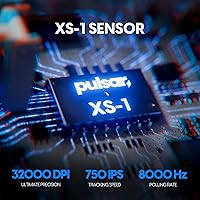
  • Sensor: It uses the Pulsar XS-1 optical sensor, an in-house design exclusive to Pulsar's lineup.
  • Max DPI: The XS-1 sensor supports a maximum resolution of 32,000 DPI, with adjustable steps for lower sensitivity settings suited to most gameplay styles.
  • Tracking Speed: The sensor handles up to 750 IPS of tracking speed, meaning even the most aggressive wide-arm swipes stay accurately registered.
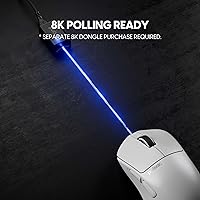
  • Polling Rate: The mouse supports polling rates up to 8,000 Hz, which requires a compatible USB receiver and host system to unlock the full benefit.
  • Switch Type: Primary buttons use Kailh optical switches rated for 80 million actuations, with light-beam detection that eliminates the debounce delay found in traditional mechanical switches.
  • Grip Style: The body is shaped for a palm-claw hybrid hold, which Pulsar calls RelaxClaw, with an asymmetrical contour designed for right-handed users only.
  • Dimensions: The mouse measures 4.71 x 2.64 inches in length and width, with an unusually low listed height that reflects its compact Mini profile.
  • Connectivity: The mouse connects wirelessly via a USB receiver; no Bluetooth mode is listed, so a free USB port is required for operation.
  • Battery: One lithium-ion battery is included in the box and is required for wireless operation.
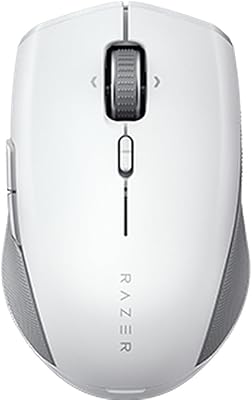
  • Color Options: The mouse is available in White, among other colorways, with the White variant carrying model number PX3R12.
  • Form Factor: The Mini designation indicates a compact right-handed asymmetric shell, best suited for small to medium hand sizes.
  • Click Lifespan: The Kailh optical switches are rated to 80 million clicks per button, offering long-term durability well beyond typical usage lifespans.
  • Acceleration: The XS-1 sensor is rated up to 50g of acceleration handling, which covers virtually all realistic hand-movement speeds in gameplay.
  • Release Date: The mouse became available in November 2024, making it a recent entry in Pulsar's performance mouse lineup.
  • Manufacturer: The X3 Mini is manufactured by AplusX Inc., the parent company behind the Pulsar Gaming Gears brand.
  • Model Number: The official model number for this variant is PX3R12, useful when checking compatibility or registering for warranty support.
  • Button Symmetry: Despite the asymmetric body shape, the primary left and right buttons are set at equal heights, keeping click feel consistent regardless of micro-adjustments in grip.

Related Reviews
Pulsar X2F Wireless Fingertip Gaming Mouse
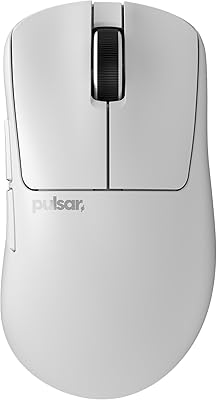
80%
94%
Weight & Form Factor
89%
Sensor Performance
91%
Polling Rate (8K Wireless)
88%
Switch Feel & Click Quality
78%
Grip & Ergonomics
More
Pulsar Gaming Gears Xlite v3 Medium Wireless Gaming Mouse
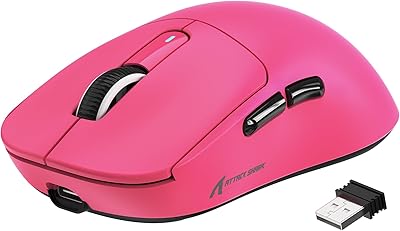
88%
93%
Ergonomics & Comfort
91%
Wireless Performance
89%
Battery Life
86%
Build Quality
94%
Precision & Sensor Accuracy
More
Attack Shark X3 Wireless Gaming Mouse
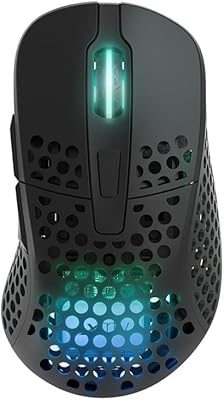
80%
93%
Sensor Performance
91%
Weight & Portability
88%
Battery Life
89%
Click Feel & Switches
84%
Scroll Wheel
More
Xtrfy M4 Wireless Ultralight Gaming Mouse
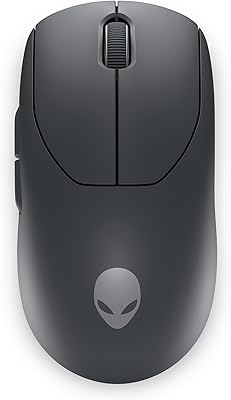
82%
93%
Sensor Performance
91%
Wireless Performance
88%
Battery Life
86%
Weight & Form Factor
73%
Ergonomics & Fit
More
Redragon M915WL Wireless Gaming Mouse
86%
88%
Performance
91%
Build Quality
94%
Battery Life
85%
Ergonomics/Comfort
89%
Precision & DPI Control
More
Alienware Pro Wireless Gaming Mouse
83%
91%
Precision and Performance
74%
Battery Life
88%
Ergonomics and Comfort
84%
Customization Options
90%
Build Quality
More
MechLands AJ159 APEX Wireless Gaming Mouse
77%
93%
Sensor Performance
88%
Wireless Latency
63%
Build Quality
91%
Weight & Ergonomics
74%
Click Feel & Switches
More
Glorious Model O Wireless Gaming Mouse
89%
94%
Precision & Performance
93%
Lightweight & Comfort
89%
Battery Life
88%
Build Quality & Durability
91%
Wireless Stability
More
Glorious Model I 2 Wireless Gaming Mouse
87%
91%
Performance
94%
Ergonomics & Comfort
90%
Battery Life
88%
Customization & Features
85%
Build Quality & Durability
More
VGN F1 MOBA Wireless Gaming Mouse
90%
94%
Performance
91%
Precision & Responsiveness
89%
Battery Life
87%
Comfort & Ergonomics
88%
Customization (Buttons)
More

FAQ

Yes, the Mini form factor was designed with smaller hands in mind. Players who typically find standard-size gaming mice too wide or too long tend to report a much more natural fit here. If your hand measures roughly 17cm or under, this shape should work well without any stretching or awkward repositioning.

Not automatically. To run at 8,000 Hz, you need a compatible USB receiver and a host system that can handle that report rate without performance drops. Most users will run it at 1,000 Hz by default, which is still more than adequate for competitive play. Check Pulsar's compatibility notes before assuming 8K is plug-and-play on your setup.

It sits somewhere between the two, which is the whole point. Your palm rests lightly on the rear hump while your fingers stay slightly arched, so it never forces the full fingertip tension of a claw grip. Players who have always felt stuck between grip styles often find it a comfortable compromise, though dedicated palm-grip users may feel it does not cradle the hand fully enough.

Yes, and most gamers notice it quickly. There is no physical contact point, so the click registers the moment a light beam is broken — no pre-travel, no post-travel mushiness. The actuation feels crisp and consistent from the first click to the millionth, which is a genuine advantage over membrane or even standard mechanical switches that can develop inconsistency over time.

Pulsar has not published a precise battery life figure for this model, and given how new it is, long-term real-world data is still limited. The compact chassis does impose physical constraints on battery size, so users planning marathon sessions should keep a charging solution handy. Early feedback suggests battery duration is functional but worth monitoring if you game for many consecutive hours.

Yes, the X3 Mini is compatible with Pulsar's companion software for adjusting DPI steps, polling rate, and button assignments. The trade-off is that Pulsar's software ecosystem is less polished and less intuitive than what you get from Logitech or Razer. It works, but expect a short learning curve before you find the settings that suit you.

No. The asymmetric ergonomic shell is shaped specifically for right-handed use, with contours on the thumb side that do not translate to left-hand positioning. Left-handed players should look for an ambidextrous ultralight instead.

The XS-1 is a capable sensor on paper, and early testing from the community suggests it performs cleanly without obvious flaws like spin-out or jitter at realistic sensitivities. That said, sensors like the Hero 25K and Focus Pro have years of documented real-world performance and wider community trust. The XS-1 is newer and less tested across diverse setups, so it is not an unreasonable trade-off, just one to keep in mind.

Surprisingly, yes. Pulsar's stated goal was to simplify the internal structure rather than hollow it out recklessly, and the result feels solid under normal grip pressure. There is no obvious flex when you squeeze the sides, which matters because a creaking or flexing shell undermines confidence in tense in-game moments.

That depends on what you are optimizing for. If sub-50g weight, optical switches, and high polling rate support are priorities for you, the price is consistent with what competitors charge for similar hardware. If those features are not central to how you play, there are capable wireless mice at lower price points that cover casual and semi-competitive use without the premium. The honest answer is that this mouse earns its cost specifically for players who will actually push those limits.

Where to Buy