Overview

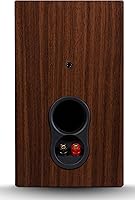
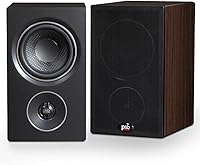
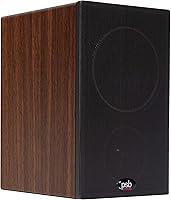
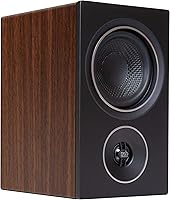
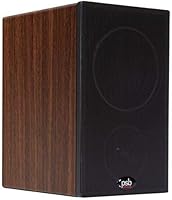
The PSB Alpha P3 Bookshelf Speakers come from a Canadian brand with a long, serious history in acoustic engineering — and that heritage shows. Peter Barlow founded PSB with a commitment to measured, science-driven design rather than chasing trendy specs, and the Alpha P3 reflects that philosophy throughout. These compact bookshelf speakers sit in a competitive entry-to-mid-range segment but consistently outperform what you would expect at this price point. The walnut finish is a genuine surprise — it looks more like something you would find on a shelf twice the cost. One thing to know upfront: the rear bass-reflex port means placement matters, so wall-hugging shelves are not ideal.
Features & Benefits

The 4-inch polypropylene woofer uses dual-layer voice coils to help squeeze bass response down to 43Hz — genuinely impressive for a cabinet this small. The 3/4-inch aluminum dome tweeter is paired with a front waveguide, which does real work smoothing the handoff between low and high frequencies rather than just looking technical on paper. What truly sets the Alpha P3 pair apart at this price is the Linkwitz-Riley crossover — a filter design typically found in far more expensive speakers that keeps distortion in check even when you push the volume. Five-way gold-plated binding posts and magnetic grille attachment round out a build that feels considered, not cut-rate. At 85dB sensitivity, though, these need a proper amplifier to open up.

Best For

These compact bookshelf speakers are a natural fit for nearfield desktop listening — the kind of setup where you sit close and actually want to hear what is in a recording, not just feel it. If you are graduating from a soundbar or an entry-level Bluetooth speaker and want your first real taste of hi-fi, the Alpha P3 pair is a strong starting point. They also perform well in small to medium rooms when paired with a stereo integrated amplifier that can drive them properly. What they are not built for is heavy bass listening without a subwoofer — the low end is controlled and accurate, but it will not rattle anything. Listeners who value tonal accuracy over bass weight will be most at home here.

User Feedback

Across more than a hundred verified ratings, PSB's entry-level standout holds a 4.6 out of 5 — and the pattern of reviews is telling. The most repeated praise centers on soundstage and imaging: buyers are genuinely surprised how wide and precise the stereo image is for such small cabinets. The treble is consistently described as smooth and non-fatiguing over long listening sessions, which is not always a given with aluminum dome tweeters. On the critical side, the bass limitation comes up often — not as a complaint exactly, but as a practical note that adding a subwoofer rounds things out nicely. A few users also flag that the rear port needs breathing room from walls to perform as intended.

Pros

  • Soundstage width and imaging precision are exceptional for speakers of this size and price.
  • The aluminum dome tweeter delivers smooth, non-fatiguing highs ideal for long listening sessions.
  • Linkwitz-Riley crossover design keeps distortion notably low even at higher volume levels.
  • The walnut finish looks and feels far more premium than competing speakers at this tier.
  • Tight, controlled bass response gives acoustic, jazz, and vocal music a natural, honest quality.
  • Five-way gold-plated binding posts accept banana plugs, bare wire, and spade connectors without issue.
  • Magnetic grilles detach and reattach cleanly with no fumbling or tool requirements.
  • PSB's entry-level standout benefits from decades of measured acoustic engineering, not just marketing.
  • Compact footprint fits easily on most desks and bookshelves without dominating the space.
  • Consistent build quality across units means what you receive closely matches what reviewers describe.

Cons

  • Bass extension is genuinely limited — a subwoofer is almost essential for full-range music genres.
  • At 85dB sensitivity, underpowered amplifiers leave the Alpha P3 pair sounding flat and lifeless.
  • The rear port requires several inches of wall clearance, restricting placement in tight spaces.
  • No built-in amplification means total system cost rises considerably once a receiver is factored in.
  • The neutral tonal character may feel dry or uninvolving to listeners used to colored, bass-boosted sound.
  • Walnut finish is a vinyl wrap, not real wood veneer, which matters to some buyers at this price.
  • Bright or harsh upstream components can expose a slight upper-midrange edge at high volumes.
  • Not a fit for large rooms — these compact bookshelf speakers run out of scale in bigger spaces.

Ratings

The PSB Alpha P3 Bookshelf Speakers have been put through a rigorous AI-driven analysis of verified global buyer reviews, with spam, bot-generated, and incentivized feedback actively filtered out to ensure the scores reflect genuine ownership experiences. What emerges is a picture of a speaker that punches well above its price class in several key areas — but with a few real-world limitations that serious buyers should know going in. Both the standout strengths and the honest shortcomings are reflected transparently in every category below.
Sound Clarity & Detail
91%
Listeners consistently report a level of midrange clarity and instrument separation that surprises anyone used to similarly priced consumer speakers. Vocals come through with real texture, and acoustic recordings in particular sound remarkably resolved for such a small cabinet.
At very high volumes, a small number of users detect a slight hardness in the upper midrange, though this is far from a common complaint. Those coming from warmer-sounding speakers may find the neutral character a little clinical at first.
Soundstage & Imaging
93%
This is arguably the Alpha P3 pair's single greatest achievement — the stereo image is wide, precise, and stable in a way that consistently draws comparisons to speakers costing significantly more. Desktop listeners in nearfield setups report a convincing sense of instrument placement that makes long listening sessions genuinely engaging.
The wide soundstage does require careful positioning and toe-in to fully realize; buyers who simply place them on a shelf without adjustment may not experience this benefit. Room acoustics also play a meaningful role, which can make results less predictable in untreated spaces.
Bass Response
67%
33%
For a 4-inch driver in a cabinet this compact, the low-end extension is genuinely respectable — bass-heavy jazz, acoustic folk, and vocal-led music all come through with natural weight. The bass that is present is tight and well-controlled, never muddy or one-note.
Anyone who listens to electronic music, hip-hop, or film soundtracks will feel the limitation fairly quickly — the low end simply does not go deep enough without a subwoofer to fill in below 50Hz. Multiple buyers specifically recommend budgeting for a sub to complete the setup.
Treble Quality
88%
The aluminum dome tweeter with front waveguide produces smooth, extended highs that hold up well across hours of listening without inducing ear fatigue. Cymbal detail, string harmonics, and high-register piano notes all come through with air and clarity that many competing tweeters at this tier fail to match.
A handful of reviewers with particularly bright-sounding amplifiers note that the treble can tip into sharpness, suggesting careful pairing is worthwhile. The tweeter is not as forgiving of poor recordings as a softer dome might be, which is a tradeoff inherent to the design.
Build Quality & Finish
89%
The walnut vinyl finish looks genuinely premium on a desktop or bookshelf, and most buyers comment that the cabinets feel solid and well-assembled with no flex or rattling. The magnetic grille attachment is a particularly appreciated detail — clean, tool-free, and secure.
A few buyers note that the walnut finish is a vinyl wrap rather than real wood veneer, which is understandable at this price but worth knowing. Cabinet edges on some units have shown minor inconsistency in the wrap application, though this appears to be the exception rather than the norm.
Value for Money
86%
The engineering pedigree behind these compact bookshelf speakers — Linkwitz-Riley crossover, dual-layer voice coils, waveguide-loaded tweeter — represents genuine investment in acoustic performance rather than cosmetic upgrades. Buyers overwhelmingly feel they are getting more speaker than the price suggests.
The need to pair these with a capable amplifier and potentially a subwoofer means the total system cost climbs considerably beyond the speaker price alone, which can frustrate buyers who did not anticipate the additional investment. As a standalone purchase without that ecosystem, the value case weakens slightly.
Amplifier Compatibility
63%
37%
With an 8-ohm impedance and support for up to 80 watts of input power, the Alpha P3 pair works well with a wide range of stereo integrated amplifiers and quality AV receivers, and the five-way binding posts accept virtually any cable type buyers choose to use.
At 85dB sensitivity, these are not an easy load — budget mini amps and low-powered desktop units will leave them sounding flat and lifeless. Several buyers who paired them with underpowered sources were disappointed, not realizing the speakers need proper amplification to perform as intended.
Placement Flexibility
61%
39%
The compact footprint makes these an easy physical fit on most desks and bookshelves, and the lightweight build at under 5 pounds each means repositioning them is effortless during setup.
The rear-firing bass port is the main constraint — pushing these flush against a wall chokes the low end and creates port noise at higher volumes. Most users report needing at least 6 to 8 inches of rear clearance, which rules out certain shelf or cabinet installations entirely.
Crossover Design
92%
The Linkwitz-Riley filter implementation is a standout technical detail that pays off audibly — the transition between woofer and tweeter is smooth and coherent, with no obvious frequency gap or coloration around the crossover point that cheaper designs often exhibit.
The sophistication of the crossover is largely invisible to casual listeners, so buyers who are not already familiar with what this means may not consciously appreciate it. Its main benefit is what you do not hear — distortion and harshness at higher volumes — which is harder to market than a flashy spec.
Ease of Setup
84%
Connecting these compact bookshelf speakers is straightforward for anyone with a basic stereo system — the gold-plated five-way binding posts grip firmly and accept bare wire, banana plugs, or spade connectors without fuss. First-time passive speaker buyers find the process intuitive.
Newcomers to passive speakers may be caught off guard by the need for a separate amplifier, since there is no built-in amp or wireless option. The setup experience assumes a degree of system knowledge that pure plug-and-play buyers may not have.
Distortion at High Volumes
83%
Thanks in large part to the Linkwitz-Riley crossover and the dual-layer voice coil woofer, PSB's entry-level standout holds together remarkably well when pushed. Most buyers who tested them at party levels reported clean output with no audible strain within the recommended power range.
Driving them beyond the 80-watt recommended ceiling does introduce audible stress, and a few buyers with high-powered amplifiers noted port noise when pushing very low frequencies at high volumes — a consequence of the small cabinet physics more than a design flaw.
Midrange Performance
87%
Vocals, guitars, and woodwind instruments land with natural body and presence, which is where these speakers genuinely shine in everyday listening. The polypropylene cone material contributes to a clean, uncolored midrange that does not exaggerate or soften character.
Some listeners accustomed to British-voiced speakers with a warmer, more euphonic midrange character may find the neutrality of these slightly dry or matter-of-fact. This is a matter of taste rather than a technical fault, but it does narrow the audience somewhat.
Long-Term Listening Comfort
90%
Non-fatiguing is the word that comes up again and again in long-term owner reviews — the tonal balance is tuned for extended sessions, and buyers who use these for work-from-home background music or multi-hour listening rarely report fatigue. The smooth treble rolloff plays a large part in this.
Those seeking a more exciting, forward-sounding presentation may find the relaxed character less engaging for short, critical listening sessions. The accuracy that makes them comfortable over time can read as slightly uninvolving to listeners who prefer a more hyped sound signature.
Consistency Across Units
85%
The low return rate and high overall satisfaction score across a meaningful sample of verified buyers suggests PSB maintains solid quality control between pairs. Most buyers report that both speakers in the pair are well-matched sonically and cosmetically straight out of the box.
A small minority of reviewers have flagged minor cosmetic inconsistencies in the finish, and at least one user reported a driver that did not meet the standard of the other in the pair. These appear to be isolated production outliers rather than a systemic concern.

Suitable for:

The PSB Alpha P3 Bookshelf Speakers are the right call for anyone who listens seriously but does not have a large room or a large budget to match. They shine brightest in nearfield desktop setups — think a well-organized home office or a dedicated listening corner — where the listener sits close enough to fully appreciate the wide soundstage and precise imaging these speakers produce. Audiophile beginners who are tired of the flat, congested sound from soundbars or entry-level Bluetooth speakers will find the Alpha P3 pair a genuinely eye-opening step up. They also work well as the foundation of a small stereo system in an apartment living room, particularly when paired with a quality integrated amplifier that can drive them properly. Listeners who prioritize tonal accuracy — the kind of people who want to hear a recording as it actually sounds rather than through a heavily colored filter — will feel right at home with these.
Not suitable for:

The PSB Alpha P3 Bookshelf Speakers are not the right fit for buyers who want deep, room-filling bass without adding a subwoofer to the mix. If your listening diet leans heavily toward electronic music, hip-hop, or cinematic soundtracks, the limited low-end extension will leave you consistently wanting more — these are built for accuracy, not impact. Anyone planning to drive them from a budget desktop mini-amp or a low-powered portable source should also look elsewhere; at 85dB sensitivity, these compact bookshelf speakers need real amplification to perform as intended, and underpowering them is a common and avoidable disappointment. Buyers with shelving that sits flush against the wall will run into placement challenges too, since the rear port needs breathing room to work correctly. Finally, if you want an all-in-one wireless solution with Bluetooth or built-in streaming, this passive wired design requires a separate amplifier and source component, adding both cost and setup complexity.
Specifications

  • Woofer: 4-inch (102mm) textured polypropylene cone with rubber surround and dual-layer voice coils for extended bass control.
  • Tweeter: 3/4-inch (19mm) black anodized aluminum dome with ferrofluid cooling, neodymium magnet, and integrated front waveguide.
  • Crossover: Acoustic Linkwitz-Riley filter design engineered to minimize distortion and flatten frequency response across the driver handoff point.
  • Frequency Response: 57–21,000Hz at ±3dB on-axis, with a low-frequency cutoff of 43Hz at -10dB.
  • Sensitivity: 85dB measured in an anechoic chamber; 87dB in a typical listening room environment.
  • Impedance: 8 ohms nominal, compatible with the vast majority of stereo integrated amplifiers and AV receivers.
  • Input Power: Recommended amplifier power is 10–80 watts; program power handling is rated at 60 watts per speaker.
  • Cabinet Design: Tuned port bass reflex enclosure with a 1 3/8-inch (35mm) rear-firing port for enhanced low-frequency extension.
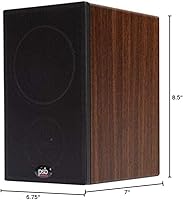
  • Dimensions: Each speaker measures 5 1/8″ wide x 8 5/8″ tall x 6 7/8″ deep (130 x 220 x 174mm).
  • Weight: Each speaker weighs 4.9 lb (2.2 kg), making repositioning and desktop placement straightforward.
  • Binding Posts: Five-way gold-plated speaker terminals accept banana plugs, spade connectors, pin connectors, and bare wire up to 10 AWG.
  • Grilles: Acoustically transparent magnetic grilles attach and detach without tools, leaving no mounting hardware visible on the baffle.
  • Finish: Walnut vinyl wrap finish applied to an MDF cabinet, offering a premium aesthetic with consistent texture across the enclosure.
  • Connectivity: Passive wired stereo speaker requiring an external amplifier or receiver; no built-in amplification or wireless capability.
  • Configuration: Two-way stereo design sold as a matched pair, rated for 2.0 surround sound channel configuration.
  • Driver Material: Dynamic driver type with a polypropylene cone woofer and aluminum dome tweeter, both sourced for PSB's specific acoustic tuning targets.
  • Indoor Use: Designed exclusively for indoor use; not water-resistant and not rated for outdoor or high-humidity environments.
  • Warranty: Covered by a limited manufacturer warranty from PSB Speakers; buyers should confirm current warranty terms directly with PSB or the point of purchase.

Related Reviews
PSB Alpha P5
PSB Alpha P5
82%
91%
Sound Clarity & Detail
88%
Soundstage & Imaging
72%
Bass Performance
86%
Treble Quality
89%
Midrange Accuracy
More
Edifier S2000MKIII Bookshelf Speakers
86%
92%
Sound Quality
89%
Bluetooth Performance
88%
Build Quality
85%
Ease of Use
91%
Connectivity Options
More
KEF Q350 Bookshelf Speakers
86%
93%
Sound Quality
80%
Bass Performance
88%
Build Quality
91%
Design and Aesthetics
85%
Ease of Setup
More
MEVOSTO DS19 Bookshelf Speakers
85%
89%
Sound Quality
91%
Bass Performance
85%
Treble Clarity
88%
Bluetooth Connectivity
90%
Design & Aesthetics
More
Sanyun SW208 3″ Bookshelf Speakers
86%
88%
Build Quality
84%
High-Frequency Clarity
91%
Mid-Range Warmth
78%
Bass Performance
93%
Control Ergonomics
More
Riowois DS6800M Bookshelf Speakers
83%
85%
Sound Quality
90%
Ease of Installation
82%
Build Quality
88%
Space-Saving Design
78%
Bass Performance
More
KEF Q150 Bookshelf Speakers
87%
88%
Sound Quality
75%
Bass Performance
93%
Build Quality
90%
Design & Aesthetics
85%
Treble Clarity
More
Orroplus OR-02 Powered Bookshelf Speakers
77%
83%
Sound Clarity & Midrange
61%
Bass Performance
91%
Connectivity & Input Range
78%
Bluetooth Performance
72%
Setup & Ease of Use
More
Probox BT16 Bookshelf Speakers
75%
78%
Sound Clarity
54%
Bass Performance
84%
Bluetooth Stability
82%
USB DAC Quality
63%
Build Quality
More
Sanyun SW205
Sanyun SW205
78%
83%
Sound Quality
61%
Bass Performance
87%
Soundstage & Imaging
89%
Connectivity & Inputs
84%
Bluetooth Performance
More

FAQ

Yes, a separate amplifier or receiver is required — the Alpha P3 pair are passive speakers with no built-in amp. You cannot connect them directly to a computer headphone jack or USB port. You will need a stereo integrated amplifier or a receiver with speaker outputs to drive them properly.

PSB recommends between 10 and 80 watts per channel, but given the 85dB sensitivity rating, leaning toward the higher end of that range will get you noticeably better dynamics and control. A 50-watt-per-channel integrated amplifier is a solid starting point. Avoid underpowered desktop mini-amps — they will leave these sounding flat and compressed.

Because of the rear-firing bass port, you want at least 6 to 8 inches of clearance between the back of the cabinet and the wall behind it. Placing them flush against a wall will restrict airflow through the port, which softens the bass and can cause chuffing noise at higher volumes. A little breathing room makes a genuine difference.

For acoustic music, jazz, classical, and vocals, the bass is tight and satisfying on its own. If you listen to electronic music, hip-hop, or movie soundtracks regularly, you will likely want a subwoofer — the low end rolls off around 43Hz at its limit, which leaves some genres feeling a little light. The bass that is present is well-controlled, just not deep.

Yes, they can work as front stereo speakers in a modest home theater system connected to an AV receiver. They are not designed as a full surround sound solution on their own, but paired with a center channel and a subwoofer, they handle dialogue and stereo content well. PSB also makes compatible center and tower speakers in the Alpha line if you want to build out a matched system.

They are actually excellent for this use case. At nearfield distances — roughly 2 to 4 feet away — the imaging and soundstage these compact bookshelf speakers produce is genuinely impressive, and the detail resolution rewards close, attentive listening. Just make sure you have a proper desktop amplifier with enough clean output to drive them, not a basic USB-powered unit.

The finish is a walnut vinyl wrap rather than a real wood veneer, which is standard practice at this price range. That said, most buyers find it looks considerably more upscale than expected — the texture and color are convincing, and the overall cabinet appearance is much closer to a premium product than you might anticipate.

The grilles are described as acoustically transparent, meaning they are designed to have minimal impact on sound. In practice, most critical listeners prefer removing them for pure listening sessions since even a thin mesh can introduce very subtle high-frequency diffraction. For everyday use the difference is minor, and the magnetic attachment makes swapping back and forth completely effortless.

The Alpha P3 pair stands out primarily through its crossover engineering and imaging quality — areas where many competing speakers at this tier cut corners noticeably. The Linkwitz-Riley filter design is genuinely unusual here and pays off in a more coherent, distortion-free presentation. Where competitors sometimes win is in bass quantity, since PSB prioritizes accuracy over low-end emphasis. If you want the most honest, detailed sound at this price rather than the most impressive demo at a store, these are hard to beat.

They are a great entry point for anyone serious about getting into hi-fi, but they do require some basic system knowledge — you need to understand that a separate amplifier is necessary and that placement affects performance. The speakers themselves are not difficult to set up once you have the right equipment. The main risk for beginners is underestimating the total system cost once an amplifier is factored in.