
Overview

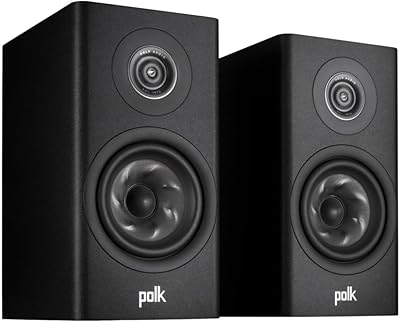
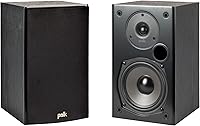
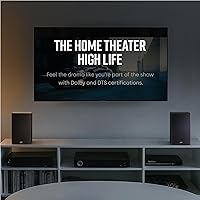
The Polk Audio T15 has been a fixture in the entry-level speaker market for well over a decade, backed by a brand with more than fifty years making home audio gear. These bookshelf speakers come as a pair — passive, wired, and housed in a wood cabinet — which already puts them a step ahead of cheaper plastic alternatives at this price tier. They sit at the base of Polk's T-series lineup, meaning you can start here and later add a center channel, towers, and a subwoofer to build out a proper 5.1 system. If you're just getting into home theater or want a no-fuss stereo setup, these are worth a serious look.

Features & Benefits

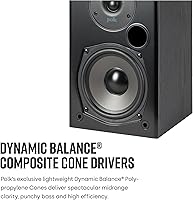
At the core of the T15 pair is a 5.25-inch Dynamic Balance woofer that handles mid-range frequencies with noticeable clarity — vocals come through clean, and the low end stays controlled rather than muddy. A smaller tweeter handles the high end without becoming shrill, which matters more than you'd think during long listening sessions. The wood cabinet dampens internal vibrations that cheaper plastic enclosures simply can't manage. Both speakers have integrated keyhole slots on the back, so wall-mounting is genuinely straightforward. They run at 8 ohms, meaning virtually any entry-level AV receiver will drive them without issue. And since these are passive speakers, there's no app, no pairing, no power adapter — just run a wire.

Best For

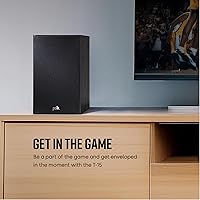
These Polk speakers are a natural fit for anyone building their first home theater on a reasonable budget. They shine in small to medium-sized rooms — a large open living room may expose their limits without subwoofer support. If you're planning a full 5.1 system over time, the T-series ecosystem makes that path straightforward: keep these as front or rear channels and add complementary pieces as your budget allows. They also work well for basic stereo music listening, particularly with vocal-heavy genres where midrange clarity matters most. One important note: these are passive, meaning you'll need a separate AV receiver to power them — they won't work plugged directly into a TV.

User Feedback

Across thousands of reviews, the consistent theme is that these bookshelf speakers outperform what most people expect at this price point — clarity and soundstage are the most frequently cited strengths. Setup gets high marks too; most buyers had them running within minutes of opening the box. That said, bass response is a recurring criticism: without a dedicated subwoofer, the low end feels thin, especially for action movies or bass-heavy music. A fair number of buyers deploy them as rear surround channels rather than primary speakers, which speaks to their versatility. The grilles feel a bit flimsy, but that's purely cosmetic. Long-term owners consistently report the drivers hold up well with years of regular use.

Pros

  • Vocal and midrange clarity consistently outperforms expectations for the price bracket these speakers occupy.
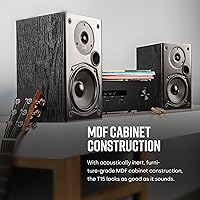
  • Wood cabinet construction keeps resonance in check and adds a solidity rarely found at this price tier.
  • Compatible with virtually any mainstream AV receiver thanks to a standard 8-ohm impedance rating.
  • Integrated keyhole slots make wall mounting practical without any extra hardware.
  • Long-term owners report reliable durability with no meaningful degradation after years of daily use.
  • Works flexibly as front stereo speakers, rear surround channels, or standalone desktop audio.
  • Part of the T-series ecosystem, making it easy to expand into a full 5.1 system incrementally.
  • Setup is genuinely quick — most buyers report going from unboxing to audio in under ten minutes.
  • These Polk speakers deliver a surprisingly wide stereo image for their compact physical footprint.
  • Grille design is unobtrusive and the compact black cabinet fits discreetly into most room decor.

Cons

  • Bass output runs thin on action films and bass-heavy music without a dedicated subwoofer alongside them.
  • These are passive speakers — buyers without an AV receiver face an additional mandatory purchase before hearing any sound.
  • The included grilles feel noticeably lightweight and the plastic clips are fragile if removed repeatedly.
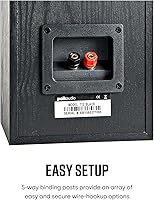
  • Speaker terminals are basic and do not accommodate thicker aftermarket cables without some effort.
  • Output levels in large rooms fall short — the bookshelf driver size is a real constraint at distance.
  • No angle adjustment is possible once wall-mounted, limiting placement options for angled listening positions.
  • The T-series ecosystem requires buying multiple additional products to realize the full 5.1 potential.
  • Buyers coming from higher-end speakers will notice a clear ceiling on fine detail and high-frequency resolution.

Ratings

The Polk Audio T15 scores below are generated by our AI engine after analyzing thousands of verified global buyer reviews, with spam, incentivized, and bot-flagged submissions actively filtered out before any scoring is applied. The results reflect a genuinely balanced picture — where these bookshelf speakers earn strong praise and where real buyers have run into frustrations. Nothing here is cherry-picked in either direction.

Sound Clarity
88%
Midrange reproduction is where these speakers consistently earn compliments — voices in dialogue-heavy films and acoustic music come through with real presence and definition. Buyers frequently note that the high frequencies stay smooth even at higher volumes, avoiding the harshness that plagues cheaper tweeters in this price class.
Clarity does drop off slightly at the very top of the frequency range under demanding conditions, and a handful of listeners with more trained ears find the overall sound signature slightly warm or colored rather than truly neutral. It is noticeable mainly when directly comparing against higher-tier bookshelf speakers.
Bass Response
61%
39%
For the driver size, low-end output is reasonably controlled and avoids the loose, boomy quality common in budget speakers. In stereo music listening, especially for vocal-forward genres, the bass stays tight enough to feel satisfying in smaller rooms.
Without a dedicated subwoofer, the low-end extension runs out of steam noticeably during action movie sequences or bass-heavy electronic music. This is the single most common complaint in user reviews — buyers who skipped a subwoofer often feel shortchanged on impact, and it is a real limitation of the driver size rather than a defect.
Build Quality
79%
21%
The wood cabinet construction gives these speakers a noticeably more solid feel than anything comparable using plastic enclosures. Panels feel rigid, there is minimal flex when pressing on the sides, and long-term owners consistently report no rattles or structural degradation even after years of regular use.
The included grilles are the one area where the build feels like a cost-cutting decision — they are lightweight and clip on in a way that feels less secure than the cabinet deserves. The speaker terminals, while functional, are also basic and will not accommodate thicker aftermarket speaker cables easily.
Value for Money
93%
For buyers entering home theater or stereo listening for the first time, these speakers represent one of the strongest dollar-for-performance ratios available. Getting a matched, brand-name passive pair with a wood cabinet at this price tier is genuinely difficult to beat, and most buyers feel they paid less than the sound quality warrants.
The value equation does shift once you factor in the mandatory cost of an AV receiver — buyers who did not account for that additional purchase occasionally feel misled. The speakers themselves are priced fairly, but the total system cost is higher than the sticker price alone suggests.
Ease of Setup
91%
Connecting passive speakers to an AV receiver is about as straightforward as audio hardware gets — strip the wire, clamp it into the terminals, and you are done. Reviewers with zero prior audio experience consistently describe the process as taking under ten minutes from unboxing to first sound.
The setup simplicity depends entirely on the receiver side, and buyers who purchased without understanding that a separate amplifier is required ran into frustration. The product itself offers no guidance about receiver compatibility beyond very basic spec notes, which has caught out a meaningful number of first-time buyers.
Compatibility with AV Receivers
89%
The 8-ohm impedance rating makes these speakers play well with virtually every mainstream AV receiver sold today without any risk of overloading the amplifier output. Buyers running entry-level units from Denon, Yamaha, and Sony all report clean, stable performance with no clipping or distortion at normal listening levels.
Buyers using very low-powered vintage receivers or unconventional amplifier setups occasionally note the speakers need more volume knob travel than expected to reach comfortable listening levels. Sensitivity is adequate but not exceptional, which matters more in larger rooms where you need the receiver to work harder.
Soundstage & Imaging
76%
24%
For bookshelf speakers in this category, stereo imaging is a genuine strength — instruments and dialogue pan across the left-right field in a way that creates a convincing sense of width in small to medium rooms. Several reviewers specifically call out how well these perform for movie watching in a 2.0 stereo configuration.
Depth and vertical imaging are limited, as is expected at this level, and the soundstage does not extend convincingly beyond the physical speaker positions. In larger rooms the sense of width collapses somewhat, particularly without wall or stand placement that allows the speakers to breathe.
High-Frequency Detail
82%
18%
The tweeter handles cymbals, string overtones, and high-pitched dialogue without introducing the fatigue that budget tweeters often cause over longer sessions. Buyers who stream a lot of TV content appreciate that voices stay crisp without the sibilance problems that can make certain speaker designs tiring.
Fine high-frequency micro-detail — the kind audiophiles reference when discussing air and resolution — is not this speaker's territory. At this price point that is a reasonable expectation to manage, but buyers coming from higher-end speakers will notice the ceiling clearly.
Midrange Performance
87%
Vocal reproduction across both male and female registers is consistently praised as the standout quality of these speakers. Whether it is a podcast, a film with heavy dialogue, or an acoustic album, the midrange clarity makes extended listening sessions genuinely engaging rather than fatiguing.
There is a slight mid-forward coloration that some listeners find adds a flattering warmth to certain content but makes the balance feel slightly off with brighter recordings or certain electronic music genres. It is more a character than a flaw, but worth knowing before buying.
Placement Flexibility
84%
The integrated keyhole mounting slots on the rear panel make wall placement genuinely practical without any additional hardware beyond a screw. Buyers in smaller spaces who need to keep furniture clear appreciate this option, and the compact footprint works well on a shelf, a stand, or flush against a wall.
Wall mounting works best when the speakers are positioned at ear level or slightly above, and the keyhole slot design gives you no angular adjustment once mounted. For buyers who need to aim the speakers downward or at a strong angle, the fixed mount becomes a limitation.
Cabinet Resonance Control
81%
19%
Wood construction noticeably reduces the cabinet coloration that undermines cheaper plastic enclosures — bass notes stay tighter and the overall sound avoids that hollow, boxy quality that is a giveaway of budget construction. Long-term owners confirm the cabinets stay quiet with no new rattles developing over time.
The cabinet walls are not particularly thick by audiophile standards, and at high volumes with bass-heavy content there is some panel vibration detectable by touch. This rarely translates into audible issues at typical listening levels, but it does show the limits of the enclosure at the price point.
Durability & Longevity
86%
These speakers have been on the market for over a decade with consistent driver performance reported by long-term owners, which says something real about component reliability. Buyers running them daily for several years report no degradation in sound quality or mechanical integrity.
The grille clips are the most commonly damaged component — they are thin plastic and several reviewers report breaking one during repeated removal and reattachment. The speaker terminals also show some oxidation over time if left in humid environments, though this is addressable with basic contact cleaner.
Versatility of Use Cases
78%
22%
These speakers cover an impressively wide range of use cases for a single product — front stereo pair, rear surround channels, desktop near-field listening, or bedroom TV audio. That flexibility makes them easy to repurpose if your system configuration changes over time.
They are sized and voiced for small to medium room applications, and buyers who try to use them as the primary speakers in a large open-plan space often find the output and bass extension fall short. They are not a universal solution, and room size genuinely matters here.
Packaging & Unboxing
74%
26%
Both speakers arrive well-protected with foam inserts that hold the cabinets securely without contact between the speaker faces and the outer packaging. Grilles are individually wrapped, and out-of-box damage complaints are relatively rare given the volume of units sold.
The box and packaging materials feel minimal and purely functional — there is no premium unboxing experience here, which matters to buyers giving these as a gift. Documentation inside is sparse, and new buyers looking for a setup guide will need to find one independently.

Suitable for:

The Polk Audio T15 is a natural starting point for anyone who wants to build a real home theater system without overcommitting financially from day one. First-time buyers who already own or plan to buy an AV receiver will find these speakers an easy, low-risk entry — the wired passive setup is straightforward, and the 8-ohm impedance means compatibility headaches are basically a non-issue with any mainstream receiver. They are well matched for small to medium living rooms, home offices, or dedicated media rooms where the listening distance is reasonable and the space does not demand enormous output. Casual music listeners — especially those who favor vocals, acoustic recordings, podcasts, or film dialogue — will appreciate the midrange clarity that these Polk speakers deliver consistently. If you are thinking longer-term and want to eventually build out a full 5.1 surround system, starting here makes practical sense because the T-series lineup gives you a clear upgrade path without abandoning your initial investment.

Not suitable for:

Buyers expecting deep, room-filling bass without purchasing a separate subwoofer are likely to be disappointed — the Polk Audio T15 simply does not have the driver size or cabinet volume to reproduce serious low-end extension, and that is not a fixable limitation. Anyone looking for a wireless or self-powered solution will need to look elsewhere entirely, as these are purely passive speakers that require an external amplifier or AV receiver to function at all. Large open-plan rooms or spaces that need high output levels will expose the limits of these bookshelf speakers quickly — they are not designed to pressurize a big room. Dedicated audiophiles who prioritize flat frequency response and high-resolution detail retrieval will find the sound character too colored and the overall technical ceiling too low for critical listening. And if your budget does not already account for the cost of a receiver, the full system cost may stretch further than the speaker price alone suggests.

Specifications

  • Speaker Type: Passive bookshelf speakers requiring an external amplifier or AV receiver to operate.
  • Driver: Each speaker uses a 5.25″ Dynamic Balance woofer designed for controlled midrange and bass reproduction.
  • Tweeter: A 0.75″ tweeter handles high-frequency detail with reduced harshness during extended listening sessions.
  • Cabinet Material: Enclosures are constructed from wood, which reduces internal resonance compared to plastic alternatives.
  • Impedance: Both speakers are rated at 8 ohms, ensuring broad compatibility with mainstream AV receivers.
  • Power Handling: Each speaker handles up to 100 watts, suitable for typical home theater and stereo receiver outputs.
  • Dimensions: Each cabinet measures 7.25″ deep, 6.5″ wide, and 10.63″ tall — a compact footprint for shelf or wall use.
  • Weight: The pair weighs approximately 8.25 pounds combined, making them easy to position or wall-mount without heavy hardware.
  • Mounting: Integrated keyhole slots on the rear panel allow wall mounting with a single screw per speaker.
  • Connectivity: Wired connection via bare speaker wire inserted into spring-clip or binding post terminals on the rear panel.
  • Color: Available in black with a matching fabric grille that attaches and detaches without tools.
  • Included Items: Each package includes two speakers, two removable grilles, and a warranty registration card.
  • Compatibility: Designed for use with home theater AV receivers; not compatible with passive connection to a TV directly.
  • Surround Config: Suited for use as front, rear, or surround channels in a 5.1 home theater configuration.
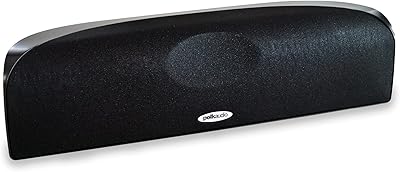
  • Series: Part of the Polk T-series, which also includes the T30 center channel speaker and T50 floor-standing towers.
  • Waterproofing: These speakers are not waterproof and are intended strictly for indoor use in dry environments.
  • Warranty: Covered by a limited manufacturer warranty; exact duration and terms are documented on the included warranty card.

Related Reviews
Polk Audio Signa S4 Soundbar with Subwoofer
85%
88%
Sound Quality
75%
Bass Performance
92%
Setup Ease
90%
Voice Clarity
83%
Build Quality
More
Polk Audio DB842 DVC 8″ Subwoofer
89%
96%
Bass Performance
91%
Sound Clarity
93%
Build Quality
90%
Durability in Wet Conditions
85%
Ease of Installation
More
Polk Audio PSW10 10″ Powered Subwoofer
85%
90%
Bass Quality
88%
Ease of Setup
85%
Integration with Home Theater Systems
81%
Build Quality
92%
Compact Design & Space Efficiency
More
Polk Audio 265-RT In-Wall Speaker
86%
88%
Sound Clarity
84%
Bass Performance
92%
Ease of Installation
90%
Build Quality
86%
Durability
More
Polk Audio OWM3
Polk Audio OWM3
83%
88%
Sound Clarity
63%
Bass Performance
94%
Versatile Placement
76%
Build Quality
86%
Value for Money
More
Polk Audio DB6502 Component Speaker System
86%
93%
Sound Quality
90%
Bass Performance
88%
Waterproof Durability
85%
Ease of Installation
84%
Mounting Flexibility
More
Polk Audio 65-RT In-Wall Speaker
84%
89%
Sound Quality
85%
Bass Performance
92%
Ease of Installation
87%
Build Quality
88%
Aesthetics & Design
More
Polk Audio TL1 Center Channel Speaker
85%
91%
Sound Clarity
76%
Bass Performance
85%
Build Quality
88%
Mounting Flexibility
92%
Dialogue Clarity
More
Polk Audio Atrium 6 Outdoor Speakers
88%
88%
Sound Quality
85%
Bass Performance
90%
Build Quality & Durability
91%
Ease of Installation
89%
Weather Resistance
More
Polk Audio Atrium 4 Outdoor Speakers
88%
89%
Sound Quality
91%
Ease of Installation
93%
Build Quality & Durability
87%
Value for Money
83%
Bass Performance
More

FAQ

No, they do not. These are passive speakers, which means they have no built-in amplifier and cannot be plugged directly into a TV. You will need a separate AV receiver or stereo amplifier to power them — the receiver sits between your TV and the speakers and provides the amplification that makes sound come out.

Almost any entry-level AV receiver from brands like Denon, Yamaha, Sony, or Onkyo will work without any compatibility concerns. These speakers are rated at 8 ohms, which is the standard impedance that all mainstream receivers are designed to drive comfortably. If you are just starting out, a basic two-channel stereo receiver or an entry-level 5.1 AV receiver in the mid-range price tier is more than enough.

For casual music listening or TV shows with moderate audio demands, many people find these bookshelf speakers acceptable without a subwoofer. However, for movies with heavy action sequences, or if you listen to genres like hip-hop, EDM, or any bass-heavy content, the low-end extension will feel noticeably thin. A subwoofer paired with these speakers transforms the experience significantly.

Yes, and it is actually one of the more practical features of these speakers. Each cabinet has an integrated keyhole slot on the back, so all you need is a single screw in the wall per speaker. Just keep in mind there is no angular adjustment once mounted, so you will want to think about ear-level positioning before committing to a spot.

In a small to medium-sized room, yes — they perform well as a primary stereo pair, especially for vocals, acoustic music, and spoken-word content. In a large open living room, you may find they struggle to fill the space adequately, particularly in the low end. Adding a subwoofer helps considerably if you are pushing them in a larger environment.

Absolutely, and quite a few buyers actually prefer to use them this way. Their compact size and wall-mounting capability make them well-suited for rear channel placement, and their tonal character blends well with other T-series speakers if you are building a matched system across all five channels.

It is genuinely straightforward. You strip a small amount of insulation from the end of your speaker wire, insert each wire into the corresponding terminal on the back of the speaker, and connect the other end to your receiver. Most people complete the full setup in under fifteen minutes. The only thing to get right is polarity — make sure positive goes to positive and negative to negative on both the speaker and receiver sides.

The grilles attach via small plastic clips and stay in place under normal conditions. That said, several users have noted that the clips feel lightweight and can become fragile if you remove and reattach the grilles repeatedly. For most people who put the grilles on and leave them, it is not an issue — but if you plan to frequently swap them on and off, handle them with some care.

Based on long-term owner feedback, these Polk speakers hold up well with regular use over multiple years. The wood cabinets stay quiet with no new rattles developing, and driver performance stays consistent. The speaker terminals can show minor oxidation in humid environments, but a quick clean with contact cleaner addresses that. Overall, durability is considered a genuine strength of this product.

It is actually an ideal starting point for exactly that goal. These speakers are part of a broader T-series family that includes a matching center channel and floor-standing tower speakers, so you can build out incrementally without your initial purchase going to waste. Starting with a stereo pair and adding components over time is a practical and budget-friendly way to reach a full surround setup.