Overview

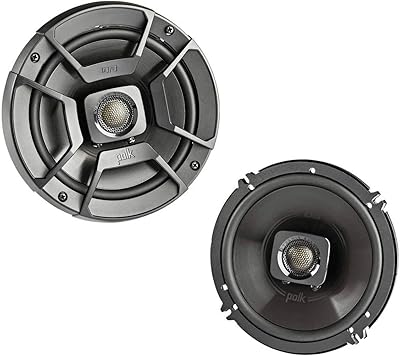
The Polk Audio MM6502 6.5″ Component Car Speakers occupy an interesting position in the mobile audio market — built to survive the punishment of a marine environment without sacrificing the sound quality that enthusiasts actually care about. Polk has been around long enough that their name carries real credibility in this space, and the MM6502 component system reflects that experience. Unlike coaxial speakers, where the tweeter sits mounted directly on the woofer cone, a component setup separates the drivers so each handles its own frequency range independently — a distinction that makes a real difference for imaging and detail. If you want richer stereo clarity, this is worth serious consideration; if you just need background audio, it may be more speaker than you need.
Features & Benefits

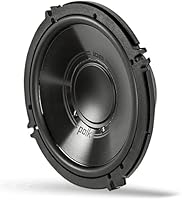
The titanium-plated 6.5″ woofer cone is the first thing worth understanding. Titanium plating stiffens the cone without adding significant mass, which means the driver moves quickly and accurately without flexing under pressure — that translates directly to cleaner midrange reproduction. The 1″ Terylene dome tweeter mounts separately and swivels, so you can angle it toward the listening position rather than wherever the door panel dictates. The outboard crossover is a genuinely thoughtful detail — epoxy-coated and housed away from the basket, it stays cooler and better protected than integrated designs. Polk's Dynamic Balance process uses laser imaging to fine-tune materials during development, reducing distortion in ways you can actually hear, and at 93 dB sensitivity, these Polk marine-grade speakers will perform without demanding a massive amplifier.

Best For

This 6.5″ component set was clearly built with boat owners and off-road drivers in mind — people who regularly deal with humidity, spray, and harsh UV exposure. The IP56 certification means it handles water splashing and jets, but it is not rated for submersion, so keep that distinction in mind before choosing an installation location. Beyond marine use, it is a strong pick for anyone upgrading from stock or budget coaxial speakers in a car who wants noticeably better stereo imaging. The system genuinely rewards pairing with a dedicated amplifier; running it off a factory head unit will leave real performance on the table. Those chasing heavy bass output will also want to look elsewhere — the priority here is midrange detail.

User Feedback

With roughly 94 ratings and a 4.5-star average, the feedback pool is smaller than you would find on mass-market speakers, so patterns are worth noting without overstating them. Buyers who installed these in marine environments consistently highlight how well the hardware holds up against humidity and spray over time. On the audio side, vocal and midrange clarity comes up repeatedly in positive reviews, especially from those upgrading out of factory speakers. The most common criticism involves installation: crossover wiring and tweeter placement take patience, and anyone unfamiliar with component system wiring should expect to spend real time on the setup. The swivel tweeter helps resolve placement issues once you are in, but the process itself is not beginner-friendly.

Pros

  • Separated tweeter and woofer design delivers noticeably better stereo imaging than typical coaxial upgrades.
  • Titanium-plated woofer cone handles dynamic material cleanly without sounding harsh at higher volumes.
  • The swivel-mounted tweeter lets you dial in the listening angle rather than accepting whatever the panel dictates.
  • Outboard crossover stays away from heat buildup at the basket, which helps preserve component longevity over time.
  • IP56 marine certification and stainless steel hardware make these Polk marine-grade speakers genuinely built for wet environments.
  • Santoprene rubber surround resists UV degradation and corrosion far better than standard foam surrounds.
  • At 93 dB sensitivity, they do not demand a monster amp to sound good — a modest four-channel will do the job.
  • Build quality feels solid and premium compared to similarly priced competitors, with hardware that inspires confidence during installation.
  • Dual mounting options — flush or surface — give installers real flexibility depending on the vehicle or vessel.
  • Polk's Dynamic Balance tuning process results in clean, natural sound reproduction across the full frequency range.

Cons

  • Installation is significantly more involved than a coaxial swap and will frustrate inexperienced DIYers.
  • Running this 6.5″ component set off a stock head unit leaves the majority of its performance potential untapped.
  • The review pool is still relatively small, so long-term reliability data is less established than with mass-market alternatives.
  • No dedicated subwoofer support means listeners who want strong low-end punch will need to budget for additional hardware.
  • Crossover placement requires planning — finding a cool, protected mounting spot adds steps to an already involved install.
  • The 2.62″ top-mount depth may cause fitment challenges in doors with shallow mounting cavities without modification.
  • One-year limited warranty is shorter than what some competing premium marine speaker brands offer.
  • Tweeter imaging is sensitive to placement; a careless install can undercut the very soundstage quality you paid for.

Ratings

The scores below reflect our AI-driven analysis of verified global buyer reviews for the Polk Audio MM6502 6.5″ Component Car Speakers, with spam, bot activity, and incentivized feedback actively filtered out before any scoring was calculated. Ratings cover everything from sound performance and marine durability to installation complexity and long-term value, giving you a transparent picture of where this component set genuinely excels and where real buyers have run into friction.

Sound Clarity
91%
Buyers consistently describe a clean, articulate midrange that makes vocals and acoustic instruments sound noticeably more lifelike than the factory speakers they replaced. At moderate to high volumes during highway driving, the separation between instruments stays intact rather than collapsing into a muddy wall of sound.
A handful of users noted that the high-frequency detail can feel slightly forward or bright in vehicles with highly reflective interiors, particularly if the tweeter is aimed directly at the listening position without any angle adjustment.
Stereo Imaging
88%
The physical separation of woofer and tweeter is the biggest reason buyers report a genuine sense of soundstage width that coaxial speakers simply cannot reproduce in the same way. Positioning the swivel tweeter toward the listening position transforms how layered recordings feel inside the cabin.
Getting the imaging right depends almost entirely on where the tweeter ends up, and buyers who installed them without thinking carefully about angle reported a flat or off-center stereo image that undersold the system significantly.
Marine Durability
86%
Owners running the MM6502 component system on center console boats and pontoons report that the hardware holds up well through full seasons of spray, sun exposure, and humidity without corrosion appearing on grilles or basket edges. The Santoprene surround in particular draws praise for staying supple rather than cracking after UV exposure.
The IP56 rating covers spray and splash but not submersion, so buyers who installed these in low-mounted positions on smaller open boats occasionally reported water ingress during rough conditions or heavy rain at anchor.
Build Quality
84%
Out of the box, these Polk marine-grade speakers feel noticeably more solid than competing products at a similar price point — stainless hardware, a rigid ABS basket, and a cone that does not flex when pressed with moderate finger pressure all contribute to a premium physical impression.
A small number of buyers flagged that the tweeter mounting cups felt slightly less refined than the woofer assembly, with fitment that required some patience to get flush and secure in certain door panel applications.
Crossover Quality
83%
The outboard crossover design earns consistent appreciation from buyers who understand what they are looking at — keeping the crossover electronics separated from the basket heat source is a genuine engineering advantage that shows up in long-term reliability and cleaner frequency transitions.
Finding a suitable mounting location for the crossover adds a step that catches some buyers off guard, particularly in compact door cavities where space behind the panel is already tight and routing the extra wiring cleanly takes real effort.
Ease of Installation
58%
42%
Buyers with prior component system experience or professional installation backgrounds describe the process as straightforward, appreciating the included mounting cups and the clear driver complement that makes wiring decisions logical rather than guesswork.
For DIYers who have only ever swapped coaxial speakers, the additional steps — crossover placement, tweeter wiring, swivel angle decisions — add significant complexity. Multiple reviewers described the process as taking far longer than expected and requiring a second attempt to get right.
Tweeter Performance
82%
18%
The Terylene dome handles cymbals, string harmonics, and sibilant consonants with a smoothness that avoids the harshness common in cheaper tweeters, and the swivel mount means careful installers can optimize the dispersion angle to suit the specific geometry of their vehicle.
Buyers who placed the tweeter without adjusting the swivel angle reported that highs felt directional and localized rather than dispersed, which is a placement issue rather than a driver flaw but still results in disappointment when not addressed during install.
Bass Response
63%
37%
For a 6.5″ component woofer without subwoofer support, this 6.5″ component set delivers reasonable low-end body on rock, jazz, and spoken-word content, with enough warmth to avoid sounding thin when paired with a competent amplifier.
Bass-heavy genres like hip-hop and EDM reveal the system's clear ceiling without a dedicated subwoofer in the mix — low frequencies feel restrained rather than authoritative, and buyers expecting standalone bass impact from these drivers alone consistently come away underwhelmed.
Amplifier Compatibility
87%
At 4 ohms and 93 dB sensitivity, the system pairs cleanly with a wide range of four-channel amplifiers without requiring anything exotic, and buyers running modest mid-range amps in the 75W to 100W RMS per channel range report excellent results without approaching thermal limits.
Buyers who attempted to run them directly off factory head units consistently reported that the output felt underwhelming and dynamically flat, which is an expected outcome given the power handling specs but still catches unprepared buyers off guard.
Value for Money
74%
26%
Buyers who pair this system with a proper amplifier and invest the installation time tend to feel the price is well justified — the combination of marine certification, Dynamic Balance tuning, and component-level imaging is difficult to match at a lower price point from a reputable brand.
Buyers who installed them without an amplifier or who underestimated the installation effort frequently felt the price was hard to justify given the results they experienced, making the perceived value highly dependent on how completely the system is set up.
Woofer Cone Performance
85%
The titanium-plated composite cone tracks transients accurately during complex passages — drum hits and plucked bass lines retain their attack without the smearing that softer cone materials tend to introduce at higher volumes or in demanding acoustic environments.
A small segment of buyers noticed that the cone can produce a faint metallic coloration on very bright recordings played at high output, which is a known trade-off of stiffer cone materials and is most perceptible on poorly mastered source material.
Mounting Flexibility
79%
21%
The inclusion of both flush mount and surface mount options via the packaged cups gives installers genuine flexibility across vehicle and marine applications, and the multiple woofer basket mounting holes accommodate a range of template configurations in non-standard door panels.
The 2.62″ top-mount depth requirement creates fitment challenges in shallower factory door cavities, particularly in compact and subcompact vehicles, where spacer rings or custom baffles become a necessity rather than an option.
Long-Term Reliability
77%
23%
Buyers who have run these Polk marine-grade speakers across multiple seasons in marine environments report that the Santoprene surround and stainless hardware hold their condition noticeably better than standard car speakers exposed to the same conditions.
With roughly 94 ratings available globally, the long-term reliability picture is still forming — there is simply not enough multi-year feedback volume to draw high-confidence conclusions about component lifespan beyond the first year of use.
Warranty Coverage
61%
39%
Polk Audio's 1-year limited warranty provides baseline protection against manufacturing defects and gives buyers a direct resolution path during the initial ownership period, which is when component failures are most likely to surface.
At just one year, the warranty falls noticeably short of what some competing marine speaker brands offer at comparable price points, and buyers making a deliberate investment in a marine installation environment tend to expect longer coverage as standard.

Suitable for:

The Polk Audio MM6502 6.5″ Component Car Speakers are an excellent match for boat owners, kayak anglers, and off-road enthusiasts who spend real time in wet or humid conditions and refuse to compromise on audio quality because of it. If you are upgrading from factory or entry-level coaxial speakers in a car or truck and want to hear a genuine improvement in stereo imaging and vocal clarity, this component set delivers that step up in a way that budget alternatives simply cannot match. Audiophile-leaning listeners who care about how instruments and voices are positioned across the soundstage — rather than just raw volume — will appreciate the separated tweeter and dedicated crossover design. The system also suits anyone already running or planning to install an external amplifier, since pairing these with clean amplified power is where the performance really opens up. Marine builders doing proper installs on center consoles, pontoon boats, or hardtop cruisers will find the IP56 splash resistance and stainless hardware genuinely practical for long-term durability.
Not suitable for:

The Polk Audio MM6502 6.5″ Component Car Speakers are not the right choice if you plan to run them straight off a factory head unit and call it a day — the design rewards amplified power, and without it, you are paying a premium price for performance you will never fully access. Bass-heavy listeners who prioritize deep low-end thump over midrange detail will also find this set underwhelming without a dedicated subwoofer in the mix, since the focus here is clarity rather than raw bottom-end output. The installation process demands more patience and know-how than a simple coaxial swap; you are dealing with separate crossover placement, tweeter wiring, and physical positioning decisions that take time to get right. Buyers who need truly waterproof speakers for submerged or near-submerged applications should look elsewhere, because IP56 covers splashing and water jets but is not a submersion rating. If you are working with a tight budget and need a straightforward plug-and-play upgrade, simpler and less expensive options will serve you better.

Specifications

  • Woofer Size: Each channel uses a 6.5″ titanium-plated composite cone woofer for stiff, low-distortion mid and bass reproduction.
  • Tweeter: A separate 1″ Terylene dome tweeter is included per channel, mounted in a swivel cup for adjustable high-frequency positioning.
  • RMS Power: Each channel handles up to 125W RMS of continuous power, making amplifier pairing the recommended installation approach.
  • Peak Power: The system is rated for 375W peak power handling across the full speaker pair under dynamic listening conditions.
  • Sensitivity: Sensitivity is rated at 93 dB measured at 1 watt and 1 meter, indicating efficient driver response without requiring extremely high amplifier output.
  • Impedance: Nominal impedance is 4 ohms, which is compatible with the majority of aftermarket amplifiers and many factory head units.
  • Frequency Range: Total frequency response spans 35 Hz to 40 kHz, covering deep low-end extension through the upper limits of audible high frequencies.
  • Crossover: An outboard 2nd-order epoxy-coated crossover network splits the signal at 3.0 kHz, directing highs to the tweeter and lows to the woofer.
  • Marine Rating: These speakers carry IP56 Ultra-Marine certification, meaning they are protected against water jets and splashing but are not rated for submersion.
  • Surround Material: The woofer uses a Santoprene rubber surround, which resists UV degradation, ozone, and moisture far better than standard foam surrounds.
  • Hardware: All mounting hardware is stainless steel, chosen specifically to resist corrosion in saltwater and high-humidity marine environments.
  • Basket Material: The woofer basket is constructed from ABS plastic, providing a corrosion-resistant and lightweight structural foundation.
  • Mounting Type: Flush mounting is the primary installation method, with surface mounting also supported via the included molded mounting cups.
  • Mount Depth: Top-mount installation requires a minimum depth of 2.62″ behind the mounting surface to clear the woofer basket.
  • Mounting Cutout: A 5″ diameter cutout is required for flush mounting the woofer into a door panel or marine surface.
  • Weight: The complete pair — including woofers, tweeters, crossovers, and hardware — weighs approximately 6 pounds total.
  • Warranty: Polk Audio covers this product with a 1-year limited warranty against manufacturing defects from the date of purchase.
  • Unit Count: Each package includes components for two full channels: two woofers, two tweeters, two crossover networks, and associated mounting hardware.
  • Dimensions: The packaged product measures approximately 4.4″ deep by 10″ wide by 8″ tall, reflecting the full contents of the retail box.
  • Technology: Polk's Dynamic Balance process uses laser scanning during development to identify optimal material combinations that minimize resonance and distortion.

Related Reviews
Stinger HC-65C 6.5″ Component Car Speakers
76%
83%
Sound Clarity
61%
Bass Performance
81%
High-Frequency Detail
58%
Volume & Loudness
84%
Installation Ease
More
JBL GTO609C 6.5″ Component Speaker System
77%
88%
Sound Clarity
71%
Bass Performance
84%
Tweeter Quality
74%
Installation Ease
86%
Compatibility with Stock Radios
More
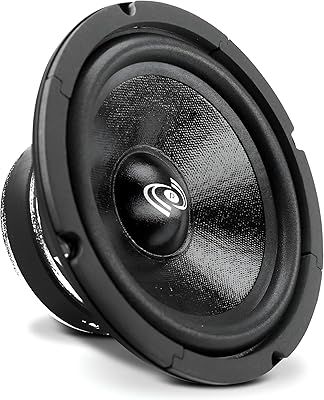
PRV Audio 6MB100-4 6.5″ Midbass Car Speakers
79%
93%
Mounting Depth & Fitment
88%
Midrange Sound Quality
71%
Bass Response
89%
Installation Ease
52%
High-Frequency Extension
More
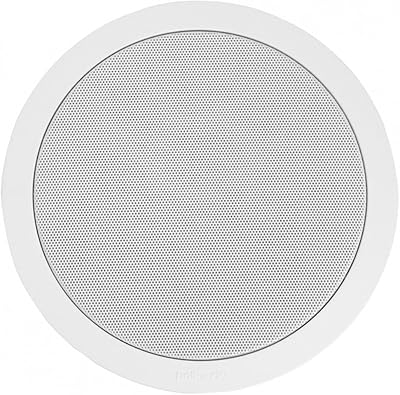
Polk Audio MC60 6.5-inch In-Ceiling Speaker
80%
88%
Sound Clarity
91%
Installation Ease
83%
Moisture Resistance
72%
Value for Money
79%
Tweeter Performance
More
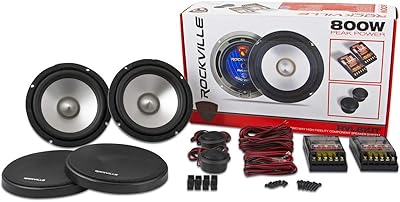
Rockville RVL6KIT 6.5″ Component Car Speakers
84%
88%
Sound Clarity
80%
Bass Performance
94%
Ease of Installation
86%
Build Quality
92%
Value for Money
More
Polk Audio DB652 6.5-inch Coaxial Speakers
77%
83%
Sound Clarity
61%
Bass Performance
88%
Build Quality
91%
Weather Resistance
86%
Installation Ease
More
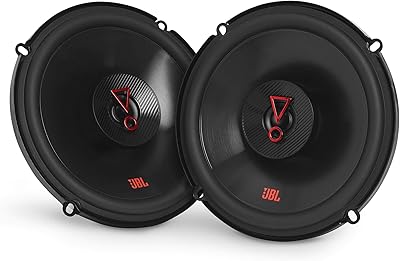
JBL Stage 3627F 6.5-inch Car Speakers
78%
88%
Sound Clarity
61%
Bass Performance
91%
Installation Ease
84%
Value for Money
73%
Build Quality
More
Pyle PDMR6 6.5″ Car Midrange Speaker
74%
88%
Value for Money
71%
Sound Quality
67%
Build Quality
62%
Power Handling
83%
Ease of Installation
More
Alpine SPR-60C 6.5″ Component Car Speakers
80%
93%
Sound Clarity
91%
Soundstage & Imaging
88%
Crossover Quality
74%
Bass Response
89%
Amplifier Compatibility
More
Cerwin-Vega V465C 6.5-inch 2-Way Car Speakers
77%
88%
Bass Performance
74%
High-Frequency Clarity
81%
Sound Quality Overall
89%
Installation Ease
86%
Compatibility
More

FAQ

You can connect them to a factory head unit, but you will not get anywhere near what the MM6502 component system is capable of. Most stock head units output somewhere between 15W and 22W RMS per channel, and these speakers are designed to perform at 125W RMS. Pairing them with a modest four-channel amplifier makes a dramatic difference in clarity, dynamics, and overall output.

They are splash-proof and water-resistant, not waterproof in the full submersion sense. The IP56 Ultra-Marine rating means they can handle direct water spray, rain, and humidity without issue, which covers the vast majority of open-boat and marine cockpit conditions. Just avoid mounting them anywhere they could be fully submerged, and you should be in good shape for years of marine use.

In a coaxial setup, the tweeter is mounted right on top of the woofer cone, so both drivers live in the same location. A component system like this one physically separates the tweeter from the woofer, allowing you to mount each in a spot that actually makes sense for your listening position. The practical result is that highs and mids come from different places in the soundstage, which creates noticeably more realistic stereo imaging — particularly for vocals and instruments.

If you have done coaxial swaps, you understand the mechanical side, but a component install adds a few steps. You will need to find a suitable location to mount the external crossover, run separate wiring to the tweeter, and make a deliberate decision about tweeter placement. It is manageable for a careful DIYer, but plan for an afternoon rather than an hour, and watch a walkthrough video specific to your vehicle before you start.

The general rule is to aim the tweeter toward your ears while keeping it as close to the woofer position as practical. Common spots are the upper corner of the door panel, the sail panel near the A-pillar, or a dedicated dash mount. The swivel cup design helps here — once you have the tweeter physically placed, you can angle it precisely without having to move the entire mounting cup.

The 6.5″ woofer fits most standard factory openings in doors and rear decks, but the 2.62″ top-mount depth is the number to check first. Some factory door cavities are shallower than that, and you may need a spacer ring to clear the window mechanism. Checking a vehicle-specific fit guide before purchasing is always the safest approach.

The crossover should be mounted somewhere cool, dry, and away from high heat sources like exhaust tunnels or amplifier chassis. Under a seat, inside a door panel cavity, or in a trunk corner are all common choices. The outboard design means it stays separated from the woofer basket, which runs warmer during high-volume listening, and the epoxy coating gives it solid moisture resistance.

These Polk marine-grade speakers are tuned for clarity and midrange accuracy rather than deep bass emphasis. They extend down to 35 Hz on paper, but in a typical car door installation, bass reinforcement from a dedicated subwoofer will make the system significantly more satisfying for any genre that relies on low-end weight. Think of these as the mid and high foundation of a properly built system, not a standalone bass solution.

The hardware choices are specifically aimed at this concern — stainless steel fasteners, a Santoprene rubber surround, and an ABS basket all resist corrosion far better than standard car speaker materials. Buyers using this 6.5″ component set in marine settings generally report solid durability, though the review sample size is still relatively limited compared to mass-market speakers. Following proper installation practices — like sealing exposed wire connections — will extend the life further.

Target an amplifier that can deliver between 75W and 125W RMS per channel at 4 ohms — you do not need to push maximum rated power to get great results, and staying under the RMS ceiling actually protects the drivers from clipping damage. A four-channel amplifier in the 75W to 100W RMS per channel range is a practical and cost-effective pairing for most installs.