Overview

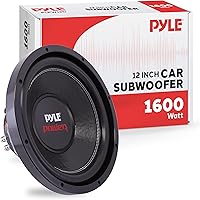
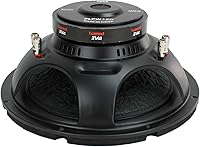
The Pyle PLPW12D 12-Inch Car Subwoofer has been a staple of the budget car audio market since 2011, and its longevity on the shelves is a fair indicator that it delivers on the basics. This is an entry-level driver — no more, no less — built for people tired of their factory speakers struggling to produce any real low end. What separates this 12-inch sub from similarly priced single-coil options is its dual voice coil design, a feature usually reserved for pricier builds. One thing to know upfront: this is a raw driver, and you will need a separate amplifier and enclosure before it makes a sound.

Features & Benefits

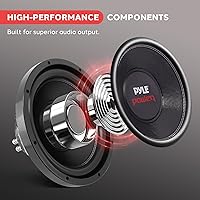
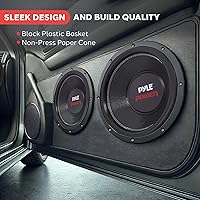
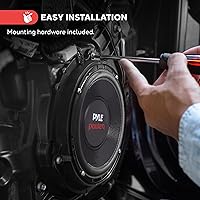
The dual 4-ohm voice coil is the standout spec here, giving you real wiring flexibility — drop it to 2 ohms to squeeze more output from your amp, or wire it to 8 ohms for a cooler, more conservative setup. The 60-ounce magnet and 4-layer coil assembly help the motor stay composed during longer, louder sessions without cooking itself. A non-pressed paper cone with a rubber surround is a durable pairing, and the bumped, vented motor adds meaningful heat dissipation under sustained play. The spring-loaded push-down terminals are a small but practical touch — clean connections without needing to fiddle with set screws.

Best For

This entry-level car subwoofer is best suited for first-time builders working within a tight budget who just want noticeably better bass than their stock system provides. Pair it with an amplifier delivering somewhere in the 300 to 600 watts RMS range, and it will perform comfortably without being pushed beyond its limits. It is also a natural fit for drop-in replacement situations — its standard 12-inch sizing makes it straightforward to swap into an existing enclosure. Secondary vehicle builds, where it makes little sense to spend heavily, are another ideal use case. Seasoned builders chasing accuracy or deep extension should look at a higher tier.

User Feedback

Across more than 5,600 ratings sitting at 4 out of 5 stars, the Pyle dual voice coil woofer earns broadly positive marks for what it costs. Buyers consistently praise its bass output relative to price and find installation approachable, even without prior experience. The recurring criticisms are worth noting: some owners report inconsistency between units, which is a known risk in the budget segment. Long-term durability reviews are mixed once the one-to-two year mark passes. A notable theme in the negative reviews is improper amp matching — many buyers underpower or overpower the sub without realizing it, which often explains reported underperformance rather than any defect in the driver itself.

Pros

  • Delivers a meaningful bass improvement over factory speakers at a budget-friendly price.
  • Dual voice coil design allows flexible 2-ohm or 8-ohm wiring to suit different amplifier setups.
  • Standard 12-inch sizing fits most existing enclosures, making it an easy drop-in replacement.
  • Spring-loaded push-down terminals simplify wiring for first-time installers.
  • Rubber surround and non-pressed paper cone hold up reasonably well under regular daily use.
  • Bumped and vented motor helps manage heat during extended listening sessions.
  • Over 5,600 buyer ratings with a 4-star average signals broadly reliable performance for the price.
  • Lightweight enough at 7.5 pounds to handle solo during installation without extra help.

Cons

  • Unit-to-unit consistency is a known issue — some buyers receive noticeably better examples than others.
  • Long-term durability becomes questionable past the one-to-two year mark based on owner reports.
  • Requires a separate amplifier and enclosure, adding real cost that first-time buyers often overlook.
  • The 1600W peak rating is a marketing ceiling, not a practical target — real-world headroom is considerably lower.
  • Amp matching is easy to get wrong here, and underpowering or overpowering significantly hurts performance.
  • Not well suited to sealed enclosures if you want deep, accurate sub-bass — output starts to thin out.
  • One-year limited warranty offers minimal protection given the mixed longevity feedback from some owners.
  • This entry-level car subwoofer cannot realistically compete with mid-range alternatives if your expectations grow over time.

Ratings

Our scores for the Pyle PLPW12D 12-Inch Car Subwoofer were generated by AI after analyzing thousands of verified global buyer reviews, with spam, bot activity, and incentivized feedback actively filtered out. The ratings reflect an honest, unweighted look at real-world performance — strengths and frustrations alike — so you can make a genuinely informed decision before buying.

Value for Money
84%
Buyers consistently point to this as one of the better-performing budget subs available without spending significantly more. For daily commuters or first-time builders, the output-to-cost ratio lands well above what most shoppers expect at this price tier.
The value calculation shifts if you factor in the cost of a compatible amp and enclosure, which are both required. A small but notable share of buyers felt the price was only justified because they already owned those components.
Bass Output
76%
24%
For hip-hop, EDM, and bass-heavy playlists on a daily drive, this 12-inch sub delivers a noticeably punchier low end than any factory speaker setup. Users who matched it correctly with an amp in the 300 to 500 watt RMS range described the impact as genuinely satisfying for the money.
The bass character skews toward punch rather than depth — extended sub-bass rumble is where it noticeably loses ground to mid-range alternatives. Users expecting tight, accurate low-frequency reproduction for acoustic or orchestral content were consistently disappointed.
Build Quality
63%
37%
The rubber surround, non-pressed paper cone, and vented motor structure give the driver a reasonably solid physical presence for its price class. Most buyers reported no visible defects out of the box, and the overall assembly felt sturdy enough for everyday in-car use.
Unit-to-unit consistency is a genuine issue that surfaces repeatedly in owner feedback — some buyers received drivers that felt noticeably flimsier or showed premature wear patterns. The build is clearly optimized for cost rather than longevity, and that tradeoff becomes more apparent over time.
Ease of Installation
88%
The spring-loaded push-down terminals drew consistent praise from first-timers who appreciated being able to wire the driver without needing special tools. Its standard 12-inch footprint also meant it dropped into most prefab enclosures without any modifications or head-scratching measurements.
Where installation frustration crept in was around the wiring configuration decisions specific to dual voice coil setups — many buyers were unsure whether to wire in parallel or series and had to seek outside guidance. The included documentation does not walk beginners through that choice in plain language.
Amp Compatibility
58%
42%
The dual 4-ohm voice coil design genuinely expands your amplifier options, letting you choose between a 2-ohm or 8-ohm final load depending on what your amp handles best. Buyers who took time to match their amp correctly reported clean, distortion-free output at moderate to high listening volumes.
The 1600W peak figure printed on the packaging caused significant confusion, with many buyers pairing the sub with grossly underpowered or overpowered amps and then blaming the driver for the results. This is one of the most common threads in negative reviews and reflects a real gap in how the product is marketed versus how it needs to be used.
Sound Clarity
67%
33%
At moderate volumes and within a well-tuned setup, the Pyle dual voice coil woofer produces clean enough bass that casual listeners will not find it harsh or muddy. For genres where thump and presence matter more than nuance, it holds up reasonably well day to day.
Push it toward higher volumes without a properly dialed amp and low-pass crossover, and distortion creeps in noticeably. It lacks the cone rigidity and motor precision of pricier drivers, so clarity degrades faster than expected once you start demanding more from it.
Long-Term Durability
54%
46%
In the short term — roughly the first year of regular use — most owners reported no mechanical failures or performance degradation. Users who ran the sub conservatively within a proper enclosure and at sensible power levels tended to report positive longevity outcomes.
Beyond the one-year mark, a meaningful share of buyers described issues including surround separation, voice coil problems, and general output degradation. The one-year limited warranty provides a narrow safety window, and replacement costs effectively reduce the initial value proposition.
Enclosure Flexibility
73%
27%
The driver's standard sizing and 5.1-inch mounting depth make it compatible with a wide range of both sealed and ported prefab enclosures readily available at most car audio retailers. Buyers who sourced an off-the-shelf ported box appreciated how little effort the fitment required.
In sealed enclosures, the sub loses some of its output advantage and the bass can feel underwhelming compared to a ported setup. It is not a particularly forgiving driver in terms of box tuning — get the enclosure volume or port length wrong, and the bass response suffers noticeably.
Heat Management
71%
29%
The bumped and vented motor design gives the driver better thermal handling than basic budget alternatives at the same price point. Users who ran long listening sessions during road trips reported no obvious signs of heat-related distortion under normal operating conditions.
When pushed hard for extended periods — particularly in warmer climates or improperly ventilated enclosures — some owners noted performance softening that they attributed to heat buildup. The 4-layer voice coil helps, but the driver is not engineered for sustained high-output punishment.
Motor Strength
74%
26%
The 60-ounce magnet gives this entry-level car subwoofer more pulling force than many similarly priced single voice coil competitors, translating to more controlled cone movement and better transient response during bass-heavy passages. Buyers noticed the difference compared to smaller-magnet budget subs they had previously owned.
Against mid-tier alternatives in the 80 to 120 dollar range, the motor's authority becomes less impressive — cone control and low-frequency composure at higher excursion levels are where the gap with better-built drivers becomes audible.
Packaging & Unboxing
78%
22%
The driver arrives in standard protective packaging that most buyers found adequate, with the unit arriving undamaged in the large majority of reported cases. Nothing flashy, but it gets the job done without the anxiety of wondering whether the cone survived shipping.
The included documentation is sparse — there is little in the box to guide a first-timer through wiring options, impedance decisions, or enclosure recommendations. Beginners will almost certainly need to supplement with online resources before they feel confident moving forward.
Consistency Across Units
49%
51%
The majority of buyers — particularly those purchasing through reputable sellers — received units that performed as expected and matched the described specifications. When the driver arrives in good condition, it generally delivers what the listing promises for its tier.
Quality control variability is the single most consistent criticism across negative reviews, with a segment of buyers receiving units that measured or sounded noticeably different from what they expected. For a driver with over 5,600 ratings, the consistency thread in the reviews is too frequent to dismiss as isolated incidents.
Warranty & Support
52%
48%
A one-year limited warranty is in place through Sound Around, and buyers who contacted support for genuine defects within that window generally reported a workable resolution process. Knowing there is a formal warranty in place gives some peace of mind for the first year.
One year is a narrow coverage window given the mixed durability reports from owners approaching the two-year mark. Buyers outside that window are fully on their own, and the warranty terms do not cover damage from misuse — a real gap given how common amp-matching errors are with this driver.

Suitable for:

The Pyle PLPW12D 12-Inch Car Subwoofer is a strong match for anyone taking their first real step into car audio on a limited budget. If you have been driving with stock speakers and want a genuine low-end upgrade without committing to a high-end system, this is a practical starting point. It works especially well for daily driver builds where you want noticeably better bass for commuting and casual listening, not competition-level output. The dual voice coil design gives beginners some useful flexibility when deciding how to wire the sub to their amp, which is a genuine advantage at this price point. It also fits neatly into replacement scenarios — if a factory or old budget subwoofer has blown and you just need a reliable 12-inch driver to drop into an existing box, this one covers the basics without requiring a significant investment.

Not suitable for:

The Pyle PLPW12D 12-Inch Car Subwoofer is not the right choice for buyers who want reference-quality bass, precise low-frequency extension, or competition-ready output. Audiophiles and experienced builders who prioritize tonal accuracy and deep sub-bass performance will find this driver limiting, as it is built to a price point and behaves accordingly. It is also a poor fit for anyone who does not already own or plan to buy a separate amplifier and enclosure — this is a raw driver, and it will not function out of the box without both. Buyers expecting a plug-and-play upgrade will likely be frustrated. If you plan to run it for several years without any replacements, the mixed long-term durability feedback from owners is worth factoring into your decision, particularly if you prefer not to revisit your setup within a year or two.

Specifications

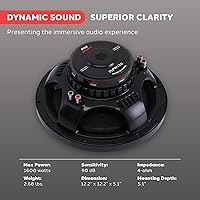
  • Driver Size: The woofer cone measures 12 inches in diameter, conforming to the standard sizing used across most aftermarket car audio enclosures.
  • Peak Power: The driver is rated for a maximum peak power of 1600W, which represents the absolute upper ceiling under ideal, momentary conditions.
  • RMS Power: Continuous RMS power handling is 800W, reflecting the sustained wattage the driver can handle during normal, real-world listening.
  • Impedance: Dual 4-ohm voice coils allow the driver to be wired to a final impedance of either 2 ohms (parallel) or 8 ohms (series) depending on the amplifier.
  • Voice Coil: A 2-inch diameter, 4-layer wound dual voice coil assembly is used to handle higher operating temperatures and improve overall motor efficiency.
  • Magnet Weight: The motor assembly is anchored by a 60-ounce magnet structure, providing strong magnetic force relative to the driver's price tier.
  • Sensitivity: Rated sensitivity is 90 dB, meaning the driver will produce 90 dB of output from one watt of power measured at one meter distance.
  • Cone Material: The cone is constructed from non-pressed paper, a traditional material chosen for its balance of stiffness and controlled flex during bass excursion.
  • Surround: A specially treated rubber foam surround encircles the cone, offering resistance to environmental fatigue and maintaining consistent spider compliance over time.
  • Motor Design: The motor features a bumped and vented construction that allows air to circulate around the voice coil gap, reducing heat buildup during extended play.
  • Mounting Depth: The driver requires a minimum mounting depth of 5.1 inches, which should be confirmed against any enclosure or door cavity before installation.
  • Overall Diameter: The total outer diameter of the driver frame measures 12.2 inches, which determines the cutout size needed in a custom or prefabricated enclosure.
  • Unit Weight: The driver weighs 7.5 pounds, making it manageable for solo installation without requiring additional support during mounting.
  • Terminals: Spring-loaded push-down speaker terminals are used in place of set-screw connectors, allowing for quick, tool-free wire connections during installation.
  • Warranty: Pyle covers this driver with a one-year limited warranty through the manufacturer, Sound Around, against defects in materials and workmanship.

Related Reviews
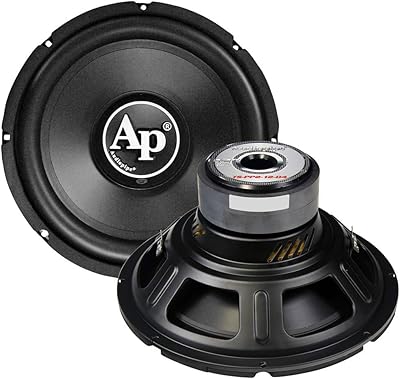
Audiopipe TS-PP2-12-D4 12-inch Car Subwoofer
70%
74%
Value for Money
71%
Bass Output
67%
Build Quality
58%
Power Handling
73%
Voice Coil Quality
More
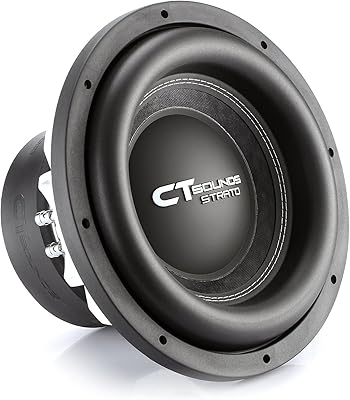
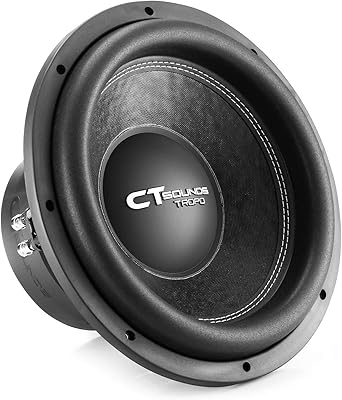
CT Sounds STRATO-12-D4 12-Inch Car Subwoofer
78%
89%
Bass Output & Volume
91%
Build Quality
88%
Thermal Durability
86%
Value for Money
74%
Installation Experience
More
CT Sounds STRATO-12-D2 12 Inch Dual 2 Ohm Car Subwoofer
86%
93%
Bass Performance
89%
Durability
91%
Power Handling
88%
Sound Clarity
84%
Ease of Installation
More
CT Sounds TROPO-12-D4 12-inch Car Subwoofer
77%
93%
Value for Money
81%
Bass Output Quality
86%
Build Quality
78%
Thermal Performance
84%
Installation Ease
More
Pyle PLW15RD 15-Inch Car Subwoofer
85%
93%
Bass Performance
88%
Sound Clarity
90%
Build Quality
82%
Ease of Installation
87%
Durability
More
Rockville Punisher 12D1 12″ Car Subwoofer
74%
88%
Build Quality
91%
Bass Output
87%
Value for Money
83%
Amplifier Compatibility
86%
Motor Performance
More
Planet Audio AC12D 12-Inch Car Subwoofer
72%
88%
Value for Money
74%
Bass Output
83%
Voice Coil Flexibility
62%
Build Quality
57%
Long-Term Durability
More
Pyramid WH12 12-Inch Car Subwoofer Speaker
84%
85%
Sound Quality
87%
Bass Performance
91%
Ease of Installation
84%
Build Quality
88%
Power Handling
More
BOSS Audio B12ES 12-Inch Powered Car Subwoofer
72%
88%
Ease of Installation
79%
Bass Output & Impact
83%
Value for Money
63%
Build Quality & Materials
81%
Remote Bass Control Usability
More
Rockville RVB12.1A 12-Inch Powered Subwoofer Enclosure
75%
91%
Ease of Installation
78%
Bass Performance
84%
Value for Money
76%
Build Quality
63%
Amplifier Reliability
More

FAQ

Yes — this is a raw driver, so it does not work on its own. You will need a separate amplifier to power it and an enclosure (either sealed or ported) to mount it in before it produces any sound. Budget for both of those components when planning your build.

An amp delivering somewhere between 300 and 600 watts RMS into the impedance you plan to wire at is a sensible match. Avoid chasing the 1600W peak rating printed on the spec sheet — that number is a momentary ceiling, not a real-world target. A stable, appropriately powered amp will get you far better results than an oversized one running at the edge of its limits.

You have two options. Wiring the two voice coils in parallel drops the final impedance to 2 ohms, which draws more current and typically produces more output if your amp is 2-ohm stable. Wiring them in series produces a final impedance of 8 ohms, which is easier on the amp but results in lower output. Check your amplifier's specifications to see which impedance it handles best before wiring.

In most cases, yes. It follows the standard 12-inch driver footprint and requires a mounting depth of 5.1 inches and a cutout diameter of approximately 12.2 inches. That said, always verify those numbers against the specific enclosure you are buying, since tolerances can vary between manufacturers.

A ported enclosure will generally get you more output and louder, punchier bass, which suits most daily-listening use cases well. A sealed box produces tighter, more controlled bass but with somewhat less overall volume. For a budget driver used mainly in a daily driver setup, ported is the more common and forgiving choice.

The most common culprit is amp gain set incorrectly, or an impedance mismatch between how the sub is wired and what the amp expects. Also confirm your head unit is sending a proper signal to the amp, and check that the subwoofer output and low-pass crossover on the amp are tuned appropriately. A lot of disappointing results trace back to setup rather than the driver itself.

Short-term performance feedback from buyers is generally solid, and most users report no issues within the first year of use. Beyond that, reports become more mixed. Running the driver within its actual power limits and keeping it in a properly sized enclosure will meaningfully extend its lifespan compared to pushing it hard or leaving it in an undersized box.

Technically you can, but it is designed and rated for car audio use. Home audio systems operate on different impedance standards and amplification setups, so compatibility is not guaranteed and would require careful matching. It is far better suited to vehicle installations where the standard mounting and wiring conventions align with what this driver expects.

A notable thread in owner feedback mentions inconsistency between units — most arrive in good shape, but a small percentage of buyers have reported issues out of the box. Buying from a seller with a clear return policy is a smart move, and testing the driver promptly after receipt gives you time to exchange it if something is off.

The Pyle dual voice coil woofer is most at home with bass-heavy genres like hip-hop, EDM, and pop where punchy, impactful low end matters more than surgical accuracy. It handles those styles well for the price. For genres like jazz or classical where natural, precise bass reproduction is important, a higher-quality driver would be a better investment.

Where to Buy