Overview

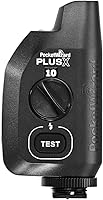
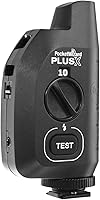
The PocketWizard PlusX Wireless Flash Trigger is PocketWizard's most approachable entry point into radio-controlled off-camera flash — and it earns its place in a lot of working photographers' kits. A radio trigger sits between your camera and your flash, firing the light the moment you press the shutter, reliably and without a wired connection. The PlusX sits below the Plus III and MiniTT1 in the lineup, but it runs on the same proven radio platform. What makes it genuinely useful day-to-day is the auto-sensing transceiver design — the unit figures out whether it should transmit or receive based on what it's connected to. No mode switches, no guesswork. This is not a feature-heavy unit; it's a dependable, no-fuss workhorse built to just work.
Features & Benefits

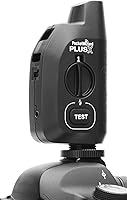
The 10-channel dial is one of those small details that matters more than it sounds — on a busy wedding or commercial set where multiple photographers are triggering flashes, switching channels quickly keeps you from firing everyone else's lights. Each unit acts as both transmitter and receiver, so you can deploy them interchangeably rather than buying separate TX and RX units. The PlusX is also compatible with all standard-channel PocketWizard gear running Legacy Firmware, which gives existing users a low-cost way to expand. The Auto-Relay Mode is a neat bonus: with just three units, you can trigger a remote camera in sync with your flashes. At 3.2 ounces, carrying four or five in a bag barely registers.

Best For

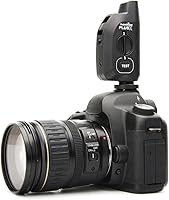
This radio trigger makes the most sense for photographers working with manual flash setups who want reliability without complexity. It's a natural fit for studio portrait work, event photography, and location shoots where consistent sync matters far more than remote power control. Wedding photographers in particular tend to appreciate gear that just fires every single time — this PocketWizard unit delivers that. If you're already using older PocketWizard gear and want to add units affordably, the PlusX slots right in. That said, if TTL automation or high-speed sync is part of your workflow, this isn't the right tool — the PlusX is strictly manual, and that's a deliberate design choice, not an oversight.

User Feedback

Among photographers who've put this radio trigger through its paces, the word that comes up most is reliability. Users consistently report minimal misfires across long shoots, and the straightforward channel dial gets particular praise compared to trigger systems that bury settings in menus or apps. Durability feedback is mostly positive — these units travel well and hold up through regular professional use. On the critical side, Canon and Nikon shooters who rely on TTL or HSS often find the PlusX too limited for their needs. A handful of budget-conscious buyers also note that cheaper third-party triggers exist at lower price points. But for photographers who prioritize consistent performance over advanced features, the consensus is that the price is well-earned.

Pros

  • Fires consistently across long shoots — misfires are genuinely rare, even in demanding environments.
  • The auto-sensing transceiver design means one unit works as both transmitter and receiver without any manual switching.
  • Ten clearly marked channels are selectable in seconds, which matters when working around other photographers on busy sets.
  • Lightweight at 3.2 ounces — carrying four or five units in a kit bag adds almost no bulk.
  • Existing PocketWizard users can integrate the PlusX directly into their current setup as a cost-effective expansion unit.
  • Auto-Relay Mode is a practical bonus for small crews needing remote camera triggering alongside flash sync.
  • Build quality is solid — users report these units surviving years of travel and heavy professional use.
  • Intuitive physical dial is faster and less error-prone than app-controlled or menu-driven trigger systems.
  • Rated 4.5 out of 5 stars across hundreds of real buyer reviews — consistently strong long-term satisfaction.

Cons

  • No TTL support — photographers who depend on automatic flash metering will need a different trigger entirely.
  • High Speed Sync is not available, ruling this radio trigger out for outdoor fill-flash work at fast shutter speeds.
  • No remote power control means you have to physically adjust each flash head when changing output levels.
  • Legacy Firmware compatibility requirement can trip up advanced PocketWizard users with newer ControlTL-based gear.
  • The price point is harder to justify for hobbyists who only trigger a single flash occasionally.
  • No built-in display or indicator feedback — there is no easy visual confirmation that units are communicating.
  • Third-party alternatives exist at significantly lower cost for photographers who only need basic manual triggering.
  • Not suited for photographers who want a single trigger system to handle both manual and TTL shooting scenarios.

Ratings

The PocketWizard PlusX Wireless Flash Trigger has been scored across 12 performance categories by our AI system after analyzing verified buyer reviews worldwide — filtering out incentivized, bot-generated, and spam submissions to surface what real photographers actually experience. Scores reflect both where this radio trigger genuinely excels and where it falls short for certain shooting styles, with no category softened to protect the overall picture.
Trigger Reliability
94%
Wedding and event photographers repeatedly describe this as the trigger they reach for when misfires simply aren't an option. Across hundreds of verified reviews, users report consistent sync through entire multi-hour shoots with virtually no dropped signals, even in environments with moderate radio interference.
A small number of users report occasional sync issues in venues with heavy wireless congestion, such as large convention centers. These cases appear to be edge scenarios rather than a product defect, but they're worth noting for photographers working in dense RF environments regularly.
Ease of Use
91%
The physical channel dial is one of the most consistently praised design choices — photographers switching channels mid-shoot can do it by feel alone without looking away from their camera. There's no pairing process, no app required, and no menu to navigate; you plug it in, set the channel, and it works.
New users occasionally find the auto-sensing transceiver concept slightly confusing at first, since there's no clear TX or RX indicator on the unit. Once understood, it becomes an asset, but the learning curve for complete beginners can cause initial frustration during setup.
Build Quality
83%
Most long-term owners describe the PlusX as surprisingly durable for a lightweight unit — surviving kit bag abuse, temperature changes on location shoots, and years of regular professional use without functional degradation. The build doesn't feel precious, which is appropriate for a workhorse tool.
The plastic housing doesn't inspire premium confidence when held alongside higher-end triggers, and some users note the hot shoe foot can feel slightly loose on certain flash units. Nothing that affects performance, but it's noticeable for photographers used to metal-bodied gear.
Range & Signal Strength
87%
Photographers using the PlusX on outdoor location shoots and large studio spaces consistently report reliable triggering at distances that would challenge optical systems. The radio frequency signal handles light obstructions — furniture, softboxes, human subjects — without the line-of-sight dependency that infrared triggers demand.
PocketWizard doesn't publish a tested range figure specifically for the PlusX, which leaves some buyers uncertain about its limits before purchasing. A handful of users working in very large outdoor spaces or across long distances report that reliability becomes less consistent at extreme range.
Compatibility
79%
21%
For photographers already embedded in the PocketWizard ecosystem, the PlusX integrates cleanly with older standard-channel units including the Plus II, making it a cost-effective way to add transceivers without replacing existing gear. The broad compatibility with third-party flash systems via sync port also adds practical flexibility.
The Legacy Firmware requirement creates real friction for users with newer ControlTL-based PocketWizard gear, and this isn't always clearly communicated at point of purchase. Canon and Nikon shooters expecting TTL compatibility will also find this unit fundamentally incompatible with their advanced flash workflows.
Value for Money
72%
28%
Photographers who shoot professionally consistently describe the price as reasonable given PocketWizard's track record — the reliability premium over budget third-party triggers is tangible in paid work scenarios where a misfire has direct consequences. Buying multiple units for a multi-flash setup remains feasible without extreme cost.
For hobbyists or photographers just experimenting with off-camera flash, the price is harder to justify when budget-friendly alternatives have improved meaningfully in recent years. Those who primarily need a single-light trigger for occasional use often feel the cost-to-feature ratio doesn't work in the PlusX's favor.
Feature Set
61%
39%
The Auto-Relay Mode is a genuinely useful feature for photographers running remote camera setups, allowing synchronized remote camera and flash triggering with just three units — something that would otherwise require additional equipment or cabling. For manual flash photographers, the ten-channel system covers every practical scenario.
Compared to competing triggers at similar price points that now offer TTL pass-through, remote power control, or HSS support, the PlusX's feature list looks lean. Photographers who want to grow into more advanced techniques will find themselves needing to replace these units rather than build on them.
Setup Speed
88%
Experienced photographers report that getting a new PlusX operational takes under a minute — plug into the flash, plug into the camera, match channels, done. There's no firmware to update before first use in standard configurations, which matters when you're setting up quickly before a shoot.
Users running mixed PocketWizard systems with different firmware versions occasionally run into compatibility checks that slow down setup. First-time buyers who aren't aware of the Legacy Firmware requirement can lose significant time troubleshooting what appears to be a faulty unit.
Portability
93%
At 3.2 ounces and roughly the size of a thick pen, this PocketWizard unit barely registers in a gear bag. Location photographers who carry multiple units to handle multi-light setups appreciate that adding two or three extra triggers doesn't meaningfully affect pack weight or space.
The slim profile, while great for portability, means the unit can occasionally feel awkward to grip when connecting cables in low light or tight spaces. There's no dedicated carrying case included, so units need to be managed carefully in bags to avoid connector damage over time.
Durability Over Time
81%
19%
Multiple reviewers with several years of ownership report their units still perform identically to when new, which is a strong endorsement for a trigger that sees regular professional use. The absence of complex electronics or moving parts beyond the channel dial contributes to long-term reliability.
The AA battery compartment latch on some units shows wear after extended use, becoming slightly loose over time. A small number of long-term users also report that the sync port connection can become intermittent after years of repeated cable insertion and removal.
Interference Resistance
76%
24%
In typical studio and venue environments, the radio frequency system handles background wireless noise — WiFi networks, Bluetooth devices, other photographers — without meaningful impact on sync performance. The ten-channel options give photographers a practical way to avoid conflicts when working in shared spaces.
Densely crowded environments like large convention halls or trade shows with dozens of active wireless devices can create noticeable triggering inconsistency for some users. Unlike more advanced trigger systems, the PlusX offers no frequency hopping or advanced interference mitigation beyond manual channel selection.
Manual Flash Control
89%
For photographers who set flash power at the unit and work from there — a workflow common in studio portraiture and controlled location shoots — the PlusX handles manual triggering with complete consistency. It does exactly what manual flash shooters need without adding unwanted complexity to the equation.
There is no way to adjust flash power output remotely from the camera position, which means physically walking to each light for every power change. In dynamic shoots where lighting adjustments happen frequently, this workflow limitation adds real time and interrupts shooting momentum.

Suitable for:

The PocketWizard PlusX Wireless Flash Trigger is the right call for photographers who shoot manual flash and simply need their triggers to fire reliably every single time. That covers a wide range of shooters — from studio portrait photographers building out a multi-light setup, to wedding and event photographers who can't afford misfires during a first dance or a ceremony. If you're already invested in the PocketWizard ecosystem and want to add units without spending a lot, the PlusX slots in cleanly as an affordable expansion option. Location shooters who juggle multiple light sources will also appreciate the Auto-Relay Mode, which lets a small crew trigger a remote camera in sync with flashes using just three units. Essentially, anyone whose work revolves around dependable manual flash control — not remote power adjustment or TTL automation — will find this radio trigger punches well above its price point.
Not suitable for:

The PocketWizard PlusX Wireless Flash Trigger is a deliberate trade-off: it strips away advanced features in exchange for simplicity and reliability, and that makes it a poor fit for certain working styles. Canon and Nikon photographers who rely on Through-The-Lens (TTL) metering or High Speed Sync (HSS) for fast-paced natural light work will find this unit simply doesn't support those modes — no workaround exists. Photographers who want to adjust flash power from the camera position without walking over to each light will also hit a wall, since this PocketWizard unit has no remote power control whatsoever. It's worth noting the Legacy Firmware compatibility requirement — advanced PocketWizard users running newer ControlTL-based gear should verify compatibility before buying, as mixing firmware generations can cause issues. Budget shooters on a tight limit may also find third-party radio triggers offer similar basic functionality at a fraction of the cost, though reliability and build quality will vary.
Specifications

  • Brand: Manufactured by MacGroup under the PocketWizard brand, a long-established name in professional radio flash triggering.
  • Model Number: The official model number is 801-129, also referenced by its product designation as the PlusX.
  • Product Type: This unit is a wireless radio flash trigger and auto-sensing transceiver compatible with standard-channel PocketWizard systems.
  • Dimensions: The unit measures 2 x 0.25 x 4 inches, making it slim enough to sit flat against a flash hot shoe without adding significant bulk.
  • Weight: Each unit weighs 3.2 ounces, so carrying multiple units in a kit bag has minimal impact on overall load.
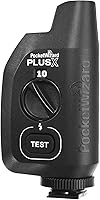
  • Channels: Ten standard channels are available, selectable via a physical rotary dial on the unit body.
  • Trigger Mode: The auto-sensing transceiver circuit automatically switches between transmitter and receiver modes based on connection context, requiring no manual input.
  • Connectivity: Communication is handled entirely via radio frequency, which provides stronger wall and obstacle penetration compared to optical triggering systems.
  • Compatibility: Works with all standard-channel PocketWizard transmitters and receivers running Legacy Firmware; ControlTL firmware compatibility should be verified before purchase.
  • Auto-Relay Mode: A built-in Auto-Relay Mode enables synchronized remote camera triggering alongside flash firing using a minimum of three units.
  • Color: Available in black with a compact, utilitarian form factor designed for professional field use.
  • Compatible Devices: Designed for use with cameras and external flash systems that accept standard 3.5mm sync or hot shoe connections.
  • Launch Date: The PlusX was first made available in March 2013 and has remained in active production since.
  • Manufacturer: Distributed and supported by MacGroup, the North American distributor for PocketWizard products.
  • BSR Ranking: Ranked #19 in the Photographic Lighting Remote Triggers category on Amazon at the time of review compilation.
  • Ratings: Holds a 4.5 out of 5 star average rating based on 472 customer reviews on Amazon.
  • Discontinuation: As of the most recent product data available, this unit has not been discontinued by the manufacturer.

Related Reviews
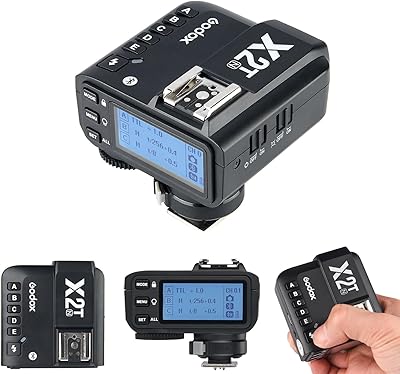
Godox X2T-N Wireless Flash Trigger Transmitter
81%
91%
Wireless Reliability
87%
TTL Accuracy
84%
High-Speed Sync Performance
79%
Build Quality
88%
Ease of Use
More
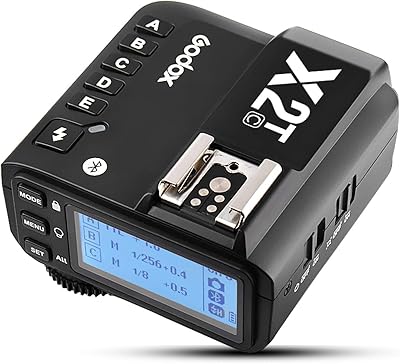
Godox X2T-C TTL Wireless Flash Trigger for Canon
86%
91%
Performance
88%
Ease of Use
85%
Reliability
89%
Bluetooth Control
75%
Signal Range
More
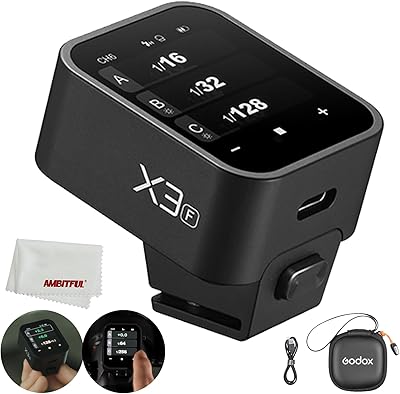
Godox X3-F TTL Wireless Flash Trigger for Fuji
88%
91%
Ease of Use
89%
Wireless Range & Reliability
87%
Battery Life
94%
Charging Speed
85%
Sync Speed & Consistency
More
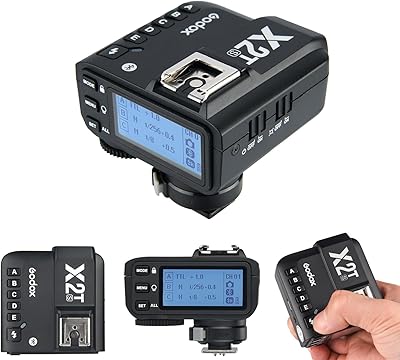
Godox X2T-S TTL Wireless Flash Trigger Transmitter for Sony Cameras
86%
91%
Wireless Range
88%
Ease of Use
75%
Bluetooth Connectivity
80%
App Control
92%
Flash Sync Speed
More
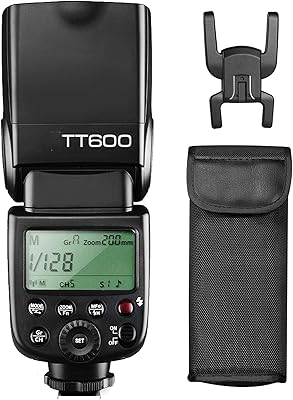
Godox TT600 Wireless Flash Speedlite
85%
89%
Performance & Power
84%
Build Quality
90%
Battery Life
87%
Wireless Range
91%
Compatibility
More
Yongnuo YN560 IV Wireless Flash Speedlite
75%
93%
Value for Money
88%
Wireless Reliability
74%
Build Quality
86%
Flash Output Power
89%
Ease of Setup
More
Arteck HW192 Wireless Keyboard and Mouse Combo
78%
78%
Build Quality
72%
Typing Experience
63%
Mouse Comfort & Ergonomics
81%
Battery Life
69%
Wireless Connectivity
More
Hourglass Vanish Flash Highlighting Stick Rose Gold Flash
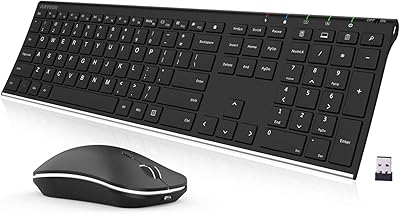
87%
91%
Buildable Coverage
88%
Ease of Application
85%
Natural Finish
87%
Suitability for Medium-Deep Skin Tones
94%
Travel-Friendliness
More
Corsair Flash Voyager 256GB USB 3.0 Flash Drive
89%
88%
Performance
93%
Durability
90%
Compatibility
72%
Speed (Write)
89%
Water Resistance
More
RØDE Wireless GO II
RØDE Wireless GO II
84%
92%
Audio Clarity
86%
Signal Reliability
97%
Internal Backup Recording
94%
Portability & Weight
91%
Setup Speed & Ease of Use
More

FAQ

One unit handles both roles. The auto-sensing circuit detects whether it's plugged into a camera or a flash and configures itself accordingly, so a single PlusX works as either a transmitter or receiver depending on where you use it. This makes expanding your kit straightforward — just buy more units.

Yes, as long as both devices are running standard-channel Legacy Firmware, they will communicate without issues. The PlusX was designed to fit into the existing PocketWizard ecosystem, so mixing it with older Plus II units on the same channel works reliably.

No, it does not. This unit is strictly a manual trigger — it fires the flash but does not communicate exposure data between the camera and flash. If TTL or HSS is part of your workflow, you'll need to look at the MiniTT1 or FlexTT5 instead.

At minimum, two — one connected to your camera's hot shoe or PC sync port as the transmitter, and one connected to your flash as the receiver. For a basic one-light setup, that's all you need.

PocketWizard doesn't publish a specific range figure for the PlusX, but real-world users regularly report reliable triggering well beyond what optical triggers can manage — typically across large studios, outdoor venues, or through light obstructions. Range will vary based on environment and potential radio interference nearby.

Yes, that's exactly what Auto-Relay Mode is designed for. With three units — one on your primary camera, one at the remote camera position, and one on a flash — the system can fire both the remote camera and connected flash in sync. It's a practical feature for multi-point setups without needing additional cabling.

The PlusX runs on a single AA battery. Battery life is generally strong given how little power radio triggering requires during a shoot — most photographers report getting through multiple full sessions before needing a replacement, though it's always good practice to carry a spare.

It works with both. As long as your monolight has a standard 3.5mm or 6.35mm sync port, you can connect the PlusX via a sync cable and trigger it wirelessly. Hot shoe flashes connect via the hot shoe foot. It's a versatile setup that covers most studio and location lighting equipment.

Probably not as your primary trigger. This PocketWizard unit has no TTL communication capability, so your Canon flash would fire only in manual mode. If manual flash is acceptable for part of your work, it could serve as a secondary or backup trigger, but for TTL-dependent event shooting it would be limiting.

The core difference is reliability and ecosystem integration. Budget radio triggers have improved considerably, but the PlusX benefits from PocketWizard's long track record of consistent performance in professional environments where a misfire has real consequences — weddings, commercial shoots, editorial work. If you're experimenting with off-camera flash casually, a budget trigger may be sufficient. If you're putting it to work professionally, the PlusX's dependability tends to justify the price difference over time.