Overview

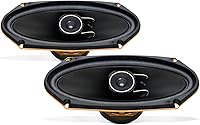
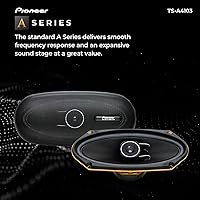
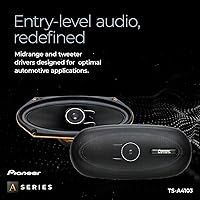
The Pioneer TS-A4103 4x10″ 2-Way Car Speakers occupy a practical sweet spot in the car audio market — not a budget throwaway, not a high-end splurge, but a solid mid-range upgrade for drivers who are done tolerating tinny factory sound. The 4x10″ dimension is worth calling out: it's a less common size found mainly in older American cars and trucks, so checking your vehicle's speaker locations before buying is genuinely important. Pioneer's A-Series has been around since 2003, which tells you something — products that stick around that long tend to earn their place. The two-way coaxial design keeps installation simple, with a single driver unit replacing your stock speaker without rewiring headaches.

Features & Benefits

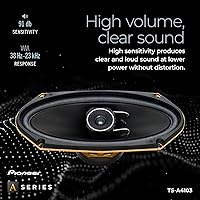
The headline spec you'll see everywhere is 120W, but that's the peak figure — 30W RMS is the number that actually matters for everyday listening. That's the continuous power the speakers can handle without strain, and it's more than enough when paired with a standard factory head unit. Speaking of which, the 91 dB sensitivity rating is a genuine advantage here: these speakers get noticeably loud without needing an external amplifier. The 1.63″ tweeter handles treble duties, adding crispness to vocals and higher-frequency instruments that stock speakers typically smear. With 4-ohm impedance, compatibility with virtually any head unit is a non-issue, and the flush-mount hardware included in the box covers most DIY installations without a trip to the parts store.

Best For

These Pioneer coaxial speakers are a natural fit for anyone with a vehicle that has factory 4x10″ openings — think late-model American sedans, classic muscle cars, or older trucks where this rectangular slot is baked into the door or rear deck. If you're a first-time car audio upgrader who doesn't want to deal with crossovers, separate tweeters, or custom mounting, the plug-and-play nature of the TS-A4103 pair is genuinely hard to beat at this price. They also suit listeners who stream music through a phone and primarily care about cleaner mids and sharper highs rather than ground-shaking bass. If heavy low-end is your priority, plan to add a subwoofer — the 4-inch woofer has physical limits that no speaker in this class can overcome.

User Feedback

Across more than 300 ratings, the pattern is pretty consistent: buyers are impressed by how much clearer their music sounds after swapping out factory speakers, with particular appreciation for improved vocal clarity and a more defined treble. Installation gets mentioned often — people are relieved that the included hardware actually gets the job done without sourcing extra parts. The honest criticism worth noting: bass is thin. That's not a knock on build quality, it's physics — a 4-inch driver in a coaxial format isn't going to rattle windows. A smaller number of buyers also wish the packaging made the 30W RMS figure more prominent rather than leading with the peak wattage. Durability reports are solid, which shouldn't be surprising given how long these 4x10″ car speakers have been on the market.

Pros

  • Direct drop-in fit for vehicles with factory 4x10″ speaker slots — no custom mounting needed.
  • The 91 dB sensitivity rating delivers strong volume even from a low-powered stock head unit.
  • Clarity jump over factory speakers is noticeable immediately, especially in the midrange and treble.
  • Included hardware — screws, speaker wire with quick-slides — means most DIY installs need nothing extra.
  • 4-ohm impedance works with virtually every aftermarket or OEM head unit on the market.
  • These Pioneer coaxial speakers have been available since 2003, a quiet indicator of consistent performance and parts availability.
  • At this price tier, the build quality holds up well according to long-term owners.
  • The two-way coaxial design keeps installation simple without sacrificing sound separation between highs and mids.

Cons

  • Bass extension is genuinely limited — a subwoofer is almost essential if you listen to bass-heavy genres.
  • The 120W peak figure is largely a marketing number; the practical RMS rating is 30W, which some buyers find misleading.
  • The 4x10″ format is a niche size — owners of newer or non-American vehicles will likely find no fitment match.
  • These 4x10″ car speakers won't satisfy listeners who want stereo imaging or staging beyond what a coaxial driver can offer.
  • No amplifier included or implied — buyers expecting plug-in power beyond a stock unit may need to budget separately.
  • At louder volumes close to their power ceiling, some users report a slight loss in clarity and tightness.
  • The warranty is limited to one year, which feels short given the speaker's positioning as a long-term factory replacement.
  • Tweeter is integrated and non-adjustable, so you cannot change the angle or position for improved soundstage.

Ratings

Our AI analyzed verified global user reviews for the Pioneer TS-A4103 4x10″ 2-Way Car Speakers, actively filtering out incentivized, bot-generated, and duplicate submissions to surface what real buyers actually experience. The scores below reflect a transparent picture of where these 4x10″ car speakers genuinely deliver and where they fall short — no spin, no padding.

Sound Clarity
83%
Buyers consistently report a striking improvement in vocal clarity and midrange definition compared to factory speakers — the kind of difference you notice immediately on the first drive. Acoustic guitars, spoken-word podcasts, and pop vocals all come through with noticeably more crispness and detail.
At higher volumes, some listeners detect a slight compression in the upper midrange that softens fine detail. The clarity gains are most pronounced at moderate listening levels; push the TS-A4103 pair hard and the refinement begins to plateau.
Bass Response
51%
49%
For spoken content, acoustic music, and lightly produced tracks, the low-mid foundation is adequate and avoids the hollow, papery quality of most stock speakers. Listeners who keep a balanced EQ and don't chase deep sub-bass report a reasonably full sound for casual listening.
The 4-inch woofer simply cannot generate meaningful low-end extension — bass-heavy genres like hip-hop, EDM, or orchestral music reveal this limitation quickly. Without a dedicated subwoofer, these 4x10″ car speakers will leave bass-focused listeners dissatisfied regardless of EQ adjustments.
Treble & Highs
79%
21%
The 1.63″ integrated tweeter handles high-frequency reproduction noticeably better than typical factory units, adding shimmer to cymbals, presence to female vocals, and sparkle to stringed instruments. For everyday streaming and radio, the treble output is one of the TS-A4103 pair's more consistent strengths.
The tweeter position is fixed within the coaxial assembly, so there is no way to angle or adjust it for improved soundstage or off-axis listening. A handful of listeners with very treble-sensitive ears find the highs slightly sharp at elevated volumes.
Volume & Loudness
86%
The 91 dB sensitivity rating translates into real-world loudness without needing an amplifier — these Pioneer coaxial speakers get genuinely loud off a stock head unit, which surprises many first-time installers. Highway driving, open windows, and moderate road noise are all handled without straining the system.
At the upper end of the volume range — especially without an amp — dynamic compression becomes noticeable and the sound loses some of its openness. The 30W RMS ceiling is modest, and buyers who regularly listen at maximum volume may find performance falls short of their expectations.
Installation Ease
91%
This is one of the most praised aspects across all user feedback — the included hardware kit with quick-slide speaker wire connectors and self-tapping screws genuinely covers most installs without a trip to the hardware store. DIYers with zero prior experience routinely report completing the swap in under an hour.
The 4x10″ format is niche enough that some vehicles require slight panel modification or adapter brackets not included in the box. Buyers who assume any rectangular speaker will fit their slot have occasionally run into sizing surprises.
Vehicle Compatibility
63%
37%
For vehicles that genuinely use the 4x10″ slot — a range of older American sedans, certain trucks, and classic muscle cars — these speakers are a clean, no-modification drop-in replacement that simplifies the entire upgrade process.
The 4x10″ dimension is far less common than 6.5-inch or 5x7-inch formats, which means a significant portion of buyers have to verify fitment carefully before purchasing. Owners of modern vehicles or import brands will almost certainly find these speakers incompatible with their factory speaker locations.
Build Quality
74%
26%
For a mid-range speaker that has been on the market since 2003, long-term durability feedback is reassuringly solid. Most buyers who have run these Pioneer coaxial speakers for two or more years report no structural failures, rattles, or cone degradation under normal use.
The materials feel functional rather than premium — the cone and surround don't inspire the same confidence as higher-end alternatives when handled out of the box. Buyers expecting build quality that matches the peak wattage figures listed on the packaging may feel a slight disconnect.
Value for Money
82%
18%
Measured against the realistic performance tier — a straightforward factory replacement with clear sound improvements — the TS-A4103 pair delivers a fair return on investment for the price. Buyers who set appropriate expectations report feeling the purchase was well worth it.
The 120W peak power marketing creates inflated expectations that the 30W RMS real-world performance cannot always meet, which skews perceived value for buyers who didn't research specifications beforehand. If you compare strictly on paper specs, more budget options can look competitive.
Midrange Accuracy
77%
23%
The midrange is arguably where these 4x10″ car speakers perform most consistently — voices, acoustic instruments, and dialogue all come through with a warmth and presence that is a clear step up from factory drivers. Daily commuters listening to podcasts and talk radio find the midrange particularly satisfying.
The coaxial design places physical limits on midrange separation and imaging; there's no true stereo staging achievable from a single integrated driver. Listeners who have experienced component speaker setups will notice the difference in depth and instrument separation.
Power Handling Transparency
57%
43%
For buyers who research the RMS figure (30W) before purchasing, the actual performance aligns well with expectations — the speakers handle their rated continuous power cleanly without distortion at moderate volumes.
The heavy marketing emphasis on the 120W peak figure is a recurring frustration in user feedback. A meaningful number of buyers feel misled when real-world loudness and headroom don't match the headline spec, and this transparency gap affects overall satisfaction more than the speakers themselves.
Included Accessories
81%
19%
Including both speaker wire with quick-slide connectors and self-tapping screws is a genuinely thoughtful touch that sets these Pioneer coaxial speakers apart from competitors who ship bare units. For first-time installers especially, having everything in one box removes a real friction point.
The speaker wire lengths — 13″ each — are adequate for direct connection but leave no slack for routing or future repositioning. Buyers working with longer wire runs or unusual mounting locations will need to source additional wiring separately.
Distortion at High Volume
66%
34%
At moderate listening levels — which covers the majority of daily commute use — distortion is minimal and the audio remains clean and composed. Buyers who keep volumes below the 80% mark on a factory head unit rarely encounter any strain.
Sustained high-volume listening reveals the limits of the 30W RMS ceiling: the sound begins to harden and loses fine detail, with occasional harshness in the upper midrange. This is not unusual for the price point, but it is a real limitation for drivers who regularly listen loud.
Longevity & Reliability
78%
22%
The model's uninterrupted commercial presence since 2003 is a quiet but meaningful indicator of consistent field reliability. Long-term owners report years of trouble-free performance under normal car audio use, which is more than can be said for many competitors in this tier.
The one-year limited warranty is the weakest part of the reliability story — for a speaker positioned as a long-term factory replacement, a single year of manufacturer coverage feels inadequate. Buyers in harsher climates or high-vibration vehicles may have legitimate concerns about longevity beyond the warranty window.

Suitable for:

The Pioneer TS-A4103 4x10″ 2-Way Car Speakers are purpose-built for a specific kind of buyer: someone with a vehicle that already has 4x10″ factory speaker slots — common in older American sedans, classic muscle cars, and certain trucks — who wants a meaningful sound upgrade without pulling apart their dash or hiring an installer. If you're running a stock head unit and have no plans to add an amplifier, the 91 dB sensitivity rating means these speakers will perform well right out of the box. First-time car audio upgraders will appreciate the coaxial design, which eliminates the need to mount separate tweeters or wire in an external crossover. Casual listeners who stream music via Bluetooth and mainly care about hearing cleaner vocals, crisper highs, and less distortion at moderate volumes will find the TS-A4103 pair genuinely satisfying. For anyone who simply wants their car to sound noticeably better than factory without overthinking it, this is a straightforward, well-supported choice.

Not suitable for:

The Pioneer TS-A4103 4x10″ 2-Way Car Speakers are not the right call if deep, powerful bass is central to how you enjoy music. The 4-inch woofer is physically constrained — no amount of power will make it produce the low-end response that a dedicated subwoofer or larger speaker can achieve. Drivers with modern vehicles that use 6.5-inch, 5x7-inch, or other common speaker formats will also find these 4x10″ car speakers simply won't fit without custom fabrication, making them a non-starter for that audience. Audiophiles or enthusiasts running an aftermarket amplifier and expecting component-level separation and staging will likely outgrow these coaxial speakers quickly. If you're already at a point where you're comparing frequency response curves and tweeter materials, these speakers are aimed at a different buyer entirely. And anyone who consistently pushes their system at high volume for extended periods should be aware that the 30W RMS ceiling is modest — running them hard near their limits over time is not where they shine.

Specifications

  • Speaker Size: These are rectangular 4x10″ flush-mount speakers designed to replace factory-installed units of the same dimension.
  • Design: Two-way coaxial configuration integrates a woofer and tweeter into a single driver unit for simplified installation.
  • Peak Power: Maximum peak power handling is rated at 120W per speaker, though this figure represents short-burst tolerance rather than continuous output.
  • RMS Power: Continuous RMS power handling is 30W per speaker, which is the practical figure relevant for everyday listening and amplifier matching.
  • Sensitivity: Sensitivity is rated at 91 dB, meaning these speakers produce strong volume output even when driven by a low-powered factory head unit.
  • Impedance: Nominal impedance is 4 Ohm, ensuring compatibility with both OEM and aftermarket head units without additional hardware.
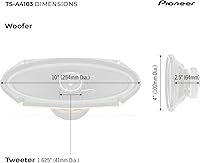
  • Woofer Diameter: The main woofer cone measures 4 inches in diameter and handles low-to-mid frequency reproduction.
  • Tweeter Diameter: The integrated tweeter measures 1.63″ in diameter and is responsible for high-frequency detail including vocals and cymbals.
  • Frequency Response: The stated frequency response range spans 38 Hz to 23 kHz, covering a broad audio spectrum from bass through extended treble.
  • Signal-to-Noise: Signal-to-noise ratio is rated at 90 dB, indicating clean audio output with minimal background noise or interference.
  • Connectivity: These speakers use a wired coaxial connection and are not compatible with any wireless audio input methods.
  • Audio Output: Audio output mode is stereo 2.0, with one speaker handling the left channel and the other handling the right channel.
  • Dimensions: Overall unit dimensions are 3″ deep x 10″ wide x 4.25″ tall, matching the rectangular footprint of standard factory 4x10″ speaker cutouts.
  • Weight: Each speaker pair weighs approximately 1.81 pounds combined, making handling and installation physically straightforward.
  • Included Items: The package includes two speakers, two 13″ lengths of speaker wire with quick-slide connectors, eight self-tapping screws, and a warranty card.
  • Mounting Type: Flush-mount installation positions the speaker flush with the door panel or rear deck surface using the included self-tapping screws.
  • Water Resistance: These speakers carry no water resistance rating and are not suitable for open-air or moisture-exposed environments.
  • Warranty: Pioneer covers the TS-A4103 pair with a one-year limited manufacturer warranty against defects in materials and workmanship.

Related Reviews
Pioneer TS-G4644R 4x6″ 2-Way Coaxial Car Speakers
85%
90%
Value for Money
88%
Ease of Installation
83%
Sound Quality
74%
Bass Performance
87%
Build Quality
More
Pioneer TS-F1634R 6.5″ Coaxial Car Speakers
76%
78%
Sound Quality
61%
Bass Performance
74%
Treble Clarity
93%
Installation Ease
89%
Compatibility
More
Pioneer TS-A652C 6.5″ 2-Way Component Car Speakers
78%
88%
Sound Clarity & Midrange Quality
67%
Bass Response
79%
Tweeter Performance
83%
Installation Ease
74%
Vehicle Compatibility
More
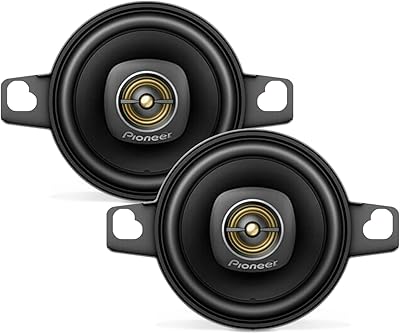
Pioneer TS-A709 2.75″ 2-Way Car Speakers
81%
88%
Sound Clarity
61%
Bass Response
91%
Installation Ease
86%
Value for Money
83%
Power Handling
More
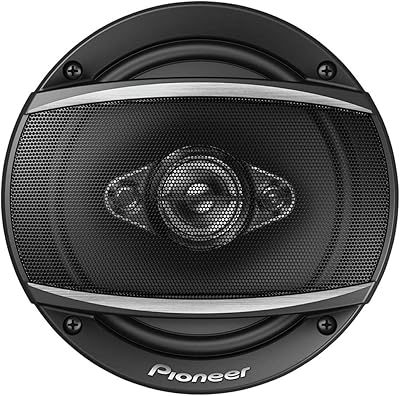
Pioneer TS-F1035R 4-Inch 2-Way Car Speakers
78%
83%
Sound Clarity
54%
Bass Response
91%
Installation Ease
88%
Value for Money
76%
Build Quality
More
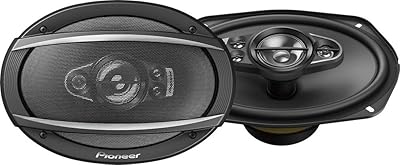
Pioneer TS-A1680F 6.5-inch Car Coaxial Speakers
79%
88%
Sound Clarity
63%
Bass Response
84%
High-Frequency Detail
91%
Installation Ease
86%
Value for Money
More
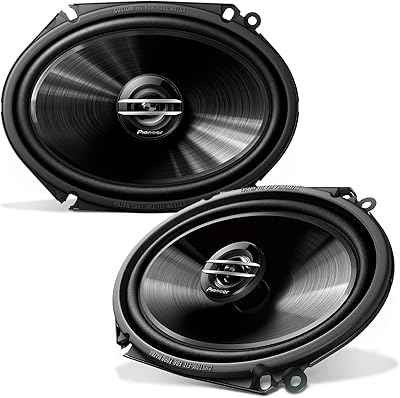
Pioneer TS-A6990F 6×9 Car Coaxial Speakers
78%
83%
Sound Quality
74%
Bass Response
81%
High-Frequency Clarity
78%
Midrange Performance
71%
Power Handling & Amplifier Compatibility
More
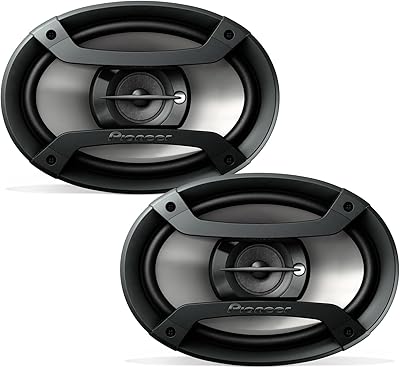
Pioneer TS-G6820S 6x8 Car Coaxial Speakers
79%
83%
Sound Clarity
61%
Bass Response
71%
Treble Performance
84%
Midrange Quality
88%
Sensitivity & Efficiency
More
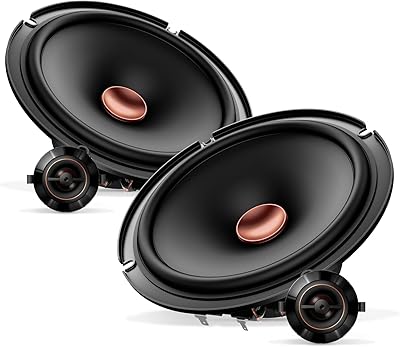
Pioneer TS-F6935R 6″x9″ 3-Way Coaxial Car Speakers
75%
78%
Sound Clarity
63%
Bass Performance
86%
Value for Money
74%
Build Quality
81%
Installation Ease
More
Pioneer TS-G6930F 6x9 3-Way Car Speakers
78%
84%
Sound Clarity
61%
Bass Performance
88%
Value for Money
83%
Installation Ease
74%
Build Quality
More

FAQ

That depends entirely on whether your vehicle already has 4x10″ speaker slots. This is a less common size found mainly in older American-made cars and trucks. Before ordering, check your owner's manual or use an online vehicle fitment tool — most car audio retailers offer one. If your car uses 5x7″, 6x5″, or 6.5″ speakers, these won't drop in without an adapter or custom work.

No, you don't. The Pioneer TS-A4103 4x10″ 2-Way Car Speakers are designed to run directly off a factory head unit. Their 91 dB sensitivity rating means they get loud efficiently without needing extra power. That said, if you do add an amplifier, keep it matched to the 30W RMS rating rather than chasing the 120W peak figure.

The 120W is the peak figure — the absolute maximum the speaker can handle in a very brief burst before risking damage. The 30W RMS is the continuous power rating, meaning how much power the speaker can comfortably handle during normal, sustained listening. For practical purposes, match your amplifier or head unit output to the 30W RMS number.

Honestly, if deep bass is your priority, you'll want to pair these with a subwoofer. The 4-inch woofer simply doesn't have the cone area to move enough air for meaningful low-end response. These speakers are strong on mids and highs, but bass-heavy genres will sound thin without additional support from a dedicated sub.

Yes, most DIYers handle this without any issues. The package includes speaker wire with quick-slide connectors and self-tapping screws, which covers the basics for a standard installation. If you've never changed car speakers before, a basic YouTube tutorial for your specific vehicle will walk you through removing the door panel and swapping the units. No soldering or special tools required in most cases.

Yes — the speakers themselves are passive drivers, so they work with any head unit that provides a speaker-level output. Whether your head unit is a basic factory radio, a Bluetooth unit, or an Apple CarPlay system doesn't matter. As long as it has a 4-ohm compatible speaker output, the TS-A4103 pair will work with it.

Most buyers say the improvement is immediately obvious, especially in the midrange and treble. Voices sound clearer, instruments are more defined, and there's far less of the dull, muffled quality that stock paper-cone speakers produce. Don't expect a transformation into audiophile territory, but the step up from typical OEM speakers is genuinely satisfying.

No. These 4x10″ car speakers carry no water resistance rating whatsoever and are explicitly not waterproof. Exposure to moisture, humidity, or outdoor elements would likely damage them quickly. For marine or outdoor use, you'd need speakers specifically rated for those environments.

Both speakers are included in a single purchase — it's sold as a pair. You also get speaker wire, mounting screws, and a warranty card. No need to buy a second unit separately.

Given that this model has been on the market since 2003 and still carries strong reviews, the durability track record is encouraging. Long-term owners generally report reliable performance over several years of regular use. As with most car speakers, longevity depends on not consistently driving them past their RMS power limits and keeping them protected from moisture.

Where to Buy