Overview

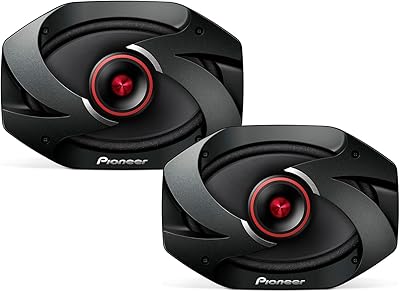
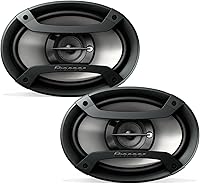
The Pioneer TS-F6935R 6″x9″ 3-Way Coaxial Car Speakers represent Pioneer's continued push into the accessible end of the aftermarket audio market, where most everyday drivers actually shop. Pioneer has been a trusted name in car audio for decades, and this model carries that reputation into 2025 at a price point that doesn't require much deliberation. What makes these Pioneer coaxials particularly practical is the standard 6″x9″ sizing — it drops into most vehicles without bracket modifications or custom cutting. One thing worth flagging upfront: these are passive speakers, meaning they rely on your head unit or an external amp to drive them properly. If your factory stereo is underpowered, you may not hear their full potential.
Features & Benefits

The TS-F6935R speakers use a 3-way coaxial setup — woofer, midrange driver, and tweeter all mounted on a single frame — which gives them a wider frequency range than the basic 2-way speakers most cars ship with from the factory. The 87dB sensitivity rating is solid enough that a stock head unit can push them to respectable volumes without distortion creeping in too early. They handle up to 230W peak, though real-world continuous power is a more modest 30W, so keep expectations grounded there. The built-in bass boost is a thoughtful addition for drivers who want a warmer low-end without reaching for an external EQ. Their 4-ohm impedance ensures compatibility is rarely a concern with any standard car stereo or amp.

Best For

These 6″x9″ Pioneers are a natural fit for OEM speaker replacement — the kind of upgrade where you pull out tired factory drivers and slot in something noticeably better without rewiring the whole car. Commuters, daily drivers, and anyone assembling a budget audio build will find it tough to argue against them at this price tier. The standard mounting dimensions mean most sedans, SUVs, and trucks with rear-deck or door cutouts can accept them without adapters. Pairing with a modest aftermarket amplifier will genuinely unlock more of what these Pioneer coaxials can do. That said, if you're chasing audiophile-grade detail or serious bass output, this isn't the product range aimed at you.

User Feedback

Buyers who've installed these 6″x9″ Pioneers consistently mention a noticeable improvement over worn factory speakers, particularly in midrange clarity and vocal presence. The metal mounting hardware earns praise for feeling more substantial than the plastic alternatives common at this price tier. On the downside, some users find the bass boost overdone in smaller cabins, and a handful report that pairing with an underpowered head unit visibly limits overall output. Installation quality also comes up — improper wiring tends to muffle performance in ways that get mistaken for a speaker defect. The general consensus still leans positive, with most buyers considering these strong value for the money against similarly priced 6″x9″ rivals.

Pros

  • Pioneer's brand credibility reduces purchase risk for buyers who want a known manufacturer backing their investment.
  • The 3-way coaxial design delivers noticeably broader frequency coverage than the 2-way speakers most vehicles ship with from the factory.
  • Standard 6″x9″ sizing means these Pioneer coaxials fit a vast range of vehicles with no adapter plates required.
  • Metal mounting hardware feels substantially more durable than the plastic alternatives common in this price bracket.
  • The 87dB sensitivity rating lets these speakers perform well even when driven by a modest factory head unit.
  • Universal 4-ohm impedance makes them compatible with virtually any car stereo or entry-level amplifier without configuration concerns.
  • The built-in bass boost adds low-end warmth for casual listeners who want a fuller sound without touching an equalizer.
  • Midrange clarity improvement over stock speakers is immediately noticeable, especially for vocals and spoken-word content.
  • The black and silver flush-mount finish looks intentional and clean rather than cheap when visible through door grilles.
  • Sold as a complete pair, so both rear or door speaker positions are covered in a single purchase.

Cons

  • The 30W RMS continuous rating is modest — buyers expecting wall-shaking output from a stock radio will be let down.
  • Bass boost and midrange can muddy each other in the 200–400Hz range when both are pushed simultaneously.
  • No grilles are included in the box, which matters if your mounting position leaves the speaker cone exposed.
  • Tight door panel clearances in some vehicles make the 2.75-inch mounting depth a genuine fitment problem.
  • Stereo imaging is limited by the coaxial format — soundstage feels flat compared to a proper component speaker setup.
  • High-frequency detail from the 11mm tweeter rolls off earlier than competing designs at a similar price point.
  • The bass boost cannot be fully disabled on some head unit pairings, which frustrates listeners who prefer a neutral tonal balance.
  • Performance is noticeably capped when paired with underpowered factory head units that output less than 15W per channel.
  • Long-term durability in high-heat rear deck environments remains unproven given the product only launched in early 2025.
  • Buyers with non-standard 6″x9″ cutout shapes may need additional mounting hardware that is not included in the package.

Ratings

The scores below reflect an AI-driven analysis of verified global buyer reviews for the Pioneer TS-F6935R 6″x9″ 3-Way Coaxial Car Speakers, with spam, incentivized, and bot-generated feedback actively filtered out before scoring. The result is an honest, balanced snapshot of real-world ownership — covering what these Pioneer coaxials genuinely do well and where they fall short depending on your setup. Both the strengths that earned them a top-5 ranking in their category and the friction points that real buyers flagged are transparently reflected in each score.

Sound Clarity
78%
22%
Most buyers upgrading from worn OEM speakers notice an immediate improvement in vocal and midrange clarity, particularly on daily commutes where spoken-word podcasts and pop tracks benefit from the 3-way driver arrangement. At moderate volumes, these Pioneer coaxials resolve detail noticeably better than similarly priced 2-way alternatives.
At higher volumes or in larger cabin vehicles like full-size SUVs, some listeners report a slight hardness in the upper midrange. The improvement over stock is real, but it's not the kind of clarity that silences a room — it's commuter-grade, not reference-grade.
Bass Performance
63%
37%
The built-in bass boost gives everyday listeners a warmer, fuller low end without needing to touch an external equalizer. For genres like hip-hop or EDM on a budget build, it adds body that basic coaxials at this price rarely offer.
Actual low-frequency extension is modest — 30W RMS doesn't move a lot of air, and bass-heavy listeners will find the boost adds warmth more than genuine depth. Without a subwoofer in the system, these 6″x9″ Pioneers won't satisfy anyone chasing real impact.
Value for Money
86%
Relative to competing 6″x9″ coaxials in the same price tier, buyers consistently highlight that the Pioneer brand name alone reduces purchase anxiety. Getting a 3-way configuration with a recognizable manufacturer's backing at this price point is considered a genuine bargain by the majority of reviewers.
A small segment of buyers who compared directly against lesser-known budget alternatives felt the sonic difference didn't fully justify the slight price premium over no-name options. For pure spec-per-dollar, the competition occasionally edges ahead.
Build Quality
74%
26%
The metal mounting hardware stands out in a product tier where plastic brackets are the norm, and reviewers routinely mention that the physical construction feels more durable than expected. The black and silver finish also holds up well after installation without visible wear in the short term.
The cone and surround materials feel adequate rather than impressive, and a few buyers noted minor flex in the grille surround during handling. Long-term durability in high-heat environments like rear decks in hot climates hasn't been tested long enough for firm conclusions.
Installation Ease
81%
19%
The standard 6″x9″ form factor means these drop into most domestic and import vehicles without adapter plates or bracket fabrication, which experienced DIYers and even first-timers find reassuring. Wiring connections are straightforward and clearly labeled for polarity.
Pioneer's own listing recommends professional installation, and buyers who didn't respect that guidance reported fitment issues and reduced sound quality. In vehicles with tighter mounting depths, the 2.75-inch depth occasionally causes clearance problems behind door panels.
Compatibility
89%
The 4-ohm impedance makes these Pioneer coaxials essentially universal — plug them into any aftermarket head unit, factory receiver with reasonable output, or entry-level amplifier without worrying about impedance mismatch. That flexibility is genuinely useful for mixed-component builds.
While electrically compatible with nearly anything, sonic compatibility is a different story. Underpowered factory head units that push less than 15W RMS per channel will noticeably cap what the TS-F6935R speakers can deliver, leaving buyers underwhelmed if they expected the full 230W peak rating to mean something at stock power.
Sensitivity & Efficiency
82%
18%
At 87dB sensitivity, these speakers produce a satisfying output level from modest power sources, which matters for drivers running factory radios. In compact sedans and hatchbacks, they reach comfortable listening volumes without needing an amplifier to intervene.
87dB is decent but not exceptional in this category — some competing models in a similar price band offer 90dB or higher, meaning those rivals get genuinely louder from the same watt. In noisy highway conditions, the difference becomes more noticeable.
Treble & High-Frequency Detail
71%
29%
The dedicated 11mm tweeter handles vocal sibilance and cymbal shimmer better than a simple 2-way cone, which buyers who listen to acoustic or jazz material specifically appreciate. High hats and string plucks come through with reasonable air and separation.
The tweeter is small and the crossover tuning is clearly optimized for a pleasant listen rather than accurate highs, so detail-oriented listeners will find the top end rolled off compared to component speaker setups. Extended listening on classical or acoustic content exposes a slight brightness that some find tiring.
Midrange Performance
76%
24%
The dedicated midrange driver in the 3-way arrangement is the most tangible upgrade over cheaper coaxials, making voices — whether singers or podcast hosts — sound more present and natural. Buyers frequently cite this as the most immediately appreciated improvement during daily commutes.
The midrange loses some composure when the bass boost is engaged simultaneously, creating a slight muddiness around the 200–400Hz region. Listeners who prefer a flat, transparent response will likely want to disable the boost entirely.
Power Handling
67%
33%
The 230W peak rating offers meaningful headroom against sudden volume spikes, and buyers who pair these with a modest 4-channel amp report clean playback at elevated listening levels. The speakers handle brief power surges without audible distress.
The 30W RMS continuous rating is the honest number, and it's conservative by current standards. Buyers who misread the peak figure and expect thunderous output from their stock radio will be disappointed — the gap between marketing power figures and real-world performance is particularly wide here.
Design & Aesthetics
79%
21%
The black and silver flush-mount finish looks clean and intentional rather than cheap, which matters when speakers are visible through door panel grilles or on an open rear deck. Several reviewers mentioned that the look complemented their car interiors without modification.
The silver accent trim is fixed, so buyers with all-black or custom-colored interiors may find the two-tone styling clashes slightly. The design is attractive in a generic, functional sense but won't excite anyone who cares deeply about interior aesthetics.
Stereo Imaging
66%
34%
When properly installed in symmetrical door positions, these 6″x9″ Pioneers produce a reasonably wide stereo stage that makes music feel fuller than single-point playback. Positioning instruments left and right with adequate separation is achievable in most compact vehicles.
Coaxial designs inherently compromise imaging versus dedicated component setups, and the TS-F6935R speakers are no exception. The soundstage feels flat and centered in larger cabins, and listeners accustomed to component systems will notice the difference immediately.
Frequency Response Accuracy
61%
39%
The stated frequency response covers a broad range on paper, and for casual everyday listening across mainstream genres, the overall tonal balance is pleasant and inoffensive. Most commuters will find the tuning suits pop, rock, and R&B well.
Measured accuracy across the full frequency range is where budget coaxials universally struggle, and these are no exception. There are audible peaks and dips that reveal themselves on critical listening, and the bass boost's influence on the low-mid region further complicates a flat playback preference.
Packaging & Unboxing
72%
28%
Buyers report that both speakers arrive well-protected with adequate foam padding, and the included components are clearly organized. The pair arrives ready to install without needing to source additional hardware for a standard mounting application.
The accessory kit is minimal — no grilles are included in some configurations, and the mounting hardware selection covers only the most common vehicle types. Buyers with less conventional cutout shapes may need supplemental adapters not included in the box.

Suitable for:

The Pioneer TS-F6935R 6″x9″ 3-Way Coaxial Car Speakers are a strong fit for everyday drivers who are tired of the flat, lifeless sound that comes from aging factory speakers and want a meaningful upgrade without rebuilding their entire audio system. If you're driving a sedan, compact SUV, or truck with standard 6″x9″ cutouts in the rear deck or doors, these drop in without adapter plates or custom fabrication — that alone saves significant time and frustration. Commuters who spend an hour or more in the car each day will immediately notice the improvement in vocal clarity and midrange presence, especially on podcasts, talk radio, and mainstream music genres. Budget-conscious enthusiasts assembling a first proper car audio build will also appreciate the Pioneer brand name as a low-risk entry point — there's real engineering behind the 3-way driver arrangement, not just marketing. Those who plan to pair these Pioneer coaxials with even a modest 4-channel amplifier will unlock noticeably more of their capability compared to running them off a stock head unit alone.

Not suitable for:

The Pioneer TS-F6935R 6″x9″ 3-Way Coaxial Car Speakers are not the right choice for anyone expecting audiophile-grade sound reproduction or genuinely deep bass without additional hardware. The continuous power rating sits at a conservative 30W, so buyers who read the 230W peak figure and assume thunderous output from a factory radio are setting themselves up for disappointment — that's not how these speakers are designed to operate. Dedicated car audio enthusiasts who already run component speaker setups with external crossovers and subwoofers will find the coaxial format a step backward in imaging precision and tonal accuracy. If your vehicle has non-standard mounting depths or tight door panel clearances, the 2.75-inch depth may create fitment headaches that require professional intervention regardless of your DIY confidence. Similarly, listeners who prioritize flat, reference-accurate frequency response — classical music listeners or audiophiles, for instance — will find the tuning too colored and the bass boost too intrusive for their preferences.
Specifications

  • Speaker Size: Each speaker measures 6″x9″, following the industry-standard oval format used across a wide range of domestic and import vehicles.
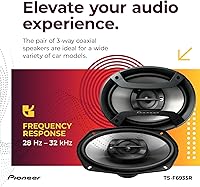
  • Configuration: The TS-F6935R uses a 3-way coaxial design, mounting a woofer, midrange driver, and tweeter on a single frame for full-range playback from one unit.
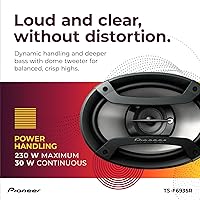
  • Peak Power: These Pioneer coaxials handle up to 230W peak power, providing headroom for dynamic audio transients without immediate distortion.
  • Nominal Power: The continuous RMS power rating is 30W, which is the more accurate figure for everyday listening levels and amplifier matching.
  • Impedance: Speaker impedance is rated at 4 ohms, making these 6″x9″ Pioneers compatible with virtually all factory head units and aftermarket amplifiers.
  • Sensitivity: The sensitivity rating is 87dB, meaning these speakers produce reasonable output volumes from modest power sources including stock car radios.
  • Tweeter Size: The integrated tweeter measures 11mm in diameter and handles the upper frequency range including vocals, cymbals, and high-frequency detail.
  • Woofer Diameter: The woofer cone spans 9 inches, forming the primary low-frequency driver responsible for bass and lower midrange reproduction.
  • Mounting Type: These speakers are designed for door or rear deck mounting using a flush-mount installation method secured by metal hardware.
  • Mount Material: The mounting bracket and hardware are constructed from metal, offering more structural rigidity than the plastic equivalents common in this price bracket.
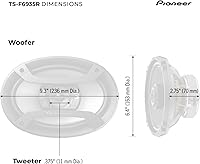
  • Dimensions: Each speaker unit measures 2.75″ deep by 9.3″ wide by 6.4″ tall, which determines clearance requirements during installation.
  • Weight: The pair weighs approximately 3.34 pounds in total, making handling and positioning during installation straightforward for a single installer.
  • Special Feature: A built-in bass boost function adds low-frequency emphasis for listeners who prefer a warmer tonal balance without adjusting head unit EQ settings.
  • Connectivity: These speakers use wired coaxial connectivity and require a standard speaker wire connection from an amplifier or head unit speaker output.
  • Audio Output: The speakers are configured for stereo output, with each unit in the pair handling one channel of a standard left-right stereo signal.
  • Quantity: The package includes two speakers sold as a matched pair, sufficient to replace both rear deck or both front door speaker positions.
  • Color Finish: The speakers feature a black and silver two-tone flush-mount design intended to blend cleanly into modern vehicle interior aesthetics.
  • Warranty: Pioneer covers the TS-F6935R speakers with a limited manufacturer warranty; buyers should confirm specific duration and terms directly with Pioneer or the point of purchase.
  • Compatibility: These 6″x9″ Pioneers are designed for OEM replacement and aftermarket upgrades in cars, trucks, and SUVs with standard 6″x9″ speaker cutouts.
  • Availability Date: The TS-F6935R was first made available in March 2025 and represents a current-generation model within Pioneer's F Series speaker lineup.

Related Reviews
Pioneer TS-G6930F 6” x 9” 3-Way Car Speakers
84%
88%
Sound Quality
93%
Ease of Installation
77%
Bass Performance
92%
Value for Money
85%
Build Quality
More
Pioneer TS-6900PRO 6x9 2-Way Car Speakers
82%
93%
Sound Output & Volume
84%
Bass Response
67%
Tweeter Performance
91%
Installation Ease
78%
Build Quality
More
Pioneer TS-G4644R 4x6″ 2-Way Coaxial Car Speakers
85%
90%
Value for Money
88%
Ease of Installation
83%
Sound Quality
74%
Bass Performance
87%
Build Quality
More
Orion CB653 6.5″ 3-Way Coaxial Car Speakers
83%
86%
Sound Quality
88%
Bass Performance
90%
Ease of Installation
84%
Build Quality
82%
Durability
More
Pioneer TS-F1634R 6.5″ Coaxial Car Speakers
76%
78%
Sound Quality
61%
Bass Performance
74%
Treble Clarity
93%
Installation Ease
89%
Compatibility
More
Rockford Fosgate T1693 6×9 3-Way Coaxial Speakers
81%
91%
Sound Clarity
67%
Bass Response
88%
Treble & High-Frequency Detail
89%
Build Quality
86%
Power Handling
More
Crunch CS65CXS 6.5-Inch 3-Way Coaxial Car Speaker
84%
89%
Sound Quality
92%
Bass Performance
87%
Installation Ease
81%
Durability
85%
Build Quality
More
SoundXtreme ST-603 6″ 3-Way Coaxial Car Audio Speakers
81%
88%
Sound Clarity at High Volumes
90%
Ease of Installation
75%
Bass Performance
85%
Build Quality
91%
Value for Money
More
Rockford Fosgate P1675 6.75″ 240W 3-Way Car Coaxial Speakers
84%
92%
Value for Money
84%
Sound Quality
76%
Bass Performance
90%
Clarity and Frequency Response
87%
Ease of Installation
More
Pioneer TS-A652C 6.5″ 2-Way Component Car Speakers
78%
88%
Sound Clarity & Midrange Quality
67%
Bass Response
79%
Tweeter Performance
83%
Installation Ease
74%
Vehicle Compatibility
More

FAQ

They will work with a factory head unit — the 87dB sensitivity rating is specifically helpful in that situation, allowing the speakers to reach decent volumes from lower power output. That said, the 30W RMS rating means a stock radio will only unlock a portion of what these Pioneer coaxials are capable of. If you want noticeably better dynamics and volume headroom, even a modest 4-channel amp makes a real difference.

Most vehicles with standard 6″x9″ oval cutouts will accept these 6″x9″ Pioneers without any adapter rings. The universal form factor is one of the main practical advantages here. However, if your vehicle has shallower door cavities, the 2.75-inch mounting depth may cause clearance issues behind the door panel, so it's worth measuring your available depth before installing.

Experienced DIYers who have done speaker swaps before will find the installation straightforward — it's mostly a matter of removing door panels, disconnecting the old speakers, and wiring in the new ones. Pioneer does recommend professional installation for those without car audio experience, and that's fair advice since improper wiring is the most common reason buyers feel underwhelmed by the results.

The bass boost is a fixed hardware feature built into the speaker's passive crossover network, meaning it applies a mild low-frequency emphasis to the audio signal passing through. It's designed to add warmth and body without an external equalizer. You can't disable it through a switch on the speaker itself, but you can compensate for it by rolling back the bass on your head unit's EQ settings.

At highway speeds, road noise is a real factor, and the 87dB sensitivity helps these Pioneer coaxials hold their own with a factory radio at moderate to high volume settings. Distortion at high volumes is more likely to be a function of your head unit's power output than the speakers themselves — they handle up to 230W peak, so they're not the bottleneck in most factory setups.

The 3-way configuration gives these a dedicated midrange driver, which is the most immediately noticeable difference in real-world listening. Voices, guitars, and instruments in the midrange band sound more present and defined compared to a typical 2-way coaxial where the tweeter handles everything above the woofer's crossover point. For everyday listening, that extra driver adds genuine value.

The silver accent is part of the fixed design, so if your interior is strictly all-black, there will be a slight contrast. In most cases the speakers are partially or fully covered by door panel grilles, so visibility depends on your specific vehicle. If the speakers are exposed on a rear deck, the two-tone look may be more noticeable.

These 6″x9″ Pioneers are well-suited to pop, rock, hip-hop, R&B, and spoken-word content like podcasts and audiobooks. The bass boost adds a bit of warmth that suits modern music production. Classical, jazz, or acoustic listeners who prefer a flatter, more neutral tonal balance may find the sound slightly colored for their taste.

The package includes the pair of speakers and mounting hardware, but grilles are not always included depending on the retail configuration. If your mounting position leaves the speaker cone exposed — common on open rear decks — you may want to source compatible grilles separately to protect the drivers from direct contact or debris.

Pioneer as a brand has a solid track record for durability in aftermarket speakers, and the metal mounting hardware adds some confidence to that expectation. The TS-F6935R only launched in early 2025, so there isn't yet a long track record of multi-year ownership data to draw from. In controlled environments — moderate volumes, climate-controlled interiors — coaxial speakers of this build quality typically last several years without issue. High heat exposure, like rear decks in very hot climates, is the main long-term risk factor.

Where to Buy