Overview

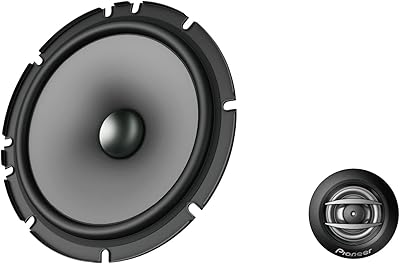
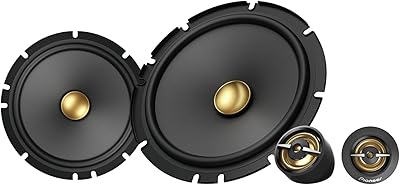
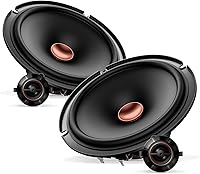
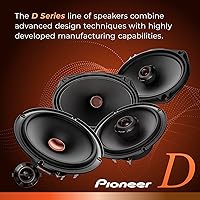
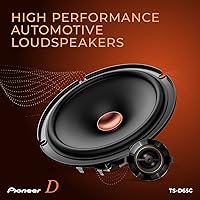
Pioneer TS-D65C 6.5-inch Component Car Speakers represent Pioneer's answer to the gap between cheap factory-installed units and high-end custom audio builds. Pioneer has been a trusted name in car audio for decades, and the D-Series sits comfortably in the mid-range tier — serious enough for real enthusiasts, approachable enough for first-timers. Unlike coaxial speakers, which bundle the tweeter and woofer into a single unit, a component setup like this separates the two drivers, letting you position the tweeter independently for better stereo imaging. The result is a noticeably more spacious, defined soundstage without requiring a full professional installation.
Features & Benefits

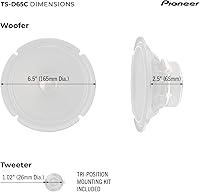
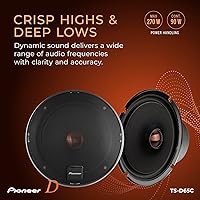
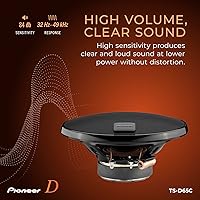
The TS-D65C set handles up to 270 watts at peak and 90 watts continuously, which covers everything from a stock factory head unit to a modest external amp. What stands out more practically is the 84 dB sensitivity — that means you get real volume without cranking the gain, and distortion stays in check even at higher listening levels. The frequency range stretches from 32 Hz to 49 kHz, which is wide by any measure, though the real strength here is in the mids and highs rather than thumping bass. The 26mm tweeter ships with a tri-position mounting kit, so you can flush-mount, surface-mount, or bracket it depending on your vehicle's door panel.

Best For

These Pioneer component speakers are the right pick for anyone who's been quietly frustrated by the flat, lifeless sound of factory-installed speakers. If you listen to a lot of vocals, acoustic music, or anything where vocal clarity matters more than chest-thumping bass, this Pioneer D-Series pair will make a real difference. They're also well-suited to DIY installers who want component-speaker performance without cutting new mounting holes or fabricating custom panels. Add an entry-level amplifier and the improvement becomes even more noticeable, but they run fine without one. Hardcore bassheads should plan to pair these with a dedicated subwoofer.

User Feedback

With a 4.5-star average across nearly 10,000 ratings, these Pioneer component speakers have clearly resonated with a large and varied audience. The most consistent praise centers on easy installation and the immediate audible improvement over stock speakers — most buyers notice the difference right away. On the critical side, some reviewers mention that the speakers feel a bit underwhelming at lower volumes without an external amp, which tracks given the sensitivity spec. A few owners also note that vehicle compatibility isn't guaranteed — certain makes and models need adapter brackets or trimming to fit properly. Sound character is generally described as bright and detailed rather than warm, which suits some listeners better than others.

Pros

  • Vocal and midrange clarity is a clear step above typical factory-installed speakers from day one.
  • The tri-position tweeter mounting kit offers genuine flexibility for different vehicle door and pillar configurations.
  • Runs competently off a stock head unit, so you do not need an amplifier to get started.
  • Included speaker wire, grilles, and mounting hardware reduce the number of extra parts you need to source.
  • The component design meaningfully improves stereo imaging compared to coaxial alternatives in the same size class.
  • Nearly 10,000 verified ratings provide a reliable picture of long-term real-world performance.
  • Scales well when paired with an entry-level amplifier, rewarding future system upgrades.
  • High-frequency detail — cymbals, string harmonics, sibilance — is handled with uncommon smoothness for this price tier.
  • Standard 4-ohm impedance ensures broad compatibility with aftermarket and OEM head units alike.

Cons

  • Bass output is limited without a dedicated subwoofer, which is a separate and additional expense.
  • The 84 dB sensitivity rating means high-volume listeners will notice a performance ceiling when running off factory power.
  • Tweeter mounting instructions are vague enough that first-time installers often need supplemental online guides.
  • Vehicle fitment is not guaranteed — some makes and models require adapter rings or door panel trimming.
  • The passive crossover network offers no tweeter level adjustment, which can leave the treble sounding forward in some cabin acoustics.
  • No water or moisture resistance means door-panel condensation is a genuine long-term risk in certain climates.
  • Tweeter housings feel noticeably lightweight compared to the woofer assembly, which some buyers find inconsistent.
  • A small number of owners reported tweeter stress or failure when consistently driven hard without amplification.

Ratings

The Pioneer TS-D65C 6.5-inch Component Car Speakers have earned one of the largest verified review pools in their category, and our AI scoring model has processed thousands of those global ratings — actively filtering out incentivized, bot-generated, and single-use reviewer accounts — to surface what real buyers consistently experience. The scores below reflect both what this Pioneer D-Series pair genuinely excels at and where real-world frustrations tend to surface. Nothing is glossed over.
Sound Clarity
91%
Vocal reproduction is where these Pioneer component speakers consistently draw praise. Reviewers who listen to podcasts, jazz, or anything with prominent vocals describe the mid-range as crisp and defined in a way that most factory speakers simply cannot match. The separate tweeter placement makes a meaningful difference in how sound reaches the ear during everyday driving.
At higher volumes without amplification, some listeners notice a slight hardness in the upper frequencies — the sound can edge toward bright rather than balanced. For genres like hip-hop or EDM where warmth in the mid-bass matters, a few users felt the overall character felt too clinical.
Bass Performance
67%
33%
The woofer handles the lower end of the frequency range competently for a 6.5-inch driver, and casual listeners upgrading from thin factory speakers will notice a clear improvement in body and fullness. Paired with an aftermarket head unit that has a built-in EQ, you can coax a reasonable low-end response out of the TS-D65C set.
Dedicated bass enthusiasts will find these speakers underwhelming on their own. The 90W RMS rating and driver size simply cannot replicate what a subwoofer delivers, and several reviewers were vocal about this mismatch when they expected more thump. These are genuinely mid-and-high speakers first.
Installation Experience
88%
The tri-position tweeter mounting kit is one of the most consistently praised elements across the review base. Buyers who had never installed component speakers before reported completing the job in under two hours using just basic hand tools. The included speaker wire and grilles mean fewer extra trips to the parts store.
Fit compatibility is not universal, and this is where a portion of one-star reviews originate. Some vehicle door cavities require aftermarket adapter rings or minor trimming to seat the woofer properly. Buyers driving certain domestic trucks or older Japanese imports flagged this issue more often than average.
Sensitivity & Amplifier Need
74%
26%
At 84 dB sensitivity, these Pioneer component speakers are efficient enough to run off most factory head units without sounding weak or strained. Daily commuters who just want cleaner audio without adding an amplifier report being satisfied with the volume and definition at moderate listening levels.
The 84 dB figure is on the lower end of the sensitivity spectrum, and buyers who push their system loud quickly notice the ceiling. Several reviewers specifically mentioned that the speakers felt constrained until they added even a modest four-channel amp, which suggests this pairing is really where the design is optimized.
Stereo Imaging & Soundstage
86%
The real advantage of a component design shows up here. Because the tweeter can be mounted independently near ear level — on the A-pillar or sail panel — the soundstage opens up in a way coaxial speakers cannot replicate. Reviewers who made this upgrade described the experience as hearing instruments and voices placed more precisely across the cabin.
Achieving this improved imaging requires thoughtful tweeter placement during installation, which not every buyer takes the time to optimize. Users who surface-mounted the tweeter in a suboptimal location reported less dramatic improvement, noting the difference from their old speakers felt modest rather than significant.
Build Quality & Materials
79%
21%
The physical construction of the TS-D65C set feels appropriate for the price tier — solid without feeling luxurious. The woofer surround and basket are well-finished, and the grilles sit flush without rattling, which is a common complaint with cheaper alternatives. Most buyers felt the materials matched their expectations.
A handful of reviewers noted that the tweeter housings, while functional, feel somewhat lightweight. The plastic used for the mounting cups drew occasional criticism from buyers who compared them against pricier component sets they had used previously. Nothing feels fragile, but it is not premium-tier construction.
Value for Money
83%
Relative to what comparable-spec component speakers from other brands cost at this performance level, the Pioneer D-Series pair sits in a competitive and defensible position. Buyers who previously ran entry-level coaxials consistently reported feeling the upgrade was well worth the investment, particularly given the included hardware.
Some buyers who stretched their budget to purchase these expected more out-of-the-box bass and were disappointed to learn they would need a subwoofer to feel truly complete. The perceived value dips slightly if you factor in the additional spend needed to unlock the full system potential.
Frequency Range Coverage
81%
19%
The specified frequency coverage from 32 Hz up through 49 kHz is genuinely wide for a component set at this price. In practical listening, this translates to a speaker that handles acoustic detail at the high end — cymbals, string harmonics, sibilant consonants — with more nuance than most direct competitors.
The extreme low end of the claimed range is where real-world performance diverges from spec sheet optimism. Sub-40 Hz reproduction at listenable volume is not realistic from these drivers, and buyers who interpret the frequency spec as a promise of full-range bass will come away disappointed.
Long-Term Durability
76%
24%
The majority of buyers who reviewed these speakers after extended ownership reported no mechanical failures or degraded performance over time. Pioneer's track record in car audio gives buyers reasonable confidence in long-term reliability, and the component architecture means a single failed tweeter does not require replacing the entire system.
A small but consistent segment of reviewers reported tweeter failure after extended high-volume use without amplification, suggesting the tweeters may be more stressed when the head unit is pushed hard to compensate for the lower sensitivity. There is no waterproofing, so vehicles with moisture-prone door panels present a risk.
Tweeter Quality
84%
The 26mm soft-dome-style tweeter handles high frequencies with a smoothness that avoids the harshness sometimes found in cheaper piezo units. Listeners who favor acoustic music or classical recordings highlighted the tweeter as the standout performer, particularly in how it handles delicate high-frequency transients without sounding harsh or fatiguing.
At very high crossover frequencies or when driven without a crossover network optimized for the vehicle, some listeners detected a slight thinness in the upper treble. A few reviewers also mentioned the tweeter leads — terminated with quick-connects — required minor modification to interface cleanly with certain factory wiring harnesses.
Crossover Network Performance
77%
23%
The included passive crossover divides the signal between the woofer and tweeter in a way that most reviewers found coherent and natural-sounding. There is no obvious frequency gap or overlap coloration that would be immediately noticeable to a casual listener, which speaks to reasonable crossover component quality for the price tier.
Serious audio enthusiasts who have worked with higher-end component sets noted that the included crossover offers no adjustability — no tweeter attenuation switches or level controls to tune the balance for different vehicle acoustics. In some cabin environments, the tweeter can feel slightly forward relative to the woofer.
Ease of Grille & Tweeter Mounting
82%
18%
Pioneer's tri-position mounting kit genuinely covers most common installation scenarios without requiring custom fabrication. The flush-mount option in particular was praised by installers working with clean factory door panels, and the hardware included in the box means most buyers do not need to source additional mounting accessories.
The instructions, while present, are described by several reviewers as vague on specific steps — particularly for surface-mount configurations. DIYers without prior speaker installation experience sometimes required supplementary online video guides to feel confident completing the tweeter mount correctly.
Compatibility with Factory Head Units
78%
22%
For buyers who are not ready to replace their factory head unit, these Pioneer component speakers offer a meaningful improvement without the need for additional equipment. The 4-ohm impedance is standard and plays well with OEM amplifiers, and the sensitivity spec is workable for moderate listening habits on a daily commute.
Drivers who habitually listen at high volumes off a factory unit will likely hit the performance ceiling of this configuration faster than expected. A few reviewers running premium factory audio systems — particularly those with integrated DSP or non-standard impedance outputs — noted compatibility hurdles that required additional adapters or resistors.

Suitable for:

The Pioneer TS-D65C 6.5-inch Component Car Speakers are a strong match for drivers who are genuinely tired of the flat, lifeless sound that comes standard in most vehicles and want a meaningful upgrade without commissioning a full custom audio build. They work particularly well for daily commuters who spend significant time listening to podcasts, vocals, or acoustic music, where midrange clarity and precise high-frequency reproduction make a real audible difference on every drive. Budget-conscious enthusiasts who plan to add an aftermarket head unit or a modest four-channel amplifier down the road will find these Pioneer component speakers scale well with system improvements over time. DIY installers with basic tools and a few hours available on a weekend will appreciate the included mounting hardware and wiring, which covers most of what you need to get up and running. This Pioneer D-Series pair also suits car audio beginners who want to step up from coaxial speakers without diving into the complexity of fully custom component systems that require crossover tuning or significant panel modification.
Not suitable for:

The Pioneer TS-D65C 6.5-inch Component Car Speakers are not the right tool for buyers whose primary measure of audio quality is bass output and low-end punch. Without a dedicated subwoofer to handle the frequencies below where these drivers realistically perform, bassheads will come away underwhelmed regardless of how much power they feed the system. Drivers who habitually listen at maximum volume off a factory head unit may also hit the sensitivity ceiling sooner than expected, finding that the speakers feel compressed or strained under those conditions. Anyone with a moisture-prone cabin or a vehicle with exposed door panels should also take note — the TS-D65C set offers no water resistance, and prolonged exposure to humidity can shorten their lifespan. Buyers whose vehicles use unusual door cavity dimensions or non-standard mounting configurations may run into fitment issues that require additional adapter brackets, adding cost and installation complexity that was not part of the original plan. Finally, experienced audio enthusiasts expecting audiophile-grade crossover adjustability or premium-tier driver materials will find the construction a step below what more specialized brands offer at a higher price point.
Specifications

  • Speaker Size: Both the woofer and overall driver diameter measure 6.5 inches, the most common size for factory door speaker locations in passenger vehicles.
  • System Type: This is a 2-way component speaker system, meaning the woofer and tweeter are separate units connected through a passive crossover network.
  • Max Power: The speakers handle up to 270 watts at peak, though this figure reflects momentary burst capacity rather than sustained listening levels.
  • RMS Power: Continuous (RMS) power handling is rated at 90 watts, which represents the realistic daily operating range for most head units and entry-level amplifiers.
  • Frequency Response: The system covers a stated frequency range of 32 Hz to 49 kHz, spanning from near-subsonic lows through frequencies well beyond typical human hearing.
  • Sensitivity: The sensitivity rating is 84 dB, meaning the speakers produce 84 decibels of output for every one watt of input measured at one meter.
  • Impedance: Speaker impedance is 4 ohms, which is the standard load for virtually all aftermarket and factory-installed head units and amplifiers.
  • Tweeter Size: The included tweeter measures 26mm in diameter and uses a soft-dome driver design intended to reduce high-frequency harshness during extended listening.
  • Tweeter Mounting: Three mounting configurations are supported out of the box: flush mount, surface mount, and bracket mount, via the included tri-position mounting kit.
  • Woofer Driver: The woofer uses a dynamic driver design, which is the conventional moving-coil technology standard across most car audio speakers in this category.
  • Dimensions: Each woofer unit measures 2.5″ deep by 6.5″ wide by 6.5″ tall, which determines mounting depth clearance requirements in the door cavity.
  • Weight: The complete package weighs 5 pounds, accounting for both woofers, both tweeters, grilles, crossovers, and all included hardware.
  • Water Resistance: These speakers carry no water resistance rating and are not designed for exposure to moisture, rain, or high-humidity environments.
  • Included Contents: The box includes two woofers, two tweeters with pre-attached leads, two flush-mount tweeter housings, two woofer grilles, two crossover networks, and lengths of speaker wire.
  • Color: Both the woofer and tweeter housings are finished in black, consistent with standard fitment behind factory grilles or aftermarket speaker grilles.
  • Warranty: Pioneer covers this set under a limited warranty; buyers should confirm the current warranty term and registration requirements directly with Pioneer at the time of purchase.
  • Compatibility: The 4-ohm impedance and standard 6.5-inch mounting footprint make these speakers broadly compatible with most passenger cars and light trucks, though some vehicles may require adapter rings.
  • Crossover: A passive crossover network is included with the set to split the audio signal between the woofer and tweeter without requiring active crossover hardware or additional tuning.

Related Reviews

Pioneer TS-A652C 6.5″ 2-Way Component Car Speakers
78%
88%
Sound Clarity & Midrange Quality
67%
Bass Response
79%
Tweeter Performance
83%
Installation Ease
74%
Vehicle Compatibility
More
Pioneer TS-A1601C 6.5″ Component Car Speakers
79%
88%
Sound Clarity
61%
Bass Performance
86%
Treble & High-Frequency Detail
83%
Stereo Imaging
79%
Ease of Installation
More
Pioneer TS-F1634R 6.5″ Coaxial Car Speakers
76%
78%
Sound Quality
61%
Bass Performance
74%
Treble Clarity
93%
Installation Ease
89%
Compatibility
More
Cerwin-Vega V465C 6.5-Inch Component Car Speakers
83%
93%
Sound Quality
91%
Bass Performance
88%
Ease of Installation
87%
Build Quality
85%
Value for Money
More
JBL Stage2 604C 6.5-inch Car Component Speakers
83%
91%
Sound Quality
88%
Bass Performance
87%
Ease of Installation
92%
Value for Money
80%
Build Quality
More
JBL GTO609C 6.5″ Component Speaker System
77%
88%
Sound Clarity
71%
Bass Performance
84%
Tweeter Quality
74%
Installation Ease
86%
Compatibility with Stock Radios
More
Rockville RVL6KIT 6.5″ Component Car Speakers
84%
88%
Sound Clarity
80%
Bass Performance
94%
Ease of Installation
86%
Build Quality
92%
Value for Money
More
JVC CS-DR621 Car Speakers 6.5-inch
84%
86%
Sound Quality (Bass & Vocals)
91%
Installation Ease
85%
Durability & Build Quality
90%
Value for Money
80%
Clarity of High Frequencies
More
Pioneer TS-A6990F 6×9 Car Coaxial Speakers
78%
83%
Sound Quality
74%
Bass Response
81%
High-Frequency Clarity
78%
Midrange Performance
71%
Power Handling & Amplifier Compatibility
More
Pioneer TS-6900PRO 6x9 2-Way Car Speakers
82%
93%
Sound Output & Volume
84%
Bass Response
67%
Tweeter Performance
91%
Installation Ease
78%
Build Quality
More

FAQ

Your factory head unit will power these Pioneer component speakers without any issues at moderate volume levels. The 4-ohm impedance and 84 dB sensitivity are compatible with stock OEM systems. That said, if you regularly listen loud or want to hear what these drivers are truly capable of, adding even a modest four-channel amplifier makes a noticeable difference in headroom and clarity.

They fit a wide range of vehicles that already have 6.5-inch speaker locations, but fit is not universal. Some door cavities have depth restrictions or non-standard mounting hole patterns that require an aftermarket adapter ring. Before buying, it is worth checking a vehicle-specific fitment guide using your year, make, and model to confirm compatibility.

Honestly, these are not bass speakers. The TS-D65C set shines in the midrange and high frequencies — vocals, guitars, cymbals — but does not produce the kind of low-end impact that dedicated subwoofer drivers deliver. If bass is a priority, plan to pair these with a separate subwoofer and subwoofer amplifier for a complete system.

Most people with basic hand tools and a couple of hours can handle this installation without professional help. The woofer swap is straightforward if your vehicle already has a 6.5-inch opening. The tweeter installation takes a bit more planning since you need to decide on placement and run a short wire lead, but the included mounting kit covers the common options without any custom fabrication.

The most effective placement is typically at or near ear level — the A-pillar, sail panel, or upper corner of the door panel. Mounting the tweeter closer to your ear level significantly improves stereo imaging and the sense of soundstage width. Avoid mounting them low in the door alongside the woofer if you can, as you will lose most of the component-speaker advantage.

Coaxial speakers combine the tweeter and woofer into a single unit mounted in one location, which is simpler to install but limits where the tweeter sits relative to your ears. Component speakers like the Pioneer TS-D65C 6.5-inch Component Car Speakers separate the two drivers so the tweeter can be placed independently at a better listening angle. The practical result is a wider, more accurate stereo image — sounds feel positioned across the cabin rather than coming from a single point in the door.
You can, but it is not recommended. The passive crossover network filters out low frequencies from the tweeter and high frequencies from the woofer, which protects both drivers and produces a more balanced sound. Running the tweeter without a crossover exposes it to bass frequencies it was not built to handle, which shortens its lifespan and degrades sound quality.

This Pioneer D-Series pair tends to suit genres where vocal and instrumental clarity matter most — acoustic, jazz, classic rock, pop, and spoken-word content all sound particularly well-defined. Electronic music and hip-hop are enjoyable but will feel incomplete without a subwoofer handling the bass. The overall sound character leans slightly bright, meaning the high frequencies are prominent and detailed rather than warm or bass-forward.

Yes, since the tweeters are separate units connected via quick-connect terminals, a failed tweeter can be replaced independently without discarding the entire system. Pioneer sells replacement tweeters, and the quick-connect lead design makes the swap relatively straightforward for anyone who did the original installation.

Like most dynamic driver speakers, the TS-D65C set benefits from a short break-in period as the woofer surrounds loosen up. Most listeners notice the sound opens up and becomes slightly more natural after 10 to 20 hours of listening at moderate volume. The tweeters are less affected, so the high-frequency performance is largely consistent from day one.