Overview

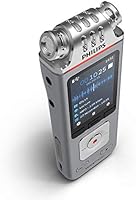
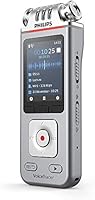
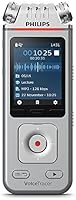
The Philips VoiceTracer DVT4110 Digital Voice Recorder sits comfortably in the mid-range tier of the VoiceTracer lineup — a step up from basic single-mic models, but not trying to compete with professional field recorders. What sets it apart from budget options is the compact rechargeable design: no hunting for AA batteries before an important meeting. It slips into a jacket pocket without a second thought. The free companion app adds a layer of convenience for sharing and remote control that basic recorders simply don't offer. Set realistic expectations — this is a reliable daily recorder for lectures and meetings, not a studio replacement.
Features & Benefits

The three-microphone array is the DVT4110's headline feature, and it delivers genuine stereo separation — something you'll appreciate when reviewing a multi-person meeting recording. Files can be saved in MP3 or PCM format, giving you the choice between compact file sizes and higher-fidelity audio depending on the situation. The 8 GB of built-in storage handles hours of recordings, and the microSD slot means you're unlikely to ever run out of space. Charging via Micro USB is genuinely practical — the same cable you probably use for plenty of other devices. The 3.5mm headphone jack supports real-time monitoring, a small but useful quality-of-life addition.

Best For

This voice tracer is a natural fit for students who record lectures and need reliable playback without wrestling with file management. Journalists and interviewers will appreciate how easily it pockets — and how clearly it picks up a two-way conversation. It also works well for business professionals who want an actual dedicated recorder rather than trusting a smartphone face-down on a conference table. Writers and researchers who dictate notes will find the companion app useful for organizing and sharing files quickly. If you're currently on a basic single-microphone recorder and frustrated by flat, muddy audio, this Philips recorder represents a clear, practical upgrade.

User Feedback

Sitting at a 3.9-star average across more than 150 reviews, the DVT4110 draws a fairly consistent picture. Most positive reviewers highlight clear stereo separation and how straightforward it is to move files to a computer — two things budget recorders often get wrong. Build quality earns a few nods too, with buyers noting it feels solid for its size and weight. On the other hand, the companion app has attracted criticism for reliability issues on newer phone operating systems, and some users find the PCM settings less intuitive than expected. Battery life earns mixed comments — adequate for most sessions, but not exceptional for all-day use.

Pros

  • Three-microphone stereo array captures room audio with noticeably better separation than single-mic recorders.
  • Built-in rechargeable battery removes the frustration of replacing AA cells before important sessions.
  • 8 GB of internal storage plus a microSD card slot means running out of space mid-recording is unlikely.
  • Slim, pocketable build makes it easy to carry daily without adding bulk to a bag.
  • Both MP3 and PCM recording formats give users a real choice between file size and audio fidelity.
  • Micro USB charging and file transfer works with cables most users already own.
  • The 3.5mm headphone jack allows real-time audio monitoring, a useful feature at this price point.
  • Free companion app adds remote control and file-sharing functionality that extends everyday usefulness.
  • Solid physical build quality reported consistently by buyers for a recorder in this weight class.
  • File transfer to a PC is straightforward and does not require proprietary software to get started.

Cons

  • The companion app has reported reliability issues on newer mobile operating systems, which limits its dependability.
  • PCM format settings are not intuitive, and new users often face a learning curve to use them correctly.
  • Battery life is adequate for typical sessions but falls short for all-day or extended field use.
  • No dedicated wind protection or noise reduction features, making outdoor recordings noticeably affected by ambient noise.
  • The Micro USB port feels dated compared to devices now shipping with USB-C connectivity.
  • The dot-matrix LCD display, while functional, is small and can be hard to read in bright outdoor light.
  • The three-mic setup, while an improvement over basic models, may not feel meaningfully superior to a good two-mic recorder in quieter environments.
  • No onboard editing tools — all file management and trimming must be handled via app or computer.
  • Lacks dedicated scene or environment presets that some competing recorders offer for optimized audio capture.

Ratings

The scores below reflect our AI-driven analysis of verified global buyer reviews for the Philips VoiceTracer DVT4110 Digital Voice Recorder, with spam, bot-generated, and incentivized submissions actively filtered out before scoring. Each category is rated on real-world performance as reported by students, journalists, business professionals, and everyday users — not on spec-sheet promises. Both the strengths that make this voice tracer a reliable mid-range choice and the pain points that have frustrated buyers are transparently represented.

Audio Recording Quality
76%
24%
For lectures, meetings, and interviews, buyers consistently report that the three-microphone stereo array captures voices with noticeably better clarity and spatial definition than single-mic budget recorders. In a classroom or boardroom, the stereo separation makes it easier to follow who is speaking during playback.
Users with higher expectations — particularly those coming from prosumer recorders — find the audio ceiling underwhelming in reverberant or noisy spaces. Outdoor recordings and rooms with significant ambient noise expose the lack of any onboard noise reduction, and results can sound cluttered.
Stereo Capture Performance
79%
21%
The three-mic arrangement genuinely earns its keep in multi-person group settings. Buyers recording study group sessions or panel discussions report that voices from different sides of a table remain distinguishable during review, which single-mic alternatives simply cannot replicate.
Some buyers who compared this against a quality two-mic stereo recorder felt the practical improvement was marginal in quieter, one-on-one settings. The advantage of the third microphone becomes more apparent in larger spaces, which means quieter users may not notice much difference in daily dictation use.
Build Quality
82%
18%
Buyers across multiple review platforms specifically call out the physical construction as a highlight, noting that this voice tracer feels noticeably more solid than other recorders at its price point. It survives daily bag carry without developing rattle, creaks, or loose buttons.
The device is not ruggedized or water-resistant, and the Micro USB port area has drawn occasional comments about feeling slightly less robust with repeated plugging and unplugging over many months. A protective case is advisable for users who carry it loosely in a bag.
Battery Life
63%
37%
For typical daily use — a few hours of recording spread across a workday — the built-in Li-Ion battery handles the load without complaint. Not having to carry or buy replacement AA batteries is a genuine convenience that regular users appreciate over time.
Extended sessions expose the battery's limitations. Users who record for six or more continuous hours, such as during all-day conferences or field interviews, report needing to recharge before the day is done. Unlike AA-powered competitors, there is no quick swap option when the battery runs low in the field.
Companion App Experience
54%
46%
When functioning correctly, the free app adds genuine convenience — users can remotely trigger recordings and share audio files directly from their phone without needing to connect to a computer. For researchers and journalists managing multiple recordings, this workflow can save real time.
App reliability on newer iOS and Android versions has been a recurring complaint, with users reporting crashes, connection failures, and missing features after OS updates. The app experience feels inconsistently maintained, and buyers who rely on it heavily often find themselves using it as a secondary option rather than a primary workflow tool.
Ease of Use
74%
26%
For basic recording tasks, the DVT4110 is straightforward — power on, press record, and you're capturing audio within seconds. Students and professionals who just want a reliable grab-and-go recorder without reading a manual first will feel comfortable from day one.
The PCM recording settings introduce a learning curve that catches some users off guard. Navigating the menu system to switch formats or adjust settings is not immediately intuitive, and a few buyers mention consulting the manual multiple times before feeling confident with the more advanced options.
File Transfer & PC Connectivity
86%
Plugging the recorder into a computer via Micro USB mounts it instantly as a standard removable drive, requiring zero software installation. Buyers consistently praise how simple it is to drag and drop files, calling it one of the least frustrating parts of owning this device.
The Micro USB standard is increasingly outdated as most newer devices have migrated to USB-C, meaning some users need to keep a dedicated cable on hand rather than sharing with other accessories. Wireless file transfer is only available through the app, which carries its own reliability caveats.
Storage & Expandability
88%
Eight gigabytes of onboard storage covers substantial recording time in MP3 format, and the microSD slot removes any practical ceiling for users who record frequently. Buyers who record daily for weeks report never feeling constrained by storage limitations.
The device does not indicate clearly how to organize or label recordings by folder directly from the hardware interface, which can make managing large archives on-device somewhat cumbersome. Heavy users typically offload to a computer regularly rather than relying on internal organization.
Portability & Form Factor
91%
At 141 grams and slim enough to fit in a shirt pocket, this Philips recorder disappears into everyday carry without effort. Journalists and students who used bulkier recorders previously often mention the compact size as one of the most immediately appreciated changes.
The slim profile means the buttons are relatively small and closely spaced, which some users with larger hands find fiddly — particularly when trying to operate the device quickly without looking at it during a live interview or meeting.
Value for Money
71%
29%
For buyers stepping up from entry-level recorders, the DVT4110 delivers a meaningful jump in audio quality and features at a mid-range price. The inclusion of a rechargeable battery, stereo mics, expandable storage, and a companion app creates a reasonably complete package without accessory add-ons.
Users who have owned the device for over a year occasionally question whether the app's declining reliability and the aging Micro USB port represent fair long-term value. A few buyers feel that slightly higher-priced competitors now offer a more future-proof hardware and software combination.
Playback & Monitoring
77%
23%
The built-in 3.5mm headphone jack for real-time monitoring is a feature buyers specifically call out as unexpectedly useful. Journalists confirm audio is being captured properly before high-stakes interviews, rather than discovering a problem after the fact.
Onboard playback controls are functional but not refined — jumping to a specific point in a long recording is more tedious than on devices with dedicated fast-forward and index mark features. Users who review lengthy recordings regularly find this aspect mildly frustrating.
Display & Interface
67%
33%
The dot-matrix LCD display shows recording status, file names, and battery level clearly enough in normal indoor lighting. For a device in this category, it covers the essentials without overcomplicating the interface.
In direct sunlight or bright outdoor environments, the screen becomes difficult to read — a real issue for users who record in the field. The 1.3″ diagonal is also quite small, making it easy to miss status indicators, particularly for users with any vision sensitivity.
Setup & Out-of-Box Experience
83%
Most buyers report being up and recording within minutes of opening the box. The battery comes partially charged, the device mounts to a computer without drivers, and basic operation requires no technical knowledge at all.
The included documentation is fairly minimal, which leaves some buyers without clear guidance on optimizing PCM settings or getting the most out of the app. A more thorough quick-start guide would reduce the number of users who stick exclusively to MP3 mode without exploring the device's full capability.

Suitable for:

The Philips VoiceTracer DVT4110 Digital Voice Recorder is a strong match for anyone who records regularly in real-world environments and needs more than a basic single-mic device can offer. University students who sit through long lectures will appreciate the stereo separation — when a professor moves around the room or a discussion breaks out, the audio stays intelligible rather than collapsing into a muddy mono track. Journalists and interviewers benefit from the pocketable size and the ability to monitor audio through the headphone jack without drawing attention. Business professionals who document meetings will find the 8 GB of onboard storage, combined with the microSD slot, more than sufficient for sustained daily use. Writers and researchers who rely on voice dictation will find the companion app a practical tool for organizing and sharing files without constantly plugging into a computer. Anyone upgrading from a years-old basic recorder will notice an immediate and meaningful improvement in recording clarity.
Not suitable for:

The Philips VoiceTracer DVT4110 Digital Voice Recorder is not the right tool for anyone expecting professional or near-studio audio quality — it is a mid-range field recorder, and the output reflects that honestly. Musicians wanting to capture instrument performances, podcasters who need broadcast-ready recordings, or field sound engineers working on film or documentary projects will find the audio ceiling too low for their standards. If you depend heavily on a companion mobile app with a polished, consistently updated experience, this device carries some risk — user reports suggest the app can be unreliable on newer operating systems. People who prefer the simplicity of disposable AA batteries may also find the built-in Li-Ion battery a limitation in remote situations without USB charging access. Finally, buyers looking for advanced features like adjustable microphone sensitivity settings or multi-track recording should look at higher-tier devices in the VoiceTracer lineup or from competing brands.
Specifications

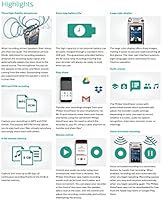
  • Brand: Manufactured by Philips Speech, a division with a long history in professional dictation and voice recording devices.
  • Model Number: The device carries the official model designation DVT4110 within the Philips VoiceTracer product line.
  • Dimensions: The recorder measures 0.8″ deep, 1.8″ wide, and 5.1″ tall, making it slim enough to slip into a shirt or jacket pocket.
  • Weight: At 141 grams (approximately 5 oz), this voice tracer is light enough for all-day carry without noticeable bulk.
  • Microphones: Three built-in microphones are arranged in a stereo array to capture directional and ambient audio simultaneously.
  • Recording Formats: Audio can be recorded in either MP3 format for compact file sizes or PCM format for higher-fidelity, uncompressed audio.
  • Internal Memory: The DVT4110 includes 8 GB of built-in storage, sufficient for many hours of continuous MP3 recording.
  • Memory Expansion: A microSD card slot allows users to expand storage capacity beyond the built-in 8 GB as needed.
  • Battery Type: A built-in Li-Ion rechargeable battery is included in the box, eliminating the need for disposable AA or AAA cells.
  • Charging Port: The device charges and transfers files via a Micro USB port, compatible with widely available standard cables.
  • Headphone Jack: A 3.5mm headphone output allows real-time audio monitoring during recording or direct playback review on the device.
  • Display: The recorder features a dot-matrix LCD screen with a 1.3″ diagonal, used for navigating menus and viewing recording status.
  • Companion App: A free remote control and file-sharing app is available, extending device management and audio sharing to a paired smartphone.
  • PC Connectivity: The Micro USB connection enables direct file transfer to Windows or Mac computers without requiring proprietary software.
  • Compatible Devices: The DVT4110 is compatible with earphones for playback and personal computers for file management and transfer.
  • Release Date: This Philips recorder was first made available in September 2019 and remains an active, non-discontinued product.
  • Manufacturer: Philips Speech is the official manufacturer, operating as a dedicated brand focused on dictation and voice capture hardware.

Related Reviews
Philips VoiceTracer DVT1160
81%
91%
Ease of Use
83%
Voice Activation (VOX)
67%
Audio Clarity
88%
Battery Life
79%
Build Quality & Portability
More
Philips VoiceTracer DVT2050
73%
81%
Audio Clarity
78%
Stereo Recording Performance
74%
Build Quality & Durability
88%
Portability & Form Factor
76%
Battery Life
More
OM Digital Solutions WS-500 Digital Voice Recorder
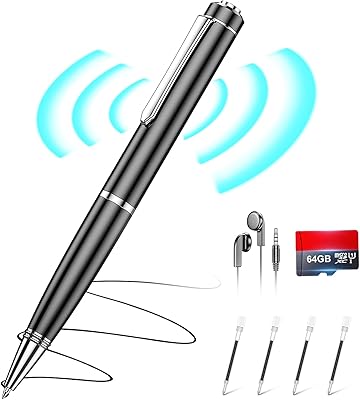
81%
94%
Battery Life
91%
Ease of Use
78%
Sound Quality
96%
Recording Time
85%
Portability
More
MDalong P10 128GB Digital Voice Recorder
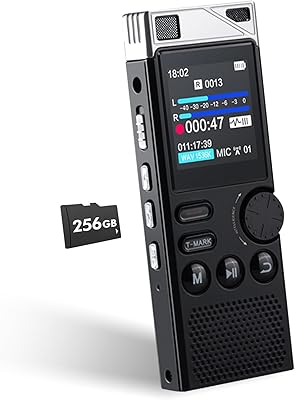
75%
78%
Audio Recording Quality
67%
Transcription Accuracy
61%
Simultaneous Interpretation
91%
Portability & Form Factor
88%
Magnetic Attachment
More
Holyask RM 128GB Voice Recorder
78%
91%
Ease of Use
74%
Audio Recording Quality
68%
Voice Activation
79%
Battery Life
93%
Storage Capacity
More
Escytegr Digital Voice Recorder 144GB
84%
88%
Recording Quality
92%
Battery Life
84%
Voice Activation
85%
Portability
91%
Storage Capacity
More
Vormooi O1 160GB Digital Voice Recorder
78%
93%
Battery Life
88%
Storage Capacity
81%
Audio Recording Quality
67%
Noise Reduction Performance
84%
External Microphone Usefulness
More
EVIDA 64GB Digital Voice Recorder
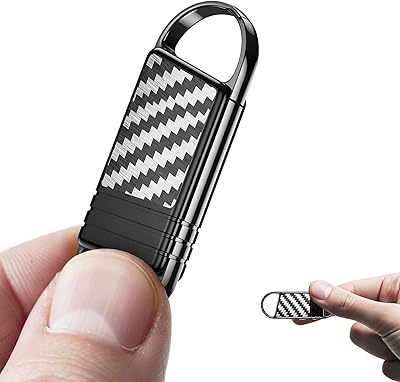
84%
88%
Recording Quality
79%
Battery Life
91%
Ease of Use
70%
Voice Activation Functionality
85%
Noise Reduction Performance
More
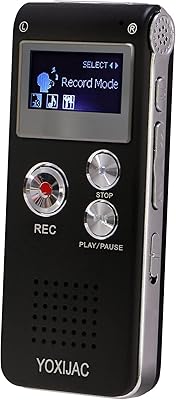
YOXIJAC LYB-101 8GB
YOXIJAC LYB-101 8GB
75%
91%
Ease of Use
78%
Audio Quality — Quiet Environments
47%
Audio Quality — Noisy Environments
63%
Voice Activation Accuracy
69%
Battery Life
More
Xelarvex 64GB Voice Recorder
77%
83%
Audio Clarity
71%
Noise Cancellation
91%
Battery Life
78%
Voice-Activated Recording
94%
Storage & Capacity
More

FAQ

It works as a standalone recorder straight out of the box — just charge it via Micro USB and you can start recording. The companion app is optional and adds remote control and sharing features, but you don't need it to record and transfer files. Files appear as standard audio documents when you plug the device into a computer, so no proprietary software is required.

Battery life varies depending on the recording format and whether you're using the display actively, but most users get through a typical workday of intermittent recording without needing to recharge. That said, if you plan on running eight-plus hours of continuous recording, it's worth having a Micro USB cable nearby as a precaution. It's a capable battery for regular use, just not exceptional for marathon sessions.

MP3 compresses the audio, which keeps file sizes small and is perfectly fine for voice recordings like lectures, meetings, or dictation. PCM records uncompressed audio, which means larger files but better fidelity — useful if you need cleaner audio for transcription services or detailed review. For most everyday use, MP3 is the practical choice.

Yes, the DVT4110 includes a microSD card slot alongside its 8 GB of built-in storage. Philips supports standard microSD and microSDHC cards, so a 32 GB card is a common and practical choice for extended recording needs. Just make sure to use a reputable brand to avoid compatibility issues.

The companion app is designed to work with both iOS and Android devices. However, some users have reported intermittent reliability issues on newer operating system versions, so it's worth checking the current app reviews in your device's app store before relying on it heavily. The recorder itself functions independently of the app for all core recording tasks.

It works well for this purpose — the stereo microphone array produces clear enough voice recordings that automated and human transcription services can process them accurately. Recording in MP3 at a higher bitrate or in PCM will give transcription tools the best chance of capturing speech cleanly. Just make sure the speaker is within a reasonable distance of the device for optimal results.

You can monitor audio in real time by plugging standard earphones or headphones into the 3.5mm jack while recording is active. This is genuinely useful for journalists or interviewers who want to confirm the device is picking up audio properly before a critical session.

Connect the DVT4110 to your computer using a Micro USB cable, and it will appear as a removable storage drive — similar to a USB flash drive. You can then drag and drop your audio files directly without installing any special software. It's about as straightforward as file transfer gets.

Multiple buyers mention the build feels solid and well-constructed for its size and weight class. It's not ruggedized or waterproof, but it handles the normal bumps of daily carry without issue. A simple protective pouch would be a sensible addition if you're regularly tossing it into a bag alongside heavier items.

In quiet, controlled environments like a small meeting room or a one-on-one interview, the difference may be subtle. Where the three-mic array shows its advantage more clearly is in larger, livelier spaces like lecture halls or group discussions, where capturing audio from a wider field matters. It's a genuine improvement over single-mic budget recorders, though it won't outperform dedicated professional stereo recorders in the same test.

Where to Buy